
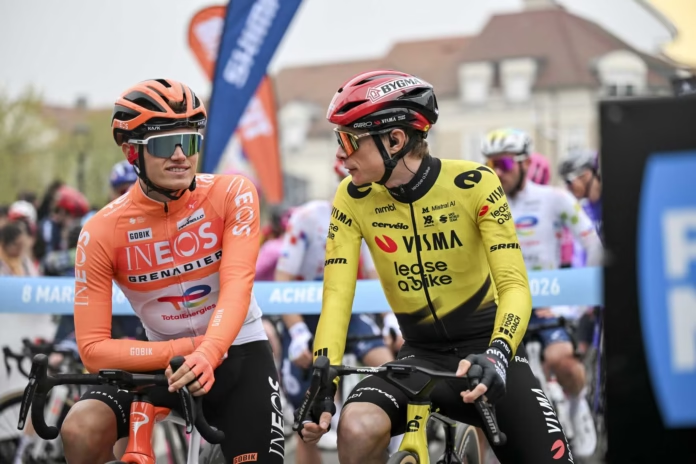
Oscar Onley arrives at the Tour de France 2026 in a very different place from 12 months ago. In 2025, he was still the breakthrough story, the Scottish climber who turned promise into a genuine general classification result by finishing 4th overall. In 2026, he is no longer simply a talented outsider. He is a major British GC hope, a new Netcompany Ineos leader, and a rider whose Tour build-up carries both expectation and uncertainty.
That is the complicated part. Onley’s ceiling is obvious. He climbs well, handles repeated hard stages, and has already proved he can remain in the Tour’s front group deep into the third week. But his 2026 season has not been smooth. Illness, disrupted racing and a crash at the Tour Auvergne – Rhône-Alpes have made his form harder to judge. The talent is not in question. The readiness is.
The 2026 Tour route gives him a real opportunity, but not a soft one. The Barcelona team time-trial gives Netcompany Ineos a chance to protect him early. The Pyrenees arrive quickly. The Vosges and Jura will test consistency. The stage 16 individual time-trial could expose any weakness against the clock. Then the final Alpine block, with Orcières-Merlette and back-to-back Alpe d’Huez finishes, will decide whether he is racing for a podium, a top five, or simply proof that 2025 was no one-off.
For the wider race picture, see our Tour de France 2026 full route guide, Tour de France 2026 route analysis, Tour de France 2026 GC favourites ranked and Tour de France 2026 dark horses for the general classification.
Why Oscar Onley matters in 2026
Onley matters because British men’s GC hopes at the Tour de France have not been in this position for a while. Geraint Thomas won the race in 2018. Adam Yates and Simon Yates have both been major Tour riders. Tom Pidcock has brought stage-winning excitement, especially in the mountains. But Onley represents something slightly different: a young British climber whose best Tour result is already good enough to make the podium a realistic target rather than an abstract dream.
His 4th place at the 2025 Tour changed the way he is viewed. Before that, he was promising. After it, he became a rider teams had to treat seriously. It is one thing to win on a climb in a one-week race. It is another to hold a GC position through the final week of the Tour. Onley did the latter, and that gives him credibility for 2026.
The move to Netcompany Ineos also raises the stakes. This is not a rider quietly developing away from scrutiny anymore. Onley has joined a British team still trying to redefine itself after the Team Sky and Ineos dominance era. For the team, he is part of a reset. For British cycling, he is a rare young GC rider with genuine Tour evidence behind him.
That does not mean he is ready to win the Tour. It does mean that if he arrives healthy, he is one of the riders who can make the top five battle far more interesting.
For more on his breakout result, see our race-day follow-up on Oscar Onley finishing fourth at the 2025 Tour de France.
From Picnic PostNL breakthrough to Ineos pressure
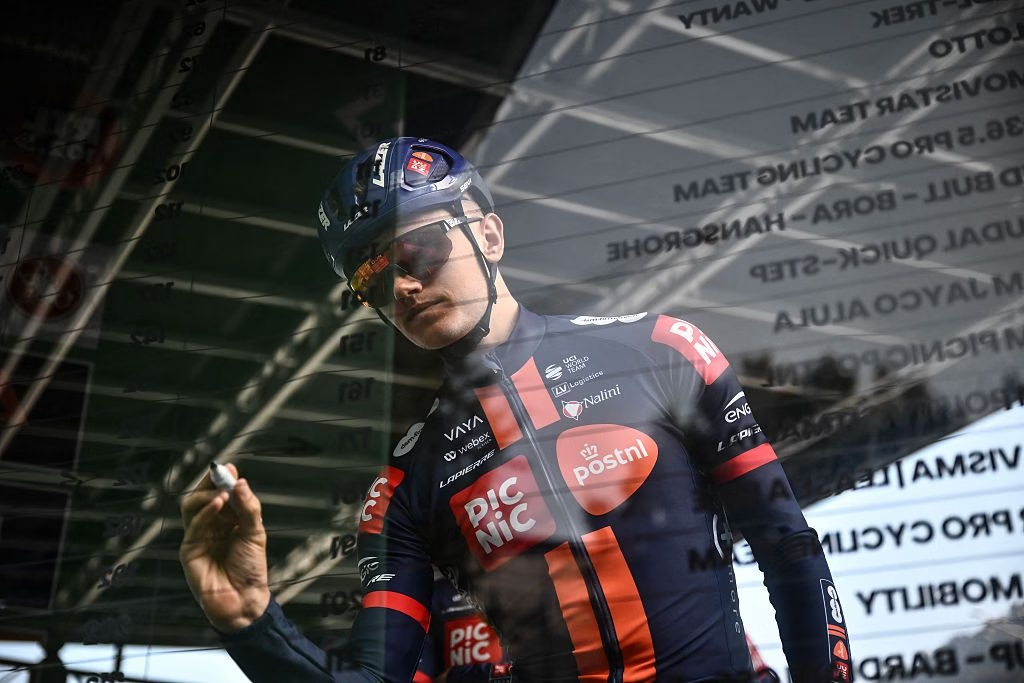
Onley’s 2025 breakthrough came with Team Picnic PostNL, where expectations were lower and the space to grow was broader. That helped. He could race into the Tour rather than carry it from the start. His 4th place was not treated as a minimum target, which may have helped him ride with the kind of freedom that younger GC riders often need.
The move to Ineos changes the psychology. He now rides for a team where GC ambition is built into the identity. Even if the modern team is not the same as the old Tour-winning machine, the pressure is still there. A British climber in an Ineos jersey at the Tour de France will never be just another rider.
That brings benefits. Ineos can give him stronger support, better time-trial structure, deeper mountain cover and a more refined Grand Tour environment. Riders such as Filippo Ganna, Thymen Arensman, Michał Kwiatkowski and Carlos Rodríguez can all contribute to a stronger Tour unit if selected. But it also removes some of the quietness that made 2025 feel like a clean progression.
In 2026, Onley has to show he can handle expectation. That may be the biggest difference from last year.
For more on the team’s role in the opening stage, see our Tour de France 2026 team time-trial explainer and how the stage 1 team time-trial could change the Tour de France 2026.
The 2025 Tour result changed everything
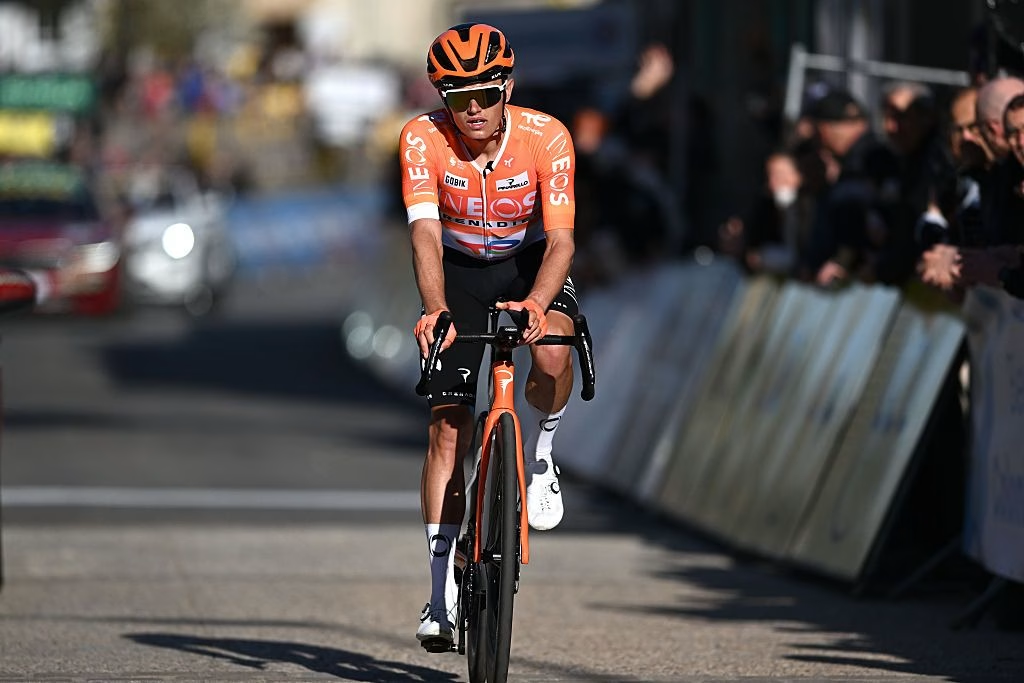
Onley’s 2025 Tour was the result that shifted him from prospect to contender. Finishing 4th overall at 22 years old was not just a good result. It was one of the clearest British Grand Tour breakthrough performances in years.
It showed that he could handle three weeks. It showed that he could stay close when the race became selective. It showed that he was not only a punchy one-week climber but a rider with enough depth for the Tour’s hardest rhythm. That distinction matters.
Some riders can shine in shorter stage races because they have sharp climbing legs and a strong final kick. The Tour is different. It tests recovery, positioning, team support, heat, pressure, tactics and the ability to stay calm after bad days. Onley came through that test far better than expected.
The question now is whether he can repeat it when everyone is watching. A surprise 4th place is one thing. A targeted podium challenge is another.
His 2025 result also places him firmly in the conversation around the Tour de France 2026 young riders to watch and Tour de France 2026 dark horses for the general classification.
A disrupted 2026 build-up
The biggest concern around Onley’s 2026 Tour is not talent. It is continuity.
His season has had interruptions, including illness and the crash at the Tour Auvergne – Rhône-Alpes. That matters because a Tour de France GC campaign is rarely built in the race itself. It is built in February, March, April, May and June, through controlled progression, careful race days, altitude work and a final pre-Tour test.
A disrupted build-up does not automatically ruin a Tour. Some riders arrive fresher after fewer race days. Others use adversity to reset. But for a young GC rider still building his consistency, interruptions create uncertainty. Is the top-end climbing where it needs to be? Has the team had enough time to refine support around him? Has he had enough racing to arrive sharp, but not too much to arrive tired?
That uncertainty should make expectations slightly cautious. Onley can still be a British GC hope without needing to be framed as a podium favourite. The more realistic question is whether he can ride another controlled, high-level Tour and stay close enough to the podium battle to prove his 2025 was the beginning rather than the peak.
The Tour Auvergne – Rhône-Alpes has become one of the more useful pre-Tour form markers, and its role as a hard rehearsal race is explained in our beginner’s guide to Tour Auvergne – Rhône-Alpes 2026.
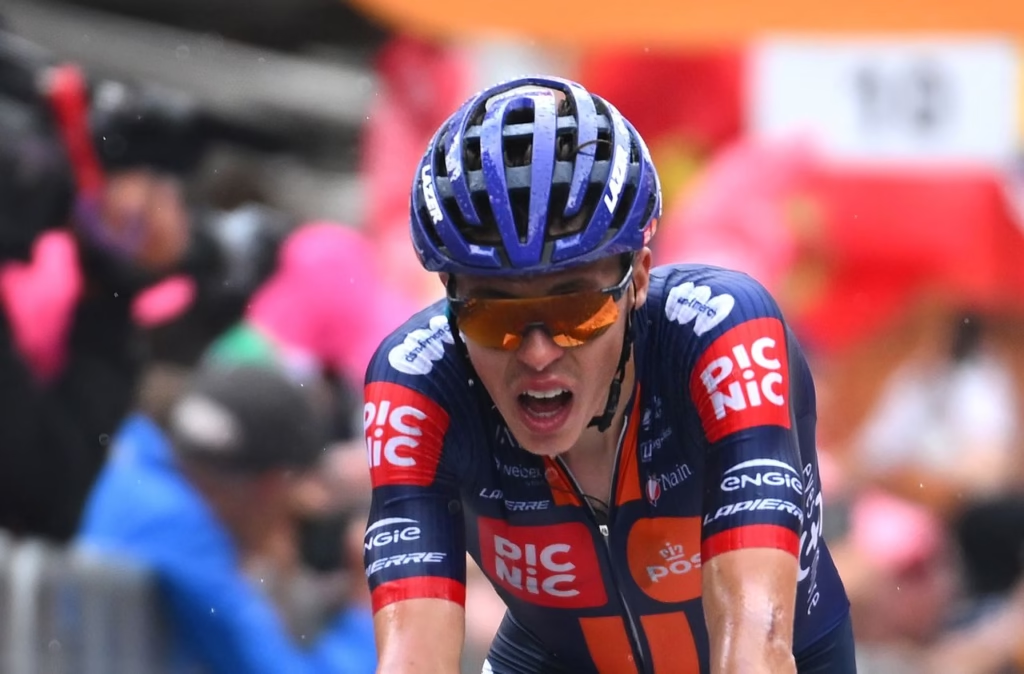 Photo Credit: Getty
Why the route suits him
The 2026 Tour route suits Onley because it rewards climbing depth and repeated mountain resilience. It is not a flat time-trial-heavy Tour. It includes the Barcelona team time-trial, one individual time-trial, and a lot of climbing spread across several different mountain blocks.
The early Pyrenees should suit him if he is sharp enough. Les Angles and Gavarnie-Gèdre come early enough to expose anyone underprepared, but also give Onley the chance to settle into the race as a serious climber. The middle mountain stages through Le Lioran, Le Markstein and Plateau de Solaison should reward riders who can recover well. The Alps then bring the real test.
Onley’s best version should like repeated climbing days rather than one isolated mountain showdown. He can ride consistently, absorb pressure and look for small openings. He is not yet at the level where he can simply ride Pogačar or Vingegaard off his wheel, but he may not need to. A strong top five bid can be built through not cracking, not losing time cheaply and choosing the right day to move.
For the specific climbing blocks, see our Tour de France 2026 Pyrenees guide, Tour de France 2026 Vosges and Jura guide and Tour de France 2026 Alps guide.
The Barcelona team time-trial could help him
The opening team time-trial in Barcelona may be one of Onley’s biggest advantages compared with some other young GC riders.
Netcompany Ineos should have the engines to ride a strong stage 1. Filippo Ganna alone changes the equation. If riders such as Kwiatkowski, Arensman and Rodríguez are also part of the squad, Ineos can start the Tour with a serious team time-trial unit. That matters because stage 1 can create immediate GC gaps before the road has even gone uphill in anger.
For Onley, the priority in Barcelona is simple: avoid damage. He does not need to win the stage or take yellow. He needs to leave the city close to the best-supported GC riders and ahead of those whose teams are weaker against the clock. If he does that, the route opens up.
The final drag around Montjuïc complicates things. It is not a flat airstrip where the biggest riders can simply keep pounding. The team will have to carry speed, preserve Onley and manage the final climb without blowing the formation apart. If Ineos get that right, Onley could start the Tour in a very useful position.
The first stage is covered in more detail in our Tour de France 2026 Grand Départ guide, why Barcelona is hosting the 2026 Tour de France Grand Départ and Tour de France 2026 team time-trial explainer.
The stage 16 time-trial is the danger point
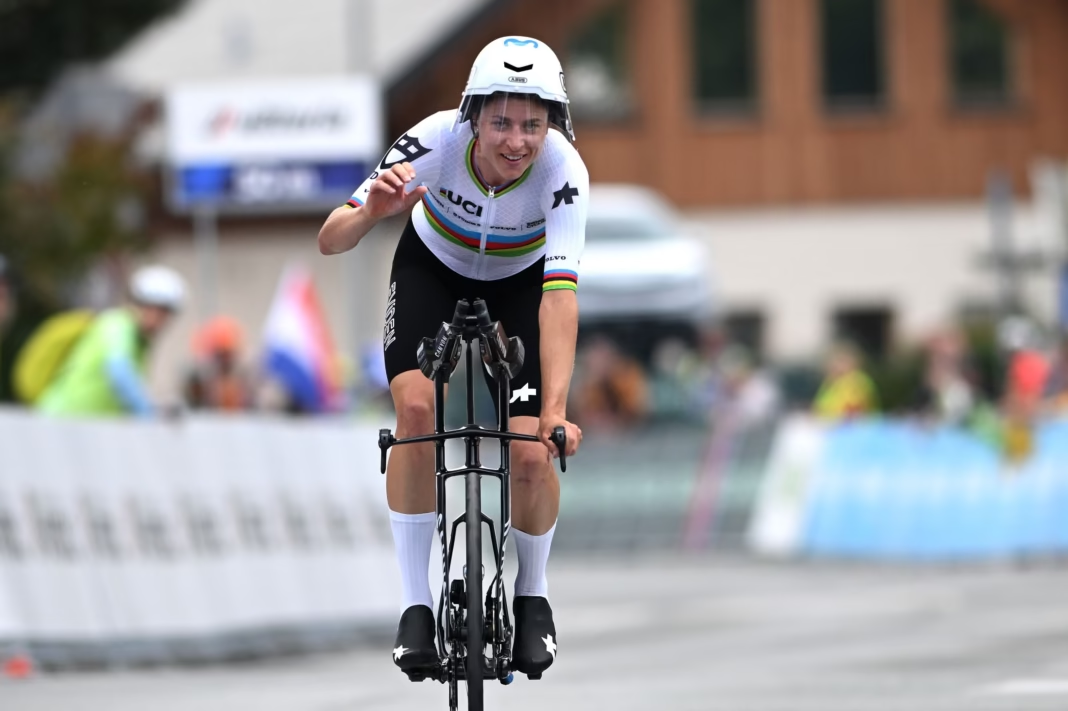
The stage 16 individual time-trial from Évian-les-Bains to Thonon-les-Bains may be the most important non-mountain stage for Onley.
It is 26.1km with enough climbing to make it more than a pure power test, but it still favours riders who can hold an aerodynamic position and pace a hard effort precisely. That is where riders such as Remco Evenepoel, Tadej Pogačar, Filippo Ganna and possibly Kévin Vauquelin or Matteo Jorgenson can gain important time.
Onley does not need to win the time-trial. He does need to limit losses. If he gives away too much time there, the Alps become more complicated. He may have to attack on terrain where stronger teams can control him. If he keeps the deficit manageable, he can use the final mountain stages to stay in the top five fight or perhaps push towards the podium.
This is where his development still matters. Climbing has carried him this far, but the next step as a GC rider is time-trial stability. He does not need to become Evenepoel. He does need to become hard to dislodge.
For more on that stage and the riders it suits, see our best time triallists at the Tour de France 2026 and Tour de France 2026 route analysis.
The Pyrenees: an early test of readiness
The Pyrenees arrive quickly in the 2026 Tour, and that could be important for Onley.
Stage 3 to Les Angles brings the first serious climbing test. Stage 6 to Gavarnie-Gèdre is a deeper mountain day with Tourmalet and a long final ascent. Those stages will not necessarily decide the Tour, but they will show who has arrived properly prepared.
For Onley, the Pyrenees are about confirmation. He needs to show that his build-up disruptions have not left him undercooked. He does not have to attack. He does not have to win a stage. He needs to stay with the right group, avoid a bad day and prove that Ineos can protect him when the race first goes uphill.
If he is already losing time in the Pyrenees, the Tour becomes a recovery mission. If he is close after Gavarnie-Gèdre, the rest of the route gives him several ways to build.
For more detail on those stages, see our Tour de France 2026 Pyrenees guide, Tour de France 2026 mountain stages ranked by difficulty and Tour de France 2026 climbs guide.
The Vosges and Jura: where consistency matters
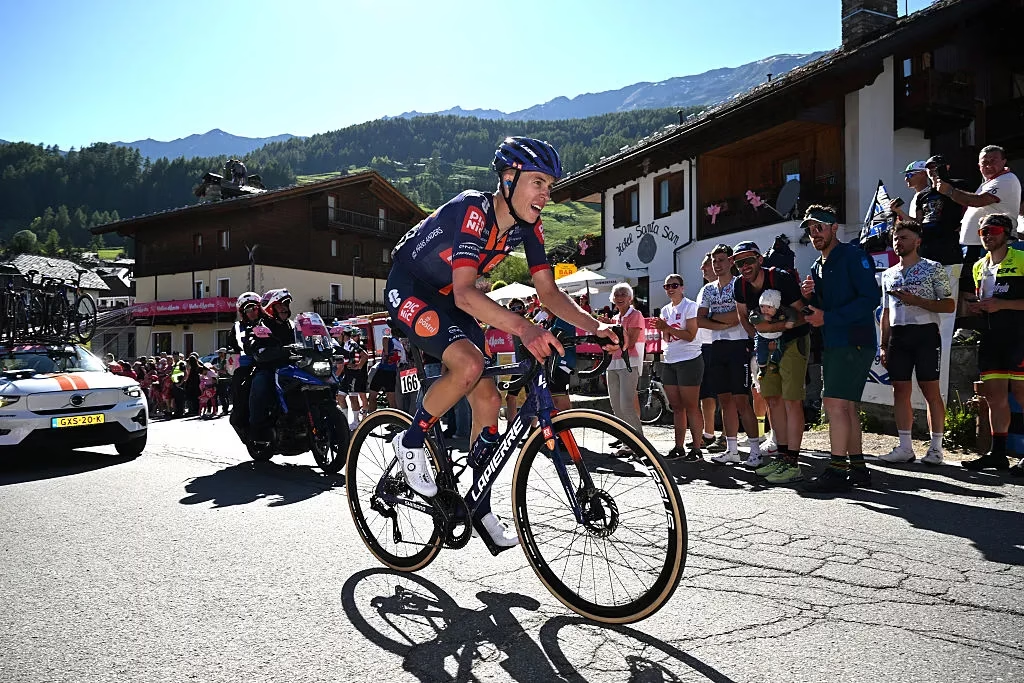
The Vosges and Jura block may be one of the most important parts of Onley’s race.
Stage 13 to Belfort is long and hilly. Stage 14 to Le Markstein Fellering is a demanding Vosges mountain stage. Stage 15 to Plateau de Solaison is a serious summit finish before the second rest day. This is not the most glamorous part of the Tour, but it is exactly where a GC rider can lose control of a top-five bid.
Onley should be suited to this type of block. He is not only a high-mountain climber. His best climbing has often come on shorter, sharper and more selective terrain, where he can use rhythm, positioning and repeated effort. Plateau de Solaison is steep enough to make real differences, while Le Markstein could reward riders who stay alert and avoid being isolated.
This block is also where team strength matters. Ineos cannot simply save everything for Alpe d’Huez. They need to keep Onley protected through the awkward second-week stages, especially if the race becomes aggressive before the final climb.
For more on this section, see our Tour de France 2026 Vosges and Jura guide, Tour de France 2026 route: best days for GC attacks and where the Tour de France 2026 can be won before the Alps.
The Alps: the final proof
The final Alpine block is where Onley’s Tour will be judged.
Stage 18 to Orcières-Merlette opens the sequence. Stage 19 finishes on Alpe d’Huez. Stage 20 returns to Alpe d’Huez via Croix de Fer, Télégraphe, Galibier and Sarenne. That is a brutal final exam for any GC rider, especially one still establishing himself as a Grand Tour podium contender.
Onley’s 2025 Tour showed that he could handle the Alps, but 2026 asks for confirmation under more pressure. If he reaches the Alps inside the top five or close to the podium, every move will matter. If he reaches them slightly behind, he may have to choose between defending a strong result and risking something bigger.
Stage 20 is the key. The queen stage is long, high, and loaded with climbs before the final Alpe d’Huez ascent. It is the type of day where a rider’s real Grand Tour level is exposed. Onley does not need to beat Pogačar or Vingegaard there. But if he can stay close to the podium riders, he will strengthen the case that he is Britain’s next real Tour GC rider.
For more on the final mountain sequence, see our Tour de France 2026 Alps guide, Tour de France 2026 queen stage guide and why back-to-back Alpe d’Huez finishes could define the Tour de France 2026.
How he compares with Pogačar, Vingegaard and Evenepoel
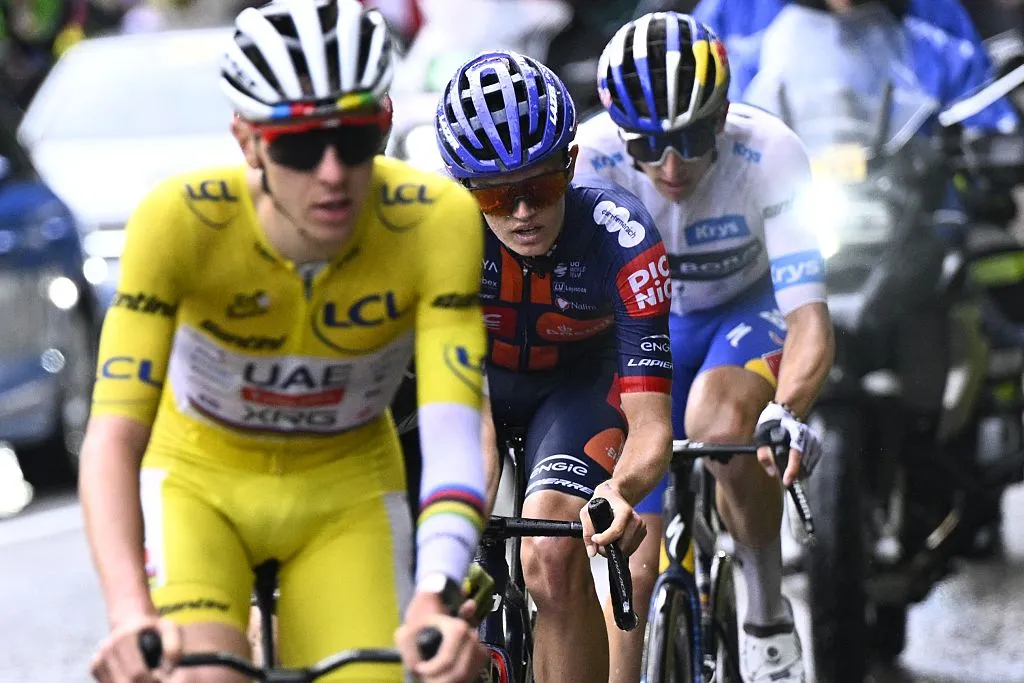
Onley is not yet in the same bracket as Tadej Pogačar, Jonas Vingegaard or Remco Evenepoel. That is important to say clearly.
Pogačar has the widest skill set in the race. Vingegaard remains one of the best pure high-mountain riders in the world. Evenepoel has the time-trial weapon that can change the whole GC equation. Onley’s route to a major result is not to outgun all three. It is to stay close enough to capitalise if one of them has a bad day, and to beat the next group consistently.
That next group is where his real battle sits: Felix Gall, Kévin Vauquelin, Florian Lipowitz, Carlos Rodríguez, Matteo Jorgenson, Thymen Arensman, Paul Seixas and other podium outsiders. That is a difficult group, but it is also a realistic one.
If Onley beats most of them, his Tour is a success. If he beats all of them and one of the big three falters, the podium becomes possible.
For the main contender picture, see our Tadej Pogačar at the Tour de France 2026, Jonas Vingegaard at the Tour de France 2026 and Remco Evenepoel at the Tour de France 2026 features.
What is a realistic target?
A realistic target for Onley is another top five.
That might sound conservative after 4th in 2025, but repeating that level is not easy. The 2026 route is hard, the pressure is greater, and his build-up has been disrupted. A top five would confirm him as a genuine Grand Tour GC rider rather than a one-year breakthrough. It would also give Netcompany Ineos a strong base for the next phase of their project.
A podium is possible, but it requires more conditions to line up. Onley needs health, strong team support, a solid team time-trial, limited losses in stage 16, and at least one mountain block where he gains time on the riders around him. He may also need one of the established favourites to underperform.
Winning the Tour is not a realistic expectation for 2026. That is not a criticism. It is simply the scale of the gap to riders like Pogačar and Vingegaard. The more interesting question is whether Onley can move from breakthrough rider to consistent podium threat.
That is where 2026 matters, and it is why he sits prominently in our Tour de France 2026 dark horses for the general classification and Tour de France 2026 young riders to watch guides.
Why he is different from previous British Tour hopes
British Tour hopes have come in very different forms.
Geraint Thomas was a time-trialling, climbing and team-structured GC rider who came through the Sky system. Simon Yates and Adam Yates were aggressive climbers with strong one-week and Grand Tour credentials. Tom Pidcock has offered a different type of excitement, with stage-winning ability and explosive climbing, but not the same steady Tour GC profile so far.
Onley feels different again. He is a lighter climber, still developing, with a quieter public profile and a more gradual route towards leadership. He does not carry the same personality-driven spotlight as some riders. His racing has done most of the talking.
That may help him. A young British rider can be burdened quickly by expectation, especially at the Tour. Onley’s challenge is to keep the scale of the occasion manageable. The best version of him rides like someone working through the race logically rather than chasing the headline.
His 2025 performance also gives him a firmer foundation than most young British Tour hopes have had. That result, covered in our report on Onley finishing fourth in Paris, means the 2026 question is no longer whether he can cope with the Tour. It is whether he can repeat and improve.
-
 Photo Credit: A.S.O./Billy Ceusters

What Netcompany Ineos need to do for him
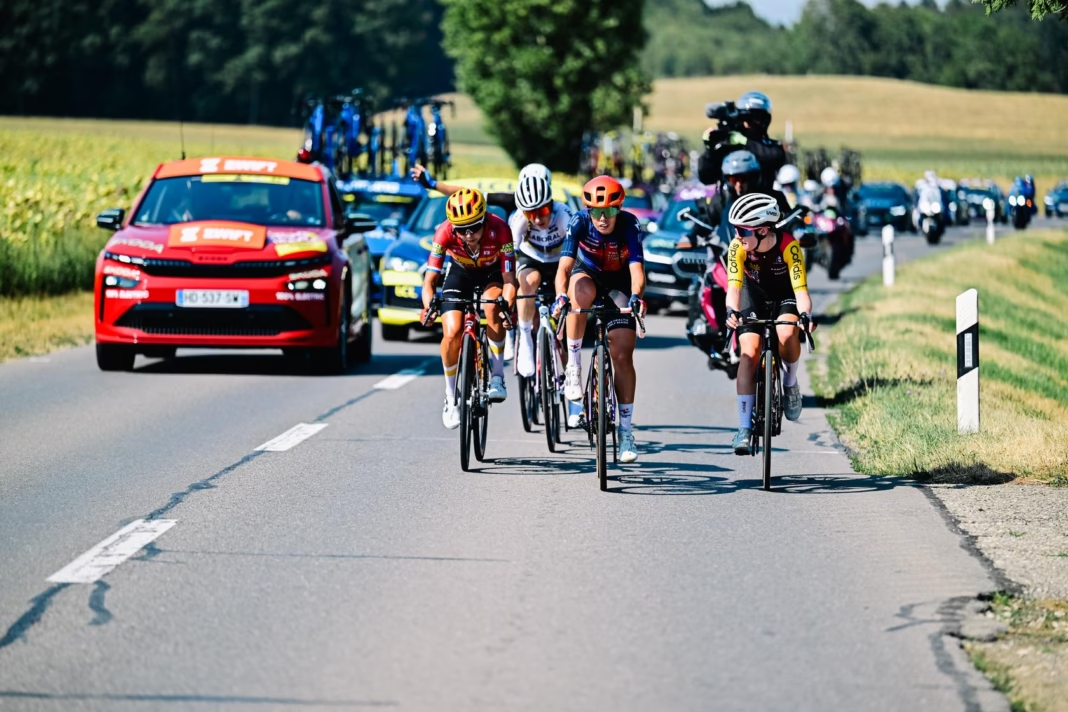
Netcompany Ineos need clarity.
If Onley is their main GC card, the team has to race that way. That means protecting him in Barcelona, keeping him safe on transition days, giving him climbing support in the Pyrenees, and ensuring he is not isolated too early in the Vosges, Jura or Alps. It also means deciding how the team balances him with Carlos Rodríguez, Thymen Arensman or any other GC options.
A multi-leader approach can be useful, especially early. But by the second week, the team will need hierarchy. If Onley is strongest, he needs backing. If another rider is better placed, Onley may need to adapt. That is the difficult part of Ineos’ rebuild: they have options, but they need those options to become a coherent race plan.
The team time-trial could help establish that direction. A strong stage 1 makes everything calmer. A weak one creates pressure immediately. After that, the mountains will tell the truth.
For more on support riders and team depth, see our Tour de France 2026 domestiques who could decide the race, while our best time triallists at the Tour de France 2026 feature explains why Ganna could be central to Ineos’ opening-week plan.
Prediction: can Oscar Onley be Britain’s GC hope?
Yes, Oscar Onley can be Britain’s leading GC hope at the Tour de France 2026. But the word “hope” needs to be used carefully.
He is not going to Barcelona as a favourite to win yellow. He is not yet at the level where Pogačar and Vingegaard should be worried about him as an equal. He is, however, one of the most credible British Tour GC riders of the post-Thomas era. His 2025 result was too strong to dismiss, and the 2026 route gives him enough climbing terrain to confirm that level.
The biggest question is whether his interrupted build-up leaves him slightly short. If it does, a top 10 may be the more realistic outcome. If he arrives healthy and Ineos ride well around him, another top five is absolutely possible. If the time-trial goes well and one or two rivals falter in the Alps, the podium becomes a genuine outside chance.
That is the right framing for Onley in 2026. Not a Tour favourite. Not a protected hype project. A proper young GC rider with evidence behind him, a British team around him, and a route hard enough to show whether he is ready for the next step.
The most realistic prediction is 5th to 8th overall. The optimistic prediction is a podium challenge. The important thing is that, for the first time in a while, Britain has a young Tour climber whose GC ambitions feel grounded in reality.
For full race coverage, see our Tour de France hub and how to watch Tour de France 2026 in the UK guide.

