
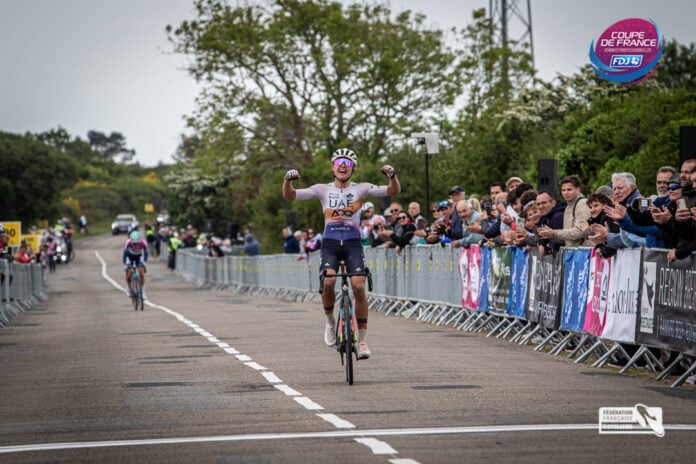
The Pointe du Raz Ladies Classic steps up to UCI 1.Pro level on Sunday 6 September with the strongest field in its short history and a route difficult enough to make the hierarchy far less straightforward than the names on the start list suggest.
Defending champion Paula Blasi returns with UAE Team L’IMAD, but she is hardly their only option. Elisa Longo Borghini and Maëva Squiban give the team three riders capable of attacking the race rather than waiting for Plouhinec. EF Education-Oatly answer with Cédrine Kerbaol and Noemi Rüegg, while FDJ United-Suez have Célia Gery, Ally Wollaston and Sofia Bertizzolo.
The full Pointe du Raz Ladies Classic 2026 start list currently contains 118 riders across 18 teams. It also includes Anneke Dijkstra, Sarah Van Dam and Victoire Berteau, all of whom finished inside the top seven when the rough Breton roads dismantled the race last year.
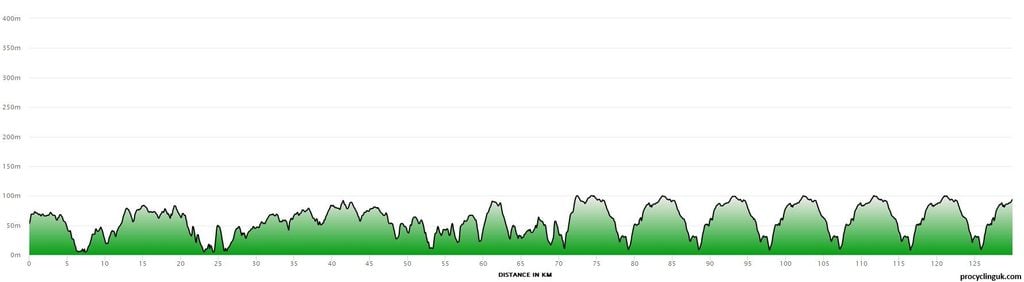
Sunday’s contest covers 130.7km and contains around 18km of ribinoù, with much of the decisive racing concentrated around the repeated Plouhinec circuits. There is enough climbing to make the race selective, but no single ascent where the strongest climber can expect to settle matters cleanly.
That should make team strength unusually important. UAE have the strongest hand on paper, but they also have three potential winners to manage.
Why Pointe du Raz is difficult to predict
Pointe du Raz is not really a gravel race and it is not a conventional hilly Classic either.
Most of the distance is still covered on normal roads. The difference comes from repeated excursions onto the Breton ribinoù, narrow tracks that can combine stone, dirt, grass and uneven surfaces.
Our Pointe du Raz Ladies Classic 2026 route guide looks at the sectors and Plouhinec finale in detail.
The strongest climber does not automatically gain an advantage on them. Positioning matters before the sector begins, technical confidence matters once the surface changes and mechanical problems remain a possibility regardless of form.
The climbs then provide another layer.
Riders who spend several kilometres fighting back after losing position on a ribin reach the next rise having already used energy. Accelerations on the circuit gradually become harder to follow, even if none of the individual climbs is particularly imposing.
The result should reward complete one-day riders rather than specialists.
Paula Blasi returns as a very different defending champion
Paula Blasi won Pointe du Raz in 2025 before her career had reached anything close to its current level.
She was already developing quickly, but what followed changed her status completely.
Blasi won Amstel Gold Race Women with a late solo attack in April, then became the overall winner of La Vuelta Femenina after the Angliru finale. Victories at Durango-Durango, the Tour Féminin International des Pyrénées and Volta a Catalunya Femenina followed before another strong Tour de France Femmes.
Pointe du Raz asks for a different type of performance, but one Blasi has already shown she understands.
In 2025, the decisive group contained Blasi, Lauren Dickson, Anneke Dijkstra, Sarah Van Dam and Célia Gery. Dickson attacked late and briefly opened a potentially winning gap. Blasi did not panic, bridged across and then went straight past her before completing the final kilometres alone.
The 2025 Pointe du Raz race report is particularly relevant because it shows how quickly normal team structures disappeared once the race split.
Blasi returns stronger, more experienced and much more closely watched.
That last point could be the problem.
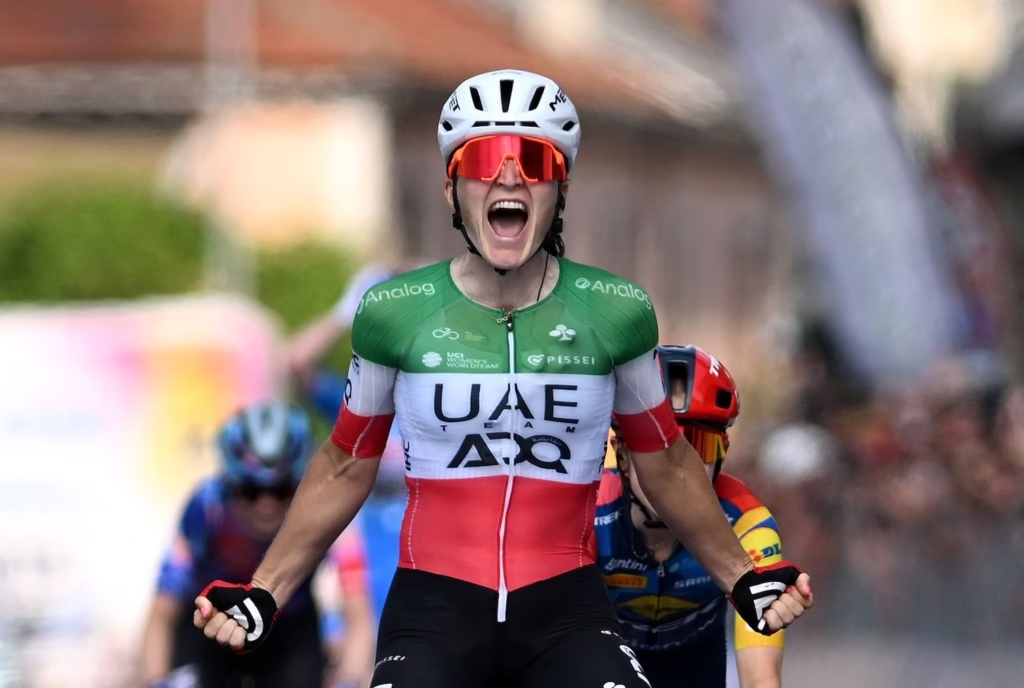
Elisa Longo Borghini gives UAE a second obvious favourite
If rivals decide their entire race should revolve around stopping Blasi, UAE Team L’IMAD can simply turn towards Elisa Longo Borghini.
Few riders in the field have more experience of winning selective one-day races.
Longo Borghini is comfortable when races become attritional rather than brutally mountainous. She can attack before the finale, sustain a high pace on rough roads and still finish well enough that rivals cannot simply carry her towards the line.
Her presence also removes much of the responsibility from Blasi.
If Longo Borghini goes clear with 25km remaining, UAE do not need to chase. Blasi can sit behind Kerbaol, Gery and the other favourites and force their teams to decide how much energy they are willing to spend.
If the move is caught, Blasi is still there.
It is the sort of numerical advantage that can decide a race before the final attack has even been made.
Maëva Squiban makes UAE’s numbers even harder to manage
Maëva Squiban is the third part of the problem.
She may begin below Blasi and Longo Borghini in the nominal hierarchy, but that could give her more freedom than either leader receives.
Squiban is at her best when she can attack instead of waiting for a sprint. The repeated climbs and changes of rhythm suit that approach, particularly if UAE begin using their numbers before the final circuits have been reduced to a handful of contenders.
Her role could become decisive without her ever being designated team leader.
Squiban attacks.
EF or FDJ commit riders to chase.
Longo Borghini counters.
Blasi waits.
That sequence is far more difficult to defend against than a team simply putting everyone on the front for one protected favourite.
Squiban’s season and recent results can be followed through her Maëva Squiban rider profile.
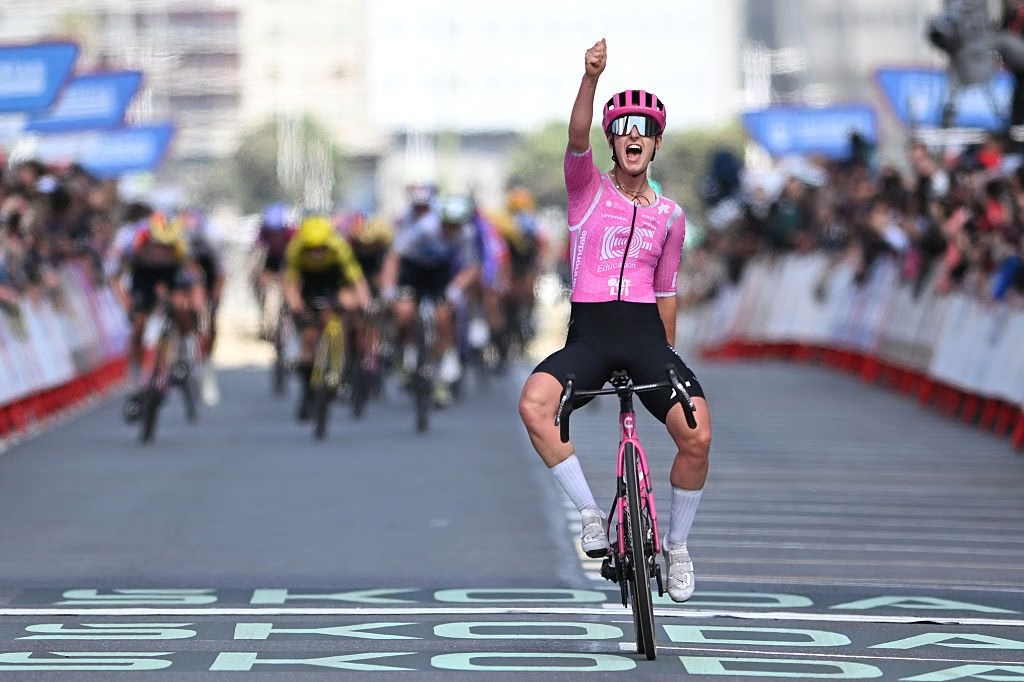
Cédrine Kerbaol has every reason to make the race aggressive
Cédrine Kerbaol is perhaps the clearest individual threat to UAE’s three-rider advantage.
She is Breton, knows this style of racing and has the attributes required to exploit a route that does not provide one obvious decisive climb.
Kerbaol is particularly dangerous when a race can be won through an attack rather than a pure test of climbing watts. She demonstrated that again at La Vuelta Femenina, where a late attack in A Coruña carried her clear of the reduced bunch.
The same instinct should be useful at Pointe du Raz.
Waiting for Blasi, Rüegg, Gery and Wollaston to reach the finish together does little for Kerbaol. Her best race is one in which the pace becomes uncomfortable well before the final kilometre and riders have to make repeated decisions under fatigue.
EF Education-Oatly also have Noemi Rüegg.
That gives Kerbaol licence to attack rather than worrying about preserving a sprint option for the team.
Her broader career and 2026 results are covered in our Cédrine Kerbaol profile.
Noemi Rüegg gives EF the opposite route to victory
Rüegg benefits if Kerbaol makes the race difficult without completely destroying it.
She combines enough climbing ability to stay involved with a much quicker finish than most of the riders who will want a selective race.
That makes the size of the front group important.
If only Longo Borghini, Blasi, Kerbaol and two or three other climbers remain, Rüegg’s advantage starts disappearing.
If 12 or 15 riders reach the closing kilometres together, she becomes one of the riders nobody wants to take to the line.
Her 2026 season has already shown that combination. Rüegg won the Tour Down Under overall and opened La Vuelta Femenina by beating Lotte Kopecky in an uphill sprint before a crash ended her race the following day.
She returned in time to play a prominent role at the Tour de France Femmes.
EF therefore have a clean tactical split: Kerbaol can try to break the race while Rüegg can afford to let other teams bring moves back.
 Photo Credit: Getty
Célia Gery is much more dangerous than when she finished fourth last year
Célia Gery already knows how to reach the decisive group at Pointe du Raz.
She finished fourth in 2025 after joining Blasi, Dickson, Dijkstra and Van Dam at the front. Twelve months later, she arrives with far more evidence that she can finish a race like this rather than simply feature in it.
Her breakthrough included victory at Brabantse Pijl Women 2026, where she beat Mischa Bredewold and Silvia Persico on the uphill finish in Overijse.
She later added another major victory on Stage 7 of the Giro d’Italia Women, coming from a late move and still having enough speed to beat Lucinda Brand in Salice Terme.
That is an ideal combination for Pointe du Raz.
Gery can survive the selective part of the race without needing everything to come back together, but a small group does not frighten her either.
FDJ United-Suez also have enough strength around her to avoid making Gery responsible for every move.
Ally Wollaston changes how aggressively FDJ can race
Ally Wollaston provides the fastest finishing option among FDJ’s leaders.
The New Zealander does not want the same race as Kerbaol or Longo Borghini. Her chances improve if the ribinoù remove some riders without reducing the front of the race to a tiny climbing group.
A group of 20 reaching the final kilometres with Wollaston still present would create an uncomfortable situation for everyone else.
She has the speed to punish hesitation and enough endurance to survive considerably harder racing than a conventional pure sprinter.
That is why FDJ do not need to use Wollaston aggressively.
Gery, Bertizzolo, Amber Kraak and the rest of the team can follow moves while Wollaston concentrates on remaining in contact.
The longer she stays there, the more pressure there is on UAE and EF to attack.
Her Ally Wollaston profile covers a career that increasingly combines elite track speed with major one-day results on the road.

Sofia Bertizzolo adds another problem for UAE and EF
Sofia Bertizzolo should not be overlooked within such a strong FDJ line-up.
Her value comes partly from not demanding the same level of attention as Gery or Wollaston.
Bertizzolo is quick enough to win from a reduced group and experienced enough to cope when a Classic becomes fragmented. If she follows the right move, rivals cannot simply assume FDJ will help chase her down because Gery and Wollaston are sitting behind.
That can make a secondary leader tactically more dangerous than another obvious favourite.
FDJ’s likely approach should therefore be flexible rather than hierarchical.
They have no need to decide from kilometre zero whether the race belongs to Gery, Wollaston or Bertizzolo.
Anneke Dijkstra has the strongest course-specific result outside Blasi
Anneke Dijkstra finished third here last season and deserves more than outsider status simply because several WorldTour stars have been added to the 2026 field.
She knows she can make the decisive selection.
That matters at Pointe du Raz more than at many races because the ribinoù require judgement as well as physical strength. Riders need to know where they can afford to move backwards, where they cannot and which sections demand position before the road narrows.
Dijkstra got those decisions right last year.
The difficulty is that the race she faces on Sunday is stronger.
Longo Borghini, Kerbaol and Rüegg substantially increase the quality at the front, while Blasi herself has moved several levels forward since winning in 2025.
A repeat podium would be an excellent result.
Another top 10 would be no surprise at all.

Sarah Van Dam should not wait for the favourites
Sarah Van Dam finished fifth in 2025, only 40 seconds behind Blasi, after making the same decisive selection.
Visma | Lease a Bike return without the sort of overwhelming favourite that forces the entire team into one plan.
That should suit Van Dam.
She and Rosita Reijnhout can race aggressively, follow secondary moves and make UAE, EF and FDJ decide whether they really want to chase every attack.
There is little value in Van Dam waiting until the finish with Blasi, Gery or Rüegg.
Her previous result was built on being present when the race split.
The most sensible way to improve on fifth is to try to create that situation again.
Victoire Berteau has the versatility for another top result
Victoire Berteau finished seventh in 2025 and again has a route that suits her ability to operate between different rider types.
She does not need a conventional bunch sprint, but nor does she require an exceptionally hard climbing race.
Berteau can follow moves, work in a small group and still finish quickly enough to capitalise when stronger favourites spend too long looking at each other.
Cofidis also bring Malwina Mul, Ema Comte, Nadia Quagliotto, Victorie Guilman and Nikola Nosková.
That gives Berteau enough support to avoid racing alone until the event has already become selective.
A victory would require several things to fall her way.
A top 10 is considerably easier to imagine.
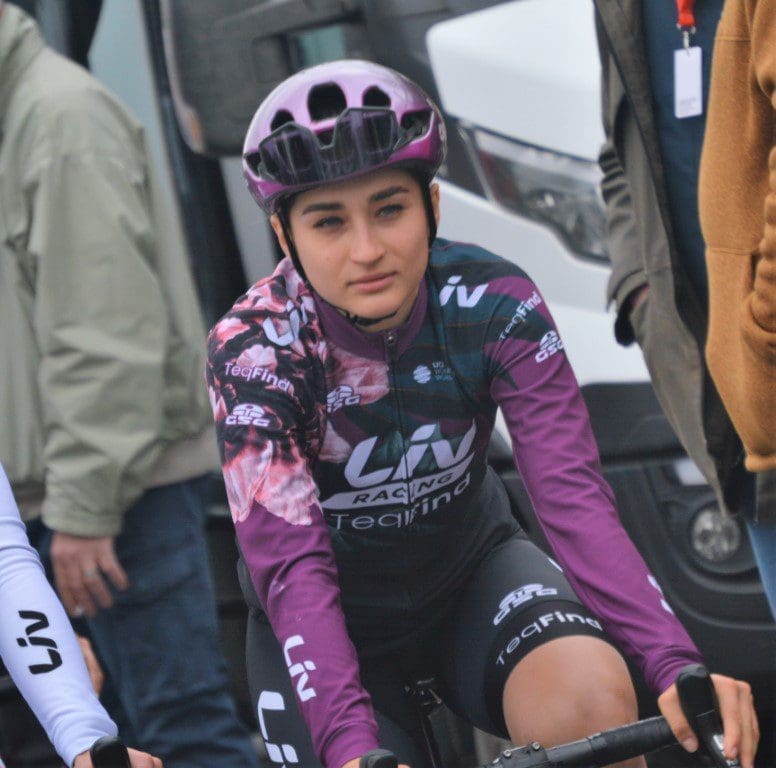
Human Powered Health have one of the more interesting outsider teams
Human Powered Health lack the single headline favourite of UAE, EF or FDJ, but their six-rider squad fits the character of the race.
Marta Jaskulska, Giada Borghesi and Katia Ragusa all bring experience of attritional one-day racing.
Mona Mitterwallner is the intriguing addition.
The Austrian’s mountain-bike background does not automatically make her a ribinoù specialist. Pointe du Raz still requires road positioning, tactical awareness and the ability to respond to attacks between the sectors.
It does, however, mean uneven surfaces and rapid changes of traction should hold fewer surprises for her than for most of the peloton.
Human Powered Health’s best opportunity is probably to place riders into moves rather than trying to control the race behind UAE.
Linda Zanetti needs the attacks to stop just short of breaking the race
Uno-X Mobility have plenty of experienced riders around Linda Zanetti, including Jelena Erić, Anouska Koster, Teuntje Beekhuis and Marte Berg Edseth.
Zanetti gives them the clearest route through a reduced sprint.
She wants the ribinoù to make the race hard enough to remove some of the purest fast finishers, but not hard enough to leave Longo Borghini, Kerbaol and Blasi alone at the front.
If 15 to 25 riders reach the finale, Zanetti deserves attention.
If the group is down to six, Uno-X will need a different plan.
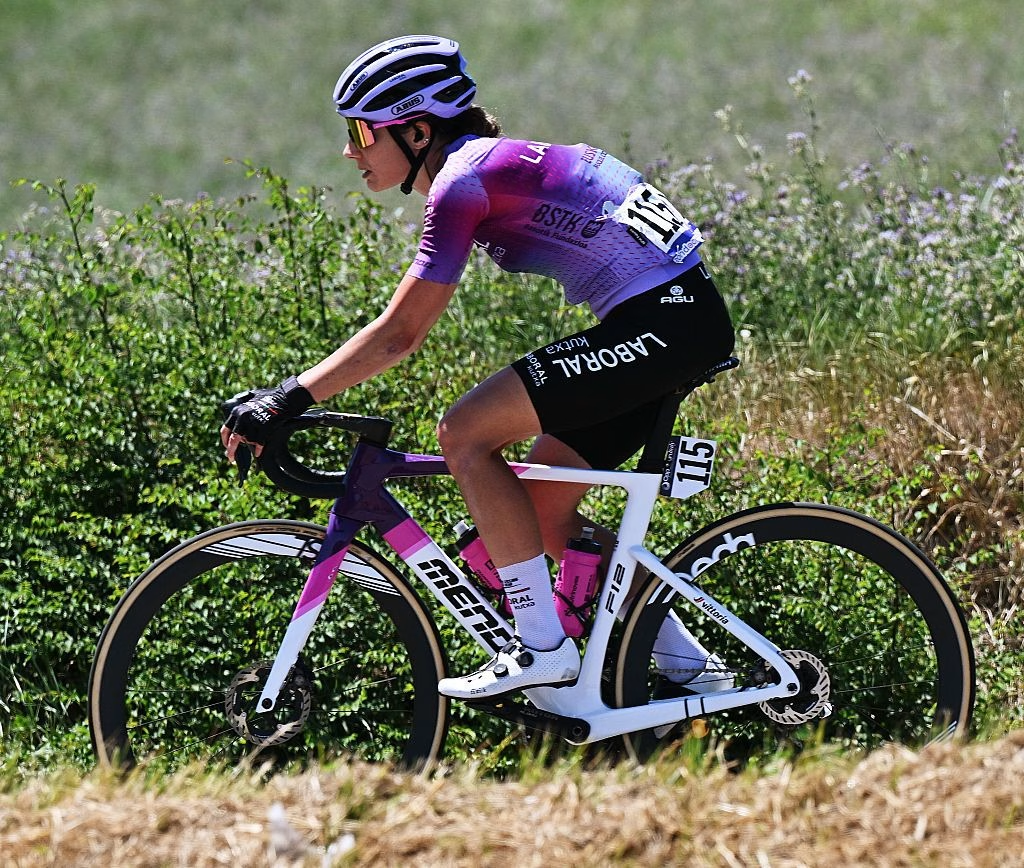
Arianna Fidanza and Sara Fiorin need a larger group
Laboral Kutxa-Fundación Euskadi face a similar calculation with Arianna Fidanza and Sara Fiorin.
Both bring enough speed to matter if the race reaches Plouhinec with a meaningful group together.
The challenge is surviving the repeated accelerations required to get there.
Laboral Kutxa also have Irati Aranguren, Idoia Eraso and Cristina Tonetti to cover earlier attacks, so Fidanza and Fiorin should not need to respond personally every time UAE begin moving riders up the road.
Their chances rise considerably if the bigger teams cancel each other out.
Who has the strongest team?
UAE Team L’IMAD.
Blasi would be one of the favourites without any support at all.
Adding Longo Borghini and Squiban gives UAE three riders capable of winning through different scenarios.
It allows them to attack rather than chase.
That distinction is important.
EF Education-Oatly probably have the best two-rider response through Kerbaol and Rüegg. One can force the race while the other waits for a reduced finish.
FDJ United-Suez have the deepest group of fast options through Gery, Wollaston and Bertizzolo.
If the race reaches Plouhinec relatively intact, FDJ’s hand becomes stronger.
If it breaks apart early, UAE should have the advantage.
Who wants the hardest possible race?
Longo Borghini and Kerbaol should have no interest in protecting a large group.
Every additional rider removed from contention reduces the number of fast finishers they have to beat later.
Squiban can also benefit if the race becomes a succession of attacks rather than one controlled selection.
Blasi sits somewhere between the two scenarios.
She is strong enough to win if the race is destroyed but quick enough that she does not need to eliminate everyone.
That versatility is one of the reasons she remains the safest individual favourite.
-
 Photo Credit: Getty
Who benefits if 15 riders reach the finish together?
Rüegg and Gery move sharply upwards.
Both can survive difficult racing and both possess enough finishing speed to punish riders who have spent the final hour attacking.
Wollaston becomes an even bigger problem if the group is larger again.
Bertizzolo and Zanetti also enter the equation, while Blasi remains dangerous whatever happens.
That is the reason the race is likely to become aggressive.
Too many of the strongest teams have something to lose by simply waiting.
Pointe du Raz Ladies Classic 2026 prediction
Paula Blasi remains the rider to beat.
She won here before becoming a Grand Tour winner, already understands how the race breaks apart and now arrives with Longo Borghini and Squiban giving UAE tactical freedom that no rival team can easily match.
Cédrine Kerbaol looks the most obvious rider to challenge that control. She has the right attacking instinct for the course and does not need to wait for a conventional finish.
Longo Borghini is arguably the strongest rider UAE can use to force others to chase, while Gery and Rüegg become increasingly dangerous if enough riders survive into the final kilometres.
ProCyclingUK prediction
- Paula Blasi
- Cédrine Kerbaol
- Elisa Longo Borghini
- Célia Gery
- Noemi Rüegg
Maëva Squiban is the rider most capable of making that order irrelevant.
UAE have enough strength to send her on the attack while Blasi and Longo Borghini remain behind. If the other favourites hesitate for even a little too long, Pointe du Raz is precisely the sort of race where 20 seconds can become a winning gap before anyone agrees whose job it is to close it.

