
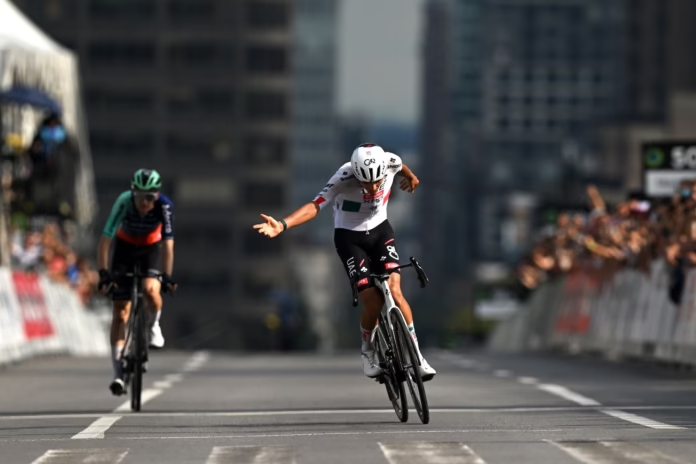
Isaac del Toro winning the 2026 Grand Prix Cycliste de Montréal would have carried weight on any version of the race. Doing it on the same Mount Royal circuit that will decide the men’s road world title in two weeks makes the result considerably more useful. Del Toro beat 19-year-old Paul Seixas in a two-rider finish, Brandon McNulty gave UAE Team Emirates-XRG third place and Remco Evenepoel finished fifth after winning GP Québec two days earlier.
Montréal did not decide the World Championships in advance, but it did reveal several things national teams now have to account for. Del Toro can win on the circuit, Seixas can make the decisive selection at elite level, UAE’s depth translated directly into control and Evenepoel proved that even excellent form does not guarantee tactical command on a course with repeated opportunities to attack.
Del Toro has gone from dangerous outsider to obvious Worlds threat
Before the Canadian races, Del Toro was already one of the most difficult riders to classify. His 2026 season included stage-race victories at the UAE Tour, Tirreno-Adriatico and Tour Auvergne-Rhône-Alpes, demonstrating climbing depth and the ability to finish hard mountain stages. Montréal added a different piece of evidence.
The Mexican did not win because one long climb allowed him to ride everybody off his wheel. He survived a race with constant reshuffling, had teammates placed in dangerous moves, responded when Seixas attacked on the final Camillien-Houde ascent and then had the finishing power to beat the Frenchman on Avenue du Parc. That combination is much closer to what a World Championship requires.
ProCyclingUK’s GP Montréal race report showed how UAE repeatedly placed riders ahead of Del Toro before he made the decisive bridge. He was not asked to spend the final 50km responding to every acceleration. That matters because Mexico will not have the same numerical strength at the Worlds.
The result therefore raises Del Toro’s individual status while also identifying the central problem he will face in national colours. He has proved he can win on the roads. Recreating the protected route into the finale will be harder without McNulty, Adam Yates and the rest of UAE shaping the race around him.
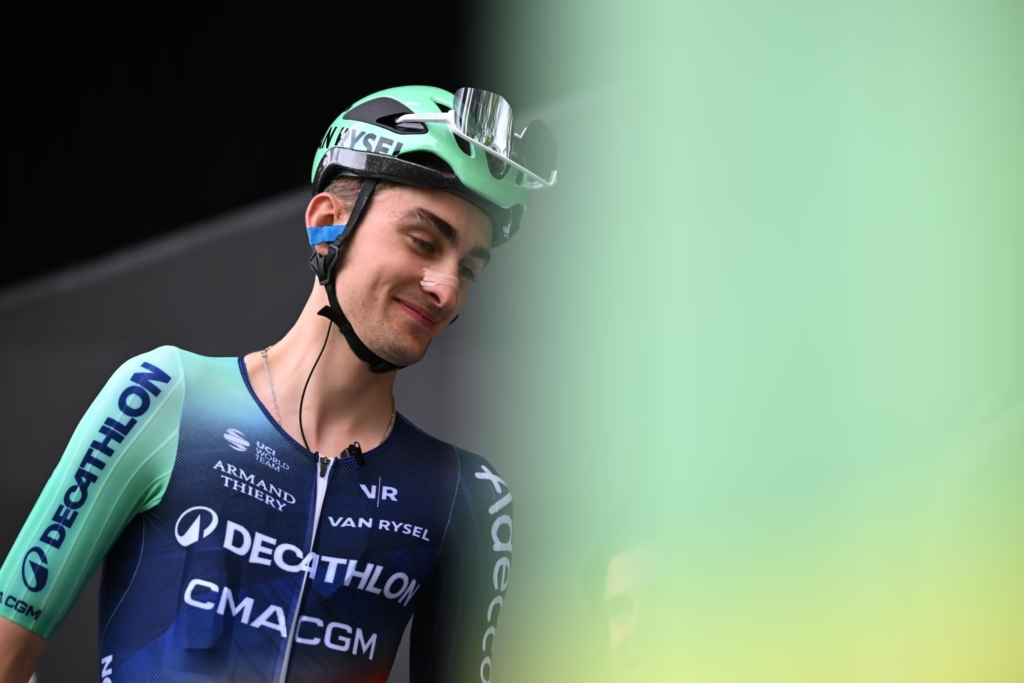 Photo Credit: Getty
Seixas produced the kind of ride France can build around
Paul Seixas did not win, but second place may have changed France’s World Championship calculations almost as much as Del Toro’s victory changed Mexico’s. At 19, Seixas attacked on the final Camillien-Houde climb, reached Ben Healy and forced Del Toro to respond. He was not simply following stronger riders until the sprint.
That distinction matters. A young rider can collect a major placing by surviving in a reduced group and using speed at the finish. Seixas instead helped create the decisive selection on a circuit with more than 4,300 metres of climbing. The physical demand will be greater in the World Championship because of the longer distance, but the tactical evidence is already strong.
France now has to decide how much freedom to give him. Protecting a teenager as a sole leader would be premature in such a long race, but using him merely as support would ignore what Montréal demonstrated. The sensible advantage is flexibility. Seixas can attack early enough to force stronger nations to chase without the move being treated as a disposable secondary option.
UAE showed the template every strong national team will want to copy
Del Toro’s victory was the headline, but UAE’s use of numbers may be the most important tactical lesson from the race. Adam Yates was present when Ben Healy and Maxim Van Gils went clear. McNulty bridged later and remained strong enough to finish third. Del Toro could therefore wait until the decisive phase rather than chase every move himself.
That is particularly relevant to Belgium, France and other nations with several plausible winners at the World Championships. The temptation in a championship is to identify one leader and spend the rest of the team protecting them. Montréal suggested the opposite approach can be more powerful on this circuit. Putting credible riders ahead forces rivals to work and reduces the number of accelerations the nominal leader must answer.
The GP Montréal team-by-team guide identified UAE’s depth as one of their biggest strengths before the start. First and third was the cleanest possible confirmation. National teams with several high-level options will have noticed.
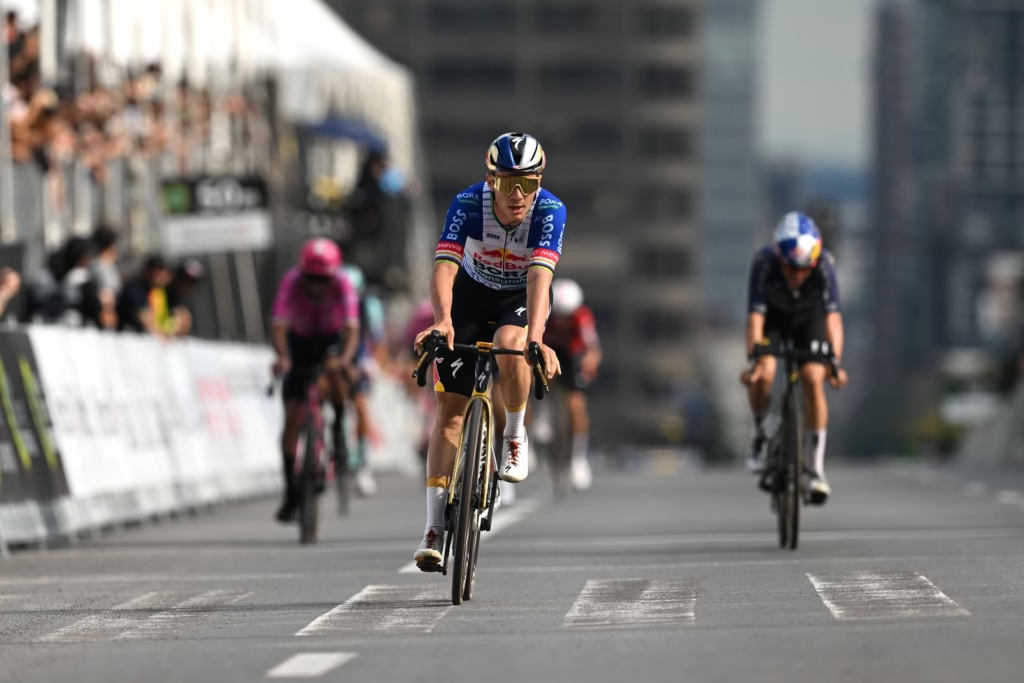 Photo Credit: Getty
Evenepoel remains a favourite, but Montréal exposed the danger of isolation
Remco Evenepoel arrived after winning GP Québec in impressive fashion, where he attacked with Giulio Ciccone and then beat the Italian in the finish. Fifth in Montréal does not reverse the form signal from Québec. It does show that the harder circuit creates more ways for the race to escape his control.
Evenepoel missed the first version of the decisive selection and had to spend energy working back into contention. By the time Seixas and Del Toro moved on the final lap, the Belgian was no longer in the position to dictate the race. On a course where attacks can come from several different points, even one moment of hesitation can force a costly chase.
That makes Belgium’s team structure important. Evenepoel may enter the Worlds as the obvious reference after his GP Québec victory, but the presence of Wout van Aert and other strong riders gives Belgium the chance to avoid making every tactical decision depend on him. Montréal was evidence for sharing the burden, not evidence against Evenepoel’s condition.

The World Championship circuit is selective without being predictable
The redesigned GP Montréal route used 16 laps of the 13.4km Mount Royal circuit and accumulated roughly 4,304 metres of climbing. Camillien-Houde is the main reference point, but the repeated smaller climbs and constant loss of team numbers create much of the difficulty.
The race did not wait obediently for the final climb. Early moves were caught, new groups formed, Healy attacked alone and the final selection was still changing inside the last lap. That is likely to be one of the defining characteristics of the Worlds. The circuit is hard enough to weaken teams but not so singular that everybody has to attack at the same obvious point.
That favours riders who can read a race as well as climb. Del Toro and Seixas reached the final kilometre because they recognised the decisive moment. McNulty reached the podium because he had spent earlier parts of the race creating tactical pressure. A strong watts-per-kilogram figure is necessary here, but it is not a complete plan.
Pogačar’s absence has turned the Worlds into a genuinely open tactical race
Tadej Pogačar’s season-ending Vuelta crash removed the rider who would otherwise have shaped almost every team’s strategy. Without him, there is no single opponent everybody can assume will make the race at one predetermined moment. Montréal looked like a preview of the consequences.
Del Toro, Seixas, Evenepoel, McNulty, Quinn Simmons, Healy and others all occupied threatening positions at different stages. No rider was strong enough to close every move personally. That encourages national teams to use numbers and take calculated risks rather than wait behind one overwhelming favourite.
The GP Montréal start list was strong enough for the result to mean something, but a World Championship is longer and governed by national rather than trade-team loyalties. The hierarchy can still change over the next two weeks.
What changed on Sunday is the burden of proof. Del Toro no longer has to argue from potential on this circuit, because he has won on it. Seixas has shown he can make the decisive attack. Evenepoel remains in form but has seen how easily the race can become fragmented. Montréal did not settle the rainbow jersey. It made the list of credible ways to win it considerably longer.

