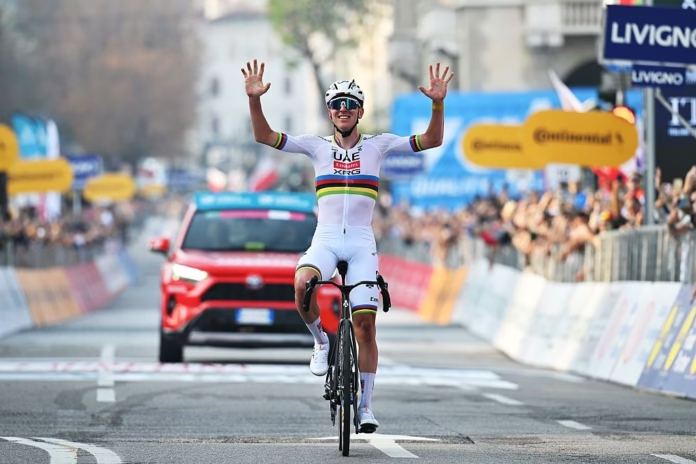
Paul Seixas’s Il Lombardia win belongs in the race’s history for a simple reason: at 20, he beat experienced contenders on a 239-kilometre course and finished alone in Como. It was a victory earned on the Civiglio, not a sprint settled in the final metres.
The youngest-winner comparison is striking, but age is only one way to understand the result. Lombardia has changed its route and finishing city many times, and the demands faced by riders in different eras are not identical. The more useful comparison is how the race has repeatedly rewarded climbers prepared to attack when the field is already exhausted.
How Seixas won the 2026 edition
Seixas made his move on the Civiglio with around 19 kilometres left. Tom Pidcock could not sustain the response, while Enric Mas and Giulio Ciccone chased behind. Seixas held his advantage on the descent and the run to Como, finishing in 5:49:28.
Mas was second at 48 seconds and Ciccone third at 1:05. The gaps give the result a particular character. It was not a small group watching each other until the final kilometre; one rider was able to ride away on the most important climb and make the separation last.
Why the route makes comparisons difficult
Il Lombardia has moved between different finishes and different combinations of climbs. Some editions have favoured a late attack, others a smaller group that survived several climbs. The name on the trophy stays the same, but the winning problem changes.
The 2026 Bergamo-to-Como course placed the Civiglio close enough to the finish for an attack to survive, but far enough away to demand a sustained solo effort. Seixas had to descend and keep riding, not merely open a gap at the summit. That distinguishes his win from editions settled by a final sprint or a short uphill acceleration.
From Coppi to the modern climbers
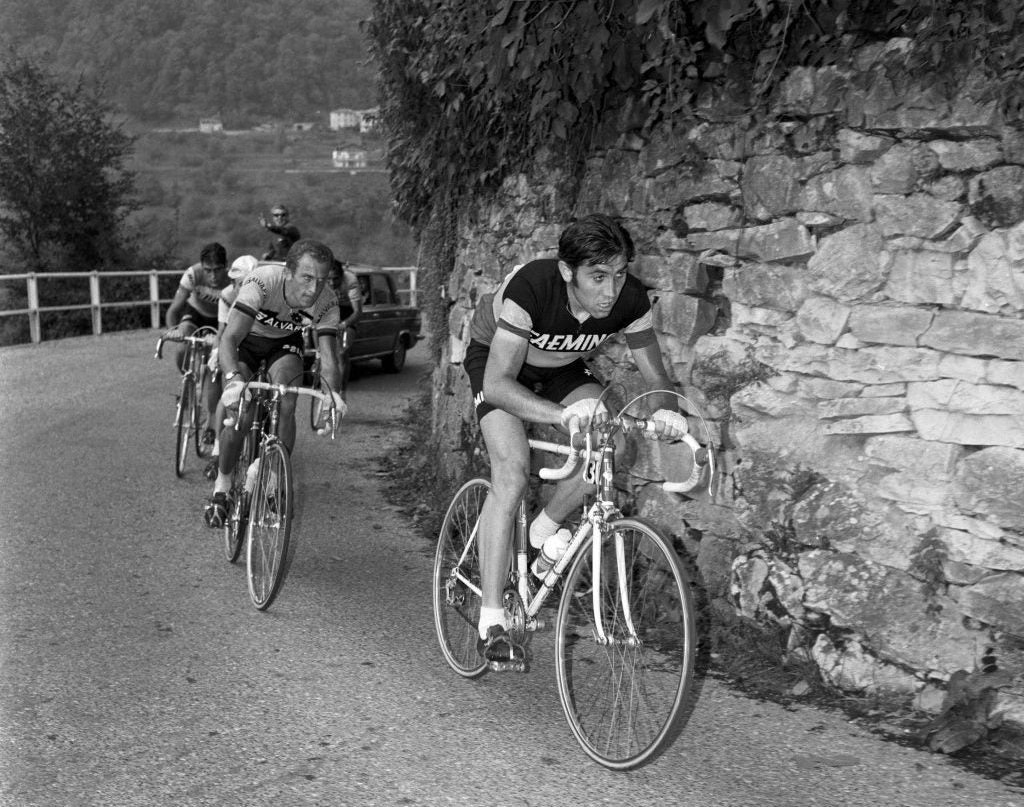
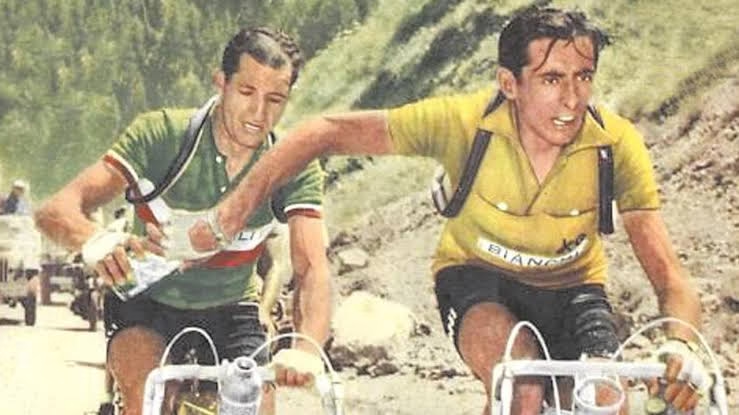
Fausto Coppi is central to the story of Lombardia, winning the race five times and setting a standard that has remained part of its identity. Eddy Merckx and other great all-rounders later added their own chapters. These riders operated with different equipment, training methods and race calendars, so raw speeds offer little basis for ranking their performances.
What carries across the generations is the need to arrive at the decisive climb with enough left to attack. Lombardia is often won after hours of attrition, when the strongest riders can no longer hide in a large bunch. Seixas’s Civiglio move fits that tradition, even if the details of the route belong specifically to 2026.
The French line from Pinot to Seixas
Thibaut Pinot’s 2018 victory was the most recent French win before Seixas. Pinot was already an established Grand Tour rider, and his success was a reminder that a pure climber could make Lombardia his own. Seixas arrived at a very different point in his career, still establishing his place at the top level.
That contrast matters more than treating both riders as part of a national story about unfulfilled Tour ambitions. Pinot’s Lombardia win stood on its own. Seixas’s should too. His Tour de France fourth place adds context, but a Monument is a major result in its own right, not simply a stepping stone to July.
 Photo Credit: Damien Meyer/AFP
What the finishing gaps tell us
The 48-second margin to Mas was built after the winning acceleration, not handed over at the line. Ciccone was another 17 seconds behind, while Evenepoel and McNulty finished at 1:20. These are substantial differences among riders who had survived a demanding day.
They also help explain the tactical choices of the chasers. Responding instantly to a move beyond your sustainable pace can end a podium challenge; holding a steadier effort can leave the leader out of reach. Seixas forced his rivals into that calculation and then made the attack stick.
A record without a forecast
Seixas’s age ensures the 2026 race will be cited whenever the sport discusses precocious winners. It does not tell us how many Monuments he will eventually win, or whether he will take a Tour title. Careers do not follow a fixed pattern after an early breakthrough.
What can be said with confidence is narrower and stronger: he won one of cycling’s oldest one-day races by attacking on its decisive terrain and maintaining a clear lead. That is why the result deserves its place in Lombardia history.