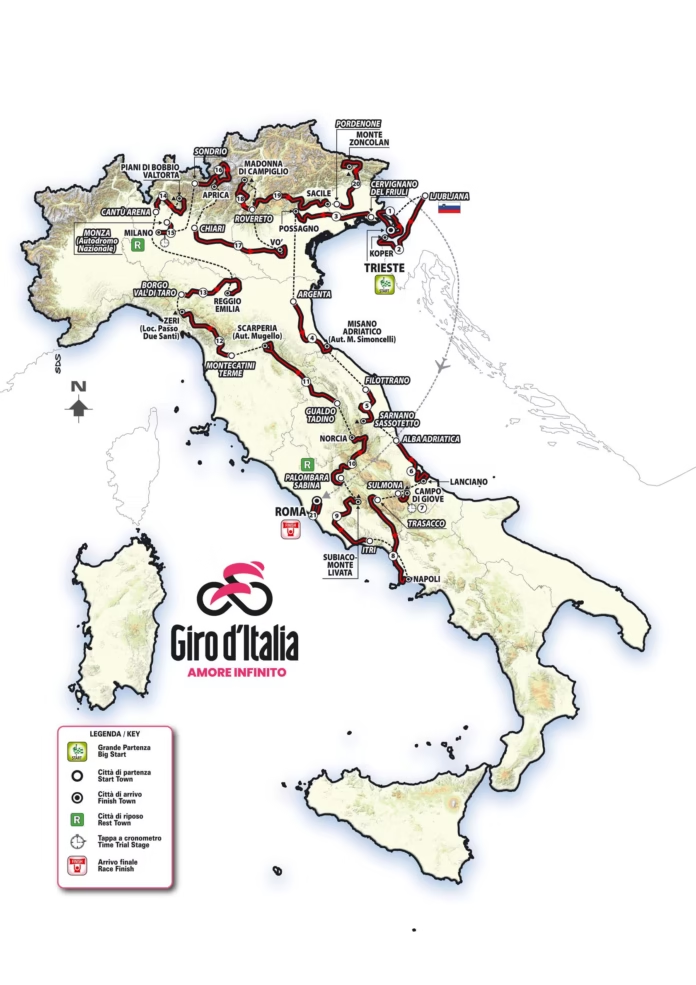
The 2027 Giro d’Italia will take the peloton from Trieste to Rome, but its identity is defined by the mountains in between. Passo Gavia, a double crossing of the Mortirolo and the return of Monte Zoncolan from the Ovaro side make the 110th edition a formidable climbing test. Across 21 stages from Saturday, 8 May to Sunday, 30 May, the riders will cover 3,418.9 kilometres and climb a combined 50,250 metres.
Unveiled in Rome on Tuesday, 3 November 2026, the route contains six stages classified for sprinters, eight hilly days, five designated mountain stages and two individual time-trials. The first week also offers climbing and an uphill test against the clock, but the most punishing sequence comes in the final seven days. The third-week stage to Aprica alone accounts for 5,700 metres of climbing.
The race starts in Italy for the first time in three years, briefly visits Slovenia, turns south as far as Naples and then heads north towards the Alps. It contains three motor racing circuits, at Misano Adriatico, Mugello and Monza, and a 37.3km individual time-trial into Milan. The organisers also pay tribute to Michele Scarponi in Filottrano, ten years after his death, and place the Cima Coppi on the Gavia and the Montagna Pantani on the Mortirolo. The official RCS Sport route presentation video provides the organiser’s overview.
Giro d’Italia 2027 stages, dates and distances
| Stage | Date | Route | Distance | Profile |
|---|---|---|---|---|
| 1 | Saturday 8 May | Trieste – Trieste | 172km | Hilly |
| 2 | Sunday 9 May | Ljubljana – Koper | 166km | Hilly |
| 3 | Monday 10 May | Cervignano del Friuli – Possagno | 163km | Hilly |
| 4 | Tuesday 11 May | Argenta – Misano Adriatico | 151km | Sprint |
| 5 | Wednesday 12 May | Filottrano – Sarnano-Sassotetto | 139km | Summit finish |
| 6 | Thursday 13 May | Alba Adriatica – Lanciano | 148km | Hilly |
| 7 | Friday 14 May | Sulmona – Campo di Giove | 19.6km | Uphill ITT |
| 8 | Saturday 15 May | Trasacco – Naples | 219km | Rolling finish |
| 9 | Sunday 16 May | Itri – Subiaco-Monte Livata | 180km | Summit finish |
| 10 | Tuesday 18 May | Palombara Sabina – Norcia | 218km | Hilly |
| 11 | Wednesday 19 May | Gualdo Tadino – Scarperia (Mugello Circuit) | 220km | Hilly / sprint chance |
| 12 | Thursday 20 May | Montecatini Terme – Zeri (Passo dei Due Santi) | 173km | Uphill finish |
| 13 | Friday 21 May | Borgo Val di Taro – Reggio Emilia | 176km | Sprint |
| 14 | Saturday 22 May | Cantù Arena – Piani di Bobbio/Valtorta | 187km | Summit finish |
| 15 | Sunday 23 May | Monza (Autodromo Nazionale) – Milan | 37.3km | Individual TT |
| 16 | Tuesday 25 May | Sondrio – Aprica | 192km | Queen stage |
| 17 | Wednesday 26 May | Chiari – Vo’ | 194km | Rolling / sprint chance |
| 18 | Thursday 27 May | Rovereto – Madonna di Campiglio | 154km | Summit finish |
| 19 | Friday 28 May | Rovereto – Sacile | 199km | Hilly / breakaway |
| 20 | Saturday 29 May | Pordenone – Monte Zoncolan | 180km | Final summit finish |
| 21 | Sunday 30 May | Rome – Rome | 131km | Sprint / finale |
Where will the 2027 Giro be decided?
The obvious centrepiece is Stage 16 from Sondrio to Aprica. The double Mortirolo, Gavia and 5,700 metres of ascent create more room for a spectacular collapse than an ordinary summit finish. It is not simply the number of metres climbed: the configuration can leave a leader isolated with major passes still to cross. A strong team is an advantage here, but a rider capable of maintaining a high tempo alone may ultimately matter more.
The time-trials offer a different opportunity. Stage 7 to Campo di Giove tests climbing power and pacing, while Stage 15 from Monza to Milan is a longer and faster course that could reward a specialist. With 56.9km against the clock, a pure climber cannot afford to think only about the steepest mountains, especially because the flatter test follows immediately after the 4,900-metre climbing day to Piani di Bobbio.
Monte Zoncolan is the final decisive opportunity, but its difficulty may not translate directly into large time gaps if the contenders arrive exhausted and separated by minutes. The earlier Sassotetto and Monte Livata summits could expose vulnerabilities, while Stage 12 to Zeri offers an unusual climb on which teams have less recent racing history. It is a route with enough variety to punish a favourite who relies on just one strength.
Week 1 – Slovenia, the Apennines and an uphill time-trial
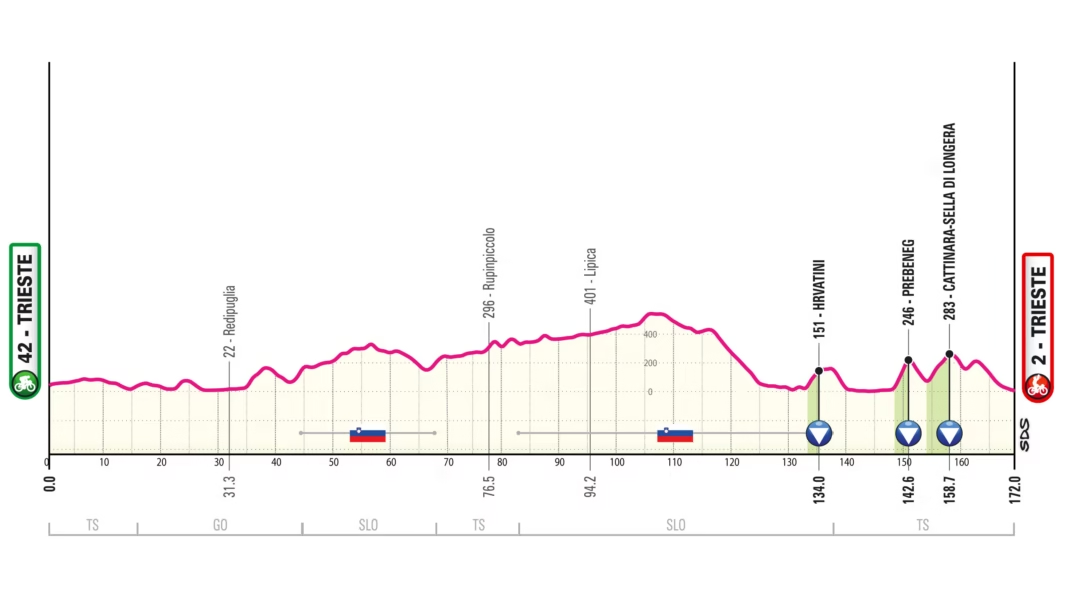
Stage 1, Saturday, 8 May – Trieste to Trieste, 172km
The Grande Partenza stays in Trieste but crosses into Slovenia before returning to the Adriatic city. Three climbs in the closing 40 kilometres make this a more complicated first day than the usual ceremonial sprint. Teams with versatile fast finishers could force a selection on the final hills; the outright sprinters may struggle to keep contact if the pace stays high. The first Maglia Rosa could therefore go to an aggressive all-rounder rather than the fastest rider on paper. The general classification contenders will be concerned primarily with positioning and avoiding a costly split on a day when every rider is still fresh.
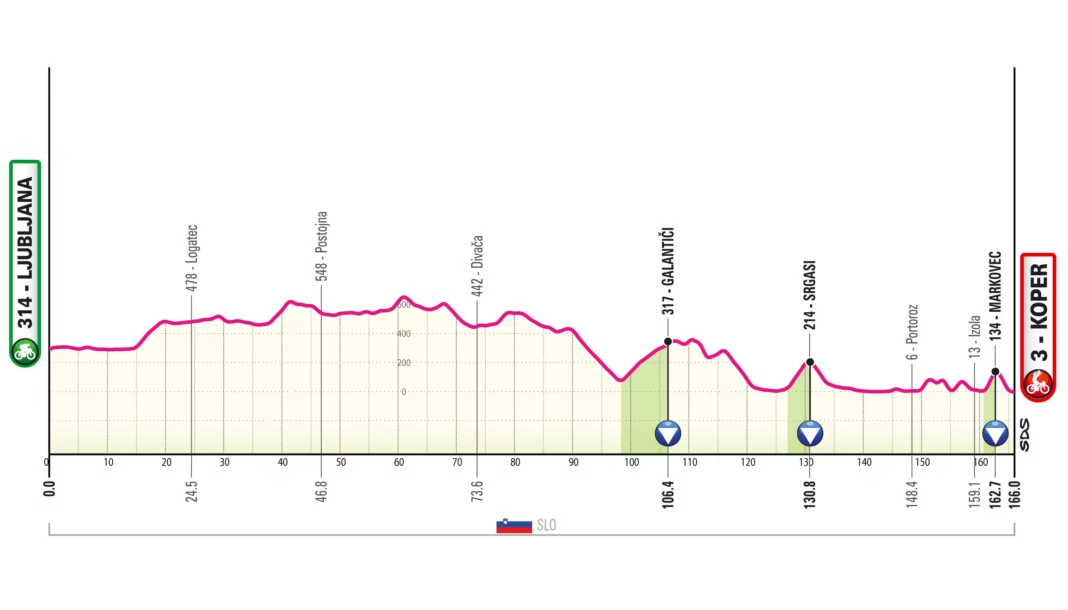
Stage 2, Sunday, 9 May – Ljubljana to Koper, 166km
The race spends its second day entirely in Slovenia, starting in Ljubljana and finishing on the Adriatic in Koper. The rolling route offers another opportunity to attackers and riders who can sprint from a reduced bunch. It also presents a difficult choice for teams interested in the points classification: use their resources to make the day easier or allow a break to take the stage while preserving their lead-out for later. With only small time gaps likely to separate the overall favourites, the positioning battle over the final rises could be more consequential than the finish itself.
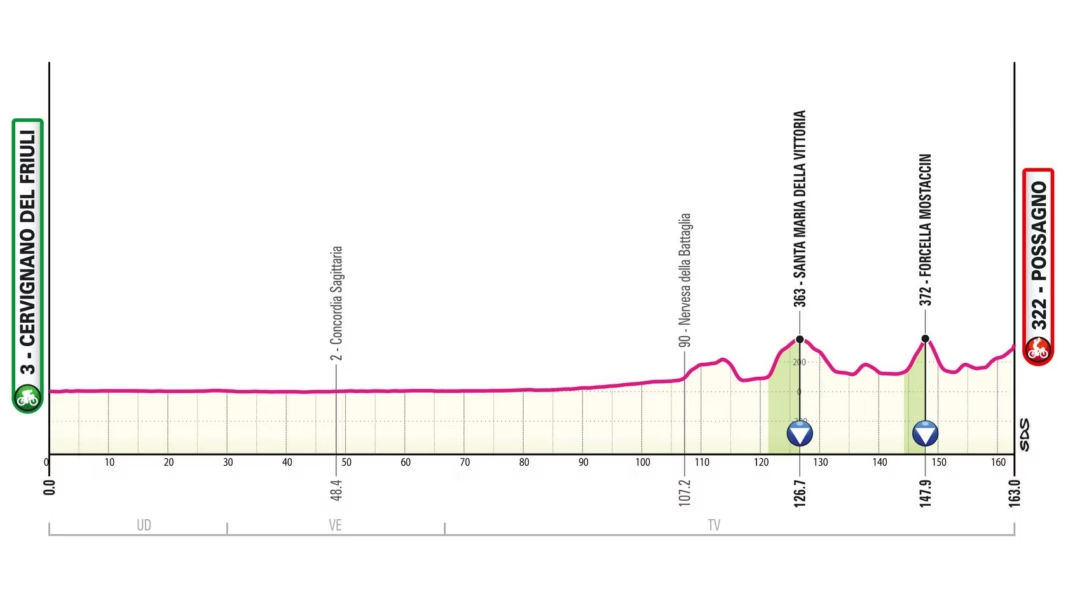
Stage 3, Monday, 10 May – Cervignano del Friuli to Possagno, 163km
The peloton returns fully to Italy for a 163km run towards Possagno. A rising finish offers the puncheurs a third successive chance to shape the race before the first genuinely flat stage. This is an important tactical feature of the opening weekend: a sprinter who loses time early may still have chances later, but a general classification rider caught out by repeated short climbs could be chasing from the first week. The final approach is likely to be contested at high speed, especially if a strong breakaway survives the earlier rolling terrain.
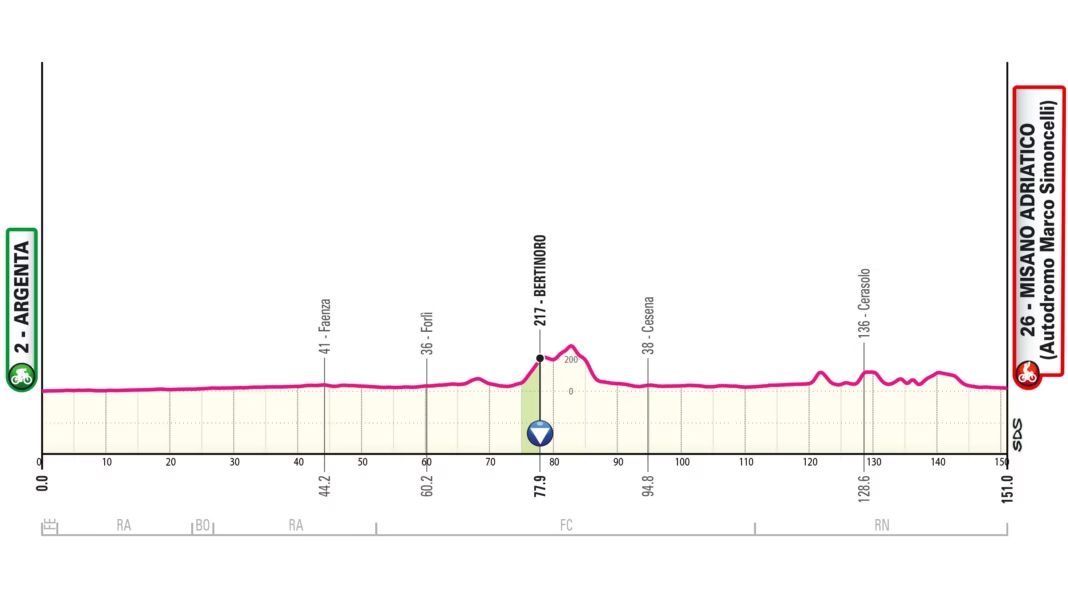
Stage 4, Tuesday, 11 May – Argenta to Misano Adriatico, 151km
The Marco Simoncelli World Circuit gives the first clear opportunity for the specialist sprinters. At 151km, the stage from Argenta should favour teams able to control a modest breakaway and arrange their lead-outs on a straightforward day. The racing circuit provides an unusual finish setting, although positioning and speed into its approach will still matter. With the first mountain-top finish scheduled immediately afterwards, general classification teams have every reason to keep a low profile and avoid unnecessary risks in the closing kilometres.
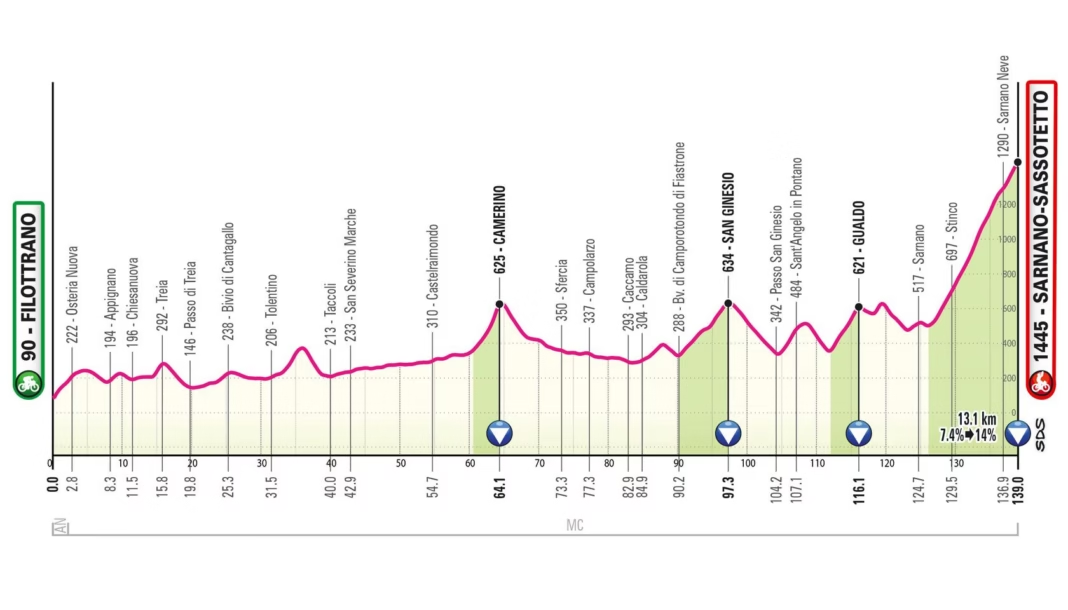
Stage 5, Wednesday, 12 May – Filottrano to Sarnano-Sassotetto, 139km
The first serious examination of the climbers begins in Filottrano, the hometown of Michele Scarponi, ten years after his death. At 139km with around 3,300 metres of climbing, the stage is short enough to encourage a fast start yet demanding enough to expose weakness. The finishing climb to Sarnano-Sassotetto is approximately 13km at 7.4 per cent, giving the favourites sustained gradients on which to test one another. A few seconds here will not decide the Giro, but a rider who cannot follow on Sassotetto will have to explain why the situation is likely to improve on the Mortirolo or Zoncolan.
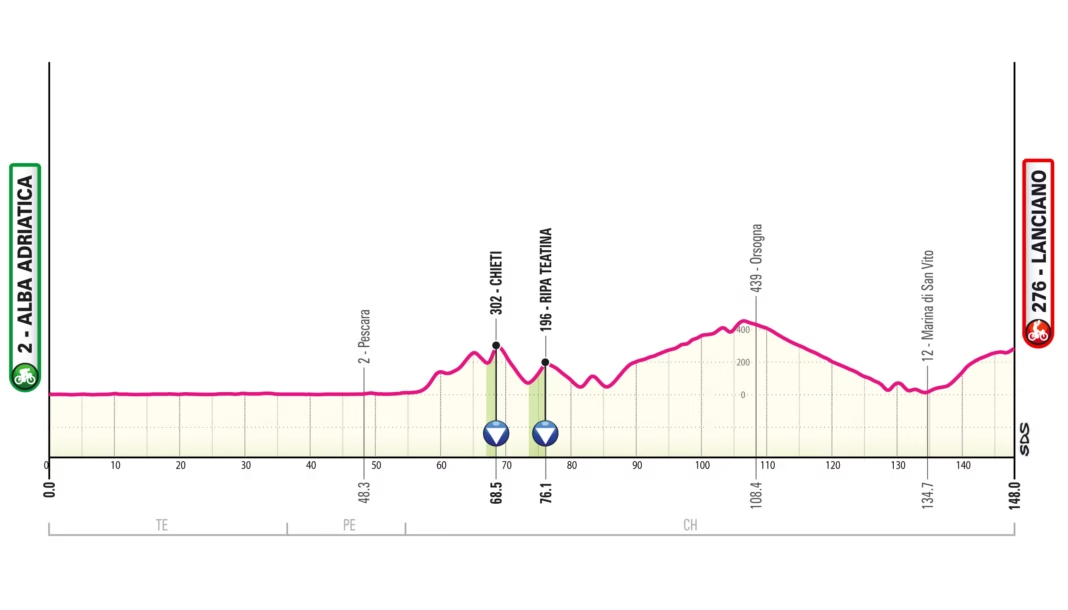
Stage 6, Thursday, 13 May – Alba Adriatica to Lanciano, 148km
From Alba Adriatica to Lanciano, the Giro follows the Adriatic region over an undulating 148km. The profile is more inviting to a breakaway or a rider with an uphill sprint than to a conventional lead-out train. After the effort to Sassotetto, the general classification teams may be happy to let the stage win go elsewhere, provided they do not give too much freedom to anyone still close on time. The key for their leaders will be reaching the first individual time-trial without avoidable losses or fatigue.
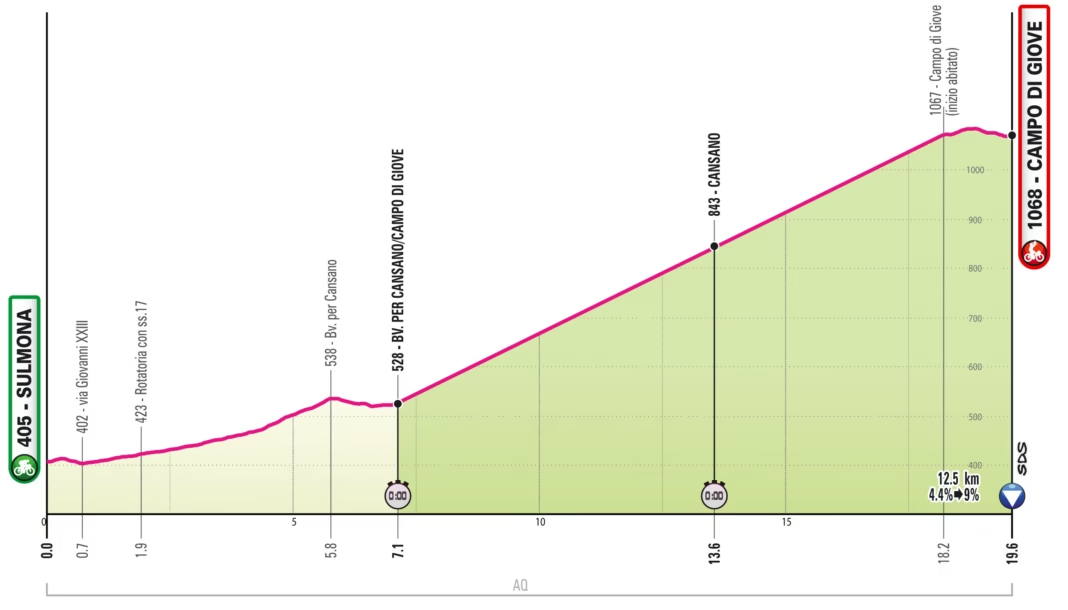
Stage 7, Friday, 14 May – Sulmona to Campo di Giove, 19.6km
The first race against the clock is only 19.6km but the time-trial finishes uphill at Campo di Giove. The climbing portion runs for roughly 12.5km at an average of around 4.4 per cent. Those gradients are not as extreme as the Monte Lussari climb on which Primož Roglič overturned the 2023 Giro, but they are sustained enough to make pacing and equipment choices particularly important. Riders who gain time through aerodynamics on the approach will have to preserve enough power for the climb. Unlike a road stage, no teammate can restore the damage once the clock begins to run.
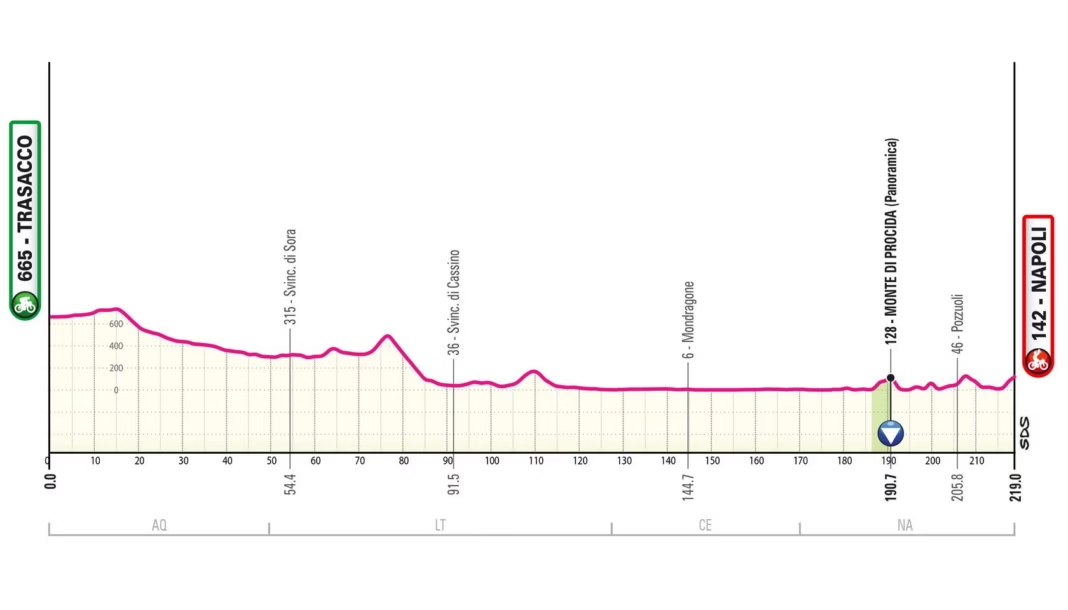
Stage 8, Saturday, 15 May – Trasacco to Naples, 219km
Naples hosts a stage finish for the sixth consecutive year, but the 219km route from Trasacco is not necessarily a guaranteed bunch sprint. Short climbs on the approach create opportunities for late attacks, especially if the longer distance has reduced the ability of sprint teams to keep control. Those final accelerations can also make a lead-out harder to organise. The stage is likely to be decided by how much assistance the sprinters have left after several hours in the saddle, rather than by raw speed alone.
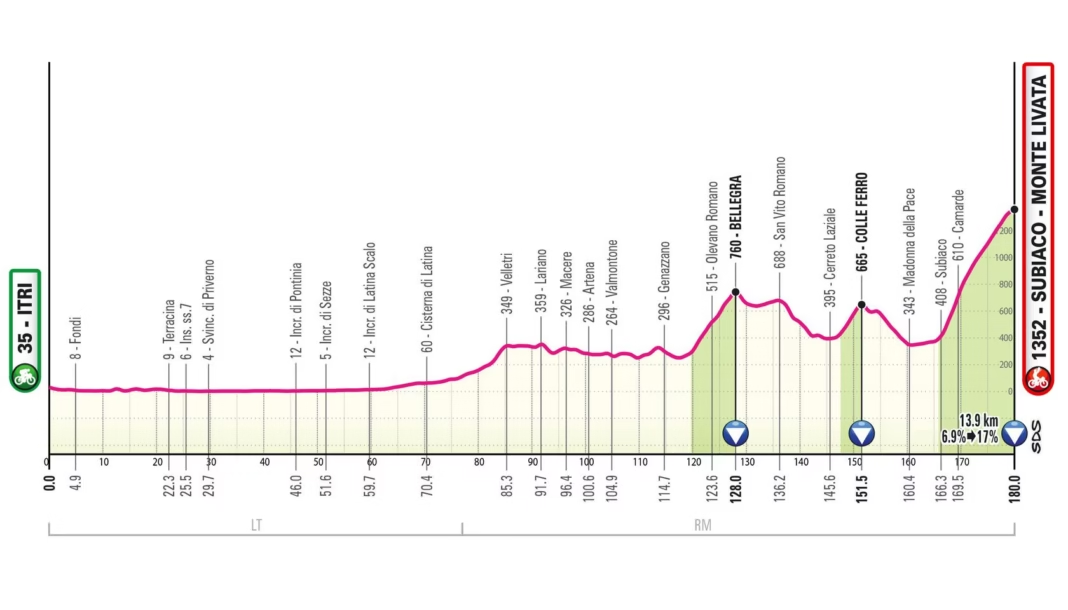
Stage 9, Sunday, 16 May – Itri to Subiaco-Monte Livata, 180km
The first week ends with a long climb to Monte Livata after 180km from Itri. The finishing ascent is around 13.9km at 6.9 per cent, with its steepest gradients concentrated towards the beginning. That shape can encourage an attack well before the final kilometre: a rider who opens a gap on the hardest ramps may be able to defend it over the less severe upper slopes. Monte Livata also connects this Giro to the next generation, having featured in the 2026 Giro Next Gen when Lorenzo Finn won alone. For the general classification, this is the second summit test before the first rest day.
Week 2 – Long stages, Piani di Bobbio and Monza
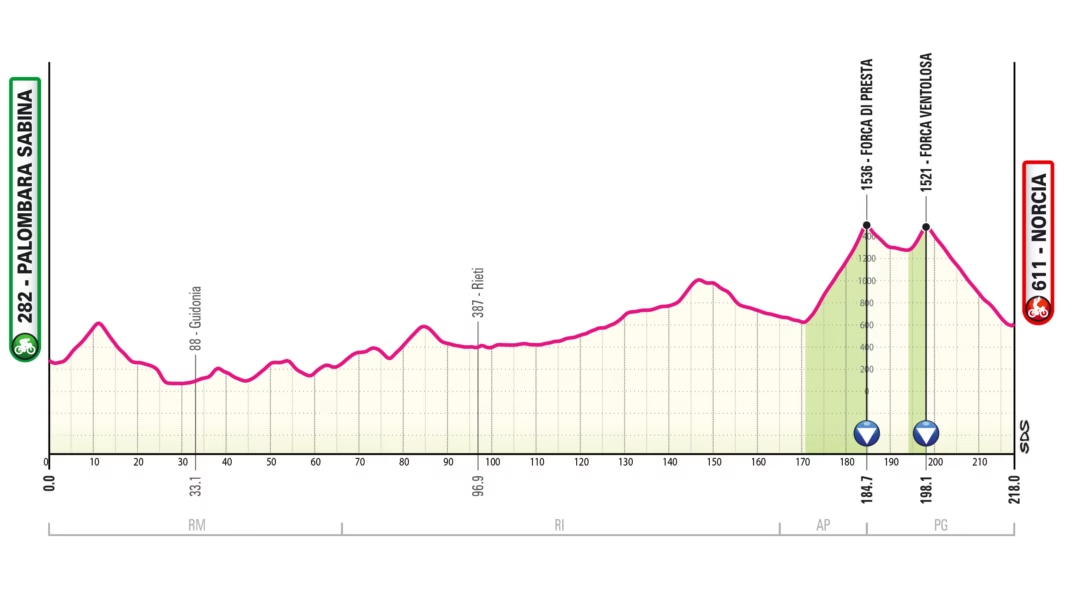
Stage 10, Tuesday, 18 May – Palombara Sabina to Norcia, 218km
After Monday’s rest day, the riders restart with 218km from Palombara Sabina to Norcia and about 3,600 metres of climbing. It is precisely the sort of stage that can be underestimated because it does not conclude on a famous Alpine summit. Repeated climbs and descents will make it difficult for a reduced team to control the race, particularly if the strongest breakaway riders sense an opportunity. A general classification leader with no teammates left in the final hour could be more vulnerable here than on a predictable uphill finish.
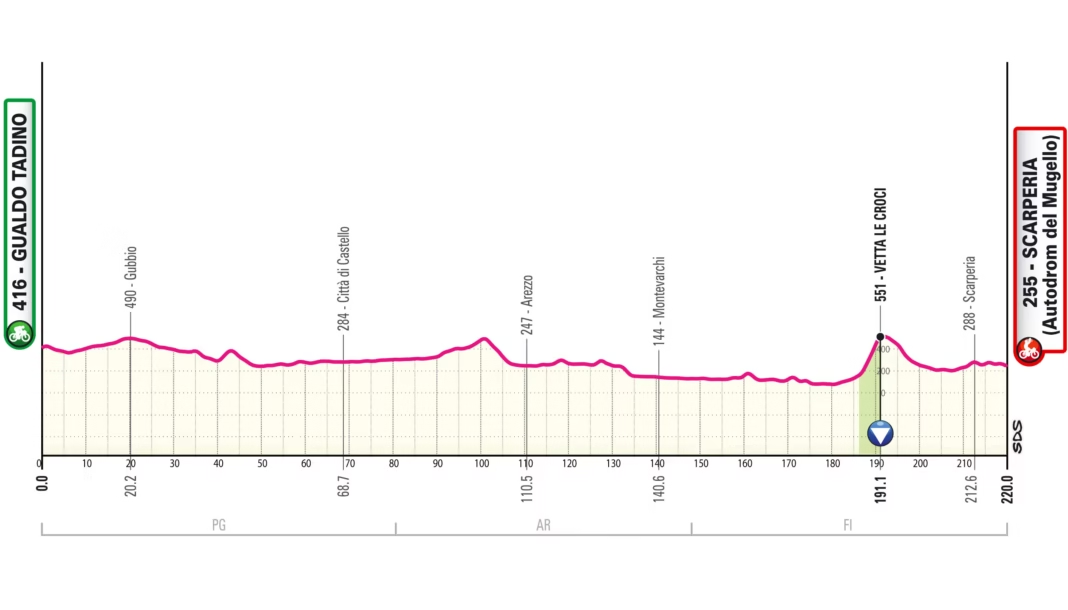
Stage 11, Wednesday, 19 May – Gualdo Tadino to Scarperia (Mugello Circuit), 220km
The longest stage of the race travels 220km from Gualdo Tadino to Scarperia, with the finishing arrangements using the Mugello motor racing circuit. The final kilometres could favour a sprint, but the distance makes it a more demanding assignment than the flat stage to Misano. Teams chasing a stage victory will need to measure how much energy they spend in the opening hours. For the favourites, this is another long day in a sequence that offers little opportunity for full recovery before the next mountain stage.
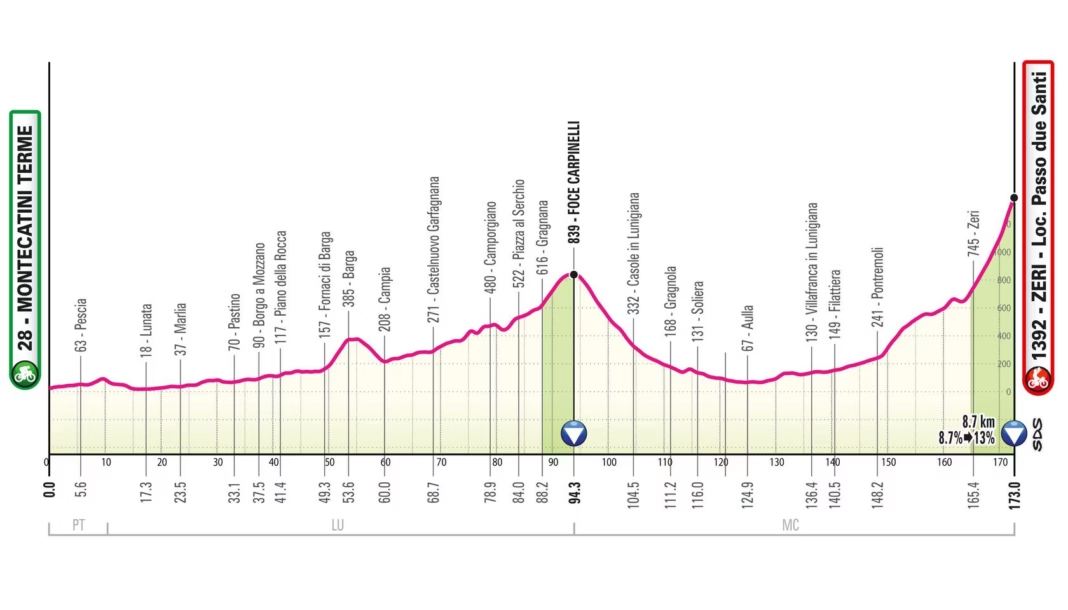
Stage 12, Thursday, 20 May – Montecatini Terme to Zeri (Passo dei Due Santi), 173km
The Tappa Bartali stays entirely within Tuscany, covering 173km from Montecatini Terme to the unfamiliar uphill finish at Zeri via Passo dei Due Santi. Its novelty makes this a difficult stage to script. Unlike the established Alpine climbs, where teams have decades of racing history to draw upon, the slopes here will demand careful reconnaissance and judgement of when to attack. A strong breakaway could contest the win if the favourites are satisfied to conserve energy, but the final climb is also an opportunity for an ambitious overall contender to make a move that rivals have not anticipated.
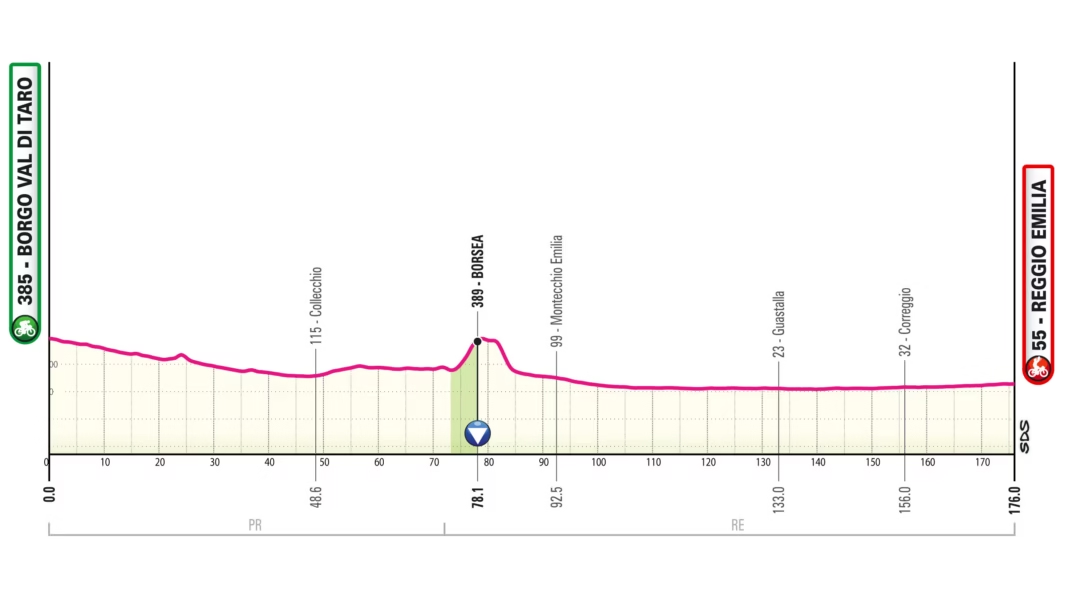
Stage 13, Friday, 21 May – Borgo Val di Taro to Reggio Emilia, 176km
The 176km journey to Reggio Emilia offers a welcome return to easier ground. This is one of the clearest chances for sprinters who have survived the first twelve stages, and their teams will be under pressure to prevent a large group of escapees taking the day. The overall favourites have a more pressing objective: arrive with no crashes, punctures or time losses before a mountainous weekend that can change the standings significantly. It may look like a transitional stage on the map, but conserving resources here will have value two days later.
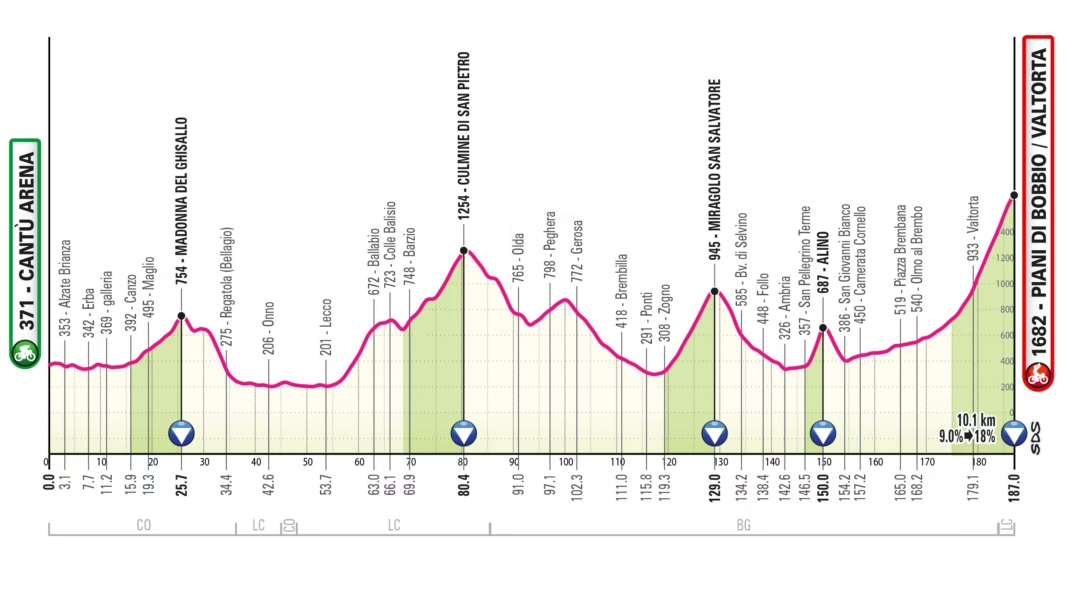
Stage 14, Saturday, 22 May – Cantù Arena to Piani di Bobbio/Valtorta, 187km
Saturday brings the largest elevation total of the first two weeks: 4,900 metres of climbing across 187km. The sequence of Ghisallo, Culmine di San Pietro, Miragolo San Salvatore and Alino comes before the finish at Piani di Bobbio/Valtorta. The danger is cumulative rather than limited to one explosive attack. Riders may reach the final ascent already isolated, meaning the strongest teams could decide the shape of the race long before the last climb. With the 37.3km time-trial the following day, there is also a strategic trade-off between spending everything to gain seconds now and protecting enough energy to defend those gains against the clock.
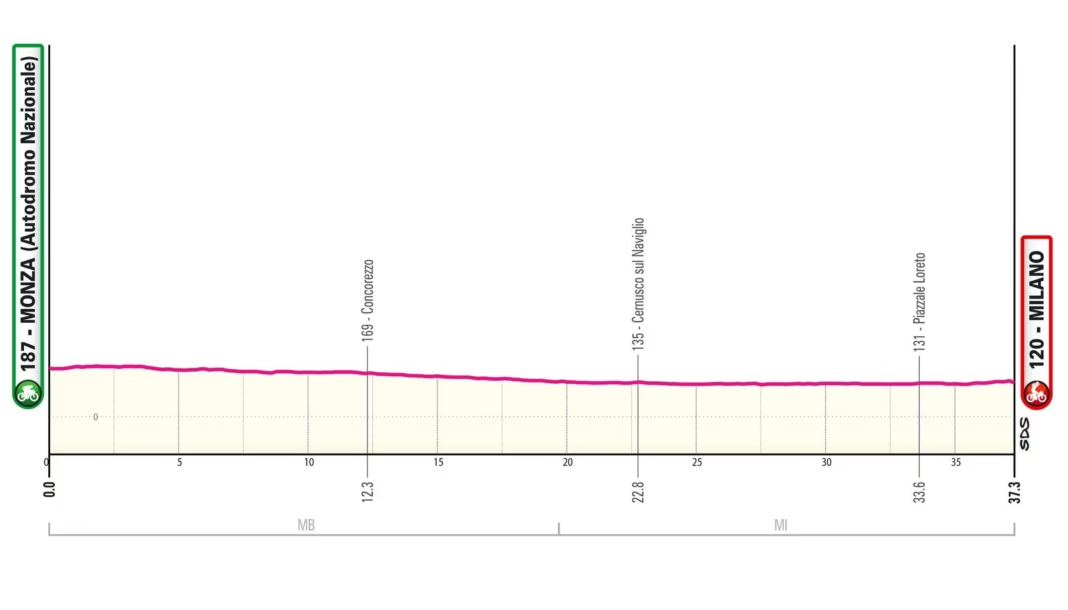
Stage 15, Sunday, 23 May – Monza (Autodromo Nazionale) to Milan, 37.3km
The second individual time-trial starts inside the Autodromo Nazionale at Monza and finishes in Milan. At 37.3km, it is long enough for a specialist to establish a material gap over a pure climber and makes the weekend a fascinating two-day test of different qualities. Teams with a time-trial strong leader may accept modest losses in the mountains to reach Monza in a position to recover them. The opposite applies to riders whose advantage comes on steep gradients: they need to bank time on Piani di Bobbio before defending it on faster roads. Filippo Ganna won Giro time-trials finishing in Milan in both 2020 and 2021, illustrating how this stage suits riders capable of maintaining very high power on relatively fast roads. Combined with Stage 7, the 2027 Giro contains 56.9km of individual time-trialling.
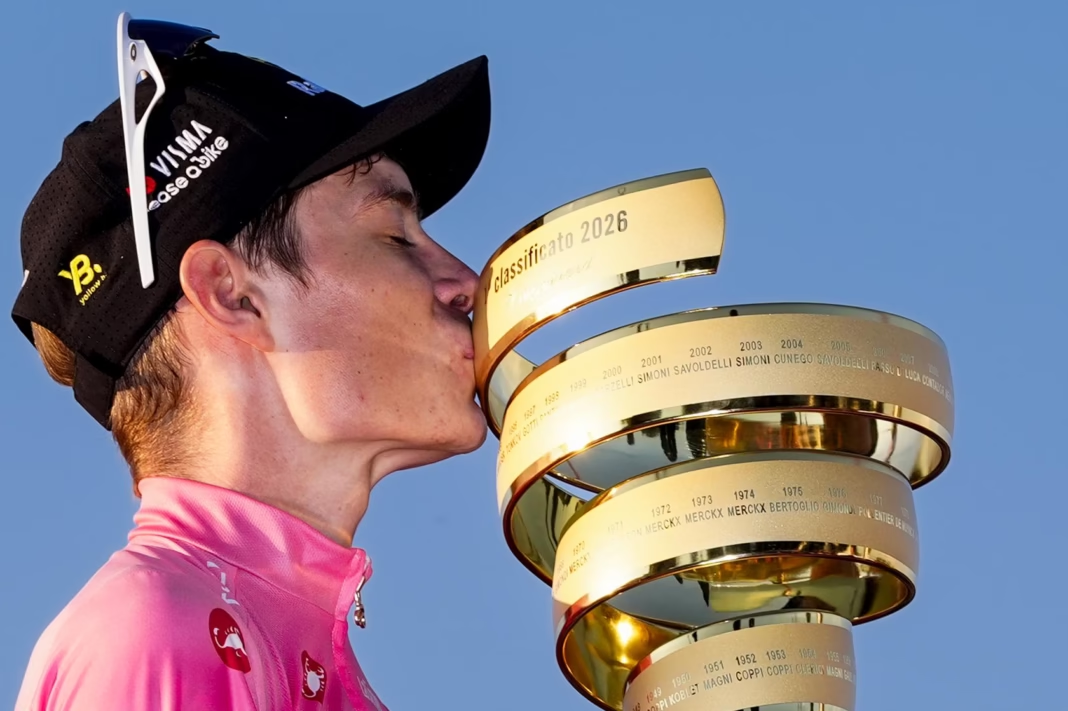 Photo Credit: RCS
Week 3 – The double Mortirolo, Gavia and Zoncolan
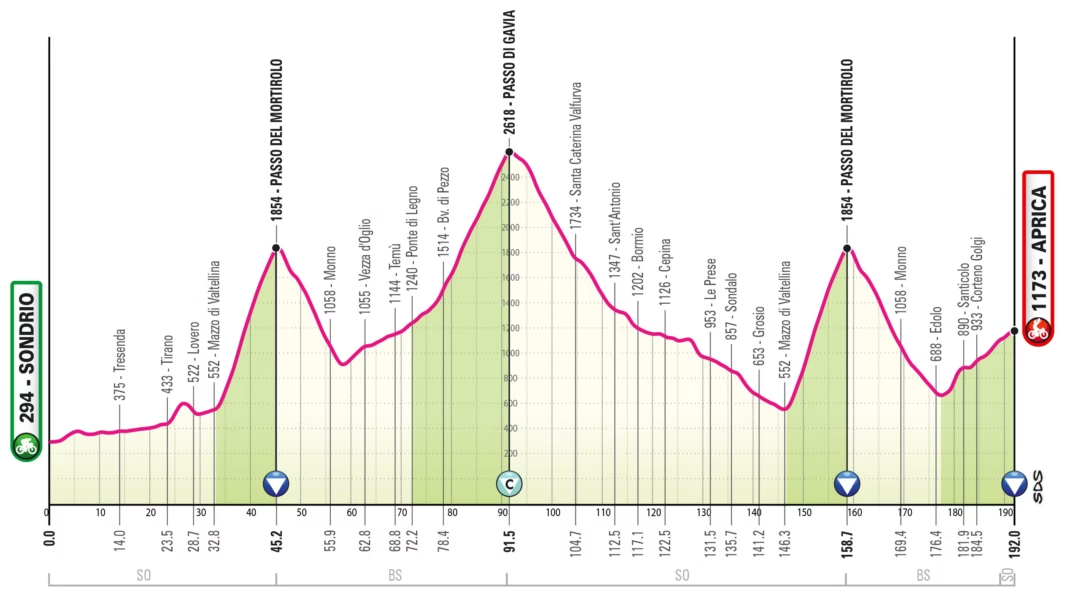
Stage 16, Tuesday, 25 May – Sondrio to Aprica, 192km
The third week begins with perhaps the most intimidating profile of the entire Giro: 192km and 5,700 metres of climbing from Sondrio to Aprica. The organisers have paired two ascents of the Mortirolo, the Montagna Pantani, with the Passo Gavia, the Cima Coppi. The Gavia’s altitude adds another difficulty, particularly after a rest day when the peloton must immediately rediscover race intensity. There are multiple points at which the general classification race could break apart, rather than one obvious place to launch a final attack.
The central tactical question is whether a team can maintain numbers across the first Mortirolo and Gavia, then still have riders capable of setting a high pace on the second Mortirolo. A favourite who has been dropped may have almost no chance to organise an effective pursuit across the remaining mountains. Equally, an attack too early risks leaving a rider alone against stronger teams on the roads to Aprica. This is the Giro at its least predictable, with altitude, fatigue, descending and team depth all likely to matter as much as the finishing climb.
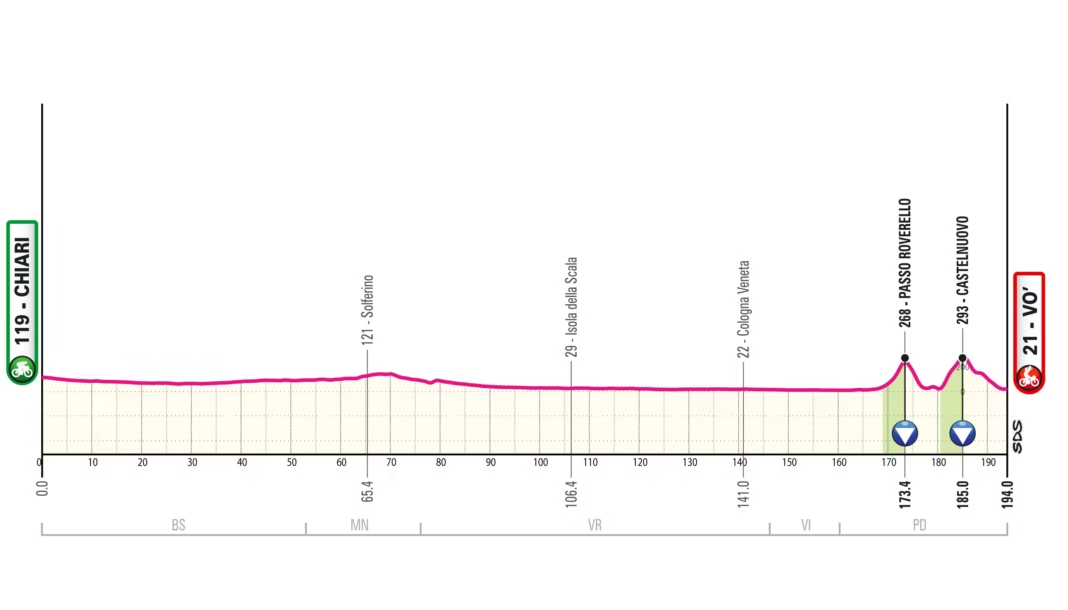
Stage 17, Wednesday, 26 May – Chiari to Vo’, 194km
The 194km stage from Chiari to Vo’ appears to offer the remaining sprinters another opportunity, although a rolling route after the Aprica marathon may be difficult to control. Breakaway specialists will be alert to the tiredness of the teams expected to chase. For riders contesting the general classification, the immediate challenge will be recovery after two ascents of the Mortirolo and the Gavia. If the first two weeks have already reduced squads to a handful of healthy domestiques, even a relatively ordinary transition day could demand attention.
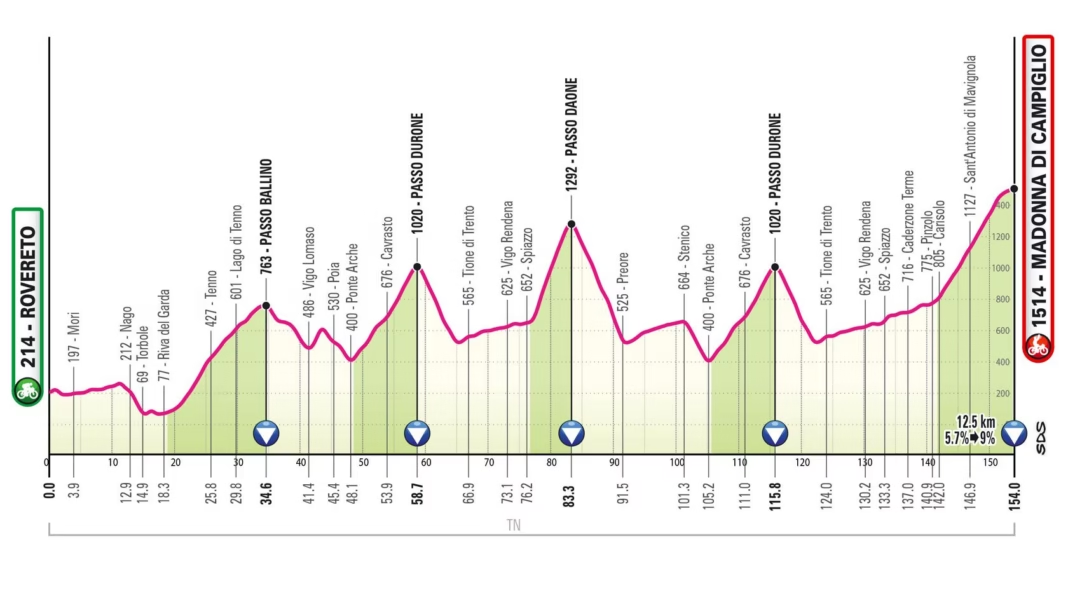
Stage 18, Thursday, 27 May – Rovereto to Madonna di Campiglio, 154km
The final mountain block continues from Rovereto to Madonna di Campiglio, a summit finish after 154km. Its position is key. Any rider who lost significant time on Stage 16 may have to attack here rather than leave everything to Zoncolan, while the leader’s team will want to control the tempo and keep the strongest challengers from turning the stage into a long-range raid. The climb also introduces a different kind of mountain racing from the brutally steep Mortirolo: gradients and duration can reward sustained high power, making it a test of recovery as much as pure climbing form.
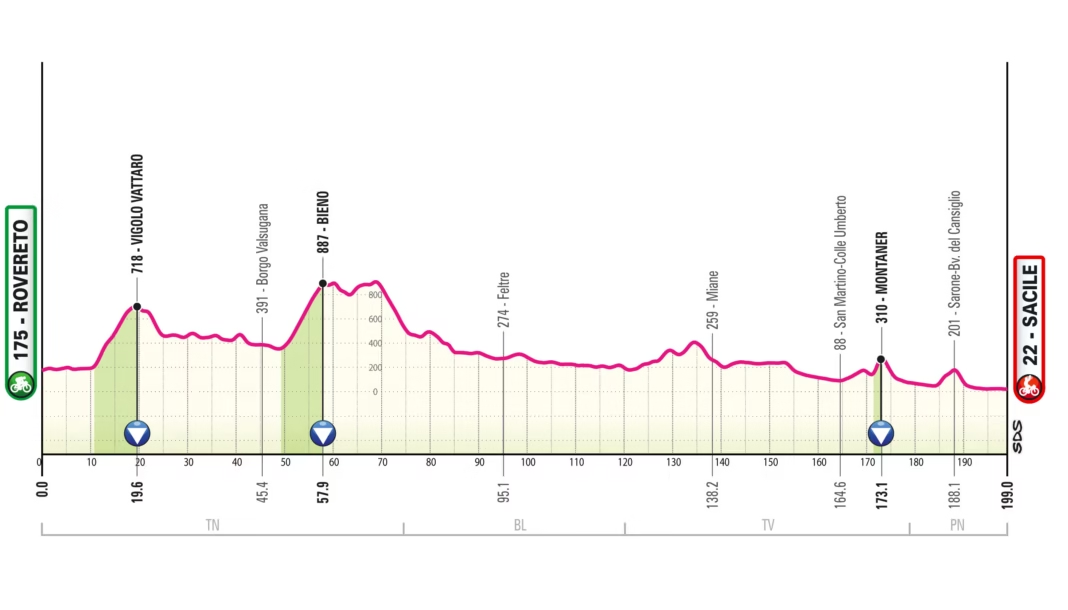
Stage 19, Friday, 28 May – Rovereto to Sacile, 199km
The final transition before Zoncolan covers 199km with around 3,000 metres of climbing, from Rovereto to Sacile. Despite its place between two summit finishes, this is no easy flat day. A breakaway is an obvious possibility as stage hunters pursue one of their last chances and general classification teams try to protect their leaders. Crucially, an ambitious contender could also use the terrain to test a rival’s weakened team, perhaps forcing an effort that will be felt on the Ovaro slopes the following afternoon. A quiet stage is possible, but it should not be assumed.
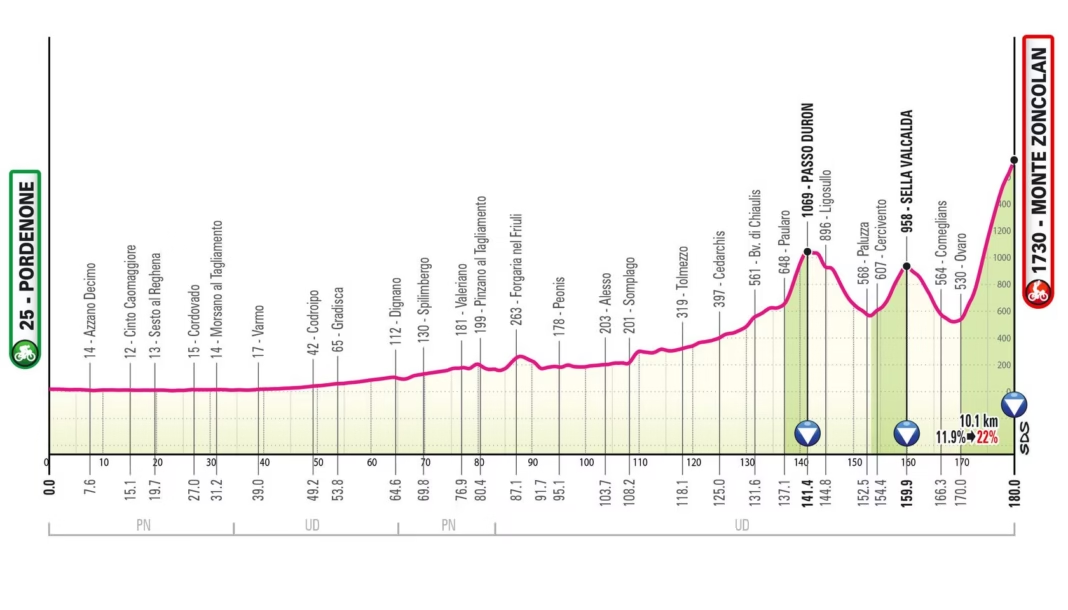
Stage 20, Saturday, 29 May – Pordenone to Monte Zoncolan, 180km
Six years after its previous Giro appearance, Monte Zoncolan returns for the final mountain stage of 2027, tackled from Ovaro. The climb is roughly 10km long, averaging close to 12 per cent, with sections significantly steeper. It is a finishing ascent on which drafting offers limited protection and teammates can disappear quickly as the gradients rise. By this stage, most of the general classification will already have been shaped by the time-trials, Aprica and Madonna di Campiglio. Zoncolan offers one last opportunity to change it with a sustained, brutally steep effort.
Chris Froome won on the Ovaro ascent in 2018, while Lorenzo Fortunato’s 2021 victory came from the Sutrio side. The route’s history explains its reputation, but its 2027 significance will depend on the size of the gaps before the start in Pordenone. If the leading riders are separated by seconds, the final kilometres could settle the Giro. If the gaps are measured in minutes, the challenge becomes finding a team willing to sacrifice its remaining riders for a last attack on the podium.
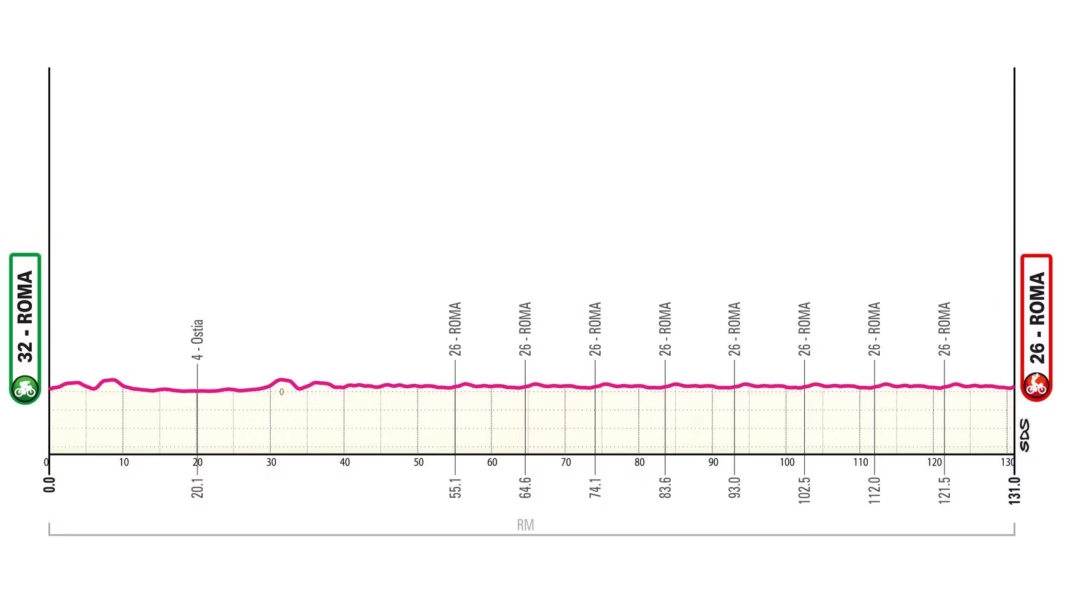
Stage 21, Sunday, 30 May – Rome to Rome, 131km
The Giro finishes with its now-familiar circuit in Rome after 131km. For the general classification leader, the most difficult work should be complete on Monte Zoncolan, leaving a final day to protect the pink jersey and celebrate on the streets of the capital. The stage win will be one of the last major sprint opportunities and could also decide a closely contested points classification. RCS Sport says this will be the fifth consecutive Giro finish in Rome, with the Trofeo Senza Fine presented once again in the Italian capital.
The Giro’s historic climbs return to the centre of the race
The 2027 route gives three of Italy’s most famous climbs distinct jobs. The Gavia is the highest point of the race and adds altitude and weather uncertainty. The Mortirolo, climbed twice, provides the repeatedly steep gradients that can break a leader’s support. Zoncolan is the last mountain finish, where even small gaps are difficult to close once a rider has cracked. For a closer look at two of these roads beyond the race, see our guide to riding the Gavia and Mortirolo from Bormio.
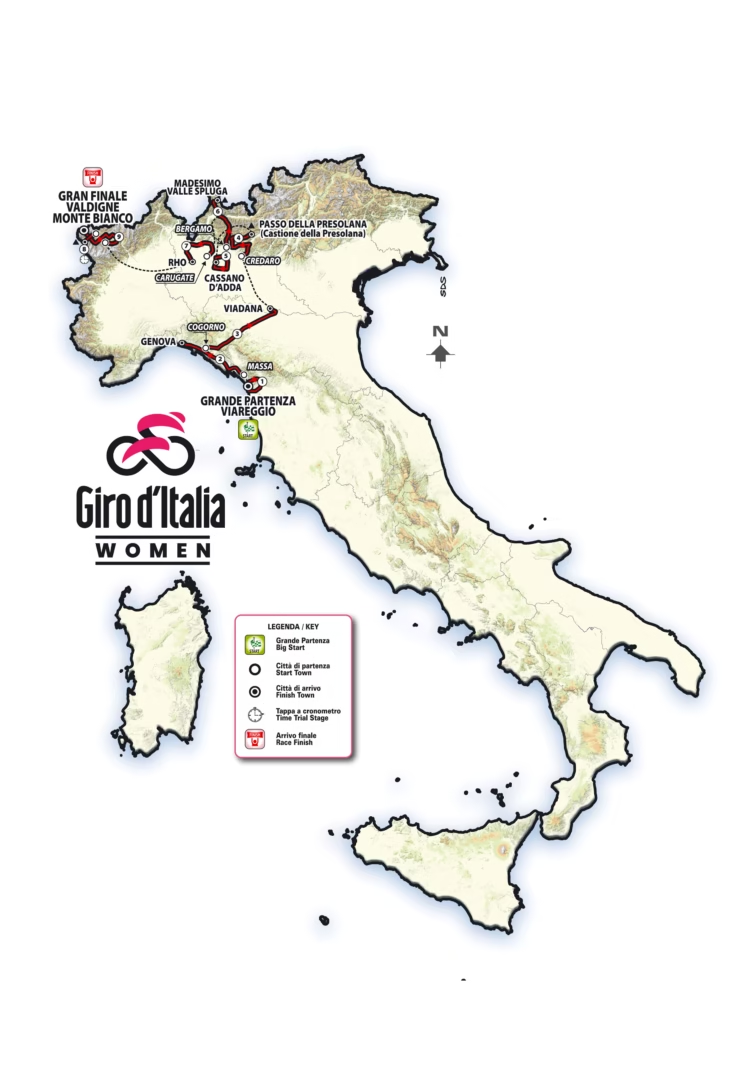
There is history away from the mountains as well: Scarponi’s hometown hosts the start of Stage 5, the Monza time-trial recalls the Giro’s long relationship with Milan, and Rome provides the familiar backdrop for the final trophy ceremony. The 2027 edition also forms part of a much longer race tradition, explored in our history of the men’s Giro d’Italia. The separately announced 2027 Giro d’Italia Women route also includes an uphill time-trial and a demanding final mountain stage, although that race begins the day before the men’s finish.