
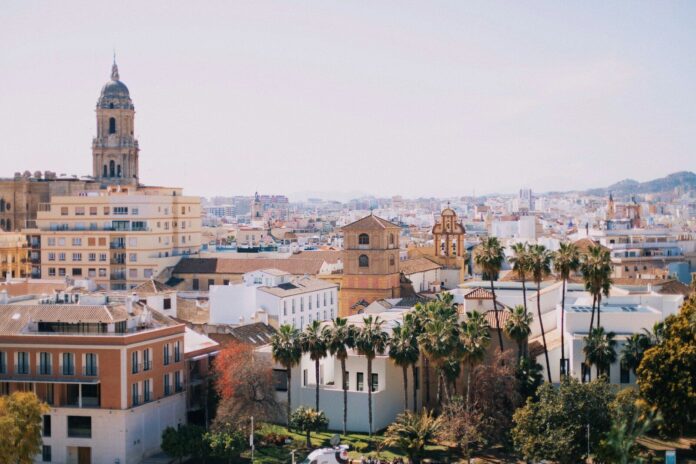
The Costa del Sol has most of the ingredients required to become one of Europe’s obvious winter cycling destinations, yet it still sits slightly outside the familiar shortlist dominated by Mallorca, Girona, Calpe and the Canary Islands.
That deserves to change. The coastline around Málaga and Marbella provides a warm Mediterranean base with substantial mountains beginning almost immediately behind the developed coastal strip. From Málaga, riders can leave the city and climb directly into the Montes de Málaga. Stay around Marbella and the Sierra Blanca rises behind the resorts, opening routes towards Istán, Ojén, Monda and eventually the much larger mountain roads towards Ronda and the Sierra de las Nieves.
The important geography therefore runs away from the sea rather than alongside it. The coast is where you stay, eat and recover. The best road cycling generally begins when you point the bike inland and start climbing.
For anyone planning a broader Spanish cycling trip, the area fits naturally alongside the destinations in ProCyclingUK’s Cycling in Spain guide, but Málaga and Marbella offer a different balance from the country’s established training bases.
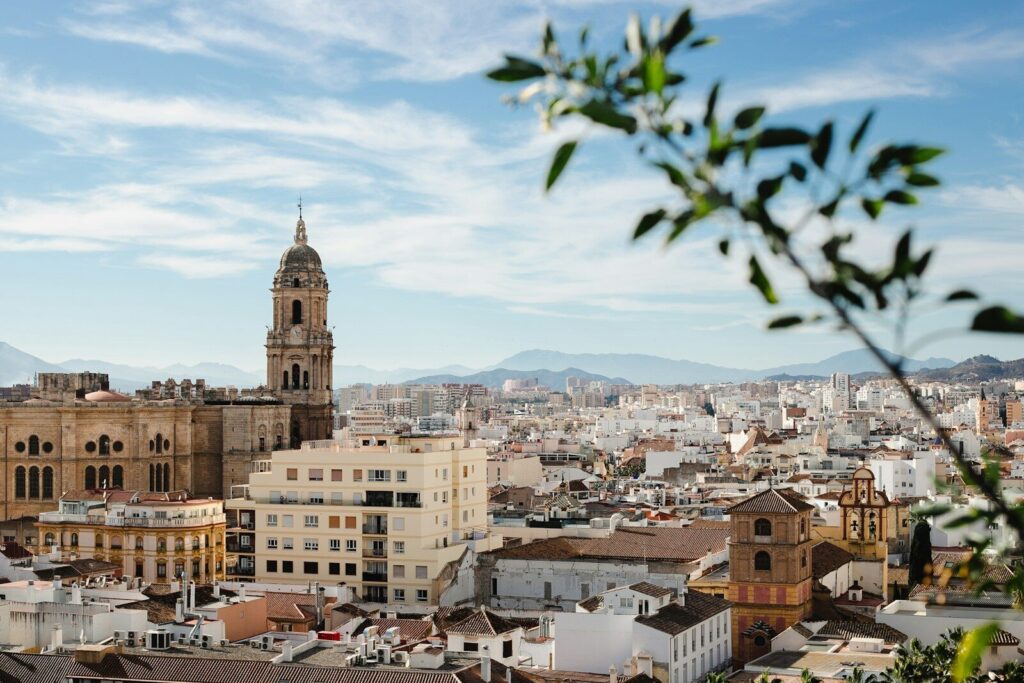
Málaga or Marbella: which is the better cycling base?
Both work well, but they suit slightly different trips.
| Base | Best for | Main advantage |
|---|---|---|
| Málaga | City break plus serious riding | Montes de Málaga begin almost from the city |
| Marbella | Cycling-focused holiday | Several mountain directions directly inland |
| Málaga | Short trip without a hire car | Airport, city and bike hire are close together |
| Marbella | Longer endurance and climbing rides | Istán, Ojén, Monda and Ronda routes |
| Málaga | Repeated climbing | Puerto del León and different Montes loops |
| Marbella | A full training week | Greater variety without changing base |
Málaga is probably the stronger choice for a short city and cycling break. You can stay centrally, enjoy the city in the evening and still begin a substantial mountain climb shortly after leaving the hotel.
Marbella has the edge if cycling is the main reason for travelling. Several different mountain corridors open almost directly behind the coast, which makes it easier to build five or six days of riding without repeatedly using the same roads.
Neither requires an hour of flat riding before the terrain becomes interesting. That is one of the Costa del Sol’s greatest strengths.
Puerto del León is the classic Málaga climb
If you stay in Málaga, Puerto del León is the obvious first serious ride.
The classic ascent heads from the northern side of the city towards the Montes de Málaga and Fuente de la Reina. Depending on exactly where the climb is measured, the main ascent is roughly 16km at around 5%, gaining close to 800 metres before reaching the higher ground above Málaga.
Those numbers make it a particularly good holiday climb. It is long enough to feel substantial without relying on severe gradients, so riders can approach it as either a controlled endurance ascent or a sustained training effort. The road gradually leaves the urban area behind and winds into the pine-covered Montes de Málaga, with views back towards the city and Mediterranean appearing as altitude accumulates.
The transformation is remarkably quick. You can begin among apartment blocks and city traffic, then find yourself riding through mountain scenery before the climb has really settled into its rhythm.
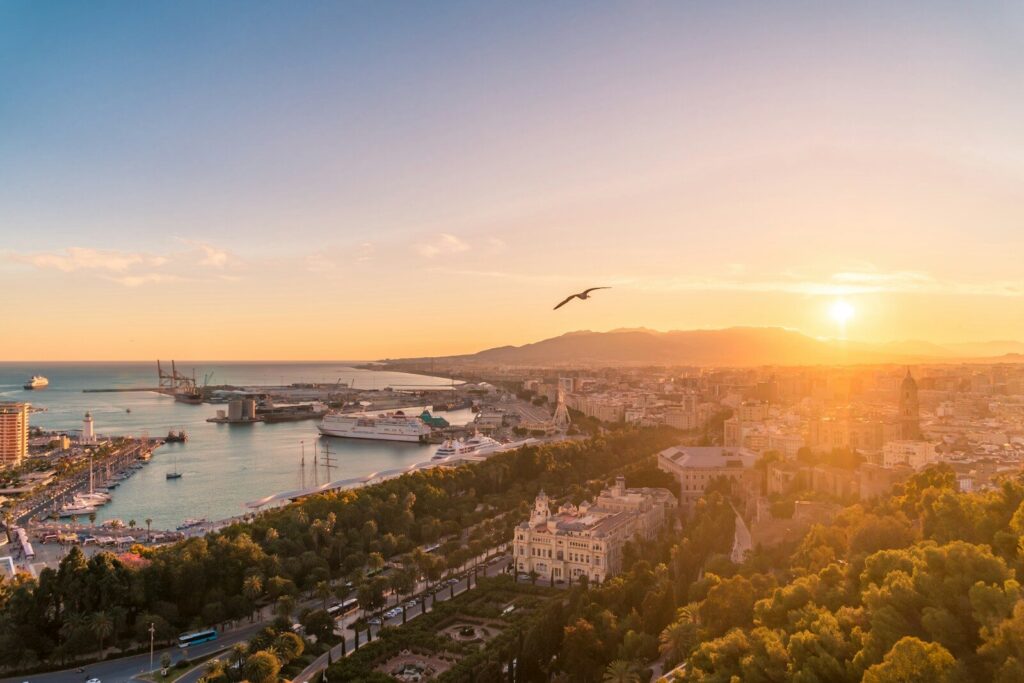
Puerto del León is better than the gradient suggests
A climb averaging around 5% is unlikely to intimidate anyone who regularly rides mountains, but that is part of Puerto del León’s appeal. It is a climb you can actually ride rather than merely survive.
There are steeper sections, but the dominant experience is sustained climbing on a gradient that rewards rhythm. A strong rider can turn it into an hour-long threshold effort, while someone riding more conservatively can settle into a comfortable gear, enjoy the views and use the summit as the turning point or beginning of a longer route.
It is also the sort of climb that works repeatedly during the same trip. One day can be ridden hard from the bottom, another can form part of a longer endurance loop, and a third can approach the same high ground using a different road.
That repeatability matters on a cycling holiday. One famous climb is useful. A mountain area that can be ridden several ways is much better.
The Montes de Málaga offer far more than one ascent
Puerto del León is the headline climb, but the Montes de Málaga are what make Málaga a genuine cycling base rather than somewhere with one good road.
Riders can continue over the higher ground and build loops using roads around Olías and the surrounding hills rather than simply descending the way they came. Even relatively compact routes can accumulate more than 1,000 metres of climbing because the mountains rise so quickly from the city.
That gives Málaga unusual efficiency as a cycling destination. There is little wasted distance between accommodation and the terrain you came to ride. A morning can contain a substantial climb, quiet mountain roads and a long descent before you return to the Mediterranean for lunch.
For riders who want the same combination on a much larger scale, ProCyclingUK’s guide to cycling in Sierra Nevada and Granada shows how Andalucía’s mountains continue further east into genuinely high-altitude territory.
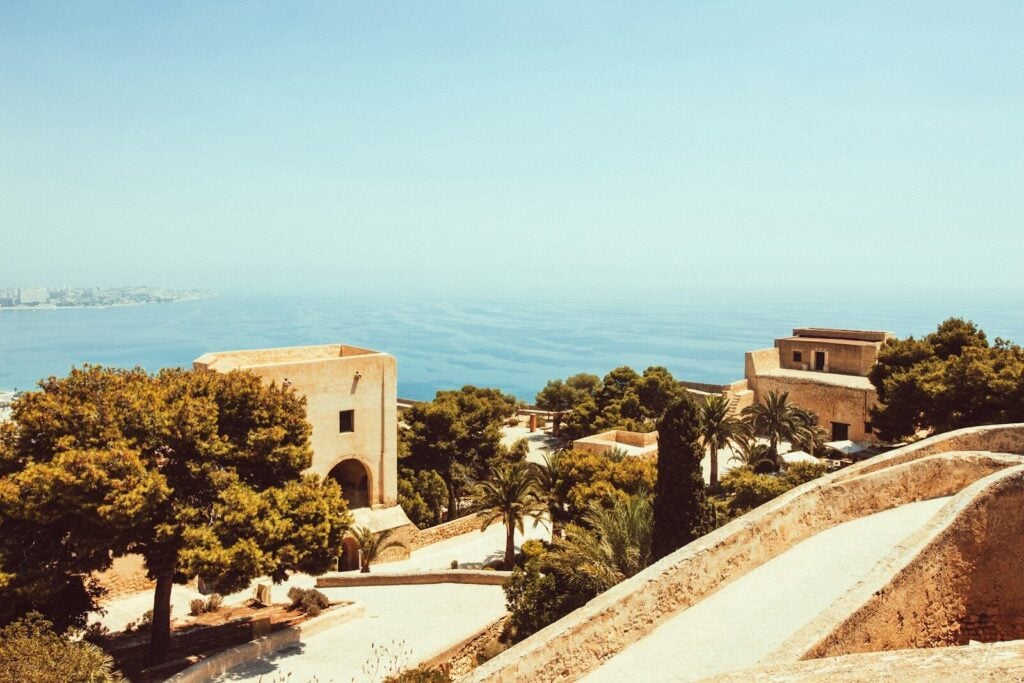
Málaga works particularly well as a cycling city break
The practical advantage of Málaga is that cycling does not need to dominate every part of the holiday.
You have a proper city after the ride, with the historic centre, waterfront, restaurants and bars all providing something to do when the bike has been put away. That makes it far easier to combine a serious morning ride with a trip where not everybody travelling is interested in accumulating 1,500 metres of climbing before lunch.
It also works well for a shorter escape from Britain. Málaga airport is close to the city, road-bike hire is readily available and the mountains can be reached directly from the urban area. There is no requirement to rent a car and spend an hour transferring to a specialist cycling resort before the trip can begin.
For three or four days in winter or early spring, that simplicity is a significant advantage.
Marbella changes the scale of the riding
Move west along the Costa del Sol and Marbella offers a different version of the same idea.
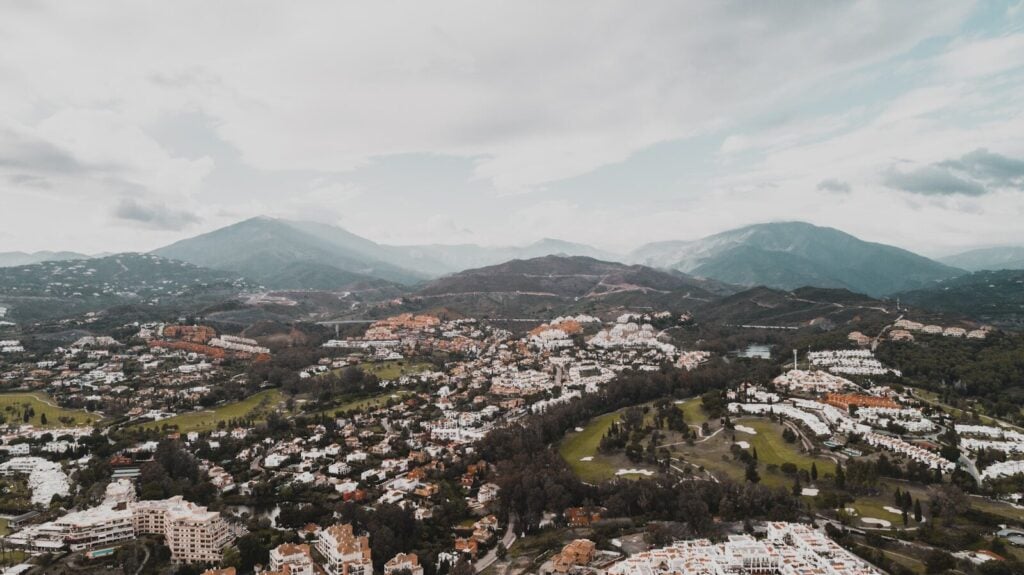
The Sierra Blanca rises immediately behind the town, creating several possible routes almost as soon as you leave the developed coastline. Ojén sits inland to the north-east, Istán lies north-west and roads further into the mountains connect towards Monda, Coín and the Sierra de las Nieves.
That creates much greater route variety for a full cycling week. One morning can be built around Istán, another around Ojén and Monda, while stronger riders can gradually extend deeper inland rather than repeatedly attacking the same local climb.
Marbella’s reputation as a resort destination can disguise how abrupt the surrounding geography really is. The Mediterranean is only a few kilometres from roads that feel completely removed from the built-up coast.
Marbella to Istán is the ideal opening ride
If Puerto del León is the natural introduction to Málaga, Istán is probably the equivalent from Marbella.
The road leaves the coastal development and climbs towards the mountains around the Río Verde reservoir. A straightforward Marbella-Istán out-and-back can be kept to roughly 30 to 40km depending on the starting point, with enough elevation to provide a meaningful ride without committing to an enormous first day.
The overall gradient is manageable, but the road is irregular enough to keep things interesting. Shorter steeper sections interrupt easier stretches, while the scenery becomes increasingly mountainous as you move away from Marbella.
That makes it particularly useful after arriving the previous evening. You get enough climbing to understand what the area offers, but there is no requirement to spend five hours on the bike before you have even worked out where breakfast is served.
Ojén gives Marbella another completely different direction
Another ride should head towards Ojén, the white village sitting in the hills directly behind Marbella.
Despite the relatively short distance from the coast, the atmosphere changes remarkably quickly. The resorts and apartment blocks give way to pale mountain rock, scrub, forest and the whitewashed buildings that characterise so much of inland Andalucía.
Ojén can be the destination for a shorter ride, but it works better as the opening section of something longer. Continue inland and routes begin connecting towards Juanar, Monda and the wider mountain network.
That is one of Marbella’s strongest qualities as a base. The first meaningful climb arrives almost immediately, but reaching the first village rarely means the riding has to stop.
The white villages are part of the experience
The climbing is only half of what makes inland Andalucía memorable.
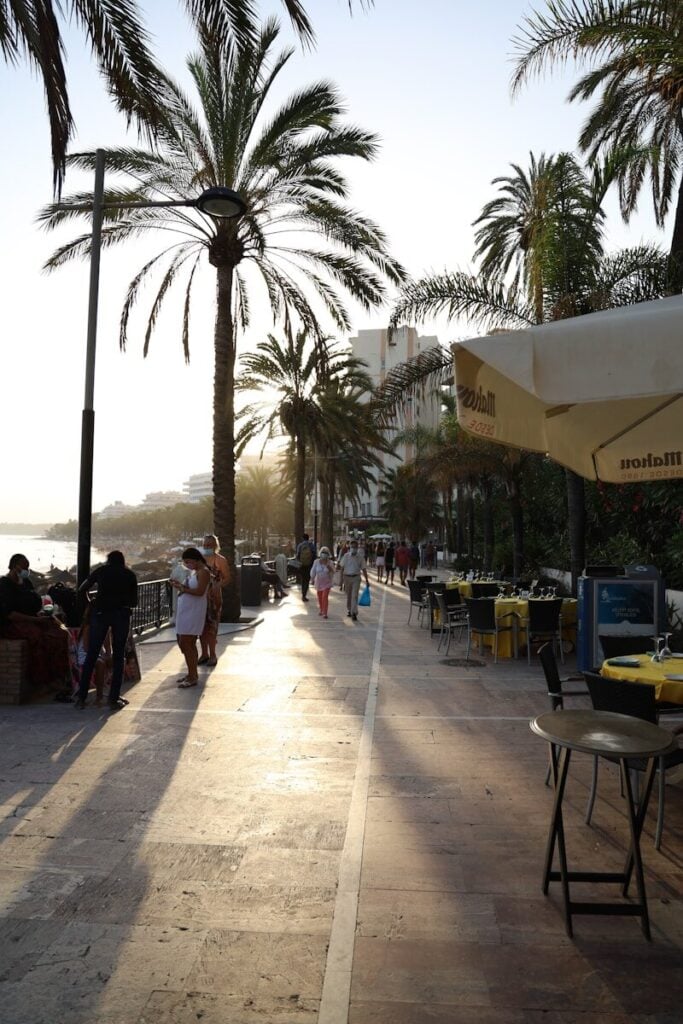
Roads repeatedly pass through pueblos blancos, whitewashed towns and villages built into hillsides and above valleys. Ojén and Istán are two of the most obvious examples near Marbella, but the pattern continues as routes move deeper into Málaga province.
These villages make natural cycling objectives because their historical locations often require climbing simply to reach them. A coffee stop therefore comes with several hundred metres of elevation gain almost automatically.
They also give the riding a distinctive visual identity. Mallorca has the Tramuntana’s stone villages, Girona its Catalan countryside and Calpe the dry Alicante mountains. Inland Andalucía combines white buildings, olive groves, rugged slopes and glimpses of the Mediterranean far below.
The coast may be where the hotel is located, but these inland roads are likely to provide most of the memories.
Ojén and Monda make a strong medium-distance loop
Once the immediate area feels familiar, linking Ojén and Monda begins to reveal the real road network behind Marbella.
Instead of simply climbing one valley and returning, the ride starts moving between different parts of the mountains. Routes in the area can easily be built from around 50km upwards, with significantly more climbing than the raw distance might suggest.
Monda also opens roads further towards Coín and other inland towns, allowing the ride to scale with fitness and available time. A relatively restrained loop can become a substantial endurance day simply by adding another section inland.
That gives Marbella exactly what a week-long cycling base needs: progression. You can begin with Istán, add Ojén and Monda, then gradually move towards the larger mountains once the legs are ready.
Ronda is the big ride that eventually becomes tempting
Spend enough time studying routes from Marbella and Ronda inevitably starts appearing.
The historic town sits much further inland and significantly higher than the Costa del Sol, with substantial mountain terrain between it and the coast. A full Marbella-Ronda loop can reach around 150km with well over 2,500 metres of climbing, depending on the route chosen.
That makes it a genuine mountain day rather than an ambitious coffee ride.
The important issue is road choice. The direct A-397 between the Marbella area and Ronda carries substantial fast traffic and is not necessarily the route a visiting cyclist should automatically select simply because it is the most obvious line on a map.
Ronda is therefore best treated as a carefully planned target. Use established cycling routes, local knowledge or a route that approaches from quieter roads rather than assuming the shortest connection will also provide the best ride.
The mountains are excellent. Not every road through them is.
Andalucía’s professional racing history makes sense once you ride here
The scale of the terrain behind Málaga and Marbella helps explain the long relationship between Andalucía and professional cycling.
The Vuelta a Andalucía, or Ruta del Sol, has repeatedly used the region’s climbs, rolling inland roads and steep finishes. Its centenary edition in 2025 again demonstrated how much varied racing terrain can be packed into southern Spain. ProCyclingUK covered that history in its look at the Vuelta a Andalucía centenary route.
Women’s racing has used the region too, including stages around Málaga province. The 2024 Vuelta Ciclista Andalucía Women showcased the same combination of heat, climbing and rolling terrain that recreational riders encounter when they leave the coast.
You do not need race barriers or professional teams to understand the appeal. Ride inland for an hour and the landscape explains itself.
Sierra de las Nieves gives stronger riders much more room
North and west of Marbella lies the Sierra de las Nieves, expanding the potential riding area considerably beyond the immediate Sierra Blanca.
The important point for road cyclists is not necessarily reaching the highest mountain in the area. It is the density of roads crossing rolling and mountainous terrain around the national park and the surrounding villages.
That makes it relatively easy to build a day containing 1,500 or 2,000 metres of ascent without relying on one enormous climb. You are simply crossing terrain that repeatedly rises and falls.
For a full training week, that variety matters. One day can focus on sustained climbing, another on repeated shorter ascents, while the easier coastal areas remain available when recovery is needed.
Do not build the trip around riding along the coast
The phrase “Costa del Sol cycling” naturally suggests long road rides beside the Mediterranean.
That is not where the best road cycling lies.
The coastal corridor is densely developed, and major roads between Málaga, Fuengirola, Marbella and Estepona carry substantial traffic. There are useful cycle lanes and shorter sections that can help link routes, but there is little reason to spend a cycling holiday trying to create a 100km coastal road ride simply because the sea is beside you.
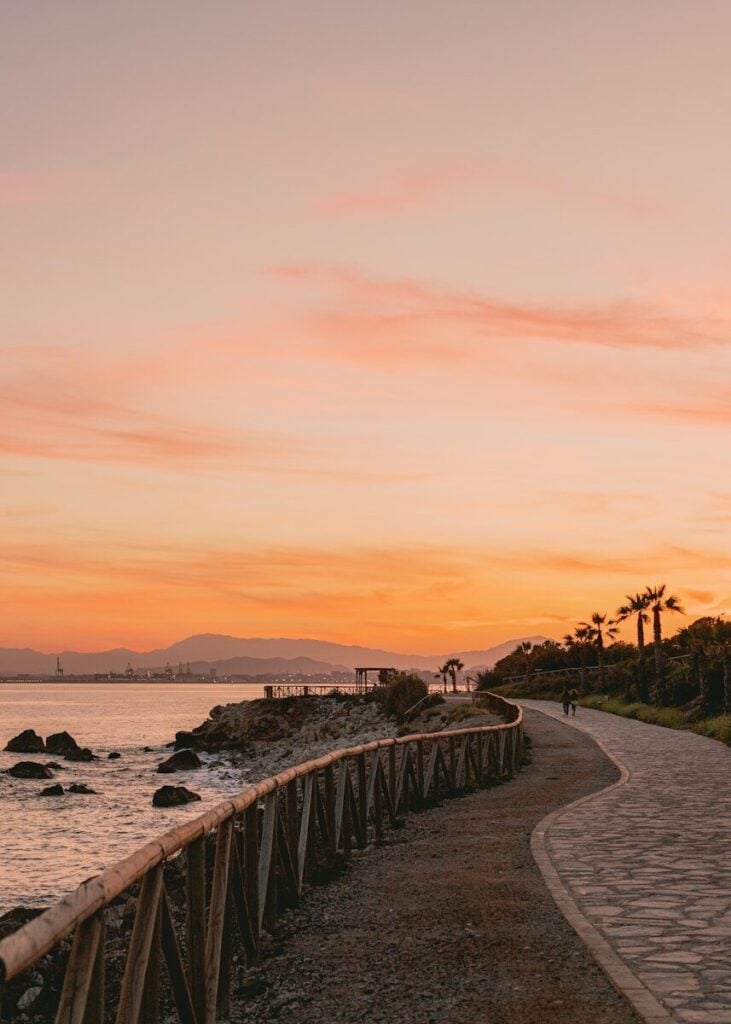
The Mediterranean works better as the backdrop.
Use the coast to warm up, recover or reach the beginning of an inland route. Then turn towards the mountains.
That is when the riding becomes special.
When is the best time to cycle around Málaga and Marbella?
Autumn through spring is the strongest period for a dedicated road-cycling trip.
The Costa del Sol gives riders the obvious advantage of a mild southern European climate while Britain is dealing with short days, wet roads and much colder temperatures. Winter can produce excellent riding conditions, while spring brings longer daylight without the intensity of midsummer heat.
Summer is possible, but serious rides should begin early. Inland Andalucía can become extremely hot during the afternoon, particularly once routes move away from the immediate coastal influence.
That makes Málaga and Marbella natural competitors to established winter bases elsewhere in Spain. ProCyclingUK’s Calpe and Costa Blanca cycling guide covers perhaps the most obvious mainland comparison, with Calpe offering a more mature cycling infrastructure but a similarly useful combination of coastal accommodation and inland climbing.
For riders considering the islands instead, cycling in Gran Canaria provides another warm-weather alternative built around substantially bigger elevation.
Málaga has the edge for a long weekend
For three or four days, Málaga is probably the better choice.
The airport, city and mountains fit together unusually efficiently. There is no need to spend a large part of the trip transferring between them, while road-bike hire means a short visit does not necessarily require travelling with a bike box.
A simple itinerary could start with an easier spin after arrival, followed by Puerto del León on the first full morning. A second hard day can use another route through the Montes de Málaga before a shorter final ride ahead of the flight home.
That gives a rider two genuinely substantial mountain days within a long weekend while still leaving time to enjoy Málaga itself.
Few winter cycling destinations combine the practical side of a city break and immediate climbing quite as neatly.
Marbella is the stronger option for a full week
For five to seven days primarily organised around road cycling, Marbella begins to make more sense.
The number of directions available makes it easier to avoid repetition. Start with Istán, move towards Ojén and Juanar, add a longer Ojén-Monda loop and then use the remaining days to explore deeper towards the Sierra de las Nieves.
A recovery day can stay closer to the coast before one final major inland ride.
That progression feels more like a conventional cycling camp, but without requiring accommodation in a town dominated entirely by visiting cyclists.
What gearing should you bring?
A normal modern road bike is ideal, but low gearing is worth having because Andalusian climbs are not always as consistent as their average gradients suggest.
A road averaging 5% can contain significantly steeper ramps, particularly once routes leave the larger mountain roads and head towards villages. For most recreational cyclists, a compact or semi-compact chainset with at least a 30 or 32-tooth largest sprocket provides a sensible range. A 34-tooth sprocket is unlikely to be regretted if the plan includes repeated days with more than 2,000 metres of climbing.
Modern 28mm or 30mm tyres are equally appropriate. Major roads are standard road-bike territory, but smaller inland surfaces can vary and a little additional comfort is useful during long mountain days.
The setup should be chosen for how the bike feels on the final climb after four hours, not for how fast it rolls during the opening flat kilometres beside the sea.
Hiring a bike is a realistic option
Málaga has a well-developed bike-hire market, which makes the destination particularly useful for a mixed holiday.
If cycling only occupies two or three mornings, hiring a proper road bike locally may make considerably more sense than transporting a bike box through the airport. For a full training week, bringing your own bike still gives the usual advantages of familiar fit, saddle, gearing and descending characteristics.
Accommodation choice can matter too, particularly for riders bringing expensive equipment. ProCyclingUK’s guide to bike-first cycling hotels looks at the facilities that make a meaningful difference on a riding holiday, from secure storage to early breakfasts and somewhere practical to deal with kit.
-
 Photo Credit: Cor Vos

Road choice matters more than it does in Mallorca
The main weakness of the Costa del Sol as a cycling base is also worth being clear about.
This is not a road network built around visiting cyclists.
There are superb mountain roads, but there are also busy arterial routes connecting major towns, tourist areas and the inland motorway network. A mapping app may consider both equally valid because both are paved. A cyclist probably will not.
Established local routes are therefore particularly useful on the first visit. The Montes de Málaga, Istán, Ojén and quieter roads around Monda are safer starting points than allowing automatic route planning to choose the shortest road between two destinations.
The same principle applies if attempting something larger towards Ronda.
Choose the road first.
Then choose the destination.
Málaga, Marbella or the other Spanish cycling bases?
Málaga and Marbella do not need to outperform Girona, Mallorca or Calpe at what those destinations already do exceptionally well.
Mallorca has an extraordinary concentration of recognised cycling roads, covered in ProCyclingUK’s cyclist’s guide to Mallorca. Girona has one of Europe’s most established international cycling communities and an exceptionally dense road network, explored in our Girona cycling guide.
The Costa del Sol offers something slightly different.
Its strength is the way city, coast and serious mountains occupy such a narrow strip of land. From central Málaga you can begin climbing towards Puerto del León within minutes. From Marbella, roads towards Istán and Ojén take you from resort coastline into proper mountain terrain almost immediately.
Málaga is probably the better choice for a long weekend where cycling shares the itinerary with food, culture and a city break. Marbella makes more sense if the aim is to wake up for five or six consecutive mornings and keep finding another substantial route.
Either way, the basic advice is the same.
Do not come to the Andalusian coast primarily to cycle along the coast. Stay beside the Mediterranean, enjoy it after the ride, and spend the mornings climbing away from it.

