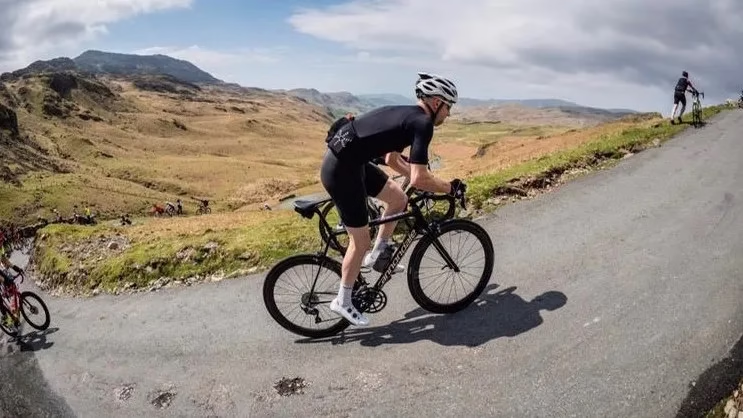
Riding 100 miles remains one of British cycling’s clearest endurance milestones.
It is far enough to demand structured training, sensible pacing and reliable nutrition, but still achievable in a single day without moving into ultra-distance territory. Add the Lake District, Yorkshire Dales, Peak District or Dartmoor and the traditional century becomes a much more serious climbing challenge.
The best UK 100-mile sportives range from the relatively accessible May Flyer through Surrey and Sussex to the Fred Whitton Challenge, where the distance is combined with some of the steepest paved roads in England.
This guide focuses on established road events offering routes close to 100 miles. Some sit a few miles below the traditional century, while others extend to 110 miles or more. Route distances can also change between editions because of road closures, weather damage and organiser decisions.
For a broader selection across all distances, see our UK sportive guide and ranking of the best UK sportives to ride in 2026.
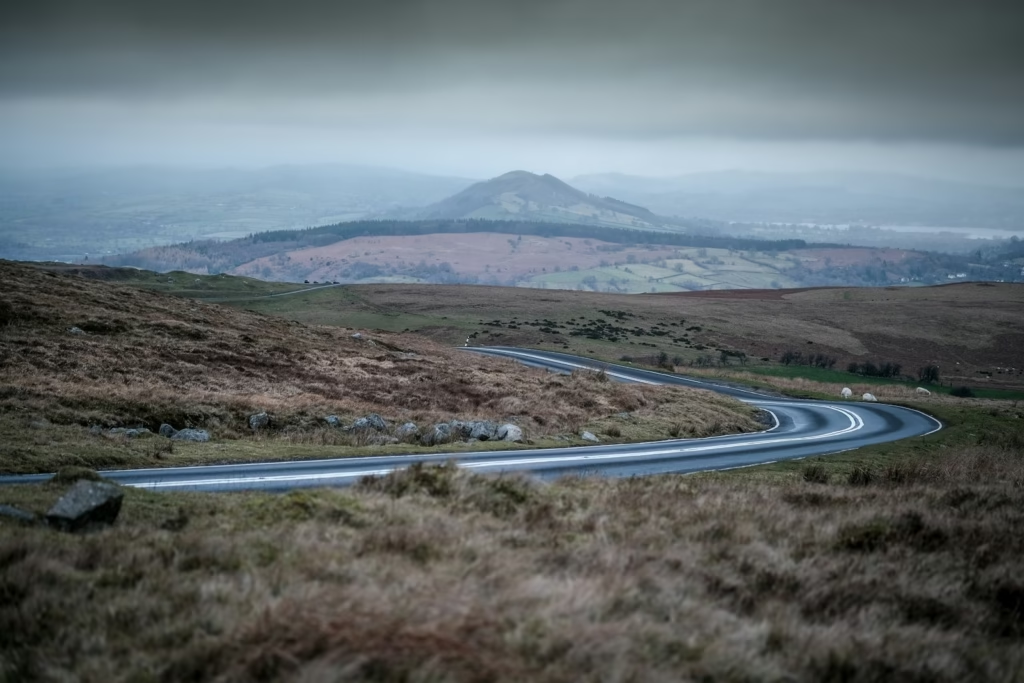
Best UK 100-mile sportives at a glance
| Sportive | Region | Long-route distance | Best for |
|---|---|---|---|
| Fred Whitton Challenge | Lake District | Around 107 to 112 miles | The ultimate British climbing challenge |
| Etape du Dales | Yorkshire Dales | 104 miles | Remote roads and sustained climbing |
| Dartmoor Classic Grande | Devon | 107 miles | Organisation, scenery and hard moorland riding |
| Peaks Tour | Peak District | Around 100 miles | Central location and varied climbing |
| May Flyer | Surrey and Sussex | 100 miles | First century and South East riders |
| White Rose Classic | Yorkshire Dales | Around 99 miles | Club atmosphere and Dales scenery |
| Struggle Dales | Yorkshire | Around 102 miles in 2026 | Steep gradients and aggressive climbing |
| Tour Essex | Essex | Around 110 miles | Faster century with less severe climbing |
| Dartmoor Legend Moor 2 Sea | Devon | Around 110 miles | Long-distance moorland and coastal riding |
| Dragon Ride Gran Fondo | South Wales | Around 138 miles | Riders ready to go beyond a century |
Fred Whitton Challenge
The Fred Whitton Challenge is the benchmark against which the hardest British sportives are measured.
Its traditional route covers around 112 miles through the Lake District, although road problems reduced the 2026 edition to approximately 107 miles. The precise distance matters less than the sequence of climbs.
Riders face a collection of famous Lakeland passes before reaching Hardknott and Wrynose late in the day. Hardknott contains ramps above 25% and arrives when riders already have more than 80 miles in their legs.
That combination makes the Fred Whitton far harder than a normal century.
A rider capable of completing a flatter 100-mile route in six hours could still spend nine, ten or more hours on the Fred Whitton. The narrow descents, unpredictable weather and limited opportunities to settle into a consistent rhythm add to the difficulty.
Entries are usually allocated through a ballot because demand exceeds the number of available places.
The event is best suited to experienced riders who have trained on steep climbs and are comfortable descending narrow roads while tired.
Our complete Fred Whitton Challenge guide covers the route, ballot, training and major passes in greater detail.
Best for: Experienced climbers seeking the hardest recognised British century.
Think carefully if: You have completed 100 miles but have little experience of gradients above 15%.
Etape du Dales
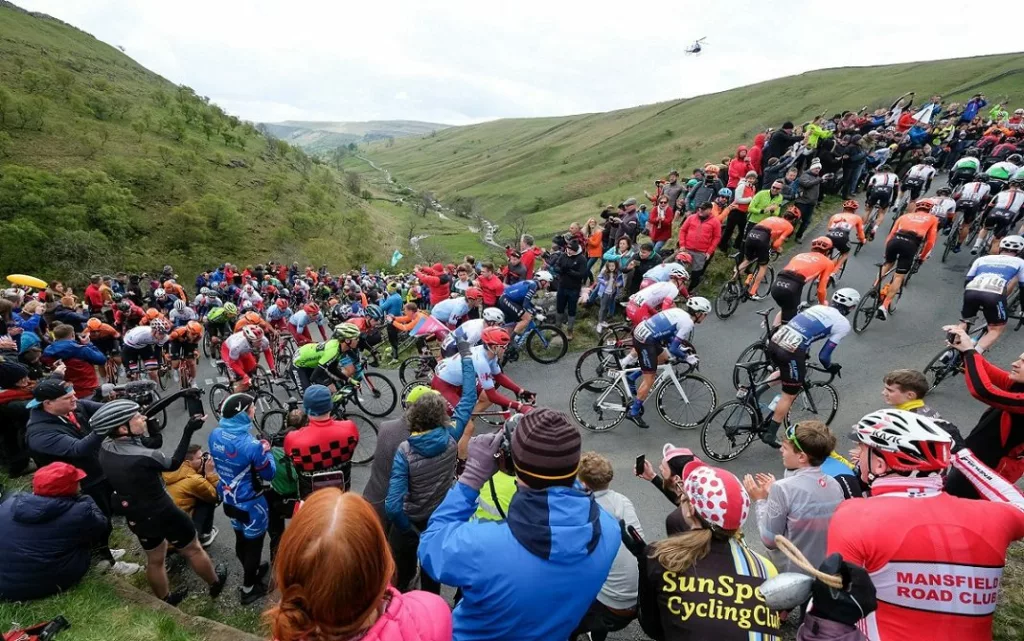
Etape du Dales offers one of the strongest combinations of distance, climbing and remote scenery in Britain.
The 2026 route covered approximately 104 miles from Settle, with almost 3,200 metres of climbing through the Yorkshire Dales.
The route typically includes a selection of well-known Dales roads such as Fleet Moss, Buttertubs, Tan Hill, the Coal Road and Newby Head. The exact order can change, but the character remains consistent.
This is a ride where the climbing never feels completely finished.
The gradients are not always as extreme as Hardknott Pass, but the repeated ascents and exposed moorland roads gradually reduce the rider’s ability to recover. Weather can also transform the route. Wind and rain on the higher sections make a difficult century considerably harder.
Etape du Dales has a traditional club-event feel and supports the Rayner Foundation, which helps young British riders develop their cycling careers.
It is one of the best choices for riders who want a serious climbing challenge without the ballot uncertainty surrounding the Fred Whitton.
Best for: Experienced endurance riders who enjoy remote roads and sustained climbing.
Think carefully if: You struggle with exposed terrain, long days in changeable weather or repeated climbing without long recovery sections.
Dartmoor Classic Grande
The Dartmoor Classic Grande combines a difficult route with the polished organisation of a major sportive.
The 2026 Grande route measured 107 miles and contained approximately 2,777 metres of elevation gain. The event starts near Newton Abbot before heading onto Dartmoor.
The climbing is substantial, but the route’s difficulty comes from more than the elevation total.
Dartmoor contains exposed roads, sharp changes in gradient, fast descents and weather that can change quickly. A warm morning near the start can become cold and misty on the higher moor.
The event has developed a strong reputation for route signage, feed stations, mechanical support, marshalling and the atmosphere at the finish. That makes it appealing to riders attempting a difficult century for the first time.
It is still not a beginner’s ride.
The Grande contains gradients approaching 20%, and the accumulated climbing can make the final section feel much longer than the distance suggests.
Best for: Riders wanting a well-supported climbing century with a major-event atmosphere.
Think carefully if: You are relying on completing the distance without having trained on long, exposed climbs.
Peaks Tour
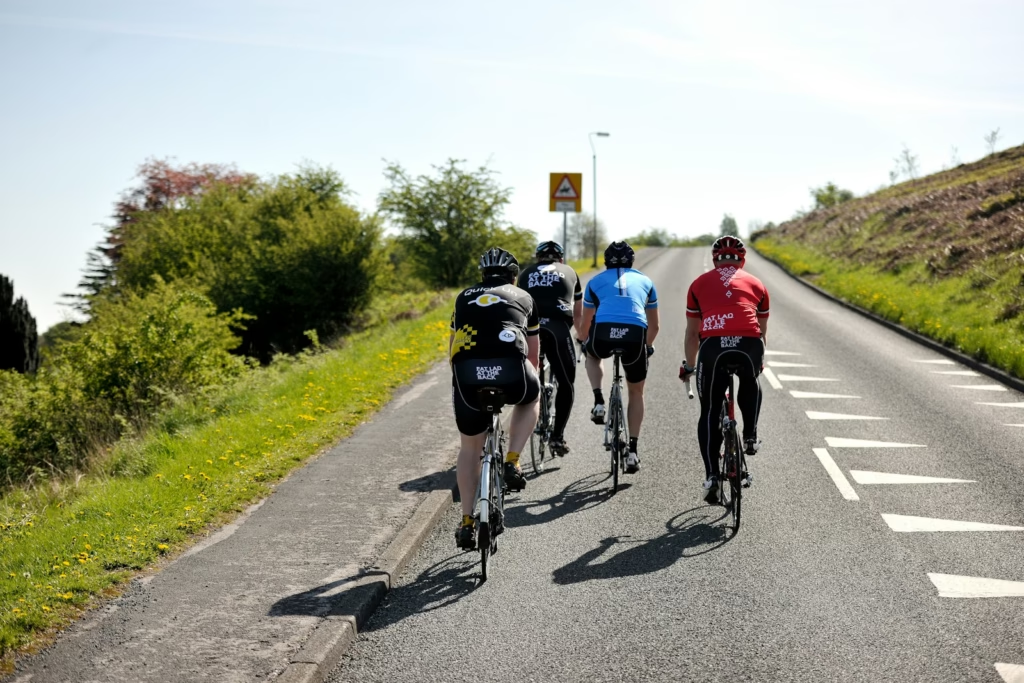
The Peaks Tour provides one of the most accessible serious centuries for riders in the Midlands and northern England.
The long route starts from Bakewell and covers approximately 100 miles through the Peak District, with around 2,600 metres of climbing.
Major features include Mam Tor, Whetstone Ridge, Gun Hill and Sir William Hill.
The Peak District does not offer the same long mountain passes as the Alps, but it specialises in repeated changes of gradient. Riders encounter short, steep ramps, longer drags and technical descents without many completely flat sections.
That makes pacing important.
A rider who attacks every climb during the first half can lose considerable time during the final 30 miles. Using lower gears and riding below threshold early is more effective than trying to maintain club-ride speed over each ascent.
The central location makes the Peaks Tour practical for riders travelling from Birmingham, Manchester, Sheffield, Nottingham and much of the Midlands.
Best for: A challenging first century in genuine climbing terrain.
Think carefully if: You are judging difficulty by distance alone. The Peak District’s constant changes in rhythm can be exhausting.
May Flyer
The May Flyer is one of the best traditional 100-mile sportives in the South East.
Starting and finishing in Cobham, the long route covers 100 miles through Surrey and West Sussex. It crosses the North Downs and uses quiet lanes around places such as Amberley, Rudgwick and Peaslake.
The route is hilly without entering Fred Whitton or Dragon Ride territory.
That makes it an excellent target for riders attempting their first organised century. There is enough climbing to make the achievement meaningful, but the day remains manageable with sensible preparation.
The event is organised on a not-for-profit basis and has been running since 1999. Its appeal comes from the traditional sportive format rather than a festival-scale event village.
Riders receive route signage, timing, refreshments and support without the entry cost associated with some larger commercial events.
London riders also benefit from a start location that does not require a full weekend away.
The May Flyer is included in our guide to the best sportives near London.
Best for: A first 100-mile sportive, London riders and anyone wanting a traditional club event.
Think carefully if: You expect an easy flat century. Surrey and Sussex lanes still create meaningful climbing and constant changes of pace.
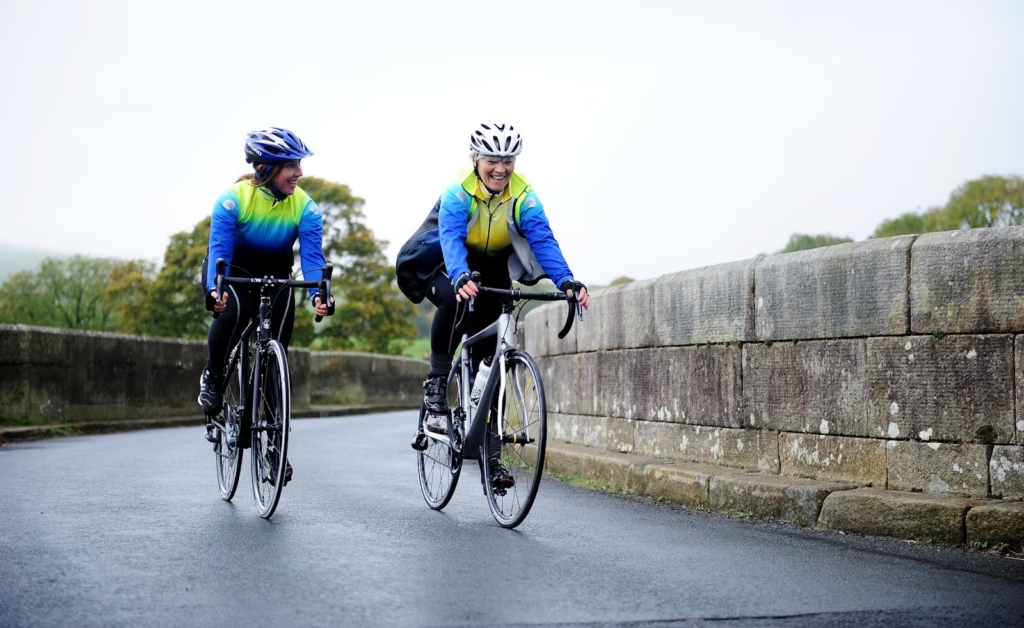
White Rose Classic
The White Rose Classic offers several routes from Ilkley, including a long option of approximately 99 miles and an extended route reaching around 125 miles.
The 99-mile course is close enough to count as a traditional century challenge, particularly given the climbing involved.
The route heads into the Yorkshire Dales and combines famous scenery with a selection of recognised climbs and lesser-known local roads. It has the feel of a large club sportive rather than a corporate mass-participation event.
That creates a friendly atmosphere, but the route deserves respect.
The Dales are rarely flat. Even when the road is not climbing steeply, riders face rolling terrain, exposed sections and surfaces that make maintaining speed difficult.
The 99-mile option is the sensible target for riders wanting a Dales century. The 125-mile route belongs in a different endurance category and requires a larger nutritional and pacing plan.
Best for: Yorkshire scenery, club atmosphere and riders wanting a hard but rewarding century.
Think carefully if: You are tempted by the longest route simply because you have previously completed 100 miles. An additional 25 hilly miles can add several hours.
Struggle Dales
Struggle Dales has built its reputation around steep Yorkshire roads and an intentionally demanding route.
The tenth-anniversary 2026 event offered distances of 120km, 165km and 250km. The middle route measured just over 100 miles, making it the closest equivalent to the event’s traditional century challenge.
The route begins in Harrogate before using climbs and narrow roads across the Yorkshire Dales.
Struggle events tend to emphasise gradients and climbing difficulty rather than creating the easiest route between two points. The result is a day that feels more aggressive than many sportives with a similar elevation total.
The event suits riders who enjoy testing themselves against steep climbs and do not need the extensive scale of a closed-road mass ride.
It is not the best first century.
Riders should already know how they respond to five or more hours of climbing and should use gearing suitable for gradients that become much harder after 80 miles.
The event appears prominently in our ranking of the toughest sportives in the UK.
Best for: Strong climbers who actively want a difficult route.
Think carefully if: Your main objective is simply completing your first 100 miles.
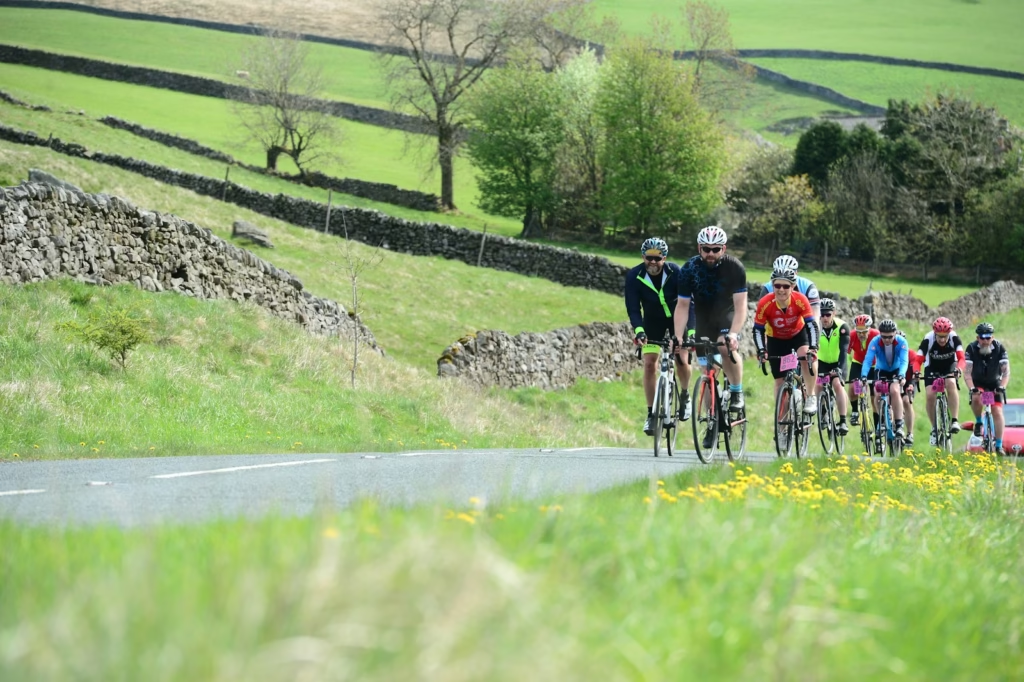
Tour Essex
The Tour Essex provides a different kind of century challenge.
Its longest route has extended to approximately 110 miles, but the terrain is generally less severe than the Lake District, Yorkshire or Dartmoor.
That does not make it easy.
Essex roads can be exposed to wind, while repeated rolling sections still create fatigue. The main difference is that riders can settle into longer periods of consistent pacing rather than constantly changing gear for steep climbs.
This makes the event a strong choice for faster riders.
A well-prepared group can maintain a high average speed, while riders targeting their first century can focus more on distance and nutrition than surviving extreme gradients.
The route is particularly practical for cyclists based in London, Essex, Hertfordshire and East Anglia.
The additional distance beyond 100 miles must still be respected. Ten extra miles can feel substantial when they arrive after the normal century landmark.
Best for: Faster groups, flatter-road specialists and riders from the East or South East.
Think carefully if: You underestimate wind exposure or plan to sit in a group without practising close riding beforehand.
Dartmoor Legend Moor 2 Sea
The Moor 2 Sea route forms part of the Dartmoor Legend event and offers approximately 110 miles from Exeter Racecourse.
It provides a more endurance-focused alternative to the Dartmoor Classic.
The route combines Dartmoor with roads towards the coast, creating a varied day containing climbing, exposed moorland and faster sections where strong groups can work together.
Riders can expect a long day rather than a short, concentrated climbing test.
That makes nutrition particularly important. The temptation is to eat less during faster opening sections, only to reach the harder terrain already low on energy.
The event also offers shorter routes and a 200-mile ultra option. Century riders should avoid being distracted by the larger distance. The 110-mile route is already a significant challenge.
Best for: Riders wanting to combine a century with a bigger endurance-event atmosphere.
Think carefully if: You have never ridden beyond 100 miles or tested your nutrition across seven or more hours.
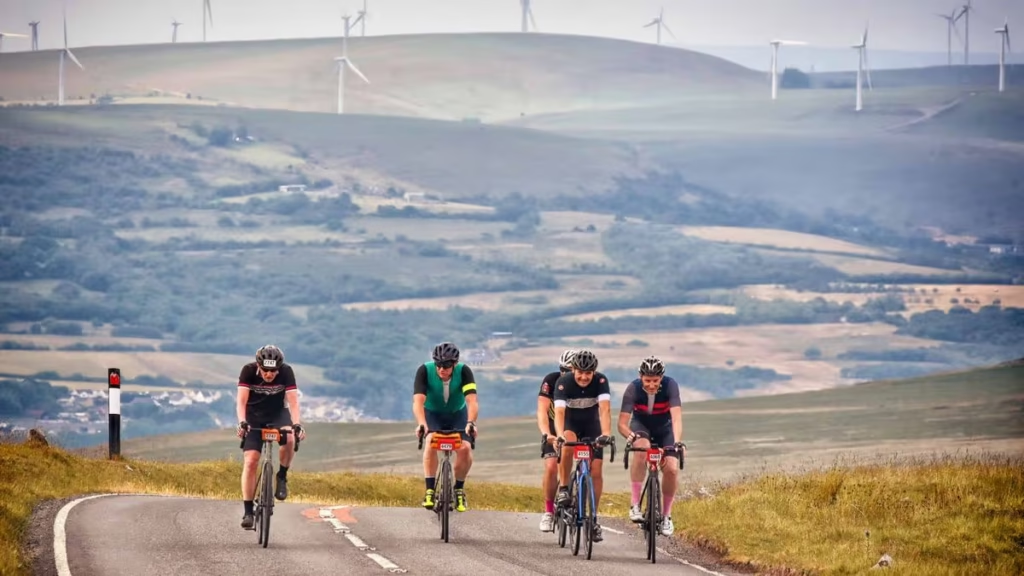
Dragon Ride Gran Fondo
Dragon Ride is not a conventional 100-mile sportive because its Gran Fondo route extends considerably beyond the century mark.
The 2026 Gran Fondo covered approximately 222km, or 138 miles, with around 3,583 metres of climbing. The longer Dragon Devil reached almost 300km.
It still belongs in this guide because many riders use Dragon Ride as the next step after completing a standard century.
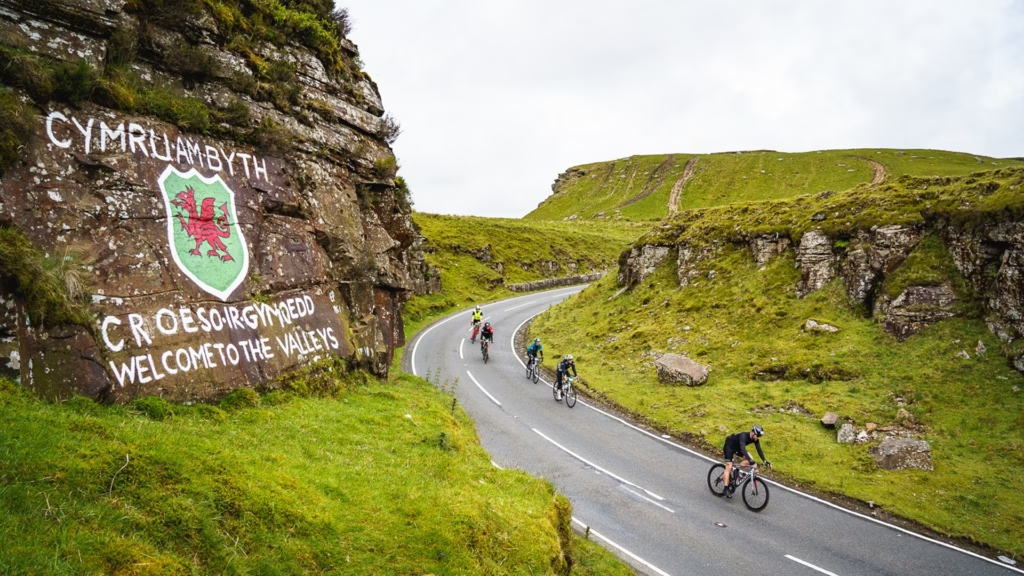
The event starts from Margam Park and enters the South Wales mountains, with routes using climbs such as Rhigos, The Bwlch and Devil’s Elbow. The longest version can also include Devil’s Staircase.
The Gran Fondo demands a different approach from a 100-mile sportive.
Riders must eat earlier, carry enough clothing for exposed weather and remain conservative during the opening climbs. Reaching 100 miles is not the finish but only another point on the route.
Our complete Dragon Ride guide explains the route choices, major climbs and training requirements.
Best for: Riders who have mastered the century and want a larger Welsh mountain challenge.
Think carefully if: Your longest previous ride is 100 miles. Adding 38 mountainous miles is a major progression.
Which is the hardest UK 100-mile sportive?
The Fred Whitton Challenge is the hardest established sportive close to 100 miles.
Its combination of distance, Lake District weather and the late Hardknott and Wrynose climbs separates it from most alternatives.
Etape du Dales, Struggle Dales and the Dartmoor Classic Grande form the next group. Their precise difficulty depends on the route, conditions and individual rider.
| Sportive | Main source of difficulty |
|---|---|
| Fred Whitton Challenge | Extreme late gradients and Lakeland passes |
| Etape du Dales | Sustained climbing and exposed Dales roads |
| Struggle Dales | Frequent steep gradients |
| Dartmoor Classic Grande | Moorland climbing and weather |
| Peaks Tour | Repeated short and medium climbs |
| May Flyer | Distance and rolling South East lanes |
| Tour Essex | Distance, wind and sustained speed |
A broader comparison is available in our guide to the toughest sportives in Britain.
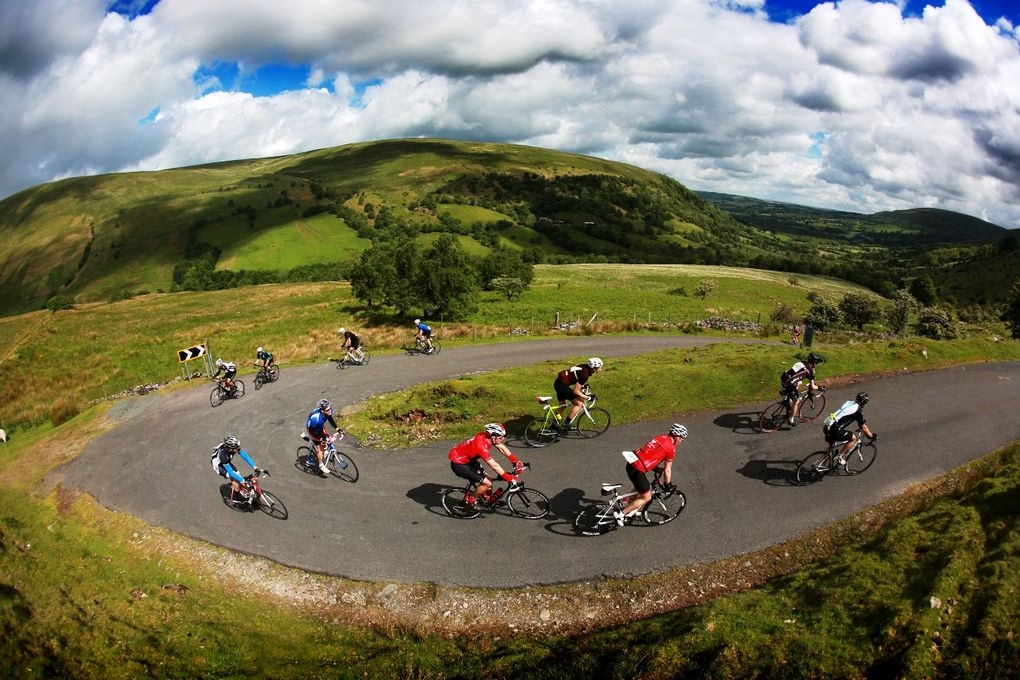
What is the best first 100-mile sportive?
The May Flyer is one of the best first centuries for riders in southern England.
It offers an exact 100-mile route, established organisation and meaningful climbing without the extreme gradients of the Fred Whitton.
The Tour Essex is a good alternative for riders who prefer flatter, faster terrain.
The Peaks Tour can work as a first century for someone who already trains regularly on hills. It is not suitable for a rider whose preparation has taken place almost entirely on flat roads.
The Dartmoor Classic provides excellent support, but its climbing makes it a more ambitious first attempt.
Newer riders should consider completing several shorter events before entering a hard century. Our guide to the best beginner-friendly sportives in the UK provides more manageable starting points.
Best 100-mile sportive for climbing
Choose the Fred Whitton Challenge for the greatest overall climbing test.
Choose Etape du Dales for longer Dales ascents and exposed roads.
Choose Struggle Dales for repeated steep gradients.
Choose the Dartmoor Classic if you want a difficult climbing route combined with strong event support.
Choose the Peaks Tour if you want a central location and a balance between sharp climbs and longer efforts.
Riders specifically targeting Wales may prefer to move beyond 100 miles and enter Dragon Ride. Our Dragon Ride guide shows why its Gran Fondo sits above a standard century in both distance and climbing.
Best 100-mile sportive near London
The May Flyer is the strongest exact-century option near London.
Its Cobham start makes it accessible from the capital, while the route provides a proper rural challenge through Surrey and Sussex.
Tour Essex is better suited to riders in East London and those wanting to chase a faster finishing time.
Neither is completely flat.
The May Flyer contains North Downs and Surrey Hills climbing, while Tour Essex can become difficult when the wind blows across exposed roads.
Our dedicated guide to the best sportives near London includes shorter alternatives and events better suited to first-time sportive riders.
Best closed-road 100-mile sportive
Britain currently has fewer closed-road century options than it did when RideLondon offered a regular 100-mile event.
RideLondon is paused for 2026, removing the most recognisable closed-road century from the calendar.
The Tour of Cambridgeshire has traditionally offered closed-road Gran Fondo riding, although riders should confirm the current route, distance and event status before entering.
Etape Caledonia and Etape Loch Ness provide excellent closed-road experiences but do not normally reach 100 miles.
Anyone prioritising traffic-free riding over the century distance should start with our guide to the best closed-road sportives in the UK.
Our look at the best alternatives to RideLondon also explains the strongest current replacements.
How long does a 100-mile sportive take?
A 100-mile sportive can take anywhere from under five hours for a fast racing group to more than ten hours on a mountainous route.
For most trained amateur riders, a sensible range is:
| Route type | Likely total riding time |
|---|---|
| Flat or gently rolling | 5.5 to 7 hours |
| Mixed rolling terrain | 6 to 8 hours |
| Hilly century | 7 to 9 hours |
| Fred Whitton-level route | 8 to 12 hours |
These figures exclude or minimise feed-stop time.
A rider averaging 16mph while moving may still spend eight hours at the event after stopping for food, water, toilets and mechanical problems.
Do not set a target based only on the average speed of your normal club ride. Sportives contain queues, junctions, climbs and sections ridden alone.
How much training is needed for a century sportive?
Most riders should build towards regular long rides of four to six hours before attempting a century.
You do not need to complete 100 miles in training, but you should be comfortable with:
- Riding 70 to 85 miles
- Eating while moving
- Drinking consistently
- Pacing long climbs
- Fixing a puncture
- Riding in poor weather
- Descending safely while tired
- Spending several hours in the saddle
A climbing century also requires elevation-specific preparation.
Completing 80 flat miles does not fully prepare the legs for 100 miles containing 3,000 metres of ascent. Riders should gradually increase both distance and climbing rather than adding everything during the final weeks.
Our guide to long-distance cycling endurance training covers progressive training and common mistakes.
What should you eat during a 100-mile sportive?
Aim to begin eating during the first hour rather than waiting until hunger appears.
Most riders should target approximately 60 to 90 grams of carbohydrate per hour, depending on what they have practised in training.
Possible sources include:
- Energy drink
- Gels
- Bars
- Bananas
- Sandwiches
- Rice cakes
- Sweets
- Feed-station food
Harder routes may reduce appetite, making carbohydrate drink and gels more useful. Longer flat events may allow more solid food.
Do not introduce an unfamiliar nutrition strategy on event day.
A rider who can physically complete 100 miles can still struggle badly after failing to eat during the first half.
What gearing is needed?
The correct gearing depends on the event.
For the May Flyer or Tour Essex, many riders will be comfortable with a compact or semi-compact chainset and an 11-30 or 11-32 cassette.
For the Fred Whitton, Etape du Dales or Struggle Dales, lower gearing is strongly recommended.
A compact 50/34 chainset paired with a 32, 34 or larger sprocket allows riders to climb at a manageable cadence after several hours.
Strong riders sometimes choose harder gears because they can climb steep roads quickly when fresh.
The question is whether those gears remain usable after 90 miles.
Walking a section of Hardknott is better than falling, but suitable gearing increases the chance of remaining on the bike.


How to choose the right century sportive
Choose according to terrain rather than reputation alone.
| Rider goal | Best option |
|---|---|
| First organised century | May Flyer |
| Faster century | Tour Essex |
| Best-supported mountain century | Dartmoor Classic |
| Hardest challenge | Fred Whitton |
| Yorkshire climbing | Etape du Dales or Struggle Dales |
| Peak District challenge | Peaks Tour |
| Club-event atmosphere | White Rose Classic |
| Next step beyond 100 miles | Dragon Ride Gran Fondo |
| London access | May Flyer |
| Midlands access | Peaks Tour |
The best event is not automatically the hardest.
A rider who chooses the right terrain is more likely to finish strongly, enjoy the day and return for a larger challenge.
Best 100-mile sportives in the UK summary
The Fred Whitton Challenge remains Britain’s defining climbing century.
Etape du Dales and Struggle Dales provide the strongest Yorkshire alternatives, while the Dartmoor Classic Grande combines a hard route with excellent event support.
The Peaks Tour is one of the best central options, and the May Flyer is an ideal traditional century for riders based around London and the South East.
White Rose Classic offers a friendly route into the Yorkshire Dales, while Tour Essex suits riders who want to focus on sustained distance and speed rather than extreme climbing.
Dragon Ride belongs beyond the normal century category but is a natural next objective for riders ready to extend their endurance.
Whichever event you choose, the same principle applies.
A century is completed through pacing and nutrition long before the final ten miles. The strongest ride is rarely the one with the fastest opening hour.