
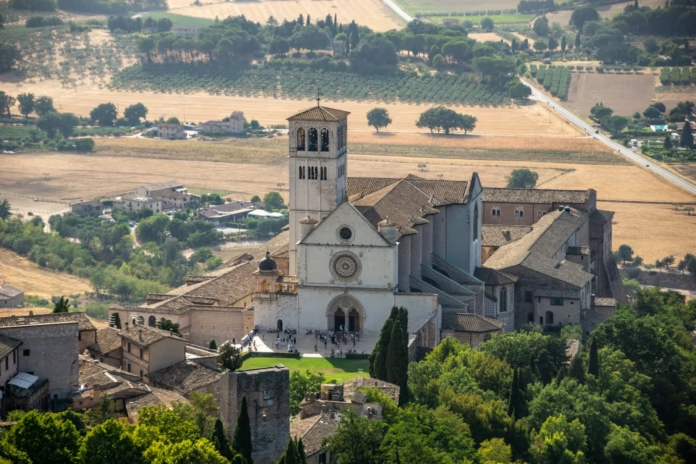
Umbria is easy to overlook when planning an Italian cycling trip. Tuscany sits immediately to the west with a far bigger international profile, while the Dolomites and Bormio dominate the conversation for riders who want famous climbs. Around Assisi, Spoleto and Norcia, however, the roads and converted railway routes create a different kind of riding base: quieter, greener, less dependent on headline passes and flexible enough to combine road riding with gravel and traffic-free sections.
The strongest reason to ride here is the variety packed into a relatively compact part of central Italy. Assisi and the Umbrian valley provide gentler terrain, Spoleto gives access to the old railway towards Norcia and the Valnerina, and the hills around Norcia can turn a moderate-looking route into a serious climbing day. A week can include relaxed cycleway mileage, long road loops and mixed-surface riding without needing to move accommodation every night.
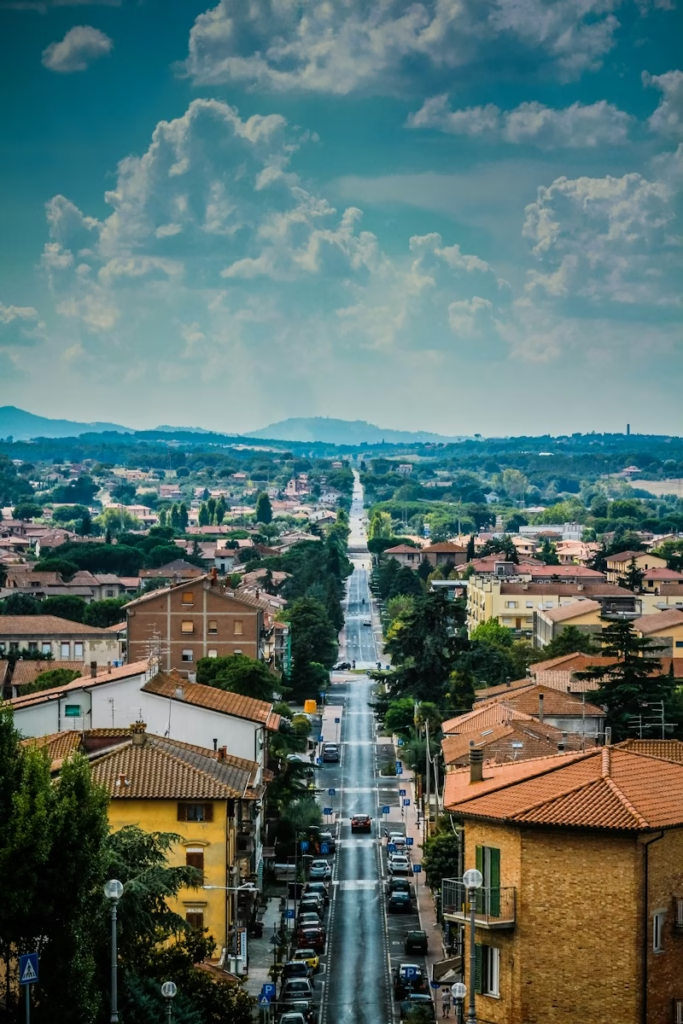
Umbria cycling at a glance
- Best bases: Assisi for gentler valley riding, Spoleto for route variety, Norcia for harder climbing
- Riding style: Rolling roads, Apennine climbs, converted railway paths and mixed-surface cycleways
- Best bike: Endurance road bike for paved loops; gravel bike if the Spoleto-Norcia route is central to the trip
- Tyres: 30-32mm for versatile road riding, wider for substantial gravel sections
- Best period: April to June and September to October
- Key route: Assisi-Spoleto-Valnerina corridor, with the former Spoleto-Norcia railway as the distinctive feature
- Main challenge: Heat in midsummer and steep gradients once routes leave the valley floors
- Ideal stay: Four to six riding days
Assisi gives the easiest introduction to the region
Assisi is the logical northern base for riders who want a gentle first day. The city itself sits on the slopes of Monte Subasio, so riding directly into the historic centre involves climbing, but the broad valley below is considerably flatter. That contrast makes it possible to choose between an easy spin and a much harder loop without travelling far.
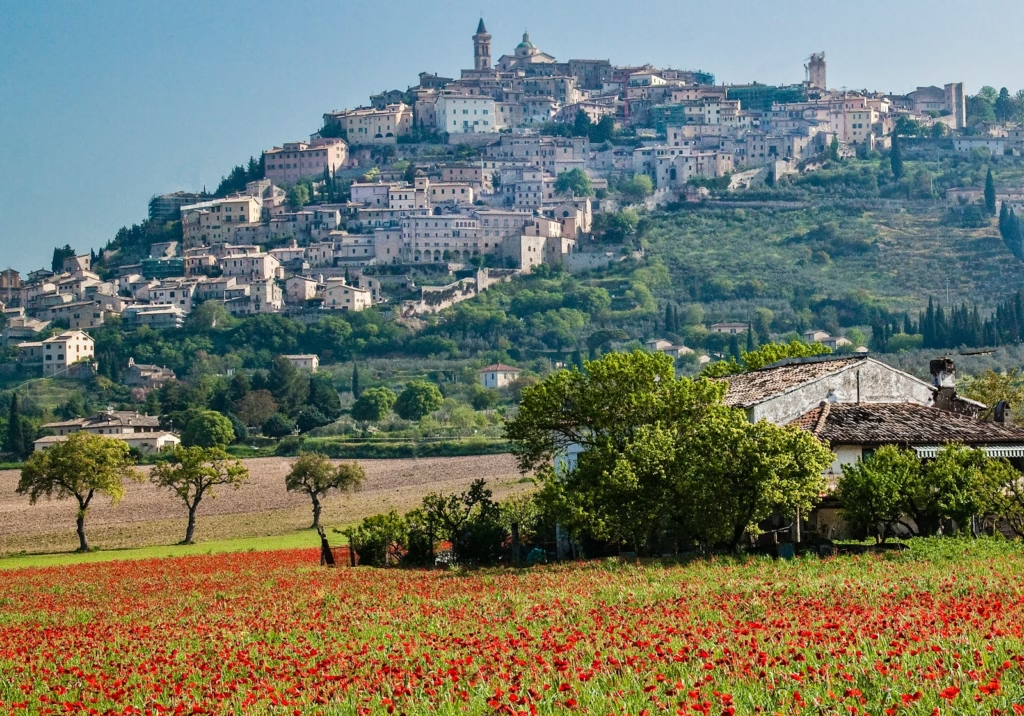
The official Assisi-Spoleto cycle route covers 51.2km and gains relatively little height across its main valley sections. It passes Santa Maria degli Angeli, Cannara, Bevagna, Montefalco, Trevi and the Fonti del Clitunno before reaching Spoleto. The surface mixes asphalt and unpaved sections, which is important for road-bike planning. A pure race bike can handle much of the corridor, but a wider-tyred endurance or gravel setup makes the complete route more comfortable.
For stronger road riders, the official cycleway is better viewed as a spine rather than a complete day’s challenge. The hills around Montefalco and Trevi provide easy opportunities to add climbing, while Monte Subasio offers a much harder option above Assisi. The valley lets tired legs recover between efforts, something that becomes increasingly useful across a multi-day trip.
Assisi also works well for mixed groups. Riders who want distance can leave the marked route for hillier roads, while less experienced cyclists can remain on the easier corridor. That flexibility is one of Umbria’s biggest advantages over destinations built almost entirely around mountain passes.
Spoleto is the best all-round cycling base
If the trip is primarily about riding rather than sightseeing, Spoleto is arguably the strongest single base. The town sits at the southern end of the easier Assisi corridor and at the gateway to the Valnerina, while the former railway towards Norcia creates one of the most distinctive cycling routes in central Italy.
The old Spoleto-Norcia railway was engineered through difficult Apennine terrain, using tunnels, viaducts and gradual gradients to cross the mountains. Much of the disused alignment has been repurposed for cycling and walking. The result is very different from a normal road climb: riders gain height through a succession of shaded cuttings and tunnels rather than simply following a modern mountain road.
This is where bike choice matters most. The historic railway is not a conventional paved cycleway throughout. Gravel, rougher surfaces and tunnels make wider tyres and dependable lights sensible. A gravel bike is the obvious choice if the route is a major goal, although an endurance bike with sufficient clearance can work on suitable sections.
Spoleto also provides normal road options. The Valnerina roads follow the Nera river through steep-sided valleys, with side roads climbing quickly towards hill villages. A rider who brings a road bike can spend several days here without needing the railway at all, while a gravel bike opens another layer of the region.
The Valnerina turns a scenic trip into serious riding
South and east of Spoleto, the landscape becomes more enclosed and mountainous. The Valnerina follows the Nera through a corridor where villages sit between the river and steep slopes. Distances can look modest on a map, but side roads gain height rapidly and there are fewer long flat sections once a route turns away from the valley.
The broader Assisi-Spoleto-Cascata delle Marmore itinerary combines three cycle routes for roughly 106km. It links the Assisi-Bevagna-Spoleto corridor with the Spoleto-Norcia route and the Nera river cycleway. The official Italian tourism route describes much of it as low-traffic road or cycleway, making it a useful template even for riders who do not want to follow every kilometre exactly.
SpoletoNorcia Gravel demonstrates how much climbing the area can contain. Its 2026 routes range from 30km with around 700 metres of elevation to 140km with approximately 2,600 metres. Those figures are a useful warning against judging Umbrian rides by distance alone. A 75km mixed-surface day in the Valnerina can be a substantial ride.
Water and food planning becomes more important away from the main towns. Villages provide cafés and fountains, but opening hours are not always aligned with a British rider’s assumptions, particularly in quieter periods. Carrying enough food to finish the route without relying on one planned stop is sensible.
Norcia suits riders who want the hardest days
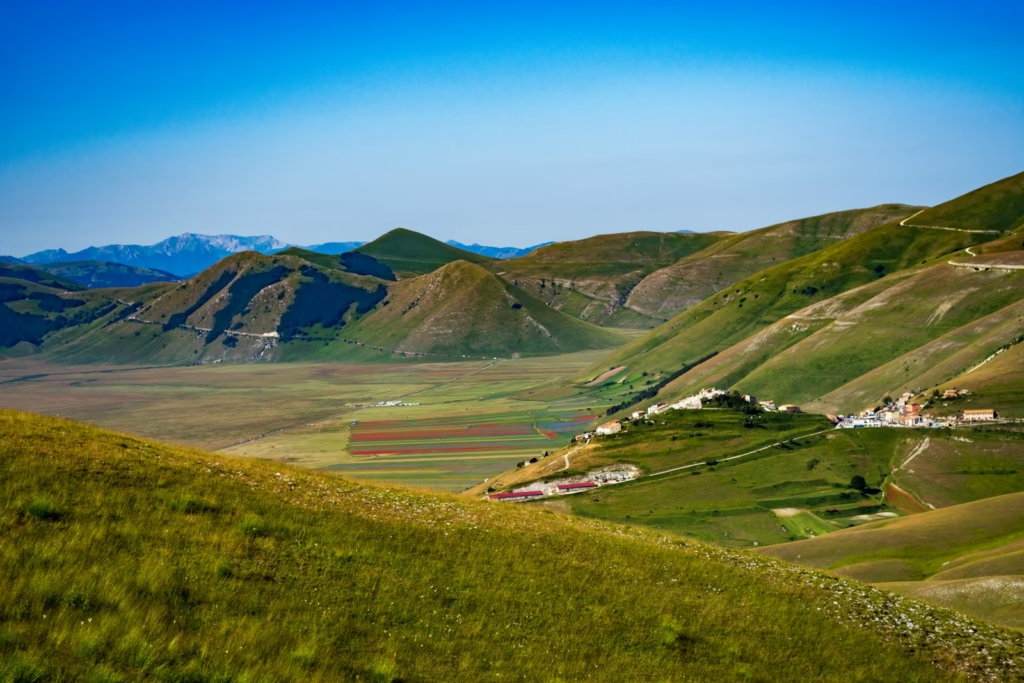
Norcia sits deeper in the Apennines and feels more like a mountain base than Assisi or Spoleto. The surrounding roads climb towards the Sibillini area and the high plateaux, with longer ascents and more exposure to changing weather. Riders who want the biggest climbing numbers should allocate at least one full day here.
The famous landscape around Castelluccio lies above Norcia, reached by sustained mountain roads that become especially busy when the flowering plain attracts visitors in late spring and early summer. The scenery is exceptional, but timing matters. An early start reduces traffic and gives more margin if conditions change at altitude.
Gearing should reflect the terrain rather than Italian cycling mythology. A compact chainset with at least a 30-tooth largest rear sprocket is a sensible minimum for most recreational riders, and a 32 or 34 can make consecutive climbing days considerably more enjoyable. There is no prize for turning a scenic holiday into repeated low-cadence survival.
Norcia was heavily affected by the 2016 central Italy earthquakes and reconstruction remains part of the area’s recent history. Riders should check current road and trail access rather than assuming every mapped route is permanently open. Mountain conditions, maintenance and reconstruction can all alter access.
Spring and early autumn are better than the hottest part of summer
April through June usually gives the best balance of green landscapes, comfortable temperatures and long daylight. Higher roads can still be cool in spring, particularly around Norcia, so the difference between the valley floor and the mountain sections should be taken seriously.
July and August can be very hot at lower elevations. Starting early helps, but riders planning long exposed road days may find the middle of the afternoon unpleasant. The old railway sections offer more shade than open roads, although tunnels and tree cover do not remove the need to carry enough water.
September and early October are excellent alternatives. Temperatures are generally more manageable, tourist traffic eases and the region remains warm enough for long road rides. Daylight becomes the main constraint later in autumn, while mountain weather around Norcia can change much faster than conditions in the valley.
-
 Photo Credit: Canyon SRAM (supplied media release)
 -
 Photo Credit: Park Tool



A five-day trip can combine all three areas without rushing
Use the first day around Assisi for a moderate valley ride, adding Montefalco or Trevi if the legs feel good. Day two can follow the corridor towards Spoleto, either as a point-to-point ride with luggage transferred or as part of a loop if the trip is based in one place.
Day three should focus on the Spoleto-Norcia railway and Valnerina, using a gravel or wider-tyred bike where appropriate. Day four can be the hardest road ride, moving towards Norcia and the higher Apennine roads. Keep day five flexible for a shorter recovery loop, another gravel section or a return towards Assisi.
That structure also works well as part of a broader Italian trip. Riders who want a more road-focused wine-and-hills experience can compare it with ProCyclingUK’s guide to cycling in Lucca and northern Tuscany, while Puglia provides a flatter southern alternative. More destination ideas are collected in the cycling travel hub.
Umbria works because it does not force one type of riding onto the whole holiday. Assisi provides access and gentler terrain, Spoleto connects roads with one of Italy’s most unusual railway conversions, and Norcia supplies the climbing. For riders who want Italy without building the trip around famous professional passes, that combination is unusually strong.

