
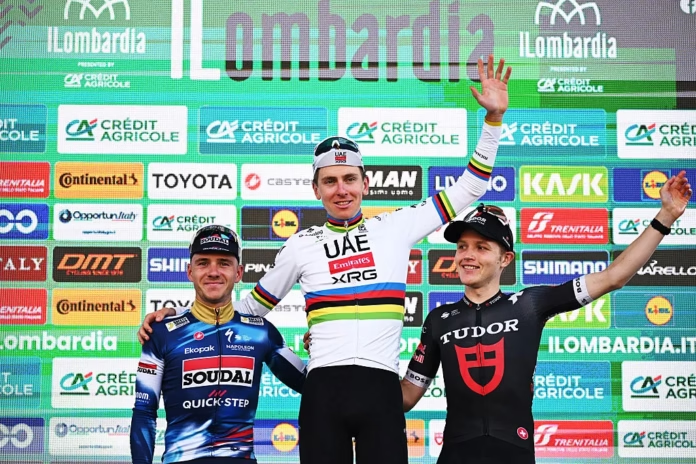
Il Lombardia is the final Monument of the men’s road season and one of cycling’s most distinctive one-day races. The Italian Classic is built around long climbs, technical descents and late-season fatigue rather than cobbles or flat-out sprinting, which is why its winners tend to come from a narrower group of climbers and Grand Tour riders than the other Monuments.
The 2026 edition takes place on Saturday 10 October and will start in Bergamo. As of 12 September, organisers have confirmed the date and Bergamo start but have not yet published the full route. That matters because Lombardia regularly alternates its finish and changes the order of its decisive climbs.

Il Lombardia at a glance
- Date: Saturday 10 October 2026
- Classification: UCI WorldTour one-day race
- Monument: Fifth and final Monument of the season
- 2026 start: Bergamo
- Typical terrain: Long climbs, repeated hills and technical descents
- Best suited to: Climbers, Grand Tour riders and powerful one-day specialists
- Historic nickname: The Race of the Falling Leaves
- 2025 winner: Tadej Pogačar
- 2026 route: Full details still to be announced
Why Il Lombardia is different from the other Monuments
Milan-San Remo is shaped by distance and a short sequence of late climbs. The Tour of Flanders and Paris-Roubaix are defined by cobbles. Liège-Bastogne-Liège uses repeated Ardennes climbs but usually on shorter, sharper terrain. Lombardia is the Monument that most consistently rewards riders with genuine climbing depth.
The winning move can come on a steep late climb, but the race is usually decided by what has happened much earlier. Several hours of climbing gradually reduce the number of domestiques, weaken fast finishers and expose riders who are carrying end-of-season fatigue. By the final major ascent, the strongest favourites often have very few teammates left.
That is why riders such as Tadej Pogačar, Vincenzo Nibali and climbers from previous generations have found the race so compatible with their strengths. It is not enough simply to climb well for five minutes. A potential winner needs to descend confidently, position well and still be capable of attacking after well over 200km.
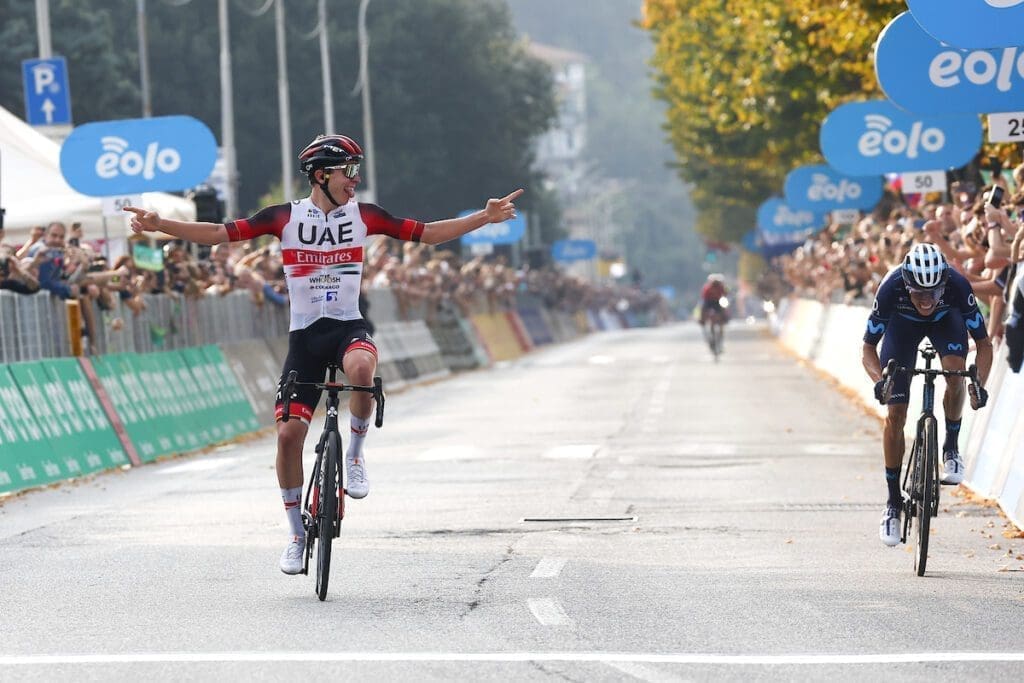
The Race of the Falling Leaves has more than a century of history
Il Lombardia was first held in 1905 and quickly became one of Italy’s major one-day races. Its autumn date gave rise to the nickname Giro di Lombardia and, in English, the Race of the Falling Leaves. The name changed to Il Lombardia in the modern era, but the position in the calendar remained central to its identity.
The winners list contains almost every type of great champion. Fausto Coppi won five times, Eddy Merckx twice and riders such as Bernard Hinault, Sean Kelly, Damiano Cunego, Philippe Gilbert and Nibali all added the race to very different palmarès. Andrea Tafi’s 1996 win is a reminder that Lombardia has occasionally rewarded riders better known for other terrain. His broader career is covered in our Andrea Tafi rider history.
The prestige comes partly from continuity. A race held at the end of the season for more than a century inevitably becomes a measure of durability as well as peak ability. Riders who reach October with form left are often those who have managed their entire season best.
Climbs around Como and Bergamo shape the modern race
Modern editions have usually been built around roads in Lombardy between Bergamo and Como. The exact route changes, but several climbs have become closely associated with the race. The Madonna del Ghisallo is the most famous because of its place in cycling culture, while climbs such as Civiglio, San Fermo della Battaglia, Passo di Ganda and Bergamo Alta have been decisive in different editions.
These climbs vary significantly. Ghisallo carries enormous symbolic weight but is not always the final selection point. Passo di Ganda can create a long sustained test. Civiglio and San Fermo are shorter but arrive late enough to punish riders who have already accumulated hours of climbing. Bergamo Alta adds steep urban roads and positioning pressure close to the finish.
The descent is often just as important. Lombardia has produced winning attacks that depended on a rider being willing to take risks downhill or maintain a small gap after cresting the decisive climb. That combination of climbing and descending makes the race harder to reduce to a simple watts-per-kilogram contest.

How Il Lombardia is normally won
There are three broad routes to victory. The first is a solo attack from one of the final major climbs. Pogačar has repeatedly used sustained power to remove the need for a sprint altogether. The second is a small-group selection in which several favourites reach the finale together and settle the race tactically. The third is a longer-range move that succeeds because rival teams lack the numbers or willingness to organise a chase.
A large bunch sprint is highly unlikely. Even if twenty or thirty riders remain together relatively late, the final climbing normally reduces that number sharply. Teams therefore spend much of the race trying to preserve a leader without committing too many domestiques too early.
Positioning matters before every key climb. A rider who starts an ascent twenty places behind a rival can be forced to close gaps while the strongest riders are attacking. That is particularly costly late in the race, when accelerations are harder to absorb and there are fewer teammates available to help.
Pogačar has redefined the recent history of the race
Tadej Pogačar won Il Lombardia five consecutive times from 2021 through 2025, surpassing the run of four straight victories achieved by Fausto Coppi between 1946 and 1949. That sequence has made the modern race unusually easy to associate with one rider.
His dominance also illustrates what the race rewards. Pogačar can attack on long climbs, accelerate on steeper ramps, descend aggressively and still sprint effectively if a rival remains with him. Lombardia rarely offers opponents a terrain-based weakness to target.
The major uncertainty for 2026 is whether he will be able to defend that record after the crash that ended his Vuelta a España. ProCyclingUK’s latest update on Pogačar’s injury and 2026 season explains why his autumn programme is now in doubt. That uncertainty could fundamentally change the race if he is absent.
 Photo Credit: Getty
What to look for when the 2026 route is announced
The first thing to check is the finish city. Lombardia has alternated between Bergamo and Como, and that immediately changes which climbs are likely to matter. The second is the position of the longest ascent. A major climb with 60km remaining creates a different race from one whose summit sits 20km from the finish.
The final descent is another clue. A technical downhill run can favour riders willing to attack over the summit, while a flatter run-in gives a chasing group more chance to reorganise. Total elevation gain matters, but where that climbing is concentrated usually tells more about how the race will unfold.
For now, the confirmed information is deliberately limited: Il Lombardia 2026 will be held on 10 October and will start in Bergamo. The full route, teams and start list will follow later. Until then, the safest way to understand the race is through its established character rather than pretending that last year’s course has simply been copied forward. Once the route is published, the most useful comparison will be with recent Bergamo-start editions rather than with one generic Lombardia template. The finish location, order of the climbs and distance from the final summit to the line can change which riders need to attack and which can afford to wait. That is why a beginner’s guide should separate the race’s permanent identity from details that genuinely belong to the 2026 edition.
-
 Photo Credit: A.S.O./Billy Ceusters
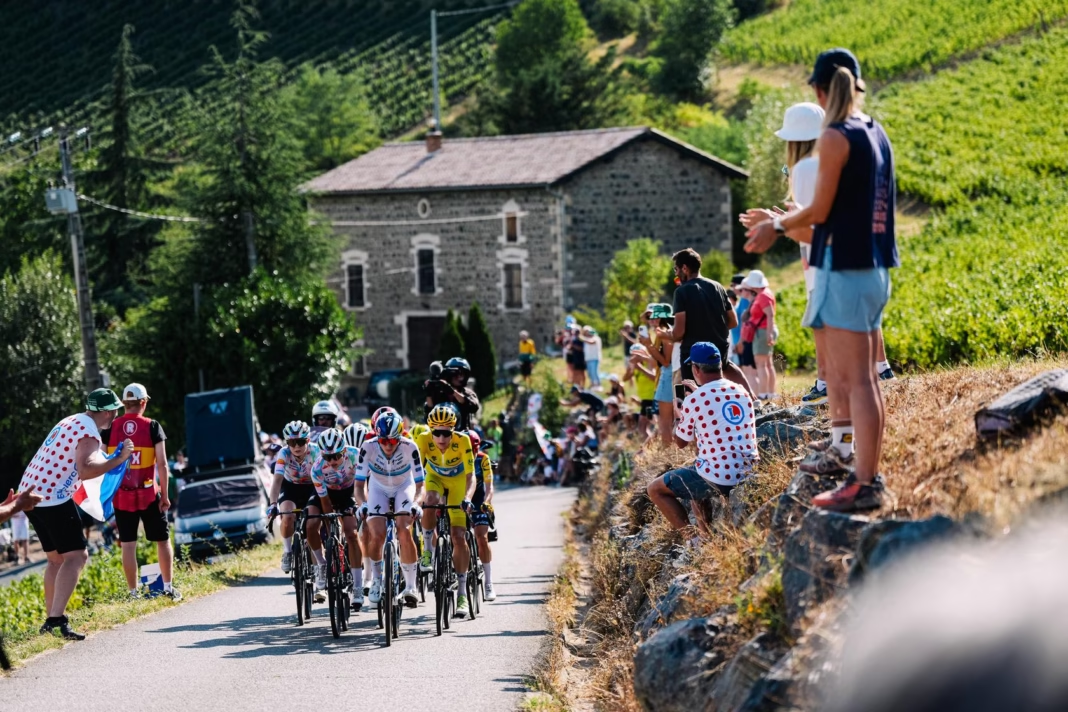

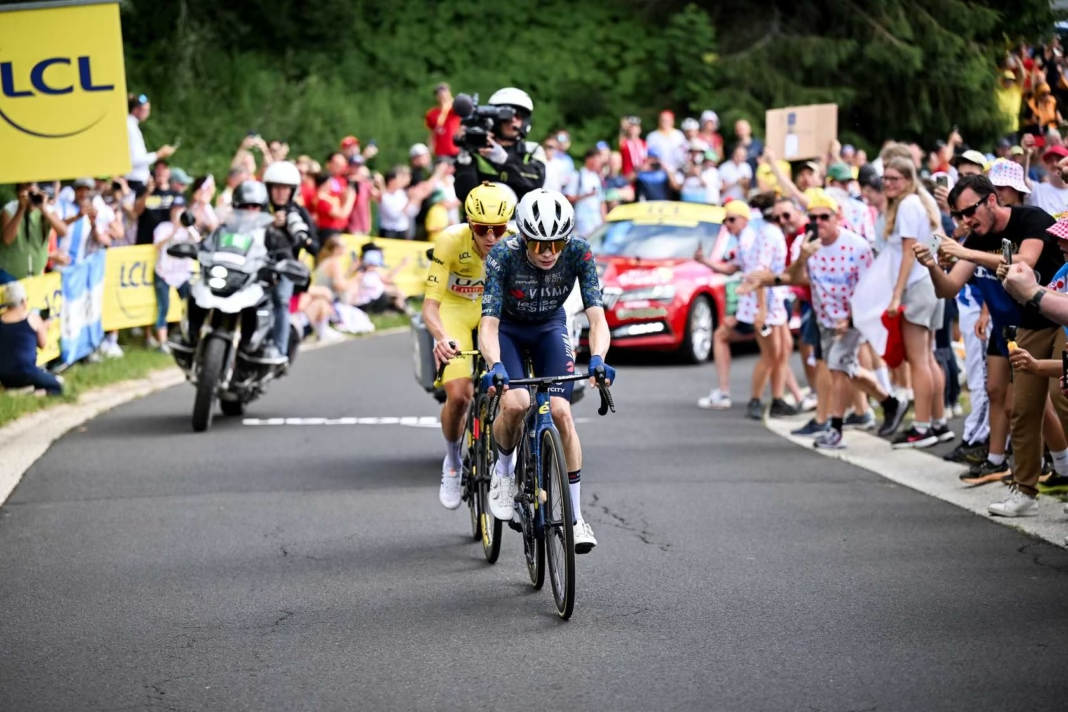
Why Il Lombardia matters at the end of the season
Il Lombardia closes the Monument season after months of racing that began with Milan-San Remo in March. That timing gives it a different psychological feel from the spring Classics. Some riders are desperate for one final major result, others are protecting tired bodies, and a few arrive in exceptional late form after the World Championships and Italian autumn races. For younger riders, simply reaching Lombardia with enough form to influence the race can also be a sign that they are ready for a larger role the following season.
For Grand Tour riders, it is also one of the few Monuments where their climbing ability can be used almost directly. They still need one-day race craft, but they do not have to become cobbled specialists or survive the chaos of a flat sprint. That creates clashes between stage-race leaders and established Classics riders that are difficult to replicate elsewhere.
The result often becomes the final major judgement on a rider’s season. A victory in October cannot erase everything that came before, but winning a Monument after eight months of racing changes how a year is remembered. That is why Il Lombardia remains much more than the last big race before winter.

