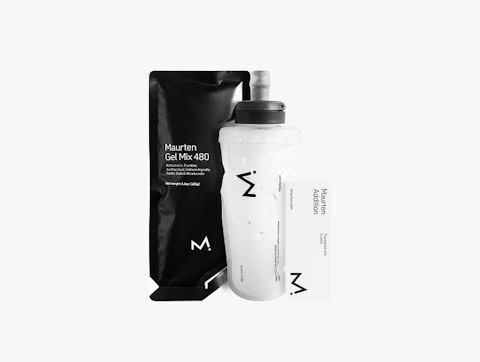
Maurten Gel Mix 480 takes a familiar endurance-fuelling idea and changes the format. One sachet provides 120g of carbohydrate, but instead of being swallowed as a succession of individual gels or diluted into a full-size bottle, the powder is mixed with 200ml of water to create a loose gel carried in a soft flask. For cyclists trying to sustain high carbohydrate intake over long races or training rides, that is an unusually concentrated way of carrying fuel.
The appeal is easy to see. A single flask can hold enough carbohydrate to cover a substantial part of a long ride, and Maurten’s neutral base means it avoids the relentless sweetness that can make conventional gels difficult to tolerate after several hours. The catch is that Gel Mix 480 is not a grab-and-go product. It needs preparation, the water chemistry matters, and 120g of carbohydrate in one container only helps if it fits a sensible fuelling plan rather than becoming a target to consume as quickly as possible.
This article contains affiliate links. ProCyclingUK may earn a commission if you buy through them, at no extra cost to you. You can check the current Maurten Gel Mix 480 price and availability here.
Maurten Gel Mix 480 specifications
| Format | Powder mixed into a loose gel |
| Carbohydrate | 120g per sachet |
| Energy | 480 kcal per sachet |
| Caffeine | None |
| Water required | 200ml |
| Recommended flask | Maurten HydraPak Gel Mix Flask 350ml |
| Preparation time | Mix thoroughly, then rest for 5 minutes |
| Water requirement | Maurten recommends water with no more than 80mg/L calcium |
| Ingredients | Maltodextrin, fructose, xanthan gum, sodium alginate, pectin and sodium bicarbonate |
| UK price | £40 for six servings at the time of writing |
Gel Mix 480 was launched in July 2026 and sits between Maurten’s Drink Mix and ready-to-eat gels. Its texture is thicker than a carbohydrate drink but looser than Gel 100 or Gel 160. The carbohydrate comes from maltodextrin and fructose, while alginate and pectin form the hydrogel structure Maurten uses across much of its endurance range.
The £40 UK box contains six servings, putting each 120g sachet at about £6.67. That is not cheap cycling food, but the comparison depends on what it replaces. Riders already using several premium gels per hour may find the concentrated format competitive, while anyone happy with homemade carbohydrate bottles or ordinary food can fuel for much less.
Why 120g of carbohydrate matters for cyclists
High carbohydrate intake has moved from a niche professional practice into mainstream endurance nutrition. Our guide to how professional cyclists eat during stage races explains why riders now routinely build race plans around 60 to 120g of carbohydrate per hour, depending on the duration, intensity and the rider’s ability to tolerate that intake.
Recent research gives the upper end of that range more support. A 2026 study involving trained cyclists and triathletes compared water, 60g/h and 120g/h of carbohydrate during three hours of moderate-intensity cycling. Critical power fell after the prolonged exercise in every condition, but the decline was smaller as carbohydrate intake increased, with the 120g/h condition producing the highest post-ride critical power. Whole-body carbohydrate oxidation was also higher at the larger intake.
That does not mean 120g/h should suddenly become the default for club rides. The participants were trained endurance athletes, the protocol was tightly controlled and high carbohydrate intake needs to be practised. Gastrointestinal tolerance differs substantially between riders, and the practical target for a normal sportive or endurance ride may be lower. The useful point is that 120g/h is no longer an arbitrary number appearing only in professional team nutrition plans. There is a growing evidence base for very high carbohydrate availability during long, demanding exercise.
Gel Mix 480 packages that amount neatly. One sachet can be consumed across an hour by a rider deliberately targeting around 120g/h, or stretched across a longer period as one part of a mixed fuelling strategy. For many cyclists the second approach will be more realistic. If you are still building a routine for longer rides, the simpler principles in our cycling nutrition guide for beginners are a better starting point than jumping straight to professional-level carbohydrate numbers.
The flask format is the clever part
The strongest argument for Gel Mix 480 is not the hydrogel branding. It is the way the product lets a rider carry a lot of carbohydrate in a small, sip-by-sip format. Maurten’s dedicated 350ml soft flask is designed around the sachet, with a 200ml fill line, wide opening and bite valve. The completed mix can sit in a jersey pocket, running vest or waist belt and be consumed gradually rather than requiring an entire gel to be opened and swallowed at once.
That has obvious advantages in long gravel events, ultra-distance rides and races where repeatedly opening wrappers becomes irritating. It also makes intake easy to divide. A rider who wants 60g of carbohydrate over an hour can consume roughly half a flask rather than carrying and timing several individual products. Maurten also says the prepared mix can be refrigerated for up to 72 hours, so there is some scope to prepare it ahead of time.
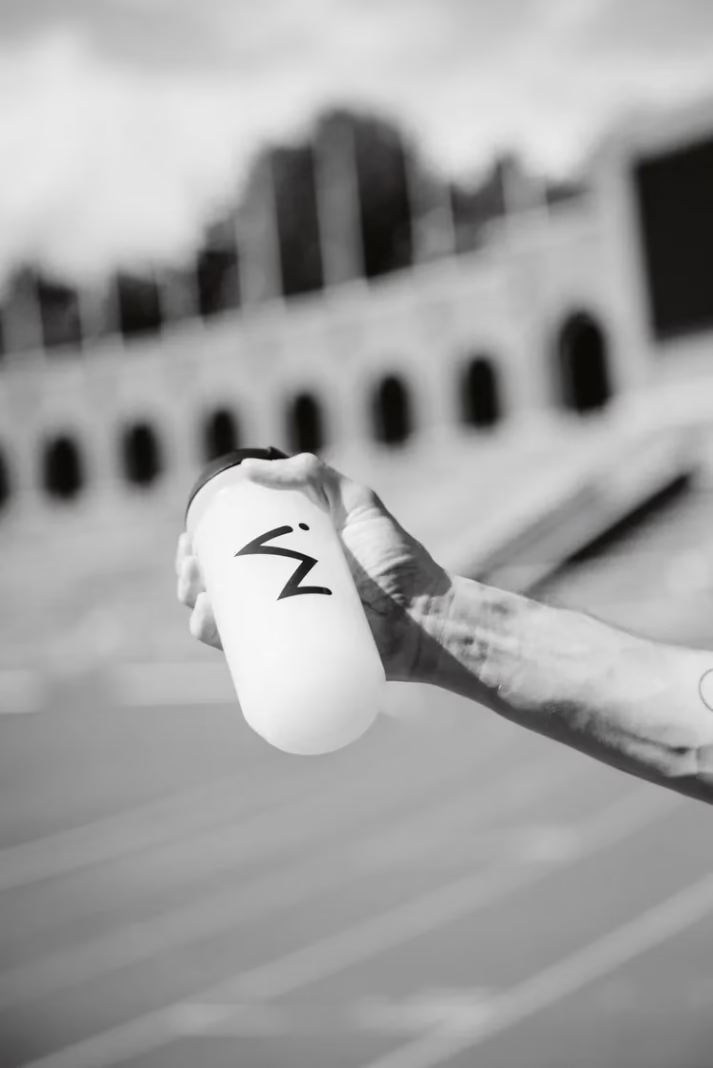
There are practical drawbacks. The mix must be shaken thoroughly and then left for five minutes. Maurten also recommends water containing no more than 80mg of calcium per litre because higher mineral content can make the product harder to dissolve. That is a surprisingly fussy requirement for something intended to simplify endurance fuelling, particularly when travelling to an event and relying on unfamiliar tap or bottled water.
The dedicated flask is useful rather than essential, but other soft flasks are not necessarily shaped around the sachet or the 200ml preparation volume. Riders who prefer a conventional bidon may find Drink Mix easier. Gel Mix 480 makes most sense when its concentrated pocket-sized format solves a specific problem.
If that format fits your riding, you can see the current Gel Mix 480 offer through Maurten.
The hydrogel claim needs separating from the carbohydrate evidence
Maurten says its alginate-and-pectin hydrogel forms in the acidic environment of the stomach, encapsulating carbohydrate before it reaches the intestine. The company presents that process as a way of making concentrated carbohydrate easier to tolerate. The mechanism is central to the brand, but the independent evidence is more nuanced than the marketing language suggests.
Controlled studies comparing hydrogel carbohydrate products with nutrient-matched conventional carbohydrate solutions have not consistently found better performance, carbohydrate availability or gastrointestinal comfort simply because alginate and pectin were present. One cycling study found no meaningful difference in substrate oxidation, gastrointestinal comfort or subsequent performance. Separate endurance-running research likewise found no improvement in blood glucose response, carbohydrate oxidation, gastrointestinal symptoms or time-to-exhaustion performance when the hydrogel components were added to an otherwise matched drink.
That distinction is important for Gel Mix 480. There is good evidence that consuming sufficient carbohydrate during prolonged exercise matters. There is newer evidence that trained athletes can benefit from very high intakes such as 120g/h in specific circumstances. The case that Maurten’s hydrogel itself produces an additional performance or gut-tolerance advantage over an equivalent carbohydrate mix is less clear.
For buyers, the practical question is therefore not whether the hydrogel technology is uniquely fast. It is whether Gel Mix 480 makes a high-carbohydrate plan easier to execute. The concentrated flask, neutral flavour and ability to sip rather than swallow separate gels provide a tangible answer to that question even without assuming an extra physiological benefit from the hydrogel structure.
It is concentrated fuel, not hydration
The 200ml of water used to prepare Gel Mix 480 can make the product look like an all-in-one bottle, but it should not be treated that way. For a long ride, 200ml is a very small amount of fluid relative to normal hydration needs. In warm conditions a rider using a full sachet over an hour could still need substantially more water or electrolyte drink alongside it.
That separation can actually be useful. Keeping carbohydrate in one flask and hydration in a normal bidon allows riders to adjust drinking independently as temperature changes. On a cool ride you may want the same carbohydrate intake with less fluid. On a hot day you can increase water and electrolytes without accidentally doubling the carbohydrate concentration.
It also means Gel Mix 480 should not be judged as a replacement for a hydration product. If sodium and fluid replacement are the priority, our guide to the best electrolyte tablets for cycling covers that side of the equation. Gel Mix 480 is primarily a compact carbohydrate-delivery system.
How it compares with gels, drink mix and normal cycling food
Maurten already sells several ways to reach the same carbohydrate total. Three Gel 160 sachets provide 120g of carbohydrate with no mixing, while Drink Mix 320 provides 80g in a conventional bottle. Gel Mix 480 sits between them. It is more concentrated and easier to sip than stacking several gels, but it requires more preparation than either a ready-to-eat gel or a normal drinks bottle.
Normal food remains perfectly valid too. A rider can reach substantial carbohydrate numbers using rice cakes, bars, sandwiches, bananas and cheaper drink powder, especially when intensity is low enough to chew comfortably. Our look at Lucho Dillitos energy blocks is a good example of a very different approach to portable cycling fuel. Gel Mix 480 becomes more attractive as pace rises, ride duration increases and convenience starts to matter more than cost.
The neutral taste is another deliberate difference. Maurten sells optional Cola, Menthol, Orange and Apple Additions, but the base mix contains no added flavour. That may be welcome late in a long event when sweet flavour fatigue becomes a problem. Riders who want a conventional flavoured gel straight from the packet may find the whole system unnecessarily elaborate.
At £40 for six servings, Gel Mix 480 is clearly a premium product. The value argument is strongest for riders who would otherwise carry several premium gels and who specifically want a concentrated flask system. You can check the current UK price before deciding whether the format justifies the cost.
Who is Maurten Gel Mix 480 for?
Road racers, gravel riders, ultra-distance cyclists and fast sportive riders are the clearest audience. These are situations where carbohydrate demand can be high, pockets are finite and eating solid food becomes progressively harder as intensity rises. A flask holding up to 120g of carbohydrate can simplify the logistics considerably.
It is less compelling for short rides, easy endurance sessions or riders whose normal fuelling target is modest. There is little reason to pay for such a concentrated system if a banana, bar and normal carbohydrate bottle already cover the ride. It also asks more of the user than the name suggests: water mineral content needs checking, the mixture needs a five-minute rest and high carbohydrate intake should be practised rather than introduced on race day.
For riders already consuming 80 to 120g/h and looking for a cleaner way to carry that fuel, Gel Mix 480 solves a real logistical problem. For everyone else, it is more useful as an option than as a new benchmark they suddenly need to hit.
Verdict
Maurten Gel Mix 480 is an interesting product because the useful innovation is simpler than the science-heavy branding around it. Packing 120g of carbohydrate into a sip-by-sip soft flask gives endurance cyclists another way to carry a large amount of fuel without filling pockets with gel wrappers or turning an entire bidon into a dense carbohydrate drink.
The underlying case for high carbohydrate intake during long, hard cycling is increasingly strong, including recent work at 120g/h. The evidence that Maurten’s hydrogel structure itself adds a further performance or gastrointestinal advantage over an equivalent carbohydrate solution remains mixed. That makes the format, rather than a unique physiological effect, the strongest reason to buy it.
If you race long events, already practise high carbohydrate intake and value compact fuelling, Gel Mix 480 is a credible addition to the options available. If your rides are shorter, your carbohydrate target is lower or you prefer straightforward food and bottles, it is difficult to justify the extra preparation and cost. For the riders it is aimed at, though, Gel Mix 480 offers a genuinely practical way to carry 120g of carbohydrate in one place.