

The men’s Copenhagen Sprint 2026 has quickly found its place on the WorldTour calendar. It is flat, long, exposed and built for fast finishers, but it is not quite as simple as waiting for the final 200 metres. Danish roads, wind, city-centre positioning and a 228.2km distance give the race just enough difficulty to stop it becoming a routine sprint procession.
The second edition takes place on Sunday, 14th June, with the peloton starting in Roskilde and finishing in Copenhagen. After a long approach across Zealand, the riders enter the capital for five laps of a 10km finishing circuit. That should give the lead-out trains time to learn the roads, but it also means the fight for position will intensify every time the peloton passes through the same key sections.
Jordi Meeus won the inaugural men’s race in 2025, beating Alexis Renard and Émilien Jeannière after a chaotic finale. That first edition set the tone for the event: the sprinters should get their chance, but only if they survive the stress, keep their lead-outs organised and avoid being caught behind late disruption.
For more race context, see our Men’s Copenhagen Sprint 2026 route guide, full start list for Copenhagen Sprint Men 2026, Copenhagen Sprint 2026 team-by-team guide and how to watch Copenhagen Sprint 2026 in the UK.
What kind of rider can win Copenhagen Sprint?
Copenhagen Sprint is first and foremost a sprinters’ race. The route does not contain the climbs needed to remove the fastest riders, and the long run into Copenhagen should give sprint teams time to control the breakaway. But the race is more complicated than a simple flat finish.
The winner needs:
- Top-end sprint speed
- A strong lead-out train
- Good positioning across the final circuit
- Enough endurance to stay sharp after 228.2km
- Comfort in crosswinds and exposed roads
- The ability to stay calm in a crowded finale
The distance matters. Some fast riders are at their best after 160km, but Copenhagen asks them to sprint after a full WorldTour one-day race distance. That should favour sprinters with endurance, strong teams and the ability to handle nervous racing.
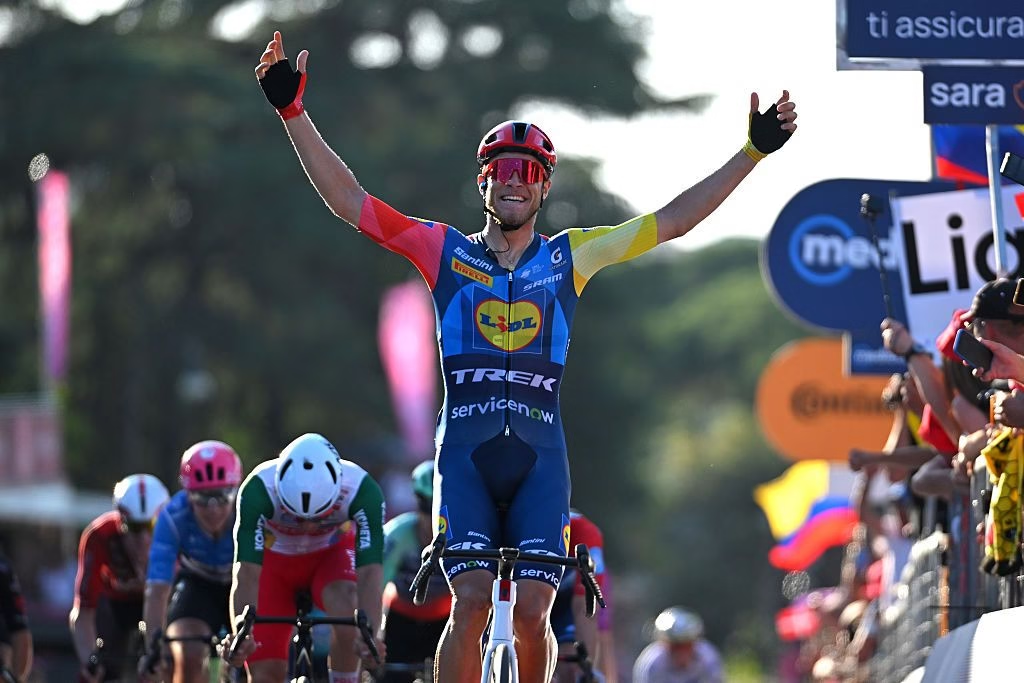 Photo Credit: Getty
Jonathan Milan
Jonathan Milan starts as the benchmark. He has the power, speed and form line to make him the obvious favourite, especially after confirming his Grand Tour sprint level again at the Giro d’Italia. When a race is flat, long and likely to finish in a bunch sprint, Milan is one of the first names to consider.
Copenhagen should suit him because the finish is not just about pure acceleration. It is about holding position, producing power after a long day and surviving the final fight between lead-out trains. Milan has become one of the most imposing sprinters in that kind of finish, with the strength to keep speed high when others begin to fade.
Lidl-Trek bring a clear lead-out structure around him. Simone Consonni is an obvious final-kilometre asset, while Søren Kragh Andersen, Edward Theuns, Otto Vergaerde, Mathias Norsgaard Jørgensen and Max Walscheid give the team enough experience and power to control the late approach. Copenhagen is the sort of race where that depth should matter.
If the race is controlled and the bunch comes back together, Milan is the rider everyone else has to beat.
Jasper Philipsen
Jasper Philipsen is the most obvious rival. Few sprinters are as dangerous when a finale becomes messy, and Copenhagen’s finishing circuit could easily become exactly that kind of race.
Philipsen does not need the cleanest lead-out in the peloton to win. He reads wheels well, moves through traffic and has the speed to punish hesitation from more structured sprint trains. In a race where the final laps may be crowded and nervous, that ability to improvise could be decisive.
Alpecin-Premier Tech also bring enough experience to keep him in the right part of the peloton. Jonas Rickaert and Florian Sénéchal can both be useful in a high-speed finale, while the team know how to commit fully to a sprinter when the route demands it.
Milan may have the strongest raw power, but Philipsen is the rider who can turn a slightly chaotic sprint into an advantage. If the lead-outs begin to break down, his chances rise quickly.
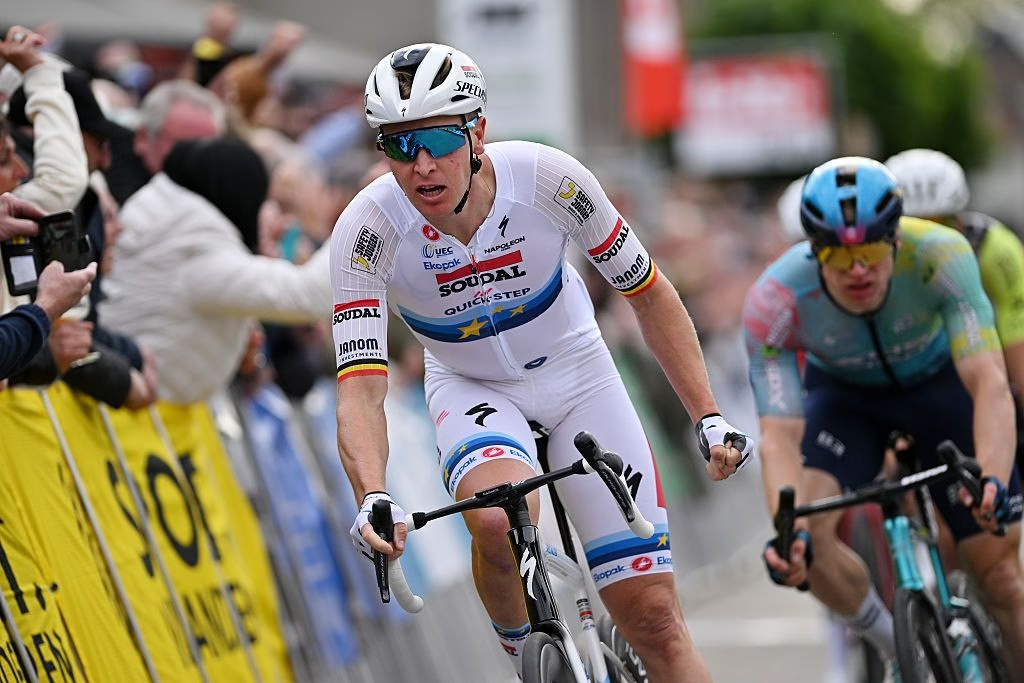 Photo Credit: RCS
Tim Merlier
Tim Merlier is another major threat. He is one of the fastest pure sprinters in the race and will not need many chances if Soudal Quick-Step can deliver him into position.
The challenge for Merlier is the nature of the race before the sprint. Copenhagen is long enough to punish any rider who has spent too much time fighting for position, and the exposed approach could make the final hour more draining than the profile suggests. But if Merlier reaches the last kilometre in the right place, he has the speed to win.
Soudal Quick-Step’s job is simple in theory: keep the race controlled, keep Merlier out of trouble, and make sure he is not starting his sprint from too far back. Bert Van Lerberghe is a key part of that plan, while Yves Lampaert, Casper Pedersen and Fabio Van Den Bossche give the team more strength before the final kilometre.
Merlier is not the most complicated contender to assess. If he is fresh, sheltered and positioned, he can win.
Jordi Meeus
Jordi Meeus returns as the defending champion, and that matters. He has already shown that he can win this race, handle the Copenhagen finale and turn the opportunity into a WorldTour victory.
The 2025 win was important because it gave Meeus a direct reference point. This is not an abstract sprint race for him. He knows the rhythm of the event, the stress of the final circuit and the timing needed to finish the job. That experience should help Red Bull-BORA-hansgrohe, especially in a race that is still new enough for small details to matter.
Danny van Poppel is likely to be crucial if Meeus is to repeat. The Dutchman remains one of the best lead-out riders in the peloton, and Copenhagen is exactly the kind of race where that calm, late positioning can make the difference. Arne Marit, Mick van Dijke, Mattia Cattaneo, Emil Herzog and Gianni Moscon give the team enough support before the final lead-out takes over.
Meeus may not start ahead of Milan, Philipsen or Merlier in raw sprint reputation, but he starts with the best Copenhagen record. That makes him a serious contender again.
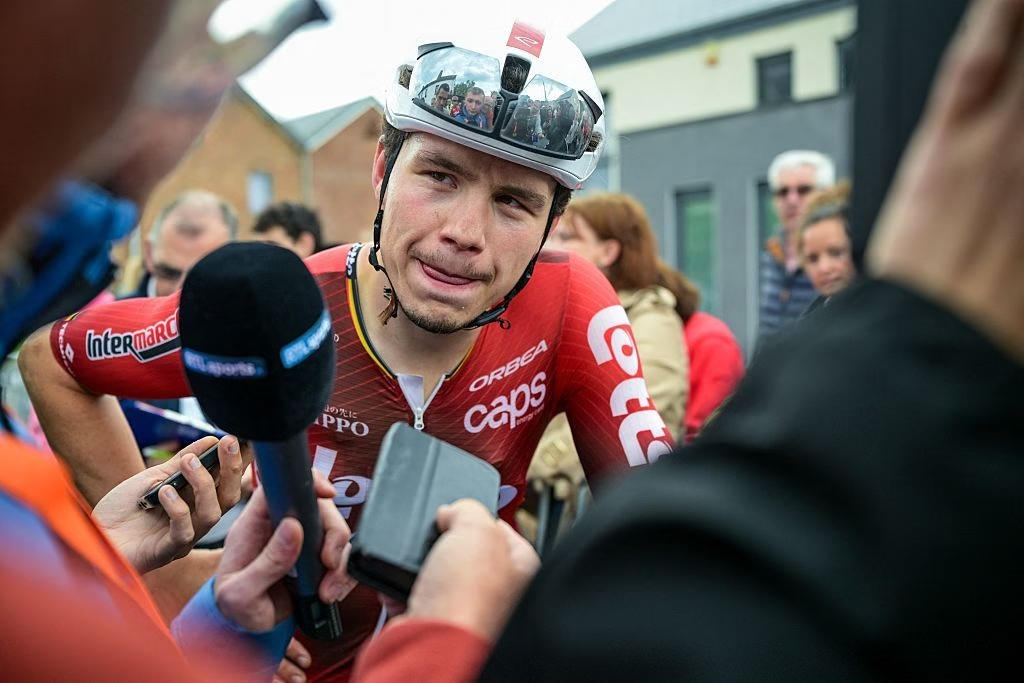 Photo Credit: Getty
Arnaud De Lie
Arnaud De Lie gives Lotto-Intermarché a different kind of sprint option. He is not just a pure drag-strip sprinter. He can handle long, physical racing, fight for position and cope if the race becomes more attritional than expected.
That could make him especially dangerous if the wind rises or the final circuit becomes more selective through stress rather than terrain. Copenhagen may be flat, but 228.2km on exposed roads can still create fatigue. De Lie is the sort of rider who can benefit if the race becomes less clean and more muscular.
His best chance may come if the final is not perfectly controlled. If the lead-out trains lose shape, or if a small split forms before the last lap, De Lie has the strength and punch to take advantage. He is also capable of winning a reduced sprint if the field is thinned down by wind or late pressure.
A standard bunch sprint against Milan, Philipsen and Merlier is difficult. A hard, nervous, reduced sprint brings De Lie much closer to the top of the list.
Dylan Groenewegen
Dylan Groenewegen brings proven sprint pedigree and a strong record in flat WorldTour finishes. Copenhagen is the type of race where he should expect to be involved if Unibet Rose Rockets can keep him sheltered and well placed.
The main question is whether he can still match the very top tier in a race this stacked. Milan, Philipsen and Merlier are brutal opponents in a straight sprint, while Meeus and De Lie bring either race-specific confidence or greater physical range. Groenewegen’s route to victory is still clear, though: a controlled race, a clean lead-out and a final 200 metres where he can launch without interruption.
Unibet Rose Rockets will need to keep the final as simple as possible. Groenewegen is at his best when he can open up cleanly rather than fight through bodies in the final metres. The Copenhagen circuit may not make that easy, but the race profile still gives him a strong platform.
He is not the top favourite, but he is a genuine win contender if the finish is orderly.
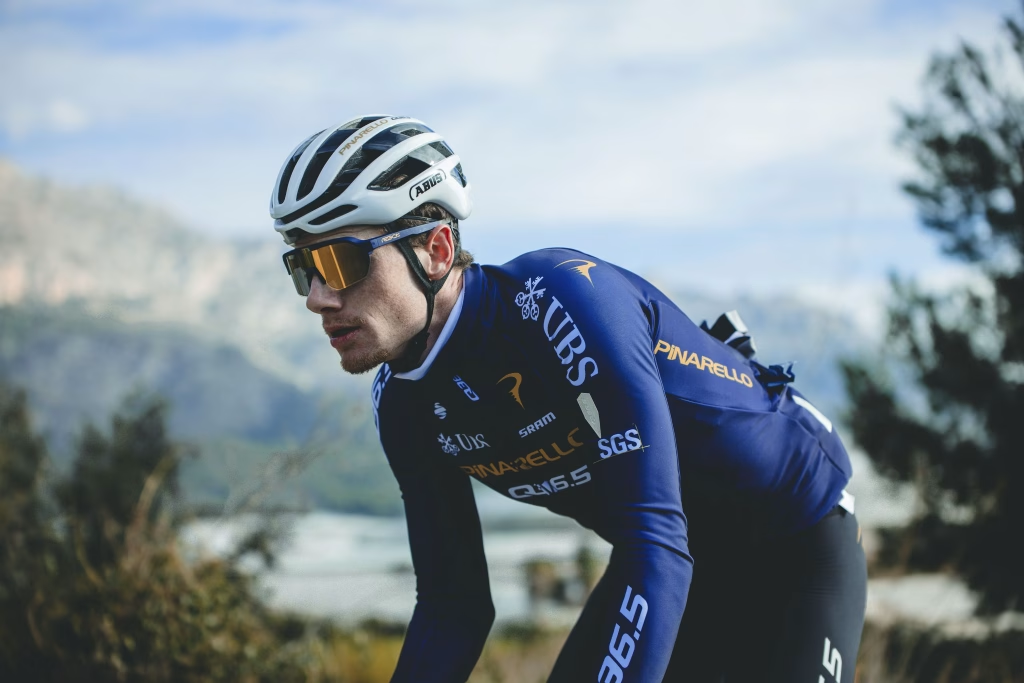 Photo Credit: Getty
Sam Bennett
Sam Bennett is another experienced sprinter who cannot be ignored. He has the calm and timing needed for high-pressure finishes, and that can still count for a lot in a race where the final laps may become messy.
Bennett’s challenge is the same as several other riders in the second tier: the top-end competition is severe. Beating Milan, Philipsen, Merlier, Meeus, De Lie and Groenewegen in the same sprint requires more than just being fast. It requires perfect timing, good team support and a finish that opens at exactly the right moment.
Pinarello-Q36.5 Pro Cycling Team also bring Matteo Moschetti, which gives them another fast rider if the final becomes complicated. Bennett is the more obvious headline name, but the team have options if the sprint does not unfold cleanly.
The positive for Bennett is that Copenhagen should at least give him the type of finish he wants. If he is still well placed into the final kilometre, he has the experience to take advantage of any hesitation around him.
Pascal Ackermann
Pascal Ackermann gives Team Jayco AlUla a strong sprint card and a rider who can still make an impact in this type of race. He may not be the automatic favourite against the biggest names here, but he has the physical profile for a long flat one-day race.
Ackermann’s best chance comes if the final is hard but still comes back together. He can handle fatigue, and if the top sprint teams start watching each other, he is the kind of rider who can slip into the right wheel and produce a result.
Team Jayco AlUla also have Luka Mezgec and Christopher Juul-Jensen, two riders who can help with positioning and control before the sprint. Ackermann will still need the final kilometre to open cleanly, but the race gives him a credible route to a high finish.
A win would require a near-perfect final kilometre, but a top-five finish is well within reach.
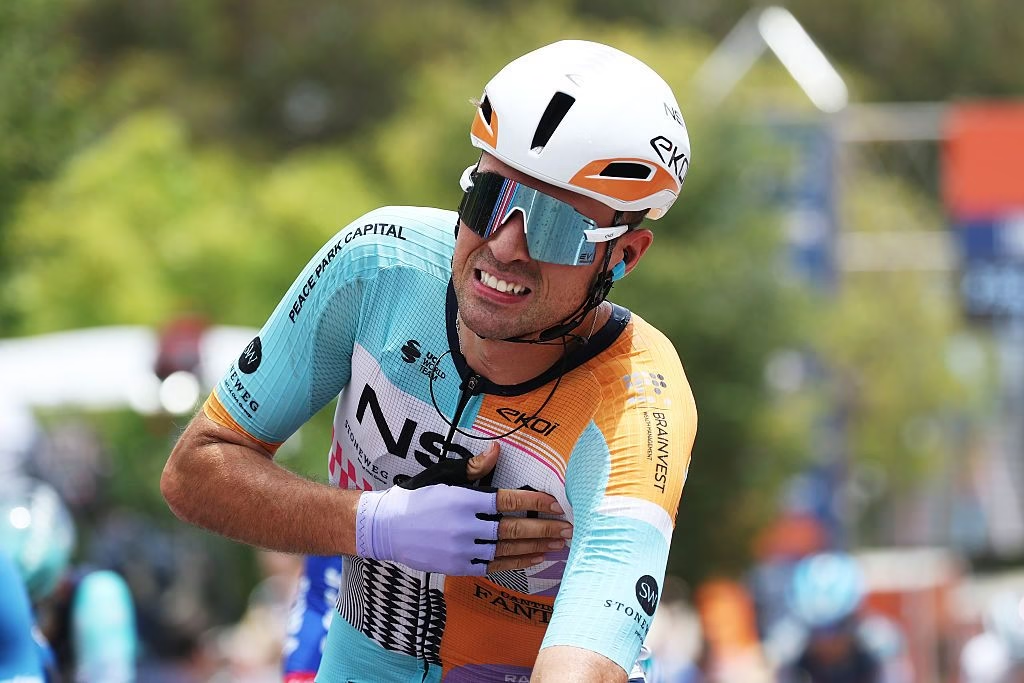 Photo Credit: Getty
Ethan Vernon
Ethan Vernon is an interesting contender because he combines speed with a strong track background and the ability to produce power in a fast, structured finale. Copenhagen’s final circuit should suit riders who can hold position, accelerate hard and cope with repeated changes in speed.
His route to victory depends on support and timing. Against Milan, Philipsen and Merlier, he cannot afford to be boxed in or start too far back. But if he is placed properly, he is fast enough to make the final podium conversation.
Israel – Premier Tech have a squad that can help keep him in position, with Ryan Mullen and Tom Van Asbroeck particularly useful in the late approach. Vernon may sit slightly below the headline favourites, but he is one of the riders most likely to benefit if the big teams misjudge the sprint.
Milan Fretin
Milan Fretin is another rider who could be visible if the sprint becomes less predictable. He was part of the Cofidis squad that finished 2nd here in 2025 with Alexis Renard, and that gives the team a useful memory of what this race demands.
Fretin has enough speed to matter and could benefit from a finale where some of the bigger names are marked, boxed in or caught behind late disruption. Cofidis also bring Renard again, which gives them two riders who can be relevant if the final is less structured than expected.
The field is deep enough that Fretin may need a slightly messy race to win, but that is not unrealistic in Copenhagen. The first edition already showed how a late incident or positioning problem can reshape the sprint. If the final lap becomes disorganised, Fretin is the sort of rider who can turn good positioning into a major result.
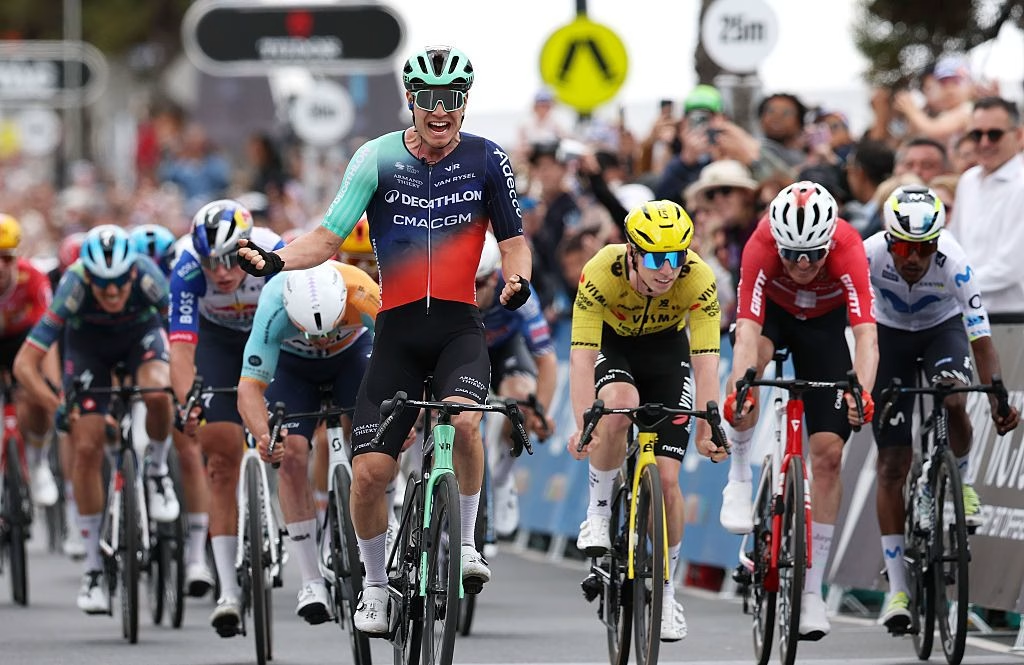 Photo Credit: Getty
Tobias Lund Andresen
Tobias Lund Andresen gives the race a Danish storyline. A home rider with sprint speed in a WorldTour race finishing in Copenhagen is an obvious focal point, and Decathlon CMA CGM Team should know how valuable a strong result would be here.
The route suits him, but the level of sprint opposition makes victory difficult. Milan, Philipsen, Merlier and Meeus all bring either more proven top-end speed or stronger lead-out structures. Lund Andresen’s best chance is if the final becomes slightly less predictable, or if he can use home-road confidence to stay calm when others are fighting for the same space.
He is unlikely to be the safest outright pick against the elite pure sprinters, but he is one of the most interesting home riders in the race. If there is hesitation in the final or if the front group is reduced, his chances improve.
Søren Wærenskjold
Søren Wærenskjold gives Uno-X Mobility a powerful option for a race that may not be as simple as the profile suggests. He is not the same kind of pure sprinter as Milan or Merlier, but he has the engine, positioning strength and finishing speed to make the most of a long, exposed day.
His best route is probably a harder sprint, a late move that forces hesitation, or a reduced group where top-end drag-strip speed is less decisive. Uno-X also bring Erlend Blikra and Stian Edvardsen-Fredheim, so they have several ways to race the finale if the bunch starts to fracture.
A standard bunch sprint is a tough ask, but Wærenskjold is exactly the type of rider who can make the sprint teams uncomfortable if the wind, distance or final circuit create openings.
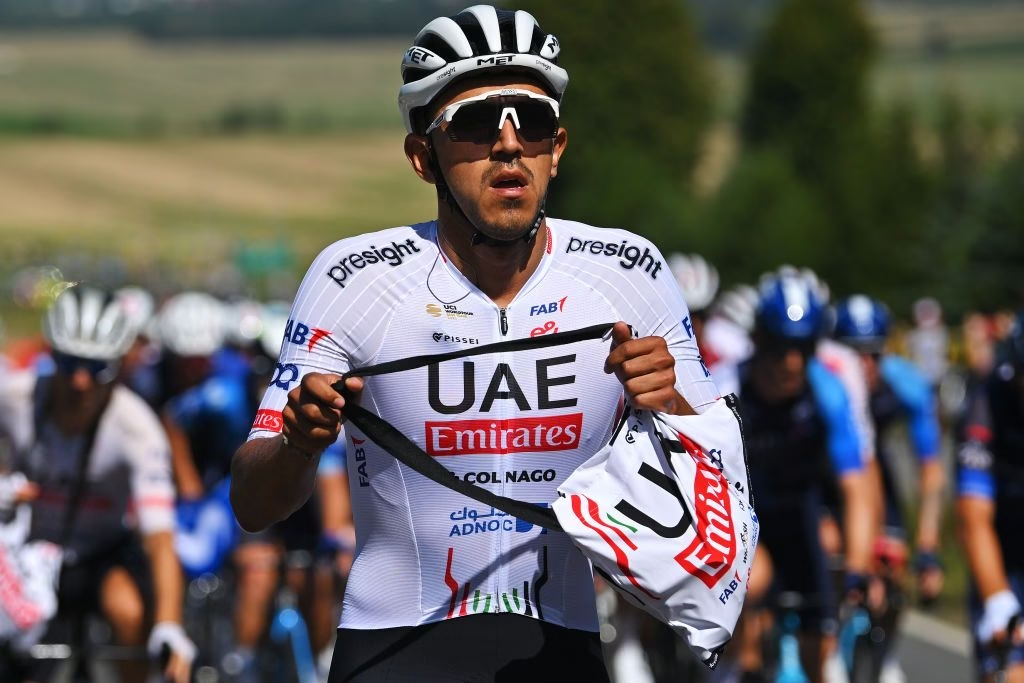 Photo Credit: Getty
Sebastian Molano
Sebastian Molano gives UAE Team Emirates-XRG a genuine sprint option. The Colombian has the speed to be involved if he is still well positioned in the final kilometre, and the race’s flat profile gives him a clear route into contention.
The challenge is depth. This is a field packed with elite sprinters and specialist lead-outs, so Molano will need a clean final and strong support. UAE Team Emirates-XRG also have Mikkel Bjerg, Rune Herregodts and Vegard Stake Laengen, riders who can contribute to positioning and control across the exposed approach.
Molano is not the favourite, but he is more than capable of taking advantage if the biggest sprint teams misjudge the final lap.
Arvid de Kleijn
Arvid de Kleijn gives Tudor Pro Cycling Team another sprint option worth mentioning. He has the top-end speed for a flat finish, and Copenhagen’s route gives him the kind of finish where he can aim for a high result if his team can keep him out of trouble.
Tudor also bring Luca Mozzato, Maikel Zijlaard and Fabian Lienhard, which gives them useful experience for the late circuit. De Kleijn’s challenge is not whether the route suits him. It does. The challenge is whether he can find enough space against some of the best sprint trains in the race.
A podium would be a big result, but he should be in the top-10 conversation.
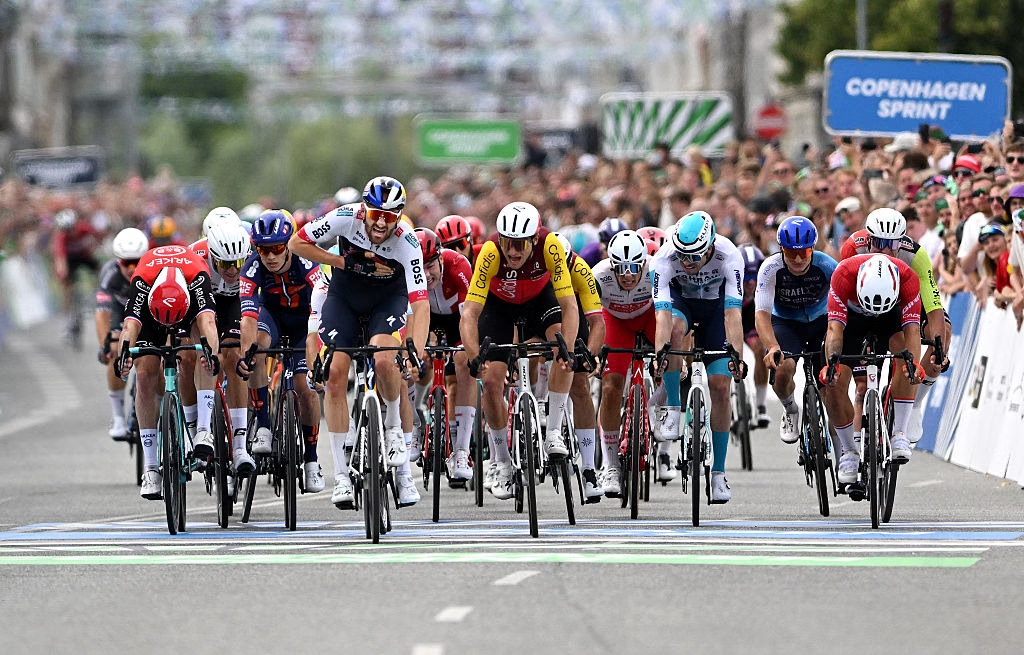
Could an attacker win?
A solo or small-group attacker can win, but it will be difficult. The route is flat, the sprint field is deep, and too many teams have a reason to chase. Lidl-Trek, Alpecin-Premier Tech, Soudal Quick-Step, Red Bull-BORA-hansgrohe, Lotto-Intermarché, Team Picnic PostNL, Team Jayco AlUla and Unibet Rose Rockets will all want the race back together.
The best chance for an attacker comes through wind, late disruption or a strong move on the final circuit when the sprint teams are hesitating. Riders such as Mikkel Bjerg, Søren Kragh Andersen, Florian Sénéchal, Jonas Rickaert, Danny van Poppel, Michael Valgren, Søren Wærenskjold and Taco van der Hoorn all have the experience or engine to make a move dangerous if the bunch loses organisation.
But under normal conditions, the sprinters should win. The race is too favourable and the sprint field too strong for the peloton to be casual.
Teams with the strongest lead-outs
Lidl-Trek look especially strong if they commit fully to Milan. Simone Consonni gives them a proven final lead-out option, while Søren Kragh Andersen, Edward Theuns, Otto Vergaerde, Mathias Norsgaard Jørgensen and Max Walscheid provide depth before the final kilometre.
Alpecin-Premier Tech are dangerous because they understand chaotic sprint finishes. Philipsen does not need everything to be perfect, and the team have the experience to move him through the final kilometres.
Soudal Quick-Step are always relevant in a flat sprint when they bring Merlier. Their challenge is making sure he starts the sprint from close enough to the front, with Bert Van Lerberghe again likely to matter late.
Red Bull-BORA-hansgrohe have the defending champion in Meeus and one of the best lead-out riders in the race in Danny van Poppel. That alone makes them one of the most important teams in the final.
Team Picnic PostNL, Team Jayco AlUla, Lotto-Intermarché, Unibet Rose Rockets and Pinarello-Q36.5 Pro Cycling Team all have enough sprint interest to keep the chase organised, but they may need to be sharper than usual because the top favourites will not leave much room for correction.
-
 Photo Credit: A.S.O./Billy Ceusters
Top 3 prediction
1. Jonathan Milan
Milan is the safest pick. The route suits him, the distance should not blunt his power, and he arrives with the strongest sprint profile in the race. If Lidl-Trek deliver him properly, he is the rider most likely to win.
2. Jasper Philipsen
Philipsen is the danger if the finale becomes messy. He can surf wheels, improvise and win from situations where other sprinters need more structure. Copenhagen’s final laps could suit that skill set.
3. Tim Merlier
Merlier has the speed to win outright, but he needs the final to be clean. If Soudal Quick-Step place him well, he can beat anyone here. He takes the final podium spot in this prediction because the route is so favourable to pure sprint speed.
Men’s Copenhagen Sprint 2026 contenders verdict
The men’s Copenhagen Sprint 2026 should be one of the strongest sprint showdowns of the season. The route is flat enough for the fastest riders, long enough to reward endurance, and exposed enough to keep the race nervous before the final circuit.
Jonathan Milan is the clearest favourite. He has the power, form and team structure to control the final. Jasper Philipsen is the most dangerous rival if the sprint becomes chaotic, while Tim Merlier remains one of the few riders with the raw speed to beat Milan in a clean drag race.
Jordi Meeus deserves major respect as defending champion, especially with Danny van Poppel likely to be central to the Red Bull-BORA-hansgrohe lead-out. Arnaud De Lie, Dylan Groenewegen, Fabio Jakobsen, Sam Bennett, Pascal Ackermann, Ethan Vernon, Milan Fretin, Tobias Lund Andresen, Sebastian Molano, Arvid de Kleijn and Søren Wærenskjold all add depth to a field that looks built for a high-speed finish in Copenhagen.
The route says sprint. The start list says sprint. The only real question is whether the wind, the final circuit or late positioning chaos can disrupt the plan before the fastest riders get their chance.

