
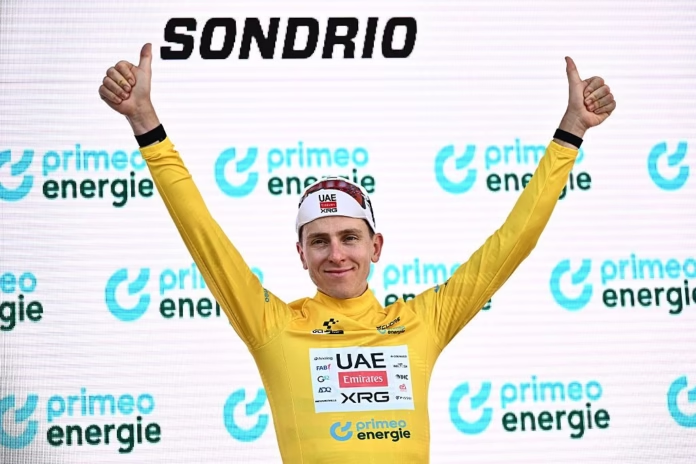
The Men’s Tour de Suisse 2026 reaches its final day on Sunday, 21st June, with the queen stage in Villars-sur-Ollon offering one last chance to test Tadej Pogačar before the race is almost certainly wrapped up in yellow. After winning the opening stage from long range and then adding the Aarburg time-trial by the narrowest possible margin, Pogačar heads into the final mountain stage with the race firmly under his control.
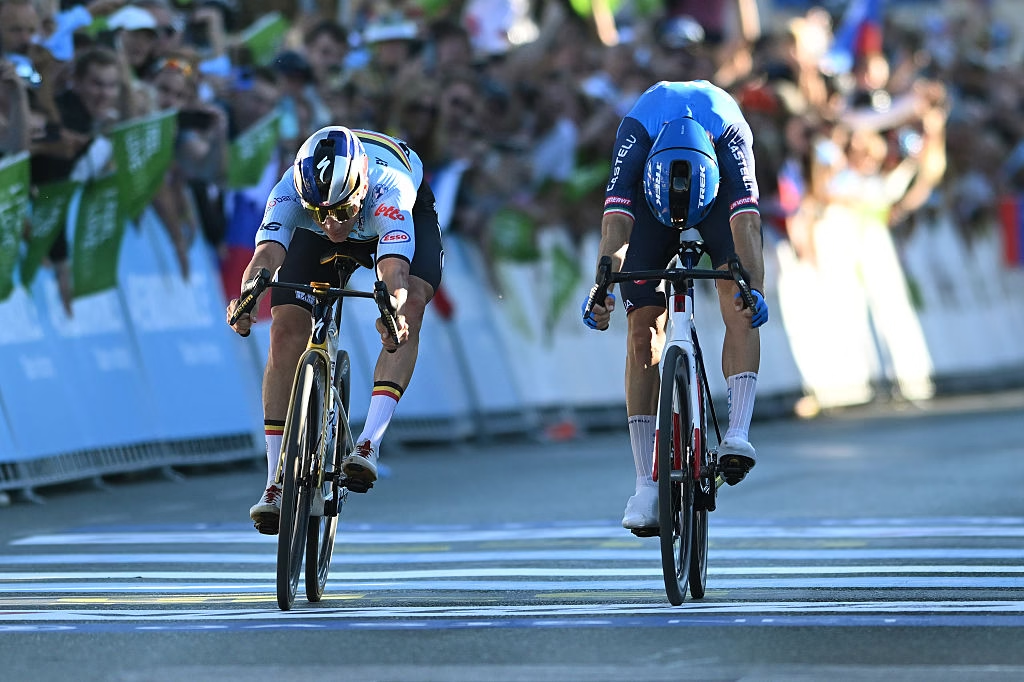
Stage 4 did not change the fundamental picture of the race. It sharpened it. Pogačar beat Mathieu van der Poel by just four hundredths of a second in Aarburg, stopping the clock a fraction faster than the Dutchman after a 23.8km time-trial that became far more dramatic than expected. Van der Poel came close to a remarkable specialist win, Tobias Foss and Mathias Vacek also produced strong rides, and Primož Roglič climbed back into the broader GC conversation, but the main result was simple: Pogačar tightened his grip again.
Now comes the final question. Can anyone put him under real pressure on the hardest stage of the race?
The answer is probably no, but Villars-sur-Ollon is still a serious test. The stage covers 151.1km and includes 4,226m of climbing, making it by far the hardest day of the 2026 Tour de Suisse. The official route gives it a 5/5 difficulty rating, and it comes after a week where the race has already been shaped by long-range attacks, breakaway days, stormy conditions and a fast time-trial.
For wider race context, see our Men’s Tour de Suisse 2026 full route guide, the full start list for Men’s Tour de Suisse 2026, our Men’s Tour de Suisse 2026 team-by-team guide and our Men’s Tour de Suisse 2026 stage 4 live viewing and start time update.
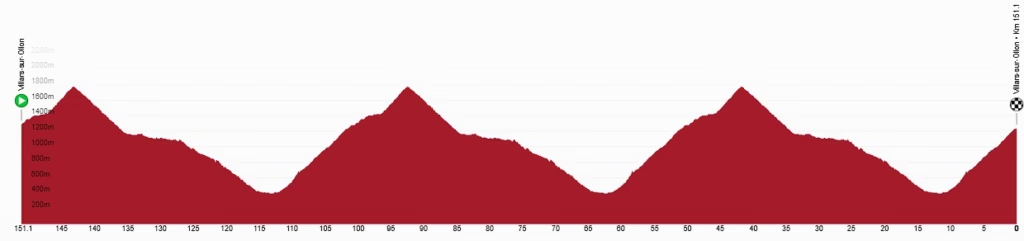
Men’s Tour de Suisse 2026 stage 5 route
Stage 5 starts and finishes in Villars-sur-Ollon, with the riders covering 151.1km and 4,226m of elevation. After four stages built around hilly circuits, breakaway opportunities and one time-trial, this is the race’s clearest high-mountain test.
The official Tour de Suisse route describes the final day as the queen stage, and the numbers back that up. There is barely any room to hide, with repeated climbing around Villars and the Col de la Croix making this a stage that should be selective long before the final kilometres.
This is not a gentle pre-Tour spin. It is the kind of stage that can expose riders who have been riding on the edge all week. The climbing load is heavy enough to make the stage decisive for the podium, even if Pogačar’s overall lead looks close to untouchable.
The route should create several different layers of racing. UAE Team Emirates-XRG will want to keep Pogačar safe and avoid unnecessary risk. The riders behind him will be fighting for the podium, top five, stage win and Tour de France form signals. Breakaway riders may also fancy their chances if UAE are willing to let non-threatening names go up the road.
Why stage 5 matters
Stage 5 matters because it is the hardest stage of the race and the last meaningful climbing test before the Tour de France for several riders.
Pogačar has already done more than enough to make this Tour de Suisse feel like a personal demonstration. His stage 1 attack from around 70km out was the kind of performance that immediately changed the race. His time-trial win in Aarburg then showed that his power and precision are also in place. Villars-sur-Ollon gives him one more chance to show how sharp his climbing is before July.
For everyone else, the stakes are different. Richard Carapaz needs a strong ride to protect or improve his podium position. Primož Roglič needs evidence that his climbing legs are where they need to be after a time-trial that brought him back into the top-10 conversation rather than the stage-winning fight. Tom Pidcock, Andrea Bagioli, Aleksandr Vlasov, Brandon McNulty, Mathias Vacek and Finlay Pickering all have reasons to treat the final stage seriously.
The race may not be open for yellow, but it is still open beneath Pogačar. In a five-day race, one bad day can undo everything. On a stage with more than 4,200m of climbing, the podium can still move dramatically.
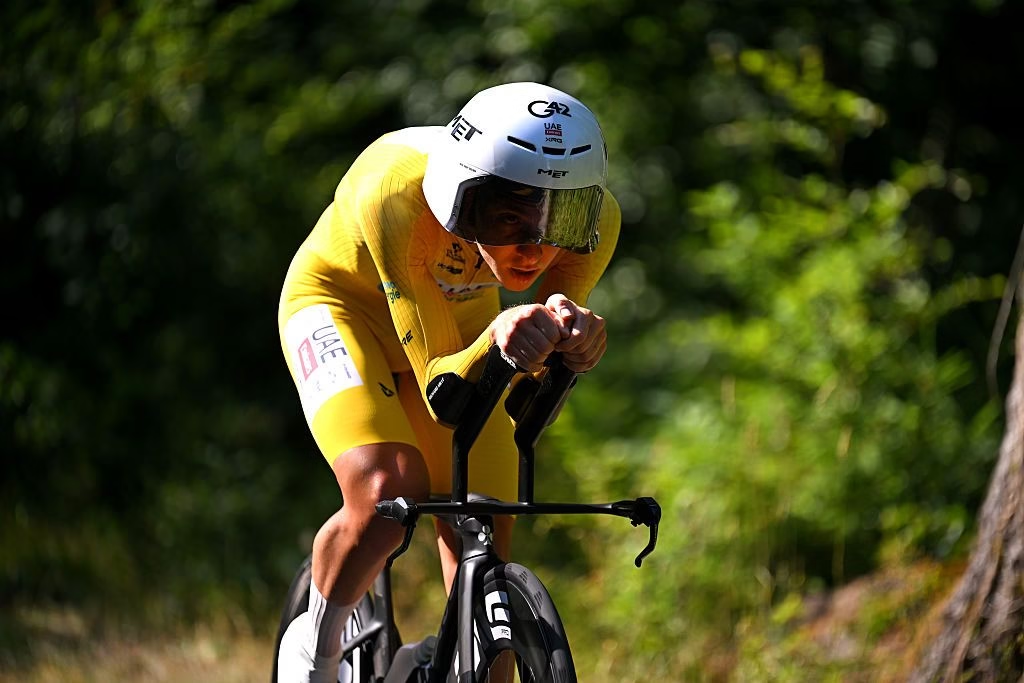
Current GC picture after stage 4
Pogačar remains in yellow after winning the Aarburg time-trial, and his position is stronger than ever. He already had a commanding lead after the opening stage, and stage 4 only reinforced the sense that the race is his to lose.
Carapaz remains the most obvious rider behind him, but the time-trial did not make his final day easier. He now has to defend against riders who may have taken confidence from Aarburg, particularly Roglič, Vacek and others who can still see a pathway into the podium fight.
The stage 4 result also matters psychologically. Pogačar did not simply defend. He won. Even if it was by four hundredths of a second, it was still another reminder that he is capable of turning almost every type of stage into a success. That makes the final day harder for rivals. They are not only trying to attack the yellow jersey. They are trying to attack a rider who has looked comfortable in every discipline this week.
The more realistic fight is for second, third and the top five. That is where stage 5 should be most aggressive.
Tadej Pogačar
Tadej Pogačar starts the final stage as the overwhelming favourite for the overall and one of the main favourites for the stage. The only real question is how he chooses to race.
He does not need to attack. He does not need to chase every move. He does not even need to win the stage. His lead is strong enough that UAE Team Emirates-XRG can ride defensively, keep the race controlled and allow the podium fight to happen behind him.
The problem for everyone else is that Pogačar rarely looks satisfied with simple defence when the legs are good. Stage 1 showed that clearly. His attack was not required, but once the race opened, he took the opportunity and turned it into a dominant solo victory. Stage 4 then showed the same instinct in another form, with Pogačar squeezing out the time-trial win by the smallest margin.
Villars-sur-Ollon is the kind of terrain where he can choose. If he wants to test himself before the Tour de France, he can attack. If he wants to ride conservatively, he can simply mark the main rivals. If the breakaway goes, he can decide whether the stage win is worth chasing.
The safest prediction is that he will not be under serious overall threat. The more interesting question is whether he wants another stage win enough to make the final climb a demonstration.
 Photo Credit: Getty
Richard Carapaz
Richard Carapaz has been the closest challenger since the opening stage, but stage 5 is still a complicated day for him. He is strong enough to attack, aggressive enough to try something and experienced enough to know that defending a podium can be as dangerous as chasing yellow.
The route suits him better than the time-trial. Villars-sur-Ollon gives him climbs, repeated effort and terrain where instinct matters. If he wants to make the race harder, he can do so. If he waits too long, he risks being drawn into a fight with riders coming from behind.
His best chance may be to force the issue before the final climb. Carapaz is rarely at his most dangerous when everything is controlled until the last few kilometres. He is better when the race becomes unstable, when teammates are dropped and when rivals have to make decisions without time to calculate.
The problem is Pogačar. Even if Carapaz attacks well, the yellow jersey can simply follow or let UAE control the gap. The more realistic target may be protecting second overall and chasing a stage podium.
Primož Roglič
Primož Roglič’s Tour de Suisse has not followed the dream scenario, but stage 5 still gives him a chance to make the week feel more useful before the next phase of his season.
The Aarburg time-trial did not put him into the stage-winning fight, but it helped move him back up the GC picture and gave Red Bull-BORA-hansgrohe something to build on. Now he needs a strong climbing day.
Roglič’s best version is still capable of making a stage like this uncomfortable for almost anyone. The question is whether that version is present here. He has not looked like the clear second-best rider in the race, and Pogačar’s level has made everyone else look distant, but Villars-sur-Ollon is a better test of where Roglič really sits.
He does not need to win the stage for it to be a success. If he climbs with Carapaz, Pogačar and the strongest GC riders, that will be a positive sign. If he gains time and moves further up the overall, even better. If he fades on the hardest sections, the questions about his trajectory will continue.
This is less about winning Tour de Suisse and more about finding evidence of sharpness.
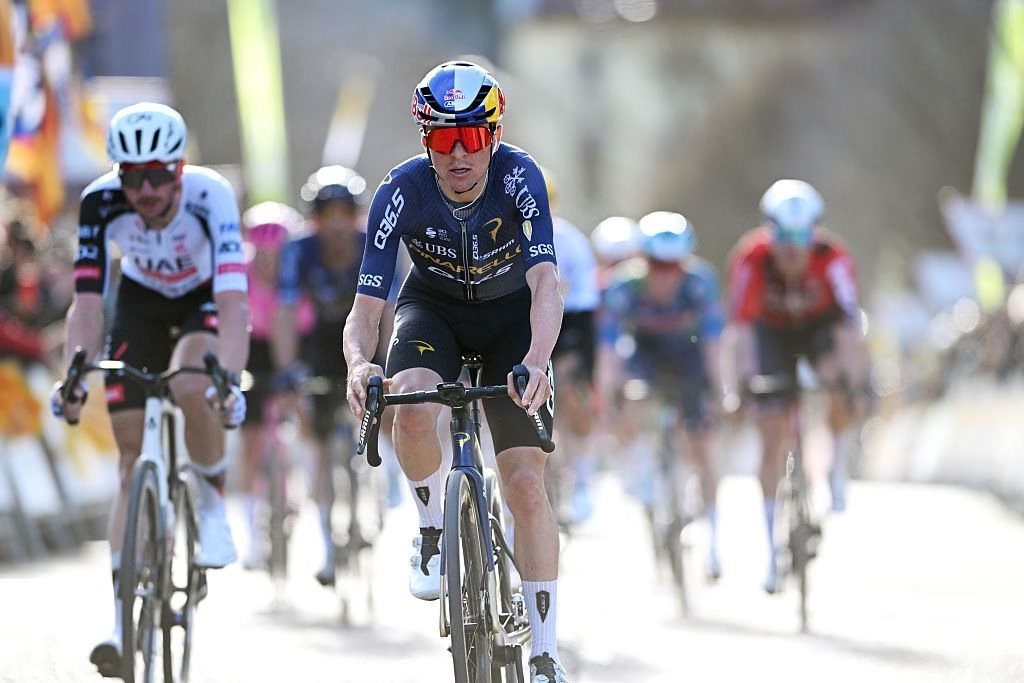
Tom Pidcock
Tom Pidcock remains one of the more intriguing riders in the race because his best terrain is not always the same as the obvious GC contenders. Villars-sur-Ollon is a serious mountain stage, but it also includes enough descending, rhythm changes and tactical possibilities to keep him relevant.
Pidcock’s challenge is whether the climbing load is simply too heavy. A 151.1km stage with more than 4,200m of elevation is not just about punch or handling. It is about repeated endurance. If the race becomes a pure climbing contest behind Pogačar, Pidcock needs to show that he can stay there deep into the day.
The upside is that he can race with freedom if his GC position allows it. Pidcock is dangerous when the race becomes less predictable, and he does not need a straightforward summit-finish duel to make an impact. If he can get into the right move or follow an attack from one of the podium contenders, he has the skillset to make the most of it.
A stage win may be difficult, but a strong performance would be a major sign before the Tour de France.
Brandon McNulty
Brandon McNulty is an interesting case because his role may be as important as his legs. He is strong enough to ride high on a mountain stage, but his primary job should be helping Pogačar and keeping UAE Team Emirates-XRG in control.
The team already has the race where it wants it. That means McNulty may be used to set tempo, cover attacks or sit in a dangerous group if the tactics demand it. His time-trial ability was already relevant in Aarburg, and his all-round engine makes him one of UAE’s most valuable riders on a climbing-heavy final day.
If Pogačar wants the stage, McNulty may be one of the riders used to make the final selection. If UAE are content to defend, he can help control the race without needing to chase every move himself.
There is still a stage-win possibility if the tactical situation opens. But the more likely scenario is that McNulty shapes the race for Pogačar rather than riding for himself.
Aleksandr Vlasov
Aleksandr Vlasov gives Red Bull-BORA-hansgrohe another option if Roglič is not able to take the race on alone. He is the kind of rider who can use a stage like this to move up quietly, especially if others overcommit early.
Vlasov’s strength is stage-race steadiness. He may not be the rider most likely to attack Pogačar directly, but he can survive hard days, limit losses and capitalise if others fade. In a stage with more than 4,200m of climbing, that can be enough to gain places.
The tactical question is how Red Bull use their numbers. If Roglič is still the main focus, Vlasov may become support. If the race becomes chaotic, Vlasov could become a second card. That flexibility could be useful, especially if Carapaz, Pidcock or Bagioli are isolated.
Vlasov is unlikely to be the most spectacular rider on stage 5, but he could be one of the riders who benefits most from a hard, attritional race.
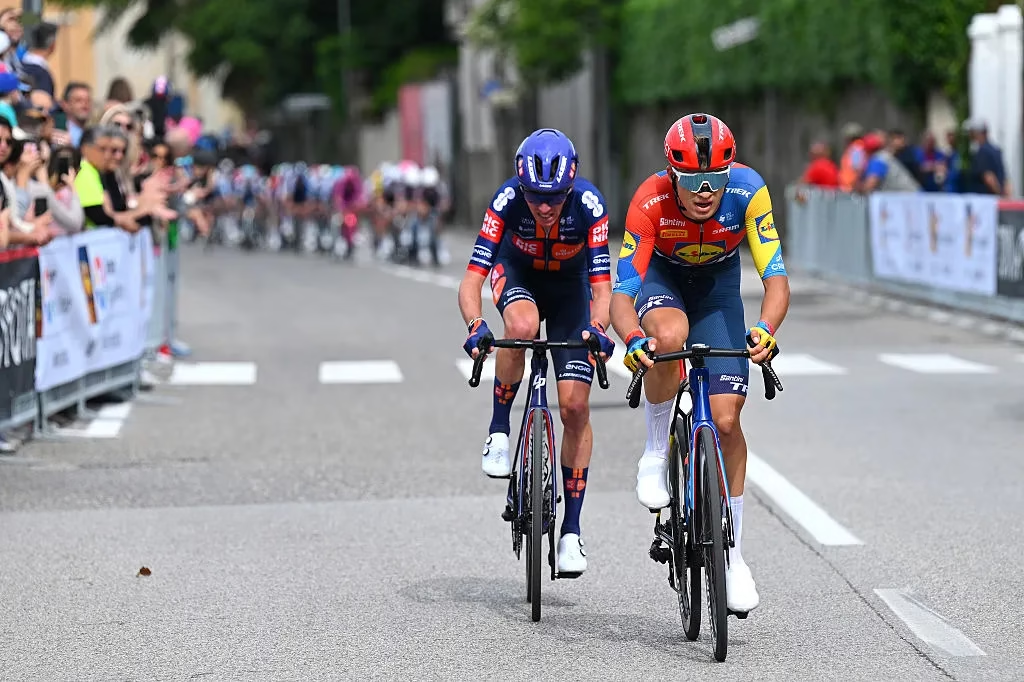
Mathias Vacek
Mathias Vacek’s time-trial ride in Aarburg confirmed that he is one of the stronger all-round performers of the week. He looked capable of challenging for the stage at the intermediate point before eventually finishing outside the very top fight, but the performance still mattered.
Stage 5 is a different test. Vacek’s power and consistency have kept him high in the race, but Villars-sur-Ollon asks for climbing depth. If he can survive the repeated ascents, he can defend a strong overall position. If the pure climbers push the race hard, he may find himself under more pressure than he did in the time-trial.
This is the kind of stage that can define whether a good stage-race week becomes a genuine GC breakthrough. Vacek does not need to attack early. He needs to stay calm, avoid being caught out by the first major acceleration and see how much he has left when the race reaches the final climbs.
A top-five overall is still possible if he climbs well enough.
Finlay Pickering
Finlay Pickering has been one of the quieter but more interesting names high on the GC. Stage 5 gives him the chance to prove that his position is not only the result of earlier race circumstances, but something he can defend on the hardest day.
The route is demanding, but it may suit a rider with climbing resilience and less pressure than the biggest names. Pickering does not have to control the race. He can follow, conserve energy and see how many riders ahead of him begin to struggle.
The danger is that the pace goes beyond what he can manage once UAE, EF Education-EasyPost or Red Bull-BORA-hansgrohe increase the pressure. A stage like this can be unforgiving for riders who are slightly over their level on GC.
If he survives well, it will be one of the strongest results of his season. If he drops, it may still be a useful marker of where he sits against WorldTour climbing depth.
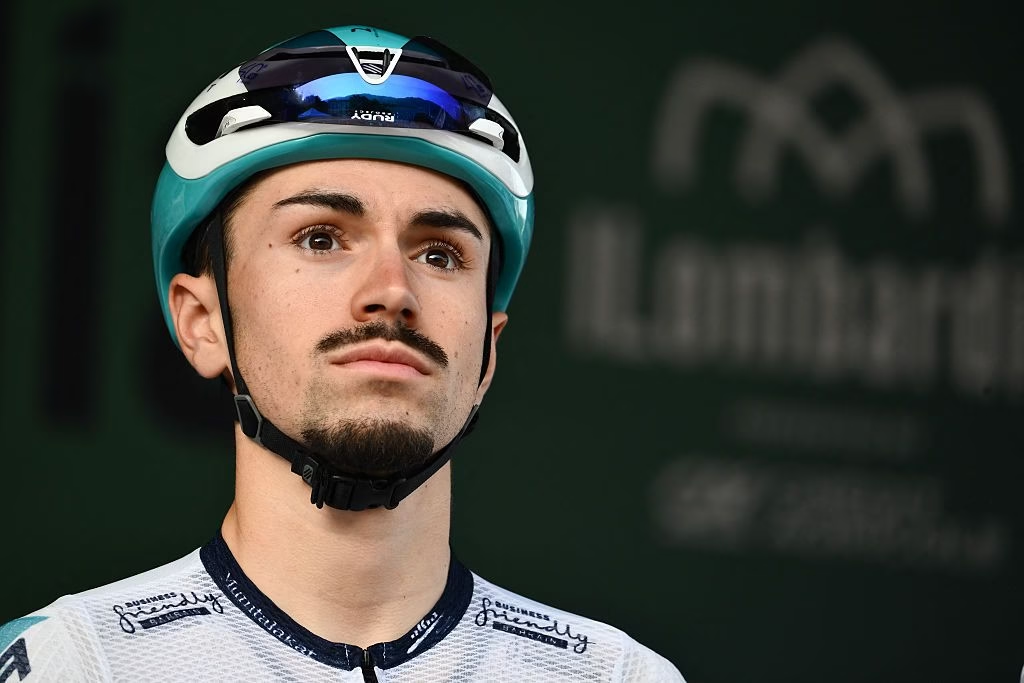
Lenny Martinez
Lenny Martinez is exactly the kind of rider who should look at Villars-sur-Ollon as an opportunity. The overall picture may be difficult, but the stage terrain suits his climbing profile.
The problem is timing and freedom. If he is close enough on GC to worry the main teams, he may be marked. If he has lost enough time to be given room, he becomes far more dangerous for the stage. Martinez is not going to out-time-trial the all-rounders, but on a pure climbing day he can still make a race.
The stage’s repeated climbing should suit him better than Aarburg. If the breakaway forms with enough climbing talent, he is one of the riders who could turn that move into something serious. If the GC teams keep the race tight, he may have to wait and try to survive with the favourites.
Either way, he is one of the more natural climbers to watch.
Stage hunters
The queen stage could still go to a breakaway if UAE Team Emirates-XRG decide they do not need another stage win. That is the biggest tactical question of the day.
Pogačar has already won twice. UAE do not need to chase a third stage victory if it costs too much energy or creates unnecessary risk. If they let a non-threatening move go, the stage hunters could have a real chance.
Riders sitting far enough down on GC will know that this is the final opportunity of the race. Climbers who lost time earlier in the week, strong all-rounders without a protected GC position and teams still chasing a result all have a reason to make the opening half hard.
The key is whether the breakaway contains too much climbing quality for UAE to ignore. The strongest breakaway riders will need to get ahead before the race becomes controlled by the GC teams. Once Pogačar, Carapaz and Roglič are fighting on the final climbs, it may be too late.
A stage hunter can win, but only if UAE are happy to let the stage go or if the breakaway gets enough of a head start before the hardest climbing begins.
Race tactics
UAE Team Emirates-XRG hold the strongest hand. They have Pogačar in yellow, a strengthened lead after the time-trial and enough depth to control the stage if they choose. Their biggest decision is whether to chase the stage or simply protect the overall.
If they ride conservatively, the breakaway could take the win. That would make sense if Pogačar wants a lower-risk day before the Tour de France. If they ride aggressively, they can make the stage another demonstration and let Pogačar finish the race in the same style he started it.
EF Education-EasyPost have to decide whether Carapaz should attack or defend. If he only defends, he may keep a podium position but miss the chance to test the race. If he attacks, he risks opening the door for Roglič, Pidcock or others to counter.
Red Bull-BORA-hansgrohe should be more aggressive. Roglič and Vlasov both need to make the day count, and there is little value in waiting until the final kilometre if Pogačar is still surrounded. A move before the last climb would make more sense.
The rest of the GC group will be watching for cracks. A stage with this much climbing can create damage quickly once the pace rises.
-
 Photo Credit: Getty

What stage 5 tells us before the Tour de France
This final stage is not only about the Tour de Suisse result. It is also a Tour de France signal.
Pogačar has already sent several messages this week. His stage 1 long-range attack showed his aggression and climbing force. His time-trial win showed that his engine is sharp. Villars-sur-Ollon can confirm whether his high-mountain rhythm is as strong as everything else.
For Roglič, it is a test of direction. A strong climbing day would make the week feel more positive, even if he cannot win the race. For Pidcock, it is a chance to show whether he can stay with the best climbers on a serious mountain stage. For Carapaz, it is a chance to show that he can still make a race hard rather than simply defend.
For everyone else, it is a reminder that the Tour de France is close. A good ride here does not guarantee anything in July, but a bad ride on a stage like this can create questions that follow a rider into the next block of preparation.
Prediction
Pogačar is the obvious favourite. He has already won on a hilly stage from long range and in the time-trial, and there is no reason to think the hardest climbing stage will suddenly make him vulnerable. The only thing that might stop him winning stage 5 is choice. If UAE decide they do not need the stage, the breakaway may have a chance.
Carapaz should be one of the strongest challengers on the climbs, but he needs to be more than defensive if he wants to trouble Pogačar. Roglič has a chance to make the podium fight interesting if his climbing legs respond better than his time-trial suggested. Pidcock, Vlasov and Bagioli are all strong enough to influence the top five, while Martinez or another climber could become dangerous from a breakaway.
The most likely scenario is that UAE keep the race controlled until the hardest sections, then Pogačar either follows the main move or attacks late. He may not need to win, but the pattern of this race suggests he will not turn down the chance if it is there.

