Bernard Hinault is usually remembered as a force of nature. The glare, the stubbornness, the attacks, the refusal to accept a race being ridden on anyone else’s terms. Yet even Hinault, for all his individual ferocity, did not dominate cycling alone.
Behind the Badger stood one of the most effective team structures of the late 1970s and early 1980s. Renault-Elf, also known in its earlier forms as Renault-Gitane and Renault-Gitane-Campagnolo, was more than a sponsor’s name on a jersey. It was a French performance project, built around Cyrille Guimard’s tactical intelligence, Gitane’s cycling heritage, Renault’s corporate backing and a generation of riders who reshaped the sport.
Between 1978 and 1984, the Renault structure won six editions of the Tour de France: four with Hinault and two with Laurent Fignon. That run alone places the team among the most successful Tour squads of the modern pre-WorldTour era. It also explains why Renault-Elf still matters. This was not simply Hinault’s team. It was the machine that helped turn his dominance into a system.
Quick answer: what was Renault-Elf?
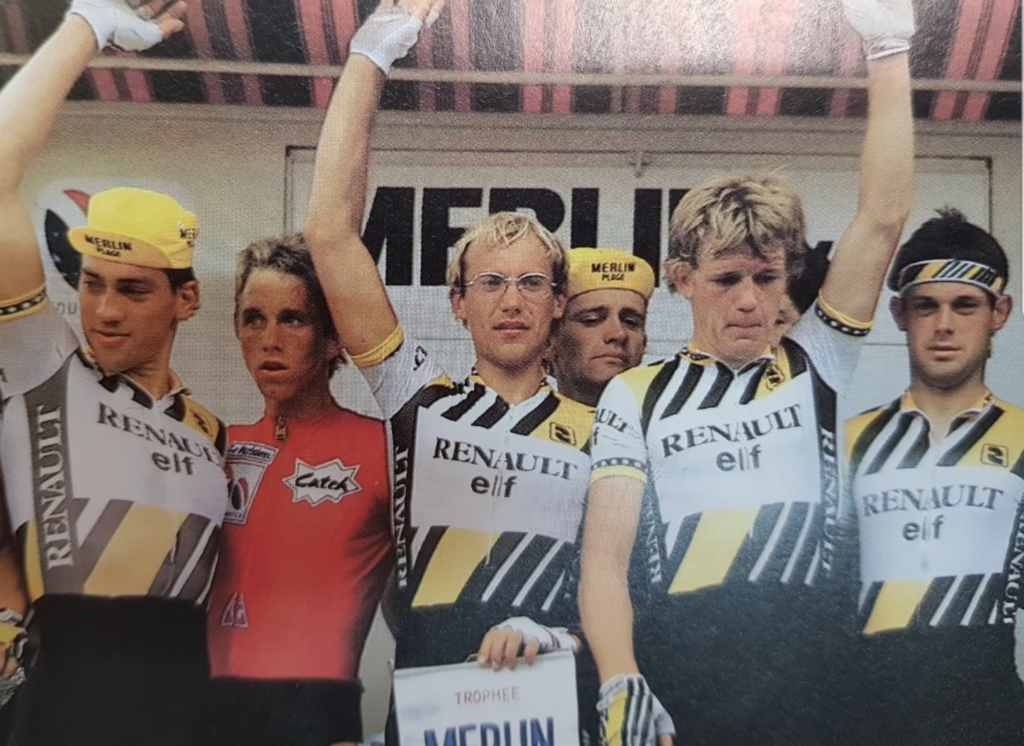
Renault-Elf was a French professional cycling team that grew out of the Gitane-Campagnolo squad and operated under Renault backing from 1978 to 1985. Its most famous leader was Bernard Hinault, who won the Tour de France with the team in 1978, 1979, 1981 and 1982. Under Cyrille Guimard, the team also developed Laurent Fignon, Greg LeMond, Marc Madiot and Charly Mottet, making it one of the defining squads of its period.
From Gitane roots to Renault power
The story begins before Renault-Elf itself. Hinault turned professional with Gitane-Campagnolo in 1975, entering a French cycling world still shaped by traditional teams, regional identities and powerful directeurs sportifs. Gitane already had credibility. Lucien Van Impe won the 1976 Tour de France under Guimard’s guidance, giving the structure a Grand Tour pedigree before Renault became the headline sponsor.
Renault’s arrival changed the scale. The car manufacturer had bought Gitane and, from 1978, the team entered the peloton under the Renault-Gitane-Campagnolo name. The sponsorship names shifted over time: Renault-Gitane-Campagnolo, Renault-Gitane, Renault-Elf-Gitane and finally Renault-Elf. Elf’s arrival added another major French corporate identity to the project, giving the team the feel of a national sporting institution rather than a conventional trade squad.
That mattered. Cycling teams of the era could be fragile, changing sponsors, bikes and priorities quickly. Renault-Elf had a broader base. It carried the weight of French industry, a recognised bicycle brand and a directeur sportif who understood how to turn talent into repeatable success.
Cyrille Guimard: the architect behind the machine
Cyrille Guimard was central to the Renault story. A former top rider himself, he became a directeur sportif with a sharp eye for talent and a willingness to think beyond the habits of the old peloton. With Hinault, he found a rider who did not need to be taught aggression. What Hinault needed was direction, pacing and a structure that could make his brutality count over three weeks.
Guimard’s Renault was built on discipline. The team was not romantic in the loose, chaotic sense often attached to French cycling. It was modern, planned and ambitious. Hinault could attack, but he also had a team designed to protect him, position him, manage the race around him and control the moments when others thought they could unsettle him.
That relationship between Guimard and Hinault was productive because it contained tension. Hinault was never a passive leader. He wanted control, he wanted respect and he wanted the team built around winning. Guimard, though, was not simply managing Hinault. He was building an organisation capable of outliving him.
That distinction became crucial later.
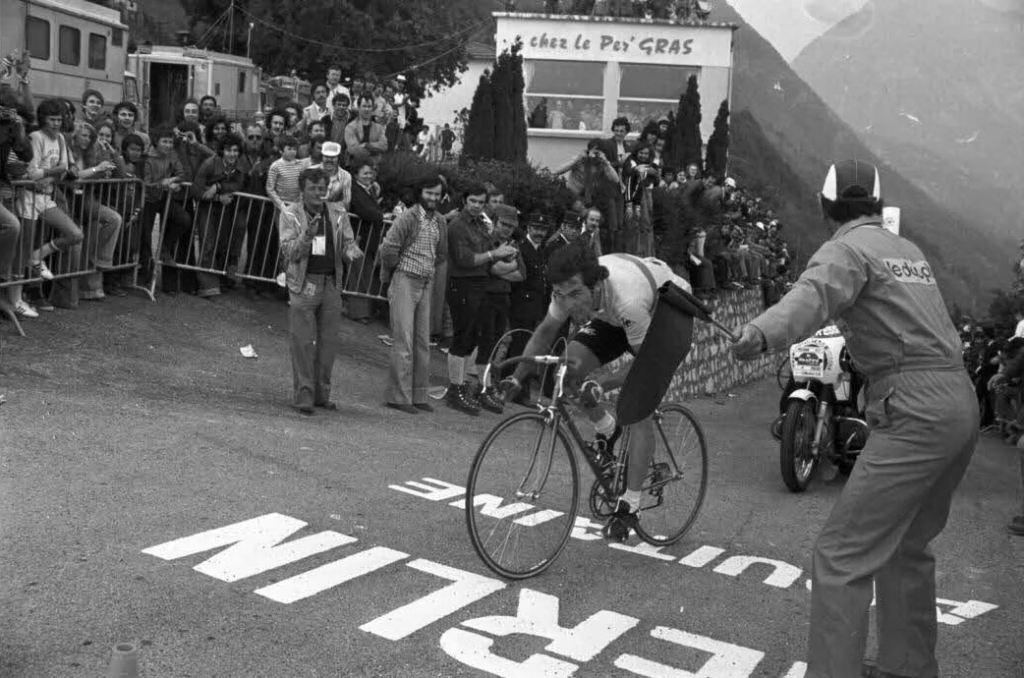
Hinault’s first Tour win: 1978
Hinault’s 1978 Tour de France victory was the foundation stone. He arrived as a debutant but not as a gentle apprentice. He had already won the Vuelta a España earlier that season and carried himself like a rider who saw the Tour as the next logical step rather than a distant dream.
The 1978 Tour had its own turbulence, including the expulsion of Michel Pollentier after a notorious doping control incident on Alpe d’Huez. Yet Hinault did not inherit the race by accident. He still had to defeat Joop Zoetemelk and Joaquim Agostinho, finishing nearly four minutes clear of Zoetemelk in Paris.
For Renault, it was immediate confirmation that the investment had worked. The team had a French Tour winner, a new national champion figure and a leader whose authority would shape the next half-decade. For broader context on where Hinault sits in the race’s long line of champions, see our Tour de France winners list.
The Hinault years: control, range and intimidation
Hinault’s Renault period was not just about Tour wins. It was about the range of races he could bend to his will.
He won the Tour again in 1979, added the Giro d’Italia in 1980, claimed the road world title that same year, returned to win the Tour in 1981, then completed the Giro-Tour double in 1982. He also won major one-day races, including Paris-Roubaix and Liège-Bastogne-Liège, despite being remembered primarily as a Grand Tour ruler.
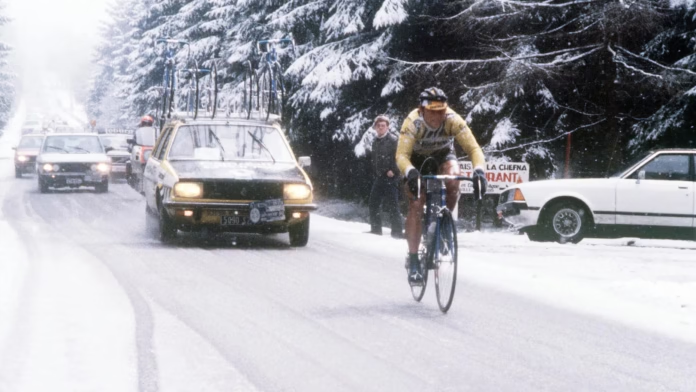
That breadth is important. Renault-Elf did not create a rider who could only follow wheels in July. It supported a champion who could win time trials, survive the high mountains, impose himself in foul weather and carry authority into the Classics. Hinault’s 1980 victory in Liège remains one of the great endurance performances in Monument history, and it is covered in more detail in our brief history of men’s Liège-Bastogne-Liège.
Hinault’s dominance was psychological as much as physical. Rivals knew he could beat them almost anywhere.
The 1982 season was the clearest expression of that command. Hinault won the Giro, then went to the Tour and controlled the race with almost cold efficiency. He won the prologue, took time in the time trials and even won the final stage on the Champs-Élysées, answering critics who felt his Tour had been too clinical. It was a champion’s season, but it was also a Renault season: planned, measured and ruthless.
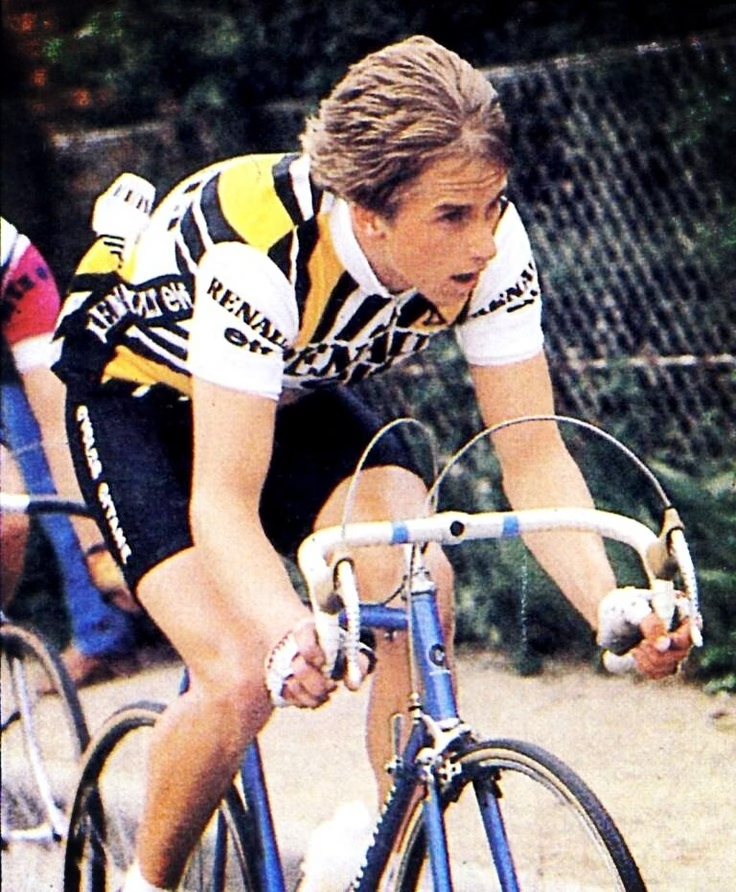
The Renault method
Renault-Elf’s strength came from more than having the best rider. Great teams often appear simple in hindsight because the leader’s victories dominate the record. Renault’s deeper importance was in how it organised winning.
The team understood three key principles.
First, it gave Hinault a clear sporting platform. The squad could ride for control when required, but it was not built around defensive racing alone. Hinault’s best racing came when pressure was applied early enough to make others uncomfortable. Renault gave him the base from which to do that.
Second, it valued time-trial strength. The late 1970s and early 1980s Tours contained substantial time-trial mileage, including prologues, long individual time trials and team time trials. Renault’s structure was well suited to those demands. Hinault could gain time himself, while the team could also impose order collectively.
Third, it looked ahead. Guimard’s eye for younger riders meant Renault became a development pipeline as well as a Hinault support unit. Laurent Fignon, Greg LeMond, Marc Madiot and Charly Mottet were not just useful names on a roster. They showed the team’s ability to identify the next wave before the old order had fully left the stage.
That is what separates Renault-Elf from a simple champion’s entourage. It had succession built into it, even if that succession would eventually help break the Hinault-Guimard alliance.
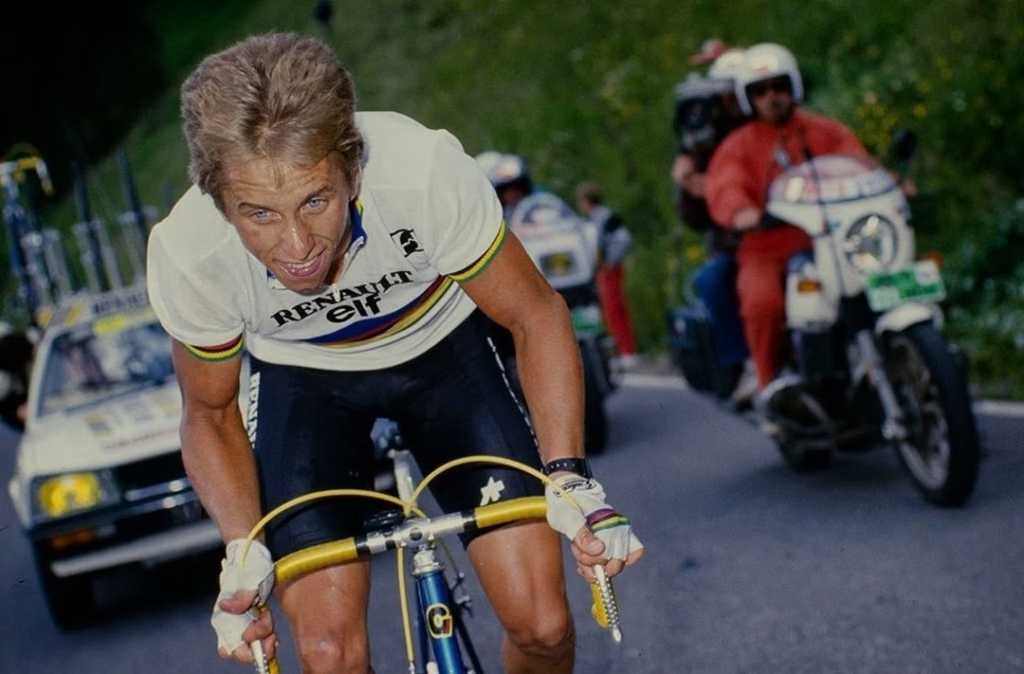
1983: the turning point
The 1983 season exposed both Renault’s strength and its internal fault line. Hinault won the Vuelta a España but missed the Tour de France through injury. In his absence, Laurent Fignon stepped into leadership and won the race for Renault.
For most teams, that would have been a perfect solution. The leader is absent, the young understudy wins, and the structure proves its resilience. For Hinault, it was more complicated. He had built his status at Renault through conquest, and now the team had shown it could win the Tour without him.
Renault-Elf’s 1983 record captures the depth of that squad. Hinault, Fignon, LeMond, Mottet and Marc Madiot all sat inside the same structure, while the team’s season included Fignon’s Tour win, Hinault’s Vuelta victory and LeMond’s Dauphiné success.
In sporting terms, that was an outstanding year. In political terms, it changed everything.
Hinault eventually left for La Vie Claire, the new team backed by Bernard Tapie. The split followed a dispute with Guimard and the changing leadership dynamic inside Renault. The Badger wanted a team where he was unquestionably central. Renault, by then, had Fignon. For the next chapter in that story, see our history of La Vie Claire and the Hinault-LeMond years.
Fignon proves the system
If Renault-Elf had collapsed after Hinault left, it would be remembered differently. Instead, 1984 made the team’s broader quality impossible to ignore.
Fignon defended his Tour title in dominant fashion, beating Hinault, now riding for La Vie Claire, by more than ten minutes. Greg LeMond finished third overall, giving Renault two riders on the final podium behind its former leader’s rival project. Renault’s 1984 record also underlines how strong the team still was, with Fignon’s Tour win, LeMond’s third place and Fignon’s second place at the Giro d’Italia among the squad’s major results.
That 1984 Tour is one of the strongest arguments for Renault-Elf’s greatness. Hinault had gone, but the machine kept moving. Fignon was a different type of champion: more stylish, more angular, less visibly authoritarian than Hinault, but tactically sharp and physically devastating when the race turned his way.
Renault had not merely served Hinault. It had created the conditions for another French Tour winner to emerge immediately after him.
Why Hinault and Renault suited each other
Hinault and Renault were not a sentimental partnership. That was part of their power.
Hinault brought force. Renault brought structure. Guimard brought calculation. Gitane brought cycling identity. Elf and Renault brought corporate weight. Together, they formed a rare alignment between rider, director, equipment heritage and national sponsorship.
Hinault suited Renault because he gave the project its face. He was French, uncompromising and successful at the exact moment the team needed a leader who could justify its scale. Renault suited Hinault because it gave his aggression a framework. He could race like a dominant individual while being supported by a system that understood the value of control.
There was always a danger inside that arrangement. A rider as strong-willed as Hinault was never likely to age quietly into a shared leadership model. A directeur sportif as ambitious as Guimard was never likely to hold back the next champion for sentimental reasons. Renault-Elf’s brilliance and its rupture came from the same source: it was built to win, not to preserve harmony.
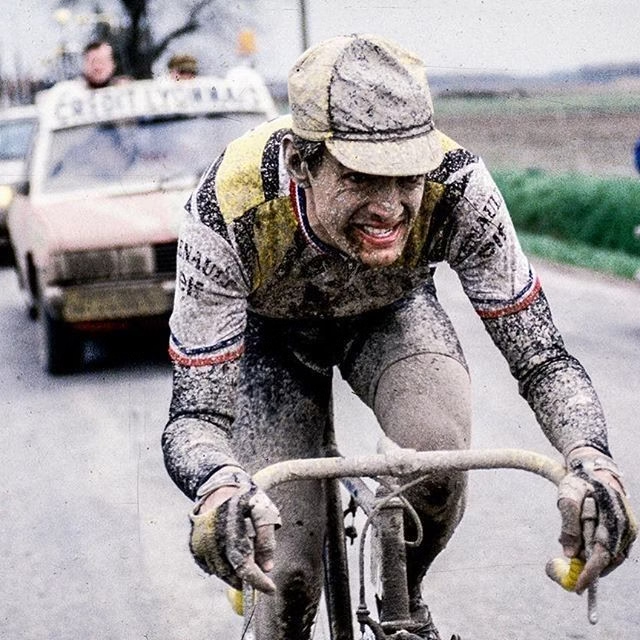
The end of Renault-Elf
Renault withdrew at the end of the 1985 season, after eight years as the defining name behind the structure. The team continued under Guimard with Système U-Gitane, keeping the lineage alive even as the Renault-Elf identity disappeared from the peloton.
By then, the sport had already changed around it. La Vie Claire had introduced a different kind of super-team glamour, with Tapie’s money, Paul Köchli’s methods, Hinault, LeMond and a striking Mondrian-inspired jersey. Fignon remained one of the great talents of the decade, while LeMond would soon become the sport’s first American Tour winner.
Renault-Elf’s direct lifespan was short, but its influence ran deep. It bridged the old trade-team world and the more sophisticated, internationally ambitious structures that followed. It also gave French cycling its last true period of Tour de France command. For a wider view of how that era fits into the race’s evolution, see our brief history of the men’s Tour de France.
Renault-Elf’s legacy
Renault-Elf’s legacy sits in three places.
The first is Hinault. Four of his five Tour victories came inside the Renault structure, along with two of his three Giro wins and both of his Vuelta victories. He would later win the 1985 Tour with La Vie Claire, but his imperial period was forged in yellow, black and white.
The second is Fignon. Renault proved that a team built around a dominant champion could still produce his successor from within. Fignon’s 1983 and 1984 Tour wins made Renault more than Hinault’s support act. They turned it into a dynasty.
The third is the idea of the modern performance team. Renault-Elf was not modern in the data-heavy sense used today. It did not have power meters, altitude camps, nutrition departments and marginal-gains language. Yet its instincts were modern: talent identification, tactical planning, clear leadership, time-trial strength, sponsor coherence and a willingness to think beyond one season.
That is why Renault-Elf still carries weight. It was not just the team behind Bernard Hinault. It was the machine that made his dominance repeatable, then proved its own quality by winning without him.
In the end, that may be the truest measure of its greatness. Hinault was the force. Renault-Elf was the structure that turned force into history.