

Tiffany Cromwell did not ease quietly into retirement. In the final race of her professional career, the 2026 UCI Gravel World Championships in Nannup, the 38-year-old attacked early, spent a long spell clear of the field and went again on the Folly climb before fighting on to finish eighth. After 17 seasons in the professional peloton, the last image was of Cromwell racing as she had so often raced: visible, aggressive and willing to commit before the result was guaranteed.
The setting made the farewell unusually neat. Nannup was in Australia, on roads and gravel tracks Cromwell knew well, and it was the same region where she had already won SEVEN three times. The home crowd followed her through a muddy 125.6km race with more than 3,000 metres of climbing, turning the final hours of a long career into something closer to a send-off than a routine last start.
“It still hasn’t sunk in fully that it was my last race,” Cromwell said afterwards. She expected retirement to feel more real once the peloton returned to training and she suddenly had no race programme to prepare for. For now, there was satisfaction rather than sadness. The race had completed the final goal she had built her last season around.
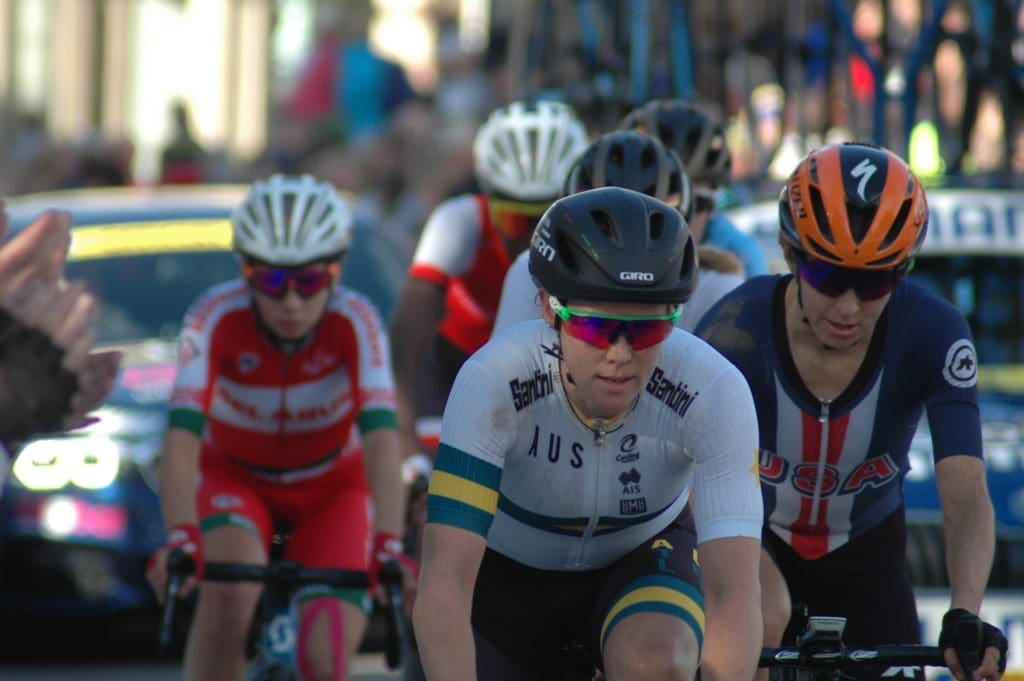
A career that began in a different version of women’s cycling
Cromwell’s career is worth looking at as more than a list of results because of when it happened. She emerged from South Australia’s development system in the mid-2000s, raced in the United States with Colavita and by 2010 was established in the European professional peloton with Lotto Ladies Team. Hitec Products followed in 2011 before two seasons with Orica-AIS.
That was a very different sport from the one she leaves in 2026. Major women’s races were often run with limited television coverage, smaller team structures and far less financial security. The Women’s WorldTour did not yet exist. Riders who could survive across continents, adapt to different calendars and contribute in several roles were especially valuable because squads had less depth and fewer specialists.
Cromwell fitted that environment quickly. She was never only a sprinter, climber or time triallist. Her best terrain was usually hard one-day racing, rolling courses and races where positioning, endurance and an ability to keep going after repeated efforts mattered more than one pure physiological strength.
Giro stages, Plouay and the Omloop win
Cromwell was winning in Europe before she became a regular contender in the biggest one-day races. She took stages at the Tour Féminin en Limousin and Route de France in 2009, then won a stage of the Giro d’Italia in 2012 and finished second at GP de Plouay later that season. The following February produced the result most closely associated with her road career.
Cromwell won the 2013 Omloop Het Nieuwsblad for Orica-AIS, beating Megan Guarnier and Emma Johansson. It was a race she entered primarily in support of Johansson, but the opportunity shifted during a bitterly cold edition and Cromwell took it. The victory has aged well. Omloop later became part of the Women’s WorldTour and one of the most important early-season Classics, while Cromwell returned to finish third in 2016.
Her World Championships record around that period showed the same strength in selective one-day races. She finished ninth in the 2013 road race and fifth in Ponferrada in 2014, one of the best championship results of her career. A second Giro stage win followed in 2016 and she added a Thüringen Ladies Tour stage in 2017.
The raw victory total was never huge, but that understates what made Cromwell valuable. She could finish near the front of major Classics, work deep into races for a leader and still be dangerous enough that rivals could not simply ignore her when she went up the road.
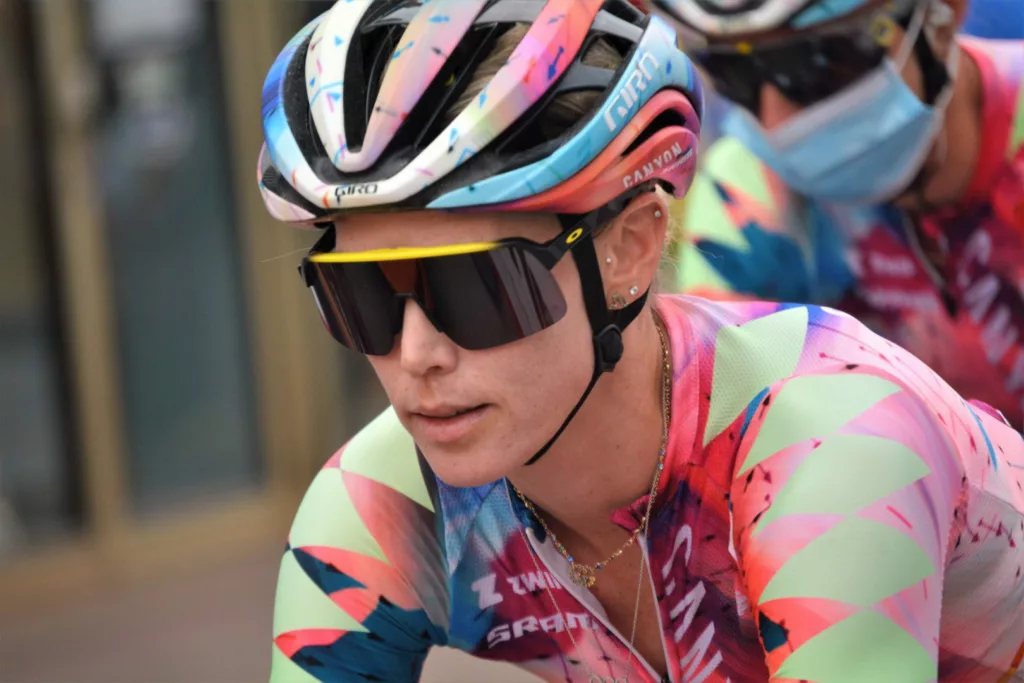
Eleven seasons with Canyon SRAM
The defining team relationship of Cromwell’s career began in 2016. She joined the newly launched Canyon SRAM and stayed for the rest of her road career, eventually becoming the final rider from the original roster still with the team. When she signed for an 11th season in 2026, longevity itself had become part of her role.
Those Canyon years coincided with a change in what teams asked of her. The rider who had once been expected to chase her own Classics results increasingly became a road captain, domestique and reference point for younger teammates. She still had freedom on selected days, but positioning leaders, reading races and helping organise the team became more important than building a personal palmarès.
That transition can make the second half of a rider’s career look quieter from the outside. It was not. Cromwell remained part of teams contesting the biggest stage races and Classics, including the restored Tour de France Femmes, while helping Canyon SRAM develop from a new project into one of the most recognisable teams in women’s cycling.
She also represented Australia repeatedly across that period. Her international career included the Tokyo Olympic Games and a long list of Road World Championships, stretching from the era before the Women’s WorldTour through to the modern professional calendar. Few riders remained at the top level for long enough to experience that entire change from inside the bunch.
What Cromwell’s longevity says about the growth of the sport
There is an obvious temptation to describe a 17-year career simply as endurance, but Cromwell’s longevity required adaptation. The physical level rose, teams became more specialised and riders entered the professional ranks younger with more structured development behind them. A role that was enough to hold a place in the peloton in 2012 was not automatically enough in 2022 or 2026.
Cromwell adapted from contender to captain while still keeping enough individual ambition to make herself useful in breakaways and harder races. Earlier this year, when looking back at her 2013 Omloop victory, she made the point that the level of women’s cycling had increased enormously since then. Her own career provides a useful measure of that change because she was competitive on both sides of it.
She also became a visible example of how experienced riders could add value beyond results. Canyon SRAM repeatedly kept her because of race knowledge, feedback, leadership and the ability to steady younger riders. That became especially relevant as the team’s roster filled with riders who had come through a far more developed pathway than the one Cromwell encountered at the start of her own career.

Gravel gave the final years a different shape
Gravel changed the final phase of Cromwell’s career. What began as an extra discipline gradually became a serious parallel programme and then, eventually, the place where she chose to finish. She was among the established Women’s WorldTour riders who treated gravel as more than an off-season novelty, building a calendar around major events while continuing to race on the road.
The results justified that commitment. Cromwell won events including UNBOUND Gravel 100, FNLD GRVL, the Gralloch and SEVEN, and became a two-time Australian gravel champion. In 2023 she won the elite race at the first European Gravel Championships event, although as an Australian she was not eligible for the European title itself. She also finished 10th at the 2023 Gravel World Championships before returning to the top 10 in her final appearance three years later.
That gravel programme also prolonged the part of racing she appeared to enjoy most: reading terrain for herself, attacking and racing without every decision being tied to a team plan. ProCyclingUK had followed that shift from the point where she began building a second gravel season, and by 2026 the discipline had become central enough that a home Gravel World Championships was one of the main reasons she continued for one more year.
Her final road race had already taken place in Philadelphia, where Canyon SRAM won through Chiara Consonni. Cromwell’s road farewell therefore ended with her team winning, a fitting reflection of the support role that had become such a large part of her later career. Nannup was different. The last race was for her.
A fitting final race in Nannup
Cromwell raced the Gravel Worlds without the caution that can accompany a farewell. She attacked early and built a lead of more than a minute before the favourites brought her back. After being distanced, she fought back into the race and attacked again on the Folly climb with less than 30km remaining. Marianne Vos eventually won the world title, but Cromwell still sprinted home eighth.
For someone whose career had so often involved doing work that did not appear in the result sheet, there was something appropriate about using the final day to make the race harder rather than waiting for a ceremonial finish. The crowds on Folly were the part that briefly broke through the competitive focus. Cromwell said the noise reminded her of racing in Flanders, with people packed into small sections of the climb and calling her name as she passed.
She also spoke about people telling her after the finish that she had inspired them. Those conversations fitted the wider arc of her career. Cromwell was a major race winner, an Olympian and a World Championships contender, but she was also present through the years when women’s professional cycling changed from a relatively hidden sport into one capable of producing the crowds and attention she encountered at her farewell.
The next part may take longer to register. Cromwell said retirement would probably become real when other riders started training again and she had “nothing to train for”. After 17 professional seasons, two Giro stage wins, an Omloop victory, 11 years with Canyon SRAM and a late career that connected road racing with the growing gravel scene, the first winter without a race programme will be the clearest break yet from the routine that has defined most of her adult life.

