The Tour de France Femmes 2026 starts in Switzerland, and it is much more than a ceremonial send-off.
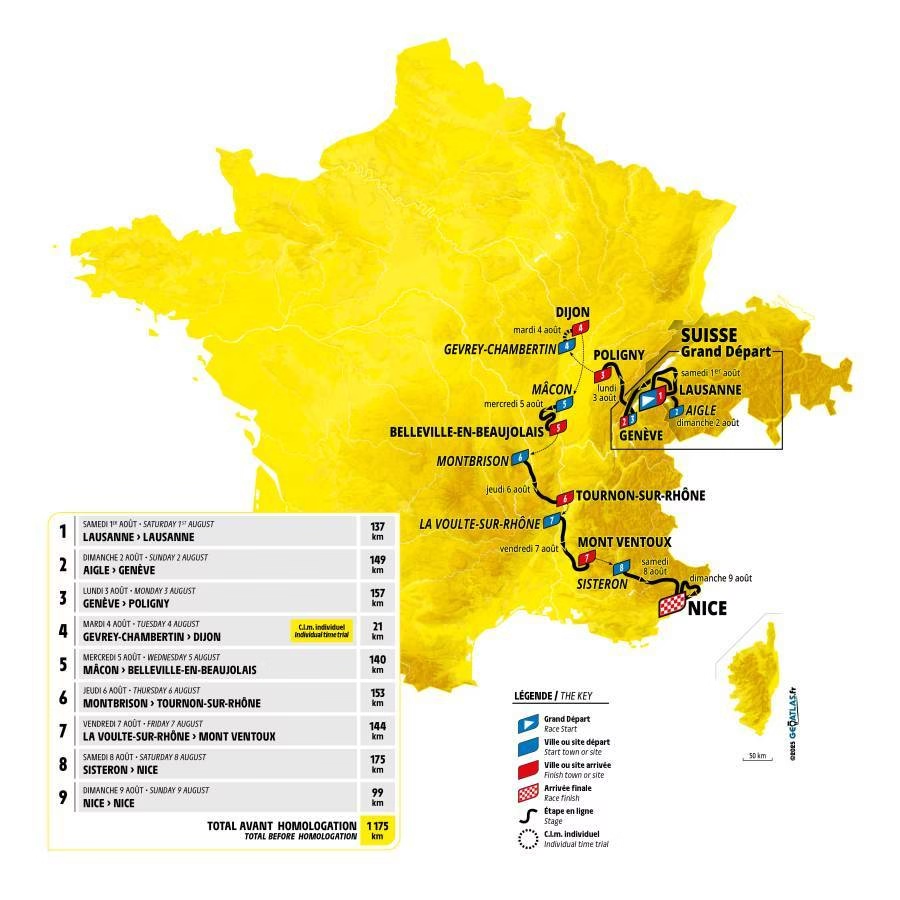
The fifth edition begins on Saturday 1 August with a loop around Lausanne, continues with a stage from Aigle to Geneva, then leaves Geneva for Poligny on stage 3 as the race crosses into France. It is the second international Grand Départ in the modern Tour de France Femmes era, following Rotterdam in 2024, and gives the race three opening days around Lake Geneva, the Swiss Riviera and the Jura.
That matters for fans as much as for riders. Lausanne gives the race an Olympic capital start, Aigle brings the peloton close to the UCI headquarters and World Cycling Centre, and Geneva offers the most accessible big-city finish of the Swiss opening. It should look spectacular on television, but it is also one of the easier Grand Départs to plan around if you want to watch roadside.
For the wider race picture, see our Tour de France Femmes 2026 route guide and Tour de France Femmes 2026 calendar.
Quick answer: where is the Tour de France Femmes 2026 Grand Départ?
The Tour de France Femmes 2026 Grand Départ is in Switzerland. Stage 1 is a 138km Lausanne to Lausanne loop on Saturday 1 August, stage 2 runs 147.9km from Aigle to Geneva on Sunday 2 August, and stage 3 starts in Geneva before finishing in Poligny in France over 156.5km.
| Day | Stage | Route | Distance | Type | Fan angle |
|---|---|---|---|---|---|
| Saturday 1 August | Stage 1 | Lausanne to Lausanne | 138km | Flat, but punchy | Opening day, lakeside roads, uphill city finish |
| Sunday 2 August | Stage 2 | Aigle to Geneva | 147.9km | Flat, rolling middle | UCI/WCC start, Swiss Riviera, likely sprint in Geneva |
| Monday 3 August | Stage 3 | Geneva to Poligny | 156.5km | Hilly | Jura climbs, first serious GC pressure |
Why Switzerland is a strong Grand Départ choice
This is a smart Grand Départ because it gives the race identity immediately.
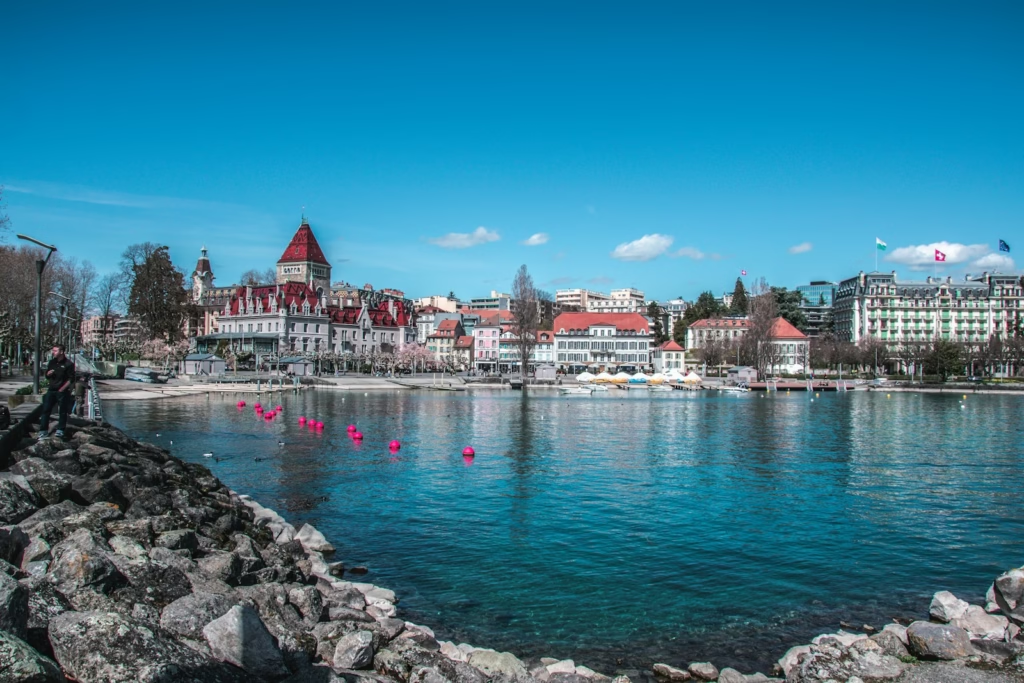
Lausanne, Aigle and Geneva are not just scenic host cities. They make sense for cycling. Lausanne has Olympic weight, Aigle is tied directly to international cycling through the UCI and World Cycling Centre, and Geneva gives the race a major international city with a natural finish backdrop by the lake.
The opening also fits where the modern race now sits. The Tour de France Femmes has moved beyond the simple point of proving it deserves attention. It now needs routes that give it story, geography and sporting shape from the first day. The Swiss Grand Départ does that.
It also gives the first three days clear roles. Stage 1 can create an immediate yellow jersey contest in Lausanne. Stage 2 should give the sprinters their chance in Geneva. Stage 3 then turns towards the Jura and gives the GC riders their first serious warning.
For more on how the modern race has built its identity, see our feature on La Course and the Tour de France Femmes.
 Photo Credit: A.S.O./Pauline Ballet
Grand Départ route overview
The full 2026 Tour de France Femmes covers 1,175km across Switzerland and France, with 18,795m of total climbing. The race has nine stages, split between three flat stages, three hilly stages, two mountain stages and one individual time trial. It also visits three mountain ranges: the Jura, Massif central and Alps.
That makes the Swiss opening only the first act. The later race still has the time trial in Dijon, a Mont Ventoux summit finish and the final Nice stage, but the Grand Départ is where the first yellow jersey story begins.
| 2026 race feature | Detail |
|---|---|
| Dates | 1-9 August 2026 |
| Countries | Switzerland and France |
| Total distance | 1,175km |
| Total elevation gain | 18,795m |
| Stages | 9 |
| Stage types | 3 flat, 3 hilly, 2 mountain, 1 time trial |
| Highest point | Mont Ventoux, 1,910m |
| Riders | 154, across 22 teams of 7 |
For newer fans, our beginner’s guide to the Tour de France Femmes 2026 explains the jerseys, format and race structure. Our guide to how long the Tour de France Femmes 2026 is also breaks down the stage count, distance and race format.
Stage 1: Lausanne to Lausanne
Stage 1 is the most important fan day of the Grand Départ because it combines the ceremonial start, the first yellow jersey and a proper city finish.
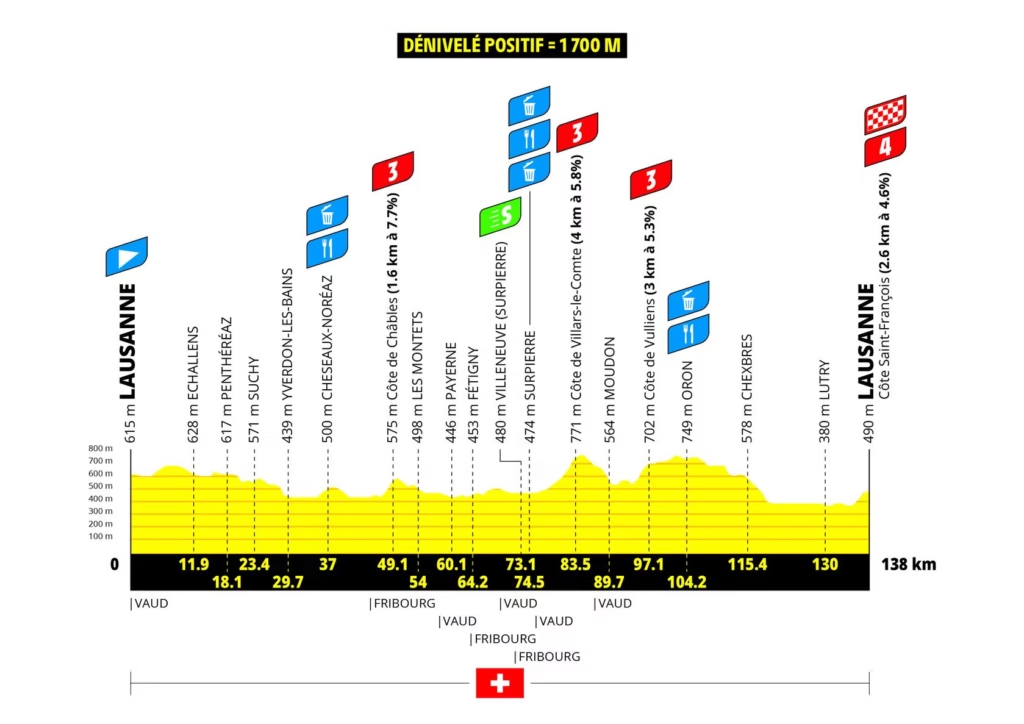
The stage is 138km, starting and finishing in Lausanne. It is officially classed as flat, but the route is much more awkward than that sounds. The race includes the Côte de Châbles, Côte de Villars-le-Comte, Côte de Vulliens and the final Lausanne – Côte Saint-François climb to the finish.
That final climb is the key detail. It is 2.5km at 4.6%, finishing in Lausanne, and it comes after a day that has already rolled through Vaud and back towards Lake Geneva.
This is not a guaranteed sprinter’s stage. The yellow jersey could go to a puncheuse, a reduced-bunch finisher or a fast rider who can survive repeated short climbs.
Best places to watch stage 1
Lausanne gives fans several different ways to watch.
The start in the city is best for atmosphere, team buses, sign-on and seeing the full race before it gets serious. The lakeside sections and Lavaux area should be among the most photogenic parts of the day, especially with Lake Geneva and the vineyards in the background. The finish at Côte Saint-François is the sporting choice, because that is where the first yellow jersey will be decided.
| Viewing spot | Best for | What to expect |
|---|---|---|
| Lausanne start | Team presentation feel | Crowds, buses, early atmosphere |
| Lake Geneva roads | Scenery | Faster passing, easier fan viewing |
| Lavaux / lakeside return | Visual backdrop | Vineyards, lake and race atmosphere |
| Final Côte Saint-François | Sporting impact | Crowded, decisive, best for the finish |
| Place Saint-François area | Finish-line energy | Biggest crowds and post-stage ceremonies |
The finish will be busy, so it is not the place to arrive late. Fans who want a good view of the final climb should treat it like a Classics finish rather than a casual roadside stop.
Stage 2: Aigle to Geneva
Stage 2 is the most accessible day for fans who want a point-to-point road stage without the stress of the opening ceremony.
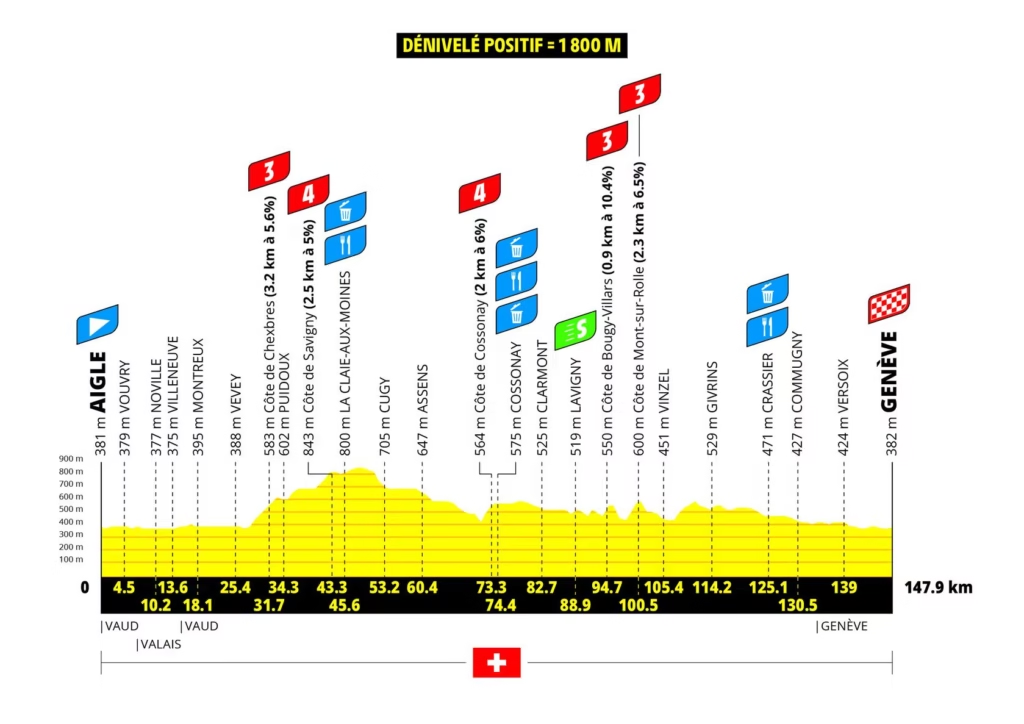
The route runs 147.9km from Aigle to Geneva. It starts in Aigle, passes close to the UCI headquarters and the World Cycling Centre, then heads along Lake Geneva through places including Montreux, Vevey and Lausanne’s wider region before finishing in Geneva.
The profile includes five categorised climbs: Côte de Chexbres, Côte de Savigny, Côte de Cossonay, Côte de Bougy-Villars and Côte de Mont-sur-Rolle. The last of those comes at kilometre 100.5, leaving enough time for the sprinters’ teams to reorganise before Geneva.
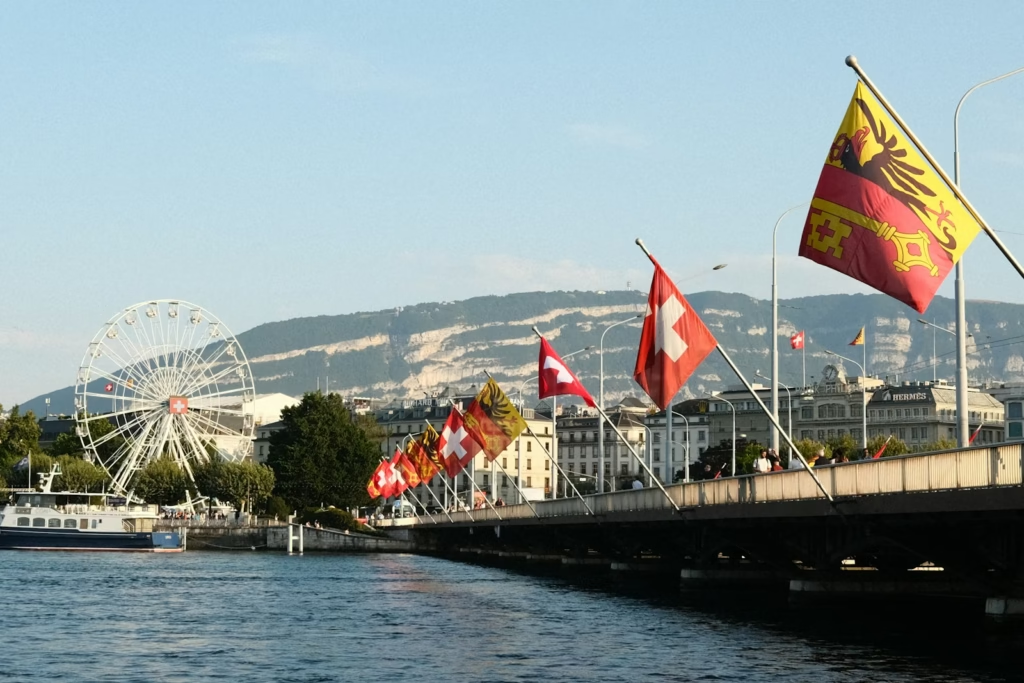
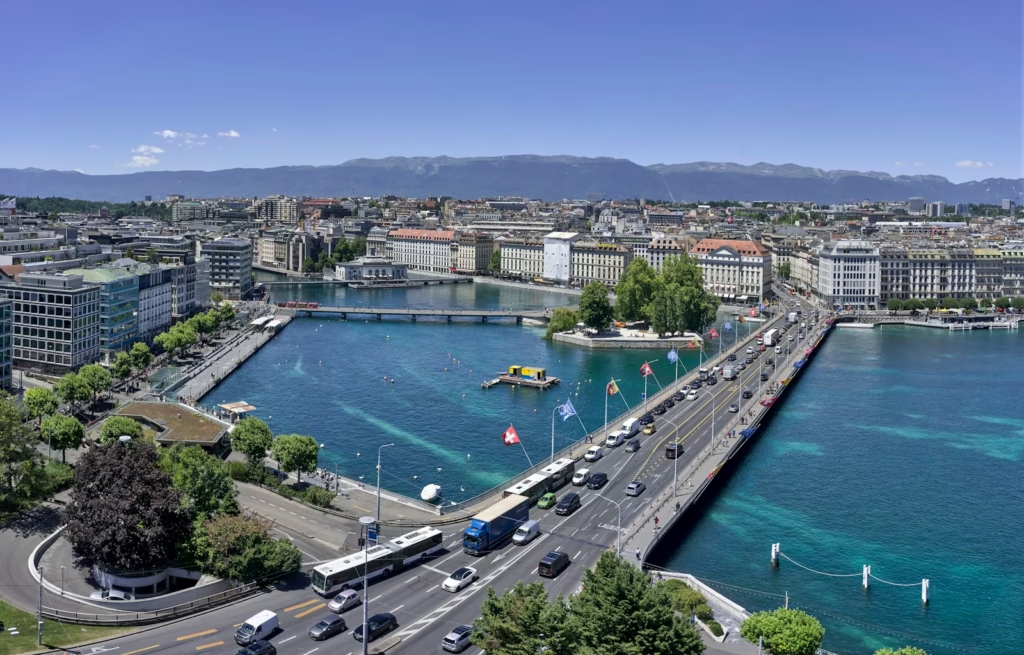
The finish in Geneva should be the big draw. The race is expected to end opposite the famous Jet d’Eau on Quai du Mont-Blanc, which gives the Tour one of the most recognisable city backdrops of the opening weekend.
Best places to watch stage 2
Stage 2 offers more choice than stage 1. The Aigle start is ideal for cycling fans who want the UCI/WCC connection. Montreux and Vevey should be good for scenery and access. The Geneva finish is best for the sprint.
| Viewing spot | Best for | What to expect |
|---|---|---|
| Aigle | Cycling culture | Start atmosphere, UCI/WCC context |
| Montreux / Vevey | Lakeside scenery | Fast racing and good visitor appeal |
| Chexbres / Savigny climbs | Early selection | Breakaway and bunch pressure |
| Côte de Bougy-Villars | Steepest short climb | Good for seeing the race under load |
| Geneva / Quai du Mont-Blanc | Sprint finish | Big crowds, final speed, ceremonies |
For most travelling fans, Geneva is the easiest stage 2 choice. It gives the clearest finish-line moment, plenty of transport options and the chance to stay in the same city for the stage 3 start the next day.
Stage 3: Geneva to Poligny
Stage 3 is where the Grand Départ becomes much more serious.
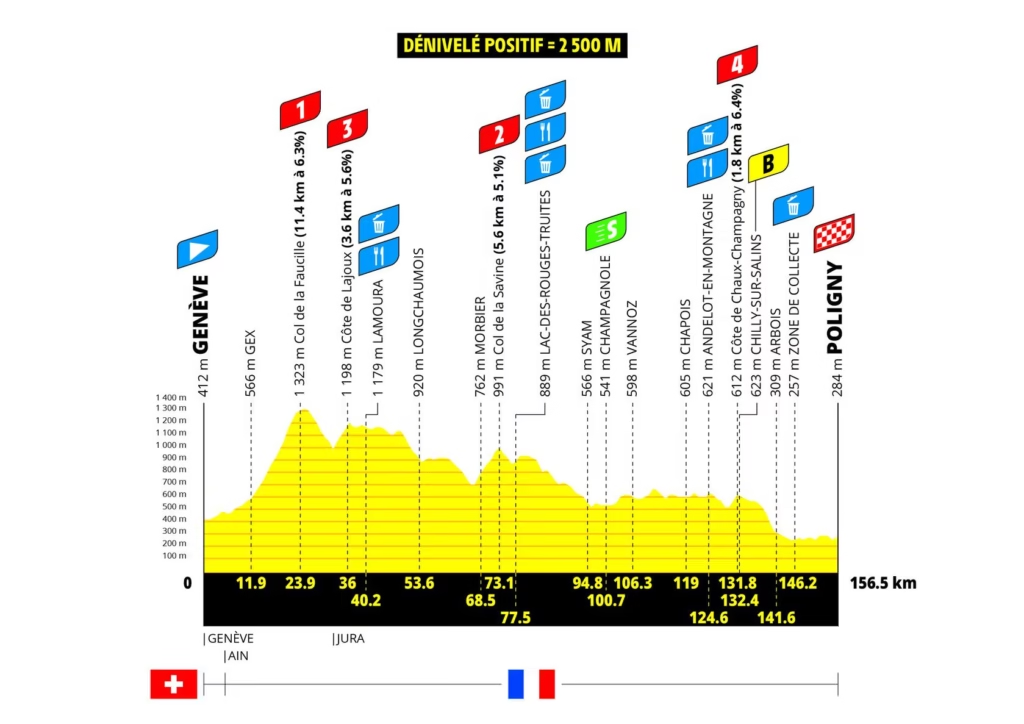
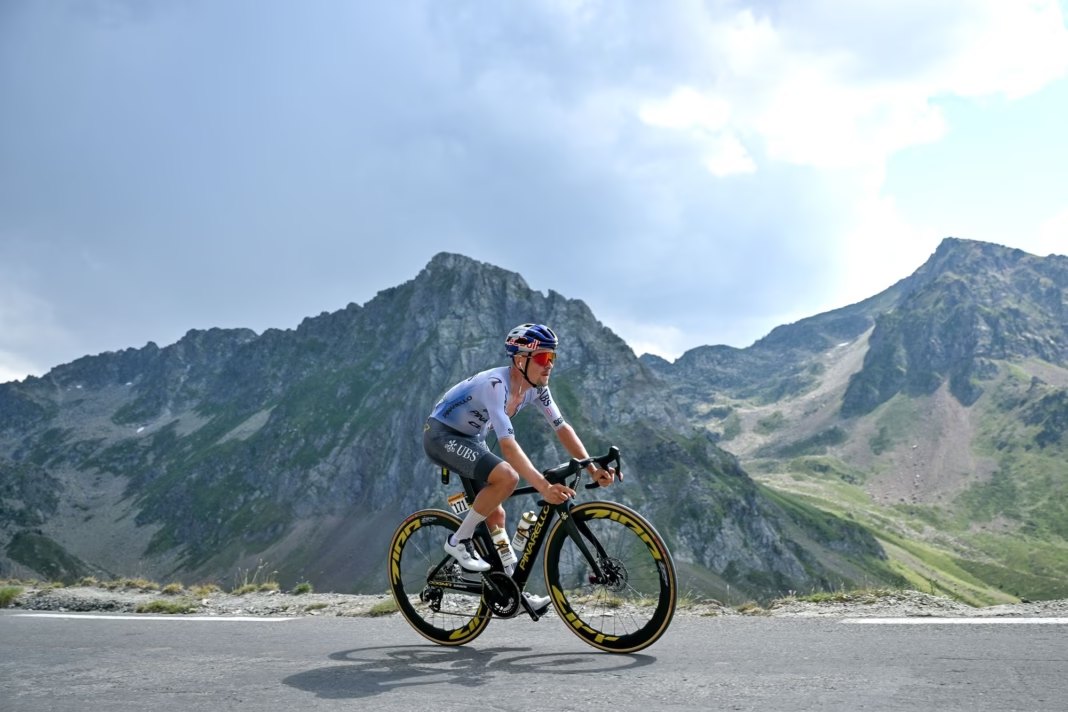
The stage starts in Geneva and finishes in Poligny after 156.5km. It is officially hilly, but the opening section is already hard, with the Col de la Faucille coming after only 23.9km. That climb is 11.4km at 6.3%, and it is followed by the Côte de Lajoux, Col de la Savine and Côte de Chaux-Champagny before the finish in Poligny.
This is the first day where GC riders, climbers and strong classics-type contenders can really begin to test each other. It is not a high-mountain summit finish, but it is too hard to be treated as a transition stage.
For fans, it is the most interesting sporting day of the Swiss Grand Départ sequence. The Geneva start will be easier logistically, but the Jura climbs will show much more of the race.
Best places to watch stage 3
The Col de la Faucille is the obvious headline viewing point, but it will also require more planning. It comes early, it is a category 1 climb, and it is likely to be busy because it is the first major climb of the 2026 race.
| Viewing spot | Best for | What to expect |
|---|---|---|
| Geneva start | Easy access | Start ceremony, team buses, lower stress |
| Col de la Faucille | First major climb | GC tension, big crowds, early selection |
| Côte de Lajoux | Follow-up pressure | Smaller climb but race still stretched |
| Col de la Savine | Mid-stage difficulty | Strong sporting viewing point |
| Poligny finish | Final result | Town finish after a selective day |
If the goal is to understand the race, stage 3 is the day to watch on a climb. If the goal is convenience, stay in Geneva for the start.
Which Grand Départ day should fans choose?
The best day depends on what kind of fan you are.
| Fan type | Best day | Why |
|---|---|---|
| First-time Tour watcher | Stage 1 in Lausanne | Opening ceremony, first yellow jersey, easy story |
| Sprint fan | Stage 2 in Geneva | Likeliest fast finish of the Swiss days |
| GC fan | Stage 3 in the Jura | First serious climbing pressure |
| Photography-focused fan | Stage 1 or stage 2 | Lake Geneva, Lavaux, Swiss Riviera backdrop |
| Cycling culture fan | Stage 2 in Aigle | UCI and World Cycling Centre context |
| Easiest travel day | Stage 2 in Geneva | Big city finish and public transport options |
Stage 1 is the best all-round Grand Départ day. Stage 2 is probably the most straightforward fan day. Stage 3 is the best sporting day.
That also matches the race’s wider direction. The modern Tour de France Femmes is not only trying to offer a showcase, it is trying to create a complete stage race. Our feature on how race routes are shaping women’s cycling in 2026 explains why that matters.
Where to base yourself
Lausanne and Geneva are the two obvious bases.
Lausanne is best for stage 1 and still works well for stage 2 because Aigle, Vevey, Montreux and Geneva all sit on the Lake Geneva corridor. Geneva is best if you want the stage 2 finish and stage 3 start with minimal movement.
Aigle is a more niche base, but it works if the UCI/WCC link is important to you or you want to watch the stage 2 start with less of a big-city feel.
| Base | Best for | Downsides |
|---|---|---|
| Lausanne | Stage 1, lake access, opening weekend | Busy and likely expensive |
| Geneva | Stage 2 finish, stage 3 start, airport access | Big-city crowds |
| Aigle | Stage 2 start, cycling culture | Less useful for stage 1 finish |
| Montreux / Vevey | Scenic stage 2 viewing | Less direct for stage 3 |
| Nyon / Rolle | Stage 2 roadside viewing | Better for roadside than ceremonies |
For transport planning, the Swiss railway network is the obvious place to start. Once event-specific timetables and road closures are confirmed, fans should check rail times, local bus changes and city access before committing to a viewing point.
How to get around the Grand Départ
Do not build the trip around driving onto the route late.
Switzerland’s public transport network makes this a Grand Départ where trains should be the default option. Lausanne, Aigle and Geneva are all rail-served, and the Lake Geneva arc gives fans more flexibility than many mountain-heavy race starts.
The main rule is simple: get to your viewing point early, assume roads near the route will close, and plan your exit before the race arrives. The women’s race now attracts significant crowds, and Swiss city centres are not places to improvise with a car on race day.
For fans comparing this to the men’s race, our guide to the Tour de France Femmes vs the Tour de France explains why the women’s race has a different structure, but increasingly similar levels of fan interest around its biggest set-pieces.
What to bring as a roadside fan
Swiss Grand Départ stages should be beautiful, but they can still be long, hot and logistically awkward.
Bring water, food, sun protection, a power bank, comfortable shoes and a light layer if you are moving between lake level and hillier areas. For stage 3, especially if heading towards the Jura, treat it more like a mountain day than a city-centre event.
A small flag or sign is fine. A giant roadside installation is less useful if you then have to carry it on a train.
Most importantly, choose one viewing point and commit to it. Trying to chase the race across several Swiss towns sounds tempting, but closures, crowds and timing windows will make that stressful.
How the Swiss stages could shape the race
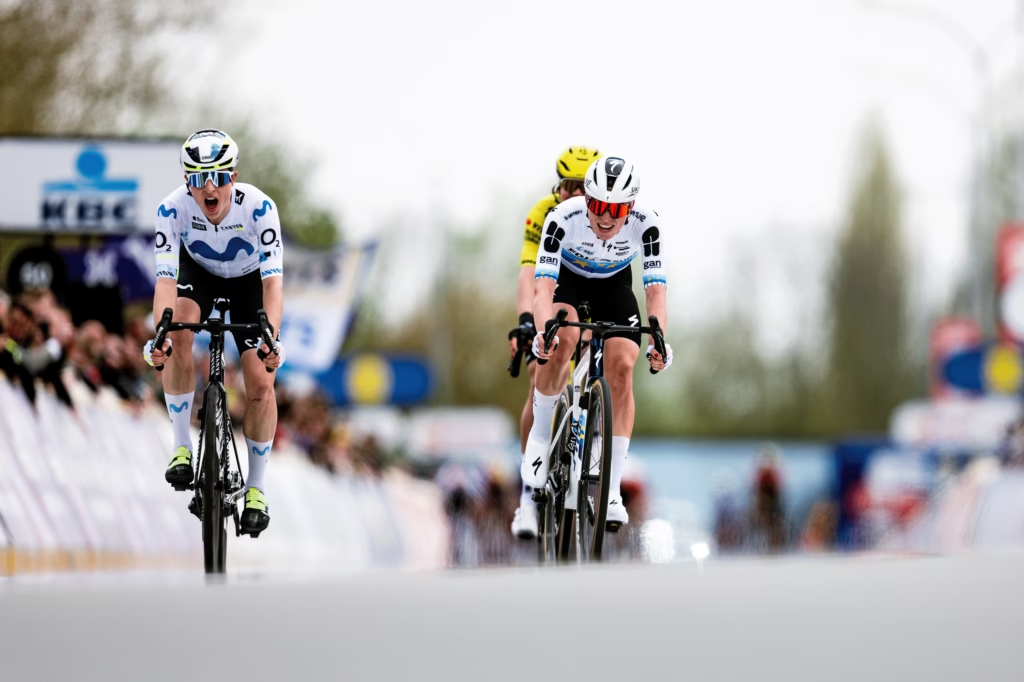
The Grand Départ is not only a fan festival. It can shape the first week.
Stage 1’s final climb in Lausanne means the first yellow jersey is unlikely to be handed out without a fight. A puncheuse or explosive GC rider could take control immediately. Stage 2 should bring the sprinters into the race, but the rolling route means positioning and team depth still matter. Stage 3 is the real early test, with the Col de la Faucille and Jura terrain capable of exposing weaker climbers.
That gives the 2026 race a sharper opening than a flat prologue-style launch. The yellow jersey battle may not be decided in Switzerland, but it can definitely be shaped there.
The wider development of the modern race is explained in our complete history of the Tour de France Femmes, while our Tour de France Femmes winners list shows how quickly the modern race has built its own roll of honour.
Watching from the UK
UK viewers will need to account for the one-hour time difference. Switzerland is one hour ahead of the UK in August, so a 14:15 local start is 13:15 in the UK.
Broadcast arrangements should be checked closer to the race, but our guide on how to watch Tour de France Femmes 2026 in the UK will track the main options once the final schedules are clear.
For stage 1, the late final climb in Lausanne should be the key live window. For stage 2, the Geneva sprint is the main target. For stage 3, fans should tune in much earlier because the Col de la Faucille comes almost immediately after the start.
The best fan itinerary
A strong three-day Grand Départ plan would look like this:
| Day | Plan |
|---|---|
| Friday 31 July | Arrive in Lausanne, scout the stage 1 finish area |
| Saturday 1 August | Watch stage 1 in Lausanne, preferably on the final climb or near Place Saint-François |
| Sunday 2 August | Travel to Geneva or pick a lakeside roadside point between Vevey and Nyon |
| Monday 3 August | Watch the Geneva start, or travel early to the Jura for the Col de la Faucille |
| Tuesday 4 August | Continue into France, or stay in Geneva/Lausanne before travelling home |
That gives the best balance of atmosphere, race action and sensible logistics. Watching all three days from finish-line areas is possible, but the best sporting experience is probably stage 1 finish, stage 2 finish, stage 3 climb.
Why this Grand Départ matters for the race’s growth
A Swiss Grand Départ also tells us something about where the Tour de France Femmes now sits.
The race is not being hidden inside a low-risk opening. It starts abroad, uses major cities, sells itself through recognisable places and immediately gives the peloton sporting terrain. That is a sign of confidence in the product.
It also matters within the wider Women’s WorldTour. The Tour de France Femmes is the most visible women’s stage race in the sport, but it still exists inside a calendar that is developing quickly. A Grand Départ like this gives the race scale and helps make the opening weekend feel like a destination in its own right.
Our explainer on what the Women’s WorldTour is gives the wider context for how the Tour de France Femmes fits into the top level of women’s cycling.
-
 Photo Credit: Getty
Verdict: a Grand Départ built for fans and television
The Tour de France Femmes 2026 Grand Départ in Switzerland works because it gives the race scenery, symbolism and sporting edge at the same time.
Lausanne provides the opening spectacle and the first yellow jersey. Aigle gives the race a direct link to cycling’s institutions. Geneva gives it a major city finish and another start before the road turns towards France. The Jura then makes sure the race is not allowed to drift through its opening days.
For fans, it is one of the most practical Grand Départs the modern race could have. There are big transport hubs, lakeside towns, strong public transport and several different viewing styles within a compact area.
For the riders, it is less comfortable. The Swiss start looks elegant, but the route is already capable of causing damage.
FAQs
Where does the Tour de France Femmes 2026 start?
The Tour de France Femmes 2026 starts in Lausanne, Switzerland, on Saturday 1 August with a 138km stage that starts and finishes in the city.
Is the 2026 Tour de France Femmes Grand Départ in Switzerland?
Yes. The 2026 Grand Départ is in Switzerland, with stages based around Lausanne, Aigle and Geneva before the race crosses into France on stage 3. It is the second international Grand Départ of the modern Tour de France Femmes, after Rotterdam in 2024.
What are the Swiss stages of the Tour de France Femmes 2026?
Stage 1 is Lausanne to Lausanne, stage 2 is Aigle to Geneva, and stage 3 starts in Geneva before finishing in Poligny, France.
Is stage 1 in Lausanne a sprint stage?
It is officially classed as flat, but it has repeated climbs and an uphill finish on the Côte Saint-François. That makes it more likely to suit puncheuses and reduced-bunch finishers than pure sprinters.
Where is the best place to watch stage 1?
The final Côte Saint-François in Lausanne is the best sporting viewing point because it should decide the first yellow jersey. The start area and lakeside sections are better for atmosphere and scenery.
Where does stage 2 finish?
Stage 2 finishes in Geneva after a 147.9km route from Aigle. The finish is expected to suit sprinters after a rolling route along the Lake Geneva corridor.
Is stage 3 still part of the Swiss Grand Départ?
Yes, because it starts in Geneva. The stage then crosses into France and finishes in Poligny after 156.5km, with the Col de la Faucille providing the first major climb of the race.