The 2026 Tour of Guangxi ends on Sunday 18 October with the race’s main uphill finish at Nongla. Stage 6 runs for approximately 165.6km from Yizhou to the Mashan Nongla Scenic Spot, turning what has largely been a week of reduced sprints into a decisive test for the general-classification contenders. The final kilometres are short but steep enough to overturn the overall standings.
For viewers in Britain, the organisers’ schedule places the start at 03:12 BST on Sunday. Coverage of the closing section is scheduled on TNT Sports and HBO Max from approximately 05:30 BST, with the finish expected around 07:00 BST. Both the start and television times are early because China is seven hours ahead of the UK while British Summer Time remains in force.
The final stage is especially important for Tom Pidcock, Kévin Vauquelin, Jarno Widar and the other riders who came to Guangxi looking for the last overall title of the men’s WorldTour road season. A good position in Saturday’s Stage 5 standings is useful, but the red jersey will not be secure until the riders have cleared the final ramp towards Nongla.
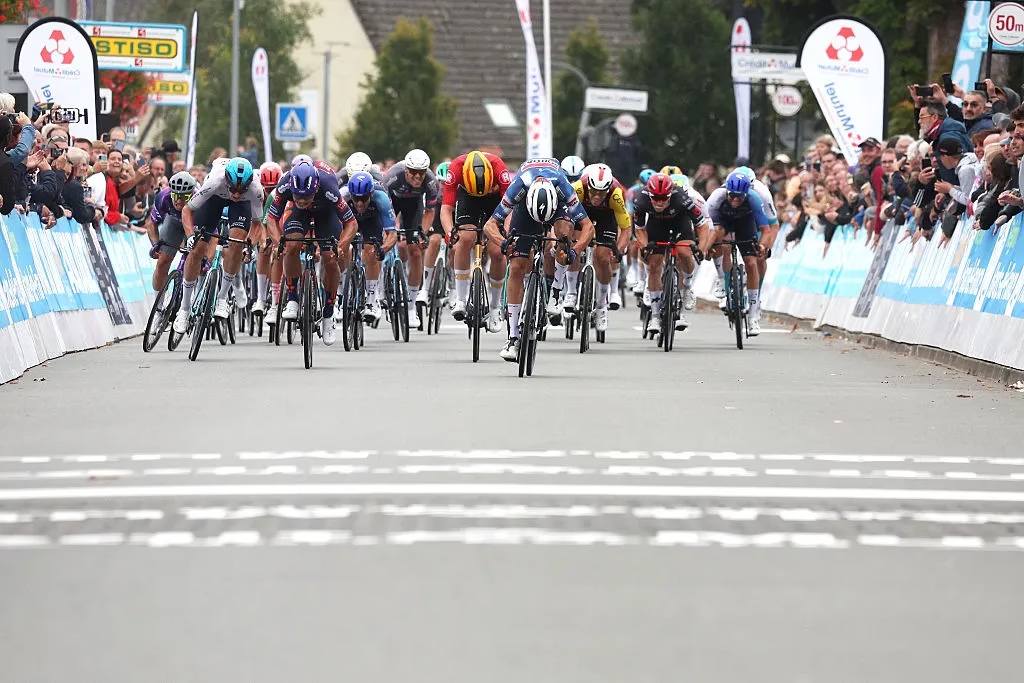
Sunday’s route is also worth watching because the previous five days have shown that the sprint teams can survive considerable climbing. Milan Fretin won Saturday’s Stage 5 after also taking Stage 3, while Paul Magnier won Stages 1 and 4 and Frits Biesterbos claimed Stage 2. Those results will count for little at Nongla if the strongest climbers can force a separation on the steepest slopes.
Tour of Guangxi Stage 6 start time and UK live TV
Date: Sunday 18 October 2026. Start: Yizhou, Guangxi. Finish: Mashan Nongla Scenic Spot. Distance: about 165.6km. Race start: 10:12 local China Standard Time, or 03:12 BST. UK live viewing: TNT Sports and HBO Max, with the closing coverage window scheduled from around 05:30 BST to 07:00 BST. These are programme and estimated race times, not a guarantee that the finish will occur at an exact minute.
Sunday’s early start means there is little reason for UK viewers to look for a live television feed from the opening kilometres. The scheduled TNT Sports feed joins the race later in the morning China time, at approximately 12:30 local. It should show the decisive approach and finishing climb if the planned schedule runs normally. The streaming selection on HBO Max may appear separately from the linear TNT channel, so the race-specific tile should be checked.
Unlike a European stage race, Guangxi has a seven-hour time difference from Britain in October. The event runs on China Standard Time, UTC+8, and the UK is on BST, UTC+1, until later in the month. A 10:12 start in Guangxi therefore becomes 03:12 in Britain, while 12:30 in China is 05:30 BST. This is a frequent source of confusion when broadcasters show local times rather than automatically converting them.
The full Tour of Guangxi UK TV guide provides the wider broadcast arrangements, and the six-stage route guide explains how the organisers have set up the contest across the week.
Stage 6 route from Yizhou to Nongla
The riders begin in Yizhou and travel through Xincheng and Shanglin before reaching Mashan and the finish at Nongla. The wider route moves through southern China’s limestone hill country, with rolling roads and repeated changes of direction before the final ascent. The main attraction is the way the organisers have placed a steep summit finish at the end of an otherwise manageable stage.
The listed distance is 165.6km on the TNT Sports race calendar, although some route guides give approximately 165.9km. That is a minor mapping difference, not a second course. Riders and team cars should work from the organisers’ final route book rather than a rounded preview distance.
The day’s racing is likely to have two different phases. A breakaway can build a gap across the relatively open earlier roads, where the GC teams might be prepared to allow riders who are not dangerous overall some freedom. The final hour becomes much less predictable if those teams must chase down a rider close enough in the classification to threaten a place on the podium.
There is no benefit for the favourites in using up their climbing teammates early unless a threatening group gets away. The most important positioning work will come as the course narrows approaching the finishing hill. A rider trapped several rows back at the foot could lose precious time before the steepest section even begins.
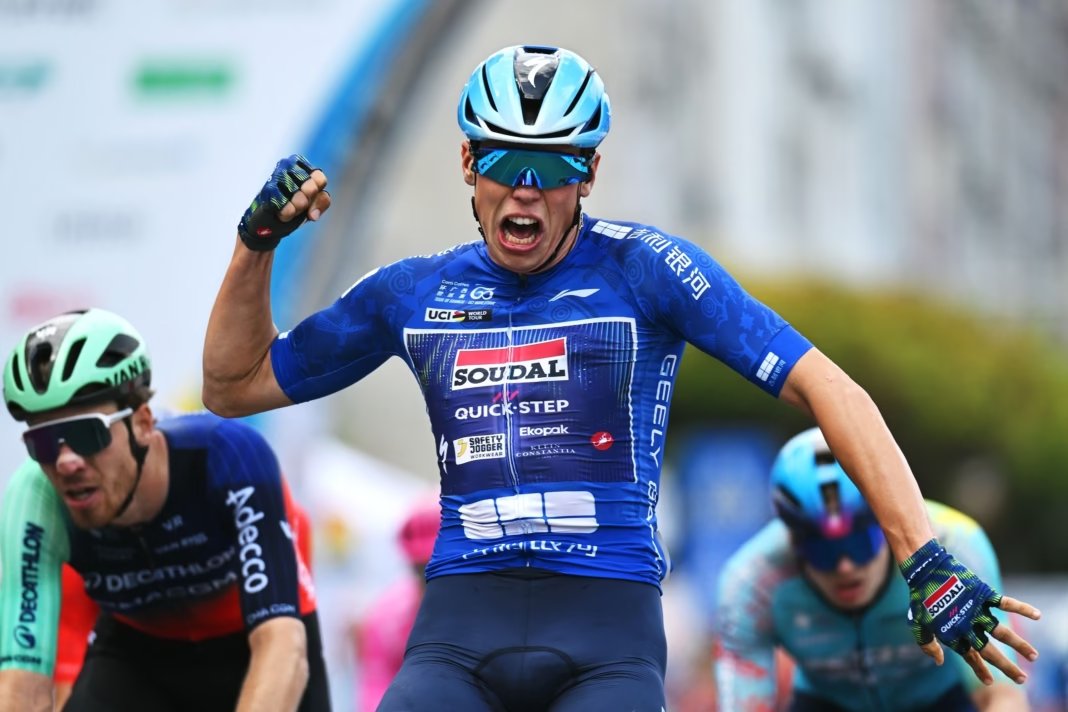 Photo Credit: Getty
How difficult is the Nongla finishing climb?
The decisive climb to the Nongla Scenic Spot is approximately 3.2km at 7.3 per cent, with ramps that rise into double figures near the finish. Those averages are demanding enough on their own, but they conceal the fact that much of the real selection can happen over a shorter final section. The temptation is to attack when the first rider increases the pace, yet a kilometre ridden too hard can be difficult to recover from.
The road rises steeply enough that ordinary sprint finishing speed is no longer relevant. This is the stage where a punchy climber who has conserved energy can make seconds on riders with a similar general classification. Small gaps formed in the last few hundred metres can be enlarged if a rider stalls or hesitates on the steepest gradient.
The Nongla ascent has decided the overall classification in previous editions, including Paul Double’s victory on the penultimate stage of the 2025 race. The 2026 layout instead saves the climb for the final day, which concentrates the race for the red jersey into Sunday’s closing kilometres. The change makes it harder for a new leader to settle in and defend their advantage the following day: there is no following day.
If the weather is wet, a high-speed approach and steep finishing ramps introduce further problems for teams trying to position several contenders. Even in dry conditions, a rider needs to preserve enough power for repeated accelerations. It is a tactical hill as much as a simple watts-per-kilogram test, because a poorly judged attack could leave a strong rider vulnerable over the final few hundred metres.

Who can win the final stage and the overall race?
Tom Pidcock is among the most obvious candidates for a short steep summit finish. He is able to change pace on climbs like Nongla and can handle a technical approach, although a race-winning move still requires the right positioning and enough teammates to deliver him near the front. The margins are likely to be measured in seconds rather than minutes.
Kévin Vauquelin and Jarno Widar are also riders suited to an explosive uphill effort. Vauquelin’s punch on short climbs and Widar’s ability to maintain hard efforts both make them interesting options, but each must balance a stage-winning attack with the general-classification situation. If a rider starts the climb already well placed overall, he may prefer to follow rather than make the first acceleration.
The same applies to other riders such as Jhonatan Narváez and Juan Ayuso. A rider who is only a few seconds off the lead can be as much a threat to the classification as a stronger climber further back. The teams will calculate their tactics from the verified Saturday evening standings rather than from the list of pre-race favourites.
The final stage may also allow a breakaway rider to claim a win if the most important GC contenders mark one another. That outcome becomes less likely if the race leader needs to defend against a rider in the move, or if several squads have their own climber hoping to attack on the hill. A successful break would need a meaningful advantage before the final 3km.
Saturday’s Stage 5 report gives the most recent sprint result and the race context entering the decisive day, while the overall contenders preview examines the riders expected to challenge for the title.
What to watch during the final hour
The most revealing moment before Nongla could be the formation of the chase. If the leading teams still have several support riders together, they can keep the pace high on the approach and prevent a late solo move from gaining too much time. If the race is already split into smaller groups, the overall contenders may need to begin racing well before the official start of the final climb.
Look for positioning at the bottom of the ascent. A rider who reaches the front ten is better placed to respond immediately to the first acceleration, whereas someone caught behind a slowing teammate could have to make up ground at precisely the moment when everyone else is going flat out. The final climb is steep enough for that early delay to matter.
It is also worth watching the race clock and intermediate standings rather than assuming the first rider across the line automatically wins overall. Finishing time gaps and any applicable bonus seconds can decide close classifications. The organisers’ confirmed final results, including any penalties, remain the authority.
For a British viewer looking to follow the title fight, joining the live coverage at 05:30 BST gives the best chance of seeing the final approach and the decisive attacks. It is sensible to allow some flexibility around the estimated 07:00 finish, because stage times depend on the actual pace and delays on the road.
After the finish, the men’s WorldTour stage-race calendar moves on from Guangxi. The final podium will establish which climber managed the week best, but on Sunday morning the decisive evidence will come from the last 3.2 kilometres to Nongla.