
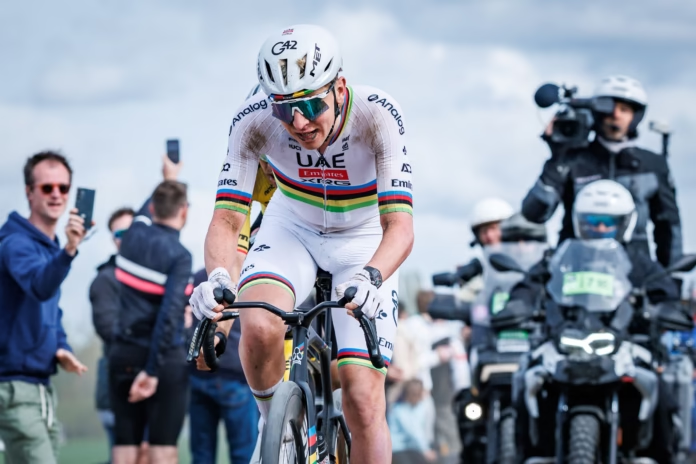
Tadej Pogačar will start the 2026 Vuelta a España as the overwhelming favourite, returning to the race for the first time since his breakthrough Grand Tour debut in 2019 and chasing the one three-week title still missing from his palmarès.
The field behind him is more complicated, and one of the biggest pre-race questions has now been settled.
Primož Roglič is confirmed to start the Vuelta with Red Bull-BORA-hansgrohe, but his team are deliberately lowering expectations after the training crash which disrupted his entire August build-up. The four-time winner was originally supposed to make a record fifth Vuelta title one of the central goals of his season. He will now begin in Monaco without the assumption that he is racing for red, with stage opportunities and assessing his condition as the race develops a more realistic starting point.
That significantly changes the GC picture. Roglič still has the pedigree to become relevant if his form improves during the race, but he should no longer be ranked as Pogačar’s obvious number-two challenger before Stage 1.
Jonas Vingegaard is definitively absent. Team Visma | Lease a Bike have confirmed that he will not race again in 2026 as he continues recovering from the fractured collarbone suffered when he crashed out of the Tour de France on Stage 15. His season is over and his focus has already shifted towards 2027.
Remco Evenepoel, Isaac del Toro, Paul Seixas, Richard Carapaz and Juan Ayuso are also absent from the current Vuelta picture, leaving a second group led by Enric Mas, Mattias Skjelmose, Felix Gall and Carlos Rodríguez trying to prevent Pogačar turning another Grand Tour into a race for second place.
The Vuelta a España 2026 route guide gives them opportunities. There are more than 58,000 metres of climbing, seven major uphill finishes and a decisive 32km individual time trial in the final week. The problem is that almost all of those features suit Pogačar as well.

Vuelta a España 2026 main GC contenders
| Rider | Team | GC outlook |
|---|---|---|
| Tadej Pogačar | UAE Team Emirates-XRG | Clear favourite |
| Enric Mas | Movistar | Podium contender |
| Mattias Skjelmose | Lidl-Trek | Podium contender |
| Felix Gall | Decathlon CMA CGM | Major climbing threat |
| Carlos Rodríguez | Netcompany INEOS | Top-five/podium contender |
| João Almeida | UAE Team Emirates-XRG | Elite secondary GC option |
| Mikel Landa | Soudal Quick-Step | Experienced outsider |
| Cian Uijtdebroeks | Movistar | Young GC wildcard |
| Matthew Riccitello | Decathlon CMA CGM | Top-10/top-five outsider |
| Primož Roglič | Red Bull-BORA-hansgrohe | Confirmed starter, but GC ambitions deliberately reduced |
The start list remains provisional, particularly around Roglič, so the hierarchy can still change considerably before Stage 1 on 22 August.
Tadej Pogačar starts as the rider everyone has to beat
There is no complicated argument required for putting Pogačar first.
He has just won his fifth Tour de France, joining Jacques Anquetil, Eddy Merckx, Bernard Hinault and Miguel Induráin in the record group, and now returns to the Vuelta seeking to complete his set of Grand Tour victories.
Our look at Pogačar’s five Tour wins and his place in cycling history already identified the Vuelta as one of the increasingly small gaps left in his palmarès. This is his opportunity to remove it.
His only previous Vuelta came in 2019, when a 20-year-old Pogačar finished third overall and won three stages. What looked remarkable at the time now reads like the opening chapter of everything which followed.
The 2026 route might be even better suited to the rider he has become.
The 9.4km Monaco time trial gives him an immediate chance to take seconds. Font-Romeu and Andorra arrive before the race has properly settled. Alto de Aitana brings more than 5,000 metres of climbing before the first rest day, while Calar Alto and Sierra de la Pandera give him repeated opportunities to attack through the second week.
Then comes the most important sequence.
Stage 18 is a 32km individual time trial to Jerez. Stages 19 and 20 finish at Peñas Blancas and Collado del Alguacil.
A pure climber can hope to exploit Pogačar in the mountains. A time triallist can hope to gain against him in Jerez. Finding someone capable of doing both is considerably harder.
There is one legitimate uncertainty: recovery.
Pogačar has already raced and won the Tour, while several of his Vuelta rivals have been preparing specifically for August. The 2026 Tour changed the rest of his season because he now arrives at every remaining objective having already completed another intense three-week race.
That is a vulnerability, but it is not enough to make somebody else favourite.
Verdict: The benchmark. If Pogačar brings anything close to his Tour level, everyone else is probably racing for the podium.
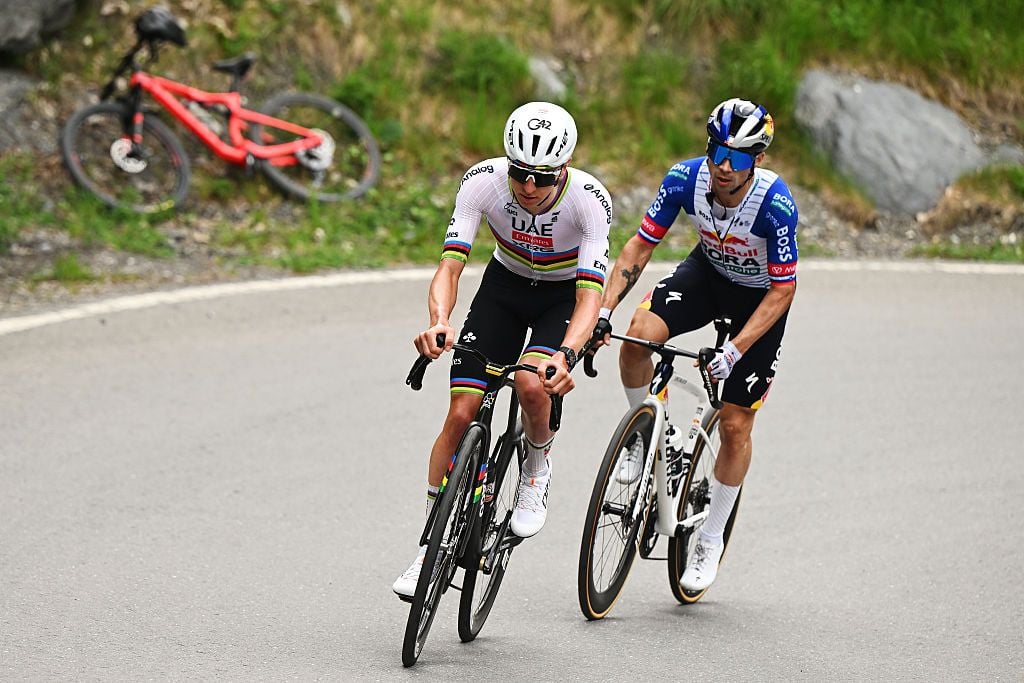 Photo Credit: Getty
Primož Roglič is racing, but a fifth Vuelta title is no longer the expectation
Primož Roglič’s entire 2026 season was originally structured around one central ambition: becoming the first rider to win the Vuelta a España five times.
He skipped the Tour de France and built his summer towards Spain, giving himself the kind of focused preparation that should have made him Pogačar’s most obvious rival.
That plan changed when he was hit by a car while training at the end of July.
The injuries forced him out of both the Clásica de San Sebastián and Vuelta a Burgos, taking away the two races that were supposed to sharpen his condition before Monaco. What initially became uncertainty over whether he would start at all has now developed into a different situation.
Roglič is confirmed for the Vuelta, but he is not arriving with the same GC expectations.
Reports around the final Red Bull-BORA-hansgrohe selection have made clear that his disrupted preparation has forced the team to adopt a much more realistic approach. The initial emphasis will be on getting through the opening stages, assessing his condition and taking opportunities rather than building the entire three weeks around a record fifth red jersey.
That takes Roglič out of the automatic second-place position in the pre-race hierarchy.
It does not make him irrelevant.
Four overall victories give him unmatched knowledge of how to win this particular Grand Tour, and his combination of climbing, time trialling and finishing speed has always fitted the Vuelta extraordinarily well. If his condition improves quickly, he has enough ability to move back into the GC conversation almost by accident.
The route remains favourable to a healthy Roglič. There is steep climbing, bonus-second terrain and the 32km Jerez time trial, all features he has traditionally used exceptionally well.
The difference is preparation.
At 36, coming into a Grand Tour after losing the key races designed to bring him towards peak condition is a much bigger problem than it would have been earlier in his career. There is also no reason for Red Bull to force him to defend a lower top-10 position if losing time would instead give him freedom to target stages later in the race.
That could produce a fascinating version of Roglič.
If he concedes meaningful GC time during the first week but continues improving, he could become one of the strongest breakaway or mountain-stage riders in the race. A rider normally watched every second by the other leaders could suddenly gain tactical freedom he almost never receives.
Verdict: Confirmed to start, but no longer one of the leading pre-race GC favourites. His Vuelta should initially be judged around condition and stage opportunities, with any serious red-jersey challenge treated as something he has to ride himself back into.
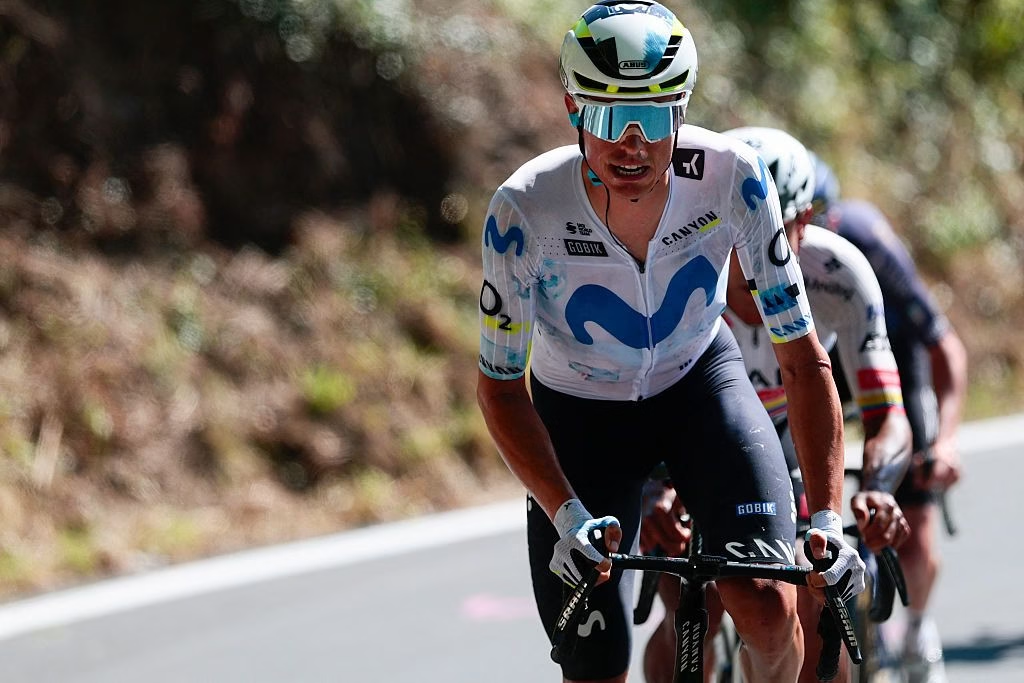 Photo Credit: Getty
Enric Mas has another Vuelta podium opportunity
Few active riders are as closely associated with being near the front of the Vuelta without actually winning it as Enric Mas.
The Movistar leader has finished second overall three times and repeatedly demonstrated an ability to reach the final week of his home Grand Tour still in podium contention.
That consistency makes him particularly relevant in 2026.
Mas does not need to prove that he can climb with a Grand Tour podium group. His question is whether he can produce the decisive performance required to turn another high finish into something more.
The route gives him plenty of climbing terrain, particularly at Aitana, Calar Alto, La Pandera and Peñas Blancas. The 32km time trial is less helpful. Against riders such as Pogačar and Roglič, Mas cannot afford to enter Jerez already defending a small deficit because he risks losing considerably more there.
He therefore needs the mountains to be genuinely selective.
His preparation has at least moved in the right direction. Mas used the Vuelta a Burgos as his final major stage-race test and remained competitive on the harder climbs after a disrupted season.
Movistar have also committed to him long term, with Mas contracted through to 2029, so there is no ambiguity about his importance within the team’s stage-racing structure.
There may be useful tactical depth around him too. Cian Uijtdebroeks, Einer Rubio, Pablo Castrillo and Nairo Quintana all appear in Movistar’s provisional Vuelta plans, giving Mas more climbing support than several rival leaders.
The problem is the ceiling.
Mas has shown repeatedly that he can finish on a Vuelta podium. Beating the best version of Pogačar requires something beyond the level which has previously earned him second.
Verdict: One of the safest podium selections, but outright victory probably requires Pogačar to falter.
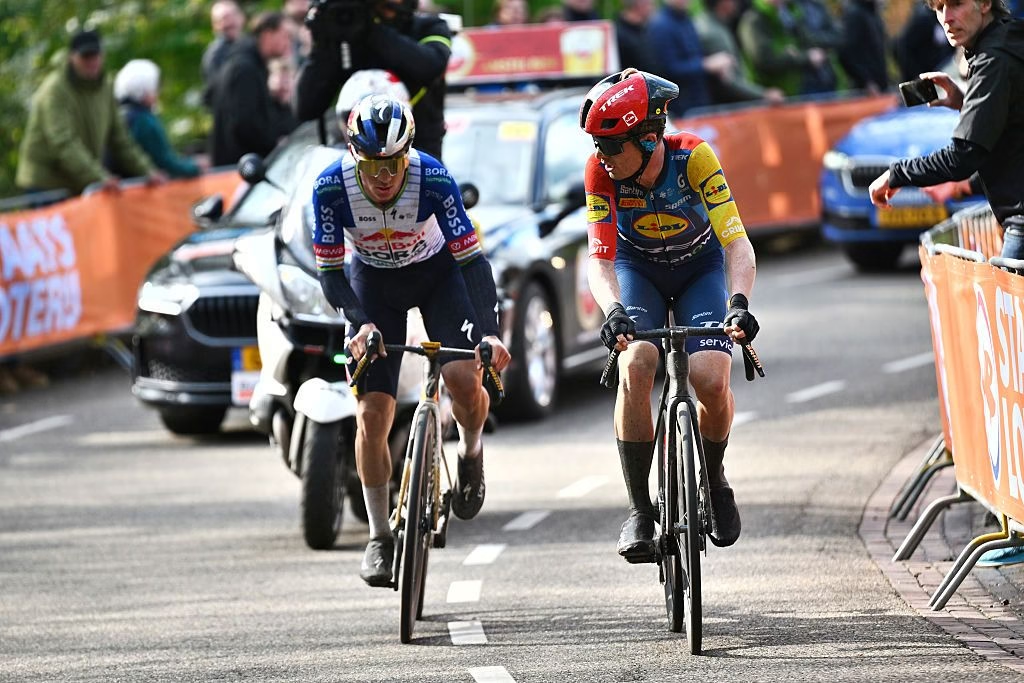
Mattias Skjelmose returns with a much higher GC ceiling
Skjelmose’s position has changed significantly because of the Tour de France.
He entered July as a strong stage racer with plenty still to prove over three weeks. He leaves it with another body of evidence that he belongs around the upper end of Grand Tour GC battles.
Lidl-Trek have confirmed that Skjelmose is planning to ride the Vuelta, giving him a rapid Tour-to-Vuelta turnaround but also another immediate opportunity to push his stage-racing development.
The route is intriguing for him.
Skjelmose is a better time triallist than several of the pure climbers around him and has enough punch to make bonus seconds relevant. He should also cope well with the less straightforward mountain days where positioning and repeated accelerations matter as much as one long sustained climb.
Aitana and Peñas Blancas are more difficult questions. Those extended mountain efforts reward riders who can sustain Grand Tour climbing power for a long time, exactly where Pogačar can create major differences.
Skjelmose does at least arrive with the confidence of a strong Tour campaign and a team increasingly prepared to build around him. His contract extension through 2028 reflected Lidl-Trek’s belief that his ceiling extends beyond simply winning week-long stage races.
The Vuelta is another chance to test that.
Verdict: A realistic podium candidate and one of the riders most capable of taking advantage if one of the established favourites has a bad week.
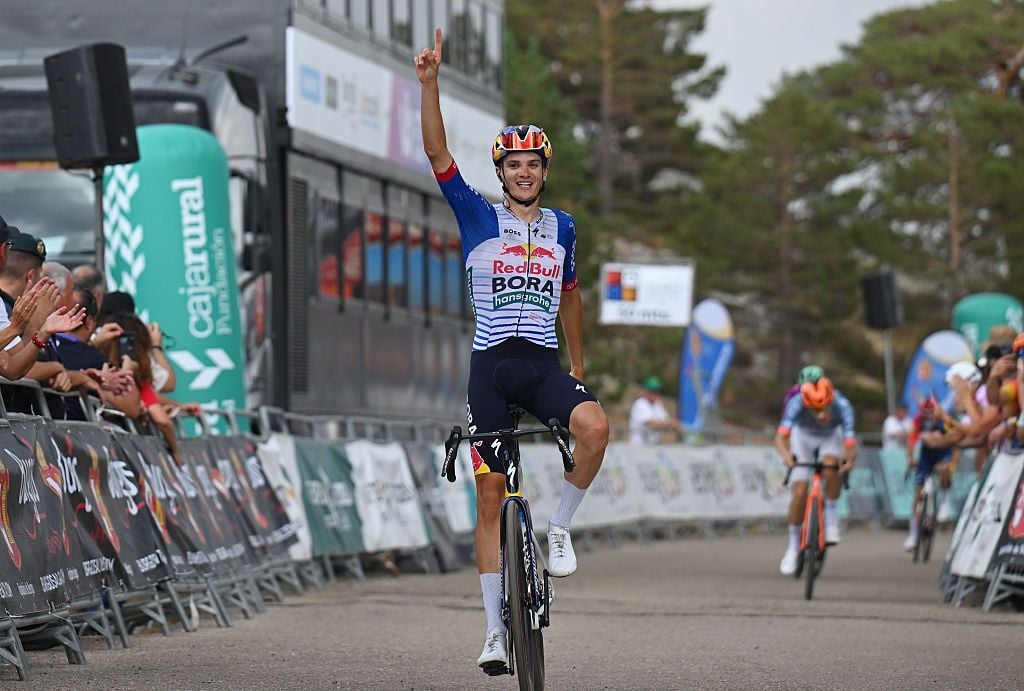 Photo Credit: Getty
Felix Gall may be the pure climber most capable of disrupting the race
Felix Gall’s route to a high GC finish is uncomplicated.
He needs the Vuelta to be hard.
The Austrian does not have Pogačar’s time trial or Roglič’s finishing speed, but the climbing programme gives him repeated chances to turn the race into an attritional contest.
His form immediately before the Vuelta is encouraging. Gall won the difficult third stage of the Vuelta a Burgos after attacking near the top of Puerto del Escudo, beating a field which included Enric Mas and several other riders preparing for Spain.
That matters because the Vuelta begins aggressively.
There is very little time to gradually find form. Font-Romeu comes on Stage 3, Andorra on Stage 4 and Valdelinares on Stage 7 before Aitana closes the opening week.
Gall should welcome that.
The larger problem comes later. The 32km Jerez time trial could cost him heavily against the more complete riders, meaning he may need to enter the final week with a substantial advantage over some of his podium rivals.
Peñas Blancas and Collado del Alguacil give him the terrain to attack afterwards, but needing to recover time is very different from having the option to do so.
Decathlon CMA CGM also appear likely to bring Matthew Riccitello and Léo Bisiaux rather than Paul Seixas. That creates a young and climbing-heavy squad without forcing Seixas through a second Grand Tour immediately after finishing fourth in his Tour debut.
Verdict: Excellent route for his climbing, difficult route for his time trialling. A serious podium threat if the mountains create large enough gaps.

Carlos Rodríguez has the consistency to stay in the podium conversation
Carlos Rodríguez should again give Netcompany INEOS a dependable route into the GC.
He rarely receives the same attention as the very biggest Grand Tour names, but his value lies in how few obvious weaknesses he brings. Rodríguez climbs well, time trials respectably and generally handles three-week racing with the consistency required to remain near the front.
That makes the Vuelta route sensible for him.
The Jerez time trial should not destroy his GC position, while the repeated mountain stages give him opportunities to move upwards through durability rather than relying on one spectacular attack.
Whether that is enough to win is another question.
Rodríguez normally gains through consistency while other riders make mistakes. Pogačar gains because he can simply ride away from them.
That distinction matters when assessing his ceiling.
A podium is realistic if Rodríguez arrives in good form and avoids a poor day. Winning probably requires both a career-best performance and problems elsewhere.
Verdict: A strong top-five candidate with a genuine route onto the podium.
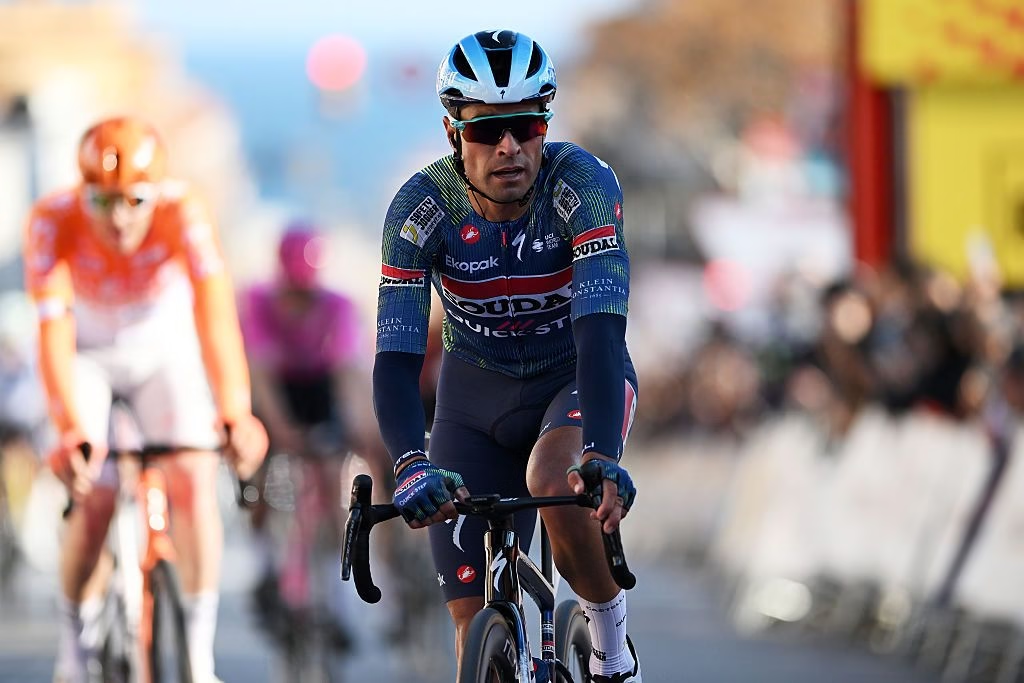
Mikel Landa remains dangerous whenever the race becomes chaotic
Mikel Landa is another rider whose prospects improve as the race becomes less controlled.
Soudal Quick-Step’s provisional plans point towards the Basque climber leading a squad which could also contain Filippo Zana, Steff Cras and Ethan Hayter.
Landa’s strengths are obvious on a route containing this much climbing. He does not need a short explosive finish to create gaps and is often happiest when a mountain stage begins breaking apart well before the final climb.
His weakness is equally familiar.
The time trial.
Thirty-two kilometres to Jerez is a major obstacle for a rider who may already need to gain rather than defend time. Landa’s best chance therefore involves aggressive mountain racing before Stage 18 rather than waiting for the final weekend.
The Andorra stage is particularly interesting. At only 104.8km, it encourages exactly the sort of early mountain aggression which can turn a conventional hierarchy into something much less organised.
Verdict: More likely to fight for the top five than the overall victory, but capable of making the race significantly harder for everyone else.
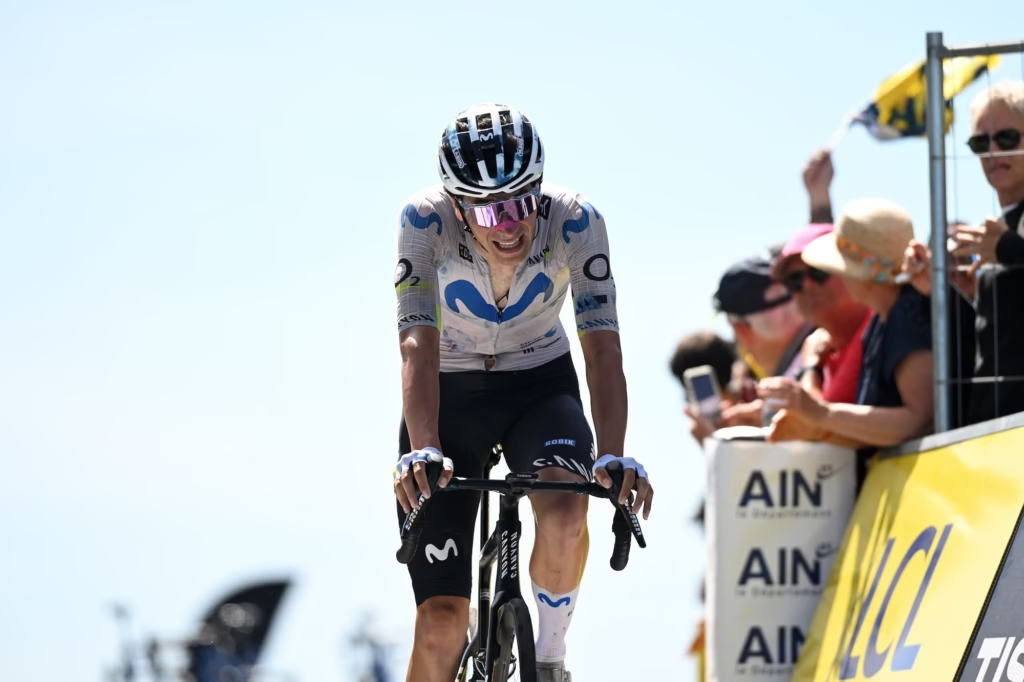
Cian Uijtdebroeks is an interesting Movistar wildcard
Movistar’s second GC card may become increasingly important depending on how Mas progresses.
Uijtdebroeks has the climbing ability required for this route and is still young enough that a significant step forward across three weeks would not be surprising. He also gives Movistar tactical freedom in a race where simply placing every rider around Mas may not be enough to trouble UAE.
The sensible approach is probably not to begin with dual leadership.
Mas has earned the right to start as the protected rider. Uijtdebroeks can remain close on GC, help on the harder stages and see what position he reaches after Aitana.
If he is still high overall, Movistar suddenly have two cards.
If not, he becomes valuable mountain support.
Verdict: Top-10 potential with an outside route to becoming much more important if he survives the opening week close to the leaders.
 Photo Credit: Getty
Matthew Riccitello can turn the Vuelta into another development step
Riccitello is unlikely to begin in the same GC category as Pogačar, Mas or Skjelmose, but he belongs among the riders capable of moving into the top 10.
The American’s climbing is his greatest asset and the Vuelta gives him plenty of terrain on which to use it.
Decathlon’s main leadership should sit with Gall, but having Riccitello high on GC gives the team options. A second rider within a few minutes can force rivals to respond to earlier attacks rather than simply waiting for Gall.
There is also less pressure than there would be around Seixas.
After Seixas finished fourth at the Tour at only 19, sending him immediately into another Grand Tour would be an enormous physical and psychological load. His absence from current Vuelta plans makes sense. The wider implications of his Tour breakthrough were explored in what the 2026 Tour de France means for the rest of the season.
Riccitello can therefore take another significant three-week opportunity without every result being treated as a referendum on the future of French cycling.
Verdict: A top-10 outsider and one of the more interesting young riders in the expected field.
Why Vingegaard, Evenepoel, del Toro, Seixas, Carapaz and Ayuso are absent
A theoretical Vuelta field containing Pogačar, Vingegaard, Evenepoel, Del Toro, Seixas, Carapaz, Ayuso and a fully prepared Roglič would have produced an extraordinary GC battle.
That is not the race beginning in Monaco.
Jonas Vingegaard will not race again in 2026. The Team Visma | Lease a Bike leader is still recovering from the fractured collarbone suffered when he crashed out of the Tour de France on Stage 15, and his team have confirmed that his season is over. The winner of the 2026 Giro d’Italia will instead focus on recovering fully before preparing for 2027.
That removes what would otherwise have been Pogačar’s most obvious Grand Tour rival.
Evenepoel is not riding the Vuelta, despite finishing second at the Tour and continuing his successful 2026 season afterwards.
Del Toro is absent from UAE Team Emirates-XRG’s Vuelta squad. UAE are instead building around Pogačar with João Almeida, Jay Vine and their wider climbing depth.
Seixas is not riding after his exceptional Tour de France debut, where he finished fourth overall at only 19.
Carapaz is also absent, removing one of the riders most naturally suited to turning the Vuelta mountains into an aggressive, unpredictable GC race.
Ayuso is not expected to start either.
Their collective absence significantly changes the balance of the race. There is no longer the huge second tier of established Grand Tour winners and emerging superstars that might otherwise have surrounded Pogačar.
Roglič’s confirmation adds a major name back into the peloton, but his reduced ambitions do not completely restore that depth. Until he demonstrates otherwise on the road, the more realistic podium fight sits around Mas, Skjelmose, Gall, Rodríguez and the secondary leaders capable of moving upwards as the race develops.

João Almeida may be too good to describe simply as a domestique
One rider who complicates the UAE hierarchy is João Almeida.
He is expected to start alongside Pogačar and would be a genuine podium contender for almost any other team.
At UAE, his first responsibility will be helping Pogačar win.
That does not make his GC irrelevant.
Keeping Almeida close gives UAE an extremely powerful tactical option. Rival teams cannot simply send riders up the road and assume Pogačar will personally respond. Almeida can follow attacks, force other leaders to work and potentially inherit leadership if anything happens to Pogačar.
The 32km time trial also suits him.
If UAE reach the final week with Pogačar first and Almeida still high overall, they could control the race in much the same way they have increasingly done at other major stage races: one leader capable of winning and another rider too strong to ignore.
Verdict: Not the designated favourite within his own team, but potentially one of the strongest five GC riders at the race.
The route makes Pogačar difficult to attack
The frustrating part for Pogačar’s rivals is that there is no obvious weakness in the 2026 Vuelta route to target.
Pure climbers can try to isolate him in Andorra, Aitana or Calar Alto.
Then they have to survive the time trial.
Time trial specialists can wait for Jerez.
Then they have to survive Peñas Blancas and Collado del Alguacil immediately afterwards.
Riders relying on consistency must accept that Pogačar can collect stage wins and bonus seconds along the way.
The best opportunity may therefore be cumulative rather than tactical. Pogačar has already completed and won the Tour. His rivals need to make every mountain stage hard enough that those additional three weeks of racing begin to matter.
If they allow UAE to control gently until the final climb each day, they are probably racing exactly the Vuelta Pogačar wants.
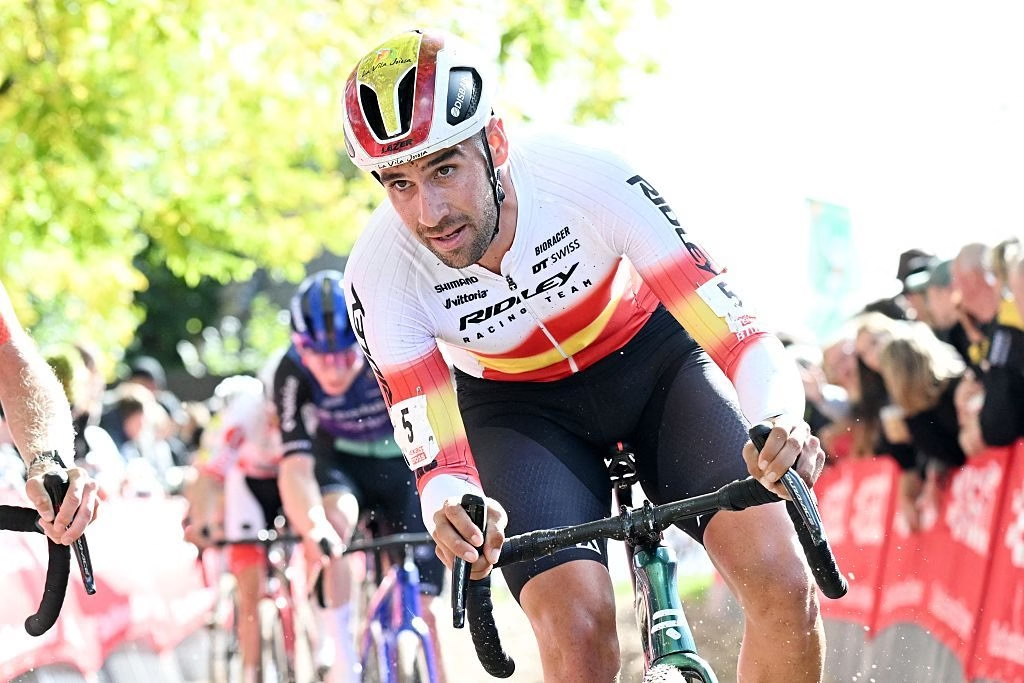
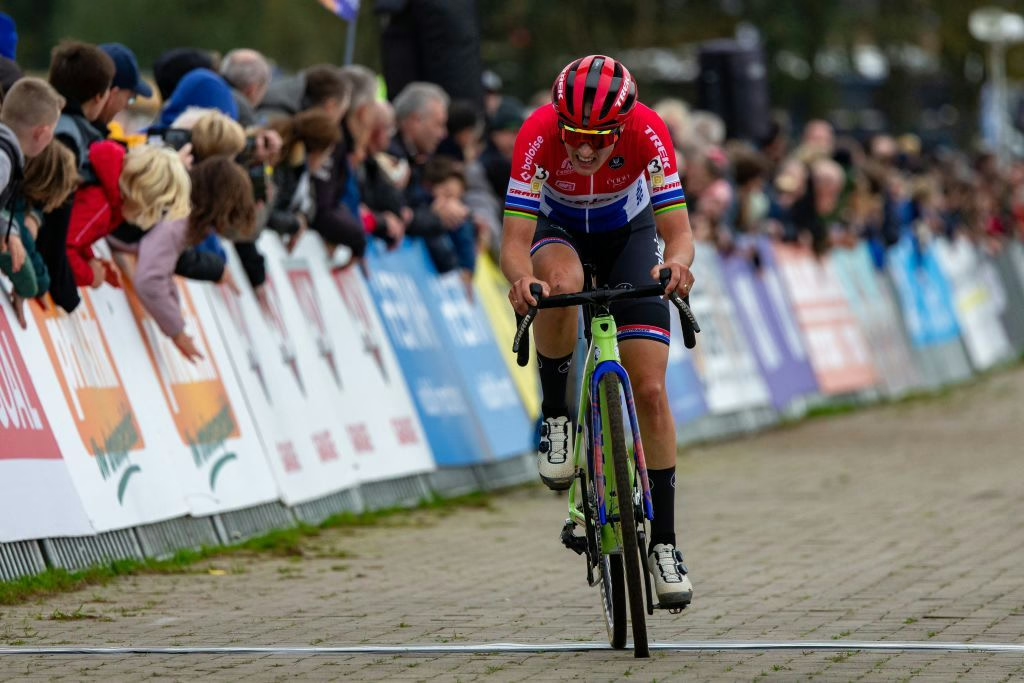
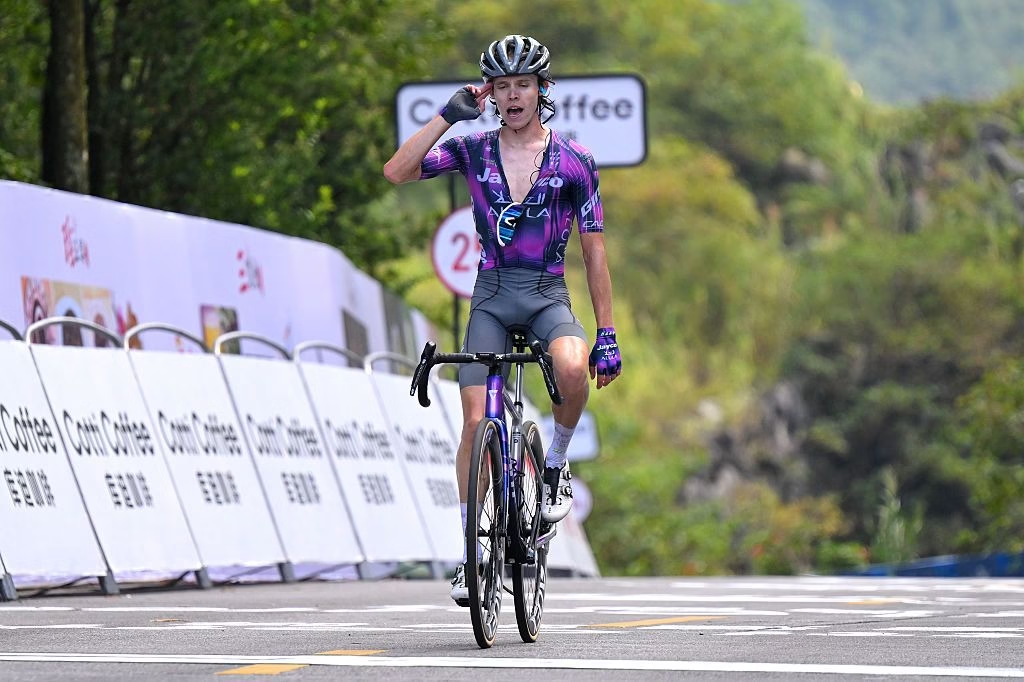
Vuelta a España 2026 contenders ranking
1. Tadej Pogačar
The strongest climber, one of the strongest time triallists and surrounded by the deepest mountain team. The clear favourite.
2. Enric Mas
Three-time Vuelta runner-up and one of the safest podium choices. He needs the mountains to create large gaps because the Jerez time trial works against him.
3. Mattias Skjelmose
A more complete option than many of the pure climbers, with enough time-trial ability and punch to score throughout the race. His biggest uncertainty is recovery after the Tour.
4. Felix Gall
Possibly the strongest pure climber among Pogačar’s principal challengers. He needs the mountain stages to produce significant gaps before the longer time trial.
5. Carlos Rodríguez
Dependable across three weeks, solid against the clock and difficult to eliminate. A strong top-five candidate with a plausible path to the podium.
6. João Almeida
Starts as Pogačar’s teammate rather than an independent leader, but may still be one of the strongest GC riders in the field. His position becomes particularly important if anything happens to UAE’s number one.
7. Mikel Landa
Plenty of suitable climbing terrain, but the time trial limits the argument for a full podium challenge.
Primož Roglič: impossible to rank normally
Roglič is now confirmed to start, but he should not be placed second simply because he has won the race four times.
His preparation has been badly compromised by the training crash, and Red Bull-BORA-hansgrohe are approaching the race without the expectation that he immediately challenges for a fifth red jersey.
If he rapidly rides himself into form, he can still become more dangerous than several riders ranked above. Before Monaco, however, his condition makes him better treated separately from the established podium hierarchy.
Wildcards
Cian Uijtdebroeks, Matthew Riccitello, Jarno Widar, Tobias Halland Johannessen and Ben Tulett all have routes towards becoming much more important once the race reaches the mountains.
Pogačar against the field
The central question of the 2026 Vuelta is ultimately simpler than the length of the contenders list suggests.
Can anyone force Pogačar to race differently from the way he wants?
Mas has the Vuelta record to remain close. Skjelmose brings a useful combination of climbing and time trialling. Gall can make the hardest mountains uncomfortable. Rodríguez can survive deep into three weeks, while Almeida gives UAE the unusual situation of having one of the strongest secondary GC riders in the entire field.
Roglič could still change the calculation, but his role is fundamentally different from the one expected when his season was planned. He is starting the Vuelta, but a record fifth overall victory is no longer the baseline ambition after his training crash. If he becomes a genuine GC factor, it will be because his condition improves significantly during the race.
The other major change is now definitive rather than provisional.
Vingegaard is not coming. His 2026 season is over.
That removes Pogačar’s most obvious direct rival, while the absences of Evenepoel, Del Toro, Seixas, Carapaz and Ayuso further reduce the number of riders capable of challenging him across every part of the route.
For anyone new to the race, ProCyclingUK’s beginner’s guide to the Vuelta a España 2026 explains how the general classification works, while the full Vuelta route guide breaks down all 21 stages from Monaco to Granada.
The hierarchy has therefore become clearer rather than more complicated as the start approaches.
Pogačar remains firmly at the top.
Mas, Skjelmose, Gall and Rodríguez form the clearest group immediately behind him.
And Roglič arrives as something much more unusual: a four-time winner who could still influence the race profoundly, but who is starting without the red jersey being treated as the primary expectation.

