

The Vuelta a España 2026 moves from Monaco into southern France on Sunday 23 August, with Stage 2 taking the peloton 214.3 kilometres from the Principality to Manosque. It is the longest stage of the race and the first conventional road stage, but more than 3,000 metres of climbing ensure this is far from a straightforward day for the pure sprinters.
Saturday’s opening time trial has already put Tadej Pogačar into the red jersey, with Ethan Hayter and Joshua Tarling among the riders to come closest in Monaco. That immediately changes the dynamic of Stage 2. UAE Team Emirates-XRG now have the race leader, but there is little reason for them to take complete responsibility for controlling a 214-kilometre hilly stage when Lidl-Trek, Visma | Lease a Bike and several other teams have much stronger reasons to deliver their fast riders to Manosque.
The stage therefore looks set up for a fight between the durable sprinters and puncheurs, with Mads Pedersen, Wout van Aert and Matthew Brennan among the most obvious names. Pogačar himself cannot be discounted if the finale proves harder than expected, while Kaden Groves, Ethan Hayter, Magnus Cort, Christophe Laporte, Bryan Coquard and Jordi Meeus all have routes into the result.
The wider Vuelta a España 2026 route guide shows how quickly the race becomes difficult after Monaco, with Font-Romeu and Andorra arriving immediately after this first road stage.

Vuelta a España Stage 2 route
Date: Sunday 23 August 2026
Start: Monaco
Finish: Manosque
Distance: 214.3km
Stage type: Hilly
Elevation: Around 3,000m
Categorised climbs: Two
Intermediate sprint: Gréoux-les-Bains
Expected finish: Around 17:15 CEST / 16:15 BST
Stage 2 leaves Monaco and heads west through southern France before turning inland towards Provence. The first classified climb comes with the Alto Châteauneuf-Grasse, 12.8 kilometres at 2.9%, followed later by the Col de Saint-Andrieu, 4.7 kilometres at 4.8%.
Neither ascent is difficult enough to create meaningful GC gaps in isolation, but the profile is deceptive. The final 100 kilometres contain constant undulations, descents and shorter uncategorised rises, making it difficult for the peloton to settle into the predictable rhythm of a conventional sprint stage.
The race passes through Gréoux-les-Bains for the intermediate sprint before continuing towards Manosque. The finale is gently rising rather than completely flat, another detail which should reward riders capable of producing their sprint after more than five hours of rolling terrain.
That is why the strongest names in ProCyclingUK’s Vuelta a España 2026 sprinter and points jersey analysis are particularly relevant on Stage 2. This Vuelta offers relatively few uncomplicated sprint opportunities, so riders such as Pedersen and Van Aert cannot afford to waste a day that suits them this well.
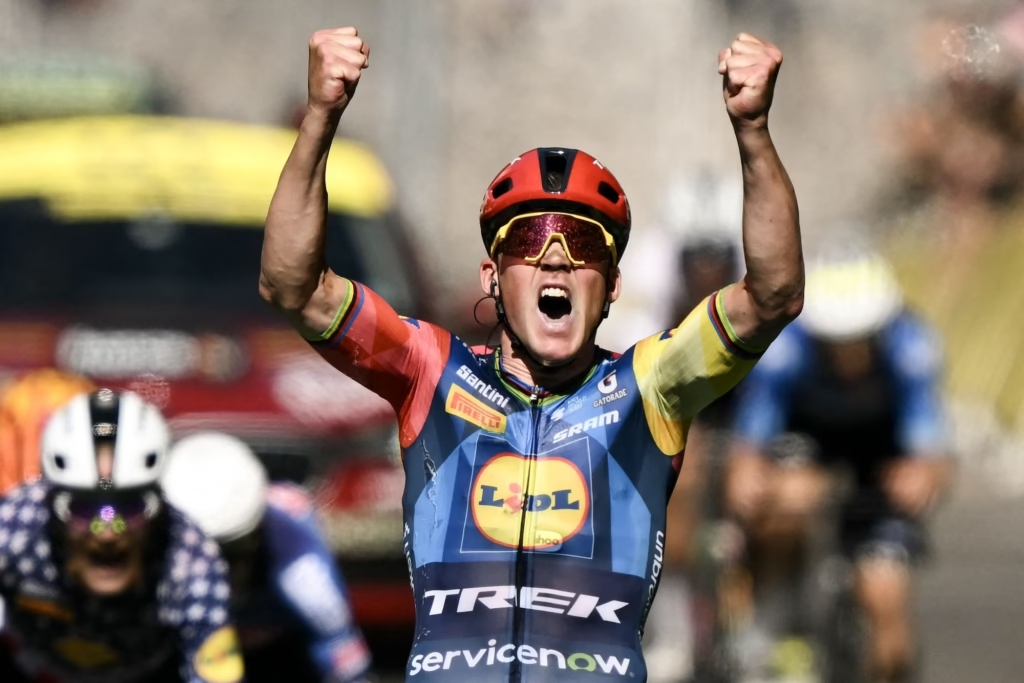 Photo Credit: Getty
Mads Pedersen looks ideally suited to Manosque
Mads Pedersen has perhaps the strongest overall profile for Stage 2.
The distance works in his favour, the repeated climbing should gradually reduce the number of pure sprinters around him and the slightly rising finish is much closer to his ideal terrain than a completely flat drag race.
Pedersen also arrives at the Vuelta after an exceptional Tour de France, where his ability to score on difficult days was central to winning the points classification. His strength is not simply beating the sprinters at 70km/h. It is still having a sprint when a long, attritional race has taken much of the speed out of everybody else.
That should matter enormously on Sunday.
Lidl-Trek consequently have every reason to control the breakaway and keep the stage within reach. Pedersen is one of the principal candidates for green at this Vuelta, and Stage 2 offers the sort of combination of stage points and intermediate sprint points that can quickly establish an advantage.
If a group of 40 or 50 riders reaches Manosque together, Pedersen should be one of the hardest riders to beat.
Wout van Aert gets terrain that suits him better
Wout van Aert should be one of Pedersen’s strongest challengers.
The Belgian rarely needs a perfectly flat finish. In fact, a long rolling stage which gradually removes some of the pure sprinters can improve his chances substantially.
Visma | Lease a Bike also have Matthew Brennan, which gives them more tactical flexibility than most rival teams. Van Aert can follow attacks if the final hour becomes selective, while Brennan can remain protected for a sprint if the race stays more controlled.
That means Visma do not have to commit themselves completely to one version of the stage.
If the peloton remains together, they have two fast finishers. If attacks begin on the final rolling roads, Van Aert can respond without sacrificing the entire team’s winning chance.
The full Vuelta a España 2026 start list shows just how much stage-hunting depth Visma have brought to the race without Jonas Vingegaard leading a conventional GC campaign.
 Photo Credit: Getty
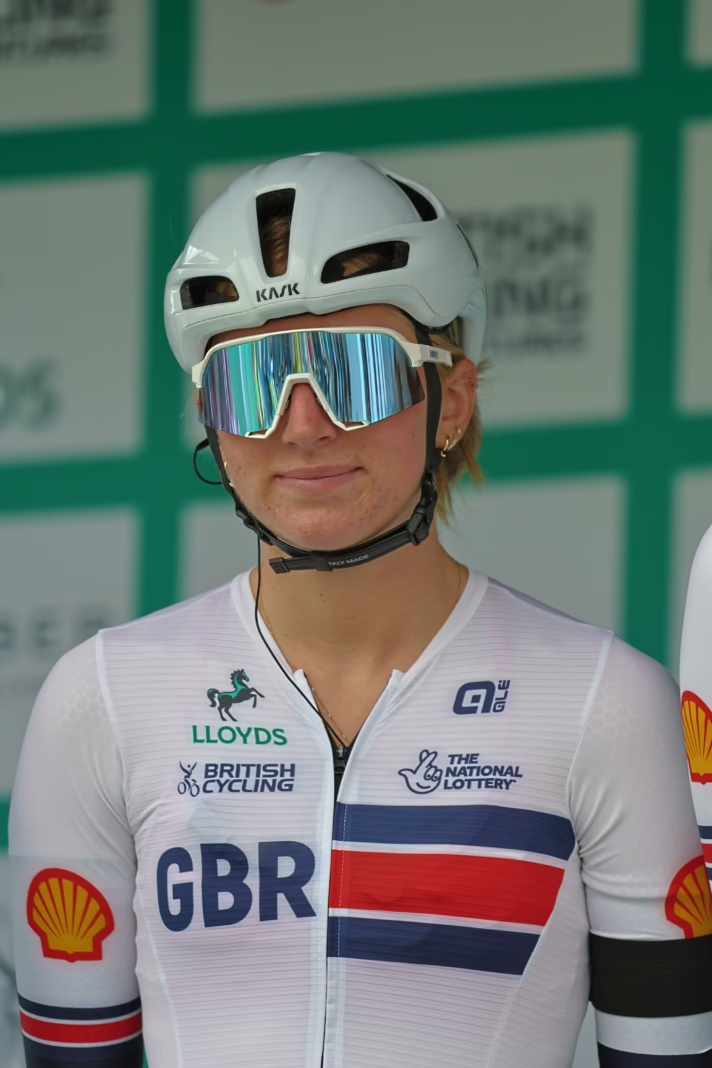
Matthew Brennan can turn Visma’s depth into a tactical advantage
Matthew Brennan gives Visma a genuine second route towards victory.
His strengths are particularly well matched to Manosque. Brennan is not dependent on an entirely flat finish and has repeatedly shown that he can remain competitive when repeated climbing has thinned the bunch.
The biggest question is how Visma divide responsibility between him and Van Aert.
One obvious approach is to protect Brennan for the finish while allowing Van Aert to respond to dangerous late moves. That creates an awkward situation for rival teams. If they chase Van Aert, they potentially tow Brennan back towards a sprint. If they do not, Van Aert is more than capable of winning from a small group.
For Brennan, Stage 2 is also an early chance to establish himself in a Grand Tour where his role should become more important as the race develops.
Kaden Groves needs the final hour to stay controlled
Kaden Groves is one of the fastest conventional sprinters in the field, but Stage 2 sits closer to the limit of the terrain he would ideally choose.
The classified climbs themselves should not automatically remove him. The bigger problem is the accumulation of more than 200 kilometres of racing, repeated uncategorised rises and a finale where attacks can continue long after the official climbs have finished.
Alpecin-Premier Tech therefore need the race to remain relatively controlled through the second half.
If Groves reaches Manosque with enough teammates and a sizeable group, his raw sprint speed puts him firmly into contention.
If the final hour becomes a succession of attacks and hard accelerations, the balance shifts increasingly towards Pedersen, Van Aert and the more durable finishers.
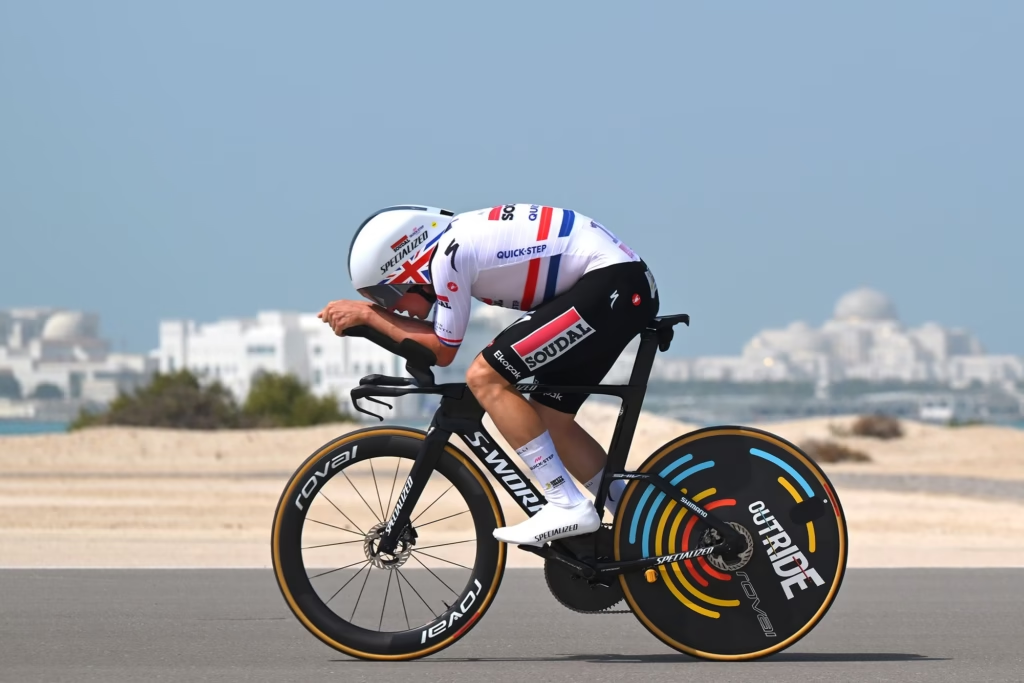 Photo Credit: Getty
Ethan Hayter brings excellent form into Stage 2
Ethan Hayter begins the first road stage with another opportunity after his excellent Monaco performance.
The British rider’s short-distance power and ability to survive rolling terrain make Manosque an intriguing finish for him. He possesses enough speed for a reduced sprint but is also comfortable when a race becomes selective enough to remove some of the more specialised fast men.
The main issue is positioning.
Hayter is at his most dangerous when the final kilometres become slightly chaotic and there are fewer fully organised lead-out trains around him. Stage 2 has every chance of producing exactly that sort of finish.
Soudal Quick-Step therefore have little reason to approach him simply as an outsider. If the race reaches Manosque with a reduced peloton, Hayter should be treated as a genuine stage contender.
Pogačar does not need UAE to defend red aggressively
Tadej Pogačar begins Stage 2 in the red jersey, but UAE Team Emirates-XRG do not need to turn the first road stage into a major defensive exercise.
The time gaps after a 9.4-kilometre time trial are naturally small, and much more important GC terrain arrives almost immediately. Stage 3 finishes at Font-Romeu before Stage 4 takes the race into Andorra, making those days far more significant to Pogačar’s overall ambitions.
That gives UAE the option of allowing another team to assume most of the responsibility for the chase.
Lidl-Trek want a sprint for Pedersen. Visma have Van Aert and Brennan. Alpecin-Premier Tech have Groves. Several other teams have strong reasons to keep the breakaway within reach.
Pogačar himself remains interesting if the finish becomes harder than expected. His acceleration means he can contest almost any uphill sprint, but there is little reason for UAE to burn through teammates merely to manufacture that opportunity.
The Vuelta a España 2026 contenders preview looks in more detail at why Pogačar’s priorities will revolve around the mountain stages rather than defending every second of red during the opening weekend.
Bonus seconds could change the red jersey
The small gaps from Monaco mean finish bonuses can affect the general classification even if the main riders all receive the same stage time.
That adds another layer to a stage already shaped by the sprinters.
A rider close enough to Pogačar on GC who finishes in the bonus positions can potentially move above him, depending on the exact gaps established in the opening time trial.
UAE may not necessarily regard that as a problem.
Giving away the red jersey temporarily can remove some of the responsibility for controlling the race ahead of the first mountain stages, provided none of Pogačar’s serious long-term GC rivals gains meaningful time.
That makes Stage 2 very different from a normal day where the race leader’s team automatically controls everything from kilometre zero.
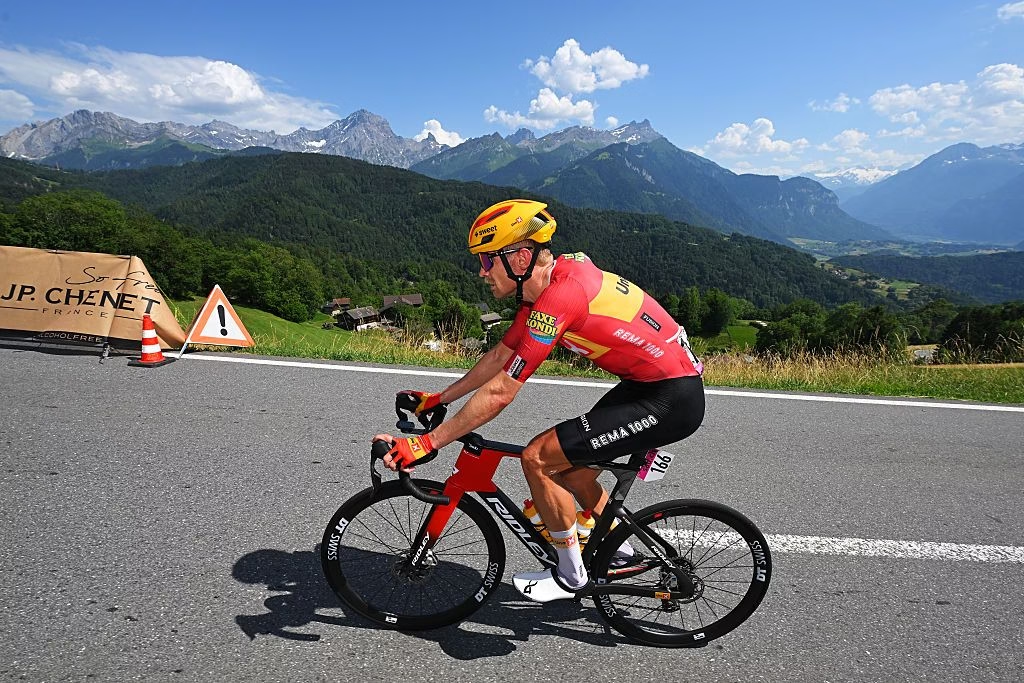 Photo Credit: Getty
Magnus Cort should welcome a selective race
Magnus Cort is one of the most dangerous riders if the stage becomes harder than a conventional sprint.
The long rolling profile, repeated small climbs and rising finish are classic Cort terrain. His disadvantage is that a large bunch still contains riders with more pure speed.
His chances therefore increase as the race becomes more selective.
If only 30 or 40 riders remain after the final sequence of hills, or if a small group escapes in the closing kilometres, Cort becomes significantly more dangerous.
Few riders are better at converting an awkward hilly stage into a sprint victory from a reduced group.
Christophe Laporte gives Visma another option
Visma’s tactical depth does not stop with Van Aert and Brennan.
Christophe Laporte is another rider capable of winning on exactly this type of terrain, particularly if the finale becomes too difficult for a conventional bunch sprint but not hard enough for the climbers.
That gives Visma arguably the strongest collection of stage-winning options in the peloton.
They can protect Brennan, use Van Aert to follow the most dangerous moves and still send Laporte into an attack if the situation suits.
The risk is becoming too complicated tactically.
Lidl-Trek have a much simpler objective around Pedersen. Visma need to use their numerical strength to make Pedersen’s race harder rather than allowing three possible winners to wait for one another.

Jordi Meeus remains dangerous if the bunch survives
Jordi Meeus should be one of the strongest alternatives if the stage remains together.
The Red Bull-BORA-hansgrohe sprinter has enough power for a slightly rising finish and should not be troubled simply by the two classified climbs.
His challenge is surviving the accumulated difficulty around them.
Meeus does not have the same margin over repeated hills as Pedersen or Van Aert, so Red Bull need the final hour to remain relatively structured.
If a sizeable peloton reaches Manosque, however, he has enough outright speed to fight for the victory.
Bryan Coquard benefits from a harder sprint stage
Bryan Coquard should want almost the opposite race from the heavier pure sprinters.
His strength is not being the fastest rider in a perfectly flat 180-rider finish. It is remaining competitive when the terrain has already removed or weakened many of those faster rivals.
That makes Stage 2 an excellent opportunity.
The repeated climbing should not concern him, while the gently rising finish suits his acceleration.
Cofidis should want enough pace through the hills to create fatigue without allowing an attacking group to gain enough freedom to stay away.
A reduced sprint would put Coquard firmly into contention.
Can the breakaway win Stage 2?
There is a genuine case for the breakaway.
The stage is 214.3 kilometres long, contains more than 3,000 metres of climbing and has enough rolling terrain for a strong group to maintain momentum. UAE also have limited reason to spend heavily defending red this early.
The difficulty for the escape is the number of teams with a realistic stage winner.
Lidl-Trek have Pedersen. Visma have several cards. Alpecin-Premier Tech have Groves, while other teams can work for Hayter, Meeus, Coquard or Cort.
That is a lot of collective interest in keeping the gap under control.
Early in a Grand Tour, domestiques are also relatively fresh and teams still have their full numbers. A breakaway which might survive in the second or third week is considerably easier to chase on Stage 2.
The balance therefore still favours a reduced sprint, but the escape has enough opportunity that the sprint teams cannot afford to give a strong group ten minutes and assume it will naturally come back.
The early climbs should create the first mountains jersey fight
The Alto Châteauneuf-Grasse, 12.8 kilometres at 2.9%, is not a GC climb, but it can help shape the first proper battle for the mountains classification.
That should encourage riders with no overall ambitions to make the early break.
The same applies to the Col de Saint-Andrieu, 4.7 kilometres at 4.8%.
A rider collecting the available points across the opening road stage can establish an early advantage in the mountains competition and potentially earn time in one of the Vuelta’s most visible jerseys.
That additional incentive could make the battle to establish the break considerably more aggressive than on a normal transitional stage.
-
 Photo Credit: Cs-wolves / Wikimedia Commons, CC BY-SA 4.0
The final 50 kilometres should decide whether the sprinters survive
The most important part of Stage 2 comes well after the last classified climb.
The road remains consistently rolling towards Gréoux-les-Bains and Manosque, meaning the sprinters cannot simply assume their work is finished once the Col de Saint-Andrieu is behind them.
The intermediate sprint also gives Pedersen, Van Aert and the other points contenders another reason to move towards the front before the finale begins.
From there, positioning becomes increasingly important.
The final approach is not completely flat and should reward riders who begin the last few kilometres near the front rather than trying to recover position after every corner and rise.
That should force Lidl-Trek, Visma and the other sprint teams to organise earlier than they would on a traditional flat stage.
Who wins Vuelta a España 2026 Stage 2?
Mads Pedersen has the strongest overall case.
The 214-kilometre distance suits him, the repeated hills should gradually improve his chances relative to the pure sprinters and the Manosque finish gives him an opportunity to use exactly the durability that made his 2026 Tour de France points campaign so successful.
Wout van Aert is the closest challenger. A difficult final hour should help rather than hurt him, and Visma have enough tactical options to make Lidl-Trek’s attempt to control the race extremely uncomfortable.
Matthew Brennan deserves to be placed high in the hierarchy as well. If Visma can use Van Aert aggressively while keeping Brennan protected, the young Briton may find himself in an ideal position for the finish.
Ethan Hayter is another serious contender if the peloton has been reduced, while Kaden Groves and Jordi Meeus become more dangerous the larger the finishing group remains.
Magnus Cort, Bryan Coquard and Christophe Laporte should all welcome a harder final hour, particularly if the conventional sprint trains begin to disappear.
Pogačar is the wildcard. The red jersey has more than enough acceleration to win if the finale becomes unusually selective, but UAE have little reason to spend heavily chasing the stage when much more important GC terrain is waiting on Font-Romeu and in Andorra.
The most likely outcome remains a reduced bunch sprint in Manosque, with Pedersen and Van Aert at the centre of the fight and Visma’s tactical depth potentially becoming the biggest complication for Lidl-Trek.
For viewers following the stage live, ProCyclingUK’s guide to watching the Vuelta a España 2026 in the UK has the TNT Sports and HBO Max details for the full race.

