
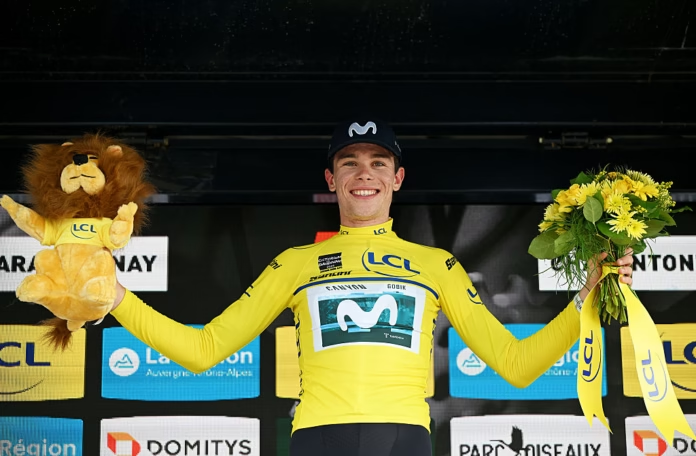
The Tour Auvergne – Rhône-Alpes 2026 arrives with a route built to expose real Tour de France conditions. The race may have a new name, but it keeps the old Dauphiné function: eight days of high-level June racing, a team time trial, awkward transition stages and a final mountain block that should be too hard for anyone still hiding form.
The decisive sequence comes late. Stage 6 finishes at Crest-Voland, stage 7 climbs to Grand Colombier, and stage 8 ends at Plateau de Solaison after a short but brutal mountain stage. Add the stage 3 team time trial in Perreux, and this becomes a race for riders with both climbing depth and strong teams around them. Pure climbers can still win time in the final weekend, but they may already be chasing after the team test.
That makes this year’s contenders list especially interesting. Paul Seixas arrives as the rising French star. UAE Team Emirates-XRG bring Isaac del Toro and João Almeida. Lidl-Trek have Juan Ayuso and Mattias Skjelmose. Team Visma | Lease a Bike line-up with Matteo Jorgenson and Wout van Aert. Netcompany INEOS have Oscar Onley, Carlos Rodríguez and Kévin Vauquelin. This is not a token pre-Tour warm-up. It is a GC race with enough quality to tell us plenty before July.
For more context on the parcours, our Tour Auvergne – Rhône-Alpes 2026 full route guide breaks down every stage, while the full start list for Tour Auvergne – Rhône-Alpes 2026 has the latest line-ups. Our guide on how to watch Tour Auvergne – Rhône-Alpes 2026 in the UK covers the broadcast details, and the Tour de France hub brings together the wider July build-up.
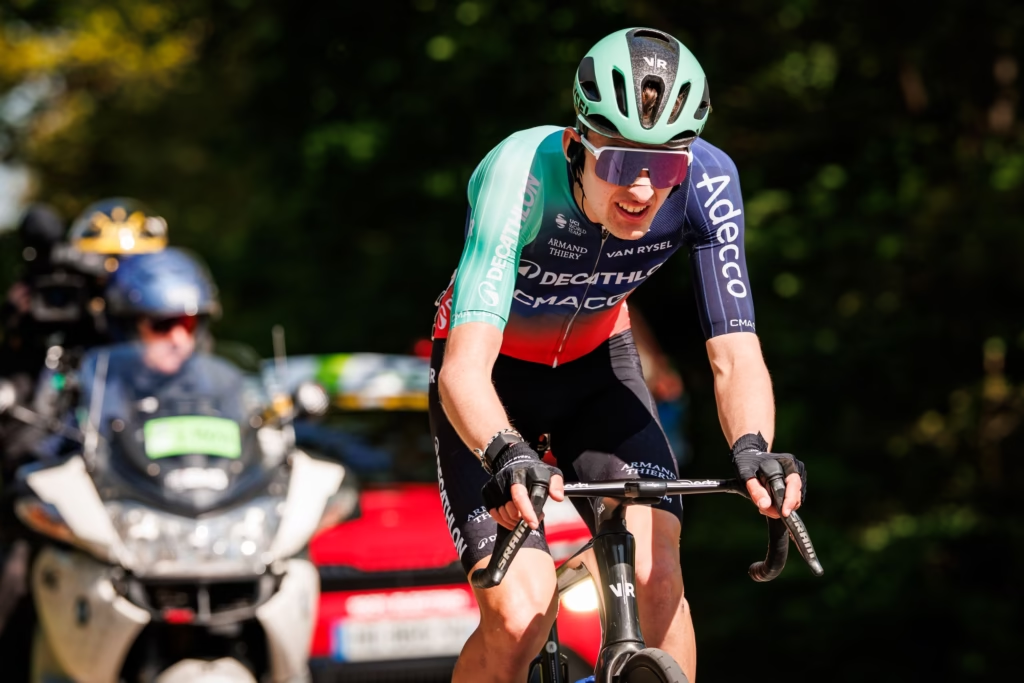
Paul Seixas
Paul Seixas is the obvious headline contender, partly because of the route and partly because of the moment he is having. The French rider has moved quickly from prospect to genuine stage-race threat, and a race like this gives him the right kind of platform: hard climbs, repeated mountain stages and enough pressure to test his Tour de France readiness without placing him directly against every July favourite.
The final weekend suits him well. Crest-Voland should begin the proper climbing sort, Grand Colombier is steep enough to reward his best efforts, and Plateau de Solaison gives the race a final stage where a climber with confidence can still change everything. If Seixas reaches the last three stages within range after the team time trial, he becomes one of the most dangerous riders in the race.
The question is not whether he can climb with the best riders here. It is whether he can manage the full structure of a WorldTour stage race as a marked favourite. That means positioning before the climbs, controlling effort across three hard days, avoiding overreaction when rivals attack and trusting his team when the race becomes tactical. A win here would not simply add another result. It would sharpen the sense that Seixas is moving towards July as a central French storyline.
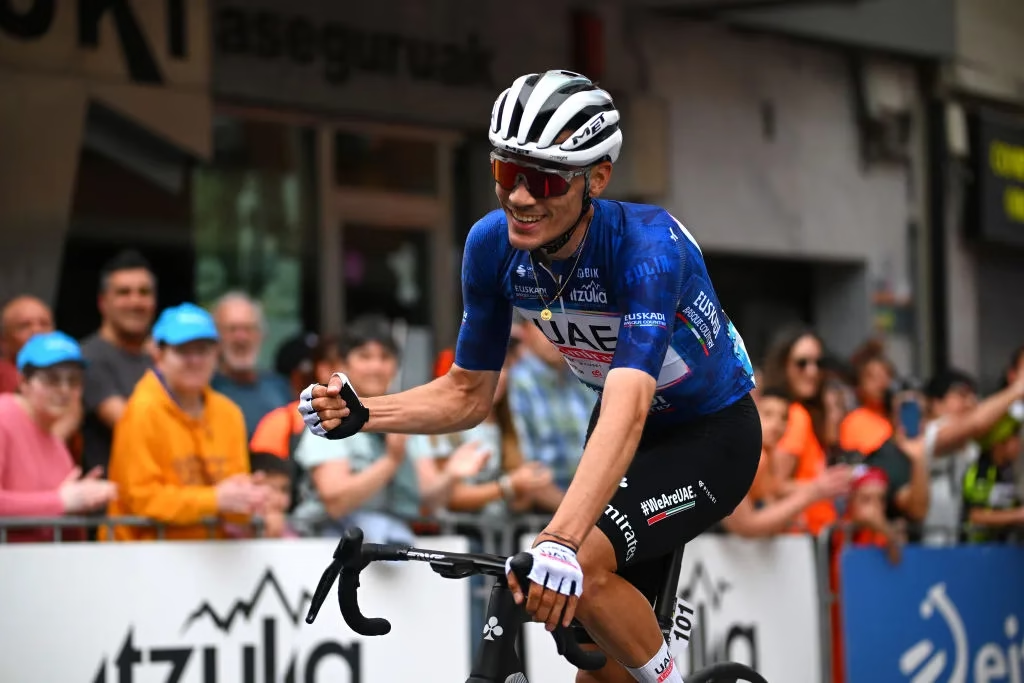
Isaac del Toro and João Almeida
UAE Team Emirates-XRG have one of the strongest GC combinations in the race with Isaac del Toro and João Almeida. The pairing gives the team two different but complementary ways to attack the general classification.
Del Toro brings volatility in the best sense. He can animate mountain stages, follow sharp accelerations and turn a selective finale into something much less predictable. On a route with three consecutive uphill finishes, that is valuable. He does not need to wait for one perfect moment. He can test rivals repeatedly and force other teams to decide whether they chase him, mark Almeida or protect their own podium positions.
Almeida gives UAE Team Emirates-XRG the steadier GC reference point. His strength is not always dramatic, but he is difficult to break when he finds his rhythm. The team time trial should suit him, and the final mountain block gives him enough road to grind rivals down if the race becomes one of sustained climbing rather than repeated short attacks.
The danger for the rest of the field is that UAE do not need to choose too early. If Del Toro is given freedom, he can make the race hard. If Almeida is the more stable option, he can become the podium anchor. If both are still close after Grand Colombier, UAE will have one of the strongest tactical hands going into Plateau de Solaison.
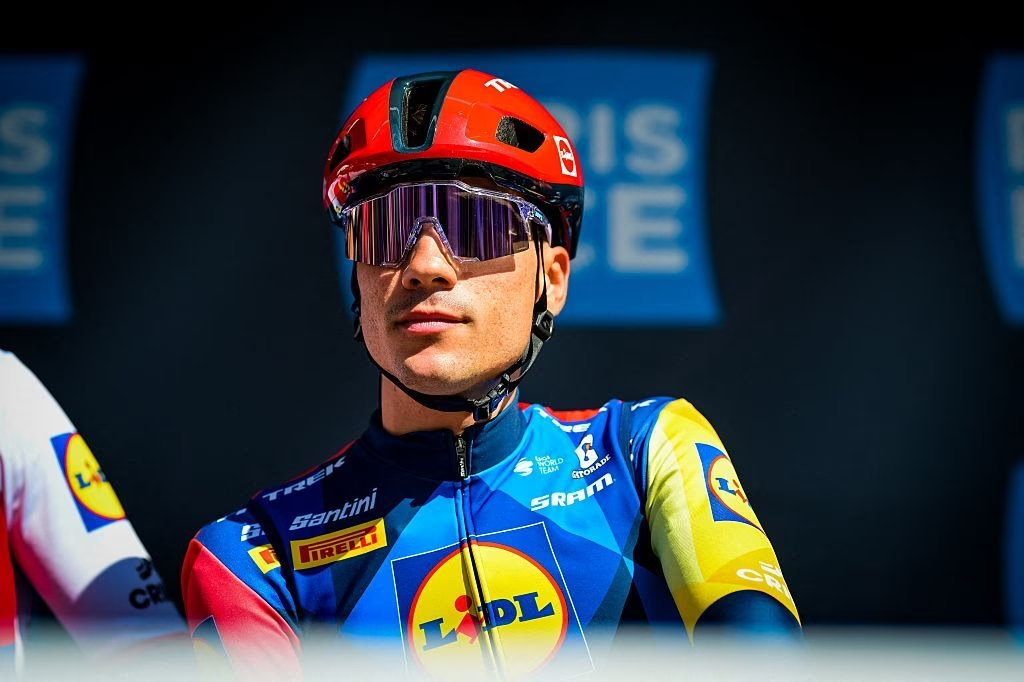
Juan Ayuso and Mattias Skjelmose
Lidl-Trek’s pair of Juan Ayuso and Mattias Skjelmose is one of the most intriguing combinations in the race. Both can climb, both can handle punchier terrain, and both have the kind of racing style that makes a route like this difficult to control.
Ayuso is the rider with the clearest pure GC ceiling. If he is close to his best, the final three stages should bring him into the front of the race. Grand Colombier is a particularly important test for him because it is steep enough to create real separation, and a strong ride there would set him up for a final-day challenge on Plateau de Solaison. Illness took him out of the Ardennes Classics but hopefully he has had enough time to recover.
Skjelmose gives Lidl-Trek another option, and possibly a more flexible one. He can be dangerous on awkward terrain before the high mountains, and he is rarely a passive presence when a race begins to split. If the GC favourites look at each other, Skjelmose is the type of rider who can use timing and terrain to create a gap before the pure climbers have organised themselves.
Their team time trial will matter. If Lidl-Trek come through Perreux strongly, they can race from a position of strength. If they lose time there, they may have to use their two-leader structure more aggressively in the mountains.
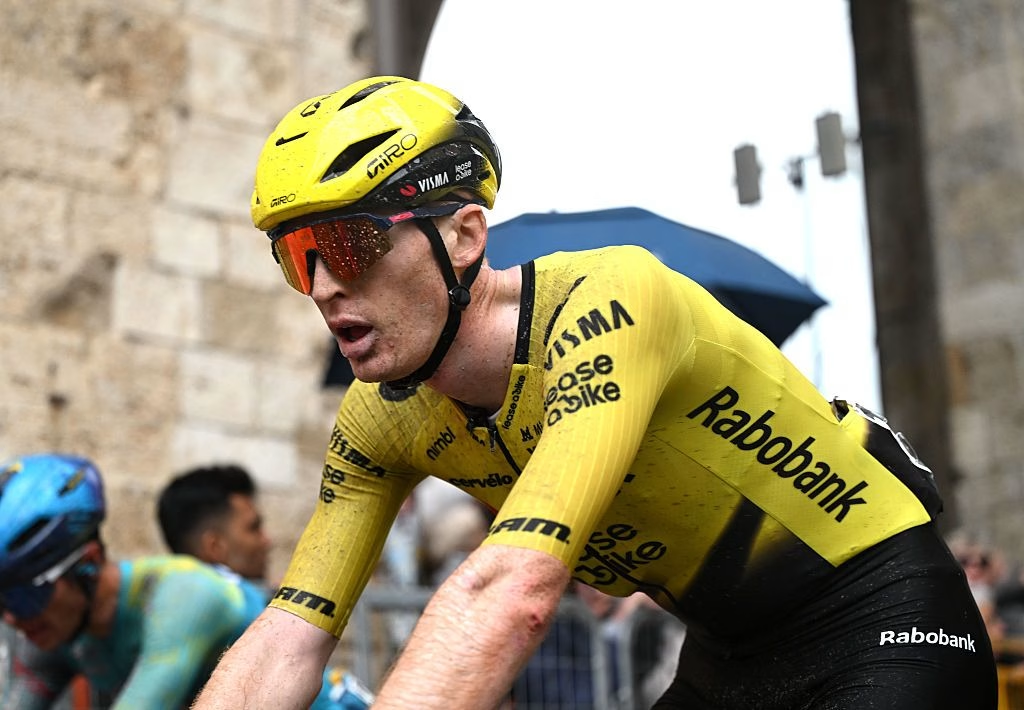
Matteo Jorgenson and Wout van Aert
Team Visma | Lease a Bike bring a different kind of balance. Matteo Jorgenson is the obvious GC card, while Wout van Aert gives the team power, stage ambition and a major influence on how the race is controlled before the steepest roads.
Jorgenson has become one of the most reliable stage-race riders in the peloton. He climbs well, reads races calmly and rarely wastes energy. This route should suit him because it rewards consistency as much as explosive climbing. The team time trial is also important for him. Team Visma | Lease a Bike should be one of the squads capable of using that stage to put pressure on rival GC teams before the race reaches the mountains.
Van Aert may not be a pure GC contender here, but he can still shape the race. On rolling stages, in the team time trial, and in controlling dangerous breakaways, he gives Visma a level of authority few teams can match. If Jorgenson is close on GC, Van Aert’s work before the final climbs could be decisive.
That makes Visma one of the most complete teams in the race. They may not have the most explosive climber on paper, but they have the structure to make the race hard, protect position and turn the final weekend into a controlled test rather than a chaotic shootout.
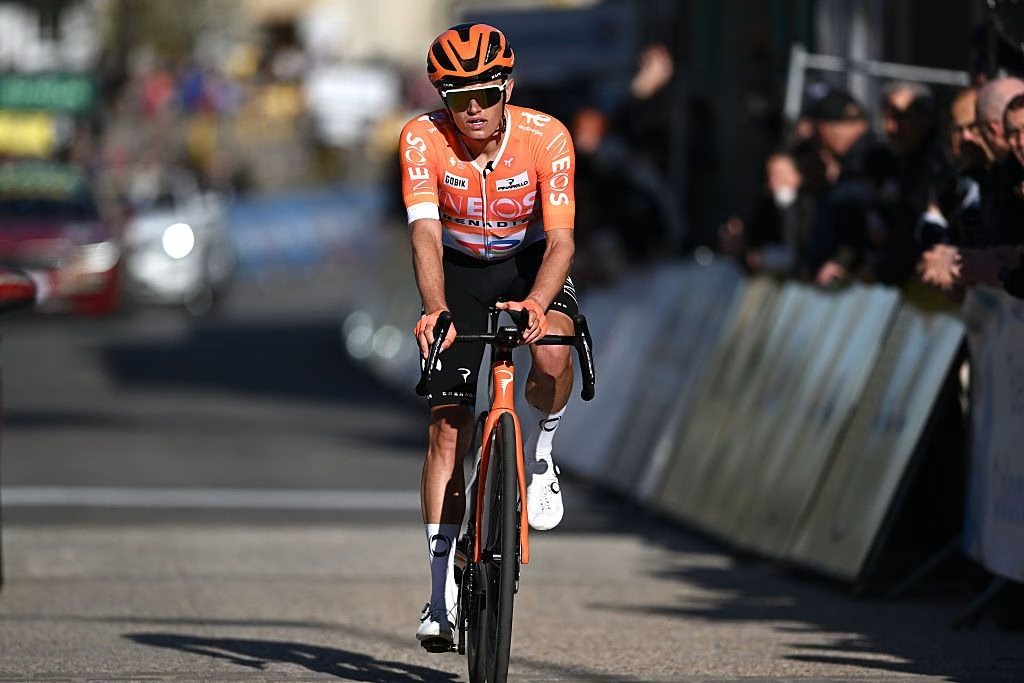
Oscar Onley, Carlos Rodríguez and Kévin Vauquelin
Netcompany INEOS arrive with three riders who could all matter in different ways. Oscar Onley gives them a sharp climbing option, Carlos Rodríguez brings Grand Tour pedigree, and Kévin Vauquelin adds a French threat with enough punch and climbing ability to be dangerous across varied terrain.
Onley is particularly interesting on the final weekend. He has the acceleration to respond when the climbing becomes selective, and he should be well suited to stages where the decisive moves come late rather than through one long attritional grind. Crest-Voland and Plateau de Solaison both offer him clear opportunities.
Rodríguez is the steadier GC presence. He has experience in the biggest races and should be comfortable building into form through a week like this. If he avoids losses in the team time trial and stays close before Grand Colombier, he can ride himself into podium contention.
Vauquelin gives the team another dimension. He can be used as a genuine GC card if he is climbing well, but he can also attack from slightly further out if the race situation allows. With three riders of this quality, Netcompany INEOS should not be forced into a defensive race. They have enough options to test UAE, Lidl-Trek and Visma before the final climbs.
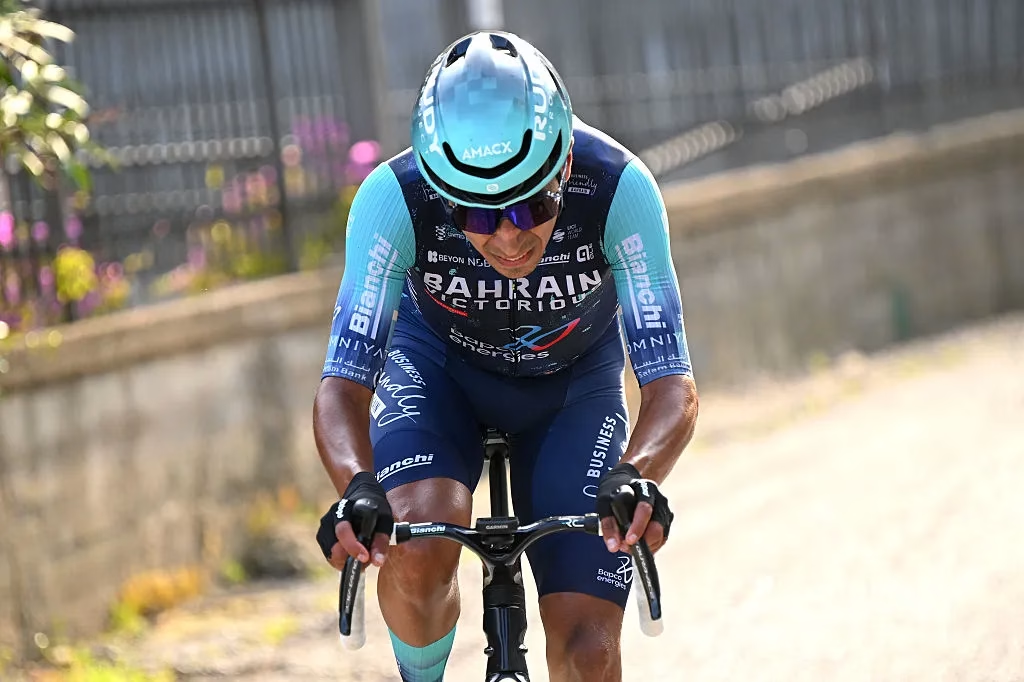
Santiago Buitrago and Pello Bilbao
Bahrain Victorious bring experience and climbing quality through Santiago Buitrago and Pello Bilbao. The route gives both riders something to work with, though in slightly different ways.
Buitrago is the more natural fit for the hardest mountain stages. If the race breaks apart on Grand Colombier or Plateau de Solaison, he has the climbing punch to follow the best and possibly attack when the favourites begin watching each other. He is especially dangerous if he reaches the final weekend close but not heavily marked as the main favourite.
Bilbao’s value comes from his consistency and race craft. He can survive difficult terrain, limit losses and exploit tactical moments. On a route that includes a team time trial and multiple transition days before the summit finishes, that experience could keep him in contention longer than more explosive but less controlled rivals.
Bahrain may not have the deepest GC squad in the race, but they have enough quality to be relevant when the high mountains arrive. Buitrago is the bigger podium threat, while Bilbao gives them a reliable second card if the race becomes tactical.
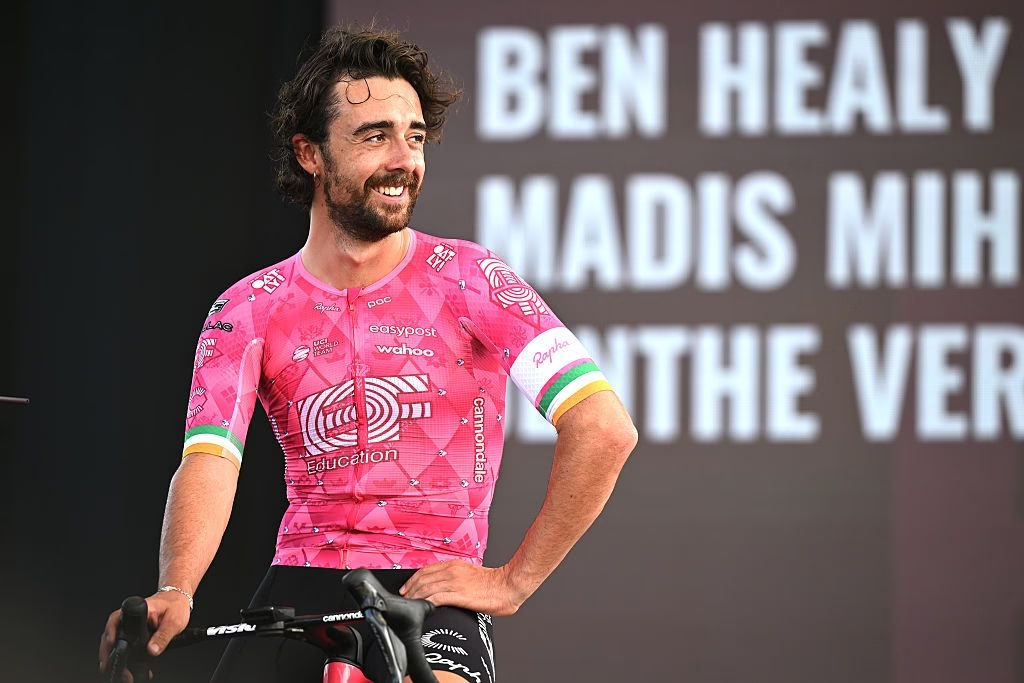
Ben Healy and Georg Steinhauser
EF Education-EasyPost are unlikely to be content with simply defending a top-10 place. Ben Healy and Georg Steinhauser give them two aggressive riders who can make the race difficult in different ways.
Healy is not the obvious rider for a traditional mountain GC battle, but that is exactly why he can be dangerous. He thrives when races become awkward, when the pace lifts early and when favourites hesitate. If he can stay close enough after the team time trial and avoid losing too much time on the steepest climbs, he has the attacking instincts to take a stage or force others to chase.
Steinhauser is a more natural fit for the mountain days. He can climb strongly, recover well and use breakaway or GC-adjacent positions to move up the classification. If EF decide the outright podium is too difficult, he could become a stage threat on one of the final three days.
The team’s best chance may be to avoid racing too conventionally. Against deeper GC blocks, EF are more dangerous when they force uncertainty rather than wait for the favourites to decide the race.
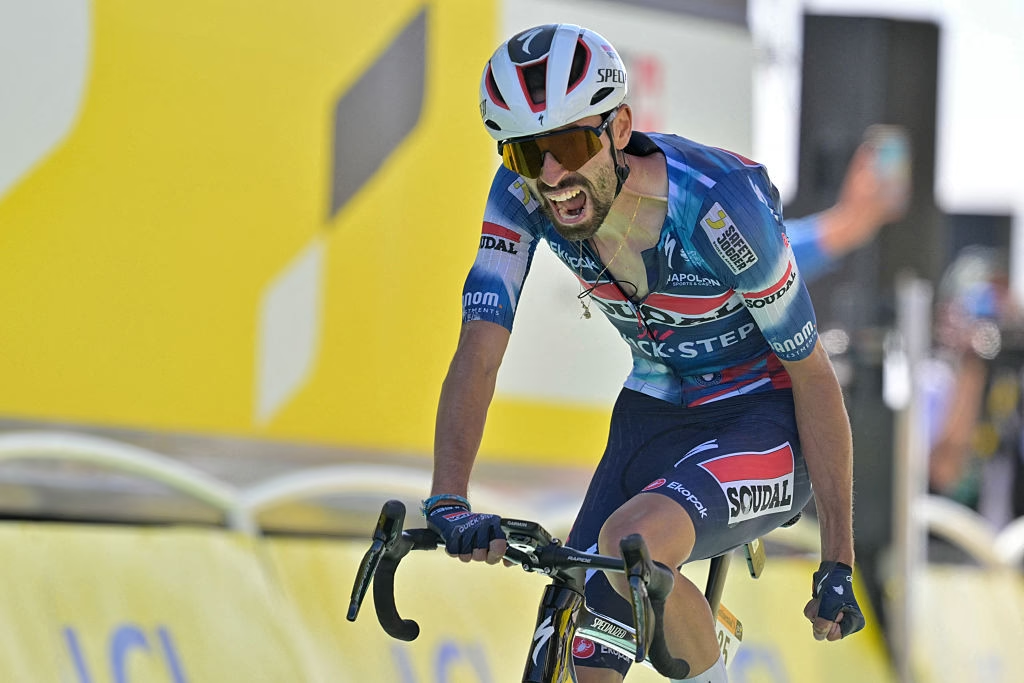 Photo Credit: Getty
Junior Lecerf and Valentin Paret-Peintre
Soudal Quick-Step bring two riders who should be watched closely once the road rises. Junior Lecerf continues to develop as a climbing prospect, while Valentin Paret-Peintre has the profile of a rider who can make a hard mountain stage count.
Lecerf’s race will likely be judged by how he handles the repeated difficulty. A single climb is one thing. Three consecutive mountain finishes after several days of racing is a more revealing test. If he can stay consistent into the final weekend, it would be a strong sign of progression.
Valentin Paret-Peintre may be more immediately dangerous on a stage-by-stage basis. The final mountain block gives him opportunities to attack, especially if he is not treated as a primary GC threat. Plateau de Solaison could suit a rider willing to go before the favourites begin their final fight.
Soudal Quick-Step may not control the GC battle, but they have enough climbing quality to influence it if the race opens up.
Luke Plapp and Michael Matthews
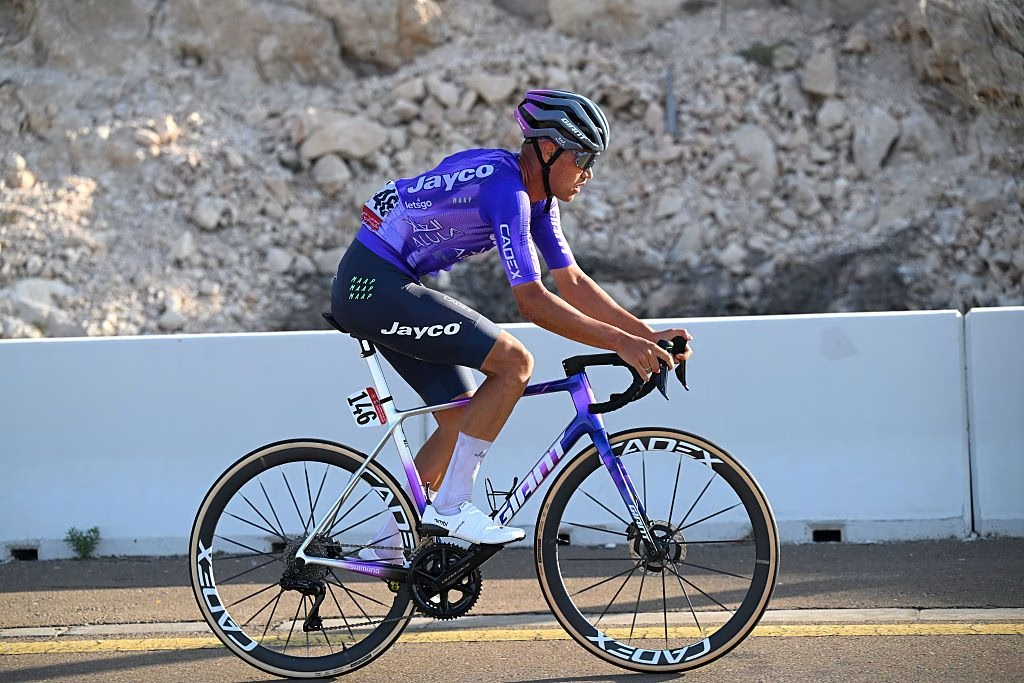
Team Jayco-AlUla’s line-up points more towards stage opportunities than an obvious overall victory, but Luke Plapp is still worth considering as a GC outsider. The team time trial should suit his engine, and if he can limit losses in the high mountains, he could remain in the top-10 conversation.
Plapp’s best path is probably a mixed one: gain or protect time through the team test, ride aggressively on the rolling stages and see how far he can hold on once the summit finishes arrive. He is not the most natural pick for Grand Colombier or Plateau de Solaison, but he has enough quality to make the race more complicated. His solo win at the 2025 Giro d’Italia was a reminder of how dangerous he can be when given room to turn strength into commitment, and that kind of engine can still be useful in a race with a team time trial and awkward transition stages: Luke Plapp wins solo on stage 8 of the 2025 Giro d’Italia as Diego Ulissi moves into pink.
Michael Matthews gives Jayco a different objective. The early and intermediate stages should offer him chances if the finishes are selective without becoming pure climbing days. His presence also means the team does not have to put everything into the GC. That freedom can make Plapp more dangerous if he is allowed to race opportunistically.
Wout van Aert, Michael Matthews and the stage hunters
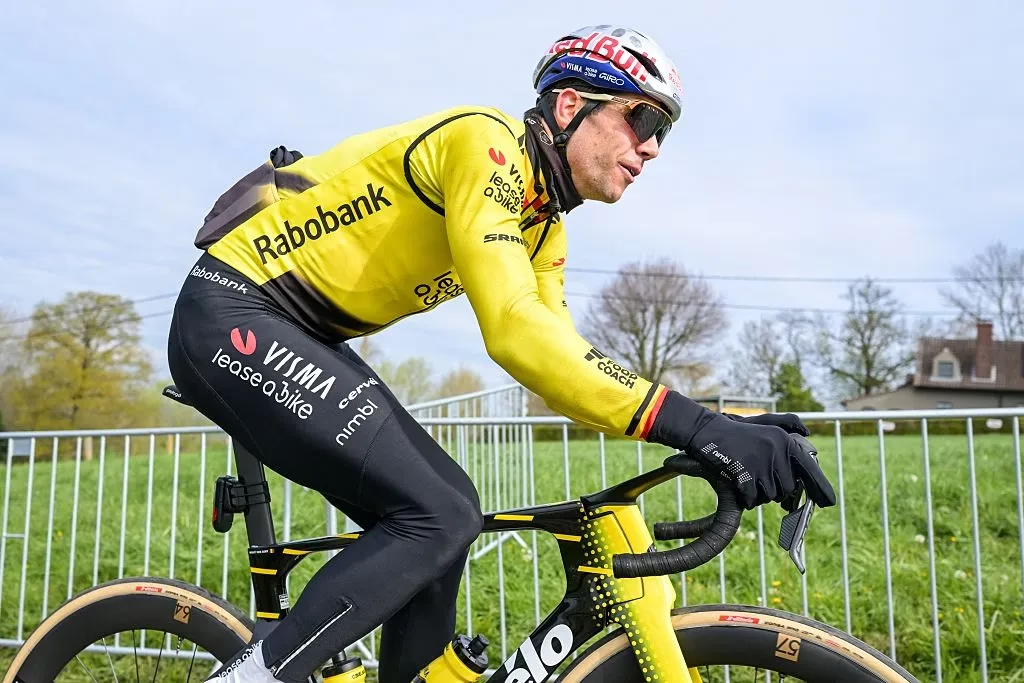
Not every major name here is racing for the overall. Wout van Aert, Michael Matthews, Toms Skujiņš, Ben Healy, Matej Mohorič, Julian Alaphilippe, Matteo Trentin, Bryan Coquard and Alex Baudin all have routes to stage success depending on how the race unfolds.
The opening days before the final mountain block could be especially important for this group. Stage 1 to Saint-Ismier is punchy enough to interest the puncheurs. Stage 2 to Le Puy-en-Velay is long and awkward. Stage 4 to Montrond-les-Bains could suit a breakaway. Stage 5 to Villars-les-Dombes may bring the sprinters and fast finishers back in.
Those stages will shape the whole race, even if they do not decide the final GC. Teams chasing stage wins can make the peloton work harder. Breakaways can force GC teams to make decisions. Strong non-GC riders can take bonuses, disrupt control and change the rhythm before the summit finishes.
Who has the strongest team?
UAE Team Emirates-XRG look particularly strong because Del Toro and Almeida give them two realistic GC options. Lidl-Trek have a similar advantage with Ayuso and Skjelmose, while Team Visma | Lease a Bike bring perhaps the most controlled GC platform around Jorgenson and Van Aert.
Netcompany INEOS may have the deepest set of GC-adjacent options with Onley, Rodríguez and Vauquelin. That could matter if the race becomes unpredictable. Bahrain Victorious and EF Education-EasyPost have enough climbing strength to be dangerous, but may need to race more creatively against the strongest blocks.
The team time trial makes squad depth even more important. A rider can lose the race there without doing anything wrong individually. The contenders with strong time-trial teams will want to create early pressure, while the lighter climbing squads may need to wait for Grand Colombier and Plateau de Solaison to respond.
-
 Photo Credit: Getty
Where will the race be won?
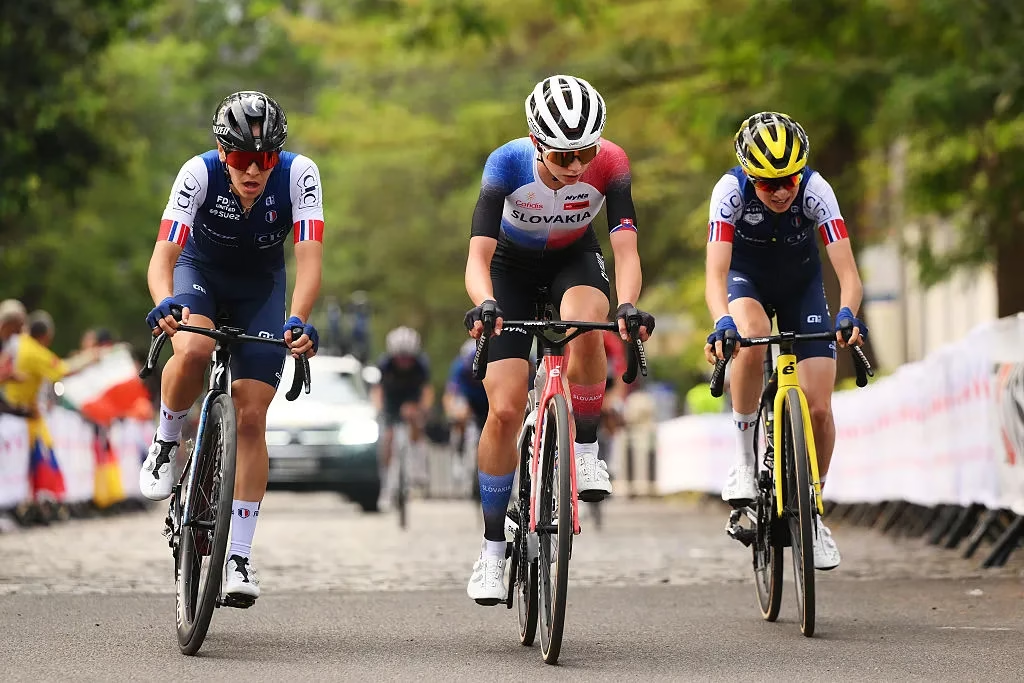
The race should not be fully won before the final weekend, but it can certainly be lost before then. The stage 3 team time trial in Perreux is the first major checkpoint. A poor performance there could leave a climber chasing before the mountains begin.
Stage 6 to Crest-Voland should be the first serious mountain sorting day. It may not decide the race outright, but it should show which leaders are climbing well and which teams still have numbers when the road gets hard.
Stage 7 to Grand Colombier is the most obvious pure climbing test. The steep gradients are ideal for separation, and any rider who struggles there will find it difficult to recover on the final day.
Stage 8 to Plateau de Solaison is the last chance and possibly the most tactical stage. At 120.1km, it is short enough to encourage aggressive racing, but hard enough to punish anyone already on the limit. If the top of the GC is still close, this is where the race can become chaotic.
Tour Auvergne – Rhône-Alpes 2026 prediction
This looks like a race where team strength and climbing depth will count as much as one standout attack. UAE Team Emirates-XRG and Lidl-Trek have the strongest dual-leader structures, Team Visma | Lease a Bike have the most controlled GC platform, and Netcompany INEOS have enough options to make the final weekend difficult.
-
Photo Credit: Getty
Paul Seixas may still be the rider with the biggest storyline. If he handles the pressure, limits any damage in the team time trial and reaches Grand Colombier within striking distance, he has the climbing profile to win the race. Del Toro and Ayuso look like the most explosive threats, Almeida and Jorgenson the steadier podium candidates, and Onley a serious danger if the final climbs become attack-heavy rather than controlled.
Prediction: Paul Seixas to win the Tour Auvergne – Rhône-Alpes 2026, with Isaac del Toro, Juan Ayuso, Matteo Jorgenson and João Almeida all serious podium contenders.

