
The Tour de France 2026 route is not built around one obvious decisive stage. That is what makes it interesting. It starts with a team time trial in Barcelona, reaches the Pyrenees by stage 3, offers a first major summit finish at Gavarnie-Gèdre on stage 6, keeps the middle of the race difficult through the Massif Central, Vosges and Jura, then finishes with an Alpine sequence that includes Orcières-Merlette and back-to-back summit finishes at Alpe d’Huez.
Across 3,333km, the route gives the yellow jersey contenders several different types of problem. They need a team strong enough to limit losses in the opening team time trial. They need climbing form from the first week. They need to survive repeated hilly and mountain stages before the final week. They need to handle the only individual time trial on stage 16. Then they need enough left for a final Alpine weekend that looks capable of deciding the race on the penultimate day.
The Tour de France 2026 full route guide gives the full stage-by-stage structure, while the beginner’s guide to Men’s Tour de France 2026 explains the race format, jerseys and main tactical terms for newer fans. This piece looks at the route differently: not just where the race goes, but where it can be won, lost, controlled or broken open.
Barcelona creates pressure before the road stages begin
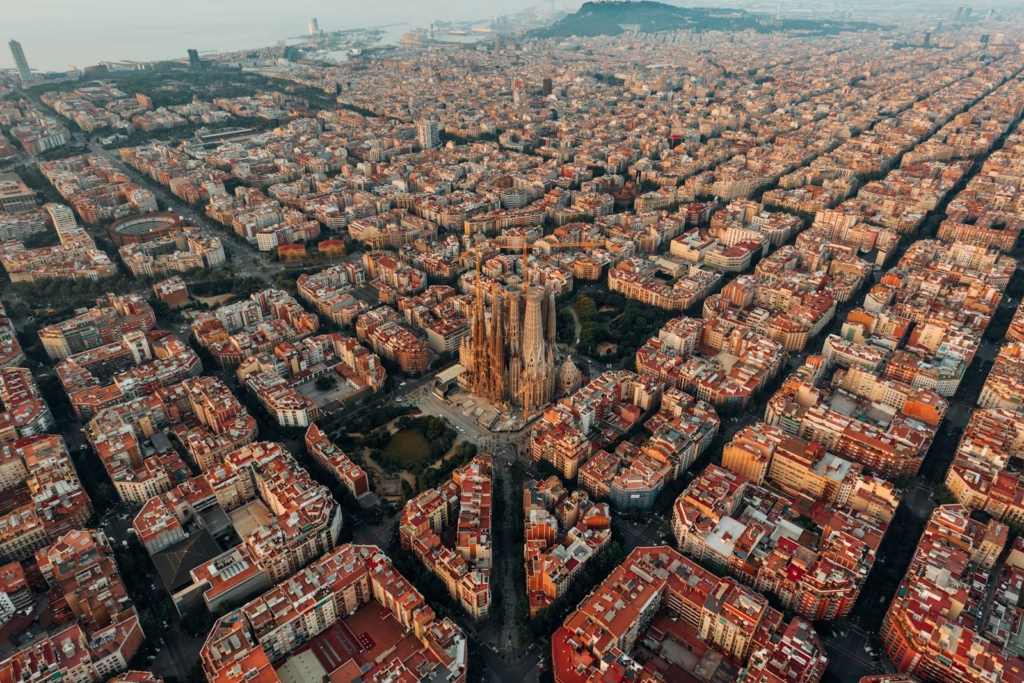
The 2026 Tour begins with a 19.6km team time trial in Barcelona, and that immediately changes the race. Grand Départs often begin with a road stage, a short prologue or a ceremonial-looking sprint day. This one starts with collective precision.
That matters because a team time trial does not only test the GC leader. It tests the whole structure around him. A contender with a weaker team could lose time before the race has even reached the mountains. A strong collective can give its leader an early cushion, place several riders high on GC and set the tone for the first week.
The distance is not huge, but it is long enough to matter. A gap of 20 or 30 seconds in Barcelona would not decide the Tour by itself, but it would shape the psychology of the opening week. Riders who lose time may have to race more aggressively in the Pyrenees. Teams who gain time can force others to spend energy first.
This is where the Tour can be lost early rather than won outright. No rider will secure yellow for Paris on stage 1, but a badly executed team time trial can leave a contender chasing the race from the first weekend.
The early Pyrenees leave no room for slow starters
The first major route statement comes on stage 3 from Granollers to Les Angles. It is early, long at 195.9km, and classified as a mountain stage. That is a very different opening week from one built around sprint days and nervous flat stages.
Early mountains create a particular kind of pressure. Riders who have misjudged preparation cannot ride into form gradually. Teams who are not organised will be exposed quickly. Domestiques who are short of climbing condition may disappear before leaders want them to. The race may not explode completely at Les Angles, but it should reveal who has arrived ready.
Stage 6 to Gavarnie-Gèdre then gives the first major summit finish. That is the more obvious early GC battleground. It comes after the hilly stage to Foix and a flatter stage into Pau, so riders will already have been through a varied opening sequence. A contender who has lost time in the team time trial or at Les Angles may need to respond here.
The Pyrenees are not the final act of the 2026 Tour, but they can shape the whole race. A leader who emerges with a time advantage after Gavarnie-Gèdre can force rivals into difficult decisions. A rider who leaves the Pyrenees more than a minute down will have to start thinking about where to attack long before the Alps.
The transition days are more dangerous than they look
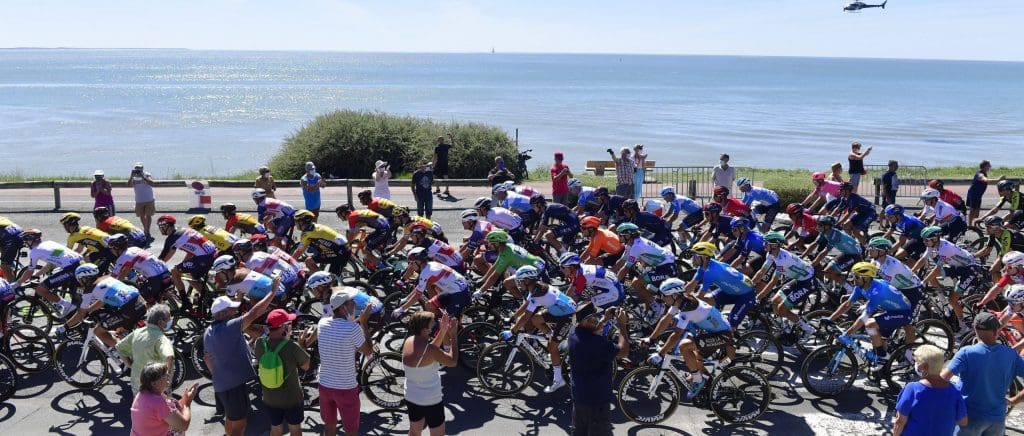
The stages between the first mountain block and the first rest day should not be ignored. Bordeaux and Bergerac look like sprint opportunities, but stage 9 from Malemort to Ussel is hilly and comes one day before the rest day. That is a classic setting for a difficult breakaway stage.
This is where teams can lose control through fatigue rather than terrain alone. The peloton will already have dealt with a team time trial, an early mountain stage, a hilly Pyrenean stage and a summit finish. By stage 9, many riders will be thinking about the rest day. That is often when opportunists sense weakness.
For the general classification contenders, these days are about staying safe and spending as little energy as possible. That sounds simple, but the Tour is rarely kind to teams who mentally switch off. A crash, split, badly timed puncture or poorly managed breakaway can turn a transition day into a problem.
The route does not contain obvious cobbles or gravel, so the ambush points are more subtle. They come through stage placement, fatigue, nervousness and the way repeated hilly terrain can stretch a peloton that wants an easier day.
Le Lioran can restart the race sharply after the first rest day
Stage 10 from Aurillac to Le Lioran is one of the more important tactical stages in the race because it comes immediately after the first rest day. Rest-day exits are always revealing. Some riders respond well. Others feel blocked, heavy or slightly out of rhythm.
Le Lioran does not have the altitude of the Alps, but that is not the point. The Massif Central is difficult because the climbs come repeatedly, roads can be narrow, and the race can become hard to organise. Teams cannot always set the kind of steady mountain tempo they prefer on wider Alpine roads.
That makes stage 10 a danger day for GC contenders who need control. If the stage is raced aggressively, domestiques can be burned off before the final phase. If a strong breakaway goes, the yellow jersey team may face a difficult decision: chase and spend energy, or allow a rider up the road to become a problem.
This is not the most glamorous stage in the route, but it is one of the days where the Tour can tilt. Riders who handle rhythm changes, positioning and short recovery after the rest day should gain confidence. Riders who struggle may find the second week much longer than expected.
The Tour Auvergne – Rhône-Alpes 2026 full route guide gives useful wider context here, because that race also leans heavily into central and eastern French climbing terrain as a Tour de France preparation marker. Its role is covered in more detail in the brief history of Tour Auvergne – Rhône-Alpes, which explains why the race has long been tied to Tour de France form.
The Vosges and Jura block could be the hidden key
Stages 13, 14 and 15 may be the quiet heart of the 2026 Tour. They do not have the final-week glamour of Alpe d’Huez, but they come at a crucial point and could cause serious damage before the second rest day.
Stage 13 from Dole to Belfort is the longest stage of the race at 205.8km. It is hilly rather than mountainous, but its length and placement make it draining. A long stage late in the second week can soften teams before the real climbing starts again.
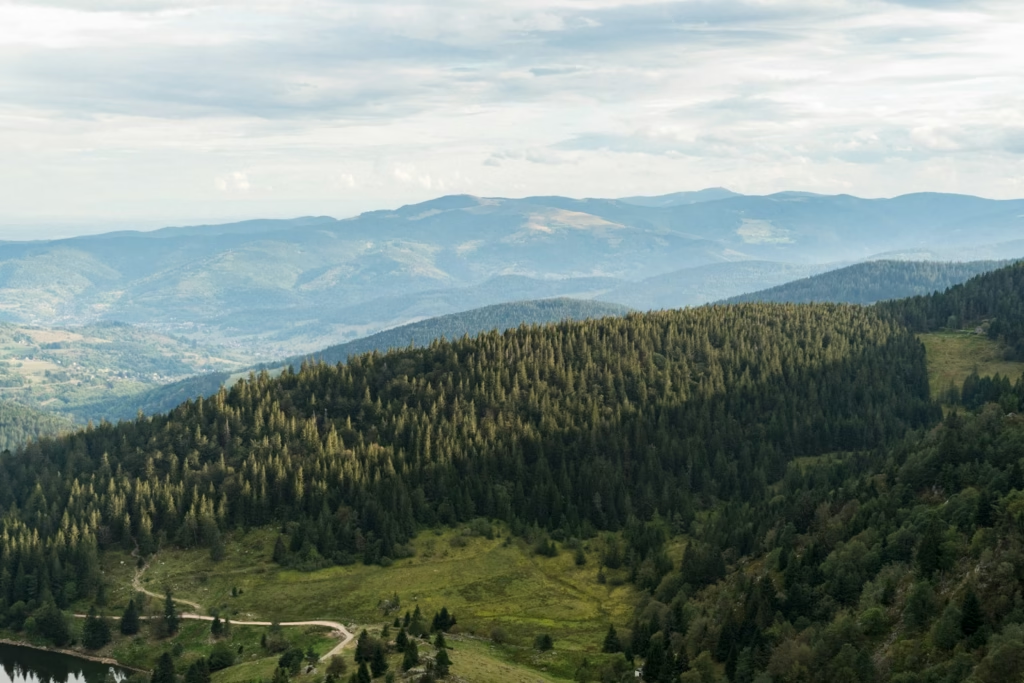
Stage 14 from Mulhouse to Le Markstein Fellering brings the Vosges into play. The Vosges climbs often feel different from the major Alpine passes. They can be steep, irregular and hard to pace. They reward riders who can handle repeated accelerations rather than simply sit at threshold for an hour.
Stage 15 to Plateau de Solaison is the second summit finish of the race and arrives just before the second rest day. That placement matters. A rider who cracks here has the rest day to think about it, but not necessarily enough road left to repair the damage. The final week still offers huge opportunities, but losing serious time before the time trial and Alps is a dangerous position.
This block is where the race may be won by patience and lost by accumulated fatigue. It is not one single spectacular ambush. It is a three-day sequence where tired teams can unravel.
The stage 16 time trial changes the whole route
The only individual time trial of the 2026 Tour comes on stage 16, from Évian-les-Bains to Thonon-les-Bains. At 26.1km, it is long enough to reshape the general classification, especially because it arrives after the second rest day and before the final Alpine block.
This is one of the most important features of the route. The climbers cannot simply wait for the high mountains and ignore the clock. Time triallists with climbing durability have a clear chance to move up. Riders who are strong in both disciplines will see this as a controlled opportunity to take time without needing to attack in the mountains.
The timing also affects how stages 13 to 15 are raced. A climber who expects to lose time on stage 16 may need to attack before the rest day. A stronger time triallist may be more comfortable defending through the Vosges and Jura, knowing that the clock can turn the race back in his favour.
The stage also creates a psychological split before the Alps. Riders who gain time will believe they can defend. Riders who lose time will have three mountain stages left to respond. That is exactly what a good late-race time trial should do: sharpen the tactical picture before the final mountain showdown.
Orcières-Merlette begins the final reckoning
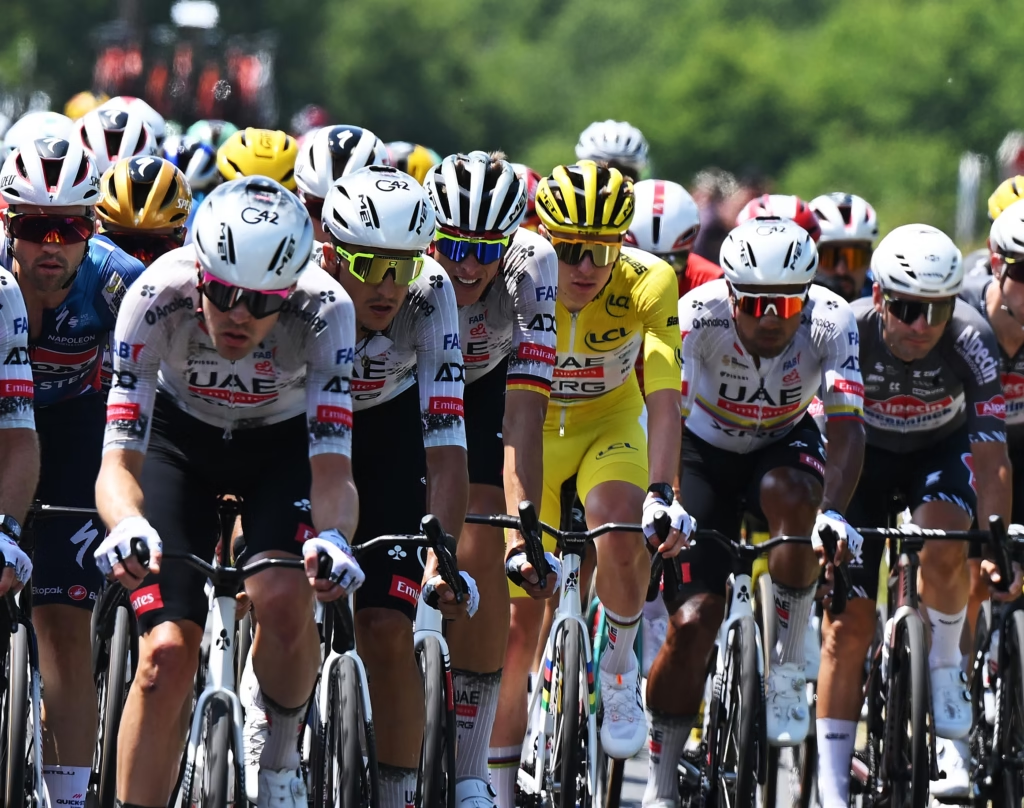
Stage 18 from Voiron to Orcières-Merlette starts the final Alpine phase. It comes after the time trial and a flatter stage to Voiron, so the GC should have been reset by the clock before the climbers get another chance.
Orcières-Merlette is important because it can force the first post-time-trial reaction. If a climber has lost time on stage 16, this is the first summit finish available to strike back. If a time triallist has moved into yellow, this is where his team immediately has to defend in the mountains.
The climb itself has Tour history, but its role in 2026 is mainly about placement. It begins a three-day mountain sequence that will be hard to control from start to finish. Teams will need to decide whether to use Orcières-Merlette as a launchpad or conserve energy for the two Alpe d’Huez stages.
That decision could shape the final week. A passive stage 18 would push everything towards the weekend. An aggressive stage 18 could turn the final three days into a rolling crisis for the yellow jersey team.
Stage 19 to Alpe d’Huez is short enough to be explosive
Stage 19 from Gap to Alpe d’Huez is only 127.9km, but that is what makes it dangerous. Short mountain stages often remove the long waiting period. Riders warm up knowing the race can be on almost immediately.
The official route brings Alpe d’Huez back as a summit finish for the first of two consecutive days. That alone changes the emotion of the race. Alpe d’Huez is not just another climb. It carries crowd pressure, heat, noise and history. Riders can lose time there because of legs, but also because the environment is difficult to manage.
Stage 19 could suit a contender who wants to test rivals before the queen stage. The danger is spending too much before stage 20, but the opportunity is obvious. If a rival looks vulnerable after Orcières-Merlette, this is the day to press the advantage before everyone starts thinking only about the Galibier and Sarenne.
This is where the race can be softened up. A rider may not need to land the final blow on stage 19, but he can make sure someone else starts stage 20 already damaged.

Stage 20 is the queen stage and the final examination
Stage 20 from Le Bourg-d’Oisans to Alpe d’Huez is the clearest answer to where the 2026 Tour de France can be won. It is 170.9km, packed with major climbing, and placed on the penultimate day. It includes the Col de la Croix de Fer, the Télégraphe-Galibier combination, the Col de Sarenne and a final return to Alpe d’Huez.
The Galibier is the highest point of the 2026 Tour at 2,642m and awards the Souvenir Henri Desgrange. Its position deep into the penultimate stage gives the route enormous tactical weight. A contender who waits until Alpe d’Huez may still be able to win, but the stage offers earlier launch points if the race needs to be broken open.
The Col de Sarenne is particularly interesting because it changes the final approach to Alpe d’Huez. It is less familiar than the classic route and adds another layer of fatigue before the final climb. By the time riders reach the last ascent, the race may already have been split by endurance, altitude and team strength.
This is the stage where team depth matters most. Leaders isolated before the Galibier or Sarenne will be vulnerable. Teams with multiple riders still present can attack, chase, bluff and force mistakes. A rider who has relied on one outstanding domestique may find that the penultimate day is too big for a narrow support structure.
If the GC is close, stage 20 should decide it. If the GC is not close, stage 20 may explain why.
Paris is not the place to fix mistakes
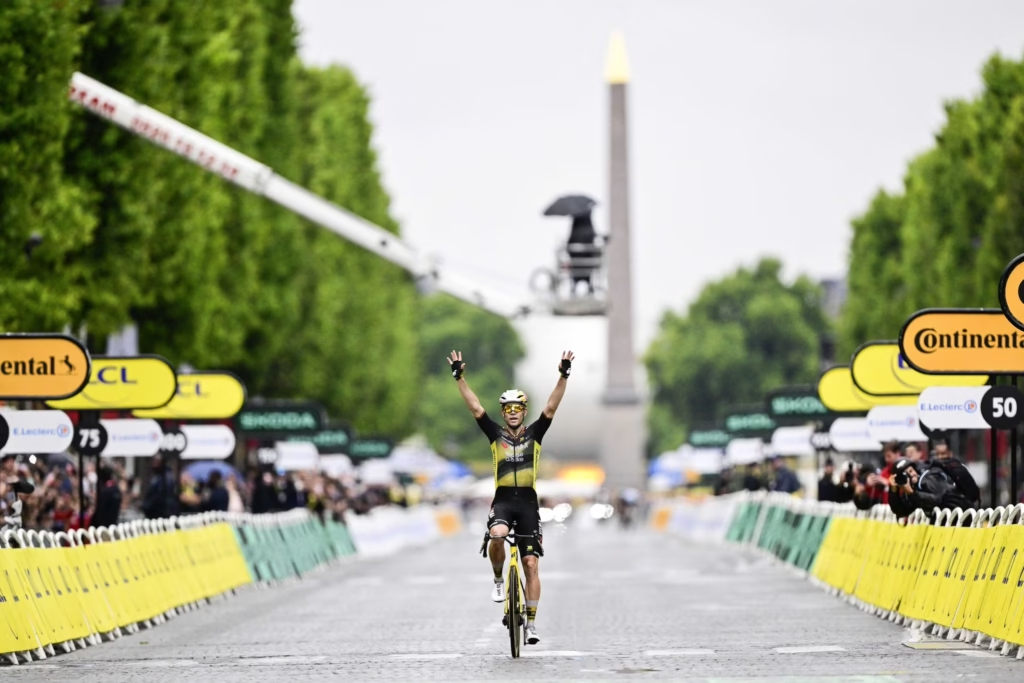
Stage 21 finishes in Paris, but the real race should be over before then. That is not unusual for the Tour, but it matters more in 2026 because the final mountain stage is so hard and so late. A rider who leaves Alpe d’Huez in yellow will almost certainly reach Paris in yellow unless something extraordinary happens.
That gives stages 18, 19 and 20 a finality that the riders will understand. There is no meaningful GC rescue mission after Alpe d’Huez. Paris is for confirmation, celebration, a sprint or the last act of survival.
For the points classification, the final stage may still matter. For the yellow jersey, the final climb of stage 20 should be the real finish line.
Where the Tour de France 2026 will be won
The 2026 Tour is most likely to be won across three connected phases rather than on one single day.
The first is the opening week, where the Barcelona team time trial, Les Angles and Gavarnie-Gèdre will create the first GC shape. A rider does not need to dominate here, but he must avoid being pushed onto the defensive too early.
The second is the mid-race mountain block through Le Lioran, Le Markstein and Plateau de Solaison. This is where teams can lose structure and where fatigue can quietly build. Riders who arrive at the second rest day still fresh, well supported and within range will have earned that position.
The third is the final week: the stage 16 time trial, Orcières-Merlette, and the two Alpe d’Huez stages. This is where the race becomes direct. The time trial gives one type of rider a chance. The Alps give another type of rider a response. The best Tour contender will need to handle both.
The route therefore suits a complete rider rather than a specialist. The winner will need a strong team, good time-trial control, repeated climbing strength, resilience after rest days and the ability to handle pressure on the most famous roads in the race.
Where the Tour de France 2026 could be lost
The race could be lost in Barcelona by a weak team time trial. It could be lost at Les Angles by a rider arriving short of mountain form. It could be lost at Gavarnie-Gèdre by a contender discovering that the race has started faster than expected.
It could also be lost more quietly. A team might spend too much energy controlling stage 9. A leader might be isolated at Le Lioran. A climber might fail to gain time before the stage 16 time trial. A time triallist might survive the clock but crack under repeated Alpine pressure. A team might bring the strongest leader but not enough support to manage three consecutive mountain stages at the end.
That is the strength of the route. It does not rely only on one spectacular trap. It creates several different ways to fail.
What kind of rider does the route suit?
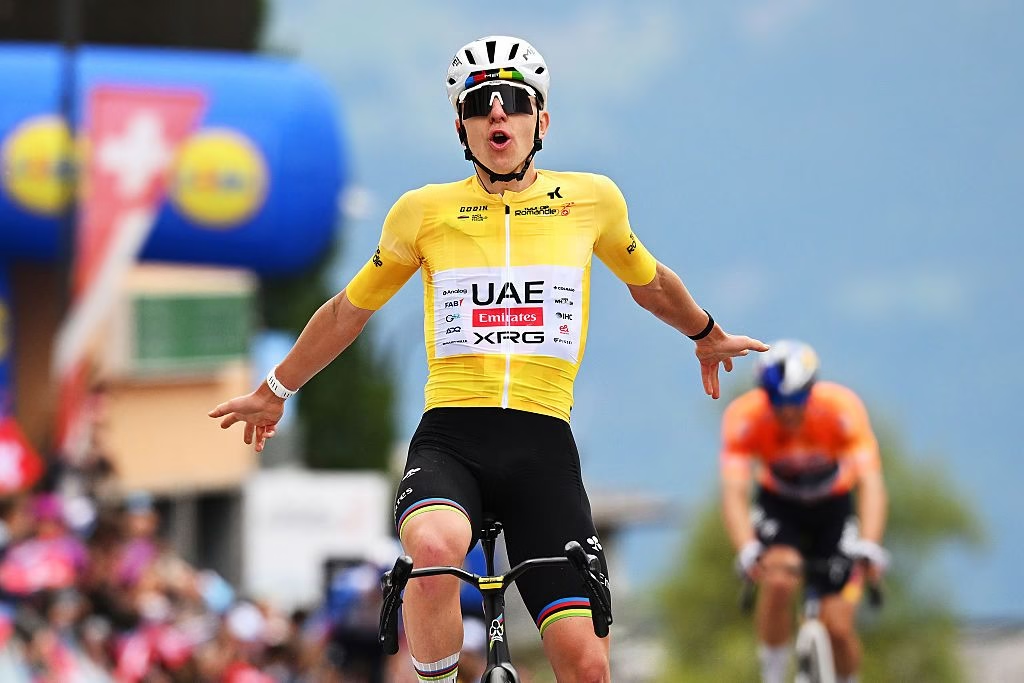
The 2026 route suits a rider who can climb repeatedly, time trial efficiently and rely on a deep team. It is not ideal for a pure climber who needs every important stage to finish uphill. Nor is it ideal for a time trial specialist who can only defend in the mountains. The winner needs enough of everything.
The Barcelona team time trial rewards collective strength. The stage 16 individual time trial rewards technical efficiency and pacing. The Pyrenees test early climbing form. The Vosges and Jura test repeated efforts and recovery. The Alps test endurance, altitude response and the ability to still attack after nearly three weeks.
That points towards the modern complete Grand Tour rider. The Tour de France winners list shows how the race has shifted between eras of climbers, time triallists and dominant team structures. The brief history of the Men’s Tour de France gives the longer perspective, from the race’s early endurance roots to the modern Tour built around team depth, television spectacle and global contenders.
The June preparation races will also matter in how this route is read. The Men’s Tour de Suisse 2026 full route guide and beginner’s guide to Men’s Tour de Suisse 2026 show why the Swiss race remains one of the most important final tests before July, especially for riders balancing time-trial sharpness with climbing form.
-
 Photo Credit: Getty

Route analysis verdict
The Tour de France 2026 route is built like a long tightening mechanism. Barcelona applies the first pressure. The Pyrenees stop anyone from hiding. The Massif Central, Vosges and Jura make the middle of the race harder than it might first appear. The stage 16 time trial resets the GC with one controlled test. The Alps then decide whether the strongest climber, the best all-rounder or the deepest team has judged the race correctly.
The back-to-back Alpe d’Huez finishes will dominate the headlines, and rightly so. Stage 20, with the Croix de Fer, Galibier, Sarenne and Alpe d’Huez, is the obvious queen stage and the clearest final battlefield. But the race may already be shaped long before then.
The winner will probably not be the rider who simply waits for Alpe d’Huez. He will be the rider who reaches it with time intact, team support still available and enough confidence to handle one final brutal examination. The Tour may be decided in the Alps, but it can be lost almost everywhere before that.
More Tour de France previews, stage guides, race reports and analysis will sit in the Tour de France archive as the 2026 race approaches.

