

The Men’s Tour de Suisse 2026 has been rebuilt into a shorter, sharper race, and the start list reflects that change. Instead of the traditional eight-day format, this year’s edition runs across five stages from Wednesday, 17th June to Sunday, 21st June, with the men’s and women’s races using the same host towns and largely parallel route designs.
That gives the race a different feel. There is no gentle opening, no long sequence of transition days and no obvious space for teams to ease into the week. The race begins on hilly roads around Sondrio, moves through Locarno and Bad Ragaz, adds a 23.8km individual time trial in Aarburg, then finishes with a mountain stage around Villars-sur-Ollon that includes more than 4,000 metres of climbing.
For the general classification contenders, that means there is very little room to make a mistake. For the Tour de France riders, it is a final serious test before July. For the stage hunters, the race is still open enough to reward aggression, especially if the GC teams choose not to control every hilly day.
For the full stage-by-stage detail, see our Men’s Tour de Suisse 2026 full route guide. The full start list for Men’s Tour de Suisse 2026 has the embedded line-up, while our beginner’s guide to Men’s Tour de Suisse 2026 explains the race’s new format and place in the June calendar. UK viewing details are also covered in our guide on how to watch Men’s Tour de Suisse 2026 in the UK.
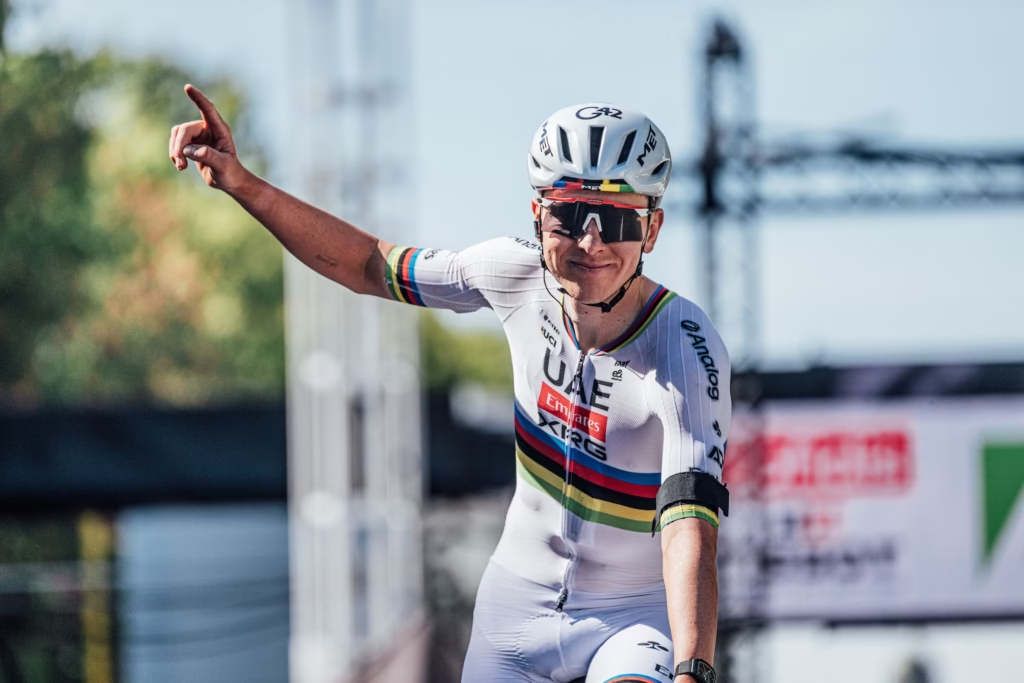
UAE Team Emirates-XRG
UAE Team Emirates-XRG bring the strongest single rider in the race. Tadej Pogačar changes the shape of any stage race he enters, and on a five-day Tour de Suisse with hilly roads, a time trial and a final mountain stage, he has several ways to take control.
The route suits him almost too neatly. Stage 1 around Sondrio is technical and hilly enough to invite early aggression, stage 3 around Bad Ragaz brings more tactical climbing, the Aarburg time trial gives him another chance to gain time, and the Villars-sur-Ollon finale is a pure GC test. UAE do not need to wait for one decisive moment. They can keep the pressure high across the whole race.
The support group is also strong. Brandon McNulty and Felix Grossschartner give the team climbing and stage-race depth, while Mikkel Bjerg and Nils Politt are important before the time trial and on more exposed days. Domen Novak adds another useful mountain presence. This is a squad built to protect Pogačar, control the race if needed and still give him options if he wants to attack early.
The main question is intent. If Pogačar is here to sharpen Tour de France form rather than squeeze everything from the race, UAE may ride more conservatively. Even then, he starts as the obvious favourite. The Tour de France 2026 full route guide shows why a rider with his profile will want every useful preparation block before July.
Alpecin-Premier Tech
Alpecin-Premier Tech arrive with a team that looks more stage-focused than GC-focused. Mathieu van der Poel is the headline name, and the opening stages should interest him far more than the final mountain day.
The Sondrio opener, with its hilly circuit feel, could suit Van der Poel if the race is hard but not a pure climbing test. Stage 2 around Locarno also gives him a route into the race if the finale is selective rather than mountainous. He may not be here to win the overall, but he can still shape the first half of the race.
Kaden Groves gives the team another obvious option if a reduced sprint or controlled hilly stage comes back together. Silvan Dillier offers valuable Swiss experience and race craft, while Tobias Bayer, Luca Vergallito, Oscar Riesebeek and Emiel Verstrynge give the team depth for breakaways and support work.
This is not the team most likely to trouble Pogačar in the GC, but it is one of the squads most likely to animate the race before the final weekend. If the favourites hesitate, Alpecin-Premier Tech have the riders to punish them.
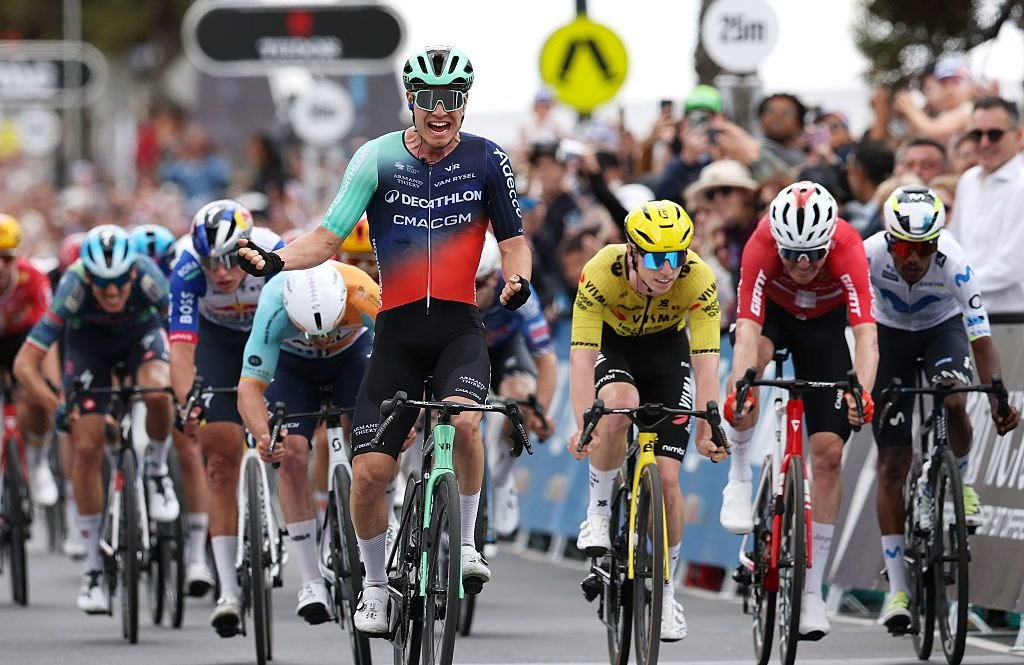 Photo Credit: Getty
Decathlon CMA CGM Team
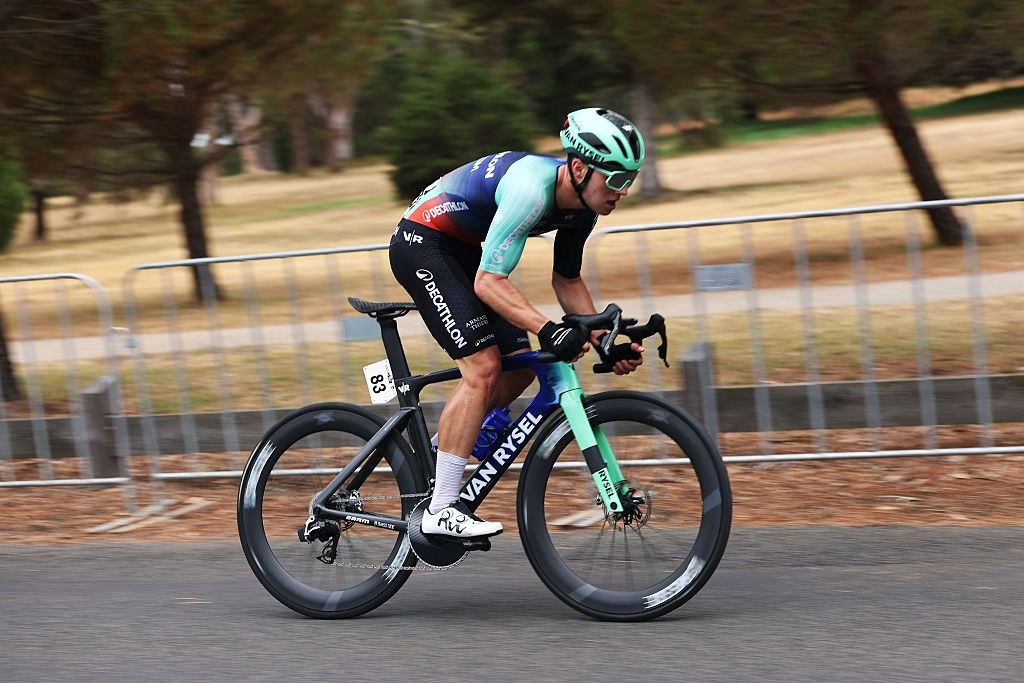
Decathlon CMA CGM Team look more like a stage-hunting squad than a GC unit, but there is enough quality here to make them visible throughout the race. Tobias Lund Andresen gives them their fastest finish, while Gregor Mühlberger is the rider best suited to the harder terrain.
The route does not offer many straightforward sprint days, which makes Andresen’s job more complicated. He may need reduced groups, selective finales and good positioning rather than a full bunch sprint. Stage 2 around Locarno could be the best chance if the race is controlled but still fast at the end.
Mühlberger gives the team a climbing reference for stage 5 and could also be useful in breakaways before the final GC battle takes over. Oscar Chamberlain, Stan Dewulf, Jordan Labrosse and Oliver Naesen add strength across hilly and tactical stages, with Tord Gudmestad another fast option if the race comes back together.
Decathlon may not be among the leading favourites for yellow, but this is a team with enough flexibility to chase a stage win rather than simply survive the race.
EF Education-EasyPost
EF Education-EasyPost bring Richard Carapaz, which immediately gives them a serious GC card. The shortened Tour de Suisse format may suit him because it rewards instinct, climbing aggression and the ability to make a race chaotic before stronger time triallists can settle into control.
Carapaz’s best route is likely to come through stage 5. The Villars-sur-Ollon finale, with more than 4,000 metres of climbing, is the day where he can apply the most pressure. The risk is stage 4 in Aarburg. A 23.8km time trial is long enough for him to lose time to Pogačar, Roglič, Tiberi and other riders with stronger TT pedigree.
EF also have useful support. Vincenzo Albanese and Luke Lamperti offer stage-winning options on faster or reduced days, while Lukas Nerurkar and Colby Simmons provide younger energy for harder terrain and breakaway scenarios. The team may not have the deepest climbing block in the race, so Carapaz may need to race cleverly rather than rely on long control.
If he limits time losses in Aarburg, Carapaz can still be one of the riders who makes the final stage dangerous.
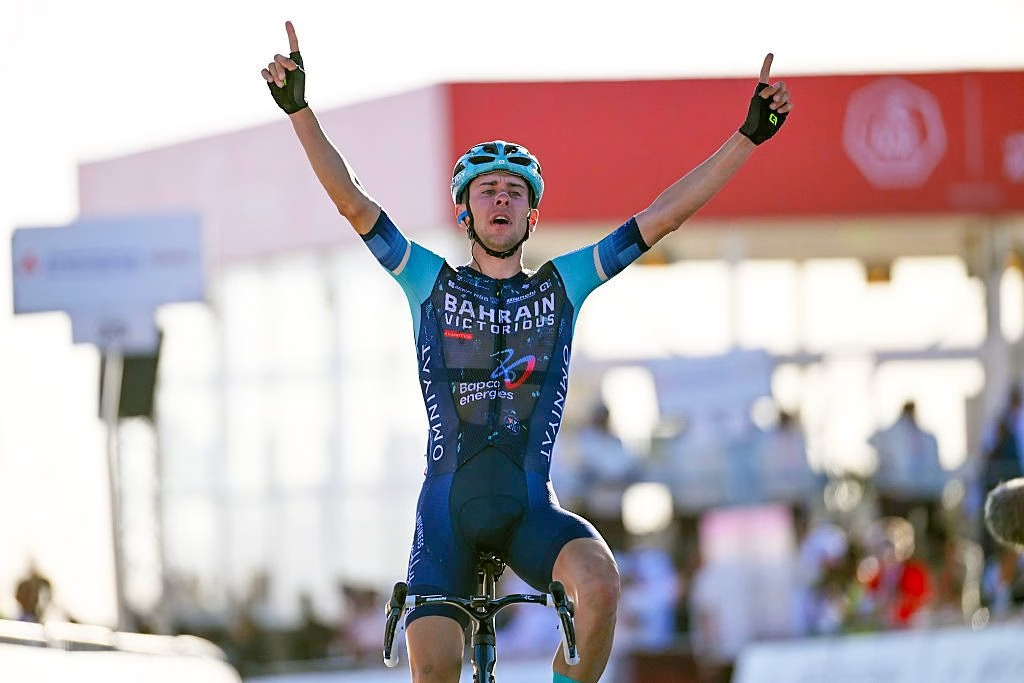
Bahrain Victorious
Bahrain Victorious have one of the more intriguing GC structures in the race. Antonio Tiberi gives them a clear leader, while Lenny Martinez and Afonso Eulálio add climbing depth and tactical options. On a route that ends with Villars-sur-Ollon, that matters.
Tiberi is the rider best suited to the full route. He can climb, time trial and hold a GC position across a short race where every day has some consequence. The Aarburg time trial should be an opportunity rather than a problem, and if he is close before stage 5, Bahrain have enough climbing support to make the race hard.
Martinez is more explosive uphill and may be better used as an attacking card. If he has lost time earlier, he becomes dangerous in the mountains. Eulálio gives Bahrain another rider who can be used aggressively or protect Tiberi deep into the final stage. Kamil Gradek, Pau Miquel, Alec Segaert and Attila Valter round out a strong and balanced line-up.
Bahrain may not have the outright favourite, but they have one of the best teams for the shape of the race. If UAE or Red Bull-BORA-hansgrohe wait too long, Bahrain have the numbers to apply pressure.
Groupama-FDJ United
Groupama-FDJ United bring a team that looks designed for aggressive racing rather than pure GC control. Romain Grégoire is the key name, with Valentin Madouas, Rémi Cavagna, Rémy Rochas and Ewen Costiou all giving the French squad different ways into the race.
Grégoire is particularly interesting because the opening stages suit his profile. He can handle punchy climbs, technical terrain and reduced finishes, which makes Sondrio and Locarno obvious targets. Whether he can stay in the GC battle through the time trial and final mountain stage is less certain, but he can still shape the race before then.
Cavagna should have the Aarburg time trial circled, even if the course is fast and technical rather than a flat drag strip. Madouas gives Groupama-FDJ United a more resilient hilly and climbing option, while Rochas and Costiou can be useful when the race gets harder.
A stage win looks more likely than overall victory, but this is a squad that can make the race uncomfortable for teams trying to keep it predictable.
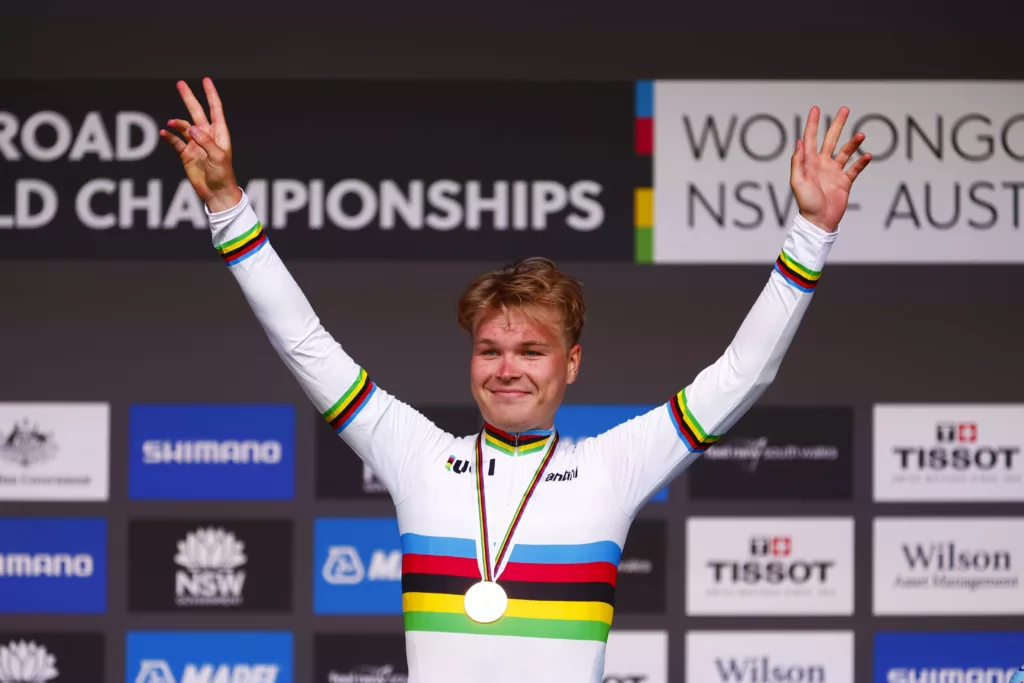 Photo Credit: Cor Vos
Netcompany-INEOS
Netcompany-INEOS arrive without the most obvious pre-race favourite, but they bring a team full of useful pieces. Tobias Foss is the standout for the time trial, while Michal Kwiatkowski, Andrew August, Victor Langellotti, Axel Laurance, Brandon Rivera and Ben Swift make the squad adaptable across the five days.
Foss is the rider who can use stage 4 most clearly. If he is still close after the opening stages, the Aarburg time trial could move him a long way up the GC. The question is whether he can survive the final mountain stage strongly enough to convert that into an overall result.
Kwiatkowski gives the team road captaincy, tactical intelligence and stage potential, especially on the hilly days. Laurance can be dangerous in reduced finishes, while August adds long-term GC upside and could be given freedom if the race becomes aggressive.
Netcompany-INEOS may need the race to break in their favour, but they have several routes to a result. Foss for the time trial, Laurance for stages and August for development all make sense in this version of the Tour de Suisse.
Lidl-Trek
Lidl-Trek have a team built around opportunity rather than one dominant GC leader. Thibau Nys is the standout stage option, Mathias Vacek gives them a time trial and all-round card, while Andrea Bagioli, Patrick Konrad, Bauke Mollema, Jacopo Mosca and Sam Oomen provide experience and depth.
Nys should look closely at the opening stages. Sondrio and Locarno are the kind of days where a punchy rider with a strong finish can turn selective racing into a stage win. He may not be the favourite for the overall because of the final mountain stage and time trial balance, but he is one of the most dangerous riders in the race for hilly finishes.
Vacek is important because the Aarburg time trial gives him a direct target. If he can stay close through the opening stages, he could move into the GC conversation. Konrad, Mollema and Oomen give Lidl-Trek experience for the climbing days, while Bagioli gives another option on rolling terrain.
This is a team that could win a stage in several ways. The GC may be harder, but if Vacek handles the mountains and time trial well, Lidl-Trek could still come away with an overall placing.
Lotto-Intermarché
Lotto-Intermarché bring a team with two obvious storylines: Arnaud De Lie for stage opportunities and Jarno Widar as a young rider to watch. On this route, both are interesting, but for different reasons.
De Lie is unlikely to be targeting the general classification, but the race has enough reduced-finish possibilities to suit him. A fully flat sprint may be rare, yet De Lie does not need a pure sprint stage to win. If the opening days are hard but not decisive for the climbers, he can be right in the mix.
Widar gives the team a development and climbing angle. The final stage to Villars-sur-Ollon is a serious test for a young rider, but it also gives him a chance to measure himself against a deep WorldTour field. He may not be expected to challenge Pogačar, Roglič or Tiberi, but he can learn plenty from the way this race is ridden.
Cédric Beullens, Sébastien Grignard, Felix Ørn-Kristoff, Lorenzo Rota and Jonas Rutsch add useful support. Lotto-Intermarché’s race should not be judged only by GC. A stage result for De Lie and a strong climbing display from Widar would make the week a success.
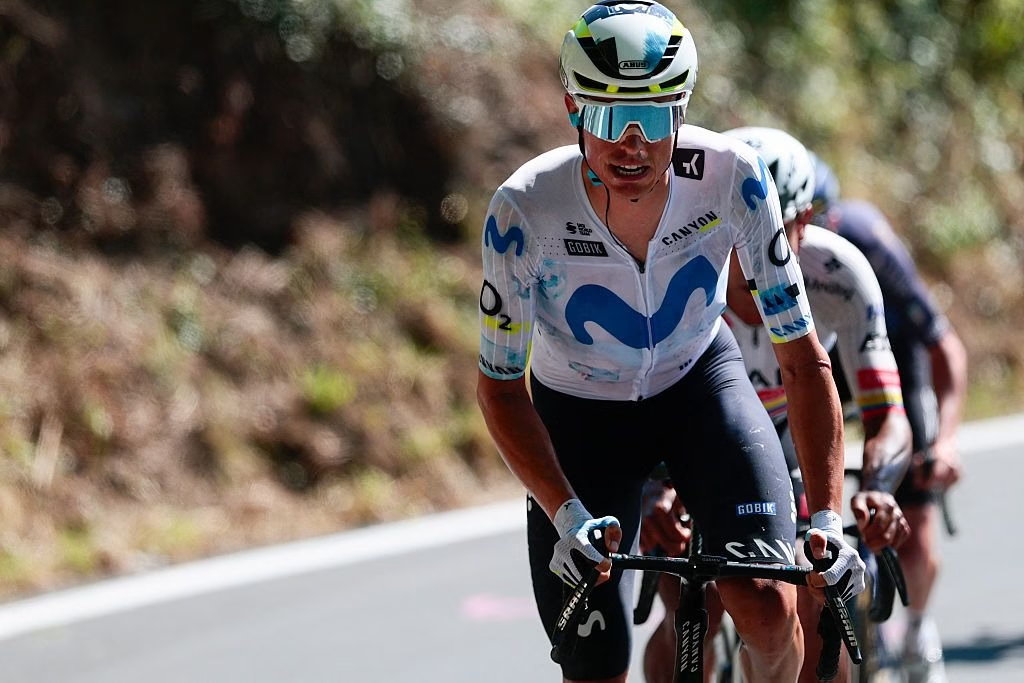 Photo Credit: Getty
Movistar Team
Movistar Team bring one of the more experienced GC pairings in the race, with Enric Mas and Nairo Quintana both on the start list. Javier Romo adds another climbing and stage-race option, while Roger Adrià, Jorge Arcas, Orluis Aular and Pelayo Sánchez Mayo give them support and stage potential.
Mas is the clearer GC leader. The final mountain stage suits him, and the hilly opening days should not be an issue. The problem is the time trial. A 23.8km individual test in Aarburg could force him to attack on stage 5 rather than ride defensively. If he loses too much there, Movistar will have to make the final day hard from distance.
Quintana is less predictable but still tactically relevant. He may be more likely to hunt a mountain stage or support Mas, depending on how the opening days unfold. Romo is another useful rider if the team wants to put someone up the road before the favourites move.
Movistar have enough climbing experience to matter, but their race probably depends on how well Mas handles the time trial. If he limits the damage, he can be a podium contender. If not, stage 5 becomes their main battlefield.
NSN Cycling Team
NSN Cycling Team arrive with a squad that looks more suited to opportunistic racing than overall control. Alexey Lutsenko is the headline name, with Corbin Strong, Jan Hirt, Nick Schultz, Dion Smith, Pier-André Côté and Alessandro Pinarello giving the team a wide range of options.
Lutsenko is the obvious all-round card. He can climb, time trial on a good day, and attack from distance. The Tour de Suisse has often suited riders who can race aggressively on hard terrain without needing a fully controlled GC structure, and Lutsenko fits that mould.
Strong and Smith give NSN options in reduced finishes. If the opening hilly stages come back together in smaller groups, both can be dangerous. Hirt is the mountain support and potential breakaway rider for stage 5, while Schultz brings resilience and tactical experience.
This is not one of the leading GC teams, but it is a team that could appear in several different stage scenarios. If the bigger squads hesitate, NSN have riders capable of taking advantage.
 Photo Credit: Getty
Red Bull-BORA-hansgrohe
Red Bull-BORA-hansgrohe bring Primož Roglič, which immediately makes them one of the most important teams in the race. On paper, he is the clearest challenger to Pogačar, especially because the route includes a time trial and a final mountain stage.
Roglič’s route to victory is straightforward in theory. Stay safe through the opening hilly stages, use the Aarburg time trial to gain or limit time, then test the race on the final day. In practice, the shortened format makes every day more nervous. There is little room to ride into form.
The support group is strong. Aleksandr Vlasov gives them a second GC option or mountain lieutenant, while Finn Fisher-Black and Giovanni Aleotti add climbing depth. Alexander Hajek, Emil Herzog and Frederik Wandahl complete a line-up that should be strong enough to protect Roglič across the week.
The team’s main challenge is how aggressive to be. If Pogačar looks comfortable, Red Bull-BORA-hansgrohe may need to create pressure before the final climb. If Roglič is close after the time trial, they can race more patiently. Either way, this is one of the squads that can realistically win the race.
Soudal Quick-Step
Soudal Quick-Step do not arrive with the biggest GC favourite, but they have a very useful combination of stage options and all-rounders. Ilan Van Wilder is the obvious GC reference, while Maximilian Schachmann, Alberto Dainese, Gianmarco Garofoli, Gil Gelders, Louis Vervaeke and Jonathan Vervenne give the team range.
Van Wilder’s chances depend heavily on consistency. He can climb well enough to survive the final stage and should be solid in the time trial, but he needs to stay close through the opening hilly days. If he does, a top-10 overall is realistic.
Schachmann is an interesting rider for the hilly stages and could be given freedom if the race becomes tactical. Dainese gives the team a fast finish if one of the stages ends in a reduced sprint, though this is not an easy race for pure sprinters. Vervaeke and Garofoli add climbing support, while Vervenne has the time trial pedigree to make stage 4 important.
Soudal Quick-Step may not control the GC battle, but they can be visible in several phases of the race. A stage win and a strong Van Wilder overall placing would be a good return.
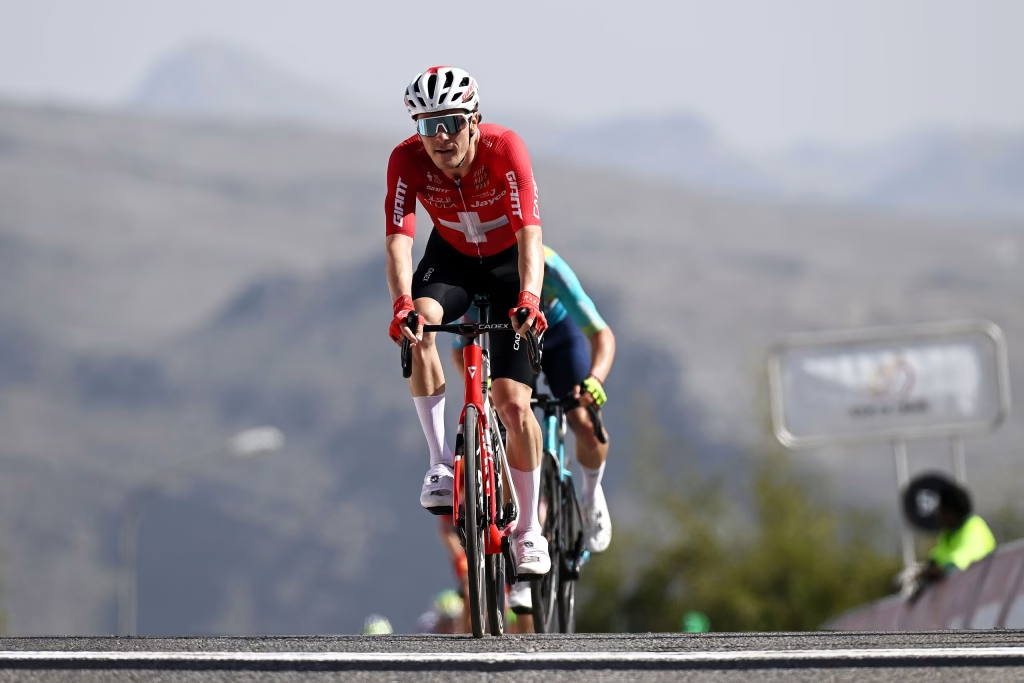 Photo Credit: Gety
Team Jayco AlUla
Team Jayco AlUla bring a mixed squad with Mauro Schmid and Michael Matthews as the two obvious names. Schmid gives them the better GC and hilly-stage profile, while Matthews remains dangerous if the race produces reduced sprints.
Schmid’s home-road element makes him particularly interesting. The opening stages should suit his ability to race aggressively on rolling terrain, and he can handle selective days. The question is whether the time trial and final mountain stage are enough to push him away from a pure GC challenge and towards stage hunting.
Matthews should be watched on any day where the sprinters are thinned but the climbers do not fully take over. He may not want the final mountain stage, but stage 1 or stage 2 could suit him if the race becomes selective without becoming too hard.
Paul Double, Asbjørn Hellemose, Patrick Gamper, Finlay Pickering and Rudy Porter give Jayco AlUla support across different terrain. This looks like a team built for stage opportunities rather than overall control, but Schmid gives them enough flexibility to keep one eye on GC.
Team Picnic PostNL
Team Picnic PostNL bring Max Poole, and that gives them a genuine GC angle. Poole has the climbing ability to take the final stage seriously, while the 23.8km time trial will show how complete his stage-race package is becoming.
The shortened route is a useful test for him. There is no week of attrition before the decisive stages, but there is enough variety to expose weaknesses. If Poole can stay close through the opening stages and limit losses in Aarburg, Villars-sur-Ollon becomes a real opportunity.
Matthew Dinham gives the team another climbing option, while Chris Hamilton adds experience. Sean Flynn, Mattia Gaffuri, Bjoern Koerdt, Oliver Peace and the rest of the squad can support across different terrain, though the team may have to be selective with where they spend energy.
A top-10 overall is a realistic target for Poole. If the time trial goes well, he can aim higher.
Team Visma | Lease a Bike
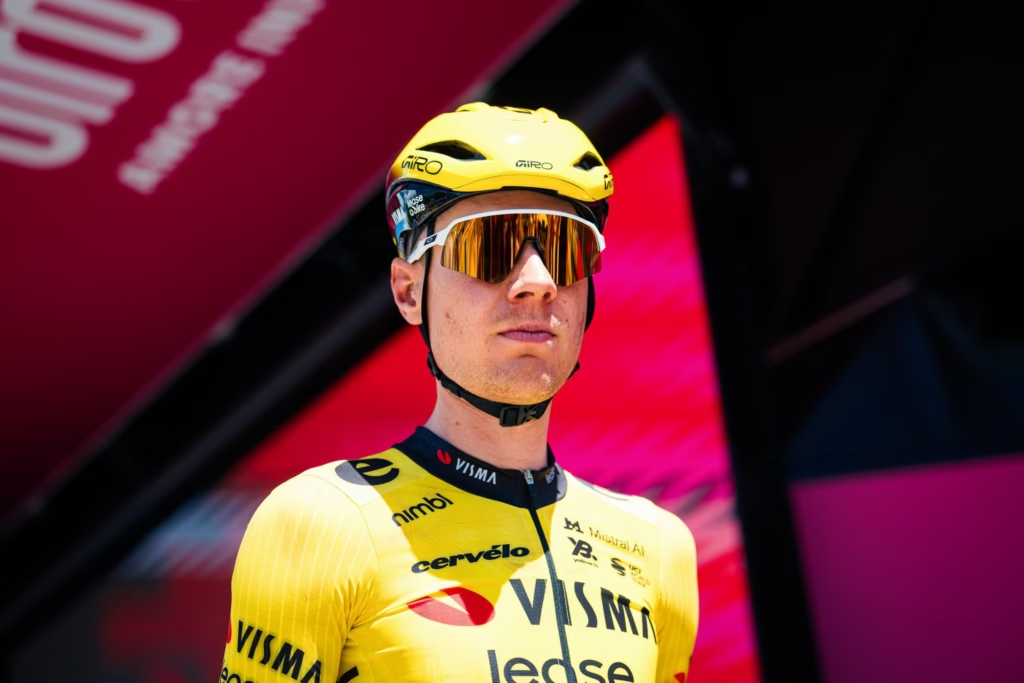
Team Visma | Lease a Bike do not bring Jonas Vingegaard or Wout van Aert, but they still arrive with a team that can shape the race. Wilco Kelderman and Steven Kruijswijk provide experience, while Menno Huising and Bart Lemmen give the squad two interesting newer-stage-race options.
Kelderman is the most obvious GC reference. He can time trial, climb and manage a short race intelligently. Whether he has the top-end climbing to challenge Pogačar, Roglič and Tiberi on the final stage is the larger question, but he should be in the top-10 conversation if he is in form.
Huising is one to watch because the final mountain stage offers exactly the kind of test that can reveal a rider’s level quickly. Lemmen’s all-round qualities also make sense on a route with a time trial and repeated hilly days. Louis Barré, Matthew Brennan and Owain Doull add stage and support options.
Team Visma | Lease a Bike may not have the headline favourite, but they rarely arrive without a plan. The team’s Giro d’Italia showed how effective their structure can be when a Grand Tour is built around a clear leader, and our piece on what the Men’s Giro d’Italia 2026 means for the season sets out why that collective strength remains one of the biggest themes of the year. In Switzerland, the aim should be a high GC placing and stage influence rather than overall control.
Uno-X Mobility
Uno-X Mobility bring a team that should be active across the race. Magnus Cort is the obvious stage-winning card, with Alexander Kamp, Fredrik Dversnes, Markus Hoelgaard, Sven Erik Bystrøm, Simon Dalby and Martin Tjøtta giving them a strong breakaway and hilly-stage profile.
Cort is the rider most likely to turn the route into a result. The opening stages could suit him if the race is hard but not dominated by the pure climbers. He can win from reduced groups, attack late and read messy finales well. In a race with very few straightforward sprint days, that is valuable.
Kamp and Dversnes give the team more options on rolling terrain, while Hoelgaard and Bystrøm bring experience. Tjøtta is worth watching if the race becomes more selective, particularly on days where the breakaway has a realistic chance.
Uno-X Mobility may not be targeting the overall, but they have the right profile for the shape of this race. A stage win is the clear target.
XDS Astana Team
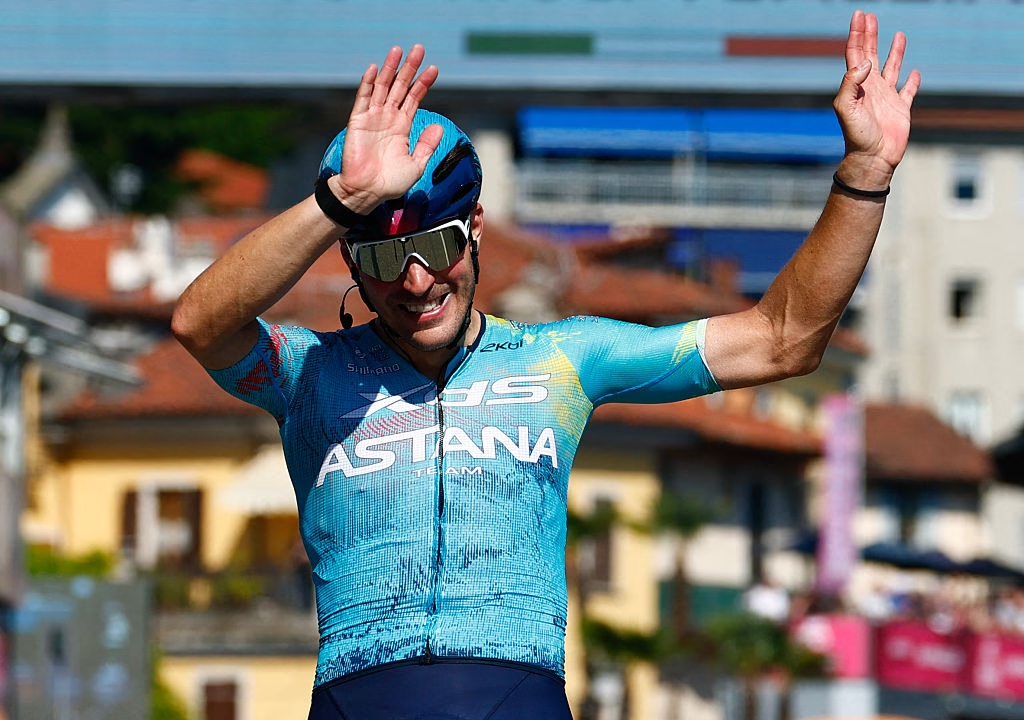
XDS Astana Team bring a squad that looks suited to attacking and opportunistic racing. Alberto Bettiol is the biggest name, while Clément Champoussin gives them the most obvious climbing and GC-adjacent option.
Bettiol could be dangerous on the opening stages. If the racing is hard, technical and difficult to control, he has the strength to attack and the experience to judge when a move has a chance. He is unlikely to be a final GC contender, but stage 1 or stage 3 could be interesting.
Champoussin is the rider more likely to stay involved when the climbs become longer. If he loses enough time early, he could also become a strong breakaway candidate for stage 5. Yevgeniy Fedorov, Anton Kuzmin, Marco Schrettl, Su Haoyu and Darren van Bekkum give the team support and breakaway depth.
Astana’s best chance may come through anticipating the GC teams rather than waiting for the race to be controlled.
Pinarello-Q36.5 Pro Cycling Team
Pinarello-Q36.5 Pro Cycling Team bring Tom Pidcock, and that immediately gives the race another serious contender. The route suits him better than a flat-heavy stage race would. Hilly terrain, technical roads, a punchy opening phase, a time trial and a hard final mountain stage all give him ways to make an impact.
Pidcock’s biggest advantage is versatility. He can descend, attack, time trial well enough to stay relevant, and use technical terrain to create pressure. The final mountain stage may still be the biggest test, especially against Pogačar, Roglič and the pure climbers, but he should not be judged only by that day.
Quinten Hermans and Xandro Meurisse add real hilly-stage strength, while Fred Wright gives the team another rider who can shape rolling stages and breakaways. Xabier Mikel Azparren, Walter Calzoni and Marcel Camprubí complete a team that should be visible throughout the race.
Pidcock is an outside GC winner but a clear podium contender if the time trial and final climb go well. At minimum, he is one of the riders most likely to make the race more aggressive.
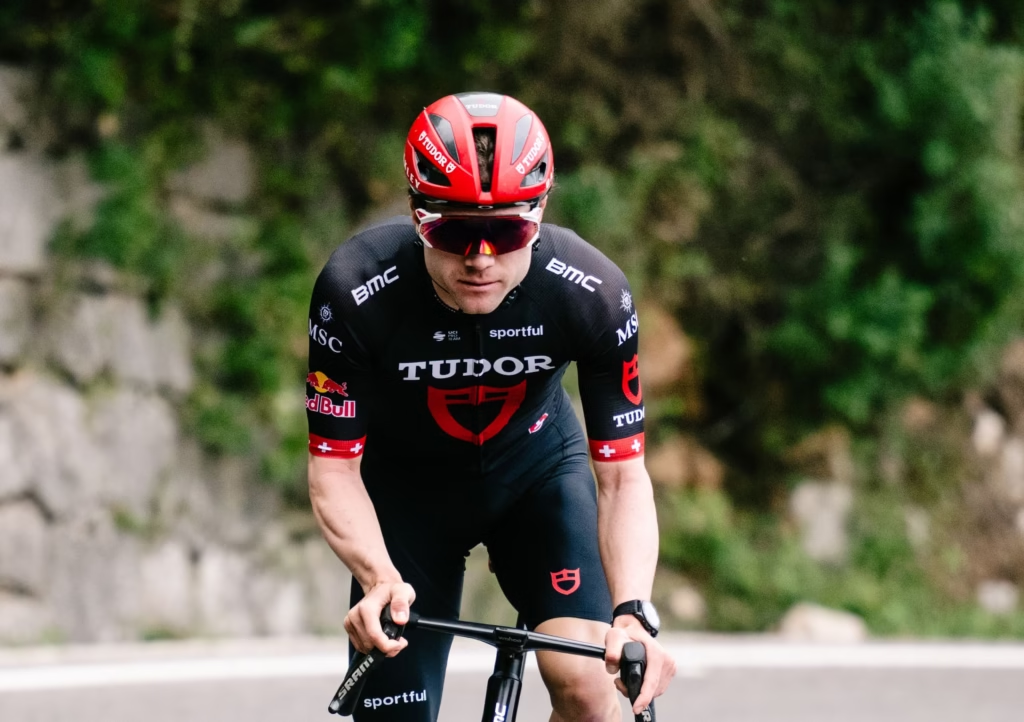 Photo Credit: Getty
Tudor Pro Cycling Team
Tudor Pro Cycling Team bring the home interest through Marc Hirschi, and that makes them one of the teams to watch closely. Hirschi may not be the top GC favourite on a route with a mountain finale, but the opening stages should suit him and the Swiss setting gives the team extra motivation.
Hirschi’s best chance is likely a stage win rather than the overall. Sondrio, Locarno or Bad Ragaz could all give him a platform if the race becomes selective without turning into a pure GC climb. He can attack late, sprint from reduced groups and use his race craft on awkward roads.
Marco Brenner gives the team another all-round option, while Marius Mayrhofer can be dangerous if a faster finish remains possible. Marco Haller, Jacob Eriksson, Arthur Kluckers and Fabian Weiss add support and breakaway presence.
For Tudor, this race is about visibility as much as GC. A Swiss stage win would be a major result, and Hirschi gives them a realistic route to one. The brief history of the Men’s Tour de Suisse explains why home success carries particular weight in this race.
Which teams look strongest for GC?
UAE Team Emirates-XRG and Red Bull-BORA-hansgrohe start as the clearest GC teams because they bring Pogačar and Roglič. Bahrain Victorious are not far behind because Tiberi, Martinez and Eulálio give them tactical depth. EF Education-EasyPost have Carapaz, Movistar have Mas, and Pinarello-Q36.5 Pro Cycling Team have Pidcock.
The most interesting team dynamic may come from Bahrain. They have more than one climber who can be used aggressively, while UAE and Red Bull-BORA-hansgrohe may be more clearly built around one leader. If the race becomes tactical before the final stage, Bahrain could be the squad that forces others to respond.
The GC hierarchy looks strongest for:
- UAE Team Emirates-XRG
- Red Bull-BORA-hansgrohe
- Bahrain Victorious
- EF Education-EasyPost
- Pinarello-Q36.5 Pro Cycling Team
- Movistar Team
- Team Picnic PostNL
- Team Visma | Lease a Bike
The race also sits in an interesting June context. The Tour Auvergne – Rhône-Alpes 2026 team-by-team guide shows how many Tour de France names are using these short stage races to sharpen form, while the Tour de France 2026 route analysis explains why the climbing and time trial balance in July makes this Swiss test so relevant.
Which teams look strongest for stage wins?
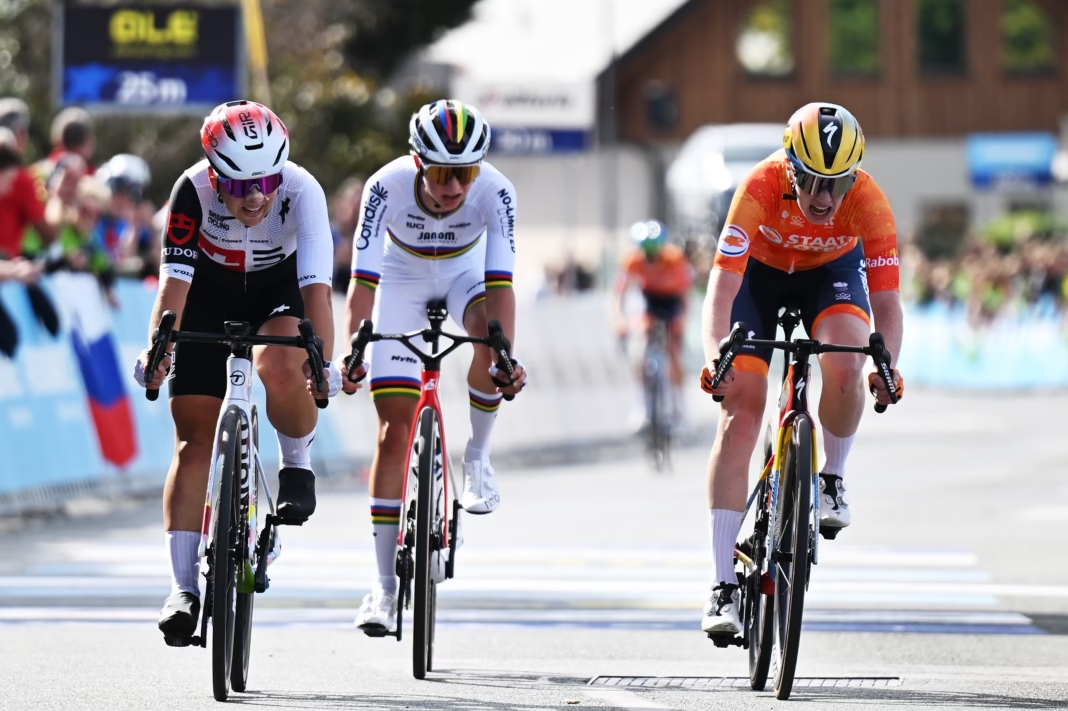
The stage-win picture is more open. Alpecin-Premier Tech have Van der Poel and Groves. Lidl-Trek have Nys and Vacek. Lotto-Intermarché have De Lie. Team Jayco AlUla have Matthews and Schmid. Uno-X Mobility have Cort. Tudor have Hirschi. Groupama-FDJ United have Grégoire, Madouas and Cavagna.
The hilly stages should stop the race becoming a simple GC procession. With the time trial and final mountain stage waiting, some overall contenders may be cautious early, which could give stage hunters room to move.
The strongest stage-hunting teams look like:
- Alpecin-Premier Tech
- Lidl-Trek
- Lotto-Intermarché
- Team Jayco AlUla
- Uno-X Mobility
- Tudor Pro Cycling Team
- Groupama-FDJ United
- NSN Cycling Team
Men’s Tour de Suisse 2026 team-by-team verdict
The Men’s Tour de Suisse 2026 start list is strong enough to make the shorter format work. Pogačar gives UAE Team Emirates-XRG the obvious favourite, Roglič gives Red Bull-BORA-hansgrohe the clearest direct challenger, and Bahrain Victorious bring the depth to make the GC race more tactical than a simple head-to-head.
Behind them, Carapaz, Pidcock, Mas, Tiberi, Poole, Kelderman, Foss and Schmid all give the race enough depth to stay open if the early stages or time trial create unexpected gaps. The final stage to Villars-sur-Ollon should still decide the overall, but the opening hilly days and Aarburg time trial mean the race can be shaped before then.
For stage wins, the field is even more varied. Van der Poel, Groves, De Lie, Nys, Matthews, Cort, Hirschi and Grégoire all have routes into the race, especially if the GC teams decide not to chase every move.
The compressed route means there is no hiding place. Teams with one leader need to protect them from the start. Teams without a GC favourite need to attack early. With no real transition stages, the 2026 Tour de Suisse should quickly reveal who has form, who is preparing for July, and who is ready to turn a five-day race into something much harder to control.

