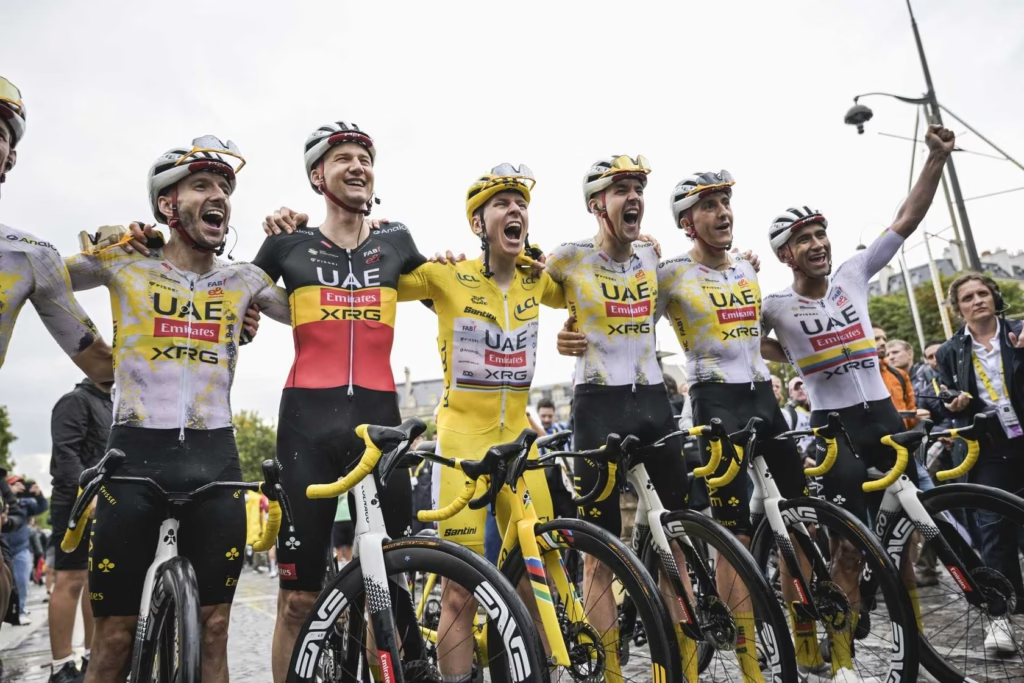
The Tour de France 2026 start list brings together 184 riders across 23 teams for the 113th edition of the race, which begins in Barcelona on Saturday, 4th July. It is a slightly larger Tour peloton than recent editions, with all 18 WorldTeams joined by five ProTeams for three weeks of racing across Spain and France.
The race opens with a 19.6km team time-trial in Barcelona, before heading through Catalonia, into the Pyrenees, across the Massif Central, Vosges and Jura, and finally into the Alps. That route shape means the Tour de France 2026 start list is not only about the yellow jersey contenders. Teams also need time-trial engines, climbing domestiques, sprint lead-out riders, breakaway specialists, and experienced road captains capable of managing a difficult three-week race.
For the full race context, our Tour de France 2026 full route guide explains how the 21 stages are structured, while our Tour de France 2026 route analysis looks at where the race is most likely to be won and lost.
Tour de France 2026 start list at a glance
| Detail | Information |
|---|---|
| Race | Tour de France 2026 |
| Edition | 113th |
| Dates | Saturday, 4th July to Sunday, 26th July |
| Grand Départ | Barcelona, Spain |
| Number of teams | 23 |
| Number of riders | 184 |
| Riders per team | 8 |
| WorldTeams | 18 |
| ProTeams | 5 |
| Opening stage | Barcelona to Barcelona, 19.6km team time-trial |
| Final stage | Thoiry to Paris Champs-Élysées |
Tour de France 2026 full start list
Data powered by FirstCycling.com
 Photo Credit: A.S.O./Charly López
Which teams are racing the Tour de France 2026?
The Tour de France 2026 peloton is made up of 23 teams. All 18 UCI WorldTeams are on the start line, joined by five UCI ProTeams. Tudor Pro Cycling Team, Pinarello-Q36.5 Pro Cycling Team and Cofidis qualified through their ranking position, while TotalEnergies and Caja Rural-Seguros RGA received organiser invitations.
That gives the 2026 race a broader team spread than some recent editions, with the usual WorldTour contenders joined by ambitious second-division squads who will be looking for breakaway exposure, stage wins and a chance to disrupt the predictable rhythm of the race.
For a more detailed look at how the race itself is structured, our beginner’s guide to Men’s Tour de France 2026 explains the jerseys, stage types, classifications and the basic tactical rhythm of the Tour.
Tour de France 2026 teams
The confirmed Tour de France 2026 teams are:
- Alpecin-Premier Tech
- Bahrain Victorious
- Caja Rural-Seguros RGA
- Cofidis
- Decathlon CMA CGM Team
- EF Education-EasyPost
- Groupama-FDJ United
- INEOS Grenadiers
- Lidl-Trek
- Lotto-Intermarché
- Movistar Team
- NSN Cycling Team
- Pinarello-Q36.5 Pro Cycling Team
- Red Bull-BORA-hansgrohe
- Soudal Quick-Step
- Team Jayco-AlUla
- Team Picnic PostNL
- Team TotalEnergies
- Team Visma | Lease a Bike
- Tudor Pro Cycling Team
- UAE Team Emirates-XRG
- Uno-X Mobility
- XDS Astana Team
Why the 2026 start list matters
The Tour de France start list is always more than a roll call. It gives the clearest early indication of how the race will be ridden. A squad built around a single GC leader will approach the race very differently from a sprint-focused team, while a wildcard or ProTeam selection may be prepared to race more aggressively from the opening week.
In 2026, that balance is especially important because the race starts with a team time-trial. Teams with strong collective depth can immediately place their leaders in a strong position, while weaker time-trial units risk losing time before the race has even left Barcelona. Our Tour de France 2026 team time-trial explained feature looks at why that opening stage could have a direct impact on the early yellow jersey battle.
The route then moves quickly towards more selective terrain. Stage 2 finishes in Barcelona after a lumpy return from Tarragona, stage 3 heads from Granollers to Les Angles, and the Pyrenees arrive before the first week is complete. That means the start list needs to be read through several lenses at once: who can win the Tour, who can survive the mountains, who can control the race, and who has enough versatility to win stages across very different terrain.
Which GC riders are expected at the Tour de France 2026?
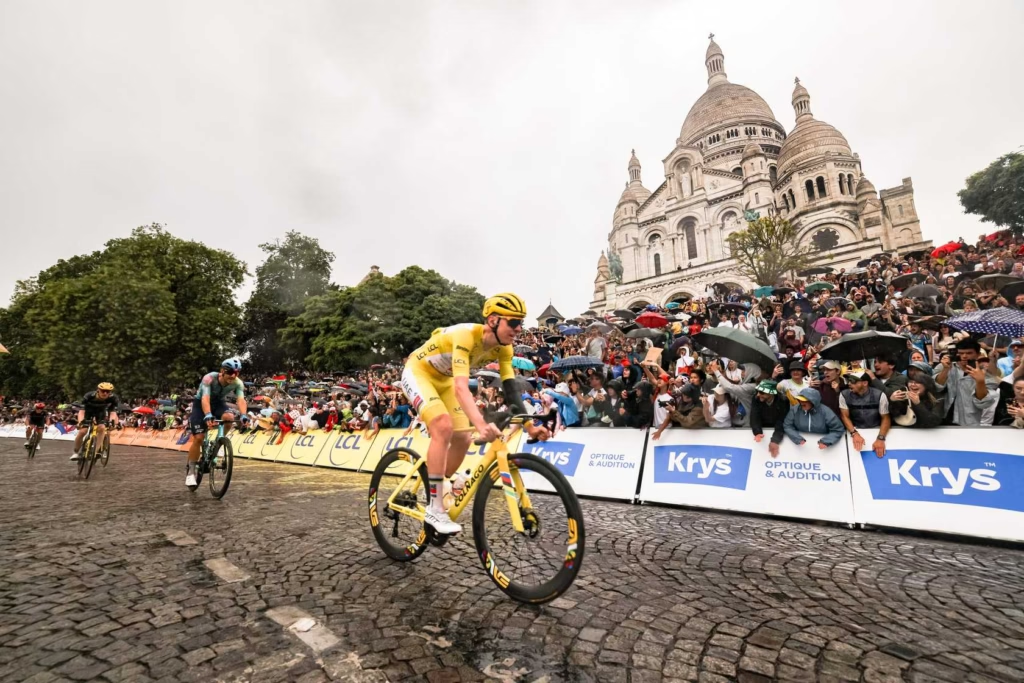
The final rider list will decide exactly how the yellow jersey field looks, but the 2026 race is expected to centre on the leading Grand Tour contenders and the strongest climbing teams. Tadej Pogačar, Jonas Vingegaard and Remco Evenepoel are the obvious reference points for the modern Tour, while riders such as Florian Lipowitz, Carlos Rodriguez, João Almeida, Richard Carapaz, Paul Seixas, Kévin Vauquelin and others may shape the wider podium and top-10 battle depending on final team selections.
The structure of the 2026 route gives GC teams plenty to think about. There is the Barcelona team time-trial, an individual time-trial on stage 16, five mountain ranges, and a final Alpine block that includes back-to-back Alpe d’Huez stages. Our Tour de France 2026 mountain stages ranked by difficulty piece explains why the climbing balance should make this a difficult race to control.
The depth of each leader’s support squad may be just as important as the leader himself. A strong start list around a contender can protect him in crosswinds, manage positioning in the first week, limit losses in the team time-trial and keep him supported deep into the major mountain stages.
Which sprinters are expected at the Tour de France 2026?
The sprint field should be shaped by the number of flat and transitional stages available. The 2026 route is not purely built for sprinters, but there are enough opportunities to make the green jersey and stage-win battle highly competitive. Riders such as Jasper Philipsen, Jonathan Milan, Olav Kooij, Tim Merlier, Arnaud De Lie, Biniam Girmay and Kaden Groves are the kind of names that could define the fast finishes if selected.
The sprint teams will also have to decide how many lead-out riders they can afford to bring. A team with a serious GC rider may not be able to build a full sprint train, while a squad committed to stage wins can structure its entire eight-rider selection around one fast finisher. That trade-off is one of the reasons the Tour start list is so revealing.
For the points competition, our Tour de France 2026 green jersey guide looks at the riders and route factors likely to shape the battle for consistency, intermediate sprints and stage placings.
 Photo Credit: A.S.O./Charly López
Which teams could shape the race?
UAE Team Emirates-XRG, Team Visma | Lease a Bike, Red Bull-BORA-hansgrohe and Soudal Quick-Step are likely to attract much of the GC attention, depending on their final eight-rider selections. Each has the potential to influence the overall battle, either through a clear leader, multiple climbing options, or a team strong enough to control the race on several types of stage.
Lidl-Trek, INEOS Grenadiers, Decathlon CMA CGM Team, EF Education-EasyPost and Bahrain Victorious could also have important roles, particularly if they arrive with a mix of GC ambition and stage-winning flexibility. The 2026 Tour route rewards teams that can adapt. Pure mountain strength will matter, but so will time-trial ability, positioning and tactical clarity.
The ProTeams add another layer. Tudor Pro Cycling Team, Pinarello-Q36.5 Pro Cycling Team, Cofidis, TotalEnergies and Caja Rural-Seguros RGA will have different goals from the biggest WorldTour squads. For them, the Tour is a platform as much as a target. A stage win, a breakaway day in the mountains, or a spell in a classification jersey can define their race.
Why the ProTeam selections matter
The five ProTeams on the Tour de France 2026 start list help shape the daily racing. Teams outside the WorldTour often bring more aggressive incentives, because they are less likely to control the race for three weeks and more likely to chase visibility through breakaways.
That can be especially important on transition days. The 2026 route includes several stages that sit between obvious sprint days and obvious GC mountain stages. Those are the days where ProTeams can force the peloton to work harder, place riders up the road, and create tactical pressure before the larger teams decide whether to chase.
Caja Rural-Seguros RGA’s inclusion is particularly notable because the race starts in Spain. The Grand Départ in Barcelona gives the Spanish wildcard a natural platform, especially during the opening Catalan stages. For fans planning to attend, our guide on how to visit the Tour de France 2026 Grand Départ in Barcelona covers the practical side of the opening weekend.
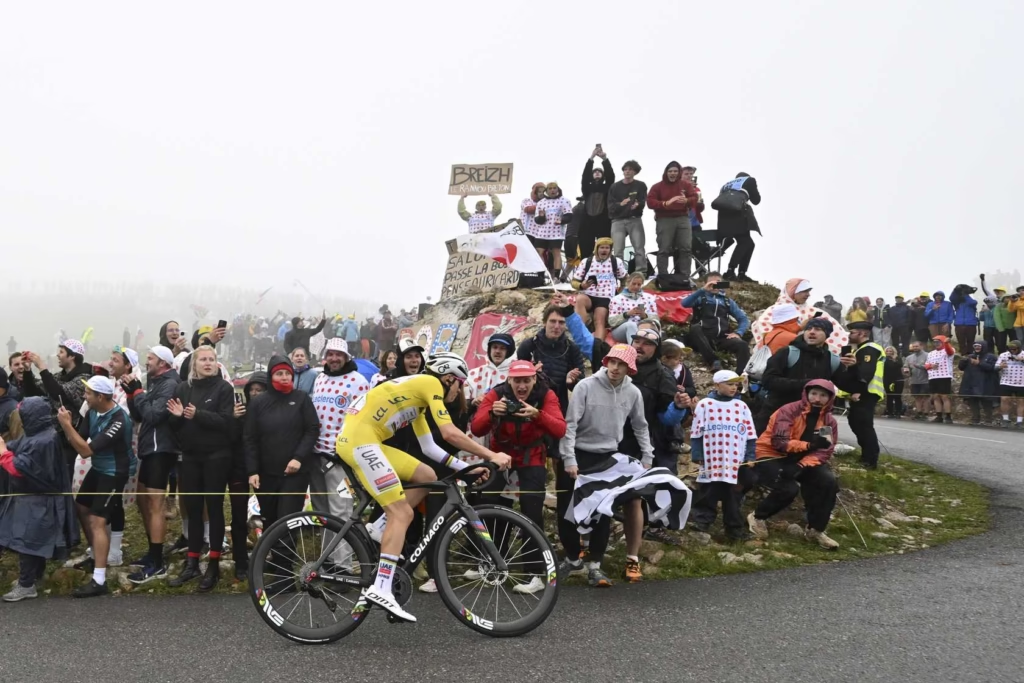 Photo Credit: A.S.O./Billy Ceusters
How many riders start the Tour de France?
A modern Tour de France team contains eight riders. With 23 teams selected for 2026, that creates a starting peloton of 184 riders.
That number matters tactically. A Grand Tour squad has to cover several jobs with only eight places. Teams normally need a leader, climbers, rouleurs, time-trial strength, domestiques, road captains and sometimes a sprinter or lead-out rider. Very few teams can bring everything.
The start list is therefore a statement of priorities. A team with four climbers and no sprinter is telling the race that GC or mountain stage wins are the focus. A team built around a sprinter may accept that it will not shape the high mountains. A team with multiple leaders may gain options, but also increase the risk of tactical uncertainty.
When is the final Tour de France start list confirmed?
The Tour de France start list becomes clearer in the weeks before the race, as teams confirm their final eight-rider squads. Provisional selections can change because of form, illness, injury, national championships, team strategy or late fitness checks.
The embedded start list above should therefore be treated as a live working list and checked again close to the Grand Départ. The official start list is normally locked in close to the race, once the teams have completed their final pre-race processes.
This is especially important in 2026 because the race begins with a team time-trial. Teams may place extra value on riders who can contribute immediately in Barcelona, even if their usual Tour role would be more focused on sprint support, mountain domestique work or breakaway freedom.

Tour de France 2026 start list FAQ
How many riders are on the Tour de France 2026 start list?
The Tour de France 2026 start list features 184 riders. The peloton is made up of 23 teams, with eight riders per team.
How many teams are racing the Tour de France 2026?
There are 23 teams racing the Tour de France 2026. That includes all 18 UCI WorldTeams and five UCI ProTeams.
Which ProTeams are racing the Tour de France 2026?
The five ProTeams selected for the Tour de France 2026 are Tudor Pro Cycling Team, Pinarello-Q36.5 Pro Cycling Team, Cofidis, Team TotalEnergies and Caja Rural-Seguros RGA.
When does the Tour de France 2026 start?
The Tour de France 2026 starts on Saturday, 4th July in Barcelona. The opening stage is a 19.6km team time-trial.
Where does the Tour de France 2026 finish?
The Tour de France 2026 finishes in Paris on Sunday, 26th July, with stage 21 running from Thoiry to the Champs-Élysées.
Why is the start list important?
The start list shows how each team intends to race. It reveals whether a squad is built around GC, sprinting, stage hunting, breakaways or support work. At the Tour, those choices shape the whole race.
Can the Tour de France start list change?
Yes. Provisional start lists can change before the race begins. Riders can be replaced because of illness, injury, form, team strategy or late selection decisions.
How can I watch the Tour de France 2026 in the UK?
UK viewing details are covered in our guide on how to watch Tour de France 2026 in the UK. The race runs from Saturday, 4th July to Sunday, 26th July.
Tour de France 2026 start list context
The Tour de France 2026 start list should produce one of the deepest race fields of the season. The route is varied enough to attract the biggest GC contenders, selective enough to reward strong climbing teams, and broad enough to give sprinters and breakaway riders meaningful chances across the three weeks.
The Barcelona start makes team strength immediately relevant. The Pyrenees arrive early. The middle of the race carries enough difficult terrain to punish weak squads, and the final Alpine weekend around Alpe d’Huez should leave little room for hiding. That means the names on the start list are not simply administrative detail. They are the first tactical map of the race.
Our Tour de France 2026 jerseys explained guide covers the classifications that will shape the race beyond the stage wins, while the wider Tour de France hub brings together route guides, rider analysis, viewing information and the wider build-up to the 2026 edition.