Stage 6 of the Tour de France 2026 is the first proper test of Torstein Træen’s yellow jersey.
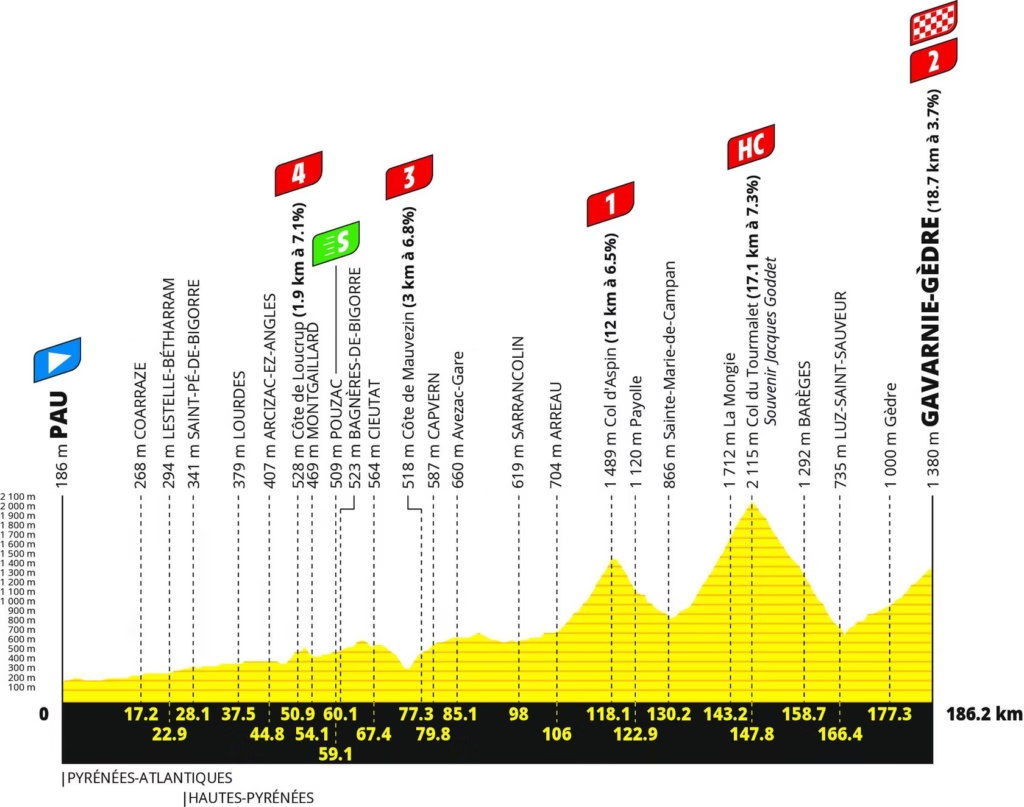
The Norwegian moved into the race lead after the stage 4 breakaway to Foix, gaining enough time to put Tadej Pogačar and Jonas Vingegaard 7:53 behind him on general classification. Stage 5 to Pau should be a day for the sprinters, but stage 6 is different. Pau to Gavarnie-Gèdre is a 186.2km mountain stage with 4,100m of climbing, the Col d’Aspin, the Col du Tourmalet and a summit finish in the high Pyrenees.
The full context behind Træen’s move into yellow is covered in our Tour de France 2026 stage 4 report and our GC and jerseys after Tour de France 2026 stage 4 round-up. For the wider route picture, see our Tour de France 2026 full route guide.
This is where the question changes. Træen has already earned yellow. Now he has to defend it.
Quick answer: why is stage 6 a yellow jersey test?
Stage 6 is a yellow jersey test because it is the first stage since Træen took the race lead where the main GC favourites have the terrain to take serious time back. The Tourmalet comes with 38km still to race, before the long final climb to Gavarnie-Gèdre. If Pogačar, Vingegaard or Remco Evenepoel want to expose Træen early, this is the first obvious place to do it.
| Stage 6 detail | What it means |
|---|---|
| Route | Pau to Gavarnie-Gèdre |
| Distance | 186.2km |
| Stage type | Mountain |
| Climbing | 4,100m |
| Key climbs | Côte de Loucrup, Côte de Mauvezin, Col d’Aspin, Col du Tourmalet, Gavarnie-Gèdre |
| Biggest test | Tourmalet followed by a summit finish |
| Yellow jersey question | Can Træen limit losses to the Tour favourites? |
Stage 6 is also one of the most important early GC days on the route. It features prominently in our guide to the Tour de France 2026 Pyrenees and in our ranking of the Tour de France 2026 mountain stages by difficulty.
The stage profile: classic Pyrenees, new finish
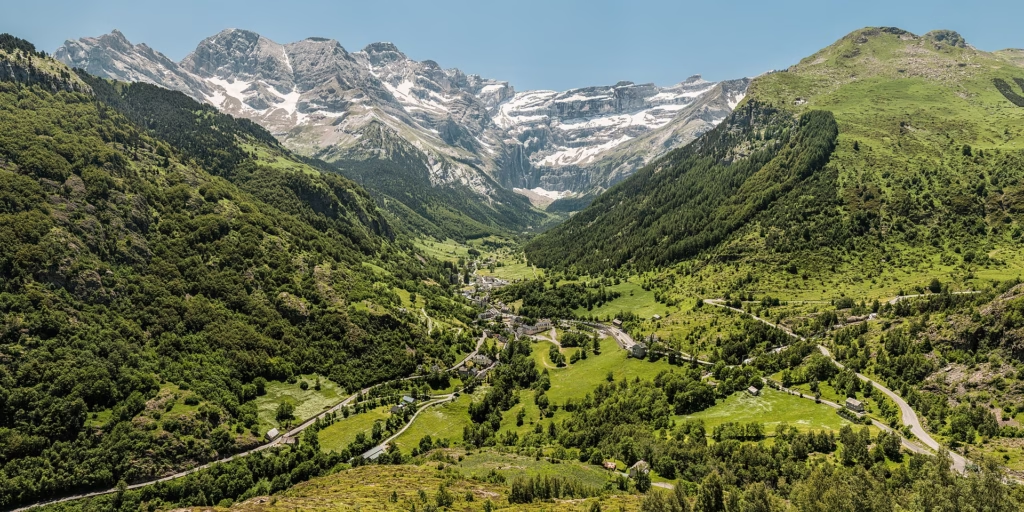
Stage 6 combines classic Pyrenean climbs with a new summit finish. The early part leaves Pau and heads south through valley roads before the first smaller climbs at Loucrup and Mauvezin. The race then moves into the serious part of the day with the Col d’Aspin and the Col du Tourmalet.
The final climb to Gavarnie-Gèdre is not brutally steep on paper. It is 18.7km at 3.7%, a long rolling ascent rather than a wall. But its position after Aspin and Tourmalet makes it dangerous. A rider who is already close to the limit over the Tourmalet will not recover easily on the way to the finish.
| Climb | Category | Length / gradient | Position |
|---|---|---|---|
| Côte de Loucrup | 4 | 1.9km at 7.1% | km 50.9 |
| Côte de Mauvezin | 3 | 3km at 6.8% | km 77.3 |
| Col d’Aspin | 1 | 12km at 6.5% | km 118.1 |
| Col du Tourmalet | HC | 17.1km at 7.3% | km 147.8 |
| Gavarnie-Gèdre | 2 | 18.7km at 3.7% | Finish |
That shape is what makes the stage so interesting. The final climb alone may not be steep enough to destroy the race. The Tourmalet, though, can make the final climb far harder than its average gradient suggests.
Why the Tourmalet matters
The Tourmalet is the climb that gives stage 6 its edge.
It is not the finish, but that is exactly why it matters. If the GC favourites wait until Gavarnie-Gèdre, the final climb may not create massive gaps on its own. If they want to put Træen under real pressure, they may need to use the Tourmalet to thin the race, isolate Uno-X Mobility and force the yellow jersey into a long chase.
That is the tactical fork in the stage. A conservative race could leave the favourites together until the final climb. An aggressive race could begin on the Aspin, harden on the Tourmalet and turn the last 38km into a sustained test of legs, team strength and nerve.
That is why stage 6 also appears in our guide to the best GC attack days at the Tour de France 2026. If the big teams want to attack early in the race, this is the first day that truly invites it.
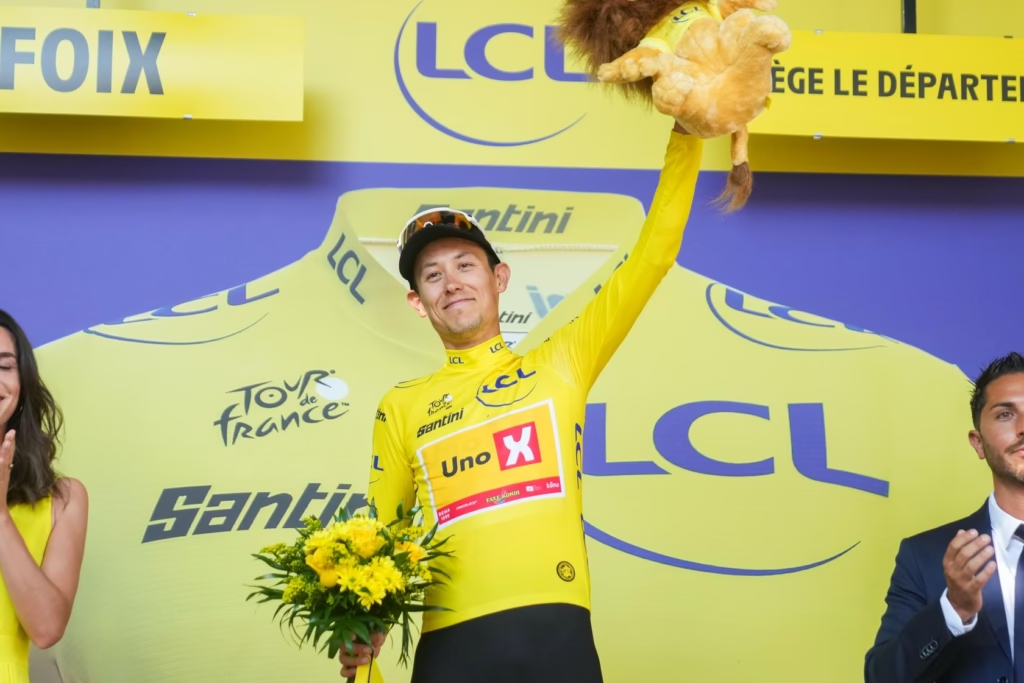 Photo Credit: A.S.O./Thomas Maheux
Træen’s yellow jersey equation
Træen’s advantage over Pogačar and Vingegaard is large enough to matter, but not large enough to make him safe.
The headline number is 7:53. That means Træen does not need to follow every attack from Pogačar or Vingegaard. He can afford to lose time and still keep yellow. But he cannot afford to collapse. The Tourmalet stage is long enough and hard enough for a bad day to cost several minutes at once.
For anyone still catching up on the maths, our explainer on why Pogačar and Vingegaard are 7:53 down breaks down how the stage 4 breakaway created the new GC picture.
Træen also cannot only watch Pogačar and Vingegaard. Sean Quinn is only 28 seconds behind him, while Mathias Vacek sits at 3:50. Both are ahead of the headline favourites on the road to yellow. If Træen loses contact early, the jersey could move to another rider from the stage 4 breakaway before it moves back to one of the pre-race favourites.
That makes his defence more complicated. He is not simply defending against Pogačar. He is defending against the whole race.
What Uno-X Mobility need to do
Uno-X Mobility do not need to ride like a traditional Tour powerhouse, but they do need to protect the jersey properly.
Their first job is positioning. Træen cannot start the Aspin or Tourmalet too far back. A split caused by traffic, road furniture or nervous positioning would be a waste of a yellow jersey. The second job is pacing. If the big teams accelerate, Uno-X must decide whether to follow immediately, ride tempo or let Træen settle into his own rhythm.
That decision matters. A rider defending a surprise yellow jersey can lose more time by panicking than by accepting a controlled deficit. Træen does not need to look spectacular on stage 6. He needs to avoid one catastrophic block of time loss.
Uno-X came into the race as one of the more interesting teams outside the obvious super-squads, with a mix of breakaway strength and climbing ambition. That wider team context is covered in our Tour de France 2026 team-by-team guide.
If Træen reaches Gavarnie-Gèdre still close enough to the favourites’ group, the jersey defence becomes realistic. If he is isolated and struggling before the top of the Tourmalet, the last climb could become a very long road.
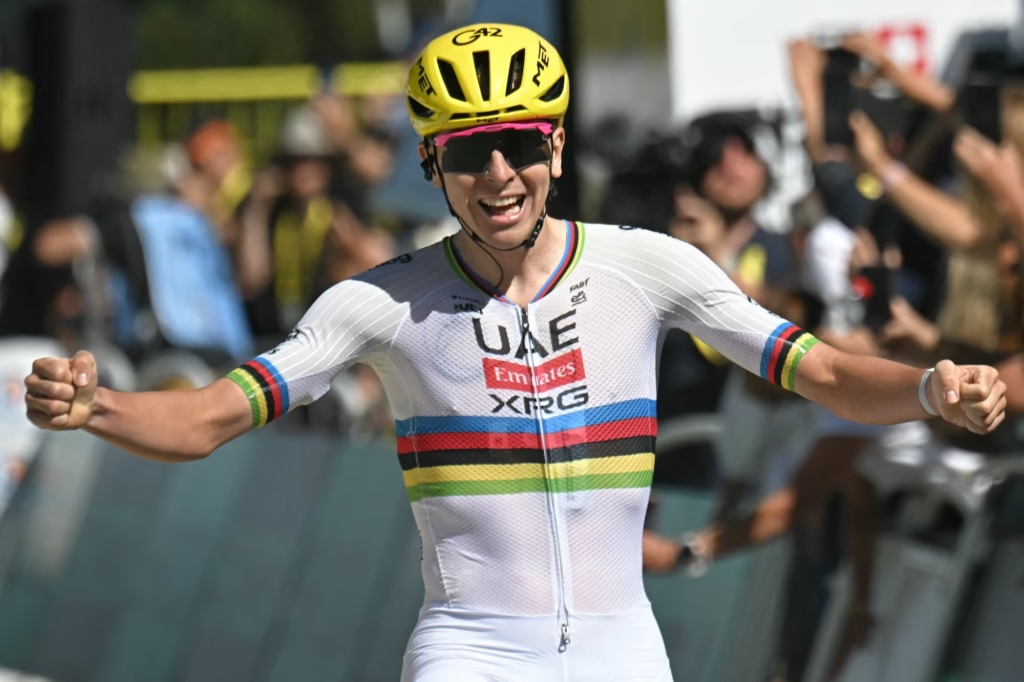 Photo Credit: Getty
What Pogačar can do
Pogačar’s situation is unusual. He is 7:53 behind yellow, but still level with Vingegaard. That means he does not need to attack only because Træen leads the Tour. His real target remains the riders who can beat him in Paris.
Still, stage 6 gives UAE Team Emirates-XRG a chance to test both layers of the race. If they ride hard on the Aspin or Tourmalet, they can see whether Træen’s lead is sustainable while also putting pressure on Vingegaard and Evenepoel.
Pogačar may not need an all-out long-range move. A sharp acceleration on the final climb, after UAE have already made the day hard, could be enough to take back time without risking too much. But if he senses weakness on the Tourmalet, the stage is designed for something more ambitious.
What Vingegaard can do
For Vingegaard, the main question is whether stage 6 is a defensive checkpoint or an attacking opportunity.
The Tourmalet is the kind of climb that suits sustained pressure. Visma-Lease a Bike can use it to thin the GC group and make the race uncomfortable. Vingegaard does not need the steepest gradients to be dangerous. He needs a hard tempo, altitude, fatigue and enough road after the summit to make any split count.
The risk is that attacking too early helps Pogačar as much as it helps Vingegaard. If Visma commits on the Tourmalet and Pogačar follows comfortably, the Dane may have done work for little reward. If Pogačar shows even slight difficulty, though, the whole stage changes.
Vingegaard also knows that Træen’s lead is a shared problem. He can let UAE carry some responsibility. Stage 6 may tell us as much about Visma’s patience as Vingegaard’s legs.
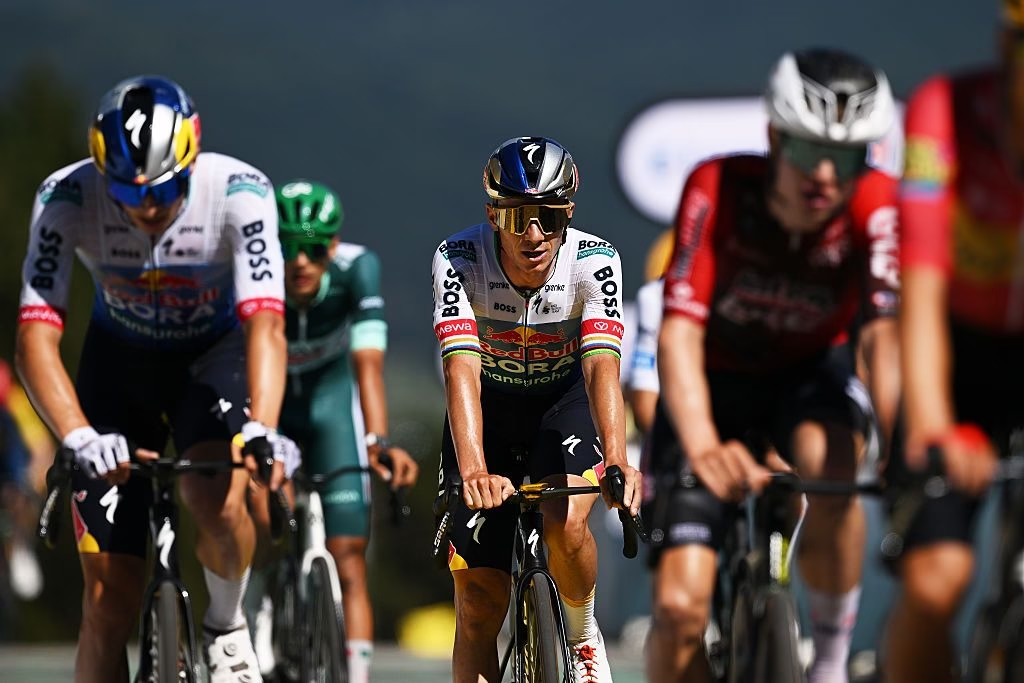 Photo Credit: Getty
What Evenepoel, Ayuso and the next tier need
Remco Evenepoel, Isaac del Toro, Juan Ayuso, Paul Seixas, Florian Lipowitz and the rest of the contenders behind Pogačar and Vingegaard have a different calculation.
They may not want the race to become a private duel between the two biggest favourites. If the pace is hard but not explosive, riders in this group can stay in contention and possibly move up the standings. If the race blows apart on the Tourmalet, the gaps may become much more permanent.
For Evenepoel, the stage is a test of damage limitation and opportunity. He does not have to win the stage, but he cannot afford to be distanced heavily before the race has even left the Pyrenees. For the younger climbers, this is a chance to prove whether their early GC position is form or just opening-week promise.
Could the breakaway still win?
Yes. Stage 6 can test yellow even if the stage win comes from the breakaway.
That is one of the interesting parts of the route. The Tourmalet is hard enough to create selection in the GC group, but the final climb is rolling enough that a strong mountain breakaway could still survive if the favourites hesitate.
That would not make the stage less important. The stage winner and the yellow jersey battle do not have to be the same story. The breakaway can fight for the victory while Træen fights to keep his lead behind.
The route also matters for the mountains classification. With the Tourmalet and a summit finish in the same stage, this is an early chance for the polka-dot contenders to take meaningful points. Our Tour de France 2026 climbers guide explains how stage 6 fits into that contest.
The three likely race scenarios
1. The favourites wait for Gavarnie-Gèdre
This is the cautious version. The breakaway goes, the GC teams control without destroying the race, and the main favourites test each other only on the final climb.
In this scenario, Træen has a strong chance of keeping yellow. The final climb is long but not viciously steep, so he could limit his losses if he avoids a bad patch. The big names may take seconds or a minute, rather than several minutes.
2. The Tourmalet becomes the launchpad
This is the aggressive version. UAE, Visma or Red Bull-Bora-Hansgrohe raise the pace on the Aspin, then use the Tourmalet to split the race.
This is the real danger for Træen. If he is isolated before the summit and has to chase across the valley and onto the final climb, his buffer can disappear quickly. It is also the scenario where Pogačar, Vingegaard and Evenepoel can begin to separate themselves from the rest of the contenders.
3. A mountain breakaway takes the stage while GC burns behind
This may be the most likely middle ground. A strong breakaway goes early, the stage win is contested up the road, but the GC teams still race hard enough over the Tourmalet and Gavarnie-Gèdre to change the yellow jersey picture.
For Træen, this would still be a proper test. The jersey does not care whether the stage winner is ahead. It cares how much time he loses to the riders behind him on GC.
What would count as success for Træen?
Success does not have to mean finishing with Pogačar and Vingegaard.
If Træen loses one or two minutes, he remains strongly placed. If he loses three or four minutes, he may still keep yellow depending on where Quinn, Vacek and the other high-placed riders finish. If he loses more than five minutes, the jersey defence becomes much more fragile, even if he survives the day in yellow.
The key is avoiding collapse. Stage 6 is not about proving that Træen is the best climber in the Tour. It is about proving that his yellow jersey is more than a one-day consequence of a breakaway.
If he gets through Gavarnie-Gèdre still in yellow, the race changes. The favourites will have to accept that he is not going away immediately.
-
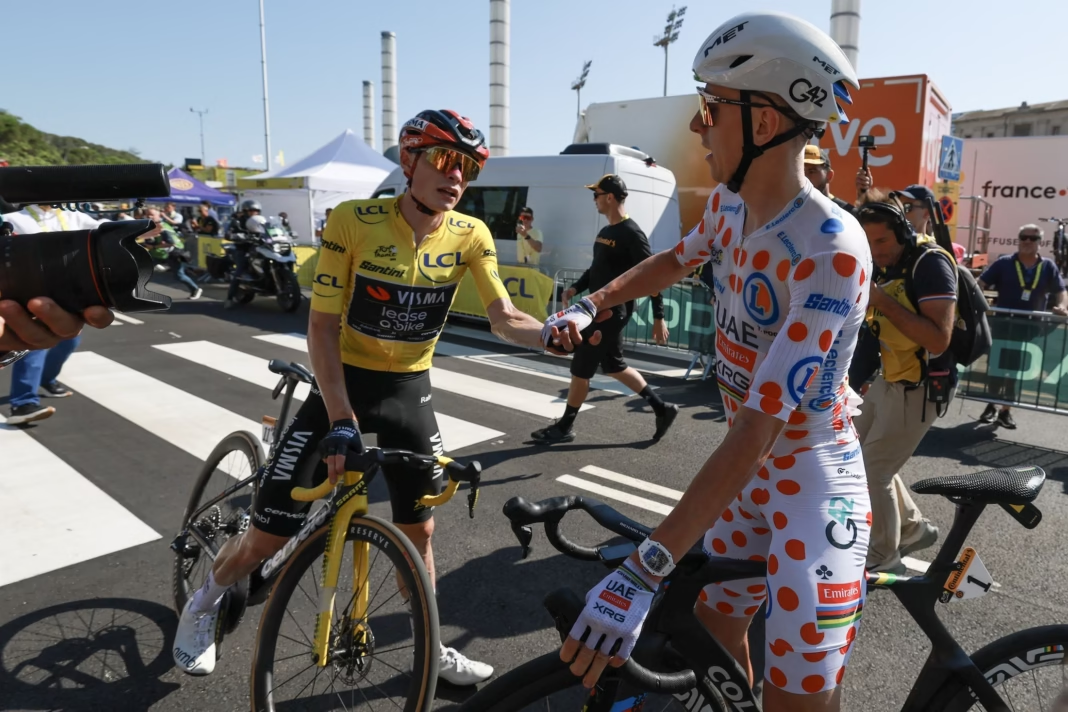 Photo Credit: Getty
Why stage 6 matters for the rest of the Tour
Stage 6 matters because it will tell us whether the stage 4 breakaway changed the race temporarily or structurally.
If Træen loses yellow immediately, stage 4 becomes a dramatic but short-lived reshuffle. If he survives, the favourites have a real obstacle on the road. They would still have time to remove him later, but the pressure changes. Every mountain stage becomes partly about taking back minutes, not just beating each other.
It also matters for Pogačar and Vingegaard. They are level with each other, but their race cannot stay frozen forever. Stage 6 is the first chance to see whether one of them is ready to attack the other in the mountains, or whether the early Pyrenees are still about positioning before the Tour’s deeper tests.
For more on Træen’s route into yellow and why his story matters, see our profile on Torstein Træen as the new Tour de France 2026 yellow jersey wearer.
The verdict
Stage 6 is the first real examination of Torstein Træen’s yellow jersey.
The Tourmalet gives the favourites the platform. Gavarnie-Gèdre gives the stage its finish. The 7:53 gap gives Træen room to breathe, but also gives the favourites a clear target. They do not need to take all of it back in one day. They need to find out how much of it is real.
If Træen survives this stage well, his yellow jersey becomes a sustained storyline. If he cracks on the Tourmalet, the Tour could move back towards the expected Pogačar-Vingegaard axis before the race even leaves the Pyrenees.
That is why stage 6 matters. It is not just another mountain day. It is the first test of whether the new yellow jersey is a temporary surprise or a genuine complication for the favourites.