
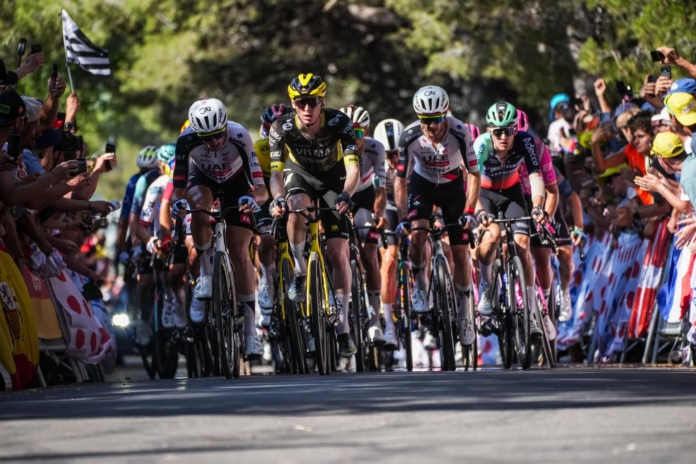
The Tour de France 2026 reaches the mountains on stage 3, and it does so with the race already much sharper than expected.
Two stages into the race, Jonas Vingegaard is in yellow, Tadej Pogačar is only six seconds behind, Remco Evenepoel sits 15 seconds down, and UAE Team Emirates XRG have already shown they can turn the race around quickly. Saturday’s Barcelona team time trial gave Team Visma Lease a Bike the first blow. Sunday’s hilly stage to Montjuïc gave UAE the answer, with Isaac del Toro winning ahead of Pogačar after a dominant team display.
Now comes the first proper mountain stage.
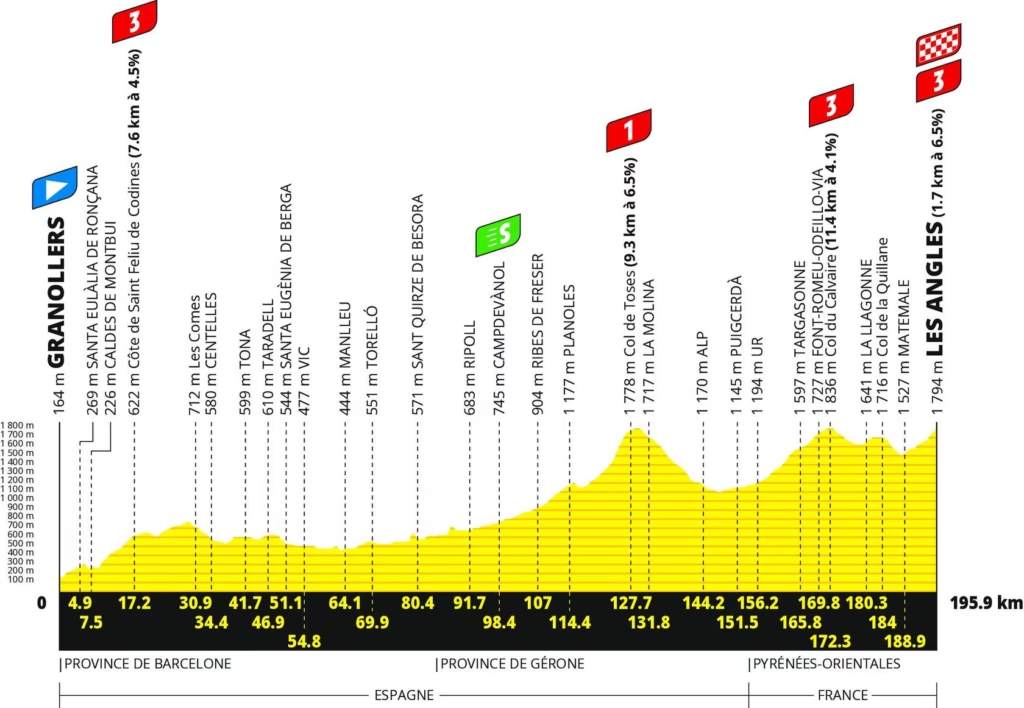
Stage 3 runs 195.9km from Granollers to Les Angles, taking the race from Catalonia into the French Pyrenees. It includes 3,850m of climbing, the category 1 Col de Toses, the Col du Calvaire and a short uphill finish at Les Angles.
It is not the hardest mountain stage of the Tour. It is not a day that should decide the whole race. But after the opening team time trial and UAE’s response in Barcelona, it suddenly feels like a much more important early test.
For the wider race picture, see our Tour de France 2026 full route guide, Tour de France 2026 Pyrenees guide and Tour de France 2026 mountain stages ranked by difficulty.
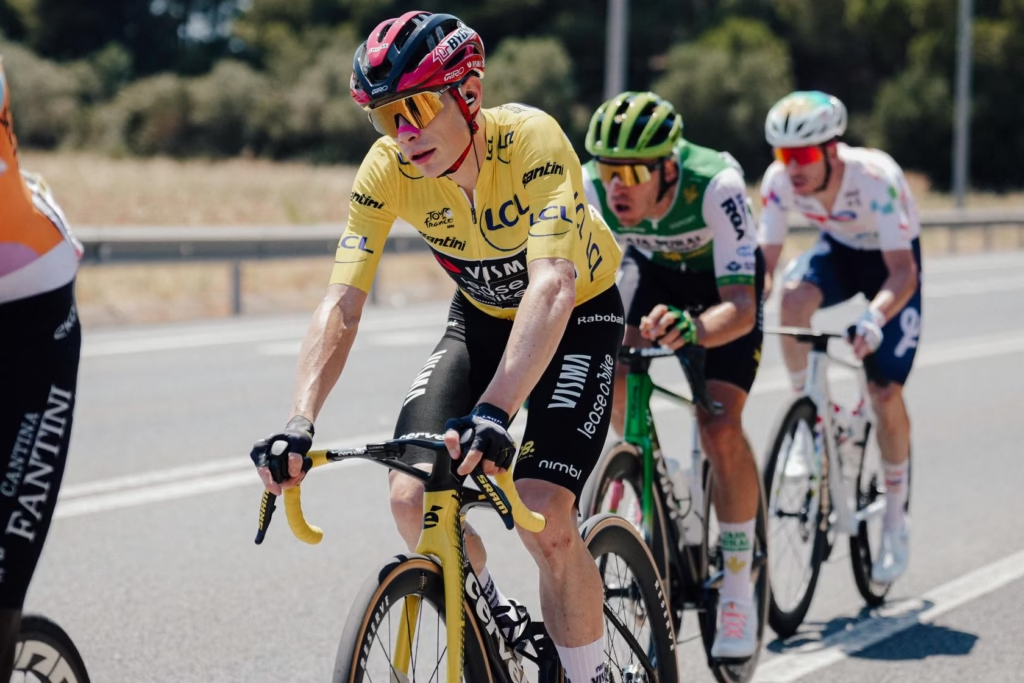 Photo Credit: A.S.O./Pauline Ballet
Quick answer: what is stage 3?
Stage 3 of the Tour de France 2026 is a 195.9km mountain stage from Granollers in Spain to Les Angles in France. It includes 3,850m of climbing, with the category 1 Col de Toses as the main climb and a short final ascent to the finish at Les Angles. It should suit a strong breakaway, but the GC riders may still test each other because the race is already tight.
| Detail | Stage 3 |
|---|---|
| Date | Monday 6 July 2026 |
| Route | Granollers to Les Angles |
| Distance | 195.9km |
| Stage type | Mountain |
| Elevation gain | 3,850m |
| Neutralised start | 12:10 local time |
| Expected finish | From around 16:54 local time |
| Key climb | Col de Toses, 9.3km at 6.5% |
| Final climb | Les Angles, 1.8km at 6.5% |
| Likely winner type | Breakaway climber or GC rider |
| GC situation | Vingegaard leads Pogačar by six seconds |
What happened in the first two stages?
The opening weekend has already split the tone of the race.
Stage 1 gave Visma Lease a Bike control. Their team time trial in Barcelona put Vingegaard into yellow and left Pogačar 12 seconds behind. Evenepoel lost 19 seconds. Juan Ayuso started well in fourth overall. The new format, with individual times taken as riders crossed the line, made the final climb to Montjuïc more important than a normal team time trial.
That was always the risk of the opener, as explained in our guide to how the stage 1 team time-trial could change the Tour de France 2026. The opening classification picture is also covered in GC and jerseys after Tour de France 2026 stage 1.
Stage 2 then gave UAE Team Emirates XRG a response.
On the repeated climbs of Montjuïc, UAE made the race hard. Brandon McNulty and Adam Yates helped set the tempo, Pogačar looked sharp, and Del Toro recovered from a mid-stage bike change to take the stage win. Pogačar finished second, Evenepoel third and Vingegaard fourth, all close enough to keep the yellow jersey battle compressed.
The biggest change is simple: Vingegaard still leads, but Pogačar has already halved the gap. It is now six seconds, not 12. UAE have momentum. Visma still have yellow. Red Bull-Bora-hansgrohe have Evenepoel in touch but already on the back foot. And the young rider race has Ayuso, Del Toro and Paul Seixas all in the top six overall.
That is a lively race before the first mountain stage has even started.
Current GC before stage 3
| Rank | Rider | Team | Gap |
|---|---|---|---|
| 1 | Jonas Vingegaard | Team Visma Lease a Bike | 4:01:48 |
| 2 | Tadej Pogačar | UAE Team Emirates XRG | +6sec |
| 3 | Remco Evenepoel | Red Bull-Bora-hansgrohe | +15sec |
| 4 | Isaac del Toro | UAE Team Emirates XRG | +16sec |
| 5 | Juan Ayuso | Lidl-Trek | +19sec |
| 6 | Paul Seixas | Decathlon CMA CGM Team | +42sec |
| 7 | Romain Grégoire | Groupama-FDJ United | +44sec |
| 8 | Florian Lipowitz | Red Bull-Bora-hansgrohe | +45sec |
| 9 | Lenny Martinez | Bahrain Victorious | +53sec |
| 10 | Tom Pidcock | Pinarello-Q36.5 Pro Cycling Team | +1:00 |
The wider hierarchy is still close enough to change quickly. For the pre-race context behind those names, see our Tour de France 2026 contenders preview and Tour de France 2026 GC favourites ranked.
The route: Granollers to Les Angles
Stage 3 begins in Granollers, north of Barcelona, before heading inland and gradually towards the mountains.
The profile is not brutal from kilometre zero, but it climbs in layers. The first categorised climb comes early, with the Côte de Saint Feliu de Codines after 17.2km. That is 7.6km at 4.5%, a category 3 climb that should help the breakaway form and give the early mountains classification contenders a target.
The middle of the stage is more about positioning, heat and energy management. The intermediate sprint comes at Campdevànol, after 98.4km, before the road begins to rise towards the main climb of the day.
That main climb is the Col de Toses.
At 9.3km and 6.5%, it is the first category 1 climb of the 2026 Tour. It is not a giant Pyrenean monster, but it is long enough and high enough to show which riders have handled the first two days best. It comes with 68.2km still to race, so it is unlikely to be the place for a full GC showdown, but it can set up the rest of the stage.
After the Col de Toses, the race stays high before crossing into France. The finale includes the Col du Calvaire, 11.4km at 4.1%, before the final short climb to Les Angles, 1.8km at 6.5%.
That finish is not long, but it is steep enough to punish tired legs.
The stage also marks the point where the Grand Départ leaves its Barcelona base properly behind. Our guide to Tour de France 2026 in Catalonia explains how the opening block shifts from city racing to the first Pyrenean test.
The key climbs
| Climb | Position | Length | Gradient | Category |
|---|---|---|---|---|
| Côte de Saint Feliu de Codines | Km 17.2 | 7.6km | 4.5% | Category 3 |
| Col de Toses | Km 127.7 | 9.3km | 6.5% | Category 1 |
| Col du Calvaire | Km 172.3 | 11.4km | 4.1% | Category 3 |
| Les Angles | Km 195.9 | 1.8km | 6.5% | Category 3 |
The day is classed as a mountain stage, but it is not a classic summit-finish demolition route. The climbs are more likely to create pressure, fatigue and tactical openings than one long, simple selection. That is why this stage featured in our guide to the Tour de France 2026 route’s best days for GC attacks, but still sits low in the overall mountain-stage difficulty ranking.
Wildfire and safety update
Stage 3 is expected to take place under close safety monitoring because of wildfires near the French finale.
That matters for anyone planning to watch the stage roadside, particularly in the Les Angles area and along the French section of the route. Conditions can change quickly, and spectator access, caravan arrangements or local traffic rules may be affected by emergency services and public-safety decisions.
From a racing point of view, the riders still face the same broad sporting test: a long mountain stage, a major early climb, high ground before the border and a final kick to Les Angles. But the situation around the race means fans should treat official local guidance as more important than normal roadside plans.
It may also change the atmosphere of the finale. The first mountain stage usually brings noise, flags and packed roadside sections. If safety restrictions reduce spectator access, the final kilometres could feel more controlled and less chaotic than a normal Tour mountain finish.
What stage 2 told us about UAE
Stage 2 changed the race because UAE did not just win. They won with numbers.
Del Toro took the stage, Pogačar moved closer to yellow, and the team controlled the Montjuïc finale with clear intent. McNulty and Yates both played visible roles, and Del Toro turned what could have been a disaster after a bike change into a statement victory.
That matters for stage 3.
UAE now have Pogačar at six seconds, Del Toro at 16 seconds and real momentum. They can approach the first mountain day in several ways. They can chase the stage for Pogačar and the yellow jersey. They can use Del Toro or Ayuso as pressure points in the GC group. Or they can allow the breakaway to go and simply test Visma later.
The key question is whether they want yellow already.
Taking it on stage 3 would be possible. Pogačar only needs a small gap, or the right combination of time bonuses, to put Vingegaard under immediate pressure. But taking yellow also means taking responsibility. With the Pyrenees continuing and a long race ahead, UAE may decide that keeping Visma on the front is still useful.
Pogačar’s race situation is covered in more detail in our Tadej Pogačar Tour de France 2026 preview, while the team’s wider strength is assessed in our Tour de France 2026 team-by-team guide.
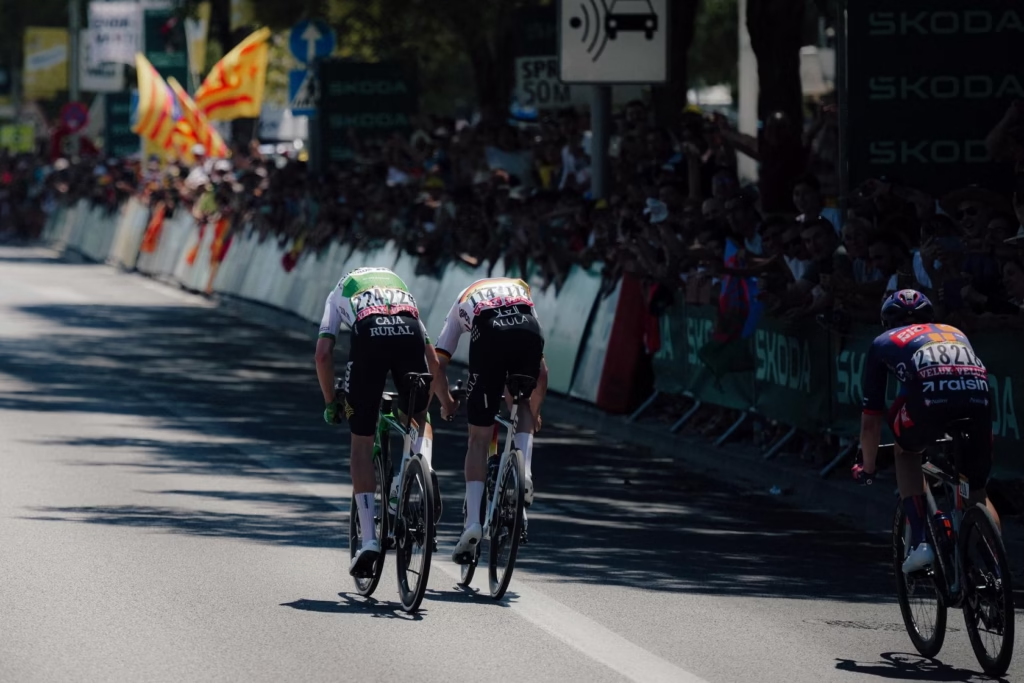 Photo Credit: A.S.O./Thomas Maheux
What stage 2 told us about Visma
Visma’s weekend was more mixed.
Stage 1 was excellent. Vingegaard took yellow, the team looked sharp, and they landed the first psychological blow. Stage 2 was less comfortable, but not damaging. Vingegaard followed the decisive move, kept the jersey and limited the bonus-second damage to Pogačar.
That is a decent outcome on terrain that suited Pogačar more.
Stage 3 should be closer to Vingegaard’s world, but it still has complications. The final climb is short rather than long. The Col de Toses comes too far out to create a natural Vingegaard-style selection. If the race becomes stop-start and tactical, it may again suit UAE’s numbers and Pogačar’s acceleration.
Visma may prefer a controlled but not overly aggressive day. They can allow a non-threatening breakaway to take stage honours, remove the finish bonuses from the GC battle and keep Vingegaard in yellow without burning too much energy.
The problem is that Pogačar only needs seconds. Visma cannot fall asleep in the finale.
Vingegaard’s route fit is covered in our guide to Jonas Vingegaard at the Tour de France 2026, and the value of support riders on days like this is explained in our feature on Tour de France 2026 domestiques who could decide the race.
What about Evenepoel?
Evenepoel starts stage 3 third overall, 15 seconds down on Vingegaard and nine seconds behind Pogačar.
That is not a bad position, but it is already slightly reactive. Stage 1 cost him time. Stage 2 gave him third place on the day, which was a strong sign, but it did not change the wider feeling that he is chasing rather than controlling the race.
Stage 3 is important because it is the first day where he can show whether the mountains are going to be a problem or an opportunity.
The route is not extreme enough to expose him like a long Alpine stage might, but it does include high-altitude climbing, a long day and a final uphill finish. If he stays with Vingegaard and Pogačar, it stabilises his Tour. If he loses even a few seconds, the early narrative becomes more difficult.
Red Bull-Bora-hansgrohe also have Florian Lipowitz at 45 seconds, so they still have depth in the top 10. But Evenepoel remains the rider who needs to show that stage 1 was not the start of a slow drift.
His broader Tour questions are covered in our Remco Evenepoel Tour de France 2026 preview.
Breakaway or GC day?
This is the central tactical question.
The profile is hard enough for a breakaway to win, especially with the Col de Toses positioned far from the finish. Riders who lost time in the opening stages may now see a chance to go clear and chase the stage, the mountains classification or even a spell near the top of the GC.
Visma may be happy with that. If a breakaway takes the stage and the bonuses, Vingegaard’s yellow jersey is easier to defend. UAE might also accept that if they prefer to save energy and simply keep the pressure on the final climb.
But there are reasons the GC teams may not let it go completely.
Pogačar is only six seconds from yellow. Del Toro is now 16 seconds down after his stage win. Ayuso is 19 seconds down and leading the young rider battle. Seixas is only 42 seconds back and looked calm through the opening weekend. A chaotic breakaway with the wrong riders could force Visma to work harder than they want.
The most likely outcome is a strong breakaway being allowed room, followed by a GC fight behind in the final 25km. Whether those two races merge depends on how hard UAE and Red Bull decide to make the Col du Calvaire and the run to Les Angles.
The stage was always one of the most interesting early breakaway opportunities, as covered in our Tour de France 2026 route: best days for breakaways guide and our wider list of stage hunters to watch at the Tour de France 2026.
Stage 3 winner profile
The winner needs to climb, recover and handle altitude, but does not need to be a pure high-mountain specialist.
The Col de Toses is the hardest climb on the route, but it is not close enough to the finish to make this a simple climbers-only day. The winner could be a breakaway rider who survives the long middle section, clears the late climbs and still has enough for the final 1.8km.
If the GC group fights for the win, the favourite profile changes. Then it becomes a stage for Pogačar, Vingegaard, Evenepoel, Del Toro, Ayuso or another rider who can handle repeated climbing and still kick on a short uphill finish.
The final climb to Les Angles is short enough that positioning will matter. A rider who starts it badly placed may not have time to recover.
For more on the riders best suited to the climbing route, see our best climbers at the Tour de France 2026 and Tour de France 2026 climbers guide.
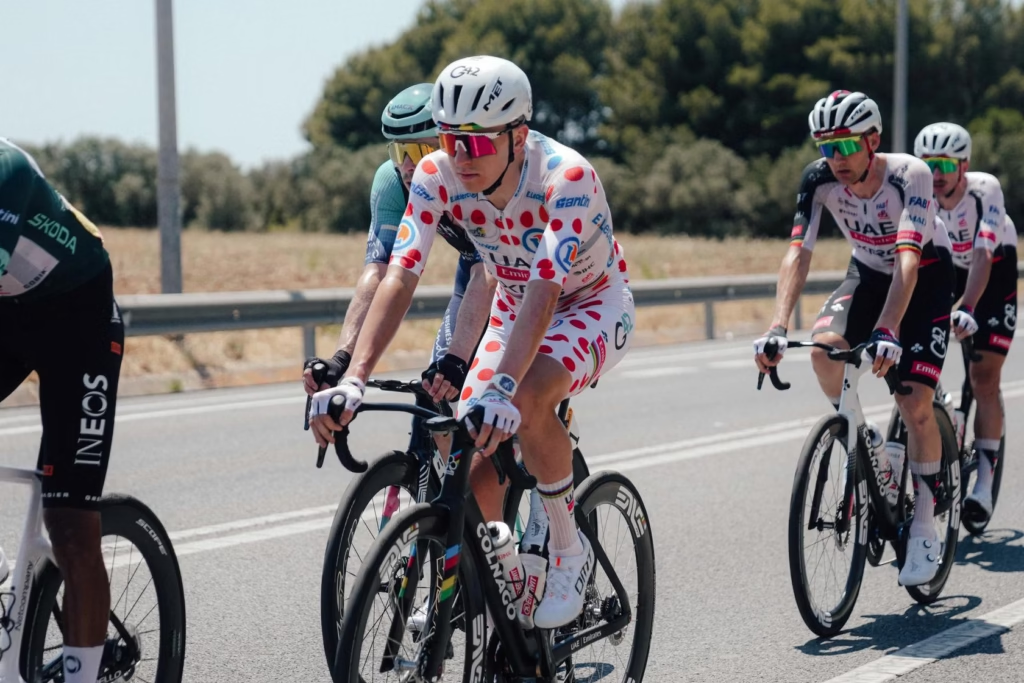 Photo Credit: A.S.O./Thomas Maheux
Riders to watch
Tadej Pogačar
Pogačar is the obvious name because he is six seconds from yellow and looked sharp on stage 2. The final climb is short enough for his punch, and the stage offers another chance to test Vingegaard before the race settles.
Jonas Vingegaard
Vingegaard’s job is to keep yellow. He does not need to win the stage, but he cannot afford to let Pogačar take easy seconds. The longer climbing should suit him better than Montjuïc, but the final ascent is still punchy.
Isaac del Toro
Del Toro’s stage 2 win changes his Tour immediately. He is now fourth overall and gives UAE another card close to the front. He may not be allowed much freedom, but he can make Visma think.
Remco Evenepoel
Evenepoel needs a clean mountain day. If he follows the best riders, the first two stages remain manageable. If he loses time, the early GC gap starts to become a theme.
Juan Ayuso
Ayuso is fifth overall and in the white jersey fight. The stage suits him, especially if the GC group is reduced but not shattered. He may also benefit if Pogačar and Vingegaard focus too much on each other.
Ayuso’s wider race is covered in our Juan Ayuso Tour de France 2026 guide.
Paul Seixas
Seixas has started his Tour well and sits sixth overall. This is the first mountain day where the French youngster can show whether he belongs near the front beyond a short opening block.
For more on his long-term significance, see our feature on Paul Seixas and the next French Tour de France generation, as well as our guide to the young riders to watch at the Tour de France 2026.
Tom Pidcock
Pidcock is one minute down overall, which gives him slightly more freedom than the top GC names. The finale is not a pure Pidcock stage, but if the race becomes selective and tactical, he is dangerous.
Lenny Martinez
Martinez sits ninth overall and should like the move into the mountains. The question is whether Bahrain Victorious want to protect his GC place or let him race more aggressively.
The mountains classification
Stage 3 is the first serious day for the polka-dot jersey.
There are 16 mountains points available across the four categorised climbs: two on the Côte de Saint Feliu de Codines, 10 on the Col de Toses, two on the Col du Calvaire and two at the finish in Les Angles.
Alex Molenaar took the polka-dot jersey after stage 2, but the category 1 Col de Toses can change the classification quickly. A breakaway rider who takes full points there will immediately move into a strong position.
That should make the early fight lively. Teams may not chase hard from the start, but riders interested in mountains points will want to be in the move before the first climb.
For newer fans, our Tour de France 2026 jerseys explained guide explains how the polka-dot jersey fits alongside the yellow, green and white jersey contests.
Tactical forecast
The breakaway should take time to form because this is the first mountain stage and plenty of riders will want to be in it.
The early Côte de Saint Feliu de Codines gives attackers a natural launchpad. If a strong group goes with riders who are far enough down on GC, Visma may let it go. UAE may not need to chase unless they want the stage win or bonus seconds.
The Col de Toses is the stage’s first real sorting point. If the break still has a big gap there, the stage may already be leaning away from the GC group. If UAE or Red Bull lift the pace, the race can become much more serious.
The final 25km after the Col du Calvaire are the danger zone. The gradients are not extreme, but the accumulated climbing, altitude and fatigue from two hot opening stages may start to matter. Any rider who suffered on Montjuïc could suffer more here.
The final climb to Les Angles is short enough for a late acceleration but not long enough for a full mountain demolition. Expect seconds rather than minutes between the main GC riders, unless someone cracks.
For a broader explanation of why small gaps can still matter, see our guide to how the Tour de France general classification works.
-
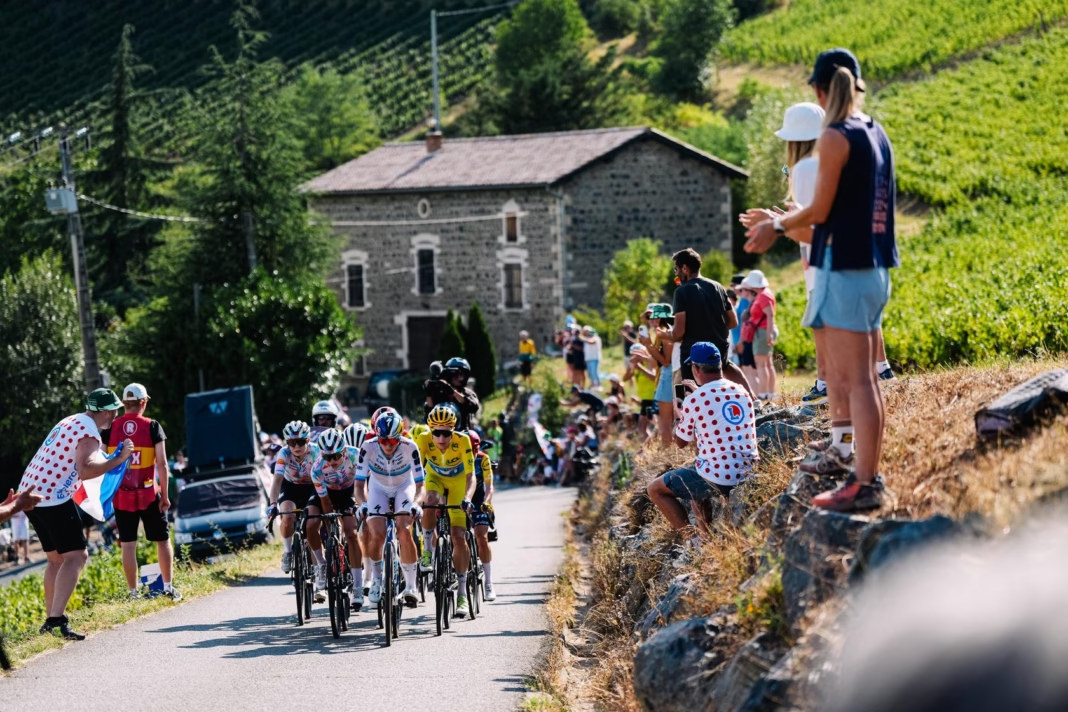
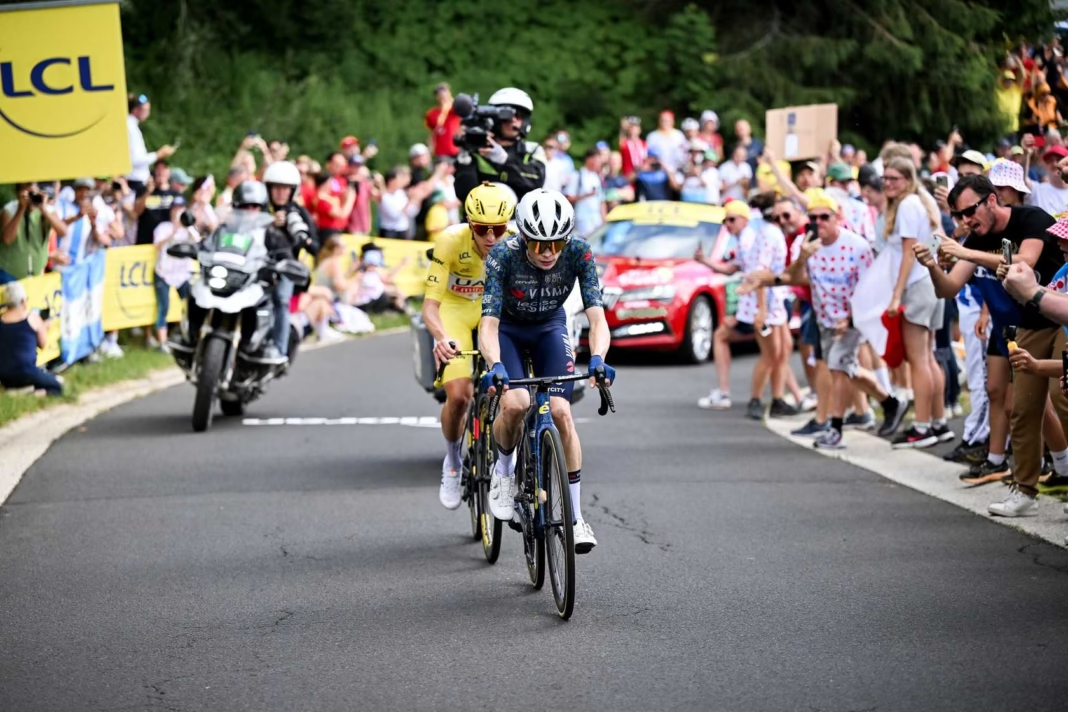
 Photo Credit: A.S.O./Billy Ceusters
Prediction
Stage 3 feels slightly more likely to go to the breakaway than the GC favourites.
The reason is the race situation. Vingegaard may prefer not to chase. UAE have made their statement already and may not want full control for 196km. Red Bull need to stay close, but they may not have the strongest reason to take responsibility. That opens the door for a good climbing breakaway to survive.
Behind, the GC riders should still test each other in the final 25km. Pogačar will surely look for weakness. Vingegaard will want a calmer day than stage 2. Evenepoel needs to prove he can stay close. Ayuso, Del Toro and Seixas make the young rider battle worth watching.
If the favourites fight for the stage, Pogačar looks the most obvious winner. If the breakaway survives, expect a rider already down on GC but strong enough to climb well at altitude.
One-star contenders
Tom Pidcock, Lenny Martinez, Tobias Halland Johannessen, Romain Grégoire
Two-star contenders
Juan Ayuso, Isaac del Toro, Remco Evenepoel, Paul Seixas
Three-star contenders
Tadej Pogačar, Jonas Vingegaard
Breakaway danger
Richard Carapaz, a Bahrain Victorious climber, a Decathlon CMA CGM rider outside the strict GC plan, or a Caja Rural-Seguros RGA rider chasing mountain points could all make sense if the race opens early.
Final word
Stage 3 is the first mountain stage of the Tour de France 2026, but it arrives with far more tension than a normal early climbing day.
The team time trial gave Vingegaard yellow. Montjuïc gave UAE the answer. Pogačar is now only six seconds back, Del Toro has a Tour stage win and a top-four GC place, Evenepoel is close but already under pressure, and the young riders are packed tightly behind.
The route to Les Angles may not create huge gaps, but it will tell us plenty. The Col de Toses will show who has recovered from the opening weekend. The Col du Calvaire will test team strength. The final climb will expose any rider who is badly positioned or running on empty.
This might be a breakaway day on paper. But after the first two stages, nothing in this Tour feels passive.
Vingegaard has yellow, Pogačar has momentum, and stage 3 gives the mountains their first chance to speak.

