
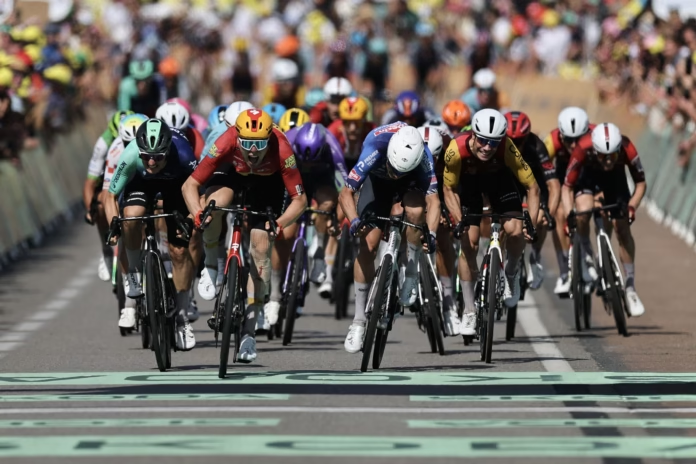
A bunch sprint is one of the fastest and most complicated finishes in professional cycling.
It may look like the strongest rider simply accelerates in the final 200 metres, but the result is usually shaped much earlier. Teams spend the closing kilometres chasing the breakaway, protecting their sprinter, fighting for position and deciding exactly when to launch their lead-out.
The fastest rider does not always win.
A sprinter can have the best top speed in the race but lose after becoming boxed in, starting too early or entering the final corner several positions too far back. Another rider may win by following a rival’s lead-out and waiting for the right moment to accelerate.
A successful bunch sprint combines speed, teamwork, positioning, confidence and split-second decision-making.
The importance of those supporting riders is explored further in our guide to the best lead-out riders at the Tour de France 2026.
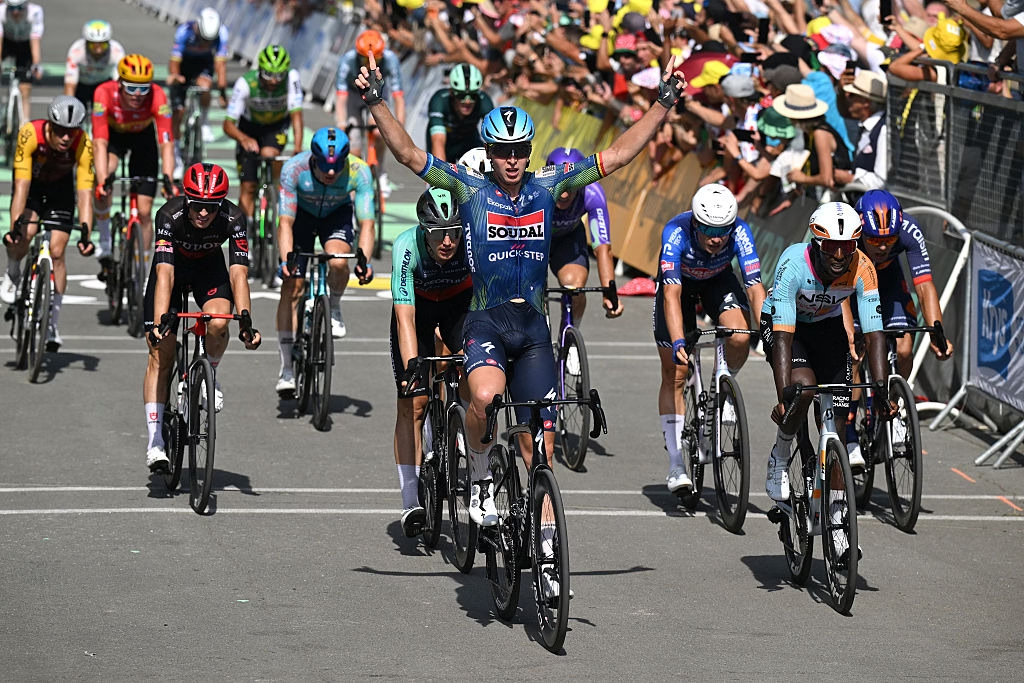 Photo Credit: Getty
Quick answer: how does a bunch sprint work?
A bunch sprint happens when the main peloton reaches the finish together and several fast riders compete for the stage victory.
In the closing kilometres, sprint teams form lead-out trains in front of their protected rider. Each teammate produces a short, powerful effort before moving aside and allowing the next rider to take over.
The final lead-out rider tries to deliver the sprinter near the front at high speed, usually with between 150 and 250 metres remaining.
The sprinter then launches their final acceleration and attempts to reach the line before their rivals.
That is the ideal version.
In reality, several teams are trying to do the same thing on the same road, while general classification riders, late attackers and riders without teammates are also fighting for space.
What is a bunch sprint in cycling?
A bunch sprint is a finish contested by a large group of riders rather than a lone attacker or small breakaway.
It most commonly happens on flat stages where the peloton can control the early escape and bring the race back together before the finish.
The term does not mean every rider in the peloton is trying to win.
Most teams have one designated sprinter. The other riders protect that sprinter, chase attacks or help create the best possible position for the final acceleration.
The remaining riders may simply try to finish safely.
General classification contenders have no reason to compete against specialist sprinters, but they still want to remain near the front to avoid crashes and time losses.
A bunch sprint can therefore include several different races at once:
- Sprinters fighting for the stage victory
- Lead-out riders trying to deliver their leader
- GC teams protecting their contenders
- Green jersey riders chasing points
- Late attackers trying to prevent the sprint
- Other riders attempting to reach the finish safely
That combination produces the speed and congestion seen during the final kilometres.
Our guide to the best sprinters at the Tour de France 2026 explains how different riders rely on pure speed, positioning, resilience or chaotic finishes.
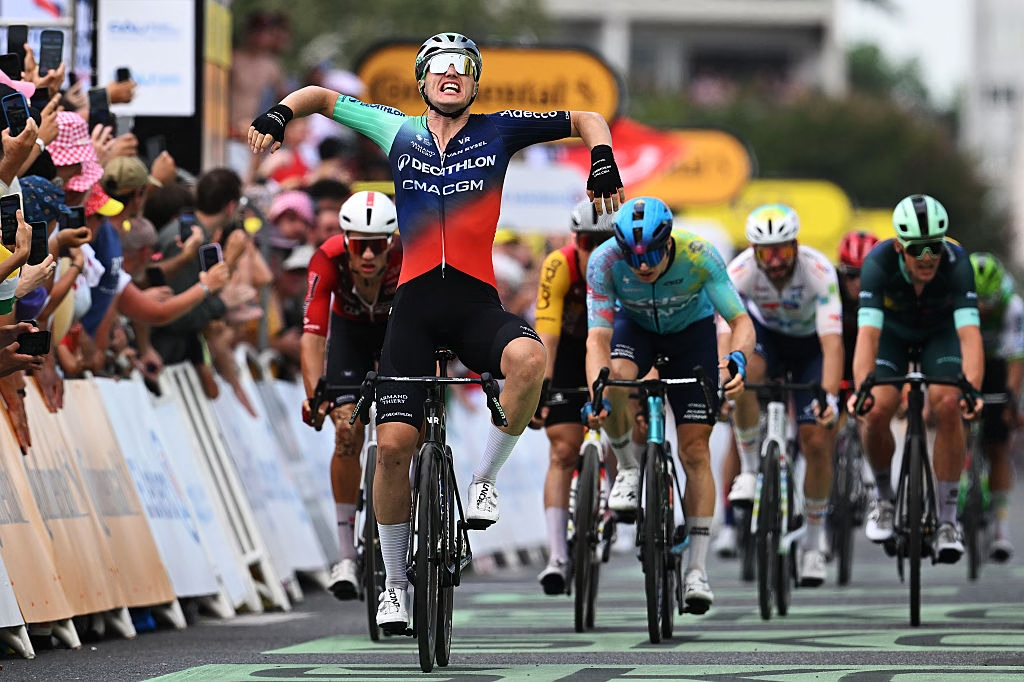 Photo Credit: Getty
What happens before the sprint?
A bunch sprint often begins long before the sprinters appear at the front.
The first task is controlling the breakaway.
A small group usually escapes during the opening part of the stage. Sprint teams allow it to build a manageable advantage before assigning riders to pace the peloton.
The chase must be carefully judged.
Catch the breakaway too late and the stage may be lost. Catch it too early and new riders can attack, forcing the sprint teams to chase again.
Teams often aim to bring back the final attackers during the last five to ten kilometres.
That allows them to move directly from chasing into positioning their sprinter.
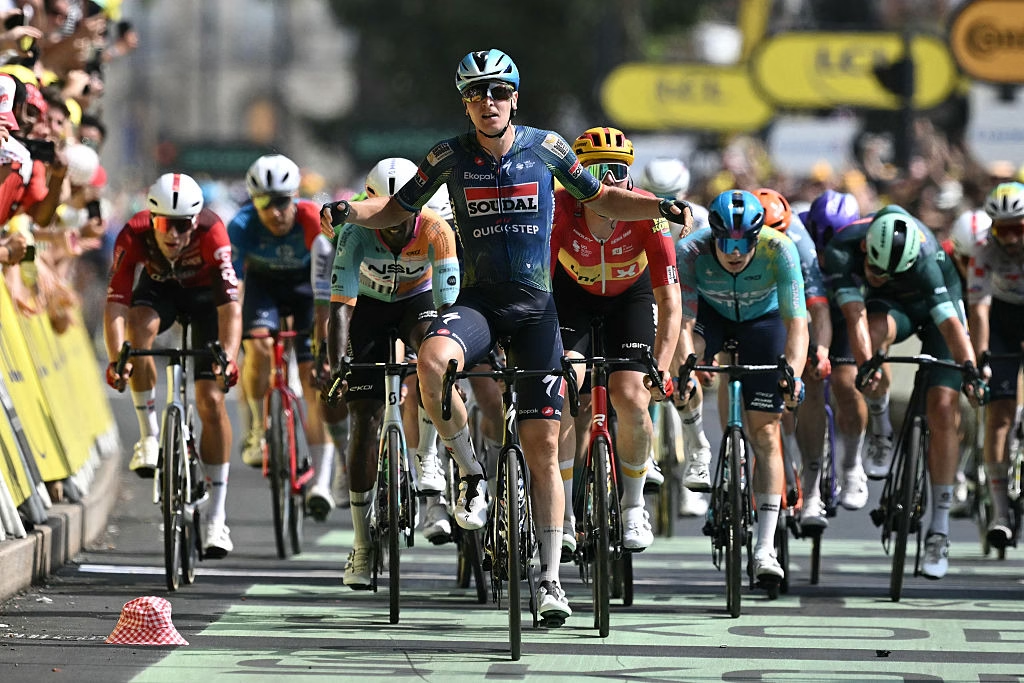
The stage 11 finish of the 2026 Tour provided a clear example, with the breakaway caught inside the final five kilometres before Søren Wærenskjold won the sprint in Nevers.
Why do sprint teams chase the breakaway?
The race leader’s team is not always responsible for catching the breakaway.
If the escape does not threaten the yellow jersey, the leader’s team may be happy to let it contest the stage.
The responsibility then falls on teams with sprinters.
Several squads may contribute one rider each to the chase. Sharing the workload allows them to preserve the teammates needed for the final lead-out.
A rough rule used during many races is that a peloton can close around one minute per ten kilometres on a small breakaway.
It is only a guide.
Wind, road width, climbing, the strength of the escape and the number of teams chasing can all change the calculation.
A four-rider breakaway with a two-minute advantage at 20km remaining may still be difficult to catch if it contains strong time triallists and the peloton is poorly organised.
 Photo Credit: Getty
What is a lead-out train?
A lead-out train is a line of teammates riding in front of their sprinter.
The riders take turns at the front, with each one increasing or maintaining the speed before finishing their effort and moving aside.
A traditional lead-out train might contain:
- A road captain organising the approach
- A powerful domestique moving the team towards the front
- A second rider holding position through corners
- A high-speed lead-out rider
- The final lead-out rider
- The sprinter
The exact structure varies.
Modern teams rarely remain lined up perfectly for several kilometres. Rival trains interfere, corners split formations and riders become separated in the fight for position.
The basic principle remains the same.
Each rider sacrifices their own result to bring the sprinter closer to the finish while using as little energy as possible.
The same process applies in women’s racing, as explained in our guide to how sprint lead-outs work in women’s cycling.
What does each lead-out rider do?
Lead-out work involves more than riding fast.
The early positioning riders
The first riders move the sprinter towards the front before the decisive fight begins.
Their job may start with ten or 15 kilometres remaining.
They protect the sprinter from wind, guide them around slower riders and prevent the team from becoming trapped behind the peloton.
These riders may never appear on television during the final kilometre, but a poor early position can make the rest of the lead-out impossible.
The power riders
Powerful domestiques take over as the speed rises.
They make long efforts that keep the peloton stretched out and reduce the number of riders able to move forwards.
A high pace can provide safety as well as speed.
When the bunch is lined out in one long formation, fewer riders can move alongside one another. When the speed drops, the road fills across its width and the fight for position becomes more chaotic.
The final lead-out rider
The final lead-out rider is often a strong sprinter in their own right.
They must hold the lead sprinter’s wheel, judge the other trains and produce a near-maximal effort during the final few hundred metres.
Their aim is to deliver the sprinter into open road at the correct speed.
A great final lead-out does not necessarily cross the line near the front. The rider may finish their effort with 200 metres remaining and immediately drift backwards through the group.
Their work is judged by the position and momentum they give the sprinter.
Why does a lead-out rider move aside?
A lead-out rider cannot sustain their maximum effort to the finish.
Once their turn is complete, they move away from the racing line so the teammate behind can continue.
This movement must be controlled.
Swinging away suddenly can interfere with another rider or create a crash. The lead-out rider needs to check there is space and avoid moving across the sprinting line of a rival.
The sprinter must also anticipate the moment.
If they leave a gap when the teammate moves aside, another rider can take the wheel or the sprinter may lose momentum.
When does the lead-out begin?
There is no fixed distance.
Teams may begin positioning with 20km remaining but hold their full lead-out until the final three to five kilometres.
The timing depends on:
- Road width
- Wind direction
- Corners and roundabouts
- The strength of the team
- The number of remaining teammates
- The location of the breakaway
- Whether rival trains are already moving
- The speed of the peloton
- The final gradient
A team with six riders remaining may take control earlier.
A sprinter with only one teammate must wait, follow another train and use that final helper at the most valuable moment.
Starting too soon can leave the sprinter exposed.
Waiting too long can leave the entire team trapped behind rivals.
 Photo Credit: Getty
Why is positioning so important?
A sprinter cannot win through riders occupying the road ahead.
Unlike a runner on a track, a cyclist cannot simply move into an empty lane. Gaps open and close within seconds.
The ideal position is usually close to the front but not necessarily first.
A rider sitting directly in the wind uses more energy than someone following a wheel. The sprinter wants shelter until the moment they launch.
Too far forward and they may be forced to start early.
Too far back and they may become boxed in or fail to react when the winning move begins.
The correct position changes constantly.
Fifth wheel may be perfect with 500 metres remaining but useless if the riders ahead slow down through the final corner.
The difficulties caused by a lead-out that remains visible without delivering the correct final position have been central to our analysis of what is going wrong for Jasper Philipsen at the Tour de France.
What does being boxed in mean?
A rider is boxed in when other cyclists block every available route forwards.
They may have riders on both sides and a slowing wheel directly ahead.
The sprinter can still possess the strongest legs but have nowhere to use them.
This is one reason positioning often matters more than maximum power.
A rider who enters the final 200 metres in open space can begin sprinting immediately. A boxed-in rival may need to stop pedalling, wait for a gap and then accelerate again.
By the time the road opens, the victory may already be gone.
Sprinters and lead-out riders therefore fight to keep at least one escape route available.
Why do sprinters follow other teams?
A rider does not need their own lead-out to win.
When a sprinter loses teammates, they can follow the wheel of a rival with a stronger train. This is often called surfing wheels.
The rider allows another team to provide the speed and shelter before moving around its sprinter near the finish.
This can be extremely effective.
The rider using the rival train may save more energy than the sprinter whose team has controlled the entire approach.
The difficulty is gaining and holding the correct wheel.
Other riders want the same position, while the rival lead-out may deliberately increase the speed or move through narrow gaps to dislodge anyone following.
Great opportunistic sprinters can move between wheels without wasting energy or becoming trapped.
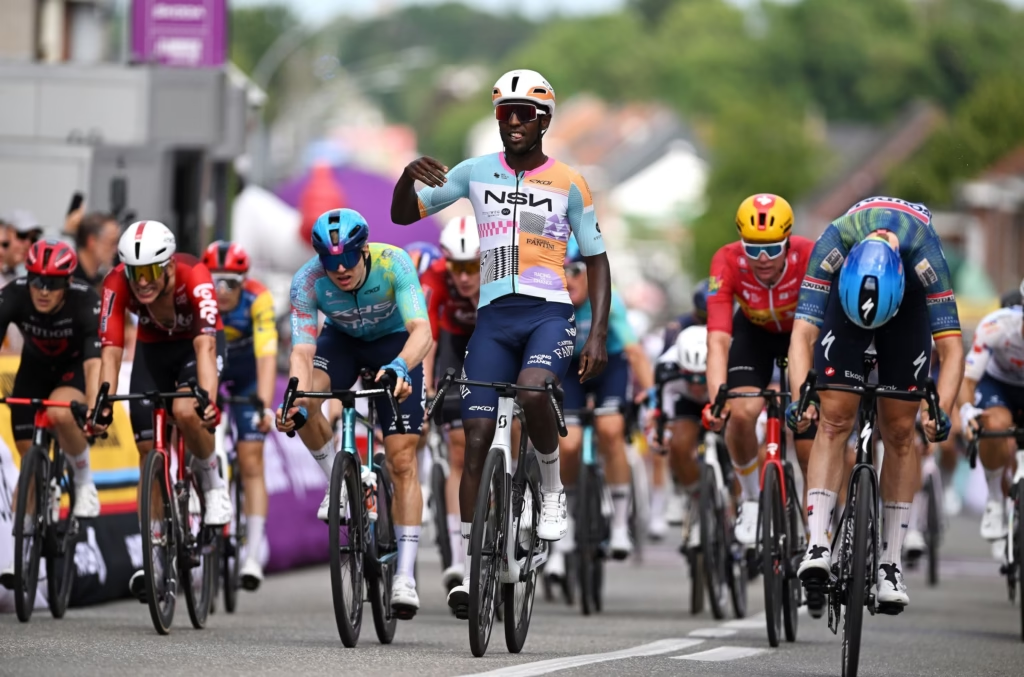
What is the best wheel in a sprint?
The best wheel usually belongs to the rider expected to launch at the right time and maintain a high speed.
That might be:
- A trusted final lead-out rider
- The fastest sprinter in the race
- A rival with a powerful train
- A rider positioned on the sheltered side of the road
- Someone likely to accelerate through the final corner
The obvious favourite’s wheel is not always best.
Too many riders may fight for it, creating contact and lost positions.
A less fashionable sprinter with a clean line can provide a safer route towards the front.
The decision is made at high speed and can change several times during the final kilometre.
How fast is a bunch sprint?
The peloton may already be travelling at more than 60km/h before the sprinters launch.
The winner can exceed 70km/h in favourable conditions, particularly with a tailwind or downhill approach.
Speed varies according to:
- Wind
- Gradient
- Road surface
- The length of the finishing straight
- The strength of the lead-outs
- Whether the approach contains corners
- How early the sprint begins
A slightly uphill sprint may produce lower speeds but require a longer power effort.
A downhill finish can create very high speeds while reducing the advantage of a rider with the strongest acceleration.
The final sprint is usually only the last ten to 15 seconds of a much longer high-intensity effort.
Our guide to how fast Tour de France riders go looks at sprint speeds, mountain speeds, descents and overall race averages.
When does the sprinter launch?
Most road sprinters launch between 150 and 250 metres from the finish.
There is no perfect distance.
A rider with exceptional acceleration may wait until 150 metres. A rider who can sustain speed for longer may begin from 250 metres or more.
The launch point depends on:
- Current speed
- Wind direction
- Gradient
- Position in the group
- The strength of the rider
- Whether rivals have already accelerated
- The remaining distance after the final corner
- How much energy the sprinter has left
A headwind encourages riders to wait because the cyclist in front pays the full aerodynamic cost.
A tailwind can favour an earlier launch because high speed is easier to maintain.
An uphill finish may reward a later acceleration, while a downhill or fast straight can make it difficult to pass a rider who already has momentum.
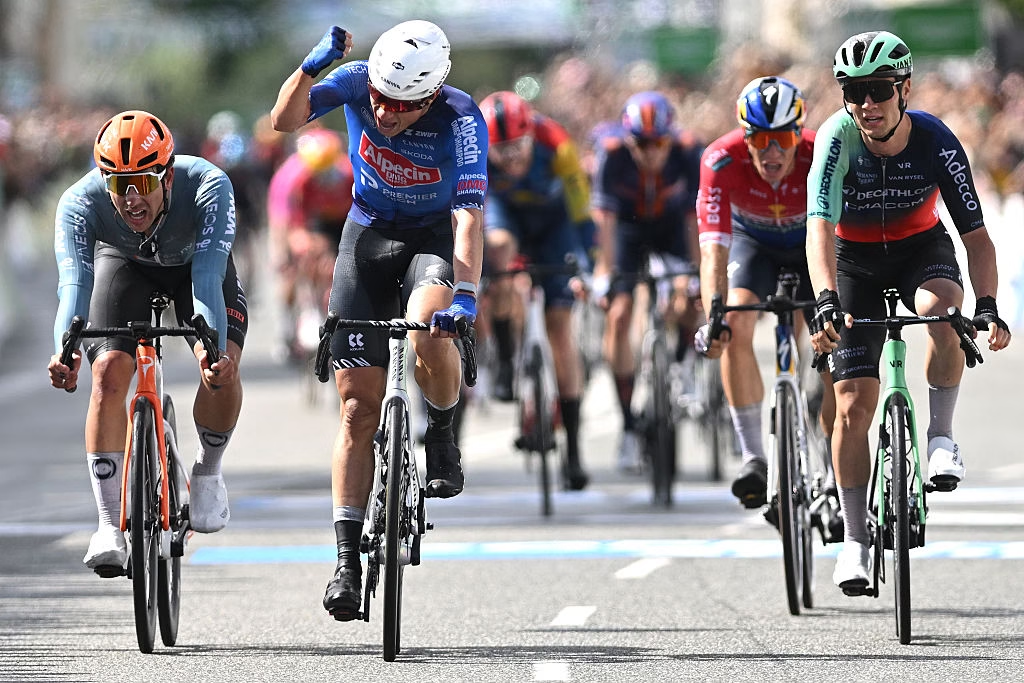
Wout van Aert provided an example of a longer launch when he began his winning sprint at approximately 250 metres during stage 5 of the 2026 Tour Auvergne-Rhône-Alpes.
 Photo Credit: Getty
Why is starting too early a problem?
A sprint is a near-maximal effort that can only be sustained briefly.
The rider accelerates, reaches top speed and then begins to fatigue.
Starting too early gives rivals time to remain in the slipstream before passing near the line.
This creates the familiar sight of one rider appearing to lead comfortably before slowing during the final 50 metres.
The rider behind has benefited twice.
They used less energy while drafting and delayed their own maximum effort.
An early launch can still work if the sprinter creates an immediate gap, receives a tailwind or catches rivals by surprise.
It remains a significant risk.
Why can waiting too long also fail?
A rider who waits for the perfect moment may never find it.
The gap can close. A rival can move across. The finish line can arrive before the sprinter reaches full speed.
Acceleration is not instantaneous.
Even the most explosive rider needs time and distance to move around the wheel ahead.
Waiting until 80 metres may work from an ideal position, but it is often too late when several riders must be passed.
The best timing is not simply the latest possible launch.
It is the latest moment that still provides enough road to reach maximum speed and complete the pass.
How much does drafting matter?
Drafting is central to a bunch sprint.
A rider following closely behind another cyclist experiences substantially less air resistance. At sprinting speeds, this can save enough energy to decide the result.
The sprinter tries to remain sheltered until the final acceleration.
The lead-out riders absorb the aerodynamic cost. Their efforts allow the protected rider to travel at high speed while producing less power.
This is why a well-executed lead-out can defeat a physically faster rival.
The fastest sprinter may begin the final 200 metres already fatigued after fighting through the wind. Another rider can arrive sheltered and use more of their available power in the final acceleration.
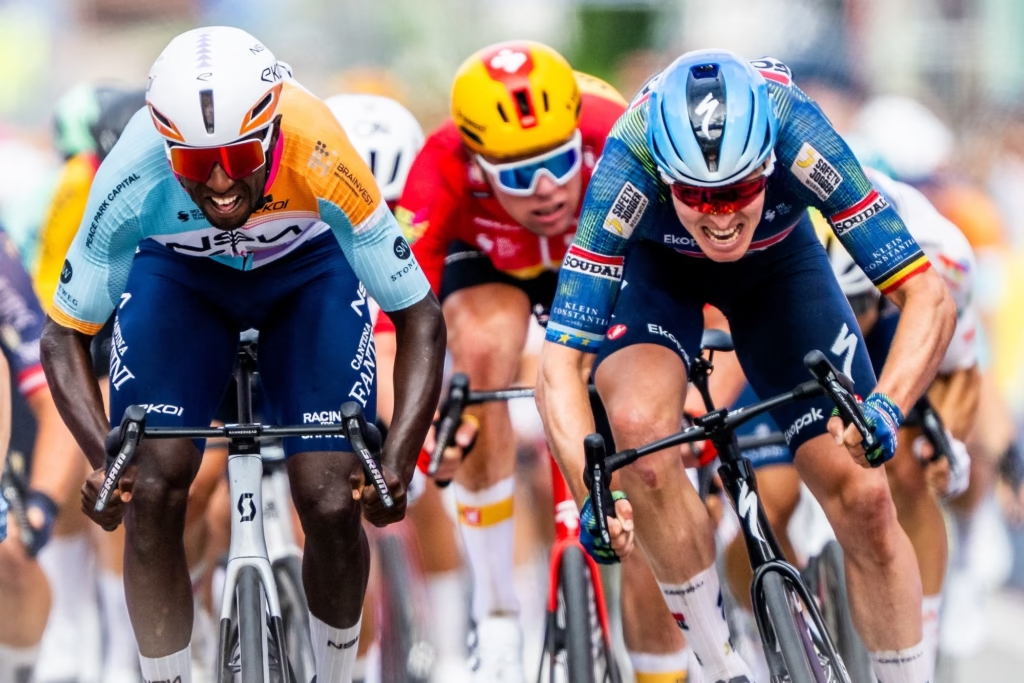
Why do teams fight for the front so early?
The final kilometres often contain corners, roundabouts, traffic islands and narrowing roads.
A team positioned tenth before a narrow section may emerge 30th if gaps open.
Moving up again requires riding in the wind and using energy that should have been preserved for the sprint.
Teams therefore fight for position before each important obstacle.
This can begin 20km from the finish even though the sprint itself lasts only seconds.
The battle is not always about leading the peloton.
It is about entering every dangerous section close enough to the front that the sprinter remains in contention afterwards.
Why are GC teams near the front during sprint finishes?
General classification teams are not trying to win the sprint.
They are protecting their leader from crashes and splits.
The safest place is often near the front, where there are fewer riders who can fall ahead.
This creates additional congestion.
Sprint teams want the same road space as teams protecting the yellow jersey contenders.
GC domestiques may complete their task and move aside before the final kilometre, but their presence makes the approach more difficult for the lead-out trains.
The broader roles within an eight-rider Tour squad are explained in our Tour de France 2026 team-by-team guide.
What happens if there is a crash near the finish?
On designated sprint stages, riders affected by a crash, mechanical problem or another recognised incident inside the sprint zone may receive the same time as the group they were with.
This reduces the incentive for GC riders to take unnecessary risks during the final sprint.
It does not neutralise the stage.
The sprinters continue racing for victory, while officials later decide which affected riders qualify for the time protection.
A rider who is dropped because they cannot follow the pace does not receive the same treatment as someone delayed by a recorded incident.
Stage positions, points and time bonuses are also separate from GC time protection.
What are the rules on changing sprinting line?
A sprinter is not required to follow a perfectly straight painted line from the moment they accelerate.
They can move around slower riders and follow the shape of the road.
They must not deviate in a way that obstructs or endangers another rider.
Commissaires examine whether a rider:
- Changed direction after launching
- Closed another rider against the barriers
- Forced a rival to brake or stop pedalling
- Created contact through avoidable movement
- Used their elbow, shoulder or head dangerously
- Gained an unfair advantage
- Created a serious risk of a crash
A crash does not need to occur for a penalty to be imposed.
A dangerous movement can result in relegation, a fine, a yellow card or a more serious sanction depending on the incident.
The difference between provisional and final sprint decisions is demonstrated by the explanation of why Jasper Philipsen was relegated and then reinstated after Tour de France stage 11.
What is a sprint relegation?
A relegation moves a rider to the back of the group in which they finished.
A rider who crosses the line second with the main peloton could therefore be reclassified far lower in the stage result.
They normally remain in the race unless an additional penalty is imposed.
Relegation is different from disqualification or expulsion.
The rider loses the finishing position and the points, prize money or time bonuses attached to it, but can usually start the following stage.
Philipsen experienced that penalty during the 2024 Tour after officials judged that he had blocked Wout van Aert in the stage 6 sprint won by Dylan Groenewegen.
What is a reduced bunch sprint?
A reduced bunch sprint involves a smaller group after climbs, crosswinds or hard racing have removed some of the pure sprinters.
The finishing group may contain 20 to 60 riders rather than the full peloton.
These finishes often favour more versatile riders.
A pure sprinter may possess greater maximum speed but fail to survive the climbs. A Classics rider or puncheur can reach the finish fresher and win from the smaller group.
Lead-outs are also less organised because teams have fewer riders remaining.
That increases the importance of instinct and wheel surfing.
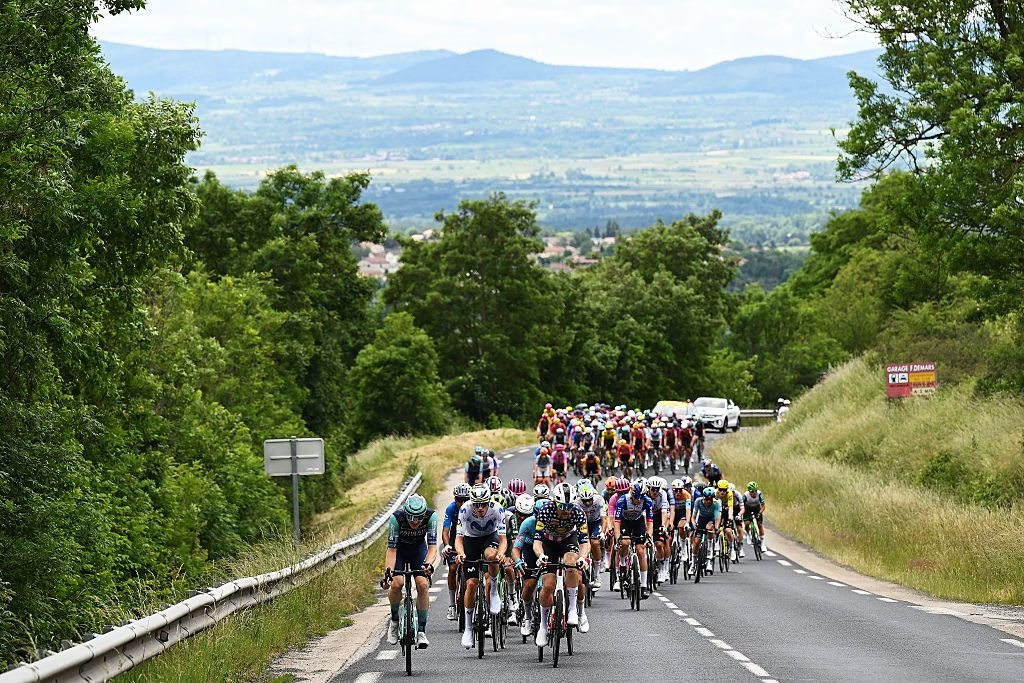 Photo Credit: Getty
What is a drag-strip sprint?
A drag-strip sprint describes a wide, straight and fast finish with few technical obstacles.
These finishes allow the strongest lead-out trains to organise fully and give pure sprinters enough space to reach maximum speed.
They appear simple but remain tactical.
A wide road creates more possible lines, allowing rival teams to come alongside one another. The lead-out that moves first may be overtaken before the sprinter launches.
Narrower finishes make moving up harder but can reward the train that reaches the front first.
How does wind change a sprint?
Wind direction can completely alter the ideal approach.
Headwind
A headwind rewards patience.
The rider who launches first faces the greatest resistance, allowing rivals to remain sheltered before passing late.
Sprinters may wait until inside 150 metres.
Tailwind
A tailwind favours speed and an earlier launch.
Once a rider creates a gap, the following sprinters may struggle to close it.
The lead-out can also maintain a higher speed before releasing its leader.
Crosswind
A crosswind makes the sheltered side of the road particularly valuable.
Riders may fight for one specific wheel or line because the opposite side leaves them exposed.
The wind can also split the peloton before the finish, turning the stage into a smaller sprint.
How does the gradient change sprint timing?
A flat finish places the greatest emphasis on top speed and aerodynamics.
An uphill finish rewards riders who can sustain power while speed gradually falls.
A slight rise can make a 250-metre launch too long, encouraging riders to wait.
A downhill finish creates the opposite problem.
The peloton may already be travelling so quickly that acceleration produces a smaller relative advantage. Positioning before the descent or final corner becomes critical because passing at 75km/h can be extremely difficult.
Sprinters study the gradient before the race and often reconnoitre the final kilometres using video, maps or an in-person ride.
Why do some sprinters prefer chaotic finishes?
Not every sprinter benefits from a perfect lead-out train.
Some riders are at their best when the organised formations collapse.
They can move between rival wheels, find narrow gaps and delay their acceleration until the last moment.
A chaotic sprint may help a rider whose team is weaker.
Instead of trying to control the entire approach, the sprinter uses the work of larger teams and trusts their positioning instinct.
Robbie McEwen became one of the Tour’s greatest sprinters through this ability to surf wheels and appear near the front at precisely the right moment.
His career is included in our guide to the greatest Tour de France sprinters.
Other riders prefer a predictable, high-speed lead-out that removes as many tactical decisions as possible.
Neither method is automatically better.
The ideal approach depends on the sprinter’s physical qualities and confidence in their teammates.
Can the lead-out rider win instead?
Yes.
A final lead-out rider may continue to the finish if the protected sprinter loses the wheel, becomes boxed in or tells the teammate to take their own chance.
This can also happen when the lead-out creates an unexpected gap.
If the rider looks behind and sees nobody on the wheel, continuing may offer a better chance than slowing down.
Teams usually make the hierarchy clear before the stage, but the final kilometre requires improvisation.
A lead-out rider who is also a fast finisher can provide a valuable backup plan.
What happens when a lead-out goes wrong?
Lead-outs fail regularly.
Common problems include:
- Starting too early
- Losing the sprinter through a corner
- Becoming trapped behind another train
- Running out of teammates
- Catching the breakaway too soon
- Allowing a late attacker to escape
- Entering the wind on the wrong side
- Misjudging the final distance
- The final lead-out rider creating a gap
- The sprinter choosing a rival’s wheel instead
One mistake can undo several kilometres of work.
A team may look dominant with five riders at the front before disappearing entirely during the final 500 metres.
The lead-out must remain connected. Once one rider loses the wheel ahead, everyone behind can lose position.
Why do late attacks threaten bunch sprints?
A rider attacking inside the final five kilometres forces the sprint teams to make a decision.
They must chase immediately or trust that the high speed will close the gap naturally.
Using a final lead-out rider too early can weaken the sprint.
Waiting too long can allow the attacker to reach the finish.
Late moves are particularly dangerous after corners or short climbs, where the peloton briefly loses momentum.
A rider may gain only five seconds but remain difficult to catch because the sprint teams hesitate over who should work.
The attacker benefits whenever rival teams look at one another.
How do riders communicate during a sprint?
Communication becomes increasingly difficult as the speed and noise rise.
Teams use:
- Race radios
- Shouted instructions
- Hand signals
- Familiar routines
- Pre-agreed plans
- Information from the team car
The lead-out riders may warn the sprinter about corners, gaps or changes in formation.
The sprinter can tell teammates to slow down, move up or abandon the planned train.
Trust is essential.
At more than 60km/h, riders cannot discuss every decision. Each teammate needs to understand when to begin their effort and where the next rider is expected to be.
Why does confidence matter?
Sprint finishes require riders to move through small gaps at high speed while remaining calm enough to make accurate decisions.
A confident sprinter commits when an opening appears.
A rider lacking confidence may hesitate, brake or surrender a valuable wheel.
Confidence can change rapidly during a stage race.
A victory confirms that the lead-out works and encourages the team to take control earlier. Several poor results can create uncertainty over wheels, timing and leadership.
The physical difference between elite sprinters is often small.
Confidence and decision-making can determine which rider converts speed into victories.
Does the strongest sprinter always win?
No.
The winner needs enough speed, but the decisive advantage may come from:
- Better positioning
- A stronger lead-out
- More shelter
- A cleaner line
- A better-timed launch
- Following the correct wheel
- Avoiding contact
- Entering the final corner first
- Saving energy earlier in the stage
A rider can record the highest maximum speed but cross the line fourth because they began from too far back.
Another rider may win without reaching the highest top speed because they started closer to the front and travelled a shorter, clearer route.

What should viewers watch during a bunch sprint?
Do not focus only on the final 200 metres.
With ten kilometres remaining, look for which teams still have several riders together.
At five kilometres, watch which trains are moving towards the front and which sprinters have already become isolated.
Inside three kilometres, pay attention to corners, narrowing roads and changes in wind direction.
During the final kilometre, watch the wheels rather than only the rider leading.
The eventual winner is often sitting between third and eighth position, sheltered behind teammates or rivals.
Useful questions include:
- Which sprinter still has teammates?
- Who is riding in the wind?
- Which train has begun too early?
- Who has become boxed in?
- Which rider is following the favourite?
- Is the road rising or falling?
- Where is the sheltered side?
- How far is it from the final corner to the line?
- Has a late attacker created hesitation?
- Which sprinter still appears calm?
The leader with 300 metres remaining is not necessarily in the best position.
Bunch sprint terminology explained
| Term | Meaning |
|---|---|
| Bunch sprint | A stage finish contested by a large peloton |
| Lead-out train | A line of teammates guiding and accelerating for a sprinter |
| Final lead-out | The last teammate to launch the protected sprinter |
| Surfing wheels | Following rival riders rather than using a team lead-out |
| Boxed in | Trapped without an open route forwards |
| Launch | The moment a sprinter begins their final acceleration |
| Reduced sprint | A sprint from a smaller group after difficult racing |
| Drag-strip finish | A wide and usually straight high-speed finish |
| Sprint deviation | Movement away from a rider’s line that may obstruct or endanger a rival |
| Relegation | Moving a rider to the back of their finishing group |
| Sprint zone | The designated final kilometres where certain incident-related time protections may apply |
| Lead-out rider | A teammate who positions and accelerates for the sprinter |
How does a bunch sprint work in simple terms?
The team first helps catch the breakaway.
It then moves its sprinter towards the front while keeping them protected from the wind.
Lead-out riders take turns riding hard until the final teammate launches the sprinter near the finish.
The sprinter waits behind a wheel, chooses a route and accelerates at the moment they believe gives them enough distance to pass without fading.
Every rival is trying to do the same thing.
That is why a bunch sprint is not simply a test of who can pedal fastest.
It is a high-speed tactical contest in which teamwork creates the opportunity, positioning keeps it alive and timing decides whether it becomes a victory.

