
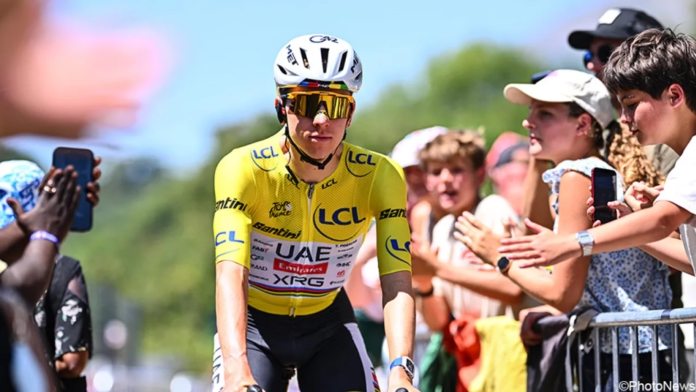
Tadej Pogačar’s switch to black bib shorts has attracted attention during the final Alpine stages of the 2026 Tour de France.
The race leader had previously worn more heavily coordinated yellow kit, but appeared ahead of stage 19 with the yellow jersey paired with plain black shorts.
There has been no official confirmation from Pogačar or UAE Team Emirates-XRG explaining the change.
The most likely explanation is therefore straightforward: Pogačar has selected a different permitted version of the yellow jersey kit, possibly because of comfort, practicality or personal preference.
The black shorts do not indicate a penalty, new classification or change in his position as race leader.
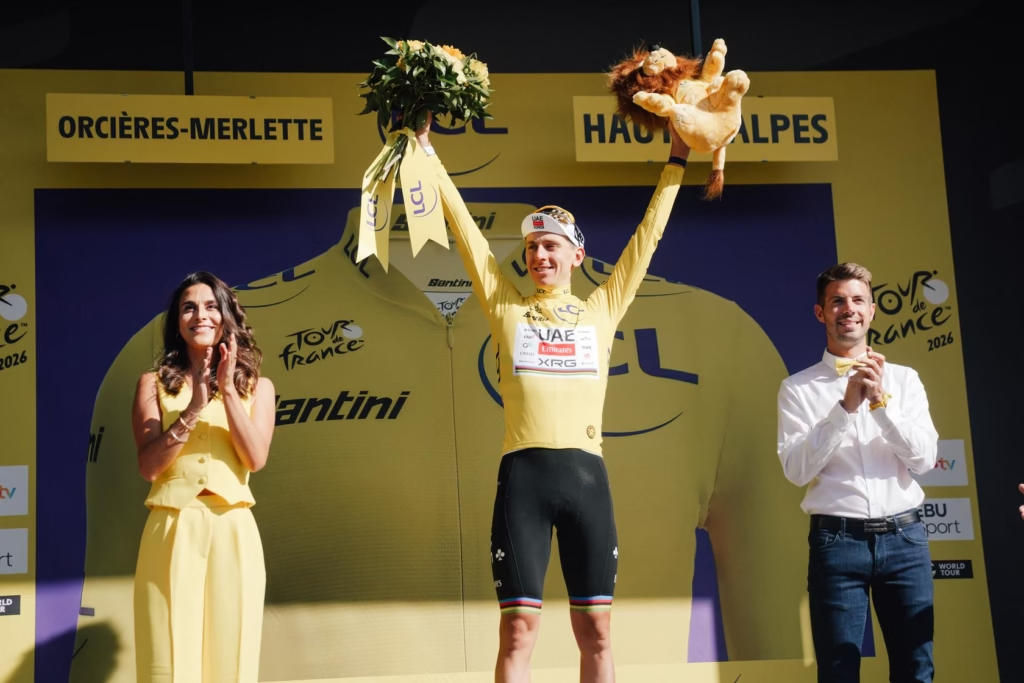 Photo Credit: A.S.O./Thomas Maheux
Is Pogačar allowed to wear black shorts with the yellow jersey?
Yes.
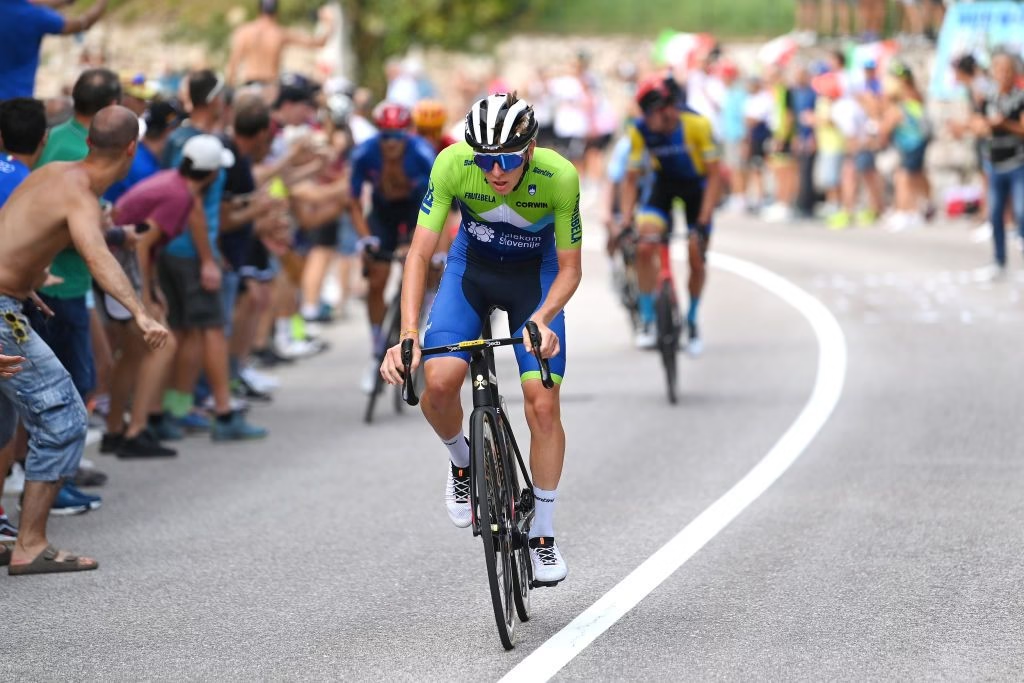
The yellow jersey identifies the leader of the Tour de France, but the rider does not have to wear matching yellow bib shorts.
Classification leaders can combine the official jersey with darker shorts, provided the kit continues to meet the race and sponsor requirements. The yellow jersey remains clearly visible, so Pogačar’s black-and-yellow combination creates no confusion over his status.
Black has traditionally been the standard colour for cycling shorts because it works with almost any jersey and is more practical during long stages.
Pogačar has also worn yellow jerseys with black shorts during previous Tours. The change appears more striking in 2026 because he had been using a more coordinated leader’s outfit earlier in the race.
The latest classification positions are covered in GC and jerseys after Tour de France 2026 stage 18.
Is Pogačar wearing black bib shorts because he is ill?
There is no confirmed evidence that the clothing change is connected to illness.
UAE Team Emirates-XRG have experienced health problems during the final week. Brandon McNulty abandoned during stage 18, while Adam Yates and Tim Wellens have also been affected.
That has encouraged speculation that darker shorts might be a precaution in case Pogačar is experiencing stomach trouble. Neither the rider nor his team have supported that theory.
Pogačar has not publicly confirmed that he is unwell, and the shorts alone should not be treated as evidence of a medical issue.
McNulty’s withdrawal and the effect on the yellow jersey team are examined in how UAE can protect Pogačar on Alpe d’Huez after Brandon McNulty’s abandonment.
Why do professional cyclists usually wear black bib shorts?
Black shorts became standard in professional cycling for practical reasons.
They are less likely to show:
- Road spray and chain grease
- Sweat and water marks
- Food or drink spillages
- Dirt from wet roads
- Wear around the saddle area
Those advantages matter during a Grand Tour, where riders spend several hours in the saddle each day and may encounter heat, rain, road spray and mechanical work during the same stage.
Light-coloured shorts can look distinctive but are less forgiving. Black also provides a neutral base when a rider changes between a team jersey and several classification jerseys during a race.
Could the black shorts be more comfortable?
Possibly, although this has not been confirmed.
Bib shorts that appear similar can use different materials, cuts or chamois designs. A rider may prefer one version for a mountain stage, hot weather or a long day in the saddle.
Comfort becomes increasingly important during the final week of a Grand Tour. Small areas of irritation that appear insignificant during the opening stages can become much harder to manage after almost three weeks of racing.
The decision may therefore relate to fit rather than colour.
It could also be no more complicated than Pogačar preferring the more traditional appearance of a yellow jersey with black shorts.
Is it a special Alpe d’Huez kit?
There is no indication that the black bib shorts form part of a special Alpe d’Huez outfit.
The jersey itself remains the official Tour de France leader’s garment. Pogačar wears it because he leads Remco Evenepoel by 4:32 before stage 19.
The black lower half creates a more traditional contrast than a full-yellow kit, but there has been no announcement connecting the design to Alpe d’Huez or another specific milestone.
Pogačar begins the stage as the favourite if the general classification group catches the breakaway. His prospects are analysed in will Pogačar win on Alpe d’Huez?.
The complete route and tactical picture are covered in the Tour de France 2026 stage 19 preview.
Does wearing black affect Pogačar’s performance?
The colour itself should not produce a meaningful performance difference.
Modern cycling clothing is designed around aerodynamics, fit, ventilation and moisture management. The construction of the shorts and the comfort of the chamois matter far more than whether the outer fabric is yellow or black.
Darker materials can absorb more heat from direct sunlight, but airflow, fabric technology and the limited surface area involved make this unlikely to be a decisive factor during a race.
Any performance reason for the switch would therefore be connected to the garment’s fit or construction rather than its visible colour.
Why has the change caused so much discussion?
The yellow jersey is the most visible piece of clothing in cycling.
Pogačar has spent much of the Tour wearing a coordinated leader’s kit, so even a relatively small change is immediately noticeable. The switch also came while UAE were dealing with illness and reduced support before the two Alpe d’Huez stages.
That timing encouraged viewers to search for a deeper explanation.
For now, there is none publicly confirmed.
Pogačar is wearing black bib shorts because that is the kit combination selected for the stage. It is legal, practical and traditional.
Unless Pogačar or UAE Team Emirates-XRG provides another explanation, theories linking the change to illness remain speculation.

