
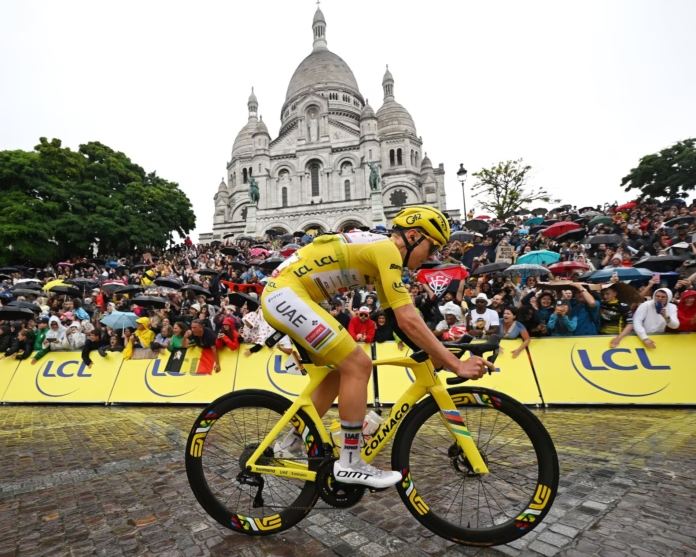
The final stage of the 2026 Tour de France has been dramatically shortened at less than 24 hours’ notice, with the racing now taking place entirely within Paris.
The original 133km route from Thoiry to the Champs-Élysées has been reduced to 89km after the French Interior Ministry redeployed security personnel to areas affected by wildfires across France, particularly Gironde.
That means the planned race through Yvelines and Hauts-de-Seine has been cancelled.
Thoiry will retain the ceremonial start, including the caravan departure and team presentation, but the riders will then travel to Paris by bus rather than racing towards the capital.
Crucially, the Montmartre circuit remains part of Stage 21.
After speculation earlier on Saturday that Rue Lepic could also be lost because of the pressure on security resources, the joint communiqué from the Préfecture de Police and Tour de France organisers confirms that the peloton will still head to Montmartre before returning to the Champs-Élysées.
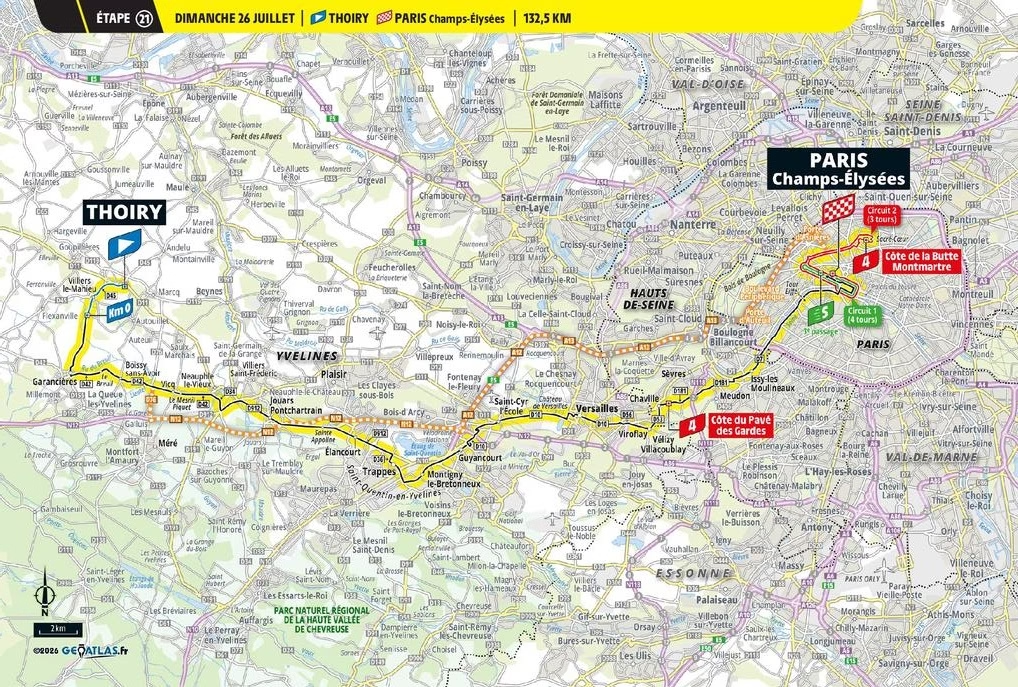
What has changed on Stage 21?
The original Stage 21 was due to start in Thoiry and cover 133km before finishing on the Champs-Élysées.
That conventional approach to Paris has now disappeared.
Instead, the competitive stage has been shortened to 89km, all of it inside Paris.
The Tour caravan will still parade from Thoiry at 13:20 local time, or 12:20 BST.
Team presentation will take place there at 15:40 local time, 14:40 BST.
After the presentation, however, the riders will board team buses and travel directly to Paris.
There will be no racing between Thoiry and the capital.
The official start will instead take place on the Champs-Élysées at 17:50 local time, or 16:50 BST.
That completely changes the structure of the final day.
Stage 21 will start from the finish line
Perhaps the strangest feature of the redesigned stage is that the riders will begin racing from the road on which they will finish the Tour less than two hours later.
The official start will be given from the finish line on the Champs-Élysées.
The peloton will then complete two additional laps of the Champs-Élysées before heading onto the planned Montmartre circuit.
After racing through Montmartre, the riders will return to the Champs-Élysées for the finish.
The scheduled arrival is now approximately 19:45 local time, or 18:45 BST.
That supersedes the original timings in the Tour de France 2026 TV schedule and daily start times, which were based on the 133km Thoiry-to-Paris route.
Why has Stage 21 been shortened?
The change has nothing to do with a fire directly threatening the Tour route.
It is about the national response to the wildfires.
Numerous fires are currently affecting France, particularly in Gironde, with emergency services heavily committed to fighting the blazes and protecting affected communities.
The Interior Minister has therefore decided to redeploy part of the internal security force originally assigned to the final stage of the Tour.
A normal Tour stage requires a huge number of police and gendarmes.
Junctions need to be secured, roads closed, spectators managed and the entire race convoy protected across a route covering more than 100 kilometres.
Removing the Yvelines and Hauts-de-Seine sections allows the Tour to concentrate those resources inside Paris while freeing personnel for areas affected by the fires.
The decision has been described by authorities and organisers as one made in solidarity with the regions and populations dealing with the emergency.
Thoiry keeps the Tour, but loses the stage start itself
Thoiry will still officially host the departure of Stage 21.
But it will no longer see the riders race away towards Paris.
The caravan will carry out its planned parade and the teams will still be presented to spectators before the riders leave by bus.
That makes Sunday an unusual compromise.
Thoiry retains the ceremonial elements associated with hosting a Tour stage start, while the actual racing begins much later in Paris.
For spectators elsewhere along the original route through Yvelines and Hauts-de-Seine, the consequence is much clearer.
The peloton will not pass.
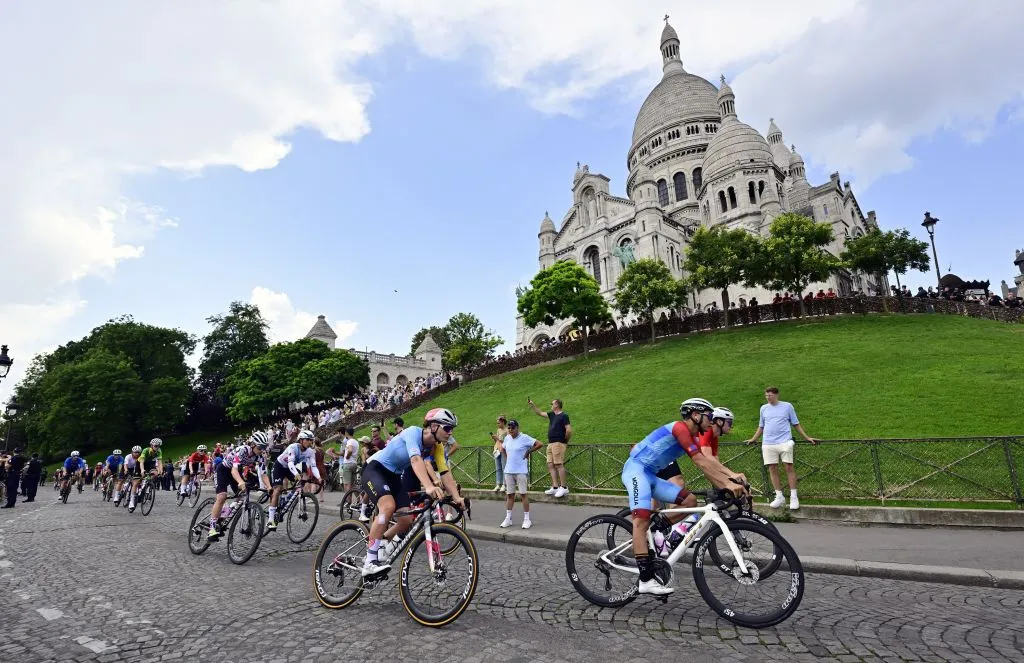
Montmartre is officially retained
The most important sporting confirmation is that Montmartre survives.
Earlier on Saturday, speculation had also surrounded the future of the Rue Lepic circuit as organisers considered how much security coverage could realistically be maintained.
Losing it would have fundamentally changed the stage.
Instead, the joint announcement confirms that after the extra Champs-Élysées laps, the riders will head onto the Montmartre circuit.
That preserves the defining feature of the 2026 finale.
The three passages through Montmartre were already expected to transform Stage 21 by creating opportunities for attacks before the peloton returns to the Champs-Élysées.
That tactical battle remains.
Why keeping Rue Lepic matters so much
Without Montmartre, shortening Stage 21 to 89km could have turned Sunday into something close to a Paris criterium built almost entirely around a bunch sprint.
Rue Lepic stops that being inevitable.
The climb itself is short, but its narrow roads, repeated accelerations and fight for position make it far more disruptive than the profile suggests.
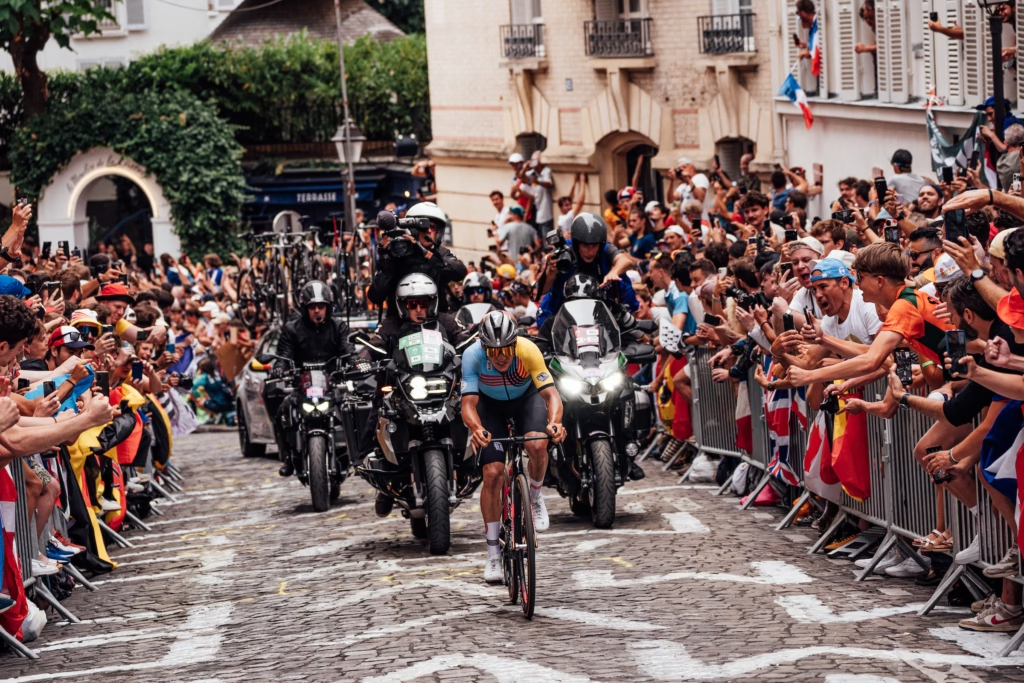
The Tour first used Montmartre on its final stage in 2025, after the climb became one of the defining images of the Paris 2024 Olympic road races.
It immediately changed the nature of Stage 21.
The 2025 Stage 21 preview highlighted how the repeated ascents gave classics riders and puncheurs somewhere to attack rather than simply waiting for a Champs-Élysées sprint.
That proved accurate.
In 2026, the same basic tactical problem remains, even though almost everything before Paris has now been removed.
An 89km stage could make Montmartre even more explosive
The shortened distance could actually make the decisive section harder to control.
The original plan gave riders more than 40 kilometres of racing before reaching Paris.
Now they will start in the capital and race for only 89km in total.
That means the peloton should reach Montmartre considerably fresher.
Attackers will have more energy available for Rue Lepic.
Sprint teams will also have more domestiques capable of fighting for position and chasing moves.
Rather than making the race easier, the reduction could simply increase the intensity.
The opening laps of the Champs-Élysées are also unlikely to resemble the relaxed arrival into Paris that traditionally preceded the final sprint.
The racing begins there immediately.
Stage 21 has effectively become a short, high-speed Parisian road race.
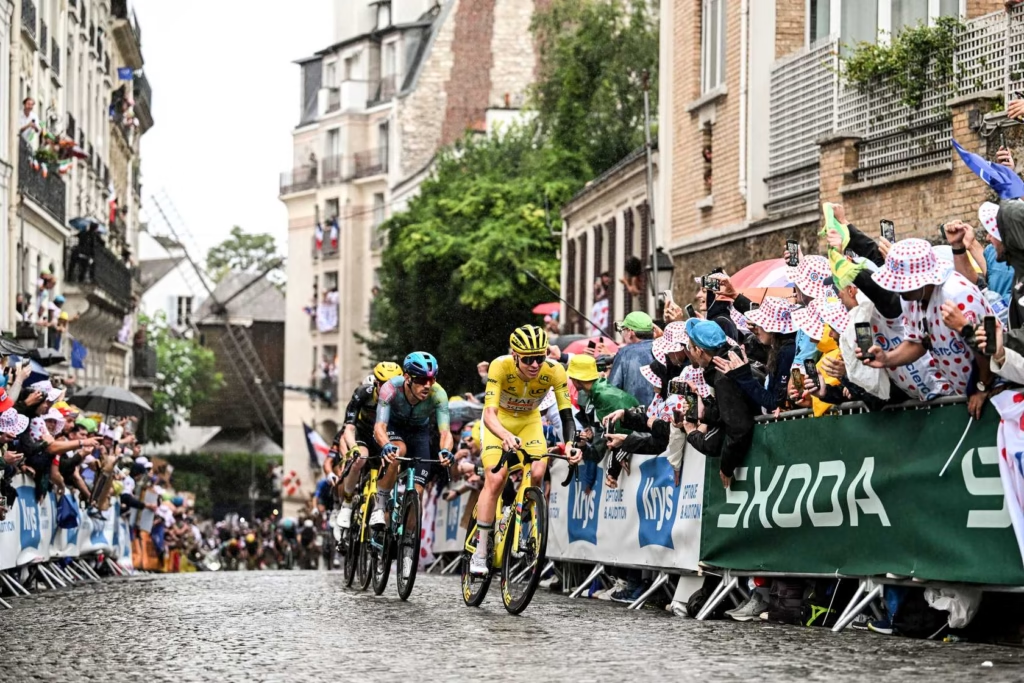 Photo Credit: A.S.O./Charly López
The sprinters gain something from the change
The revised stage is not entirely good news for attackers.
A shorter distance favours the sprinters too.
Their teams will have less fatigue to manage, and riders who might have struggled after 130 kilometres can reach the Montmartre circuit with much more left.
That should strengthen the chase if an attacker gets clear.
But Montmartre is precisely why the final stage was already difficult to categorise.
ProCyclingUK’s ranking of the best breakaway stages at the 2026 Tour included Stage 21 despite its flat classification because late attacks around Montmartre can create a completely different race from the traditional Champs-Élysées formula.
The stage is now shorter.
That logic has not changed.
What does the change mean for Pogačar and the yellow jersey?
For the overall winner, Stage 21 traditionally begins with celebrations.
There is champagne, photographs and a relaxed ride towards Paris before the racing becomes serious on the finishing circuit.
That format is harder to reproduce now.
The riders will complete their presentation in Thoiry, travel to Paris by bus and begin the official stage directly on the Champs-Élysées.
There may still be ceremonial moments before the flag drops, but once the official start is given at 17:50 there is little road available for anything other than racing.
Tadej Pogačar could therefore reach Montmartre after fewer than 90 kilometres with fresh legs and nothing left to protect beyond safely completing the Tour.
That is precisely the kind of situation sprint teams would rather avoid.


Revised Tour de France 2026 Stage 21 schedule
The new timetable is:
13:20 CEST / 12:20 BST: Caravan parade departs Thoiry
15:40 CEST / 14:40 BST: Team presentation in Thoiry
After team presentation: Riders transfer by bus to Paris
17:50 CEST / 16:50 BST: Official Stage 21 start on the Champs-Élysées
Opening phase: Two additional Champs-Élysées laps
Final phase: Montmartre circuit, including Rue Lepic, before the return to central Paris
Around 19:45 CEST / 18:45 BST: Expected finish on the Champs-Élysées
Revised distance: 89km
UK viewers can find the broadcast options in our guide to watching the Tour de France 2026 in the UK, although viewers should use the new Stage 21 times above rather than the original schedule.
An extraordinary way to end the 2026 Tour
The final stage now bears little resemblance to the one originally published.
The full Tour de France 2026 route had Stage 21 beginning in Thoiry before a more conventional approach towards Paris and the new Montmartre finale.
Only the final part survives.
The riders will still appear in Thoiry, but they will not race out of it.
There will be no Tour peloton through Yvelines or Hauts-de-Seine.
Instead, the 2026 Tour ends with an 89km race contained entirely within Paris, beginning on the Champs-Élysées, passing through Montmartre and finishing back on cycling’s most famous finishing straight.
The circumstances behind the change are serious.
Sportingly, though, the organisers have preserved the part of Stage 21 that mattered most.
Montmartre remains.
And with the ceremonial approach removed, Sunday’s final stage could now be even less ceremonial than expected.

