The Tour de France Femmes 2026 contains only two stages officially classified as mountain stages, but that understates how much climbing will shape the fight for yellow.
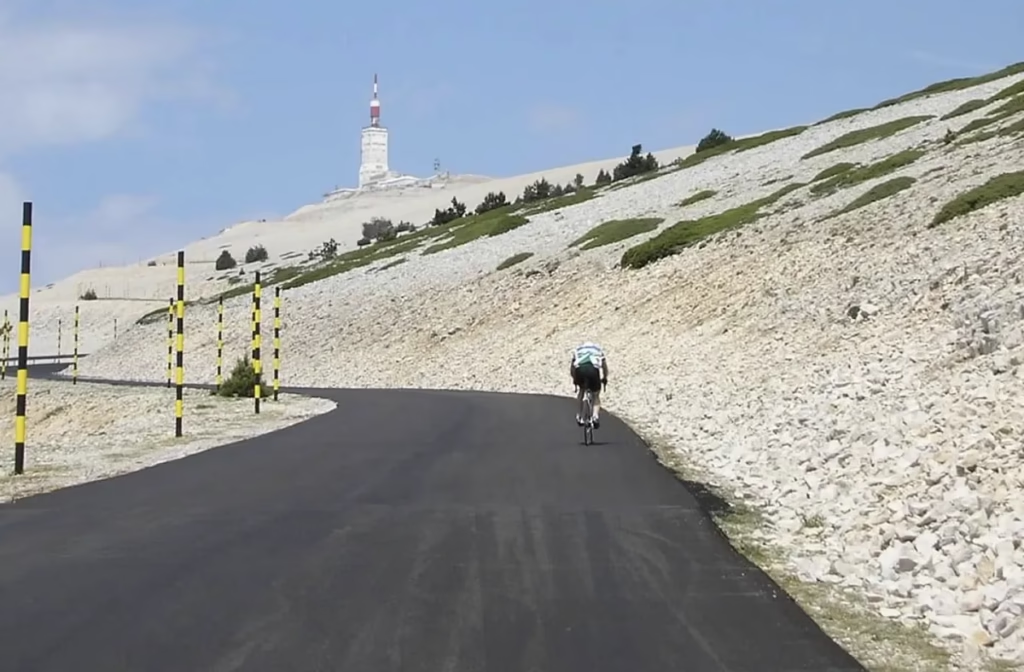
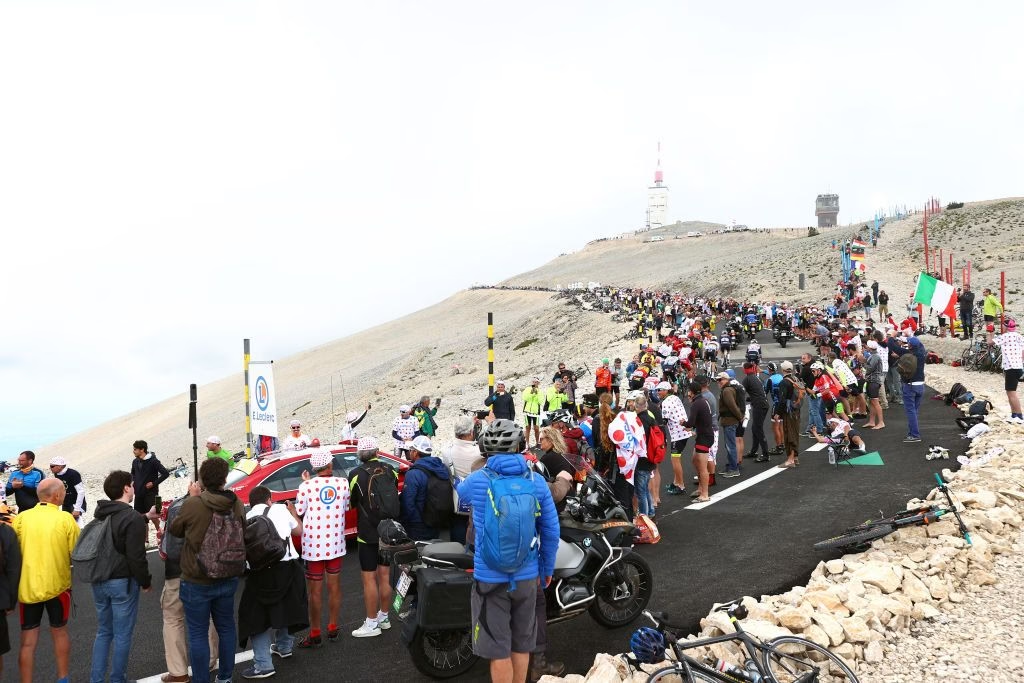
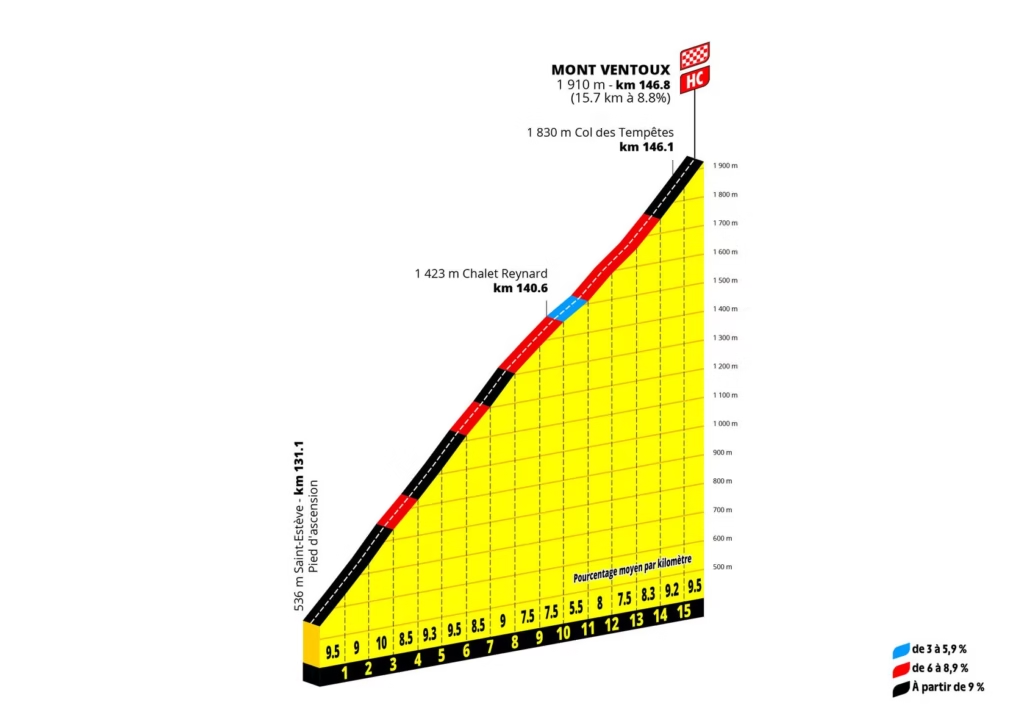
Stage 7 finishes on Mont Ventoux, where the 15.7km ascent from Bédoin averages 8.8% and reaches 1,910 metres. Two days later, the Tour finishes with a short but relentless mountain stage around Nice, climbing towards the Col d’Èze four times before using the harder final approach through the Col des Quatre Chemins.
Between them sits the longest stage of the race, from Sisteron to Nice, while the earlier hilly stages through the Jura, Beaujolais and towards the Rhône can already create differences before the peloton reaches the decisive mountain weekend.
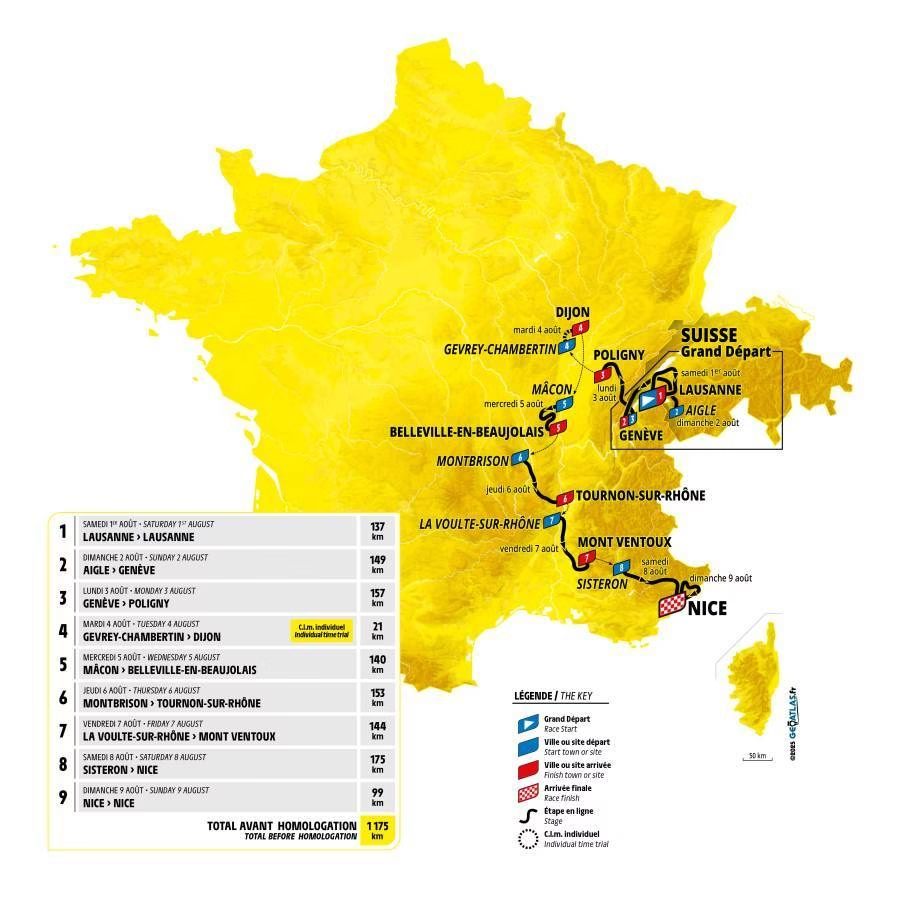
The full Tour de France Femmes 2026 route contains a record 1,175km and 18,795 metres of climbing, split between three flat stages, three hilly stages, two mountain stages and the 21km Dijon individual time trial.
How many mountain stages are there at the Tour de France Femmes 2026?
There are two official mountain stages:
| Stage | Route | Distance | Main GC feature |
|---|---|---|---|
| 7 | La Voulte-sur-Rhône to Mont Ventoux | 146.8km | 15.7km summit finish at 8.8% |
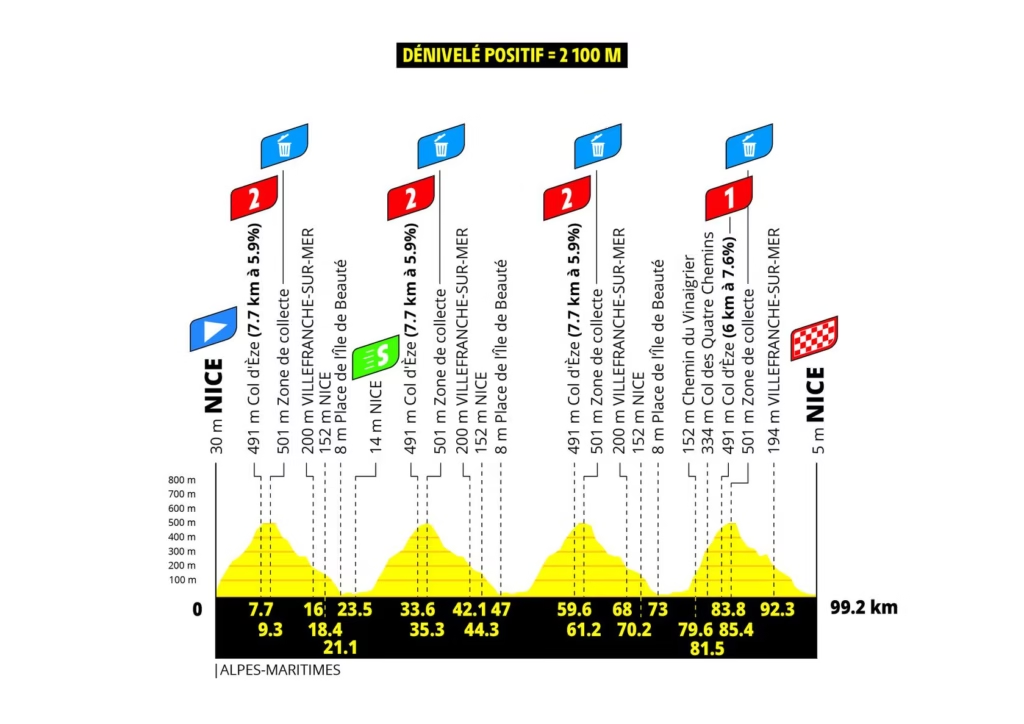
| 9 | Nice to Nice | 99km | Repeated Col d’Èze climbing and final Quatre Chemins approach |
Stage 7 is the clearest pure climbing examination of the race. It asks which GC contender can sustain the highest pace on one of the most famous mountains in cycling.
Stage 9 is a different kind of mountain stage. It is shorter, more repetitive and more tactical, with multiple opportunities to attack, descend, regroup and attack again before the final run back into Nice.
Our Tour de France Femmes 2026 stage profiles guide explains how the official flat, hilly and mountain classifications fit together across the nine stages.
Stage 7 to Mont Ventoux is the biggest pure climbing test
The queen stage arrives on Friday 7 August, taking the peloton 146.8km from La Voulte-sur-Rhône to the summit of Mont Ventoux.
It contains approximately 3,565 metres of climbing, the largest total of any stage in the 2026 Tour, and finishes at the highest point of the race at 1,910 metres.
Before Ventoux, the riders face a series of classified climbs that gradually increase the fatigue before the decisive ascent.
The headline test remains the final 15.7km at 8.8%.
That is where the strongest climbers can create the biggest sustained differences of the race.
For a more detailed look at the ascent, its history and how it could decide yellow, see our Tour de France Femmes 2026 Mont Ventoux guide.
Why Mont Ventoux is so difficult
The statistics only tell part of the story.
The Bédoin side becomes much harder once the riders reach the forest beyond Saint-Estève. From there, the gradient settles into long sections close to or above nine per cent, with very little genuine recovery.
The officially categorised section gains more than 1,300 metres in 15.7km, meaning the climb lasts long enough to expose even small differences in sustainable power.
The upper mountain adds another problem.
Once the riders emerge above the tree line near Chalet Reynard, the road becomes much more exposed. Heat and wind can become significant factors, particularly after more than three hours of racing.
Ventoux therefore rewards patience as much as explosiveness.
Attack too early and the final kilometres can become brutally long.
Wait too long and there may not be enough road left to recover time.
Ventoux is where minutes can replace seconds
By Stage 7, the general classification should already have a shape.
The opening stages in Switzerland can produce small gaps and bonus seconds. Stage 3 through the Jura gives teams their first chance to make the race genuinely selective, while Stage 4 introduces the 21km individual time trial into Dijon.
But Ventoux is where the scale of the differences can change.
A rider who loses 15 seconds on a hilly stage can repair that later.
Losing two minutes on Ventoux is a completely different problem.
That makes Stage 7 the most obvious point at which the Tour can move from an open GC battle to a clearly defined hierarchy.
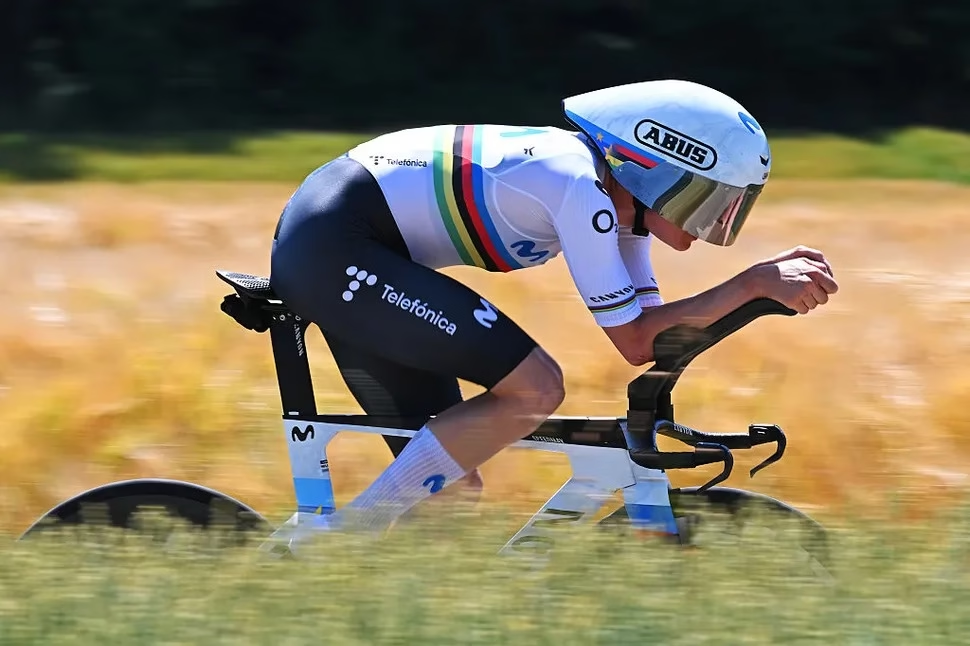 Photo Credit: Getty
The Dijon time trial will dictate how Ventoux is raced
One of the most important features of the 2026 route is that the first major GC sorting comes against the clock rather than in the mountains.
Stage 4 is a 21km individual time trial from Gevrey-Chambertin to Dijon.
That strongly favours riders such as Marlen Reusser, Demi Vollering and Anna van der Breggen, who combine GC-level climbing with elite time trial ability. Our Tour de France Femmes 2026 time trial contenders guide identifies Reusser as the obvious benchmark on the day.
The result in Dijon could completely alter the tactics on Ventoux.
If a strong time triallist arrives at the mountain with a useful advantage, she can defend.
If a lighter climber loses 45 seconds or a minute in Dijon, she may have no choice but to make Ventoux aggressive.
That is what gives the route its balance.
The mountains do not exist in isolation.
The Tour rewards complete stage racers
The eventual winner cannot simply be the strongest climber.
She needs to avoid losing too much time against the clock, handle repeated hilly stages, recover properly and then still have enough left for Ventoux and Nice.
That is why riders such as Vollering fit the race so naturally. She can time trial, climb and take bonus seconds.
Pauline Ferrand-Prévot brings a different profile but has already shown an ability to transform a decisive final weekend into a winning GC campaign.
Kasia Niewiadoma-Phinney has built her best Grand Tour results through consistency and resilience across mixed terrain rather than one overwhelming discipline.
Reusser presents another tactical puzzle entirely. If she produces one of the best rides in Dijon, the lighter climbers may have to spend the rest of the race attacking her.
The wider list of favourites and how their strengths fit the course is covered in our Tour de France Femmes 2026 riders to watch guide.
 Photo Credit: Getty
Stage 3 is the first real GC warning
The official mountain stages arrive late, but the Tour can start hurting GC riders much earlier.
Stage 3 from Geneva to Poligny is the first hilly stage and the first day where the Jura gives teams enough terrain to race aggressively.
It is unlikely to produce Ventoux-sized gaps.
That is not the same as being harmless.
A badly positioned rider can lose 20 or 30 seconds in a split. A weak team can be exposed when the pace rises over repeated climbs. A rider who misses a decisive move may be forced to chase for kilometres.
The Tour de France Femmes 2026 Grand Départ guide explains why the opening Swiss stages and the transition into the Jura are more demanding than their classifications suggest.
Stages 5 and 6 build fatigue before Ventoux
The middle of the Tour is designed to prevent the GC riders reaching Stage 7 completely fresh.
Stage 5 from Mâcon to Belleville-en-Beaujolais is hilly and full of the sort of repeated rises that can gradually strip away support riders.
Stage 6 from Montbrison to Tournon-sur-Rhône continues the same pattern.
Neither stage has a summit finish comparable to Ventoux, but both can affect how riders reach it.
A team can make a rival work without attacking its leader directly.
Put a dangerous rider in the break.
Force another squad to chase.
Raise the pace on every short climb.
Attack over the top and make support riders spend energy closing gaps.
By Friday morning, those efforts accumulate.
Ventoux may be the decisive climb, but the damage can begin long before Bédoin.
Stage 8 gives the GC contenders one awkward recovery day
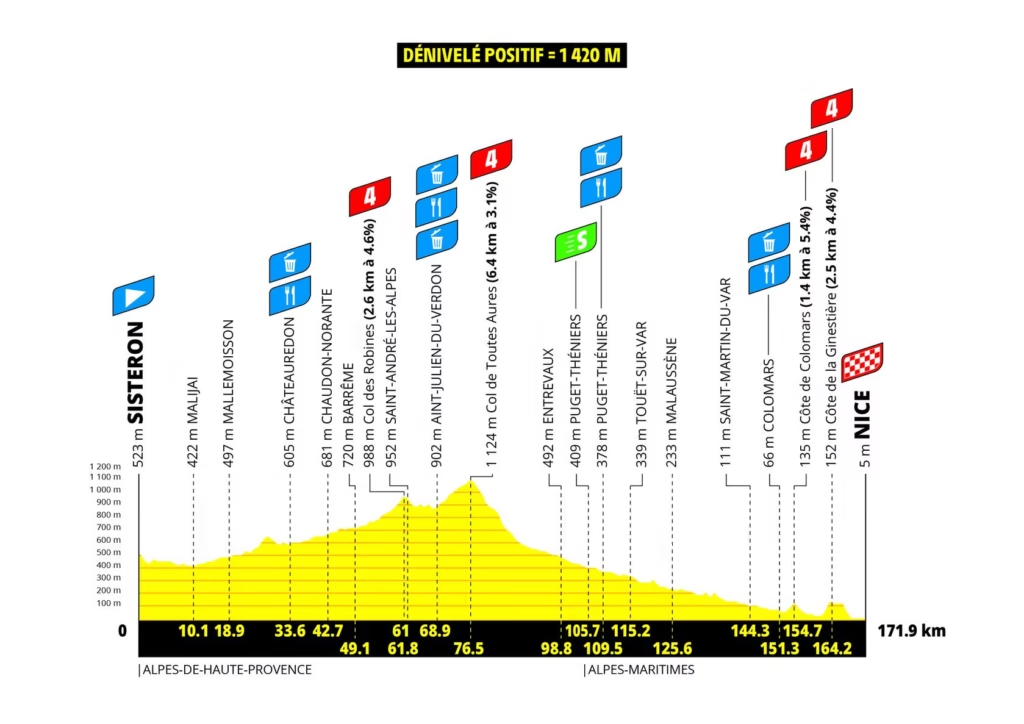
After Ventoux comes the longest stage of the race.
Stage 8 takes the peloton from Sisteron to Nice and is officially classified as flat, but its position in the Tour makes it significant for the GC riders.
Everyone arrives after the queen stage.
Anyone who struggled on Ventoux has less than a day to recover before another long afternoon.
The sprinters and breakaway riders will want to race.
The yellow jersey team will want almost nothing to happen.
That conflict can make a supposedly easy day surprisingly stressful.
Crosswinds, crashes and positioning battles still exist.
The leader cannot simply put her feet up until Stage 9.
Stage 9 around Nice is the final mountain ambush
If Ventoux is the biggest physical test, Stage 9 could be the more unpredictable tactical one.
The Tour finishes on Sunday 9 August with around 99km around Nice, and there is no ceremonial final sprint.
Instead, the riders repeatedly climb towards the Col d’Èze before returning towards the Mediterranean.
The short distance immediately changes the race.
There is much less reason to conserve energy.
Teams can begin attacking early because there are fewer kilometres over which a failed move needs to be paid for later.
The final stage is designed to keep the yellow jersey contest alive until the last descent into Nice.
Our Nice finish guide covers the final circuit and the best places to watch the race being decided.
Repeated Col d’Èze climbs can isolate the yellow jersey
The first three climbing circuits use the Col d’Èze as the central feature.
Repeated climbing works differently from one long summit finish.
A GC contender does not have to crack completely the first time.
The damage builds.
One teammate disappears on lap one.
Another struggles on lap two.
A rival attacks on lap three.
By the final ascent, the race leader may have nobody left.
That is why the stage has such a high tactical ceiling despite being much shorter than Ventoux.
It gives rivals several opportunities to test the yellow jersey before the decisive move even begins.
The final Quatre Chemins approach is where the Tour can turn
The final lap is deliberately harder.
Instead of simply repeating the standard Col d’Èze ascent again, the race uses the steeper approach through the Col des Quatre Chemins, creating a final classified climb of around 6km at 7.6%.
That average includes a much steeper section where the race can explode.
Unlike Ventoux, this is not about holding threshold for 35 or 40 minutes.
It rewards a rider who can accelerate hard after repeated earlier climbs.
That creates a different GC challenge.
A rider who was excellent on Ventoux may not necessarily be the rider best suited to a short, steep attack followed by a technical run back towards Nice.
Nice could reward a different rider from Ventoux
The two mountain stages ask fundamentally different questions.
Ventoux is about sustained climbing power.
Nice is about repeatability, positioning, acceleration and descending.
A rider with slightly less pure climbing ability can potentially limit losses on Ventoux and then become much more dangerous on the final day.
Conversely, a pure climber may establish a major advantage on Stage 7 and then spend Stage 9 trying to defend it against more explosive rivals.
That contrast is exactly why the 2026 route is more interesting than a race decided by a single summit finish.
The final stage is designed to destroy certainty
The best scenario for the race would be a GC separated by less than a minute going into Nice.
That would turn every ascent into a tactical decision.
Does the rider in second attack on the first climb?
Do teammates go ahead early and wait as satellite riders?
Does the yellow jersey team chase immediately or let a move build?
Does a rider two minutes down sacrifice a podium place to try to win the Tour?
These are decisions Ventoux does not necessarily force.
On one enormous summit finish, the strongest rider can simply ride at the highest sustainable pace.
On a short circuit stage, the race can become much less predictable.
Where can the biggest GC gaps happen?
There are five obvious battlegrounds.
Stage 3 to Poligny can create the first meaningful road gaps if the Jura is raced aggressively.
Stage 4 to Dijon can produce the biggest early differences because of the 21km time trial.
Stage 6 to Tournon-sur-Rhône provides the final hilly test before Ventoux.
Stage 7 to Mont Ventoux is the biggest pure climbing battle and the most likely stage for gaps measured in minutes.
Stage 9 around Nice gives anyone still within reach one final opportunity to overturn the race.
That sequencing is the key to the entire route.
The Tour does not allow the strongest rider on one mountain to immediately defend all the way to the finish.
There is always another problem.
Tour de France Femmes 2026 GC battlegrounds ranked
| Stage | GC importance | Why it matters |
|---|---|---|
| 3 | Medium | Jura hills and first chance for road gaps |
| 4 | Very high | 21km individual time trial |
| 5 | Medium | Repeated Beaujolais climbing |
| 6 | Medium-high | Final hilly stage before Ventoux |
| 7 | Critical | Mont Ventoux summit finish |
| 8 | Low terrain risk, high recovery importance | Longest stage after Ventoux |
| 9 | Critical | Repeated climbs and final attack around Nice |
The Tour therefore has two obvious mountain stages but at least five days capable of materially changing the overall classification.
The polka-dot jersey will be shaped by the same roads
Ventoux and Nice are not just about yellow.
They will also decide much of the mountains classification.
Mont Ventoux carries the biggest single concentration of climbing points, making Stage 7 essential for any rider targeting polka dots.
Stage 9 creates a different opportunity because there are repeated climbs available in a very short distance.
A rider interested in the mountains jersey but no longer relevant to GC may attack from the opening kilometres to collect points before the favourites begin their own battle.
That can create useful tactical alliances.
A GC team may be happy to let a mountains contender ride ahead if she poses no overall threat.
Later, that same rider can become a satellite teammate or stage-win rival.
-
 Photo Credit: Getty


Ventoux should reveal the strongest climber
If one stage is likely to provide the clearest hierarchy, it is Stage 7.
The final climb is long enough that tactics eventually become secondary.
A rider can survive a two-kilometre climb through positioning and determination.
Surviving more than 15km at close to nine per cent requires something else.
Eventually, the strongest riders should separate themselves.
Ventoux is where the Tour can become clear.
Nice is where that clarity can be taken away again.
The Tour de France Femmes will not be won by climbing alone
Mont Ventoux is the headline mountain of the 2026 Tour de France Femmes.
The race itself is more complicated.
The eventual champion must survive Switzerland, avoid losing too much time in the Dijon time trial, manage three hilly stages, climb Ventoux with the very best and then defend or overturn the race on the repeated climbs above Nice.
There are only two official mountain stages.
There are far more than two stages that matter to the climbers.
Ventoux should tell us who has the legs to win the Tour.
Nice will tell us whether they have done enough to keep it.