
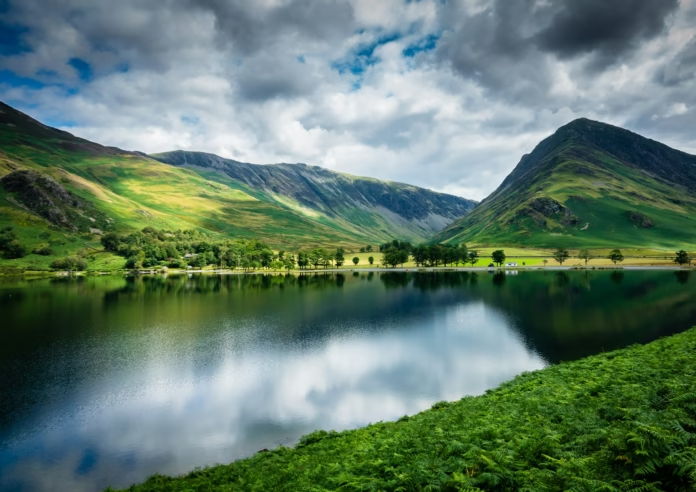
The Lake District is one of the best places in Britain to ride a sportive, but it is not a forgiving one. Distances that would look comfortable elsewhere become serious days out once roads such as Hardknott Pass, Wrynose Pass, Whinlatter and The Struggle are added to the route.
That is also what makes the area so good. A Lake District sportive can move from open valley roads beside the lakes to single-track lanes, wooded climbs and gradients beyond 20% within a few kilometres. The scenery is exceptional, the roads rarely stay flat for long and the weather can turn a manageable route into something much harder.
For riders choosing an event, the best option depends less on raw distance than on how much climbing you actually want. The Fred Whitton Challenge remains the benchmark for a full-scale test, while the Lakeland Loop, Shut Up Legs, Tour de Furness and the northern Lakes events offer different ways to experience Cumbria without committing to one of the hardest sportives in the UK.
For a broader comparison, our guide to the best UK sportives to ride in 2026 places the Fred Whitton among the strongest events anywhere in Britain.
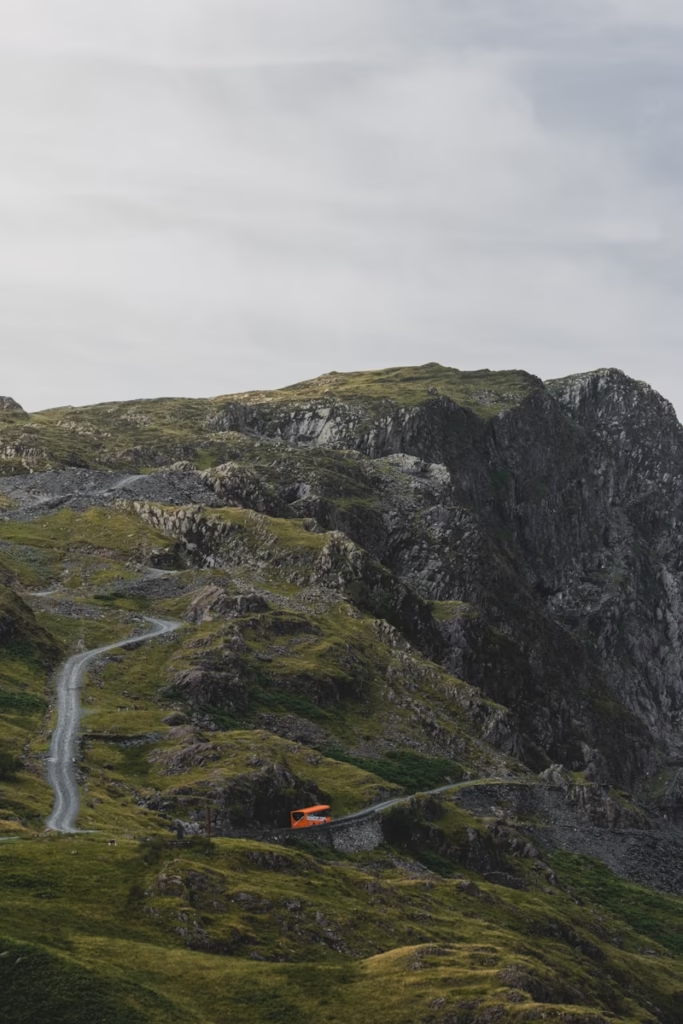
Fred Whitton Challenge
If there is one Lake District sportive that needs no introduction, it is the Fred Whitton Challenge.
The event has built a reputation as one of Britain’s hardest mass-participation road rides, traditionally linking around 112 miles of Lake District roads with a succession of major passes. The usual route includes Kirkstone, Honister, Newlands, Whinlatter, Hardknott and Wrynose, with the hardest climbing arriving after riders already have a lot of distance and elevation in their legs.
That is what separates the Fred from a simple collection of difficult climbs. Hardknott would be hard on a short training ride. Reaching its steep ramps after most of a day crossing the Lakes is a completely different problem.
The 2026 edition took place on Sunday 10 May and was adjusted because of the Kirkstone Pass landslip, with The Struggle replacing the usual early Kirkstone section. The total distance dropped to around 108 miles, but the character of the event did not become noticeably easier.
Our Fred Whitton Challenge complete guide covers the full route, ballot, cut-offs, training and individual climbs in more detail.
Best for: experienced sportive riders wanting the definitive Lake District challenge
Difficulty: 5/5
Why ride it: iconic climbs, big-event atmosphere and one of the strongest finish-line achievements in UK cycling
Main warning: being comfortable over 100 miles on flatter roads does not automatically prepare you for the Fred Whitton
Lakeland Loop
The Lakeland Loop offers much of the classic Fred Whitton experience in a shorter format.
The event starts around Great Langdale and has traditionally covered roughly 70 miles, using some of the same central and western Lake District roads. Hardknott and Wrynose ensure the shorter distance should not be mistaken for an easy ride, while Whinlatter has also featured in established versions of the route.
That makes the Lakeland Loop especially useful for riders who want to experience the famous passes without spending an entire day covering Fred Whitton distance. It is also an obvious preparation event for stronger riders targeting the Fred later in the season.
The main challenge is concentration. Around 70 miles sounds manageable, but putting multiple severe passes inside that distance means there is much less easy terrain to dilute the climbing.
Best for: strong riders wanting Hardknott and Wrynose without a full century-plus day
Difficulty: 4.5/5
Why ride it: a high concentration of classic Lake District climbing
Main warning: 70 miles in the Lakes can be much harder than 100 miles on rolling roads elsewhere
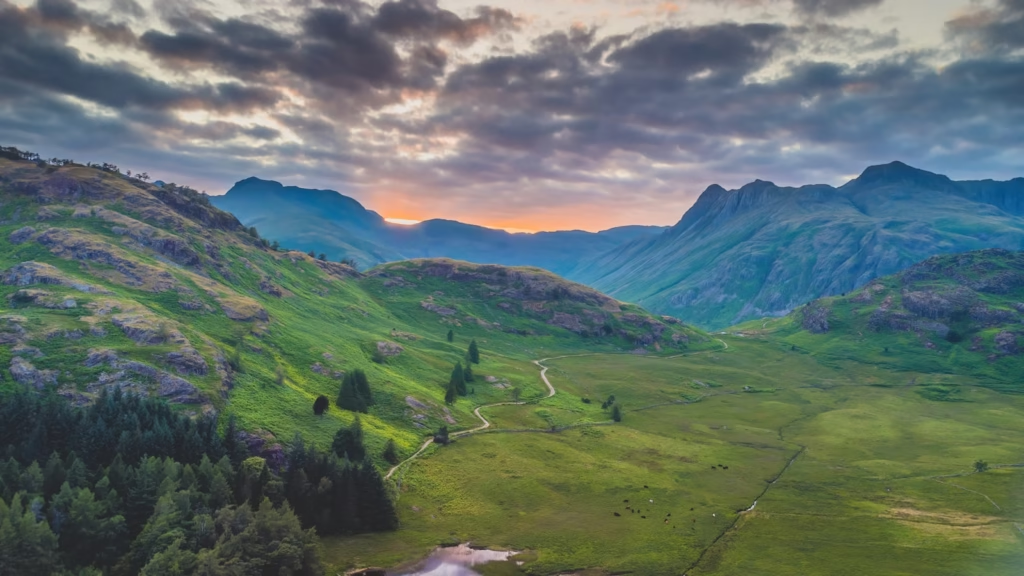
Shut Up Legs
Shut Up Legs gives riders a useful alternative to the traditional Lake District monster sportive.
The 2026 event is scheduled for Saturday 5 September from Staveley, starting at Wheelbase Cycles, and offers two significantly different routes. The shorter option is around 25 miles with roughly 1,800 feet of climbing, while the long route covers just over 62 miles with more than 6,000 feet of ascent.
That spread makes it particularly useful for mixed-ability groups. Newer riders can take on a proper organised ride in the Lakes without being thrown at Hardknott, while stronger riders still get a substantial climbing day.
It also sits later in the calendar than many of the classic Lake District events, making it a useful September target after a summer of riding.
For riders new to organised events, our best beginner-friendly sportives in the UK guide gives a useful benchmark for how much distance and climbing makes sense for a first event.
Best for: mixed-ability groups and riders wanting a late-season Lake District target
Difficulty: 2/5 short route, around 4/5 long route
Why ride it: two genuinely different route options and a strong charity focus
Main warning: more than 6,000 feet of ascent over 62 miles still makes the long route a serious ride
Tour de Furness
The Tour de Furness sits on the south-western edge of the Lake District rather than taking riders over the central passes, but it is one of Cumbria’s strongest options for anyone who wants the scenery without turning the day into a survival exercise.
The 2026 event took place on Sunday 28 June from Barrow-in-Furness, with several route options extending up to around 74 miles.
The roads around Furness are generally more rolling than the Hardknott-Wrynose corridor, but riders still get views towards the fells and coast, along with enough distance to make the longer route a worthwhile endurance target.
That makes it a good introduction to organised riding in Cumbria for cyclists who are comfortable with distance but not yet ready for repeated 20% gradients.
Best for: first-time sportive riders, groups and riders who prefer rolling terrain
Difficulty: around 1.5-3.5/5 depending on route
Why ride it: route choice, coastal scenery and a less brutal introduction to Cumbrian riding
Main warning: choose the longer option if you want a proper endurance challenge rather than a social event
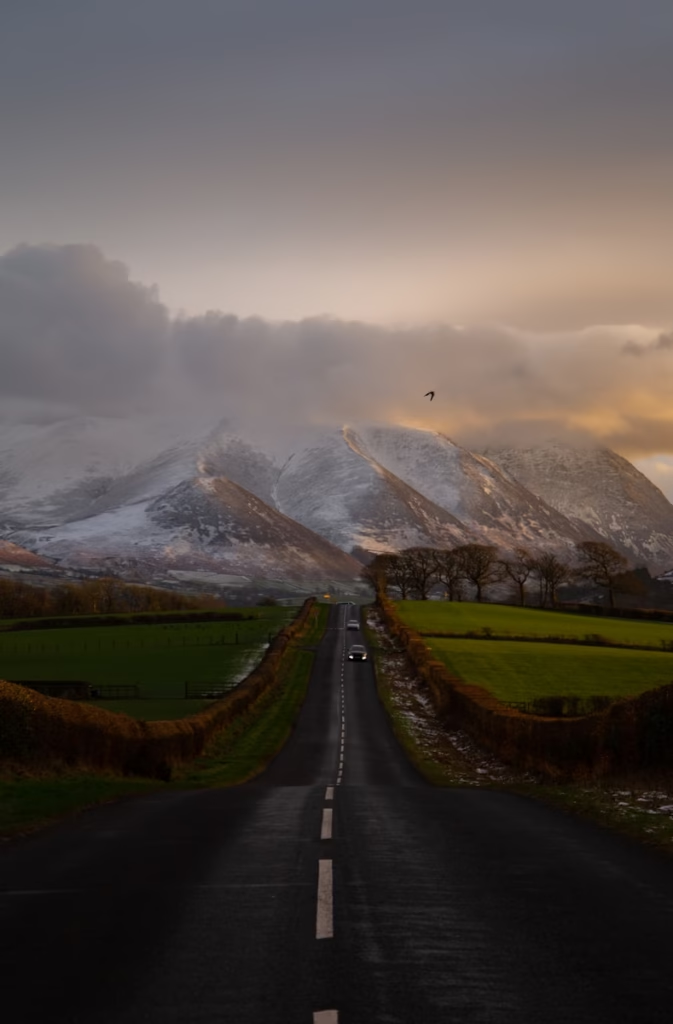
Back O’Skiddaw and the northern Lakes
The roads north and west of Keswick offer a different kind of Lake District sportive riding.
Routes around Skiddaw, Bassenthwaite and Caldbeck tend to be less dependent on huge headline gradients than Hardknott or The Struggle, but they are rarely flat. The challenge comes through persistent climbing, exposed roads and repeated changes of rhythm.
The Back O’Skiddaw sportive associated with Keswick Mountain Festival has traditionally used around 70km of these roads, making it one of the better options for riders who want a genuine Lake District event without taking on the hardest passes.
This is also an area worth considering if your main priority is scenery and a good day on the bike rather than being able to say you survived Hardknott.
Best for: intermediate riders and anyone wanting a first Lakeland sportive
Difficulty: around 2/5
Why ride it: quieter northern Lakes roads and a more manageable climbing profile
Main warning: exposed conditions can make the route harder than the gradient figures suggest
Which is the hardest Lake District sportive?
The Fred Whitton Challenge is the obvious answer.
It is not merely the distance that makes it so hard. The combination of climbing, technical descents, narrow roads and the timing of Hardknott and Wrynose late in the ride creates a far more severe challenge than a standard century.
That reputation is why the Fred sits at the top of our guide to the toughest sportives in the UK.
The Lakeland Loop is shorter but still deserves respect because the difficulty is concentrated into fewer miles. Riders who attack the early part of the route can still reach Hardknott with very little left.
| Sportive | Typical distance | Difficulty | Best for |
|---|---|---|---|
| Fred Whitton Challenge | Around 108-112 miles | 5/5 | Experienced endurance riders |
| Lakeland Loop | Around 70 miles | 4.5/5 | Strong climbers |
| Shut Up Legs long | 62 miles | 4/5 | Experienced sportive riders |
| Tour de Furness long | Around 74 miles | 3/5 | Endurance riders wanting less extreme gradients |
| Back O’Skiddaw | Around 70km | 2/5 | Intermediate riders |
| Shut Up Legs short | 25 miles | 2/5 | Beginners and improving riders |
The Fred also ranks among the best 100-mile sportives in the UK because it combines the century milestone with one of the hardest climbing profiles available in Britain.
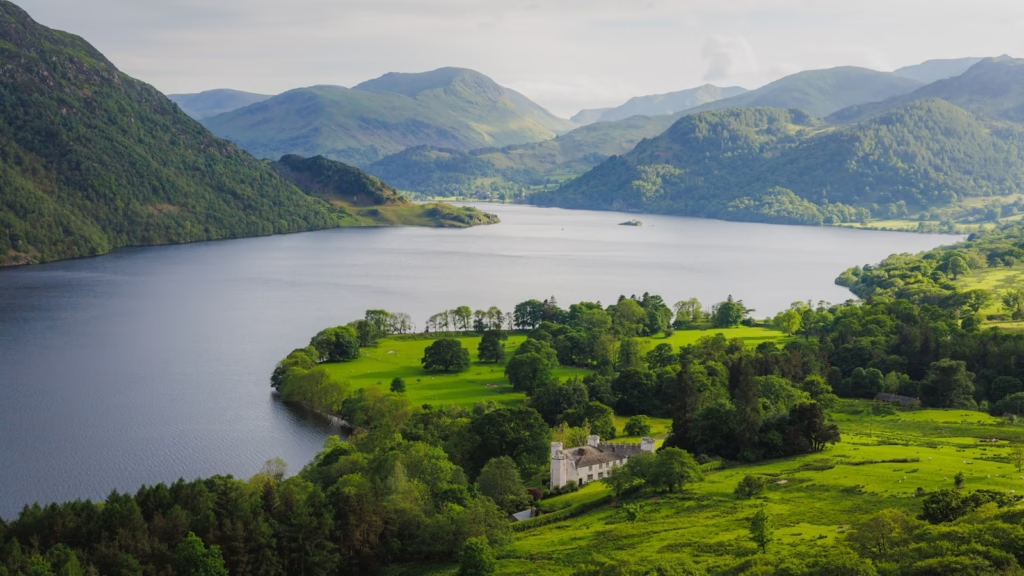
Hardknott and Wrynose change the calculation
Distances can be misleading in the Lake District.
A 100km route in flatter parts of Britain might be ridden largely at a steady endurance pace. In the Lakes, the same distance can include repeated gradients that push riders well above that intensity even when they are trying to pace themselves conservatively.
Hardknott Pass is the extreme example. The climb from Eskdale rises severely almost immediately, with ramps capable of touching 30% and tight hairpins where maintaining momentum becomes as important as fitness.
Wrynose then follows before the legs have properly recovered.
That combination is why the Fred Whitton is not simply another hard century. Riders reach the steepest roads when they are already carrying hours of fatigue, and a pacing mistake made before Whinlatter can still be punished much later.
What gearing should you use?
For the harder Lake District sportives, low gearing is more useful than pride.
A strong rider may be comfortable with something around 34×32, but 34×34, 34×36 or an equivalent lower setup gives far more room to manage Hardknott, Wrynose and The Struggle without turning every steep ramp into an all-out effort.
The key question is not whether you can push a hard gear up a 20% climb when fresh. It is whether you want to push that gear after five or six hours of riding.
Lower gearing also helps protect cadence and legs for what comes next. Grinding a huge gear at very low cadence can make the remaining climbs considerably harder even if you successfully reach the top.
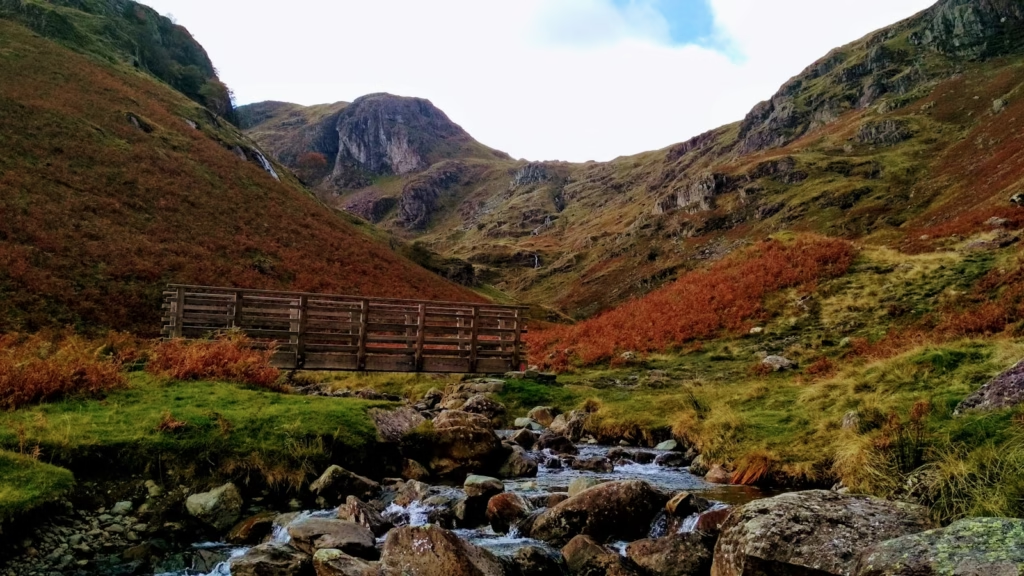
Weather can make the same sportive feel completely different
The Lake District has a deserved reputation for rapidly changing conditions.
A dry Wrynose descent can be one of the best parts of the day. The same road in cold rain is a completely different experience.
Mountain roads are more exposed to wind and can be significantly colder than the valleys, while shaded sections may remain wet even when the rest of the route has dried. Riders should therefore prepare for conditions across the whole route rather than simply checking the temperature forecast for Keswick, Ambleside or Grasmere.
A lightweight waterproof and gloves can be worth far more than the small weight penalty on a long Lakeland day.
For newer riders, the first sportive checklist covers the basic kit, food and mechanical spares worth carrying before adapting that list for the extra exposure of the Lake District.
Which Lake District sportive is best for beginners?
The Fred Whitton is not the sensible starting point for most new sportive riders.
For someone already comfortable riding 100km but with limited experience of very steep gradients, the Lakeland Loop can be an attractive step up if the rider has trained specifically for Hardknott and Wrynose.
For a genuine first sportive, the shorter Shut Up Legs option, Tour de Furness or a northern Lakes event around Skiddaw makes much more sense. These still provide a proper Cumbrian riding experience without making success dependent on surviving one of England’s steepest paved roads.
Our best beginner-friendly sportives in the UK guide is useful if you are deciding whether to start in the Lakes at all or build towards it through an easier organised event first.
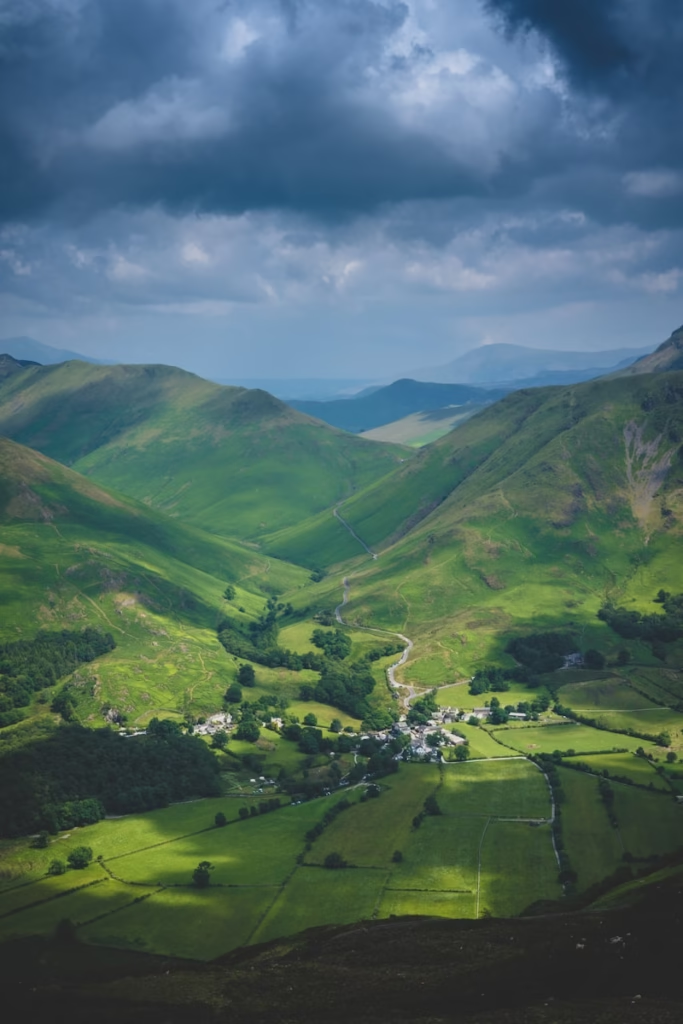
Where should you stay for a Lake District sportive?
The best base depends heavily on the event.
Ambleside and Grasmere work well for central Lake District rides and give easy access to Great Langdale, The Struggle and Kirkstone.
Keswick is the obvious option for northern routes, Whinlatter and Skiddaw.
Coniston and Eskdale make more sense if Hardknott, Wrynose and the western passes are central to the route.
Kendal and Staveley offer easier access from outside the national park while still keeping the major riding areas within reach.
If an event has a fixed start venue, staying close to it is usually worth the extra cost. Driving narrow Lake District roads early in the morning alongside hundreds of other riders is rarely the ideal start to a long day.
-
 Photo Credit: A.S.O./Billy Ceusters
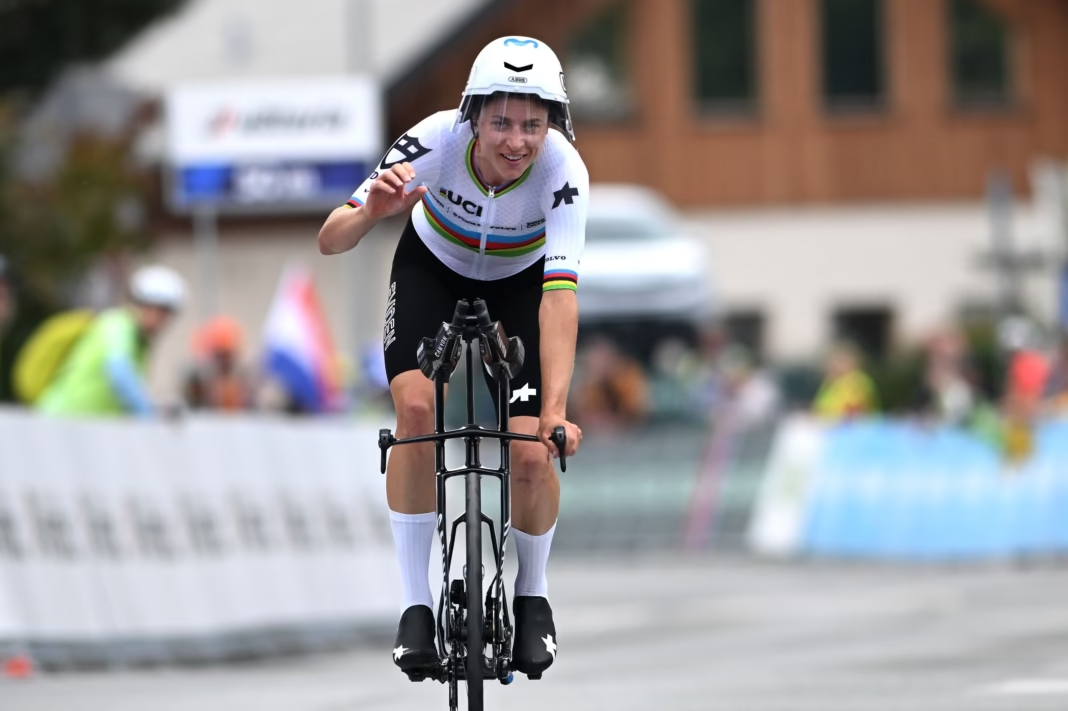

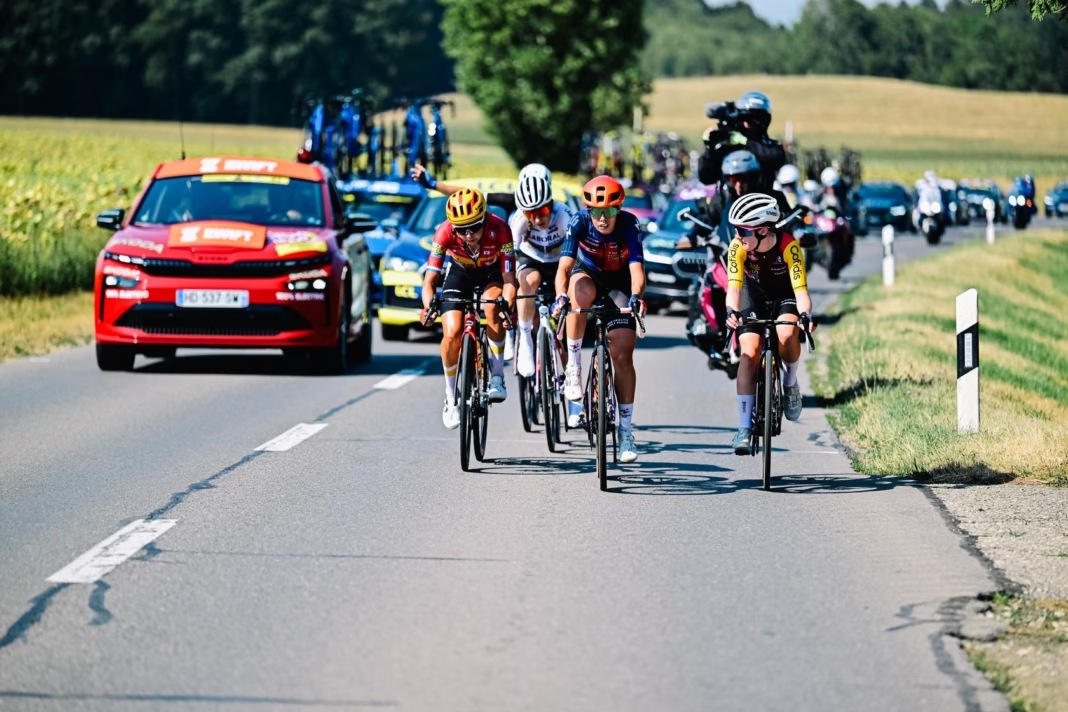
Why the Lake District works so well for sportives
The obvious answer is the scenery, but the quality of Lake District riding goes beyond the views.
The roads have character.
Hardknott does not feel like Wrynose. Whinlatter does not feel like The Struggle. The open northern roads around Keswick feel completely different from the tight lanes around Great Langdale.
A single sportive can therefore contain several different kinds of riding rather than one repeated climbing pattern.
That is also why the Lake District remains so prominent in lists of Britain’s hardest and best organised rides. In our best UK sportives to ride in 2026, the Fred Whitton sits near the very top because the event turns the area’s natural difficulty into a genuinely distinctive one-day challenge.
Which Lake District sportive should you choose?
If you want the event that defines sportive riding in the Lake District, choose the Fred Whitton Challenge.
If you want the best balance between famous climbs and a more manageable total distance, choose the Lakeland Loop.
For a first organised ride in the area, the Tour de Furness, Back O’Skiddaw or shorter Shut Up Legs route are more sensible starting points.
The Lake District is hard enough that the best sportive is not automatically the longest one. Pick the event that gives you enough challenge to make the day memorable without turning the entire experience into survival.

