
Canberra does not look like an obvious cycling destination in the same way as Girona, Mallorca or the French Alps. It is a planned capital built around a lake, surrounded by suburbs, bushland and the Brindabella ranges rather than famous mountain passes.
That is exactly why riding there works so well. Canberra combines a huge network of shared paths with short, steep climbs close to the centre, quiet roads heading west and enough route variety to move from an easy spin around Lake Burley Griffin to a genuinely hard climbing day without complicated logistics. It feels less like a cycling resort and more like a city where riding simply fits naturally into the landscape.
Then, a few hours south, the scale changes completely.
The Snowy Mountains offer some of Australia’s best high-country road cycling. Jindabyne sits beneath roads climbing towards Thredbo, Perisher and Charlotte Pass, while the Alpine Way pushes west through forest, alpine country and long mountain descents towards Khancoban. Canberra gives you variety and everyday riding. The Snowies give you altitude, long climbs and a sense of remoteness that makes the riding feel much bigger.
Together they form one of the strongest cycling combinations in Australia, complementing other destinations covered in our wider Australia and New Zealand cycling guide.
Canberra is much hillier than the map suggests
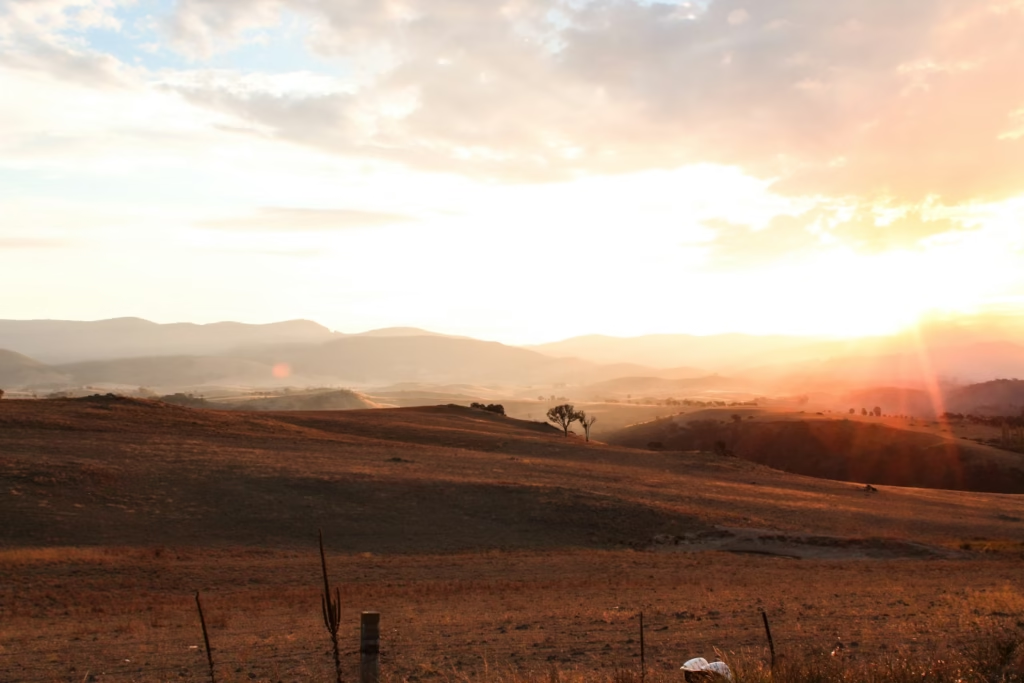
The defining feature of Canberra cycling is how quickly flat urban riding gives way to climbing.
Lake Burley Griffin provides the obvious centrepiece. It is possible to ride around the lake past Parliament House, the National Gallery, the Australian National University and Yarralumla largely without feeling as though you are negotiating a conventional capital city.
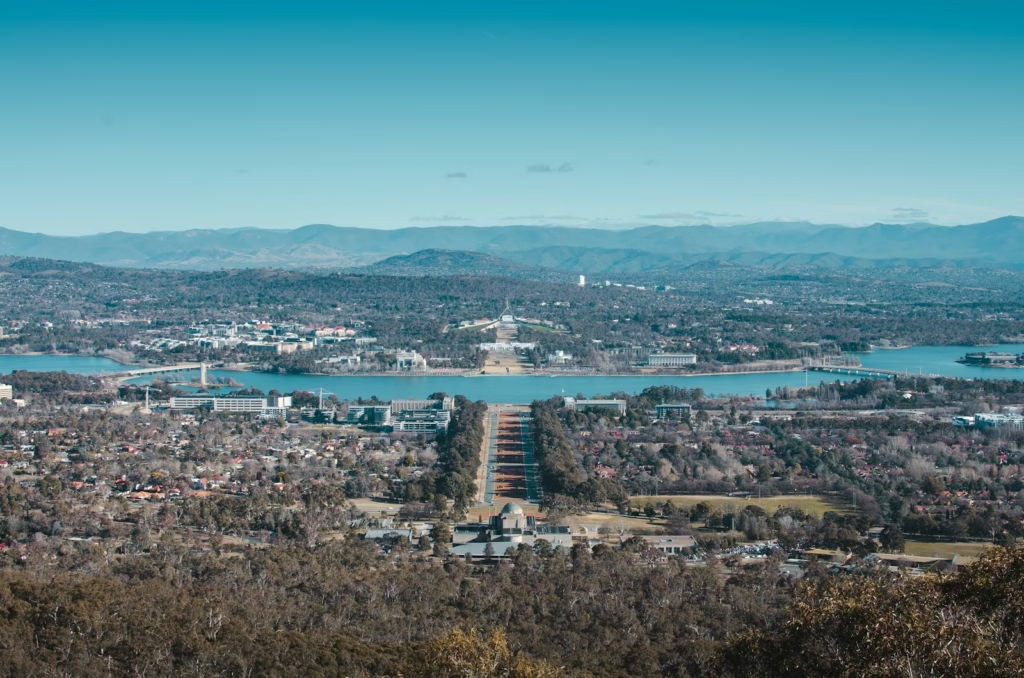
Several of Canberra’s best-known climbs rise directly from that network, which means a recovery ride can turn into a hill session with almost no transition. Mount Ainslie is the clearest example, climbing from close to the centre through bushland towards the lookout above the Australian War Memorial.
It is only a short climb, but it is steep enough to become a proper effort. For riders used to long European passes, Canberra’s climbing initially feels compressed. The gradients arrive quickly, the effort becomes hard almost immediately and the summit often comes just as you settle into a rhythm.
That makes the city very different from Australia’s larger alpine destinations such as the Victorian High Country around Bright and Falls Creek, where the climbs tend to be defined more by duration and altitude.
Mount Ainslie is Canberra’s benchmark climb
If you only have time for one hard climb in Canberra, Mount Ainslie is probably the right choice.
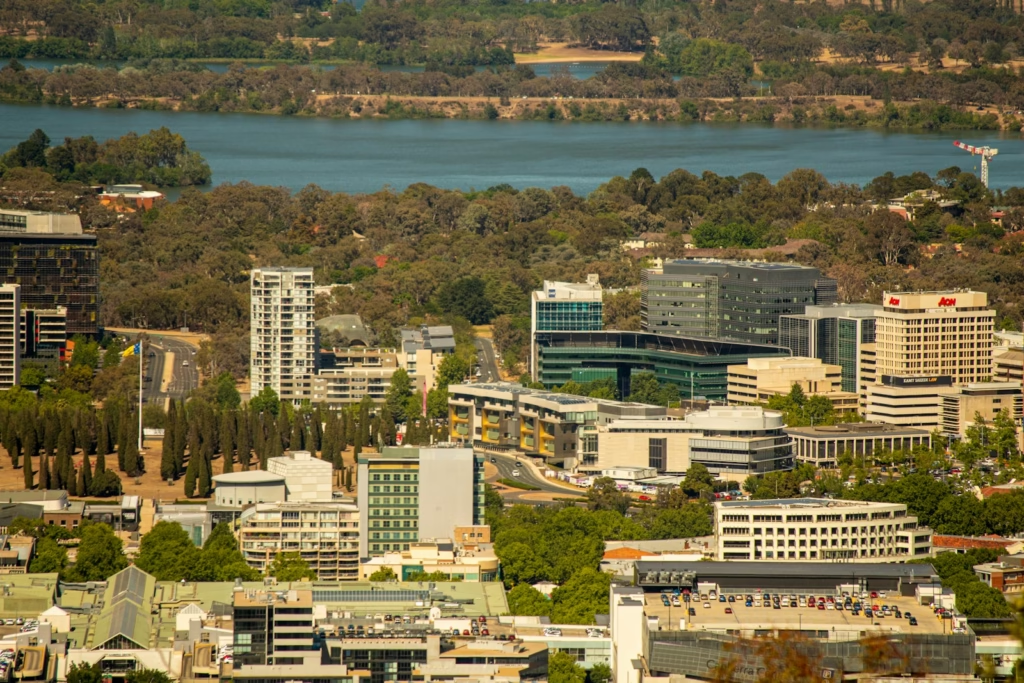
The road rises through eucalyptus bush towards one of the best viewpoints over the capital. As the climb gains height, the city progressively opens behind you, with Anzac Parade forming a straight line towards Lake Burley Griffin and Parliament House beyond.
The climb is short enough to attack but long enough that starting too hard is punished. There is little genuine recovery once the road begins climbing, and the upper section makes it difficult to hide an overambitious first few minutes.
That gives Mount Ainslie its appeal as a local benchmark. A strong rider can treat it as a threshold effort, while anyone visiting simply to explore can climb steadily and use the summit as a viewpoint rather than a finish line.
It is not an epic mountain road.
It does not need to be.
Mount Ainslie is good because it gives Canberra a hard, scenic climb almost on the doorstep of the city.
Black Mountain adds another short, sharp test
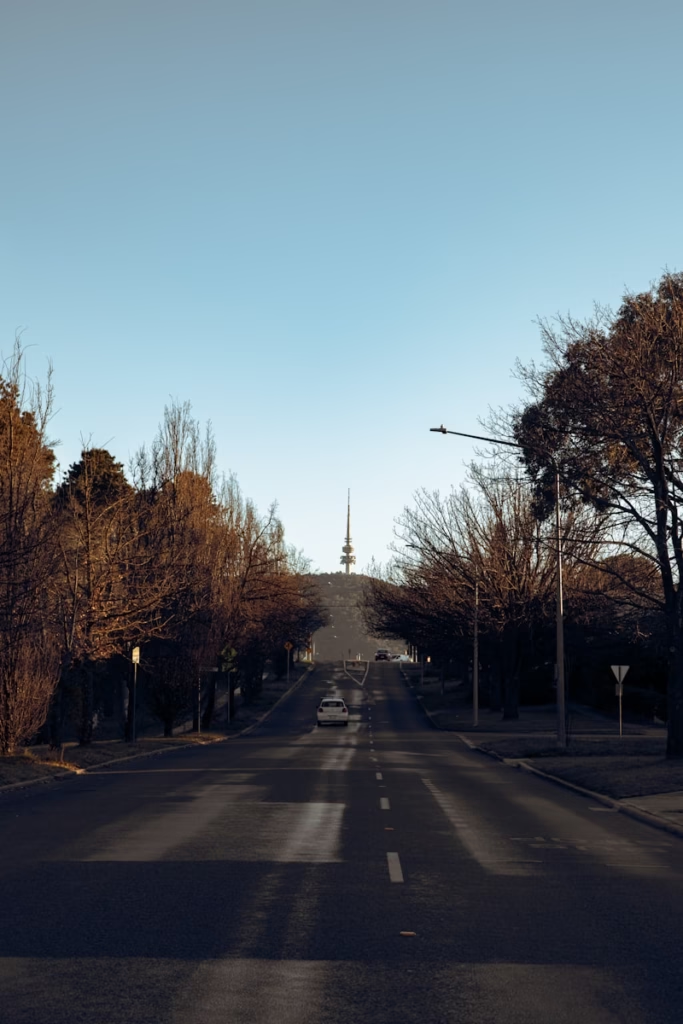
On the western side of the centre, Black Mountain provides Canberra’s other obvious city climb.
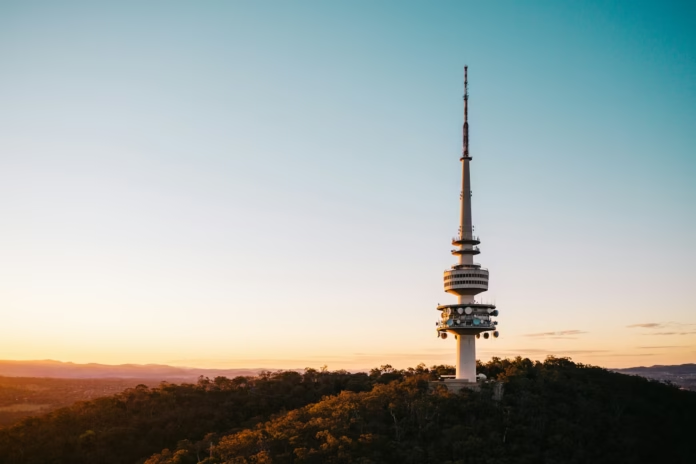
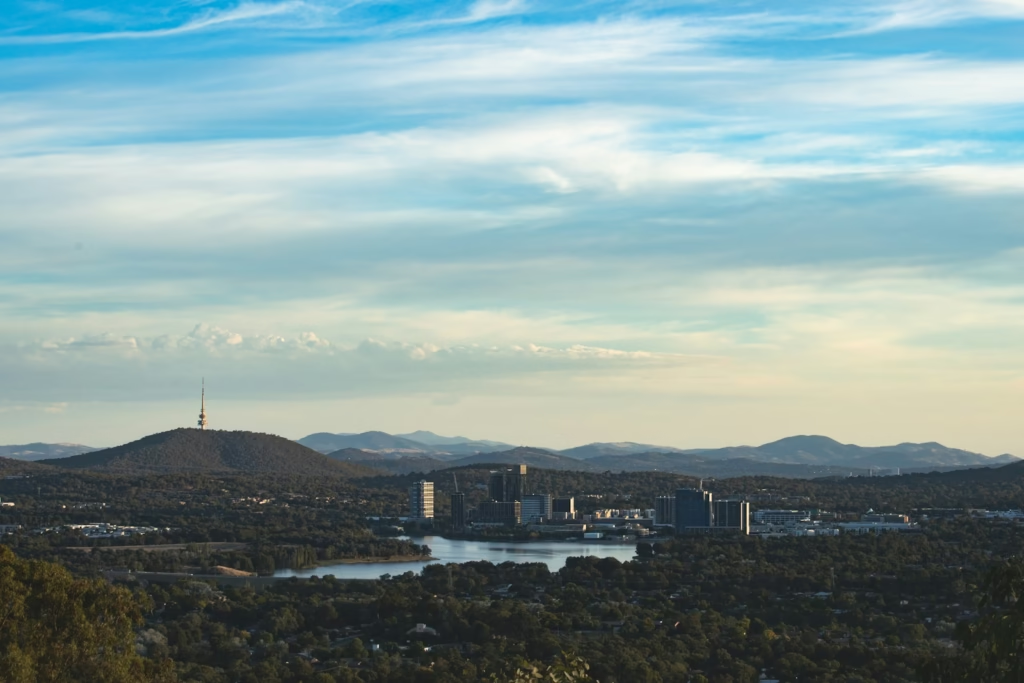
The telecommunications tower at the summit makes it easy to identify from around Lake Burley Griffin, and the road has long been part of the local training landscape. Like Mount Ainslie, it is more about intensity than endurance.
Black Mountain tends to feel sharper from the beginning. The gradient arrives quickly and does not offer much opportunity to settle, making it ideal for riders who enjoy short climbing efforts rather than long tempo ascents.
Combining the two gives one of the simplest ways to understand Canberra by bike. Ride the lake, climb Mount Ainslie, cross the city and take on Black Mountain. The total distance does not need to be huge, but the ride still has enough climbing to feel substantial.
That compact mixture of city riding and immediate elevation is one reason Canberra deserves to sit alongside places such as Sydney and its surrounding climbs when planning an Australian cycling trip.
Mount Stromlo is the gateway to bigger riding
West of the centre, Mount Stromlo marks the point where Canberra starts becoming much more serious for cyclists.
Stromlo Forest Park is best known internationally for mountain biking, but the wider area matters to road riders because it leads naturally towards Cotter, Uriarra and the Brindabilla foothills. It also gives Canberra a dedicated cycling culture that goes beyond simple commuting infrastructure.
The important thing is not necessarily riding Stromlo as an isolated target. It is what comes after it.
Leave the centre, head west and the roads begin opening up. Suburban Canberra gradually disappears, traffic thins and the Brindabellas become the dominant feature ahead. Within a relatively short distance, the ride has changed from urban cycling to proper country-road endurance riding.
Few capital cities make that transition so easily.
Cotter and Uriarra is the classic Canberra road ride
If Mount Ainslie is Canberra’s benchmark climb, the Cotter-Uriarra loop is its benchmark road ride.
Leaving the western edge of the city, the route heads through open countryside towards Uriarra Crossing and the Cotter River before looping back towards Canberra. It is rolling rather than mountainous, but the elevation accumulates quickly through repeated climbs and river crossings.
This is the sort of terrain that encourages groups to ride harder than planned. There are long sections where a steady tempo is easy to establish, followed by short rises that split tired riders almost immediately.
The landscape also makes the ride feel much farther from the capital than it really is. Suburbs disappear behind you, the road opens into bush and farmland, and the Brindabella ranges dominate the western skyline.
Canberra’s cycling appeal is clearest here. The city infrastructure gets you out efficiently, but the ride itself feels rural.
Corin and the Brindabellas are where Canberra becomes a mountain base
Ride farther south-west towards Tidbinbilla, Corin and the Brindabellas and the character changes again.
The climbs become longer, the roads quieter and the sense of isolation much stronger. This is where Canberra stops feeling like a city with good hills and begins to feel like a genuine mountain cycling base.
Corin Road is one of the most useful targets for riders looking for a bigger day. The road heads deep into the ranges, steadily removing the urban feel as it climbs through bushland towards the higher country.
The challenge is different from Mount Ainslie or Black Mountain. There is less emphasis on one short effort and more on accumulated fatigue, distance and pacing. Food and water begin to matter more, and the lack of easy shortcuts means riders need to think about the full route rather than simply the next climb.
For someone staying several days, the progression is obvious. Start with the city climbs, move on to Cotter and Uriarra, then use Corin and the Brindabellas when you want a proper mountain day.
Lake Burley Griffin is more than a recovery loop
It would be easy to treat Lake Burley Griffin as the route you ride when your legs are too tired for the hills.
It deserves more than that.
The lake is what ties Canberra together as a cycling city. Shared paths and bike-friendly connections allow riders to move between the parliamentary zone, university, arboretum, Black Mountain and eastern suburbs without constantly negotiating heavy traffic.
It is ideal for easy riding, but it is also the best introduction to the city. A loop around the water gives you the geography before you begin heading towards the mountains, while the major landmarks make the ride feel more like exploring than training.
That is one of Canberra’s understated strengths. You do not need to sacrifice sightseeing to get an easy day on the bike.
Canberra feels like a cycling city without trying to sell itself as one
There is no need for a cycling-themed café on every corner or rows of hire bikes outside hotels to tell you that riding matters in Canberra.
The evidence is practical.
Paths connect suburbs. Climbs start close to the centre. Weekend groups disappear west towards Cotter. Stromlo gives riders dedicated facilities, while the surrounding bushland creates an enormous amount of route choice without needing to leave the city by car.
That makes the atmosphere different from destinations built heavily around cycling tourism. Canberra feels lived in rather than curated for riders.
For a travelling cyclist, that can be a strength. You can ride hard in the morning and still spend the rest of the day in a functioning city rather than a mountain resort.
The same combination of riding and broader travel appeal is part of what makes destinations such as Adelaide and McLaren Vale work so well.
The Snowy Mountains change the scale completely
Drive south from Canberra through Cooma towards Jindabyne and the terrain gradually gets bigger.
Jindabyne is the obvious base for road cycling in the Snowy Mountains. The town sits beside Lake Jindabyne at around 900 metres above sea level, with roads climbing from there towards the ski resorts and Australia’s highest alpine country.
From Jindabyne, the obvious options spread in several directions. Kosciuszko Road climbs towards Perisher and Charlotte Pass, while the Alpine Way runs west towards Thredbo, Dead Horse Gap, Geehi and eventually Khancoban.
The riding feels completely different from Canberra.
The climbs are longer.
The altitude is higher.
Services are farther apart.
The weather becomes less predictable.
Most importantly, the landscape feels genuinely alpine without losing its Australian identity.
Jindabyne to Charlotte Pass is the signature Snowy Mountains ride
For road cyclists, Jindabyne to Charlotte Pass is one of the defining rides of the Australian high country.
The road climbs progressively away from Lake Jindabyne towards the ski fields, passing through increasingly alpine terrain before reaching Charlotte Pass at more than 1,800 metres above sea level.
Unlike Mount Ainslie or Black Mountain, this is not a climb where everything is decided by one hard ten-minute effort. The road trends upwards for tens of kilometres, with changes in gradient and occasional easier sections breaking up the ascent.
Pacing becomes much more important. Ride the early kilometres too aggressively because they feel manageable and the final approach can become a long struggle. Ride within yourself and the route rewards you as the trees thin and the high-country landscape begins opening around you.
This is where the Snowy Mountains start to resemble the long alpine riding found around Bright and Falls Creek, although the atmosphere remains distinctively Snowies.
Perisher is a useful target in its own right
Riders do not have to continue all the way to Charlotte Pass for the road to feel alpine.
Perisher provides a natural intermediate destination and still requires a substantial climb from Jindabyne. It also has the advantage of facilities at the resort, making it easier to build a shorter ride around food, water and weather.
That last point matters.
Conditions can change quickly with altitude in the Snowy Mountains. A comfortable morning beside Lake Jindabyne can turn into cold wind higher up, particularly outside midsummer.
The descent amplifies that difference. Climbing generates enough heat to hide how cold the air has become. Once the road turns downhill, the temperature suddenly matters.
A light jacket that felt unnecessary beside the lake can become essential above Perisher.
Thredbo and Dead Horse Gap give the Alpine Way its character
West of Jindabyne, the Alpine Way offers a different version of the Snowies.
The road rises towards Thredbo through Kosciuszko National Park, gradually becoming more mountainous as it approaches the resort. Thredbo itself makes a useful ride destination because there are cafés, facilities and enough distance from Jindabyne to produce a meaningful endurance day.
Continue beyond the resort and the climb towards Dead Horse Gap becomes the more interesting option.
The road rises into increasingly open alpine country, leaving the resort atmosphere behind and reaching one of Australia’s highest road crossings. It feels remote without requiring the commitment of heading all the way down the western side of the mountains.
For many riders, this is the sweet spot of Snowy Mountains cycling. It gives you altitude, long climbing and proper mountain scenery while keeping the route relatively straightforward.
The western Alpine Way is where the Snowies become seriously hard
Continue beyond Dead Horse Gap and the scale changes again.
The Alpine Way drops towards Geehi and Khancoban, losing a huge amount of height through forest before eventually reaching the western side of the range. Descending that road can feel effortless and spectacular.
Turning around is the problem.
Every metre lost has to be regained.
That creates a ride where elevation matters much more than simple distance. The western approaches are long, quiet and isolated, with fewer convenient places to refill or abandon the route if the legs disappear.
This is not the obvious first ride for someone arriving in Jindabyne.
It is the route for the rider who has already done Thredbo or Charlotte Pass and wants to find out how hard the Snowies can become.
Cabramurra and Kiandra show another side of the high country
The roads around Cabramurra, Kiandra and the Snowy Mountains Scheme offer a different atmosphere again.
This is high-country cycling without the resort focus of Thredbo and Perisher. Roads move through forest, open mountain country and the infrastructure created around one of Australia’s biggest hydroelectric engineering projects.
That gives this part of the Snowies a character that is difficult to compare with European alpine riding. There are no villages every few kilometres and very little of the polished tourism infrastructure associated with the major Alpine passes.
Instead there are long gaps between settlements, huge landscapes and the feeling that the road exists because people needed to cross or engineer the mountains rather than because cyclists eventually discovered them.
That emptiness is part of the appeal.
The Snowies should not be treated as Europe’s Alps in miniature
Comparisons with the European Alps are inevitable because these are Australia’s highest roads and some of its most substantial climbs.
The experience is different.
The Snowy Mountains do not reach the same altitude as the high passes of France, Italy or Switzerland, and there are fewer long valleys filled with mountain villages, cafés and cyclists.
The isolation makes up for some of that.
A long Snowy Mountains climb can pass through eucalyptus forest with almost nobody else around. There may be no spectators, no roadside restaurants and no obvious sign that this is a famous cycling road.
That gives the riding a scale that is not entirely captured by elevation figures.
European alpine cycling often feels historic and heavily travelled.
The Snowies feel spacious.
For riders interested in how different alpine regions create their own identity, our guides to Livigno and Tirol offer useful contrasts.
Wildlife is part of the road environment
Road cycling in Australia brings considerations that barely appear in European cycling guides.
Kangaroos are common around Canberra, particularly around bushland and open areas early or late in the day. The Snowies add wallabies, wombats and other wildlife that can appear surprisingly close to the road.
Most of the time this improves the experience.
At speed, particularly during descents in poor light, it becomes something to take seriously.
The sensible approach is not to ride nervously but to recognise that a quiet road is not necessarily an empty one. Good visibility matters, as does reducing unnecessary risk around dawn and dusk when wildlife activity can be higher.
For the same reason, standard road positioning and visibility remain important once the routes leave the separated paths around Canberra. Our guide to road positioning for cyclists covers the basic principles for riding predictably on open roads.
Weather can make the same route feel completely different
Canberra and the Snowy Mountains both experience bigger temperature swings than many visitors expect from Australia.
Canberra summers can be hot and dry, making early starts attractive for long rides towards Cotter or Corin. Winter mornings can be properly cold, especially on exposed roads outside the city.
The Snowies amplify that variability. Lower sections can still become hot in summer, while conditions on the alpine plateau may be cold, windy or rapidly changing at the same time.
Winter is a different proposition altogether. Snow, ice and seasonal closures can make the obvious alpine road routes unsuitable for normal road cycling, which means the Snowies should primarily be treated as a warmer-season destination unless conditions are carefully checked.
For riders tempted to push into colder conditions, the basic risks are similar to those covered in our guide to cycling safely in snow and ice.
Canberra and Jindabyne make a natural two-base trip
The best way to ride the region is not necessarily to choose between Canberra and the Snowies.
Use both.
Spend several days in Canberra first. Ride Lake Burley Griffin and Mount Ainslie on arrival, add Black Mountain and Stromlo, then use Cotter-Uriarra or Corin for a longer day once the legs have adjusted.
After that, drive south to Jindabyne.
The transition works well because Canberra’s repeated climbing provides a useful introduction before the Snowy Mountains demand much longer efforts. The trip also gains variety. One half is built around a functioning capital city with excellent cycling access, while the other feels increasingly alpine and remote.
It is the same reason a broader Australian trip can work so well by combining contrasting destinations. The Australia and New Zealand cycling hub includes everything from coastal riding and rainforest climbs to the Victorian High Country and Tasmania.
A good first ride in Canberra
For someone arriving with one afternoon available, combining Lake Burley Griffin with Mount Ainslie is hard to beat.
The lake provides easy kilometres and a tour of the city before Mount Ainslie gives the ride a clear objective. The contrast works perfectly: flat paths and broad views around the water, followed by a short, hard climb into bushland.
If the legs still feel good afterwards, Black Mountain can be added for another effort.
If they do not, ride back around the lake and save it for the next day.
Canberra’s advantage is that there is no need to force every attraction into one ride.
A good hard Canberra day
Stronger riders should head west.
Ride through Stromlo and build a route around Uriarra and Cotter, using the repeated rises and river crossings to accumulate climbing without relying on one major ascent.
This is the Canberra route that best suits a group because it naturally changes pace. There are sections for riding steadily together, climbs where stronger riders can push on and enough open countryside to make the day feel like a proper escape from the city.
Extend it towards Tidbinbilla or Corin and the ride becomes much more serious.
That ability to scale the difficulty without completely redesigning the day is one of Canberra’s strongest qualities.
A good first Snowy Mountains ride
From Jindabyne, Thredbo is an excellent first target.
The distance is substantial enough to feel like a mountain ride without immediately requiring the full commitment of Charlotte Pass or the western Alpine Way. The road gains height progressively through the national park and finishes somewhere with cafés and facilities.
It is also useful as a test.
If Jindabyne to Thredbo feels comfortable, Dead Horse Gap becomes the obvious extension.
If it feels harder than expected, the route has already given you a proper day without trapping you deep in the mountains.
The big Snowy Mountains day
For the defining road ride, take Kosciuszko Road from Jindabyne towards Charlotte Pass when the road is open and the weather is suitable.
The attraction is not one headline gradient.
It is the progression through the landscape.
Lake Jindabyne drops away below, the road climbs through forest, Perisher appears and the scenery becomes increasingly alpine as the route continues towards Charlotte Pass.
By the time you turn around, the ride feels much larger than a simple out-and-back.
The return contains plenty of descending, but the rolling nature of the road means it does not become a free ride all the way back to Jindabyne. There is enough climbing left to punish anyone who emptied themselves on the way up.
That is part of what makes it such a satisfying route.
What bike should you bring?
A normal road bike is ideal for almost everything in Canberra and the Snowy Mountains.
You do not need a specialist climbing bike, but sensible gearing is valuable. Canberra’s short climbs can be steep enough to punish oversized gears, while the Snowies reward a setup that allows you to maintain a steady cadence through longer ascents.
Wider road tyres also make sense. A 28mm or 30mm setup adds comfort and confidence on rural road surfaces without making the bike feel slow.
The bigger consideration in the Snowies is reliability.
Carry tubes or a proper tubeless repair kit, a pump, basic tools, enough food and more water than you think you will need on remote routes. Weight matters far less than avoiding a long walk or difficult pickup from an isolated stretch of the Alpine Way.
Canberra works because the options are so dense
Canberra’s greatest cycling strength is not one world-famous climb.
It is the number of different rides available from one base.
You can ride completely flat around the lake, climb hard within minutes of the city centre, use separated infrastructure, head west for rolling endurance kilometres or continue into the Brindabellas for a proper mountain day.
Very few capitals make all of those options straightforward.
That also makes Canberra useful within a longer Australian cycling trip. It offers a different experience from the coastal and harbour riding around Sydney, the Tour Down Under roads around Adelaide and McLaren Vale and the subtropical climbs of the Gold Coast hinterland.
Canberra is quieter, cooler and more understated.
That is part of the appeal.


The Snowy Mountains give the trip its sense of scale
The Snowies offer what Canberra cannot.
The climbs last longer, the roads reach higher and the settlements become farther apart. The riding feels more exposed and more dependent on planning, particularly once you move beyond Thredbo, Perisher and the main resort corridors.
There is also a distinctly Australian version of alpine isolation. Snow gums replace European conifers, hydroelectric infrastructure appears beside national park wilderness and huge views open without villages filling the foreground.
For riders who want Australia’s most concentrated collection of long alpine climbs, the Victorian High Country may still have the edge. Our Bright and Falls Creek guide covers that region in detail.
The Snowy Mountains offer something different.
They feel less concentrated, more open and in places considerably more remote.
Canberra and the Snowies complement each other perfectly
Canberra is where you can ride every day. The Snowy Mountains are where you go for the rides you remember.
Mount Ainslie provides the sharp local benchmark, Black Mountain adds another short test and Cotter-Uriarra turns Canberra into a genuine endurance base. Roads towards Corin and the Brindabellas show how quickly the capital can disappear behind you.
Then Jindabyne raises the scale.
Thredbo, Dead Horse Gap, Perisher and Charlotte Pass bring longer climbing, higher altitude and the sense of space that defines Australia’s high country.
Neither destination needs to imitate the European Alps to justify a cycling trip.
Canberra gives you one of Australia’s most naturally rideable cities.
The Snowy Mountains give you roads that feel as though they keep going long after the rest of the country has disappeared behind you.

