

The Tour de France Femmes 2026 runs from Saturday 1 August to Sunday 9 August, with nine consecutive stages beginning in Switzerland before the race moves into France and finishes in Nice.
For UK viewers, most stages begin around lunchtime or early afternoon and finish between roughly 4pm and 5pm BST. US viewers face much earlier starts, particularly on the West Coast, although the decisive final hour of most stages falls comfortably into the morning on Eastern Time.
The major exception is Stage 9. The short final mountain stage around Nice starts much later, meaning the Tour should be decided during the early evening in Europe, around lunchtime on the US East Coast and during the morning on the West Coast.
The times below are based on the official 2026 stage schedules. Normal road stages list the neutralised start, while Stage 4 uses the first rider’s individual time trial start. Expected finish times are estimates and can move depending on the speed of the race.
For television and streaming options, see our separate guides to watching the Tour de France Femmes 2026 in the UK, watching in the USA and the Tour de France Femmes 2026 live stream guide by country.
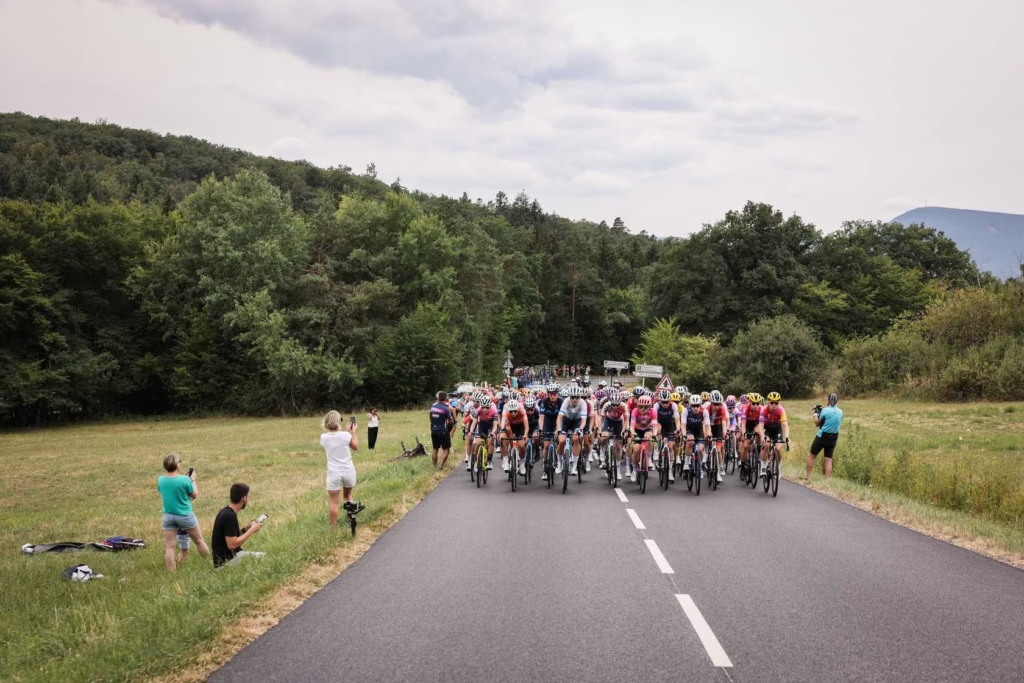
Tour de France Femmes 2026 UK and US start times
| Stage | Date | Route | UK start | US Eastern | US Pacific | Expected UK finish |
|---|---|---|---|---|---|---|
| 1 | Sat 1 Aug | Lausanne → Lausanne | 1:15pm | 8:15am | 5:15am | 4:44pm |
| 2 | Sun 2 Aug | Aigle → Geneva | 1:20pm | 8:20am | 5:20am | 4:47pm |
| 3 | Mon 3 Aug | Geneva → Poligny | 12:25pm | 7:25am | 4:25am | 4:40pm |
| 4 | Tue 4 Aug | Gevrey-Chambertin → Dijon ITT | 1:34pm* | 8:34am* | 5:34am* | 4:55pm* |
| 5 | Wed 5 Aug | Mâcon → Belleville-en-Beaujolais | 12:45pm | 7:45am | 4:45am | 4:41pm |
| 6 | Thu 6 Aug | Montbrison → Tournon-sur-Rhône | 12:35pm | 7:35am | 4:35am | 4:41pm |
| 7 | Fri 7 Aug | La Voulte-sur-Rhône → Mont Ventoux | 11:50am | 6:50am | 3:50am | 4:17pm |
| 8 | Sat 8 Aug | Sisteron → Nice | 12:40pm | 7:40am | 4:40am | 4:43pm |
| 9 | Sun 9 Aug | Nice → Nice | 3:05pm | 10:05am | 7:05am | From 5:51pm |
*Stage 4 is an individual time trial. The first rider starts at 1:34pm BST, while the final rider is scheduled to leave at approximately 4:28pm BST and finish at around 4:55pm.
The complete terrain and stage order are covered in our Tour de France Femmes 2026 route guide.
What time zone is the Tour de France Femmes in?
All nine stages take place in Central European Summer Time, CEST, which is one hour ahead of the UK during August. That means the UK conversion is straightforward: subtract one hour from the official Swiss or French schedule.
For US viewers, CEST is six hours ahead of Eastern Daylight Time and nine hours ahead of Pacific Daylight Time. A 1:30pm local stage start therefore becomes 7:30am ET and 4:30am PT.
The table above has already converted every start time into BST, ET and PT.
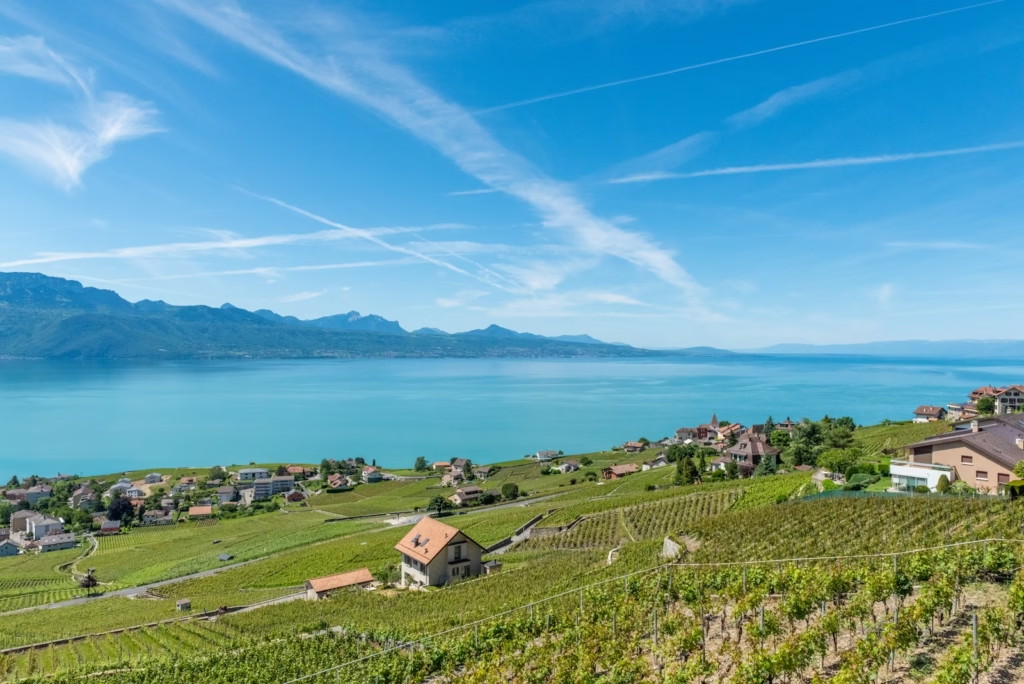
Stage 1 start time: Lausanne to Lausanne
The 2026 Tour begins in Lausanne on Saturday 1 August, with the neutralised start scheduled for 2:15pm local time. That makes the UK start 1:15pm BST, with US viewers looking at 8:15am ET and 5:15am PT.
The expected finish is around 5:44pm local time, or 4:44pm BST, 11:44am ET and 8:44am PT. The opening Swiss Grand Départ gives the Tour a relatively convenient Saturday start for British viewers, with the decisive part of the race falling during the afternoon.
Lausanne is officially a flat stage, but the route contains repeated climbing and the Côte Saint-François finish. Anyone watching specifically for the first yellow jersey should therefore tune in well before the final few kilometres rather than expecting a conventional city sprint.
Stage 2 start time: Aigle to Geneva
Stage 2 on Sunday 2 August has a neutralised start from Aigle at 2:20pm CEST, which converts to 1:20pm BST, 8:20am ET and 5:20am PT.
The expected Geneva finish is around 5:47pm local time, or 4:47pm BST, 11:47am ET and 8:47am PT.
This is one of the clearer opportunities for the sprinters during the opening weekend, so viewers mainly interested in Lorena Wiebes and the fast finishers can focus on the second half of the stage. The wider Swiss opening, including the route between Lausanne, Aigle and Geneva, is covered in the 2026 Grand Départ guide.
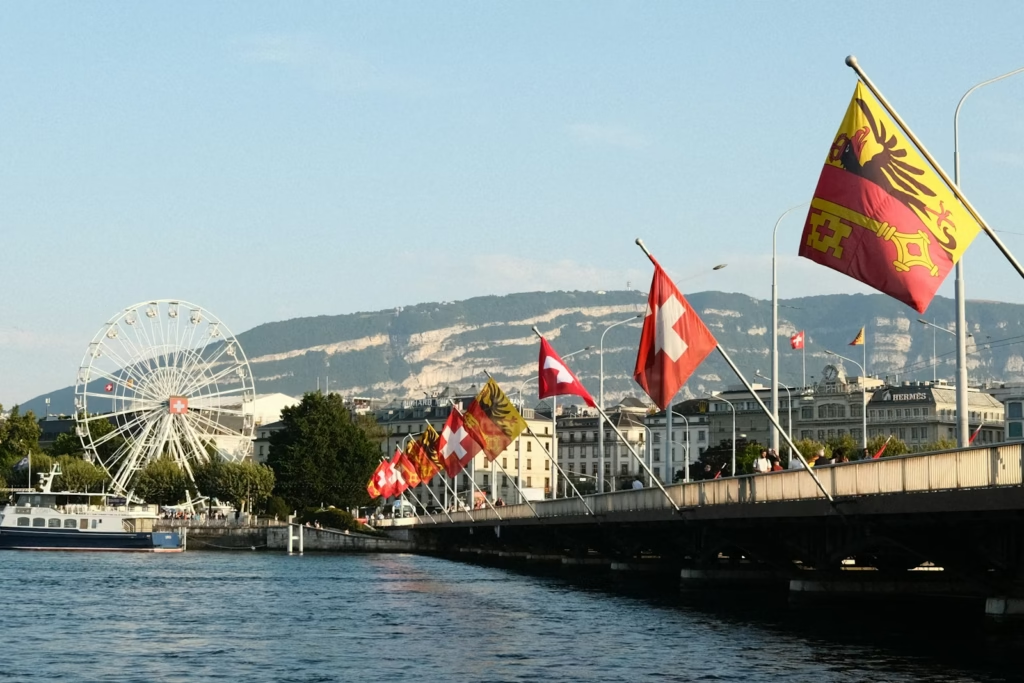
Stage 3 start time: Geneva to Poligny
The first hilly stage begins slightly earlier on Monday 3 August.
The neutralised start in Geneva is scheduled for 1:25pm local time, giving a UK start of 12:25pm BST. In the United States, that is 7:25am ET and 4:25am PT.
The expected finish in Poligny is around 5:40pm CEST, which converts to 4:40pm BST, 11:40am ET and 8:40am PT.
This is one day where watching only the final hour risks missing an important part of the race. The Col de la Faucille comes early enough to shape the breakaway and potentially put pressure on the faster riders long before the finish. Our guide to the Tour de France Femmes 2026 hilly stages explains why Stage 3 is one of the less predictable days of the opening half of the race.
Stage 4 time trial start times: Gevrey-Chambertin to Dijon
Stage 4 on Tuesday 4 August works differently because riders leave individually rather than as one peloton.
The first rider is scheduled to start from Gevrey-Chambertin at 2:34pm CEST, which is 1:34pm BST, 8:34am ET and 5:34am PT.
The final rider is scheduled to leave at approximately 5:28pm local time, or 4:28pm BST, 11:28am ET and 8:28am PT, with the last arrival in Dijon expected at 5:55pm CEST. That gives a final scheduled finish of around 4:55pm BST, 11:55am ET and 8:55am PT.
For viewers interested mainly in the yellow jersey battle, there is little need to watch from the first starter. The leading GC riders will go towards the end of the order, making roughly 4pm to 5pm BST the most important window.
Marlen Reusser should be one of the central figures, while Demi Vollering and the other GC contenders will be trying to limit or create meaningful gaps. Our Dijon time trial contenders guide looks at the riders best placed to gain time over the 21km course.
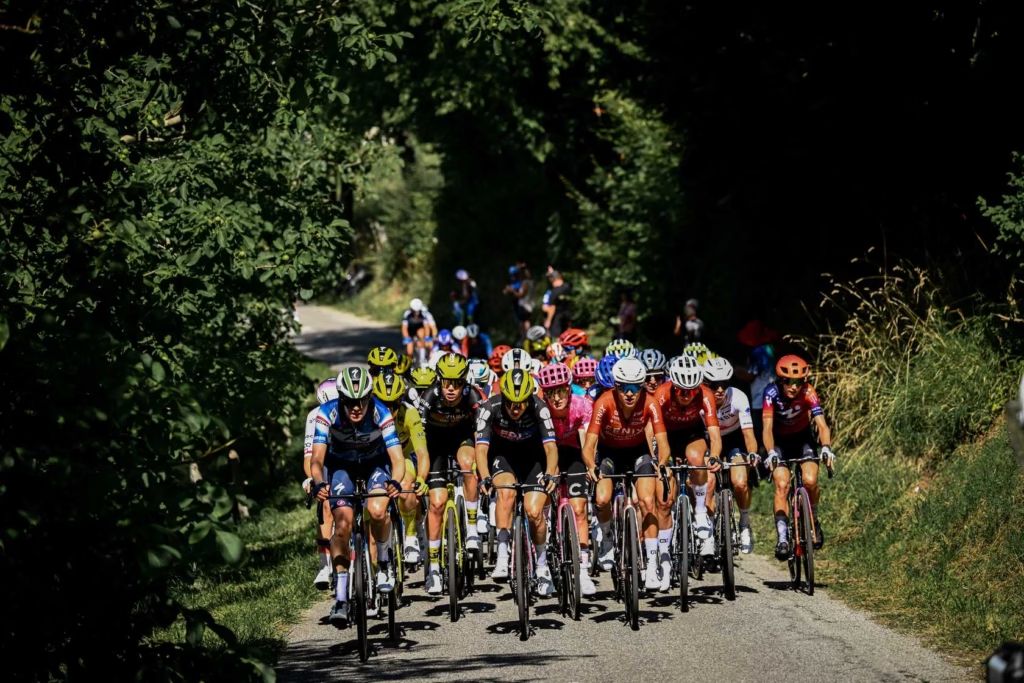 Photo Credit: A.S.O./Pauline Ballet
Stage 5 start time: Mâcon to Belleville-en-Beaujolais
The Tour returns to a conventional road stage on Wednesday 5 August, with the neutralised start in Mâcon scheduled for 1:45pm CEST.
That converts to 12:45pm BST, 7:45am ET and 4:45am PT.
The expected finish in Belleville-en-Beaujolais is around 5:41pm local time, giving 4:41pm BST, 11:41am ET and 8:41am PT.
This is one of the stages where tuning in only for the final five kilometres is particularly risky. The repeated climbing can make the race selective well before Mont Brouilly, and the final short climb gives puncheurs and attacking GC riders an opportunity to move before the finish.
For UK viewers, joining around 3pm BST should give plenty of time to see the race begin to take shape.
Stage 6 start time: Montbrison to Tournon-sur-Rhône
Stage 6 begins at 1:35pm local time on Thursday 6 August, which means 12:35pm BST, 7:35am ET and 4:35am PT.
The expected finish in Tournon-sur-Rhône is around 5:41pm CEST, giving a scheduled arrival of 4:41pm BST, 11:41am ET and 8:41am PT.
The stage could become one of the more tactically unpredictable days of the Tour because it comes immediately before Mont Ventoux. GC teams may be reluctant to spend their strongest domestiques controlling a harmless breakaway, while stage hunters know their opportunities are beginning to disappear.
That makes the official finish time a useful guide rather than a reason to switch on at 4:35pm and assume nothing important has happened.
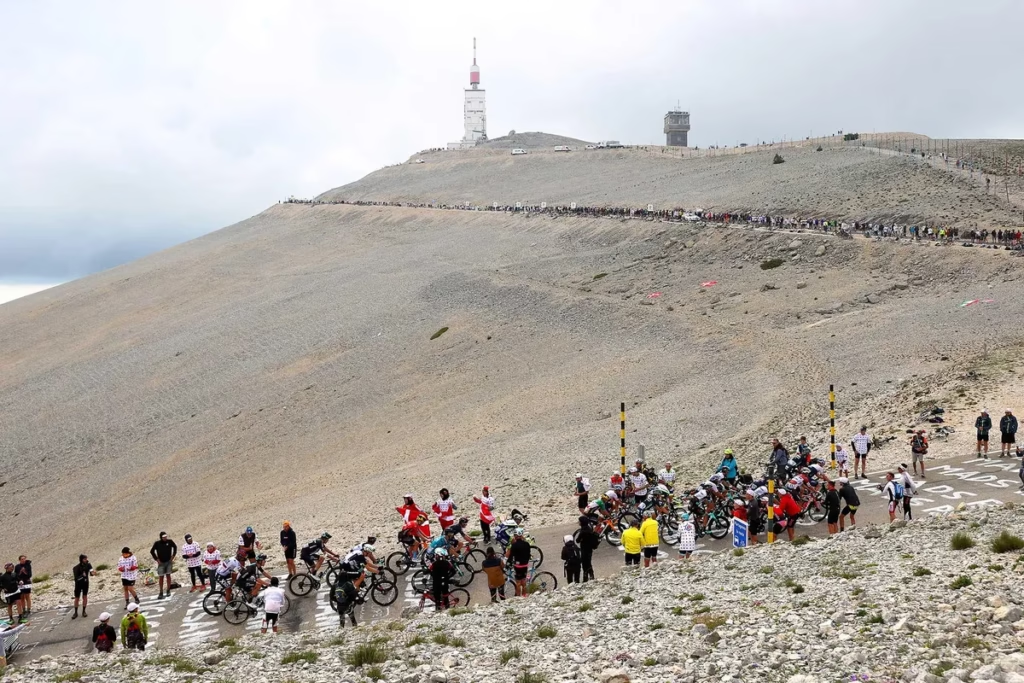
Stage 7 Mont Ventoux start time
The biggest sustained mountain stage begins earlier than most of the Tour.
Stage 7 on Friday 7 August starts from La Voulte-sur-Rhône at 12:50pm CEST, making the UK start time 11:50am BST. In the United States, that is 6:50am ET and 3:50am PT.
The expected arrival on Mont Ventoux is around 5:17pm local time, or 4:17pm BST, 11:17am ET and 8:17am PT.
This is the clearest must-watch GC stage of the race. The final climb is 15.7km at 8.8%, and our full Tour de France Femmes 2026 Mont Ventoux guide sets out why the ascent should produce the largest sustained climbing test of the Tour.
For UK viewers, being in front of the race by around 3:15pm to 3:30pm BST should cover the key approach and the majority of the final climb. Eastern Time viewers should aim for around 10:15am ET, while West Coast viewers are looking at roughly 7:15am PT.
Stage 8 start time: Sisteron to Nice
The longest stage of the race begins at 1:40pm CEST on Saturday 8 August, translating to 12:40pm BST, 7:40am ET and 4:40am PT.
The central expected finish time in Nice is 5:43pm local, or 4:43pm BST, 11:43am ET and 8:43am PT. Depending on race speed, the official timetable allows for a somewhat later arrival.
Although Stage 8 is officially classified as flat, the 171.9km route contains late climbing before Nice. That makes it the final major opportunity for the sprinters, but not a stage where the peloton can simply assume a clean bunch finish.
It also begins an entire weekend based around Nice, with the same city hosting the decisive final stage the following afternoon.
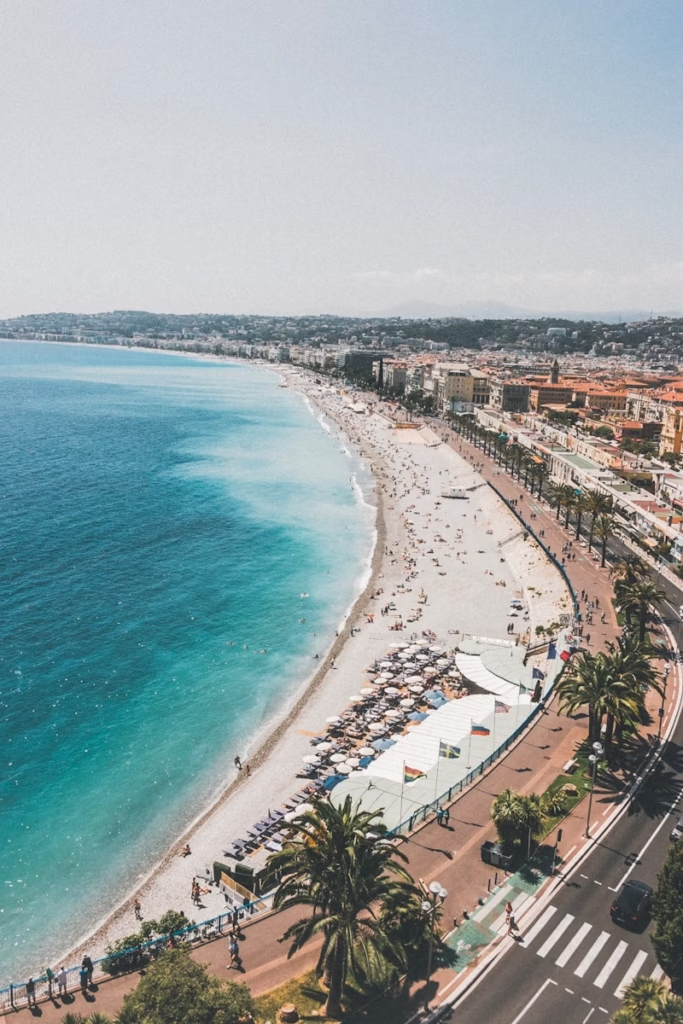
Stage 9 Nice start time
The final stage has by far the latest start of the 2026 Tour de France Femmes.
The riders leave Nice at 4:05pm CEST on Sunday 9 August, giving a 3:05pm BST start in the UK. US viewers get the most accessible start of the race at 10:05am ET and 7:05am PT.
The earliest expected finish is approximately 6:51pm local time, or 5:51pm BST, 12:51pm ET and 9:51am PT, with the official schedule allowing the race to finish later depending on speed.
The stage is only 99.2km, but it is mountainous rather than ceremonial. The riders repeatedly climb towards the Col d’Èze before the more difficult final approach around Nice, leaving genuine scope for the yellow jersey to change hands on the last day.
Our Tour de France Femmes 2026 Nice finish guide covers the final circuit, the repeated Col d’Èze passages and where the last attacks are most likely to come.
Anyone wanting to see how the 2026 Tour is decided should watch from the start. With such a short stage, there is little time for the race to settle before the climbing begins.
What time should UK viewers watch?
The overall schedule is particularly friendly to British viewers.
Most stages begin between around midday and 1:20pm BST and finish around 4:40pm. Mont Ventoux starts slightly earlier at 11:50am, while Stage 9 goes in the opposite direction with a 3:05pm start and a finish from around 5:51pm.
For most ordinary road stages, joining around 3pm BST should cover a large part of the decisive racing. The hilly stages reward watching earlier, while Stage 7 should be treated as an appointment from around 3:15pm onwards.
Stage 4 is the exception because of the time trial format. Viewers mainly interested in GC should concentrate on the final hour, when the leading contenders will be on the course.
UK viewers can watch the race live through TNT Sports and HBO Max, with the full platform breakdown in our UK Tour de France Femmes viewing guide.

What time should US viewers watch?
Eastern Time viewers have a relatively comfortable Tour. Most stages begin between roughly 6:50am and 8:20am ET and finish shortly before midday, while the final Nice stage begins at 10:05am ET.
That makes the final two hours of most stages easy to follow during the morning. Stage 7 to Mont Ventoux should reach its decisive phase at around 10am ET, while the Nice finale can be watched almost like a normal lunchtime sporting event.
Pacific Time is considerably more demanding. Most road stages begin between roughly 3:50am and 5:20am PT, so following every kilometre live requires some very early alarms. For most viewers, joining during the final hour between around 7am and 9am PT will be much more practical.
Stage 9 is the notable exception, beginning at 7:05am PT and finishing from around 9:51am.
American viewers can follow the race through NBC Sports and Peacock, with Peacock the main streaming option. The full setup is covered in our Tour de France Femmes 2026 USA viewing guide.



Best stages to watch live in full
Watching every kilometre of nine consecutive stages is not realistic for everyone, particularly for US viewers dealing with European start times.
Stage 3 is worth joining early because the Col de la Faucille can shape the breakaway almost immediately. Stage 5 contains repeated climbing before Mont Brouilly and is one of the strongest puncheur stages of the Tour, while Stage 6 could become tactically chaotic because so many teams will already be thinking about Ventoux.
Stage 7 is the obvious mountain appointment. The final climb should occupy a significant part of the last hour, so viewers do not need to watch from the 11:50am BST start to see the key GC action.
Stage 9 is different. It is short, mountainous and starts late enough to be convenient on both sides of the Atlantic. The safest option is to watch the entire stage because attacks around Nice can begin almost immediately.
Start times are fixed, finish times are not
The official Tour schedules use several estimated average speeds to calculate when the riders should reach intermediate points and the finish.
The start time is fixed.
The finish time is not.
A fast opening hour, tailwind or aggressive race can bring the peloton in earlier than the slowest schedule, while headwinds, difficult weather or a tactical mountain stage can push the finish later.
That is why the times in the table should be treated as viewing guides rather than exact finish appointments. On the most important GC stages, allowing at least an hour before the expected arrival is sensible.
For anyone watching from outside the UK or USA, the Tour de France Femmes 2026 live stream guide by country covers the main broadcasters and streaming platforms across the major cycling markets.

