
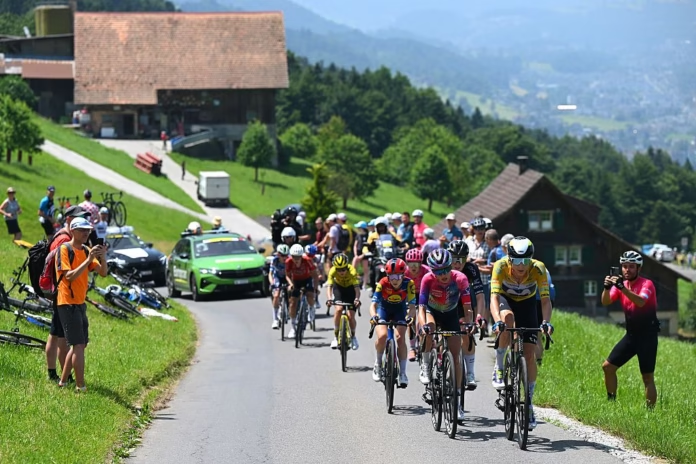
The Tour de France Femmes 2026 gives breakaway riders more opportunities than the stage classifications alone suggest.
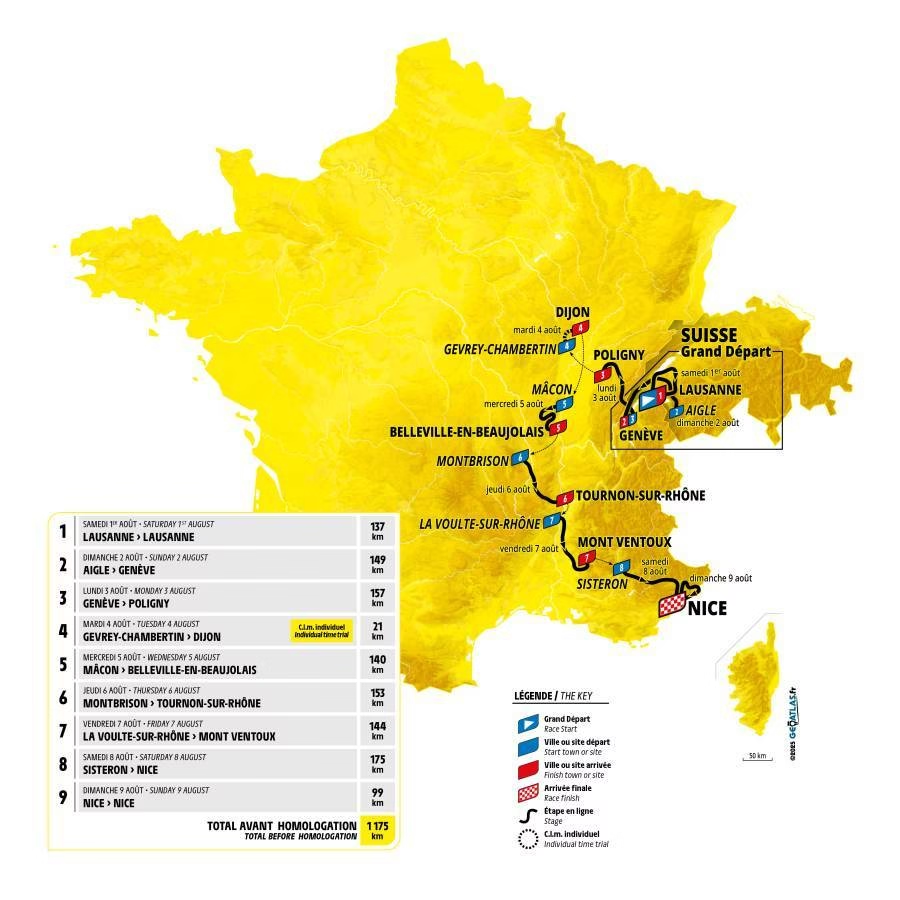
The nine-stage route contains obvious sprint days, a 21km individual time trial and two mountain stages, but the three hilly stages in the middle of the race are where the balance between the peloton and the breakaway becomes hardest to predict. There are also opportunities later in the Tour once the general classification has spread out and teams begin protecting energy for bigger objectives.
A good breakaway stage is not simply one with lots of climbing. The ideal day has terrain that makes chasing expensive, few teams with an obvious reason to control, enough distance between the hardest climbs and the finish for tactical racing, and a group of stage hunters sufficiently far down the general classification to be allowed freedom.
On that basis, Stages 5 and 6 look like the strongest breakaway opportunities of the 2026 Tour, with Stage 3 another serious possibility. Stage 8 could open up once fatigue starts to influence the race, while Stages 1, 2 and 7 are much more likely to be controlled around other objectives.
The full shape of the race is covered in our Tour de France Femmes 2026 route guide.
Stage 3 is the first serious chance for the break
The opening two days in Switzerland should be difficult terrain for a successful escape. Stage 1 around Lausanne has the first yellow jersey available, meaning too many teams have an incentive to keep the race under control. Stage 2 towards Geneva offers one of the clearer opportunities for the sprinters, giving the fastest teams another obvious reason to manage the break.
That changes on Stage 3 from Geneva to Poligny. The 156.5km route tackles the Col de la Faucille early before continuing across more climbing towards France, creating the sort of opening where a strong group can form through strength rather than simply being allowed to drift away.
That distinction matters. A break containing riders capable of making the selection on a significant climb is far harder to retrieve later than three riders who attacked during a quiet opening section.
The GC teams also have the Dijon individual time trial waiting on Stage 4. Unless the escape contains someone dangerous to yellow, there is little reason for the strongest overall teams to spend an entire afternoon controlling stage hunters one day before a major GC test.
The problem for the break is the second half of the route. With much of the hardest climbing already completed, stronger sprint teams may still believe the race can be brought back together. Stage 3 is therefore a genuine opportunity rather than an obvious breakaway win.
The Col de la Faucille can create the right kind of move
The best scenario for Stage 3 is a large group forming naturally on the Col de la Faucille.
A move of two or three riders established before the climb is relatively straightforward to manage. A group of 10 strong riders created when the peloton splits on the ascent produces a much more complicated tactical situation, particularly if several major teams suddenly find themselves represented ahead.
The composition can become more important than the size of the advantage. A team with a rider in the escape has little incentive to help chase, while another squad that missed the move may be forced to work immediately.
This is the first day where the riders identified in our Tour de France Femmes 2026 breakaway specialists guide should become genuine factors. Strong all-rounders who can make an uphill selection but retain enough speed to win from a reduced group are particularly valuable.
The escape may not need a five-minute advantage. It may simply need enough teams behind to decide that chasing belongs to somebody else.
Stage 5 is the best breakaway stage from the profile
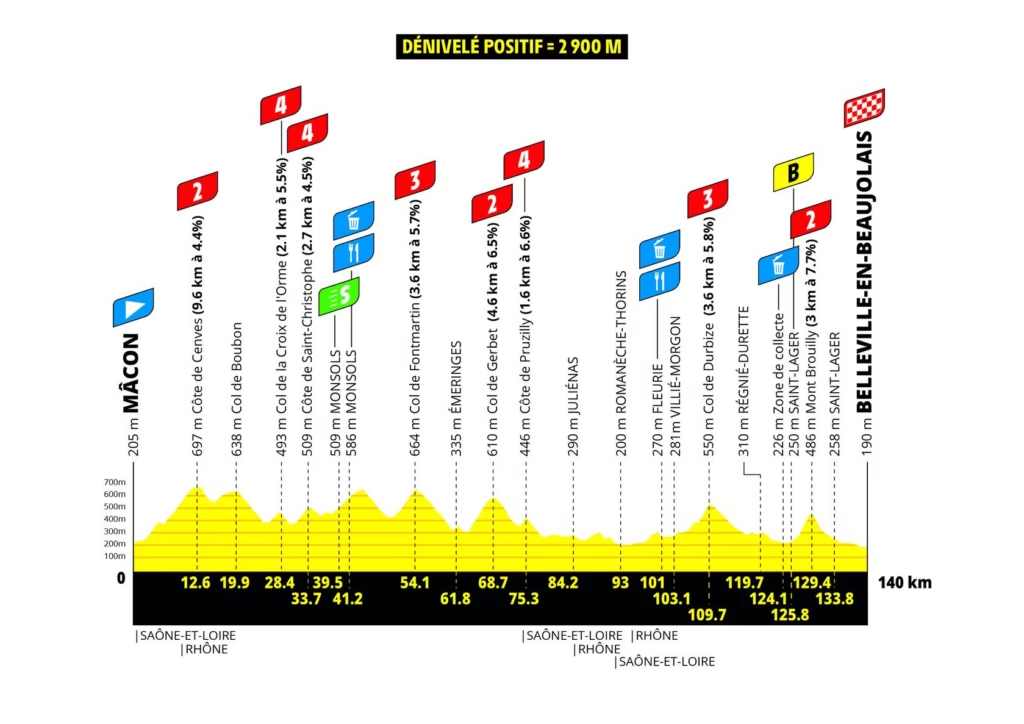
Stage 5 from Mâcon to Belleville-en-Beaujolais is the clearest day to circle for breakaway riders on terrain alone.
The 140km route contains close to 2,900 metres of climbing, spread across repeated ascents rather than one dominant mountain. The road is rarely straightforward enough for a team to place several riders on the front and comfortably control a fixed gap all afternoon.
That already helps the escape, but the timing improves the chances further. Stage 5 comes immediately after Dijon, when the general classification should have been reshaped and several riders who began the Tour relatively close to yellow may suddenly be far enough down to receive freedom.
The yellow jersey team may have little interest in controlling such a difficult stage for victory if nobody in the break threatens the lead. Sprint teams face an equally awkward calculation because the repeated climbs could make the stage too severe for their fastest riders.
That leaves the puncheur teams. Some may chase for the stage, but others can simply put a rider in the break. Once enough strong squads choose the second option, organising the peloton becomes much harder.
Our wider guide to the Tour de France Femmes 2026 hilly stages identifies Stage 5 as the clearest puncheur day of the race for many of the same reasons.
Mont Brouilly gives the break somewhere to fight back
Mont Brouilly comes late on Stage 5 and gives the riders ahead another advantage.
The final climb is around 3km at 7.7%, with little more than 10km remaining afterwards. Even if the peloton brings the break within a minute before the ascent, the strongest riders ahead still have terrain where they can attack one another and maintain a reduced advantage.
The chasing group can also begin falling apart at exactly the wrong moment. Domestiques who have spent the afternoon controlling the gap may disappear on Mont Brouilly, leaving team leaders and puncheurs to cover moves themselves.
For the break, arriving at the climb with several minutes is not essential. Reaching it with 60 to 90 seconds and enough energy to race aggressively may be far more valuable than carrying a huge advantage after spending everything to maintain it.
It is why riders with several ways to win become particularly dangerous. Puck Pieterse, for example, can attack from a break, accelerate on Mont Brouilly or sprint from a reduced group. Her route fit is covered in our Puck Pieterse Tour de France Femmes 2026 guide.
Stage 6 may be the best tactical opportunity of all
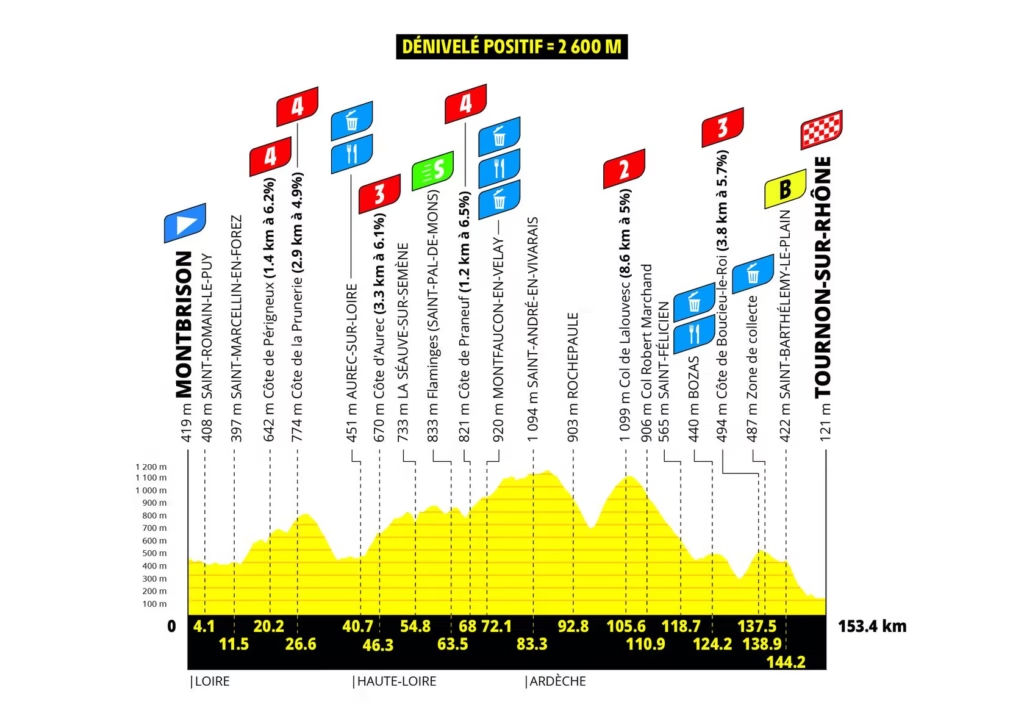
If Stage 5 is the best breakaway day from the profile, Stage 6 from Montbrison to Tournon-sur-Rhône may ultimately be the strongest opportunity because of what follows.
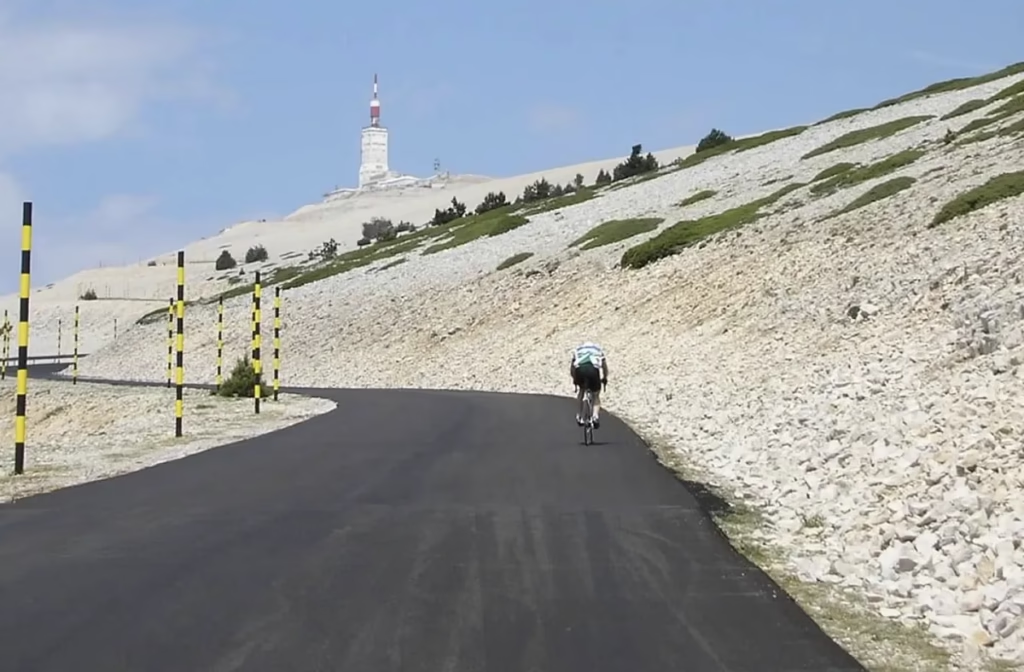
Stage 7 finishes on Mont Ventoux.
That changes the calculation for every GC team. Domestiques who might normally spend several hours bringing a break back will be needed the following afternoon on the hardest sustained climb of the race, so controlling a harmless escape simply for a hilly-stage victory may be a poor use of resources.
The yellow jersey team could actively prefer a breakaway to take the stage. If a group of riders already safely down on GC builds a large advantage, the escape absorbs the stage win and bonus seconds while the main favourites conserve energy for the Mont Ventoux summit finish.
That is close to the ideal scenario for stage hunters.
The difficult part will be getting into the correct move.
Expect a major battle to make the Stage 6 break
Because so many riders will recognise Stage 6 as an opportunity, the opening hour could be harder than much of the middle of the stage.
A small break may not be enough. Teams know that if they miss the decisive move, another equally clean stage-hunting chance may not appear before Nice, so repeated attacks are likely until a group forms with enough quality and enough team representation to be allowed away.
The eventual escape could include puncheurs, climbers, rouleurs and riders who have deliberately given away enough GC time to stop being considered threats. Once several major teams have someone ahead, the incentive to organise a chase behind can disappear quickly.
Riders such as Célia Géry, Kristen Faulkner, Magdeleine Vallières and Loes Adegeest fit the sort of profile highlighted in our breakaway specialists to watch. On Stage 6, getting into the right group may matter almost as much as being the strongest rider in it.
Why Mont Ventoux is less favourable than it looks
Mountain stages are often associated with successful breakaways, but Stage 7 to Mont Ventoux is not necessarily one of the best days for one in this Tour.
A break will almost certainly form and riders targeting the mountains classification have good reason to join it. The problem is what happens behind once the race reaches the decisive part of the route.
Ventoux is the clearest sustained GC test of the week. The strongest teams therefore have a reason to increase the pace, while the 15.7km final climb at 8.8% gives the yellow jersey favourites enough road to remove large chunks from an escape’s advantage.
A rider can begin the climb several minutes ahead and still be caught once the GC group starts racing properly. The break can win if the favourites concentrate entirely on one another and allow the stage to disappear up the road, but that depends much more on race circumstances than it does on Stages 5 or 6.
Losing time can be useful for a stage hunter
For dedicated breakaway riders, the first half of the Tour includes an important tactical calculation.
Being too close to yellow can be a problem.
A rider three minutes down cannot necessarily be allowed into a break that might gain five or six minutes. A rider already 15 minutes behind becomes much easier for the leader’s team to ignore.
That is why riders with no realistic GC objective do not always benefit from spending energy defending an anonymous position in the overall standings. Losing time can create tactical freedom later.
The Stage 4 time trial should accelerate that process. Dijon is likely to spread the GC more significantly than the opening road stages, clearly separating genuine yellow jersey contenders from riders whose best opportunity now lies in chasing stages.
That could make Stage 5 immediately more open and give Stage 6 an even larger pool of riders who are no longer considered dangerous to the overall lead.
Stage 8 depends on what Ventoux leaves behind
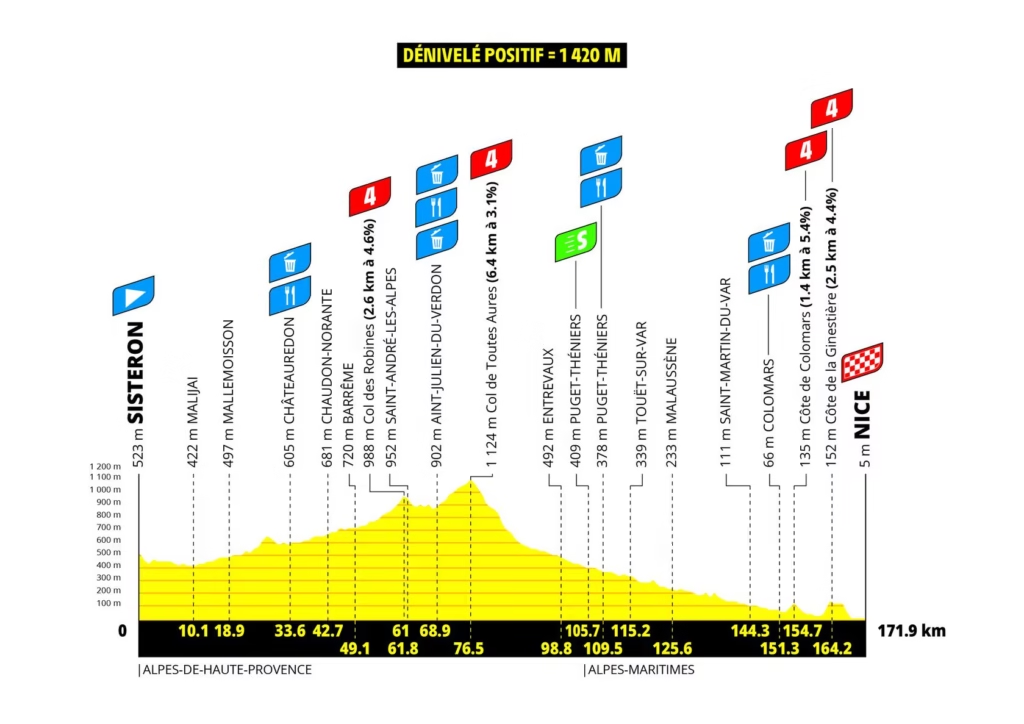
Stage 8 from Sisteron to Nice is officially flat and, at 171.9km, is the longest stage of the race. Before the Tour begins, it looks more like a sprint opportunity than a breakaway day.
It probably still is, but the timing and late terrain create some uncertainty.
The peloton will be coming directly from Ventoux. Domestiques may be tired, sprint trains may have been heavily tested and several GC teams will now care more about protecting overall positions than controlling another stage.
At the same time, the sprinters know this is their last major opportunity. A team built around one of the fastest riders in the Tour has every reason to bring the break back, so the escape will need more than fatigue in the peloton to survive.
The late climbing around Nice is where the equation could change. If the break reaches those roads with a meaningful advantage, the sprint teams may no longer have enough riders remaining to maintain an organised chase.
Stage 8 is not one of the strongest breakaway opportunities on paper. It could become one once a week of racing has changed the strength and priorities of the peloton.
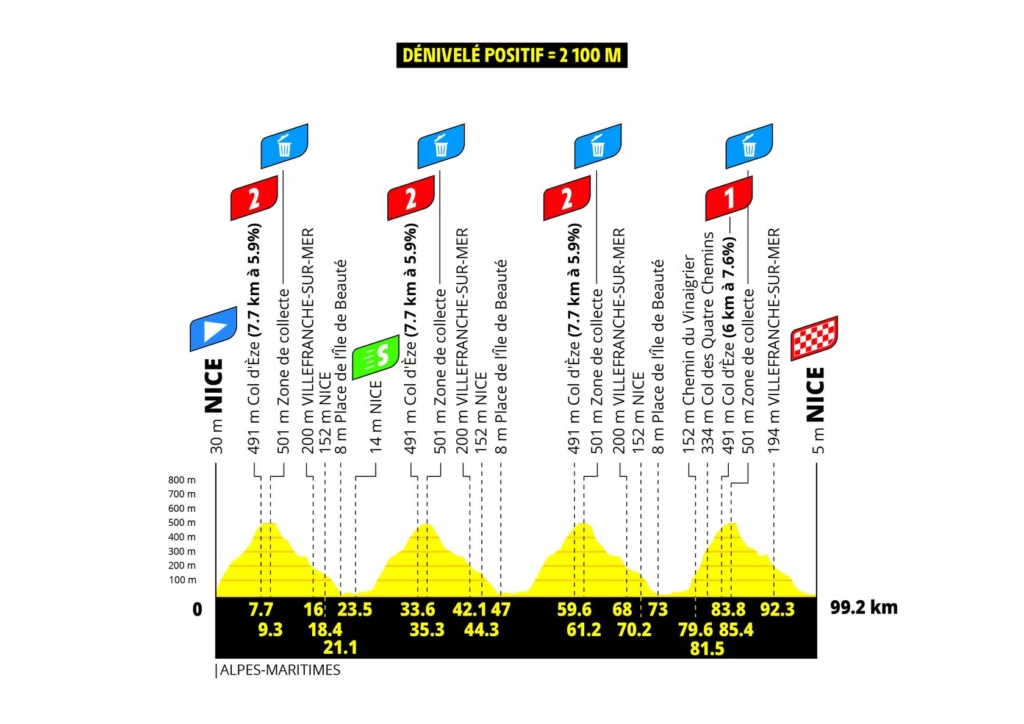 Photo Credit: Getty
Stage 9 offers attacks rather than a classic breakaway
The final stage around Nice is only 99.2km and contains repeated climbing, which initially makes it look ideal for an escape.
Short mountain stages often work differently.
There is almost no quiet opening phase, the GC favourites know there is nothing to save energy for and the yellow jersey can potentially be attacked from the first serious climb. A conventional breakaway may therefore never receive the four or five minutes usually required to settle into the race.
A stage hunter can still win, but the successful move may come during the main tactical battle rather than through an early escape that spends the entire day ahead.
Much also depends on the state of the general classification. If yellow is secure by several minutes, the leader’s team may be happy to let riders outside the GC fight for the stage. If the Tour is separated by seconds, the finale becomes a GC race almost immediately.
The possibilities are covered in our Tour de France Femmes 2026 Nice finish guide.
The opening sprint stages are the hardest places to survive
Stages 1 and 2 are the least attractive days for a conventional breakaway victory.
The opening stage has the first yellow jersey available, so almost every strong rider in a move is potentially relevant to the overall classification. The teams of puncheurs, GC contenders and fast finishers all have reasons to keep the gap manageable.
Stage 2 towards Geneva gives the sprint teams an even clearer incentive to chase. Straightforward opportunities for the pure fast finishers are limited enough that allowing one to disappear into the break would make little tactical sense.
That does not mean there will be no attacks. Riders can chase mountains points, intermediate sprints, combativity and visibility, particularly from teams without an obvious contender for the finish.
It simply means the peloton has stronger reasons to bring them back.

The time trial helps create the later breakaway race
Stage 4 obviously offers no conventional breakaway opportunity because the 21km route to Dijon is an individual time trial, but its influence on the stage-hunting race could be considerable.
The time trial should create the first substantial natural gaps in the overall classification. Riders who lose several minutes become much easier for the yellow jersey team to allow into escapes, while the strongest GC contenders become more clearly defined.
That separation matters immediately because Stage 5 follows the next day.
A rider who begins Dijon two minutes from the race lead may finish it five minutes down and suddenly move from potential GC threat to ideal breakaway candidate.
The only race against the clock in the 2026 Tour may therefore indirectly help create the strongest escapes of the week.
Ranking the best Tour de France Femmes 2026 breakaway stages
The opportunities are not equal. Before the race begins, the best breakaway days can be ranked roughly like this:
1. Stage 6, Montbrison to Tournon-sur-Rhône
The strongest tactical opportunity because Mont Ventoux follows immediately. GC teams have every reason to conserve resources and allow a harmless group to fight for the stage.
2. Stage 5, Mâcon to Belleville-en-Beaujolais
The strongest profile for a breakaway, with repeated climbing, limited sprint-team interest and Mont Brouilly close enough to the finish to make the final chase difficult.
3. Stage 3, Geneva to Poligny
The early Col de la Faucille can create a high-quality group, although the easier later terrain gives stronger sprint teams a route back into the stage.
4. Stage 8, Sisteron to Nice
Likely to be controlled for the sprinters, but accumulated fatigue and late climbing could turn it into a much better breakaway day than the official flat classification suggests.
5. Stage 9, Nice to Nice
Excellent terrain for attacking, but its short mountain format may make it difficult for a conventional early break to establish enough freedom.
Stage 7 can still produce a breakaway winner, but Ventoux gives the GC teams a much clearer reason to close the advantage than they have one day earlier.


The best escapes will contain several different rider types
A successful breakaway does not need to consist entirely of climbers.
In fact, the most difficult groups to control often contain riders with complementary strengths. A rouleur can drive the flatter sections, a climber can maintain the advantage over longer ascents, a puncheur can attack on short ramps and a fast finisher forces everyone else to think about getting rid of her before the line.
That tactical variety is why the strongest escape is not always the one containing the best individual climber.
The 2026 breakaway specialists guide highlights riders capable of winning through several different scenarios. The most dangerous groups on Stages 5 and 6 will be those where no rider can afford to wait for exactly the same finale.
Stage 5 and Stage 6 are the days to circle
A breakaway can win on almost any road stage if the tactical circumstances are right, but the 2026 Tour contains two days where the incentives align particularly well.
Stage 5 makes chasing physically difficult.
Stage 6 makes chasing strategically unattractive.
That distinction matters because breakaway success depends as much on what the peloton wants to do as on the strength of the riders ahead. The strongest stage hunter in the race can still fail if four teams have a reason to chase. A slightly weaker rider can win if everyone behind decides the cost of bringing her back is too high.
That is why Stage 6 may ultimately become the best breakaway opportunity even though Stage 5 looks more obviously suited to attackers on the profile.
The overall Tour may be decided by Dijon, Ventoux and the final mountain stage around Nice, but those are not necessarily the days offering the greatest freedom. For riders chasing a stage rather than yellow, the middle of the race is where the opportunity opens properly.
Stage 3 is the first invitation. Stage 5 is the obvious target. Stage 6 is the day when the peloton may finally decide there is no reason to chase.

