

Stage 4 of the Tour de France Femmes 2026 should provide the first major reshaping of the general classification, with a 21km individual time trial from Gevrey-Chambertin to Dijon on Tuesday 4 August.
It is short enough that nobody should lose the Tour outright in one afternoon, but long enough for the strongest riders against the clock to create meaningful gaps. For Marlen Reusser, it is the clearest opportunity of the race to put time into the pure climbers. For Demi Vollering, Pauline Ferrand-Prévot and the other yellow jersey contenders, the priority is to limit those losses before the race turns increasingly mountainous.
There is also a genuine stage battle beyond the GC. Reusser starts as the obvious favourite, but Zoe Bäckstedt has produced some of the strongest recent performances against the clock, while Loes Adegeest has already shown this season that she can challenge the specialists over a similar distance.
The course helps broaden the contest. This is not a perfectly flat out-and-back designed only for the biggest engines. The opening kilometres favour sustained speed, but the route rises towards the Lacets de Marsannay before moving through Corcelles-les-Monts and dropping towards Dijon. Power matters, but so do pacing, bike handling and the ability to rebuild speed after the more irregular middle section.
For the broader race picture, the Tour de France Femmes 2026 route guide explains why Dijon, Mont Ventoux and the final stage around Nice form the three most important GC reference points.
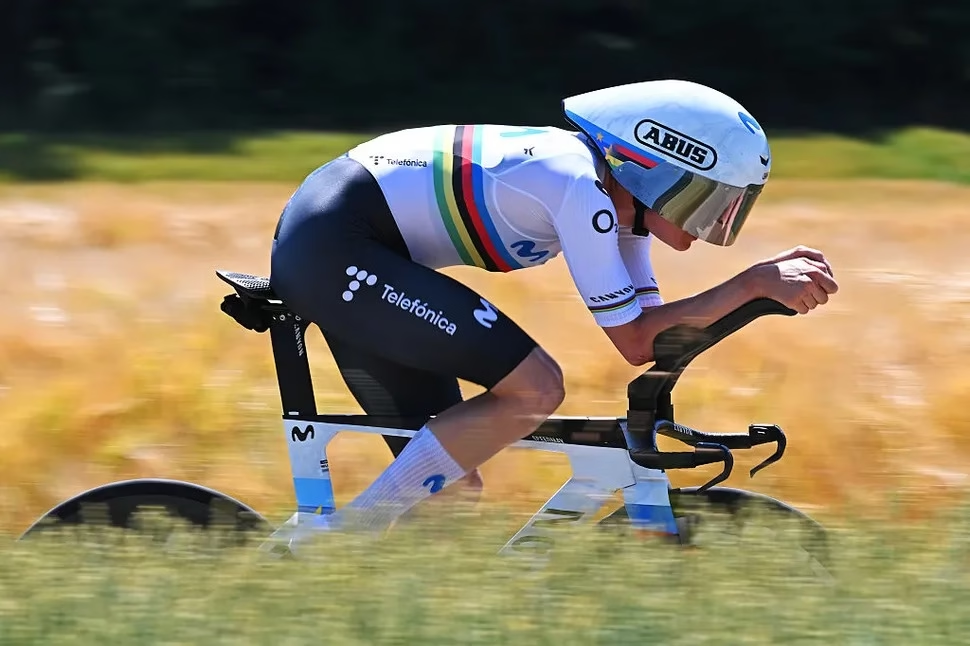 Photo Credit: Getty
Stage 4 route: Gevrey-Chambertin to Dijon
The Tour’s only individual time trial begins in Gevrey-Chambertin, in the Côte-d’Or vineyards south of Dijon, and covers exactly 21km.
The opening section heads north through Brochon, Fixin and Couchey before reaching Marsannay-la-Côte. This is the faster part of the course and should reward riders who settle quickly into an aerodynamic position and hold a controlled, high power output without going too deep too early.
At around 5.7km, the riders reach Marsannay-la-Côte before the course begins changing character. The approach towards the Lacets de Marsannay, reached after around 9.7km, introduces the section most likely to disrupt the rhythm of the pure rouleurs.
From there, the route passes Corcelles-les-Monts at 11.3km before turning towards Dijon. The final kilometres return to faster roads, placing another premium on riders capable of accelerating cleanly after the climbing and maintaining speed all the way to the line.
The first rider is due to start at 14:34 local time, with the final rider expected to finish at around 17:55. The exact running order will depend on the general classification after Stage 3.
This is not a pure flat-power time trial
A 21km distance naturally points towards the specialists, and Reusser remains the benchmark, but Dijon is slightly more complicated than the distance suggests.
The first half gives riders plenty of opportunity to build speed, while the Marsannay section interrupts that rhythm before the faster approach into Dijon. Pacing becomes important because a rider who spends too much on the opening roads may pay for it precisely where the course begins asking for changes in power.
The stronger stage racers therefore have a better chance than they would on a completely flat, straight course. Riders who combine a good aerodynamic position with climbing ability can limit losses through the fastest section and then use the middle part to close some of the gap.
At the front, the stage should still favour the specialists. The differences between the GC contenders could be much larger than the winning margin.
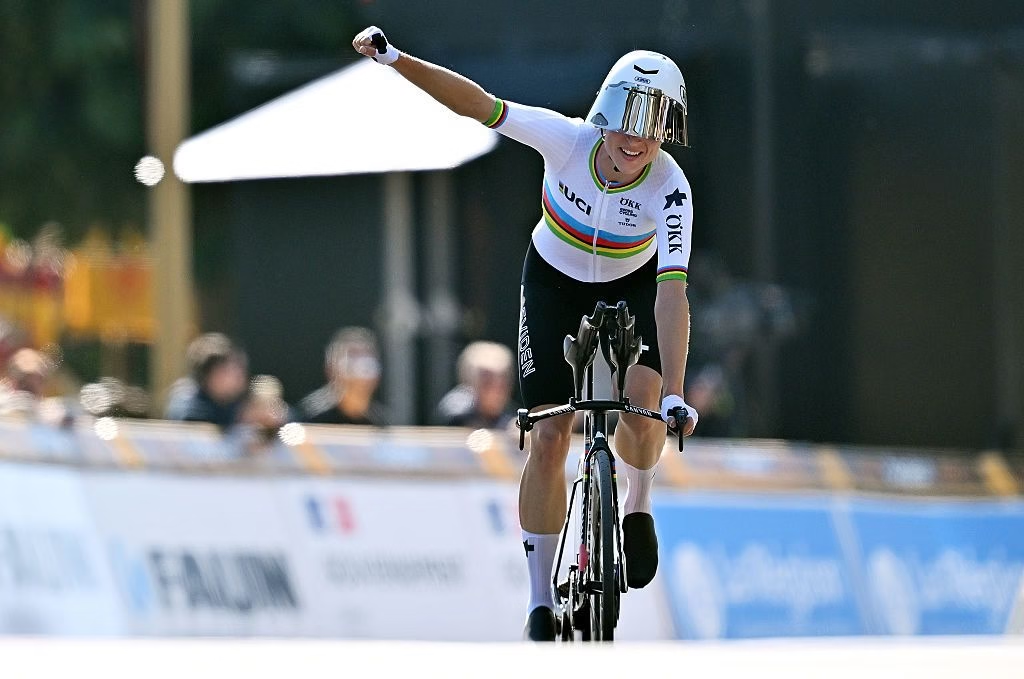
Marlen Reusser is the rider everyone has to beat
Marlen Reusser starts as the clear favourite.
Her 2026 Tour de Suisse performance provides the strongest recent evidence. Reusser won the individual time trial there, took control of the general classification and then defended that advantage in the mountains before sealing the overall victory.
That was important because it showed how much her stage-racing profile has changed. Reusser is no longer simply the rider who can gain time in an individual test and then hope to limit the damage uphill. She is now strong enough on the climbs to use the time trial as an attacking weapon in the overall race.
That makes Dijon the stage Movistar should build around.
Our deeper look at Marlen Reusser’s Tour de France Femmes 2026 chances explains why the ideal scenario is reaching Stage 4 without unnecessary losses, then forcing the climbers to chase whatever advantage she creates against the clock.
The question is not only whether Reusser wins.
It is how much time she gains.
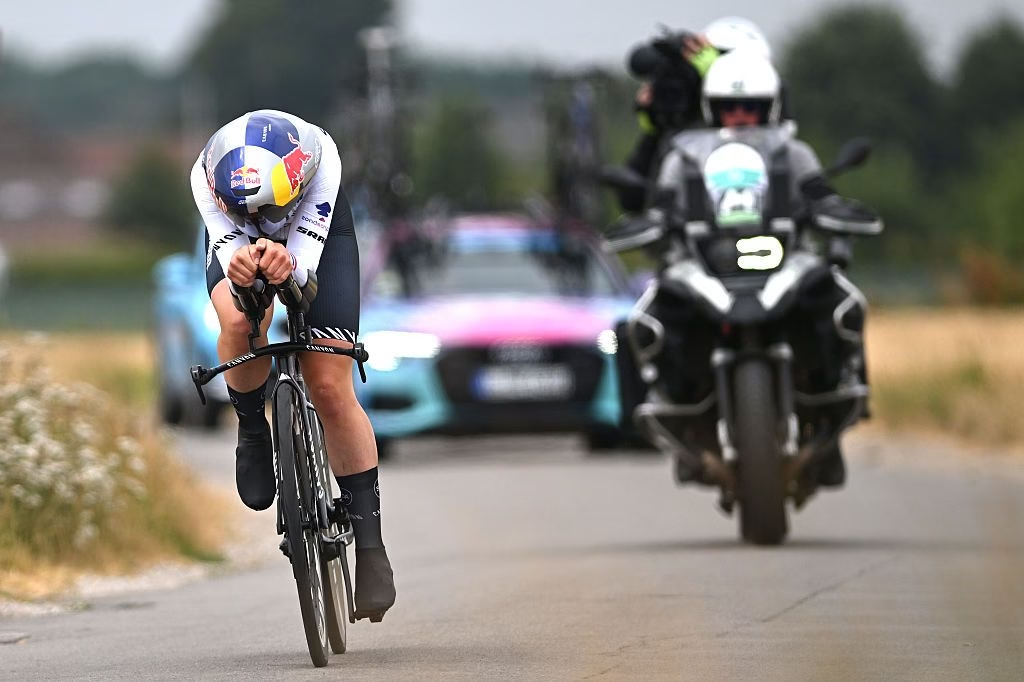
Zoe Bäckstedt is the strongest stage threat to Reusser
If anyone can beat Reusser without needing the GC battle to influence the result, Zoe Bäckstedt may be the strongest candidate.
Bäckstedt finished only 11 seconds behind Reusser in the Tour de Suisse time trial over 23.7km, a distance close enough to Dijon to provide a useful direct comparison. She has also continued to produce major results against the clock through the summer.
That makes her more than an outside podium pick.
She can win the stage.
The important difference is that Bäckstedt does not need to think about defending a Tour GC position through Mont Ventoux and Nice. Canyon SRAM have overall ambitions through Katarzyna Niewiadoma-Phinney and Antonia Niedermaier, but Bäckstedt’s own job can be much simpler.
Ride 21km as fast as possible.
That makes her Reusser’s most dangerous rival for the stage itself.

Loes Adegeest has already earned a place in the podium conversation
Loes Adegeest should also be treated seriously.
She finished third in the Tour de Suisse time trial, behind Reusser and Bäckstedt, providing a recent result against exactly the two riders who appear strongest for Dijon.
The gap to Reusser was more substantial, but Dijon is a different course and time trial form can shift quickly. The rolling middle section should also suit Adegeest better than a perfectly flat test.
Lidl-Trek do not need her to manage a GC campaign, so she can treat Stage 4 as a standalone result opportunity.
A podium is realistic.
To win, she probably needs both Reusser and Bäckstedt to leave something on the road.
 Photo Credit: TeamNL
Demi Vollering needs to watch the gap rather than the stage placing
For Demi Vollering, Stage 4 is more about the Tour than the time trial victory.
Vollering is a strong rider against the clock and should be capable of finishing high in Dijon, but Reusser’s specialist strength makes beating her a difficult task.
The important number is the deficit.
If Vollering finishes 20 or 30 seconds behind Reusser, the balance of the Tour remains favourable because Mont Ventoux and Nice give her opportunities on terrain that suits her better.
If the gap pushes towards a minute or beyond, the tactical picture changes.
Vollering would then need to recover significant time later rather than simply waiting for the decisive climbs and trusting her strength there.
Dijon therefore has the potential to turn Vollering from race controller into attacker.
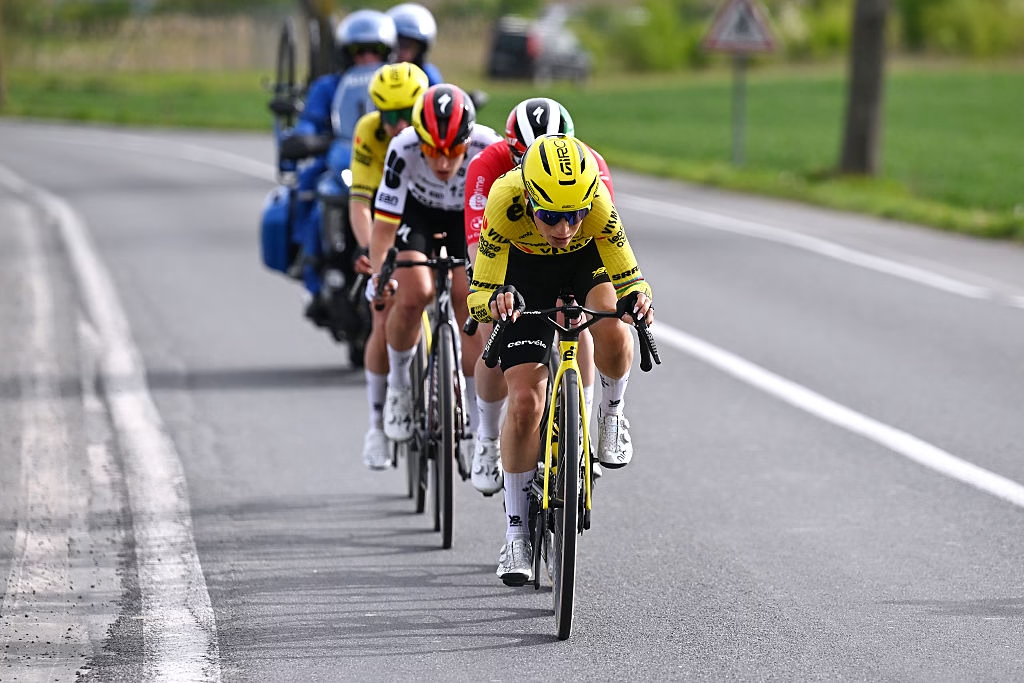
Pauline Ferrand-Prévot needs to keep Ventoux within reach
The same logic applies to Pauline Ferrand-Prévot.
The defending Tour champion does not need to beat Reusser in Dijon. She needs to remain close enough that the mountain stages can still decide the race in her favour.
The 21km distance helps.
A 35 or 40km time trial would create far more danger for a lighter climber, but over 21km a strong GC rider can limit losses with a well-paced effort.
Ferrand-Prévot’s result may therefore be more informative than her placing.
If she loses modest time, nothing changes.
If she is suddenly 60 to 90 seconds behind Reusser, the Tour starts asking a very different tactical question.
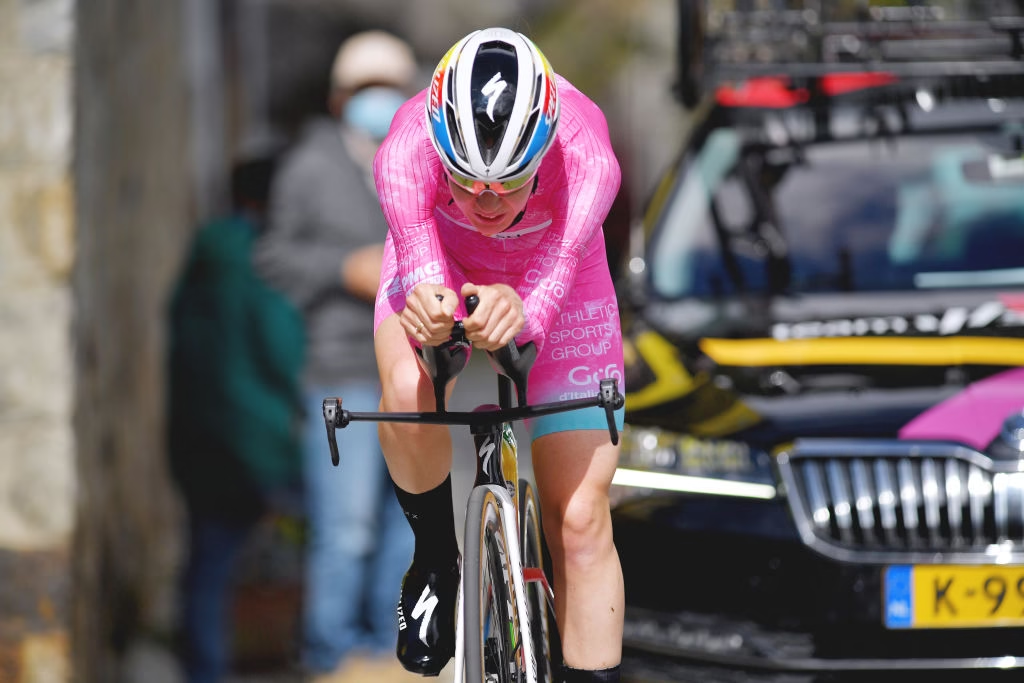
Anna van der Breggen should benefit from the course
Anna van der Breggen is another rider who can use Dijon to improve her position in the overall race.
Her career has always been built around completeness rather than one narrow speciality. At her best, she can climb with the strongest riders while still producing an elite time trial.
The 2026 course suits that profile.
She may not match Reusser on the fastest parts of the route, but the climb around Marsannay should help reduce some of the disadvantage.
SD Worx-Protime also bring a fascinating internal dynamic to the stage because Lotte Kopecky and Nienke Vinke are both on the start list.
For GC purposes, van der Breggen remains the key rider to watch.
A ride close to Vollering and Reusser would strengthen her podium position considerably before the mountains.
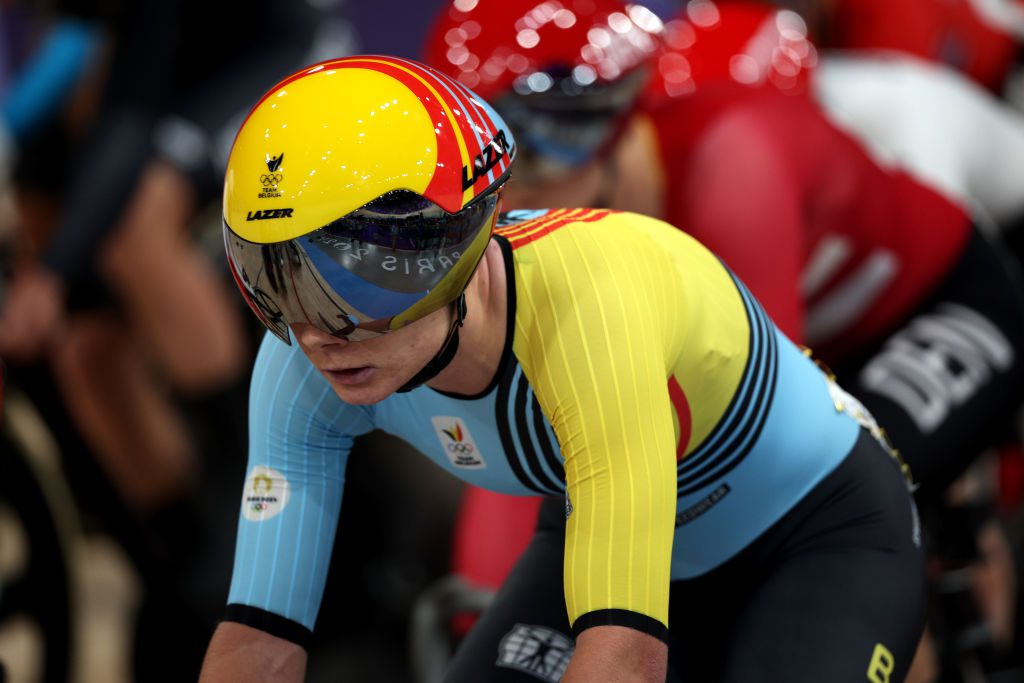
Lotte Kopecky remains a serious stage outsider
Lotte Kopecky should not be dismissed simply because the Tour is unlikely to revolve around her GC.
Her combination of raw power, aerodynamic ability and track background makes a 21km effort naturally interesting.
The distance is short enough to reward riders capable of producing very high power for around half an hour without requiring the deeper pacing demands of a long championship time trial.
The bigger question is how SD Worx-Protime use her.
If Kopecky treats Stage 4 as a major target in its own right, she belongs among the top-five contenders. Her Tour role and the wider tactical possibilities around her are covered in our Lotte Kopecky Tour de France Femmes 2026 guide.
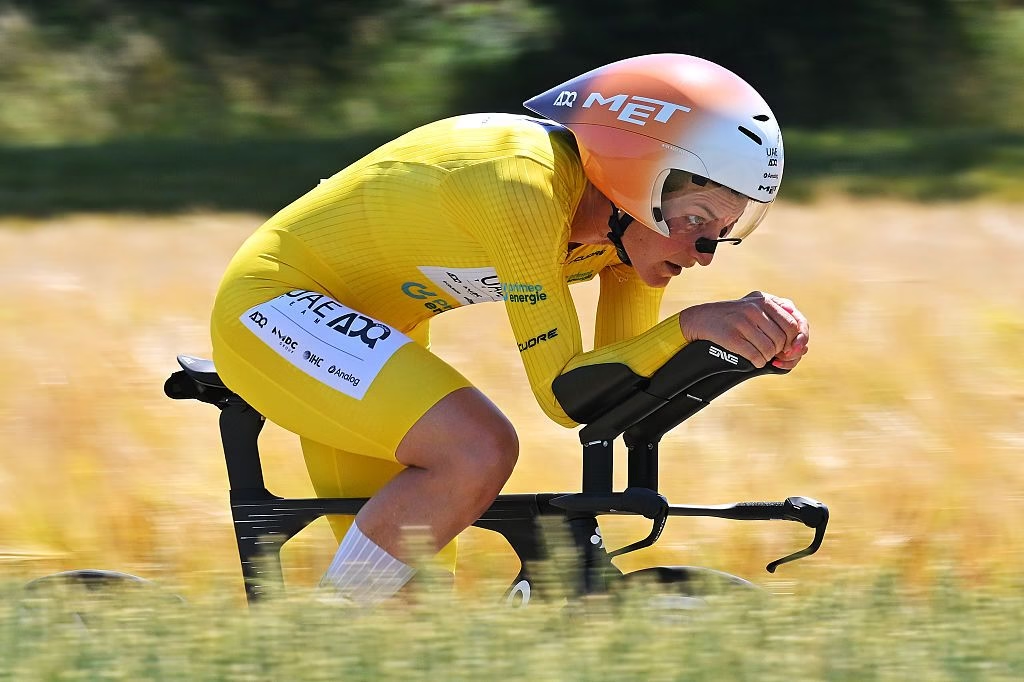
Elisa Longo Borghini can build a GC buffer
Elisa Longo Borghini is another major name to watch even if outright victory looks less likely.
Her strength against the clock gives her an opportunity to gain time on several riders she may later be closely matched with in the mountains.
That is the important distinction.
Longo Borghini does not necessarily need to challenge Reusser for the stage. If she finishes within a manageable margin of the Swiss rider while gaining 20, 30 or 40 seconds on other podium contenders, Dijon still becomes a successful afternoon.
The Italian’s route fit is explored in more detail in our Elisa Longo Borghini Tour de France Femmes 2026 analysis.
Her consistency makes her particularly dangerous in a race where several small gaps may eventually decide the podium positions.
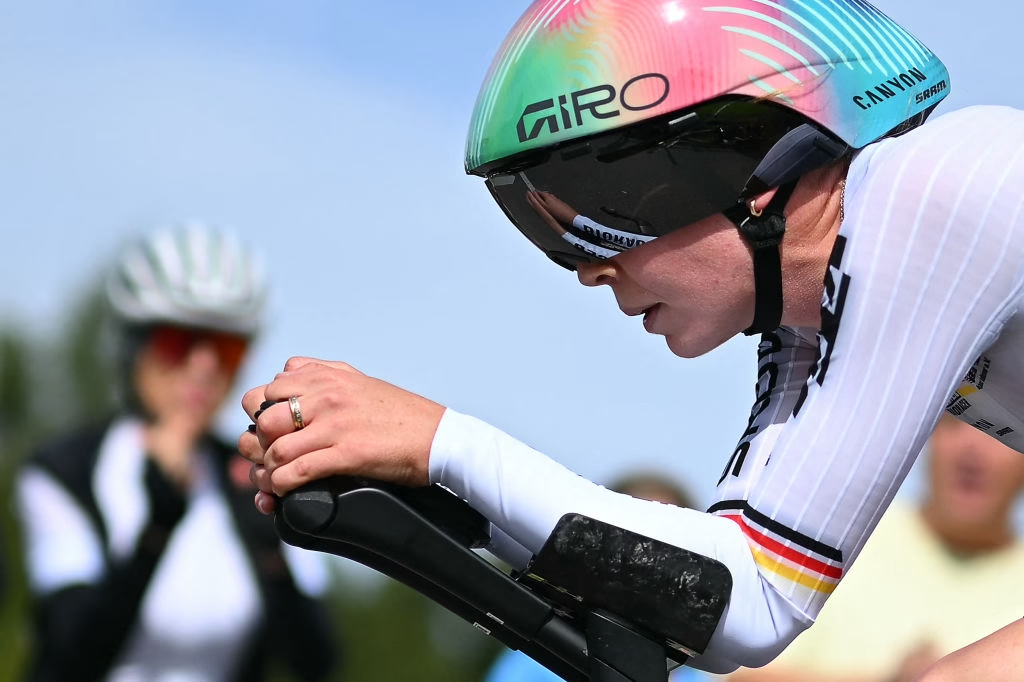
Antonia Niedermaier could be one of the biggest GC winners
Antonia Niedermaier deserves more attention than a conventional outsider label suggests.
The Canyon SRAM rider has developed into one of the strongest young stage racers against the clock and already has the time trial background to challenge established names.
The structure of the Dijon course should suit her.
There is enough flat riding to reward aerodynamic efficiency, but the Marsannay section gives a rider with her climbing ability a chance to regain time on the bigger specialists.
Canyon SRAM have an interesting dual opportunity because Bäckstedt can race for the stage while Niedermaier and Niewiadoma-Phinney have completely different GC objectives.
A strong Niedermaier performance could move her ahead of several more established climbers before Ventoux.
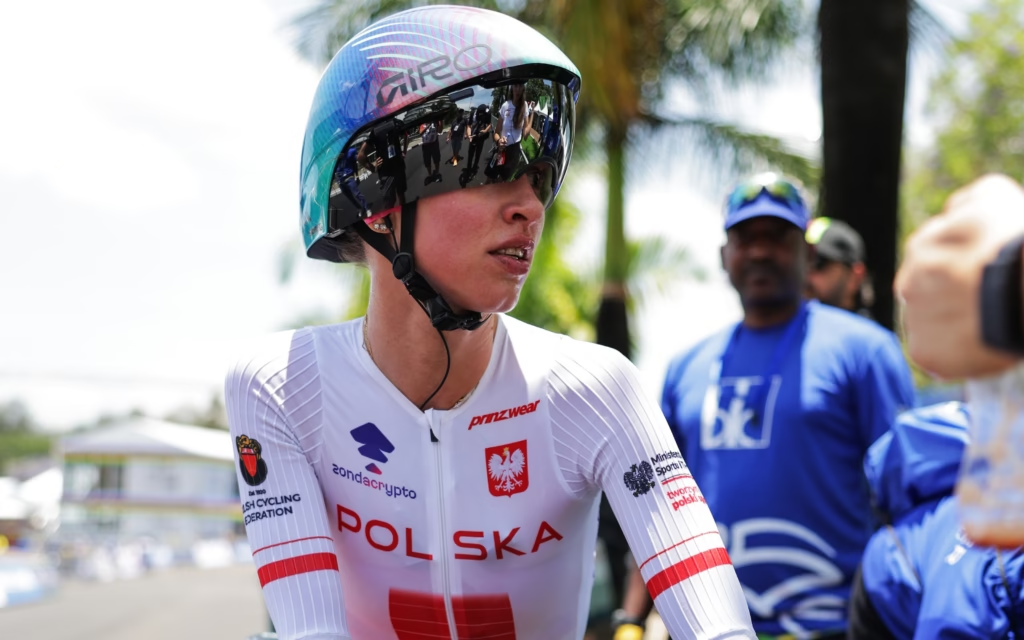
Kasia Niewiadoma-Phinney has to keep the losses controlled
For Katarzyna Niewiadoma-Phinney, Stage 4 is probably the most uncomfortable part of the first half of the Tour.
Her strengths lie in difficult road racing, repeated climbing and tactical aggression rather than sustained specialist time trial power.
The rolling middle section helps, but there are still enough high-speed kilometres for meaningful gaps to develop.
That does not make Dijon a disaster stage in advance.
Niewiadoma-Phinney can recover small deficits later because the route becomes much more favourable to her style of racing. The problem appears if one loss becomes too large.
Thirty seconds to one rival is manageable.
More than a minute to Reusser begins forcing a different strategy across Stages 5, 6 and 7.
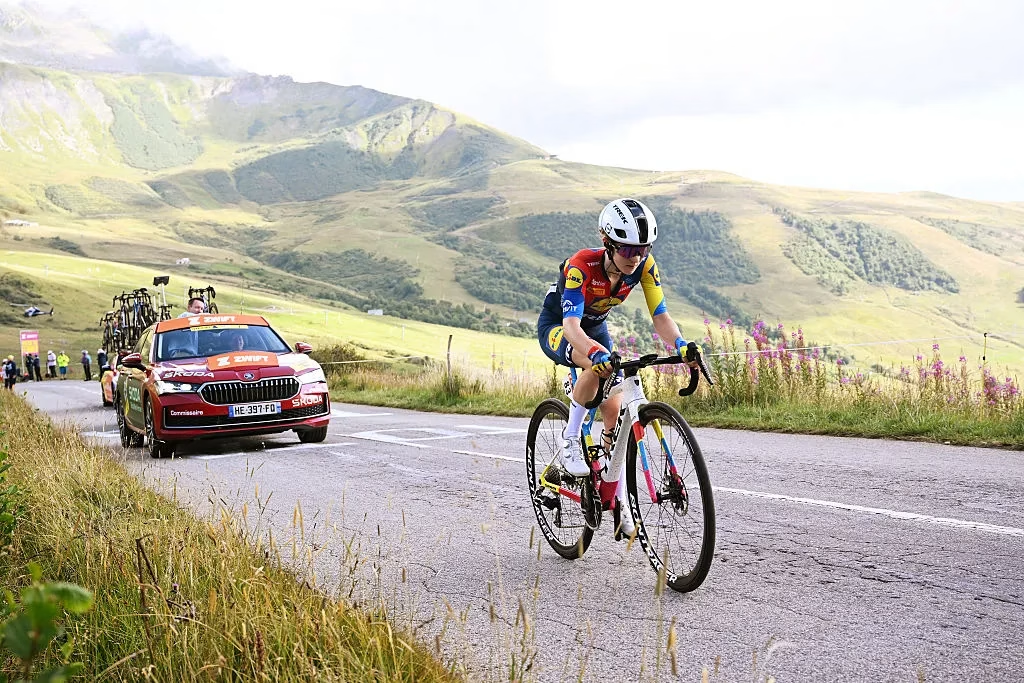
Niamh Fisher-Black can move up without challenging for the win
Niamh Fisher-Black is another rider who can use the time trial more effectively than the headline stage result may suggest.
She is not one of the obvious favourites to win in Dijon, but she has enough all-round stage-racing ability to produce a strong ride on a course where climbing and sustained power both matter.
Her objective is to beat the riders she expects to see around her later in the mountains.
A top-10 time could move Fisher-Black significantly up the GC if several lighter climbers lose more heavily.
That is the hidden value of the stage.
Not everyone needs to finish on the podium for Dijon to improve their Tour.

Cédrine Kerbaol is one of the strongest outsiders
Cédrine Kerbaol should also be treated as a serious top-10 contender.
She has repeatedly demonstrated the aerodynamic efficiency and sustained power required for this type of course, while the rolling middle section should cause her few problems.
An outright win would still require a surprise given Reusser and Bäckstedt’s recent performances, but Kerbaol can realistically finish high enough to gain meaningful time on several riders with similar GC ambitions.
EF Education-Oatly do not need her to ride defensively.
For Kerbaol, Dijon is an opportunity rather than a stage to survive.

Kim Le Court-Pienaar needs a solid ride for her top-five target
Kim Le Court-Pienaar begins the Tour with AG Insurance-Soudal targeting a top-five overall finish.
Dijon is therefore one of the stages that can determine how realistic that objective remains.
Le Court-Pienaar’s strengths lean more towards selective road racing than specialist time trialling, but she does not need to compete with Reusser for the stage.
She needs a controlled result.
If she remains close to riders such as Vollering, Ferrand-Prévot, Longo Borghini and Niewiadoma-Phinney, the Tour remains open for her.
The danger is allowing the clock to create a deficit that then has to be recovered on terrain where every rival knows exactly what she needs to do.

Puck Pieterse could produce another versatile performance
Puck Pieterse is another rider whose range makes her interesting.
The 21km distance is longer than the explosive efforts that most obviously showcase her strengths, but the changing rhythm of the course suits her better than a completely flat drag strip.
Her power, technical handling and ability to respond to short changes in gradient should all help.
More importantly, she does not need to manage the effort around a strict GC objective.
If Fenix-Premier Tech continue using her primarily as a stage hunter, Pieterse can treat Dijon as a standalone challenge and empty herself without worrying about what the result means five days later.
A top-10 performance would not be surprising.
Who are the main Stage 4 favourites?
Based on the confirmed Tour de France Femmes 2026 start list and current form, the contenders divide into several clear groups.
Stage-win favourites: Marlen Reusser and Zoe Bäckstedt.
Podium and top-five threats: Loes Adegeest, Demi Vollering, Anna van der Breggen and Lotte Kopecky.
Strong GC time triallists: Elisa Longo Borghini, Antonia Niedermaier, Cédrine Kerbaol and Niamh Fisher-Black.
GC riders primarily limiting losses: Pauline Ferrand-Prévot, Katarzyna Niewiadoma-Phinney and Kim Le Court-Pienaar.
There are other riders capable of producing a surprise, particularly on a course where 10 seconds can shift someone several places, but Reusser and Bäckstedt have the strongest current evidence.
For a deeper rider-by-rider ranking, our existing Tour de France Femmes 2026 time trial contenders guide provides the broader comparison.
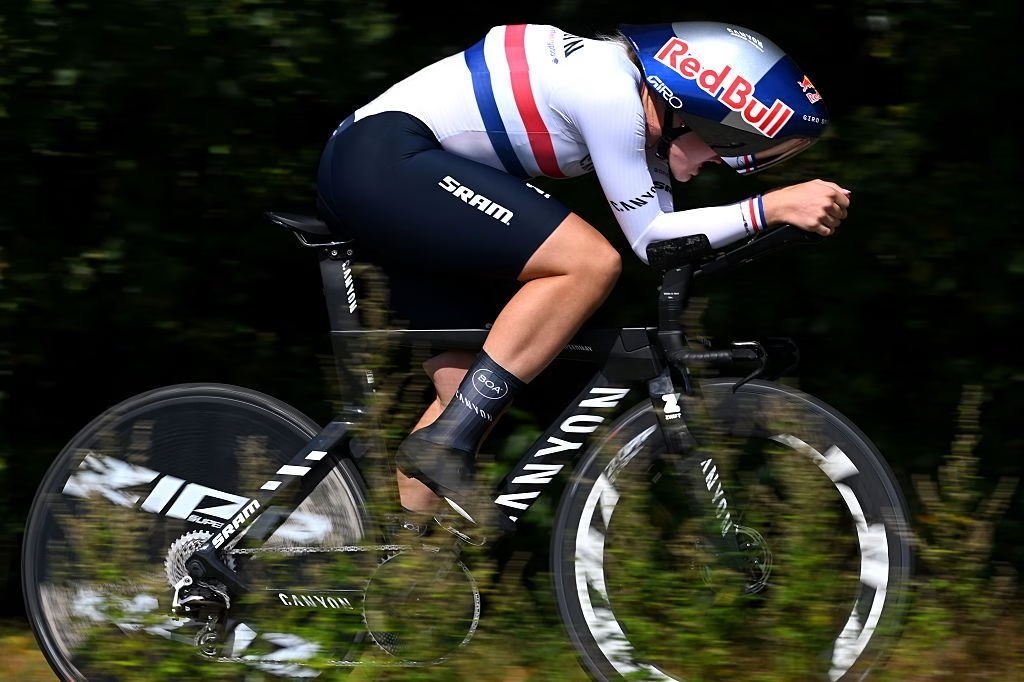
Reusser versus Bäckstedt is the stage battle to watch
The Tour de Suisse provides the cleanest direct comparison.
Over 23.7km, Reusser beat Bäckstedt by only 11 seconds.
That is close enough to make Dijon a genuine race rather than a foregone conclusion.
Bäckstedt has continued producing strong results since then and arrives with confidence. Reusser has the stronger long-term time trial record, but also has to balance the stage with a full GC campaign.
That does not automatically weaken Reusser.
It simply reduces the margin for error.
Reusser remains favourite because she has consistently produced world-class performances against the clock and has already demonstrated the same level this season.
Bäckstedt is the rider most likely to stop her.
Stage 4 could change the way Movistar race the Tour
The biggest tactical consequence may concern Movistar.
If Reusser wins and moves into yellow with a meaningful advantage, her entire race changes.
Until Dijon, Movistar can behave as challengers.
After Dijon, they may become the team expected to control the race.
That creates both advantages and problems.
Reusser can ride the mountains with time in hand, forcing Vollering, Ferrand-Prévot and the other climbers to attack. At the same time, Movistar must assess dangerous breaks, protect yellow and spend energy maintaining control.
The time trial can therefore give Reusser the race lead while simultaneously making the second half of her Tour harder.
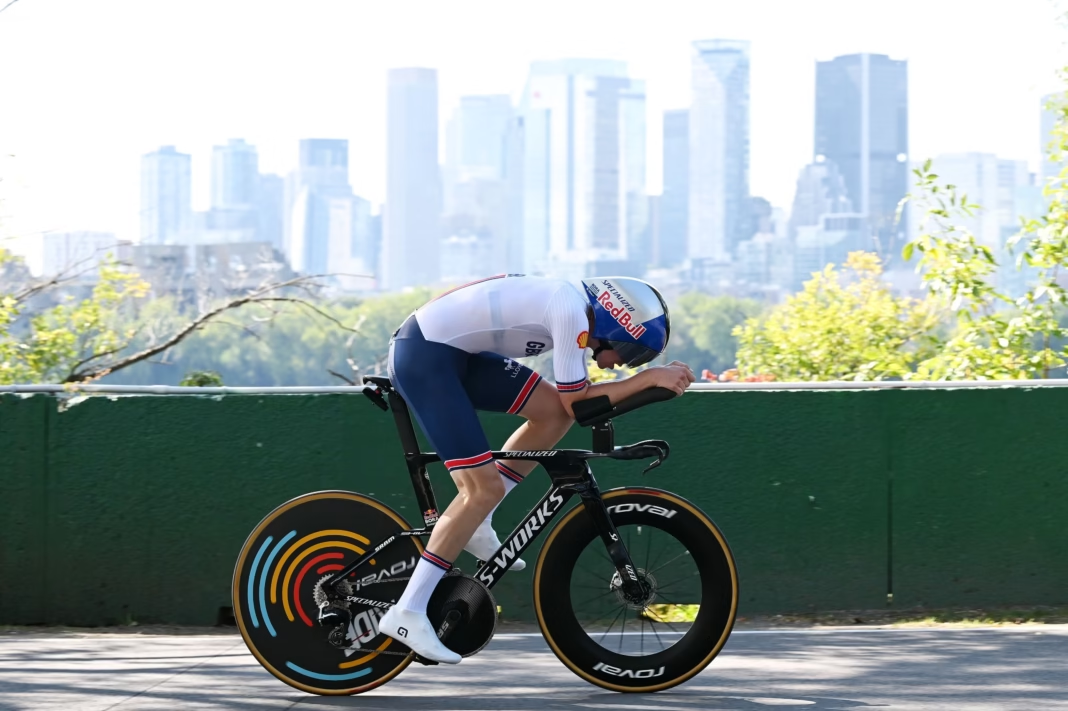

The climbers should not overreact to Dijon
The riders who lose time do not need to panic.
Five stages remain after the time trial, including the Mont Ventoux summit finish and the mountainous finale around Nice.
For Vollering or Ferrand-Prévot, losing 20 or 30 seconds to Reusser is entirely manageable.
Even Niewiadoma-Phinney or Le Court-Pienaar can recover a larger deficit if their climbing level is sufficiently strong.
The danger is not one modest loss.
It is Dijon turning a rider who wanted to wait for Ventoux into someone who has to attack before reaching it.
That is why Stage 4 matters beyond the 21km themselves.
It can change who is allowed to be patient.
Stage 4 prediction
Marlen Reusser is the rider to beat.
Her recent performances provide the strongest evidence, and the Dijon route contains enough fast riding for her sustained power to become decisive without being so flat that the climbing section becomes irrelevant.
Zoe Bäckstedt is the strongest challenger and the rider most capable of turning Stage 4 into something other than a straightforward Reusser victory. Her form against the clock has been exceptional and she can race entirely for the stage.
Behind them, Loes Adegeest has earned her place among the podium contenders, while Demi Vollering, Anna van der Breggen, Lotte Kopecky and Elisa Longo Borghini should all be capable of producing major rides.
The more important contest may happen slightly farther down the stage classification.
Reusser wants to win.
The climbers want to know how much they have lost.
By the time the final rider reaches Dijon, the Tour de France Femmes 2026 should have its first genuinely meaningful GC gaps.

