
“I fell asleep. But I’m still in yellow.”
Marlen Reusser’s blunt assessment of the Tour de France Femmes Stage 5 finish captured both the frustration and relief of a day when she nearly allowed Demi Vollering and Kasia Niewiadoma-Phinney to turn a tactical hesitation into something much more damaging.
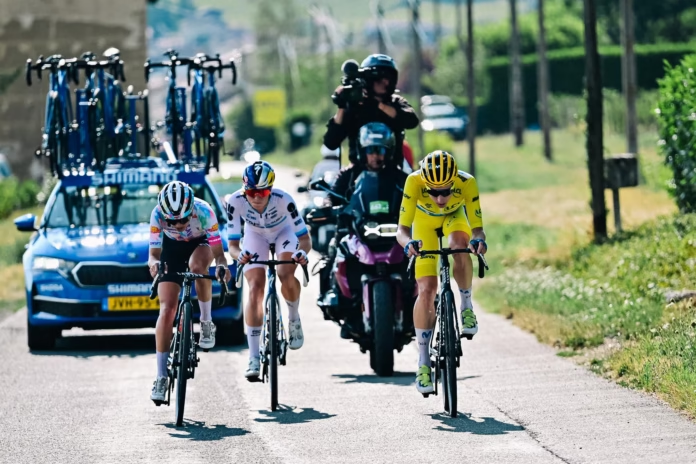
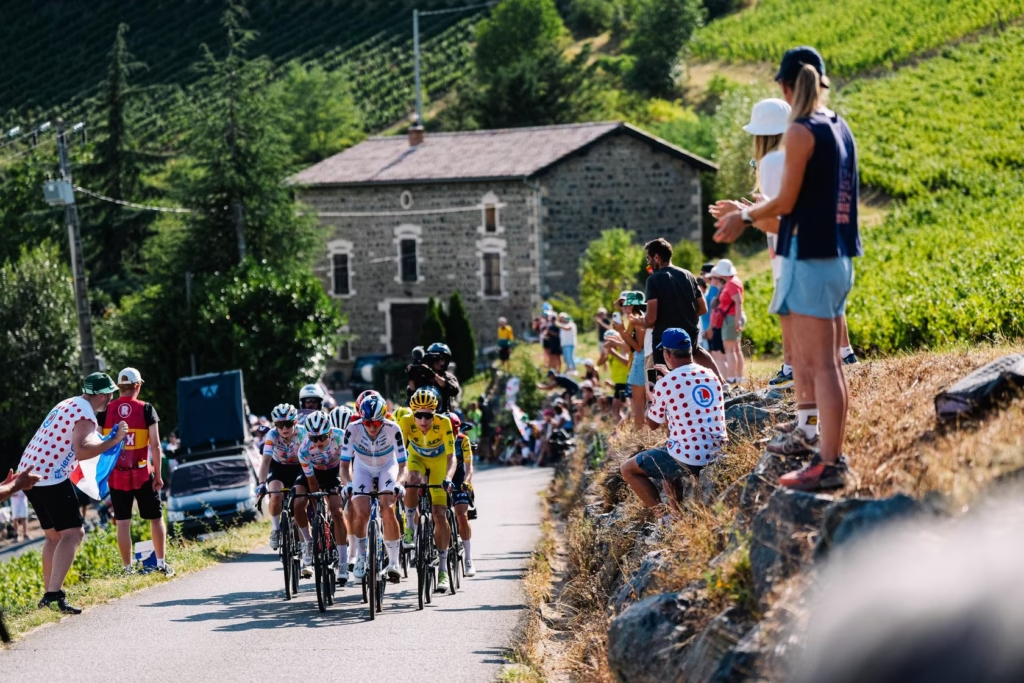
Reusser had survived the real physical test. She followed the decisive attacks across the Beaujolais climbs, remained with Vollering and Niewiadoma-Phinney when the general classification group split and reached Belleville-en-Beaujolais as one of the three strongest riders in the race.
Then, in the final few hundred metres, she almost let the moment pass her by.
Niewiadoma-Phinney attacked first, Vollering judged the sprint perfectly and Reusser found herself reacting rather than controlling. Vollering took the stage victory and the larger time bonus, reducing Reusser’s yellow jersey advantage from 14 seconds to 12.
The mistake cost Reusser a possible stage win. It did not cost her the Tour lead.
What did Reusser mean when she said she ‘fell asleep’?
Reusser was not describing a physical collapse or a lapse during the decisive climbing.
Her comment referred to the final sprint.
Niewiadoma-Phinney accelerated from distance, knowing she could not afford to wait for the faster finishes of Vollering and Reusser. Vollering remained patient and allowed the yellow jersey to make the first response.
Reusser hesitated.
She was forced to react to Niewiadoma-Phinney’s move rather than beginning the sprint on her own terms. The Canyon SRAM rider then moved across the road as the finish approached, forcing Reusser to interrupt her acceleration before trying to rebuild speed.
Vollering used the opening perfectly. She came from behind, carried greater momentum and passed both riders to win the stage.
Reusser still finished second, collecting six bonus seconds to Vollering’s ten. The complete result and its effect on every classification are covered in our GC and jerseys update after Stage 5.
Reusser had already passed the more important test
The finish was frustrating because almost everything before it had gone well.
Stage 5 contained eight categorised climbs and close to 3,000 metres of elevation. It was the first day after the Dijon time trial on which Reusser’s climbing strength could be tested repeatedly rather than through one short acceleration.
A large breakaway also created an immediate tactical complication. Antonia Niedermaier began the day only 1:43 behind Reusser and briefly reached the virtual yellow jersey as the advantage moved beyond that margin.
Movistar could not simply allow the group to ride away, but neither could the team exhaust itself chasing every kilometre before the hardest climbs. Liane Lippert’s presence in the break gave Movistar some representation while the remaining riders controlled the gap behind.
The Stage 5 breakaway placed Niedermaier on the edge of virtual yellow, but Reusser never panicked. Once the favourites began racing, she dealt with the threat herself.
Vollering and Niewiadoma-Phinney could not drop her
FDJ United-Suez used the Col de Durbize to increase the pressure for Vollering.
The pace removed Pauline Ferrand-Prévot and reduced the GC group before Vollering began testing those who remained. Niewiadoma-Phinney also attacked, repeatedly trying to exploit the steeper roads and the limited support around the yellow jersey.
Reusser followed every move that mattered.
That was the central sporting story of her stage. The world time-trial champion had gained more than two minutes on several major rivals in Dijon, but the Tour could only remain hers if she proved capable of defending those gains once the road climbed.
Stage 5 provided the answer.
Reusser could not prevent Vollering winning the stage, but she finished on the same time as the former Tour winner and Niewiadoma-Phinney. Everyone else lost at least 45 seconds.
The performance reinforced the argument outlined before the race in our Marlen Reusser Tour de France Femmes profile: she is not simply a time triallist trying to protect an advantage. She is a complete stage racer capable of remaining with the leading climbers when the race becomes selective.
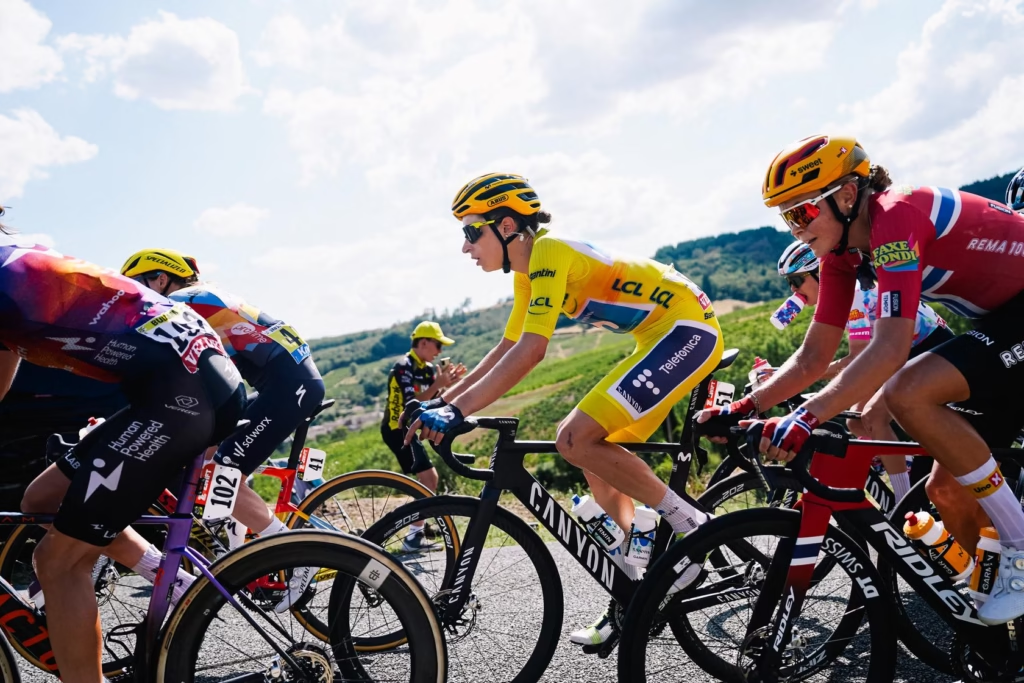 Photo Credit: A.S.O./Gaëtan Flamme
Movistar controlled the threat without controlling everything
Movistar’s approach was more measured than dominant.
The team could not prevent the dangerous breakaway forming, and Reusser did not have several teammates surrounding her when Vollering began attacking. Yet that did not mean the plan had failed.
Movistar’s central responsibility was to keep the break within a recoverable distance and deliver Reusser to the decisive climbs with enough energy to defend herself.
That is exactly what happened.
Lippert gave the team a rider ahead, while the chase behind prevented Niedermaier, Femke de Vries and Dominika Włodarczyk turning the stage into a complete GC reversal. Reusser then followed the strongest riders personally.
The approach closely matched the plan discussed before the stage in Project Nice: Marlen Reusser’s plan to defend yellow. Movistar did not need to control every attack. They needed to ensure Reusser reached the decisive terrain without paying for the team’s earlier work.
The only obvious failure came after that tactical work was already complete.
Vollering understood the finish better
Vollering’s victory came through judgement as much as raw speed.
She expected Niewiadoma-Phinney to attack early and recognised that Reusser might gamble rather than immediately closing the move. By waiting, Vollering forced the yellow jersey to spend the first acceleration.
Once Reusser’s momentum was interrupted, Vollering had the clearest line and the strongest finishing speed.
It was a small but important reminder of the difference between following attacks and controlling the race. Reusser had the legs to remain with Vollering, but Vollering made the better decision when the stage became tactical.
That ability is one of the reasons she began the Tour as the narrow favourite, as explored in our Demi Vollering Tour de France Femmes profile.
The reward was modest in the overall standings. Vollering gained only two seconds once the finish bonuses were applied. The psychological value may be greater. She proved she could defeat Reusser after a hard climbing stage and reduced the race lead without needing to create a physical gap.

Does the mistake reveal nervousness in yellow?
Reusser’s reaction suggested genuine annoyance rather than panic.
She knew the stage victory had been available. She also knew that allowing Vollering to collect the maximum bonus had tightened a race already separated by seconds.
That pressure will continue. Reusser is defending yellow against two former Tour de France Femmes winners, both of whom understand how to create and exploit small moments of hesitation.
Niewiadoma-Phinney has built her Tour career around aggressive racing and anticipation. Her Stage 5 attack was entirely consistent with the strengths outlined in our Kasia Niewiadoma-Phinney Tour de France Femmes profile.
Vollering is the strongest direct threat at only 12 seconds. Every bonus point, late acceleration and finish now carries potential consequences.
Reusser is still learning what it means to manage that pressure across a Grand Tour. Winning a time trial requires a controlled effort. Defending yellow requires repeated tactical decisions, often while physically exhausted and surrounded by riders attempting to force an error.
Her Stage 5 mistake showed that vulnerability. Her ability to joke about it while remaining in yellow also showed perspective.
The stage win escaped, but yellow did not
Reusser’s quote will define how her Stage 5 is remembered, but it should not obscure the larger performance.
She nearly mishandled the sprint. She did not mishandle the stage.
Reusser followed Vollering and Niewiadoma-Phinney when they attacked, protected her advantage over every other GC rival and proved that the yellow jersey gained in Dijon could survive a much less controlled test.
She will face a considerably harder examination on Mont Ventoux. Vollering now needs only 13 seconds to take the race lead outright, while Niewiadoma-Phinney has shown that she will continue attacking whenever hesitation appears.
Stage 5 therefore offered both reassurance and warning.
Reusser was strong enough to stay in yellow. She also learned that against Vollering and Niewiadoma-Phinney, briefly falling asleep is enough to lose something.

