

Demi Vollering begins the 2026 Tour de France Femmes with a stronger all-round case for the yellow jersey than any other rider in the field.
She is the 2023 Tour winner, the reigning Giro d’Italia Women champion and the only rider to have finished on the podium in all four editions since the modern race launched in 2022. The route rewards her combination of climbing strength, time-trialling, acceleration and finishing speed, while FDJ United-Suez have structured their season around returning her to the top step.
Yet this is not simply a title defence that briefly went off course. Vollering has not won the Tour since 2023. She lost by four seconds in 2024, then finished 3:42 behind Pauline Ferrand-Prévot in 2025.
Those defeats exposed two different weaknesses. The first came through a crash, poor positioning and an inadequate team response. The second was more straightforward. Ferrand-Prévot was stronger when the race reached its decisive mountain stages.
Vollering can win the Tour de France Femmes 2026. She may even begin as the narrow favourite. The harder question is whether she can convert the most complete physical profile in the race into nine days without a costly mistake.
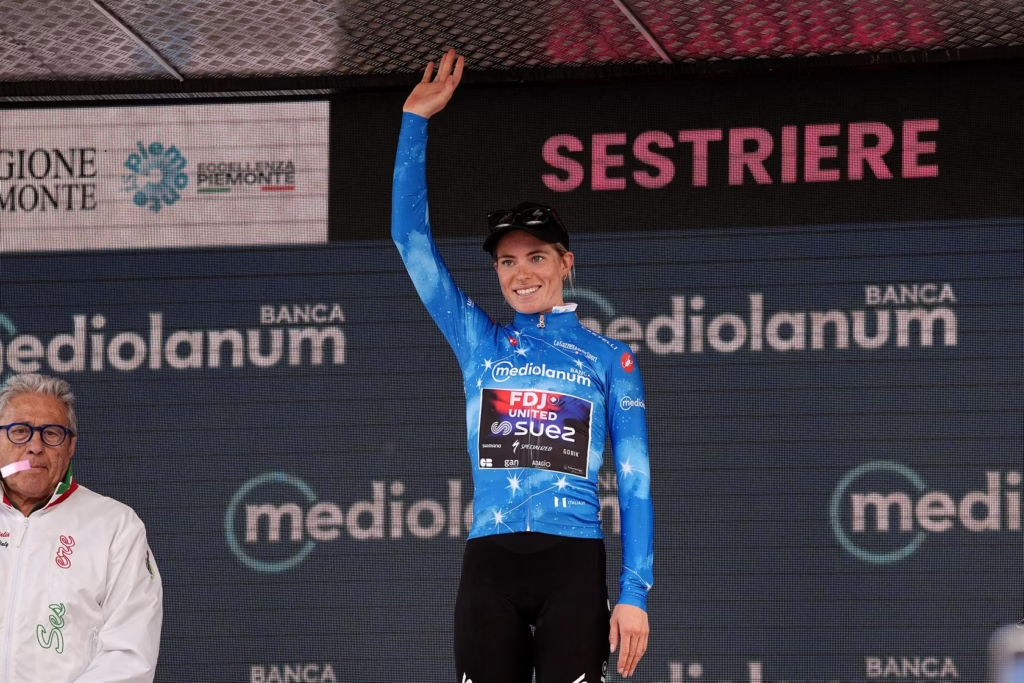 Photo Credit: RCS
Can Demi Vollering win the 2026 Tour de France Femmes?
Yes. Vollering has the form, route suitability and team support required to reclaim the yellow jersey.
Her victory at the 2026 Giro d’Italia Women showed that she remains one of the strongest stage racers in the world. She overturned a 49-second deficit to Anna van der Breggen on the final stage, completing a race in which she had already won twice in the mountains.
The Tour de France Femmes 2026 route should suit her even better. The race contains a 21km individual time trial into Dijon, hilly stages where she can collect bonus seconds, a summit finish on Mont Ventoux and a short final mountain stage around Nice.
Vollering is unlikely to dominate every part of that route, but very few rivals can match her across all of it.
Ferrand-Prévot may be stronger on the longest climbs. Marlen Reusser should gain time in Dijon. Kasia Niewiadoma-Phinney can make the race tactically unpredictable. Van der Breggen has already shown that she can place Vollering under pressure against the clock.
Vollering remains the rider with the fewest obvious weaknesses.
Demi Vollering’s Tour de France Femmes record
Vollering has finished first or second in every edition of the Tour de France Femmes.
| Year | Final position | Winning margin or deficit |
|---|---|---|
| 2022 | 2nd | 3:48 behind Annemiek van Vleuten |
| 2023 | 1st | Won by 3:03 |
| 2024 | 2nd | Four seconds behind Kasia Niewiadoma |
| 2025 | 2nd | 3:42 behind Pauline Ferrand-Prévot |
Her 2023 victory remains the clearest example of Vollering at her best. She took control on the Col du Tourmalet, then reinforced the result in the final time trial to win the general classification by more than three minutes.
The following two Tours were very different.
A crash during Stage 5 in 2024 cost Vollering 1:19 and separated her from much of her team. She recovered to win the final stage on Alpe d’Huez, but Niewiadoma defended yellow by only four seconds.
Our analysis of how Vollering lost the 2024 Tour de France Femmes by four seconds explains why the race was decided long before the final climb. The crash was important, but positioning, communication and the failure to respond immediately turned the incident into a Tour-losing moment.
In 2025, there was no four-second explanation.
Ferrand-Prévot took control on the Col de la Madeleine and confirmed her superiority on the final stage into Châtel. Vollering finished second, but the gap of 3:42 made clear that she had been comprehensively beaten during the decisive weekend.
The 2025 Tour de France Femmes winner recap shows how Ferrand-Prévot built her victory through consecutive mountain stage wins rather than relying on one isolated attack.
No rider has yet won the modern Tour de France Femmes twice. Vollering and Ferrand-Prévot therefore both have an opportunity to become the first repeat champion since the race’s 2022 relaunch.
The Tour de France Femmes winners list also shows how varied the first four editions have been. Van Vleuten, Vollering, Niewiadoma and Ferrand-Prévot all won through different combinations of climbing, time-trialling, defence and tactical control.
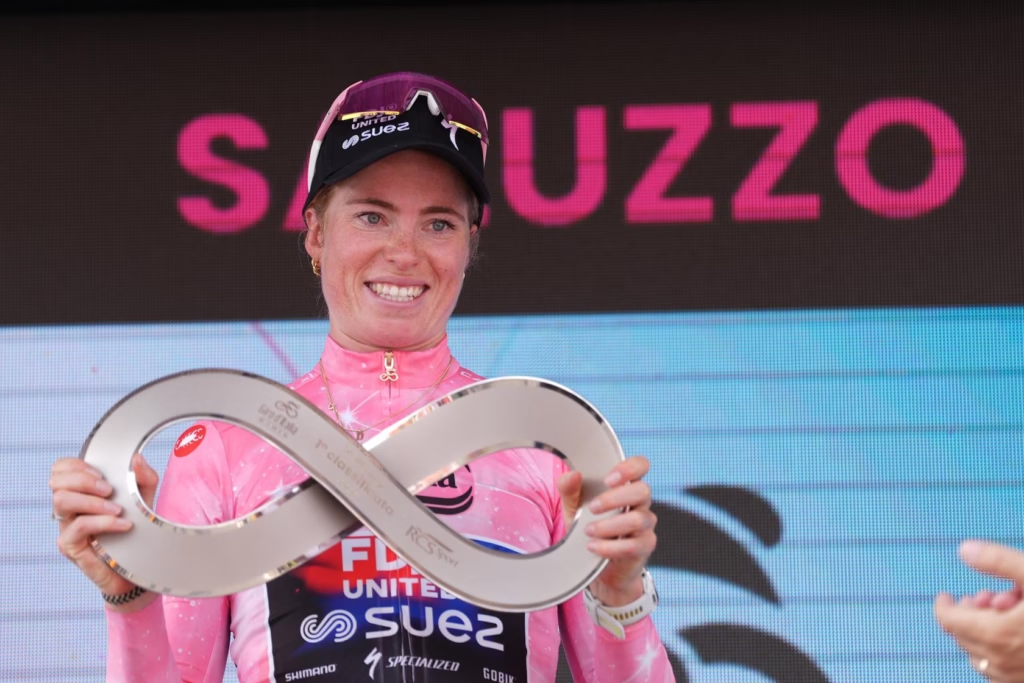
Her 2026 results make her the rider to beat
Vollering’s case is not based on reputation or her 2023 victory.
Her 2026 season has demonstrated almost every quality required to win this Tour. She has won on cobbles, short climbs, long climbs and across a nine-stage Grand Tour.
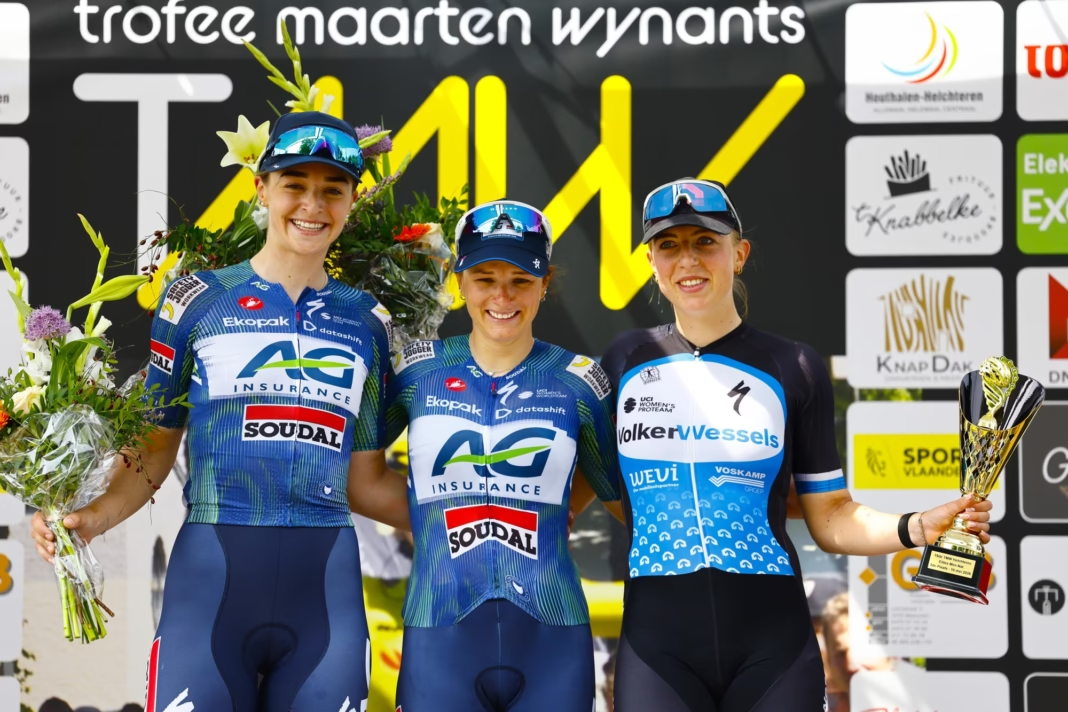
Vollering opened her major campaign by winning Omloop Het Nieuwsblad Women 2026. FDJ used Elise Chabbey and Franziska Koch to shape the finale before Vollering attacked on the Muur van Geraardsbergen with Niewiadoma-Phinney.
She then beat the Polish rider in the sprint into Ninove.
That victory carried obvious relevance for the Tour. Vollering handled poor weather, technical roads, cobbles and a tactical two-rider finish. It was a race won through positioning and team execution as much as physical strength.
Vollering finished third at Amstel Gold Race Women 2026, behind Paula Blasi and Niewiadoma-Phinney. The result was a reminder that being the strongest marked rider does not guarantee control when another contender attacks during a moment of hesitation.
She responded by completing the Flèche Wallonne and Liège-Bastogne-Liège double.
At La Flèche Wallonne Femmes, Vollering attacked early on the final ascent of the Mur de Huy and held off Puck Pieterse’s late response.
Four days later, she won Liège-Bastogne-Liège Femmes with a long solo attack on La Redoute. Vollering reached the finish 1:28 ahead of Pieterse after turning the race into a sustained climbing effort rather than waiting for a reduced sprint.
The two victories were achieved in different ways. Flèche rewarded acceleration and timing. Liège required endurance, climbing strength and the confidence to commit from distance.
The Tour will demand both.
The Giro showed that Vollering can rescue a Grand Tour
Vollering’s 2026 Giro d’Italia Women victory is the strongest evidence behind her Tour favourite status.
She did not control the race from the opening day. Van der Breggen won the Nevegal time trial and created a large enough advantage to place Vollering on the defensive.
Vollering began recovering ground by winning Stage 5 in Santo Stefano di Cadore from a four-rider GC group containing Van der Breggen, Antonia Niedermaier and Isabella Holmgren.
She won again on Stage 8 to Sestriere, but Van der Breggen still reached the final morning with 49 seconds in hand.
Vollering could have protected second place. Instead, she attacked on the Colletta di Brondello during the final stage around Saluzzo and overturned the race.
The Giro d’Italia Women 2026 final classification recap details how Vollering transformed a seemingly controlled race through one sustained final-day move.
That performance matters because the 2026 Tour also finishes with a short and aggressive mountain stage.
Vollering has already won a Grand Tour this season by refusing to accept the classification presented to her at the start of the final day. She knows that a leader can be isolated, a team can lose control and a significant deficit can disappear quickly when the terrain encourages repeated attacks.
The Giro also revealed a weakness. Vollering lost too much time in the time trial and had to expend enormous energy recovering it.
Repeating that pattern in the Tour would be dangerous. The field is deeper, the decisive mountains are harder and Ferrand-Prévot is unlikely to defend a lead in exactly the same way as Van der Breggen.
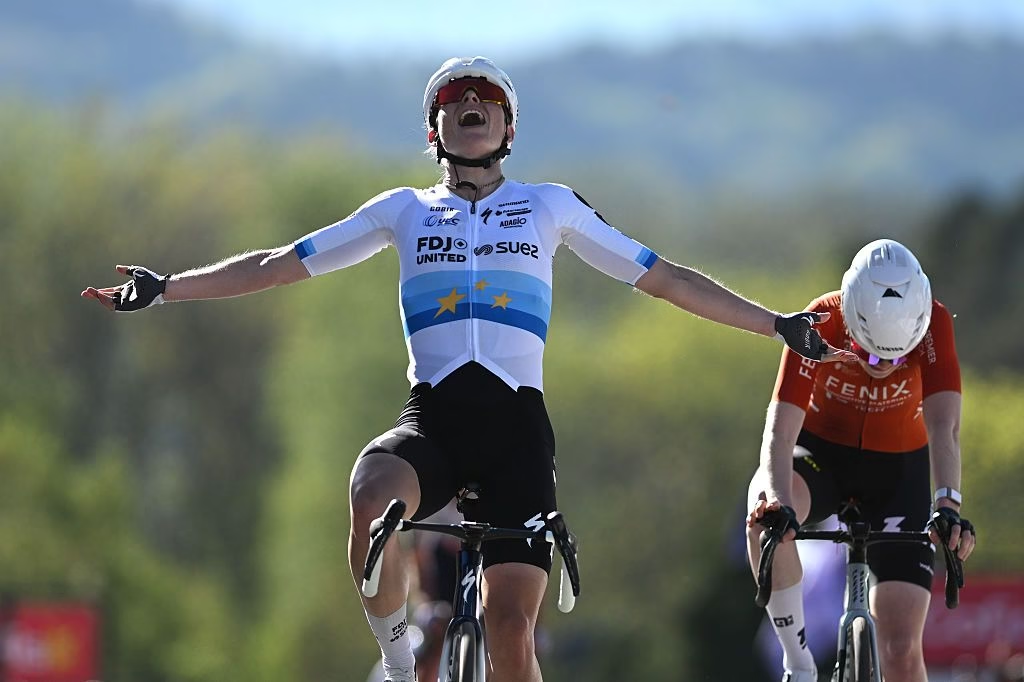
Recovery may matter more than additional racing
Vollering did not race the Tour de Suisse Women after the effort required to win the Giro.
The decision leaves her without a July stage race immediately before the Tour, but it also gives her a meaningful recovery and training block between two nine-day Grand Tours.
That should be viewed as a calculated choice rather than a lack of preparation.
Vollering has already completed a demanding spring, won two Ardennes Classics and raced the Giro under sustained pressure. She does not need more evidence that she can compete. She needs enough freshness to remain close to her best through Mont Ventoux and Nice.
The risk is race sharpness.
The Swiss opening stages will involve technical roads, repeated changes of pace and intense positioning. Ferrand-Prévot, Niewiadoma-Phinney and the other contenders may arrive with more recent racing in their legs.
Vollering cannot use the first weekend to gradually rediscover the speed of the peloton. The 2024 Tour demonstrated how quickly a supposedly minor stage can decide the general classification.
Why the 2026 route suits Vollering
The Tour de France Femmes 2026 route guide describes the hardest and most complete edition of the modern race.
Across nine stages, the riders cover 1,175km from Lausanne to Nice. The route contains three flat stages, three hilly stages, two mountain stages and one 21km individual time trial.
There is no rest day.
That structure rewards riders who can perform across different types of terrain without using too much energy on the days that do not immediately decide the classification.
Vollering should view almost every stage as either an opportunity or a manageable challenge.
She can contest reduced finishes during the Swiss opening. She should gain time on several climbers in Dijon. The Beaujolais stages suit her acceleration. Mont Ventoux rewards sustained climbing, while the final stage around Nice gives her another platform for long-range aggression.
Few riders have such a complete relationship with the course.
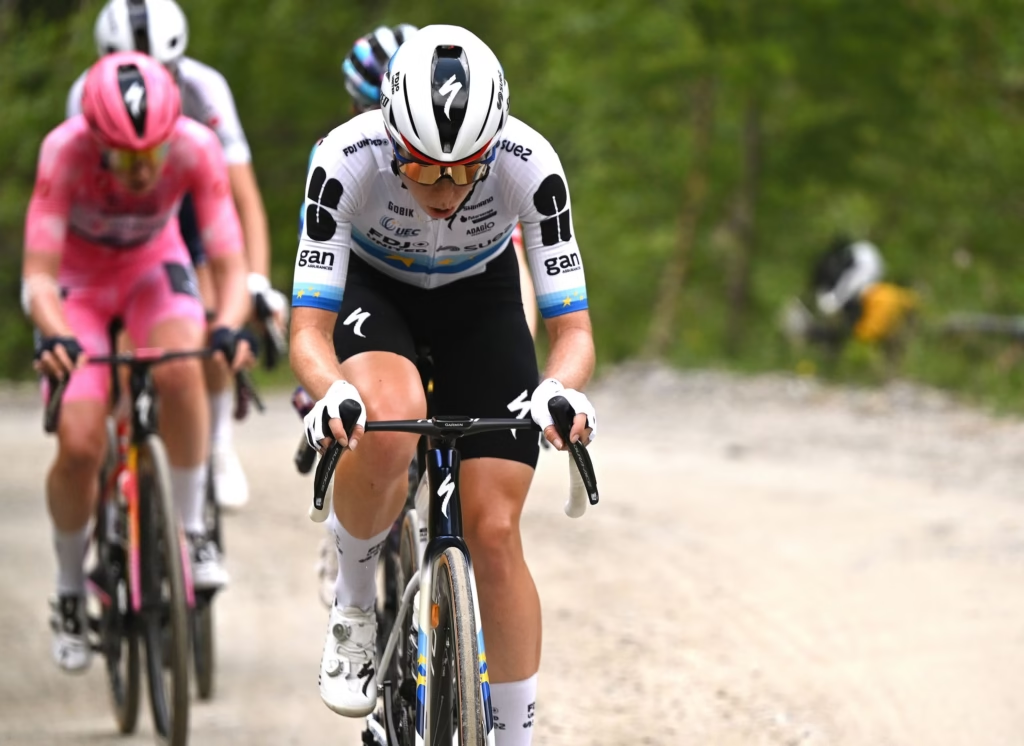
The Swiss Grand Départ rewards positioning and acceleration
The Tour begins in Lausanne on Saturday 1 August before travelling from Aigle to Geneva and then from Geneva into France.
These stages are unlikely to decide yellow outright, but they can shape the race before the time trial.
Short climbs, technical roads and bonus seconds create opportunities for Vollering to gain small amounts of time while placing pressure on less explosive contenders.
That suits her better than an entirely flat opening block.
Vollering is one of the fastest finishers among the GC riders. If a reduced group reaches the line, she can collect bonuses without committing to a major attack.
The Tour de France Femmes 2026 Swiss Grand Départ guide explains how the opening weekend combines urban roads, short climbs and exposed sections where positioning could become more important than the stage profiles initially suggest.
Vollering cannot treat these stages as days to survive anonymously.
Her four-second defeat in 2024 began with a crash on a stage that was not expected to decide the Tour. FDJ must keep her near the front, particularly through technical finales and any section where a split can form before the main GC terrain.
Dijon gives Vollering a chance to build rather than limit losses
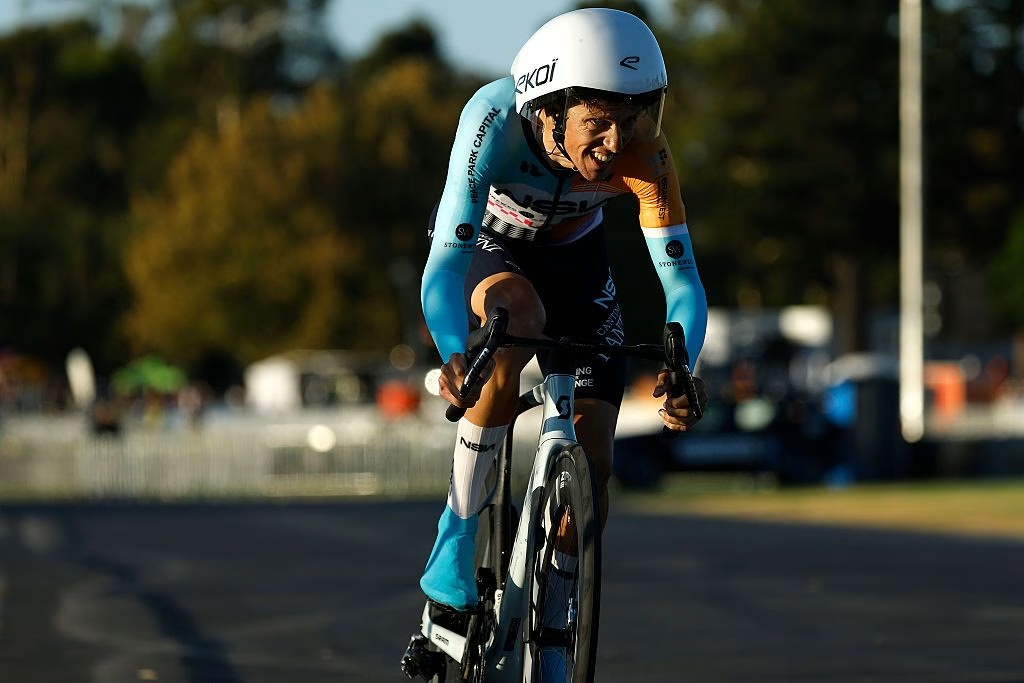
Stage 4 is a 21km individual time trial from Gevrey-Chambertin to Dijon.
The course contains approximately 255 metres of climbing and passes through the Lacets de Marsannay before a faster final section towards Dijon. It is not a completely flat specialist’s test, but it is long enough to create meaningful differences between the leading contenders.
Marlen Reusser is the clear benchmark against the clock. Van der Breggen, Niedermaier and several other riders can also gain substantial time.
Vollering does not necessarily need to win the stage.
Her objective is to avoid the kind of result that placed her under pressure at the Giro. Van der Breggen’s Nevegal performance forced Vollering to spend the rest of the race looking for opportunities to regain time. A stronger ride in Dijon would allow her to approach the mountains with greater tactical control.
The time trial should favour Vollering against several direct rivals.
Ferrand-Prévot can produce strong performances against the clock, but Vollering has the more consistent recent stage-race record in the discipline. Niewiadoma-Phinney usually approaches time trials by limiting her losses rather than taking time from the best specialists.
The Tour de France Femmes 2026 time trial contenders include Reusser and Van der Breggen as the riders most capable of changing the race before the mountains.
Vollering’s position is different. She can use Dijon to gain time on many of the best climbers, then defend or extend that advantage on Mont Ventoux.
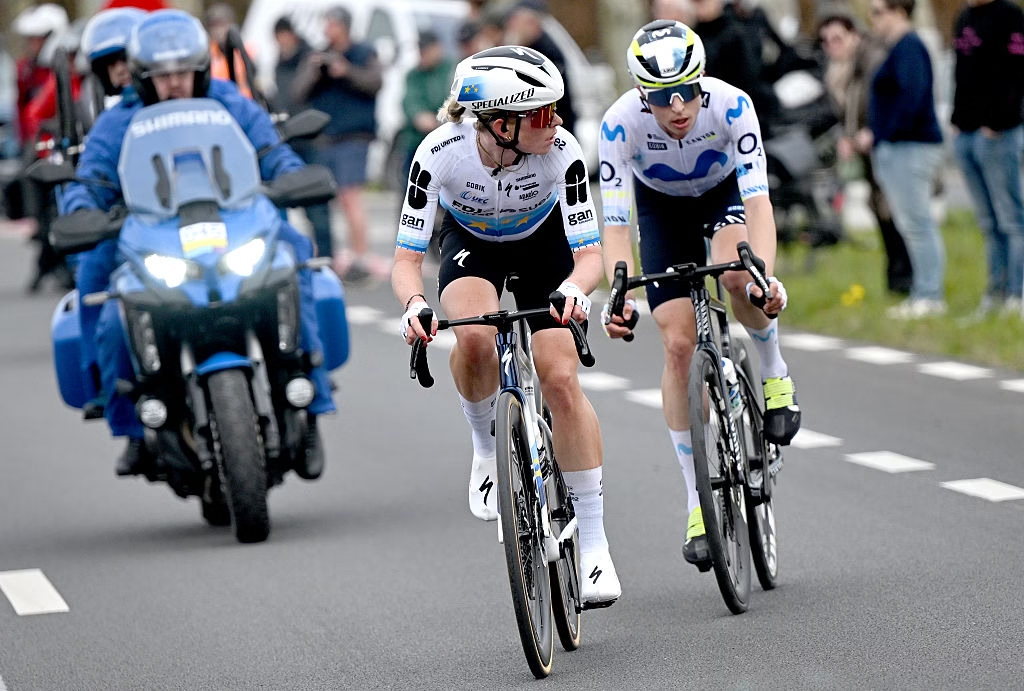
The middle stages offer hidden seconds
Stages 5 and 6 take the race through Beaujolais and towards Tournon-sur-Rhône.
Neither carries the symbolism of Mont Ventoux, but these are the days when the classification could become untidy. Riders will be recovering from the Dijon time trial while trying to conserve energy for the queen stage.
Vollering can use this section in several ways.
She can collect finish bonuses if a reduced group contests the stage. She can follow attacks without needing to initiate them. FDJ can also place a teammate into a dangerous move and force rival teams to decide whether they are prepared to chase.
The Tour de France Femmes 2026 time bonus rules make these stages particularly relevant.
A rider does not need to create a visible road gap to gain time. Repeated stage placings and bonus seconds can quietly alter the GC before the race reaches Ventoux.
Vollering’s acceleration gives her an advantage over most pure climbers.
Ferrand-Prévot may prefer to save everything for the longest ascent. Niewiadoma-Phinney is explosive enough to contest bonuses but does not have Vollering’s finishing speed. Reusser may be forced to respond to attacks rather than wait for a finish that naturally suits her.
The danger is spending energy simply because an opportunity exists.
Vollering is capable of contesting almost every hilly finish. She does not need to treat every bonus second as essential if doing so weakens her before Mont Ventoux.
Mont Ventoux is the defining test
Stage 7 finishes at the summit of Mont Ventoux after 146.8km and approximately 3,565 metres of climbing.
The final ascent from Bédoin contains 15.7km at an average of 8.8% within the official classified section, with the finish at 1,910 metres.
It is the longest sustained climbing test of the race and the clearest opportunity to create major GC gaps.
The full climb, historical context and expected race dynamics are covered in our Tour de France Femmes 2026 Mont Ventoux guide.
Vollering has the physical profile to win there.
She can sustain a high pace, respond to accelerations and produce a faster finish than most of the other contenders. Her victories in Santo Stefano di Cadore and Sestriere confirmed that her climbing remains at the highest level.
Ventoux is still where the memory of 2025 becomes unavoidable.
Ferrand-Prévot did not beat Vollering through bonus seconds or tactical luck. She broke the race apart on the Col de la Madeleine and demonstrated a superior climbing level when the Tour reached its decisive point.
Vollering cannot assume that following the defending champion will be enough.
If Ferrand-Prévot reaches the steep middle section of Ventoux in the same condition she showed during the 2025 Alps, Vollering may need to anticipate rather than respond.
The other danger is a controlled pace that keeps too many contenders in the race.
Niewiadoma-Phinney, Van der Breggen, Elisa Longo Borghini, Niamh Fisher-Black, Niedermaier and Paula Blasi may all remain close if FDJ wait until the final kilometres to apply pressure.
Reusser could also begin the stage with a time-trial advantage that forces Vollering to attack earlier than she would prefer.
Mont Ventoux should reveal whether Vollering is once again the strongest stage racer in the world or one of several riders capable of winning.
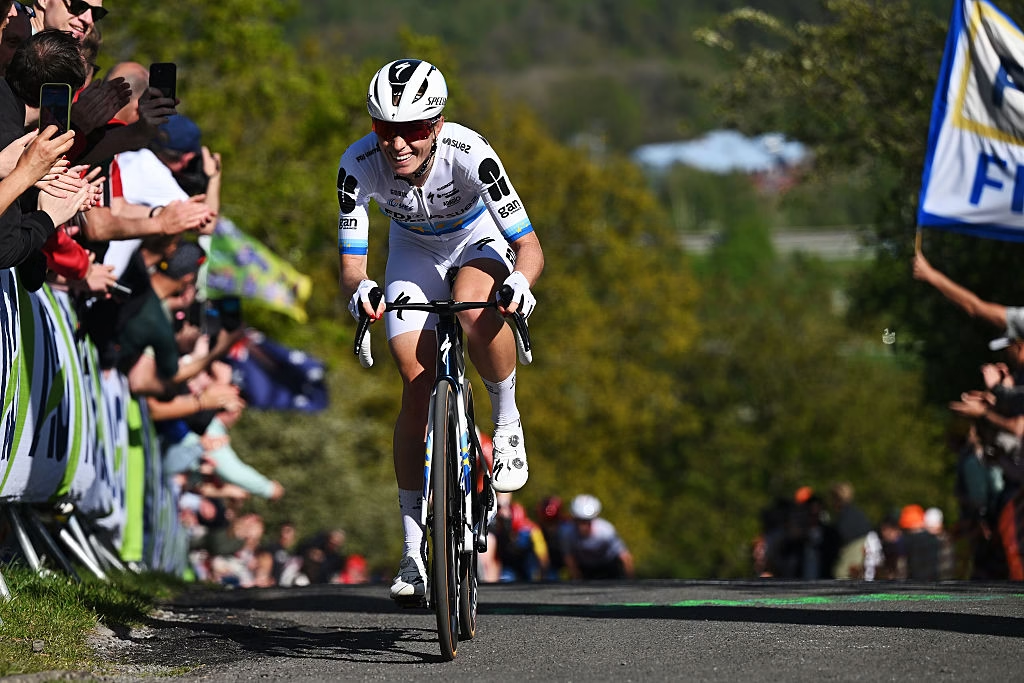 Photo Credit: Getty
The Tour does not end at the summit
Stage 8 travels 171.9km from Sisteron to Nice before the race concludes with a 99.2km mountain stage starting and finishing in Nice.
The final day includes four ascents towards the Col d’Èze. The last uses the harder approach through the Chemin du Vinaigrier and Col des Quatre Chemins before a rapid descent towards the Promenade des Anglais.
The Tour de France Femmes 2026 Nice finish guide explains why this is not a ceremonial final stage.
Its short distance leaves little time for a race leader to establish control. Attacks can begin almost immediately, support riders can disappear early and several teams may combine if the yellow jersey is vulnerable.
That may suit the Vollering seen at the Giro.
She has already won a Grand Tour in 2026 by attacking from distance on the final stage. She knows that a leader can be isolated and overturned when the course is short, mountainous and tactically unstable.
It is also a warning.
Vollering could dominate Mont Ventoux and still face a dangerous final day. A mechanical problem, poorly managed chase or rival placed in a strong early move could reopen the Tour.
FDJ cannot treat the summit of Ventoux as the finish line. They need enough climbing support left for Nice, particularly if Vollering holds yellow and several rivals begin the stage close enough to justify taking risks.
FDJ United-Suez have more responsibility than in 2025
FDJ United-Suez built their 2026 programme around winning the Tour.
The team have already helped Vollering win Omloop Het Nieuwsblad, Flèche Wallonne, Liège-Bastogne-Liège and the Giro. That demonstrates that they can control major races, support her through difficult moments and make decisive tactical choices.
The Tour remains different.
FDJ are a French team attempting to win the biggest women’s race in France with a Dutch leader. The expectation is greater, the attention more intense and every tactical decision more visible.
The absence of Elise Chabbey weakens the squad.
Chabbey had been expected to play an important role during the Swiss stages and in the mountains, but she will miss the race after failing to recover sufficiently from illness.
Her absence removes one of Vollering’s strongest attacking and climbing lieutenants, as well as a rider who would have brought local knowledge to the Swiss Grand Départ.
Célia Gery will instead make her Tour debut, as confirmed in our report on Elise Chabbey missing the Tour de France Femmes 2026.
FDJ still have considerable depth available.
Juliette Labous has finished fourth at the Tour and understands how to protect a GC position. Évita Muzic is a proven mountain stage winner. Juliette Berthet can support Vollering on sustained climbs, while Gery brings speed, climbing potential and the confidence of becoming French road champion.
The difficult question is how much freedom those riders retain.
Sending a secondary rider into an attack can place pressure on rival teams, but not if Vollering is left without support when the decisive acceleration arrives.
Ferrand-Prévot benefited from a Visma team entirely committed to creating the right mountain scenario in 2025. FDJ need the same clarity.
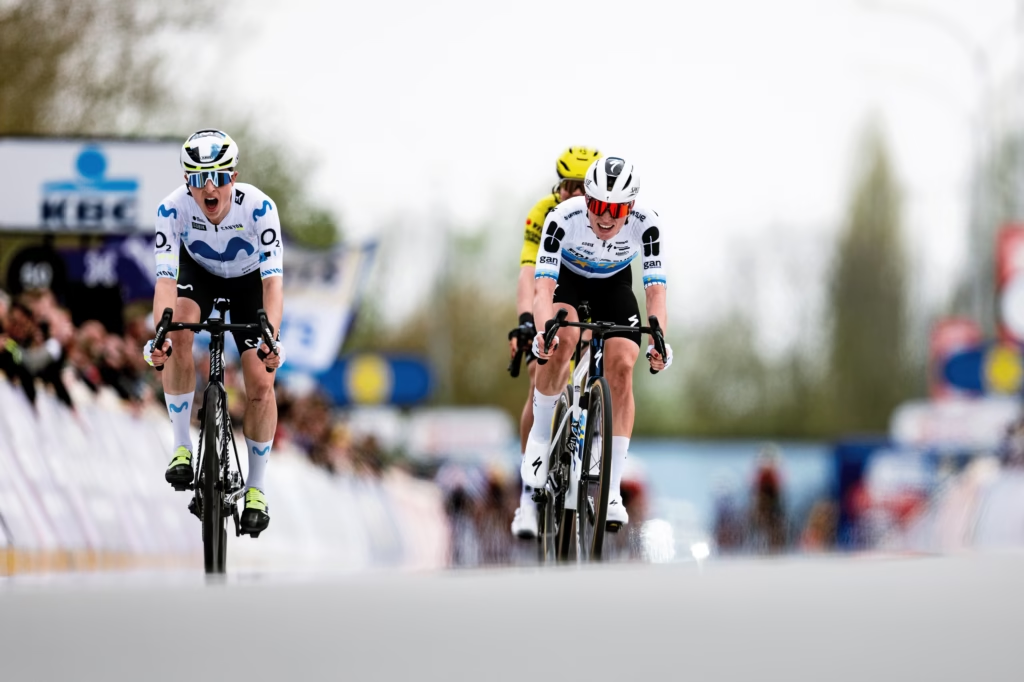
Pauline Ferrand-Prévot remains the defining rival
Ferrand-Prévot is the defending champion and the rider who set the standard Vollering failed to match in 2025.
Her victory was not based on Vollering crashing, missing a split or losing bonus seconds. Ferrand-Prévot was the strongest climber during the decisive weekend and converted that advantage into two stage victories and a winning margin of 3:42.
That makes her the central reference point, regardless of how the rest of her 2026 season compares with Vollering’s.
The route gives Ferrand-Prévot clear opportunities.
Mont Ventoux is long enough for her climbing efficiency to matter, while the short final stage around Nice rewards repeated accelerations, technical confidence and a willingness to race aggressively.
Vollering should have the advantage in Dijon and may collect more bonus seconds before the mountains. Ferrand-Prévot’s route towards yellow is more concentrated.
She needs to remain close through the time trial, then recreate the mountain superiority she showed in 2025.
The full case for the defending champion is covered in our analysis of Pauline Ferrand-Prévot at the Tour de France Femmes 2026.
Reusser creates a different tactical problem
Marlen Reusser may be the rider who changes how Vollering has to approach the race.
The Swiss rider can gain significant time in the Dijon time trial. Her climbing has also improved enough that rivals cannot assume Ventoux will automatically remove her from contention.
If Reusser builds a meaningful advantage on Stage 4, Vollering may be forced to attack through Beaujolais or on the lower slopes of Ventoux rather than waiting for the final kilometres.
That could benefit Ferrand-Prévot and Niewiadoma-Phinney, who can follow Vollering’s pressure without carrying responsibility for setting the pace.
Reusser does not need to be the strongest climber in the race. She needs enough of a buffer to turn Ventoux into a defensive exercise.
For Vollering, that makes the time trial more than a battle against the clock. It determines whether she can ride the mountains patiently or must take risks before the terrain becomes most selective.
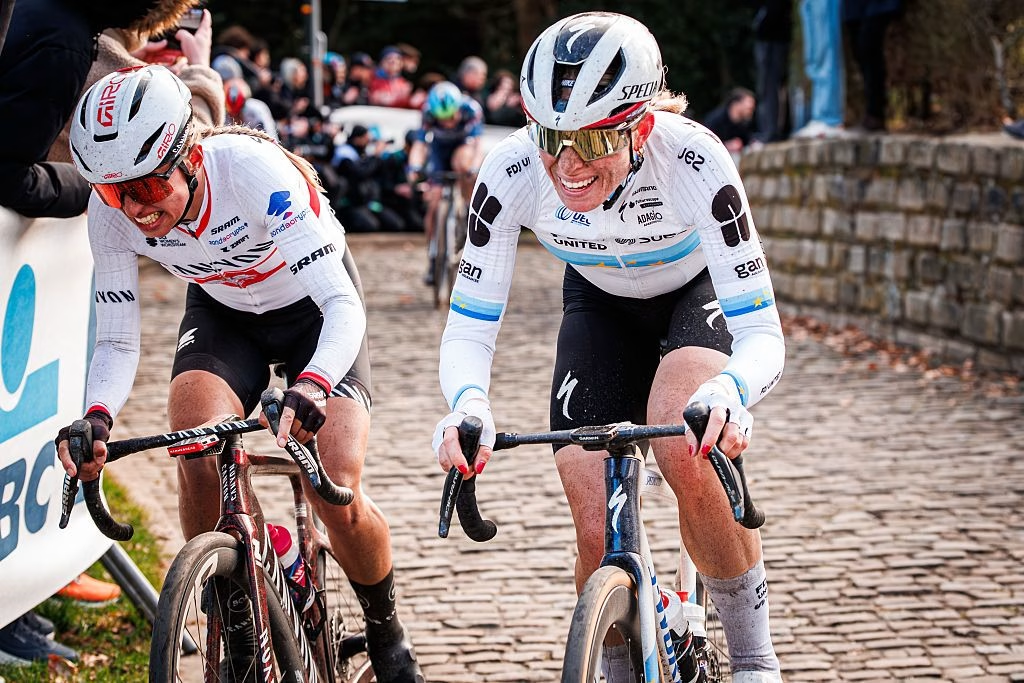 Photo Credit: Getty
Niewiadoma-Phinney cannot be removed from the equation
Niewiadoma-Phinney has finished on the podium in every edition of the modern Tour de France Femmes.
Her 2024 victory showed why she remains dangerous even when another rider appears physically stronger.
Niewiadoma gained time where she could, survived Vollering’s Alpe d’Huez attack and defended yellow by four seconds.
The 2026 route is not perfect for her because of the Dijon time trial. She may lose ground to Vollering, Reusser and Van der Breggen.
However, the hilly stages, bonus seconds and aggressive final day all suit her instinctive racing style. Niewiadoma-Phinney is rarely easy to isolate, while Canyon SRAM have repeatedly shown that they can protect a GC position under pressure.
Vollering cannot focus exclusively on Ferrand-Prévot.
Allowing Niewiadoma-Phinney into a dangerous move because she sits one minute behind could recreate the tactical complexity that shaped the 2024 Tour.
Van der Breggen has already exposed one Vollering weakness
Van der Breggen came within one stage of winning the Giro d’Italia Women.
Her performance in the Nevegal time trial placed Vollering under sustained pressure, proving that the returning former world champion can still create major GC differences against the clock.
The Giro also showed the distinction between their strengths.
Van der Breggen was stronger in the time trial and controlled much of the race from the front. Vollering had the greater ability to attack explosively and sustain the decisive long effort on the final day.
The Tour gives them another version of the same contest.
Van der Breggen can gain time in Dijon and use SD Worx-Protime’s depth to manage the race. Vollering can collect bonuses, apply greater climbing pressure and attempt to expose her on Mont Ventoux.
The Giro result favours Vollering psychologically, but it also prevents FDJ from underestimating Van der Breggen.
She was 49 seconds ahead with one stage remaining and lost because Vollering was willing to risk the podium in pursuit of victory.
What could stop Vollering winning?
Vollering’s route towards yellow is clear, but so are the risks.
A poor Dijon time trial would force her to attack earlier and more often than planned. Repeating the deficit created at the Giro would give Reusser or Van der Breggen greater control of the race.
Another positioning incident could undo months of preparation. The 2024 Tour demonstrated that a transitional stage can decide the classification.
Ferrand-Prévot matching her 2025 climbing level remains the largest physical threat. Vollering had no tactical answer when the French rider accelerated in the Alps.
FDJ losing mountain support could leave Vollering isolated on Ventoux or around Nice. Chabbey’s absence has already reduced the team’s options.
Residual Giro fatigue may only become visible late in the Tour. Vollering’s recovery block should help, but winning two nine-day Grand Tours in the same season remains an enormous demand.
Trying to win every opportunity could also become a problem. Vollering is capable of contesting hilly stages, bonuses, the time trial and the mountains. Spending energy because she can, rather than because she needs to, could weaken her on Ventoux.
-
 Photo Credit: Cor Vos
What does Vollering need to do to win yellow?
Vollering does not need to dominate every stage.
She needs to reach Dijon without losing time, produce a time trial close to her best level and enter the mountain block ahead of the climbers who are weaker against the clock.
She should use bonuses where they are available without turning every hilly stage into a personal battle.
On Mont Ventoux, she must avoid waiting for Ferrand-Prévot to make the first decisive move. The 2025 Tour showed that reacting after the gap has opened may already be too late.
FDJ also need to preserve enough support for Nice. Winning 30 or 40 seconds on Ventoux will not settle the race if the final stage remains tactically open.
The ideal Vollering Tour is controlled rather than spectacular:
- Safe and well positioned during the Swiss stages
- Among the best GC riders in the Dijon time trial
- Opportunistic around the bonus seconds
- Aggressive enough to test Ferrand-Prévot before the final kilometres of Ventoux
- Supported by at least one teammate deep into the mountain stages
- Prepared to defend or attack again around Nice
Verdict: Vollering can win and should start as favourite
Vollering should begin the Tour de France Femmes 2026 as the narrow favourite for yellow.
She has the strongest all-round route fit, the best collection of 2026 results and fresh proof that she can win a Grand Tour even when the race moves against her.
The Dijon time trial suits her better than many of the climbers, while Mont Ventoux and the final stage around Nice give her enough terrain to convert physical strength into decisive gaps.
She is not untouchable.
Ferrand-Prévot beat her convincingly in 2025. Reusser can alter the race in the time trial. Niewiadoma-Phinney has never missed the Tour podium. Van der Breggen came close to defeating her at the Giro, and FDJ must compensate for losing Chabbey from their support structure.
Vollering has already shown that she can be the strongest rider in the Tour and still lose it.
She has also shown that she can begin the final stage of a Grand Tour behind and still find a way to win.
The 2026 route is built for that complete version of Demi Vollering. If she reaches Mont Ventoux healthy, well positioned and close to the top of the classification, she has every tool required to wear yellow in Nice.

