
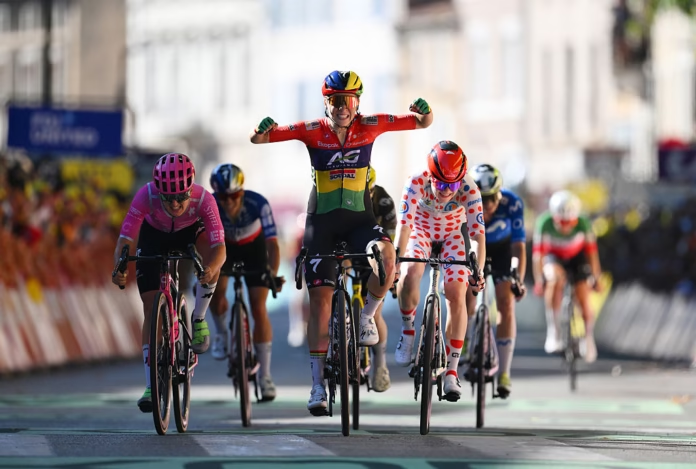
Kim Le Court-Pienaar won stage 6 of the 2026 Tour de France Femmes, sprinting to victory from an eight-rider group in Tournon-sur-Rhône after a tense late pursuit between the attackers and the yellow jersey group.
The AG Insurance-Soudal rider beat Cédrine Kerbaol of EF Education-Oatly and Puck Pieterse of Fenix-Premier Tech after the front group held off the GC favourites on the run-in. Sarah van Dam finished fourth for Team Visma | Lease a Bike, with Célia Gery fifth for FDJ United-Suez and Liane Lippert sixth for Movistar.
Elisa Longo Borghini finished seventh after driving much of the late chase behind Le Court-Pienaar’s final attack, while Riejanne Markus took eighth. Dominika Włodarczyk and Noemi Rüegg completed the top 10 from the yellow jersey group at 28 seconds.
A hilly day before Ventoux
Stage 6 was never likely to be simple, even with Mont Ventoux waiting the next day. The 153.4-kilometre route from Montbrison to Tournon-sur-Rhône packed in 2,600 metres of climbing, with a rolling opening, repeated categorised climbs and a late sting through the Côte de Boucieu-le-Roi.
Marlen Reusser started in yellow after surviving Demi Vollering’s pressure on stage 5, but her advantage was still slender. She led Vollering by 12 seconds, with Kasia Niewiadoma-Phinney at 1:17 after her strong ride into Belleville-en-Beaujolais.
That meant the stage carried two separate tensions. A breakaway had a real chance because the big favourites might want to hold something back before Ventoux. But with time bonuses available at Saint-Barthélemy-le-Plain and at the finish, the GC riders could not entirely switch off.
The result was a day where nobody wanted full responsibility, and that was exactly the opening the attackers needed.
Pieterse extends her mountains lead early
Puck Pieterse began the stage already committed to the polka-dot jersey, and she again raced like a rider fully invested in the classification.
She was first across the Côte de Périgneux, taking two more points, while Sara Casasola took second. The early climbing immediately hurt the bunch, with several riders struggling before the day had settled.
The attacks began almost as soon as the terrain allowed. Josie Nelson tried an early move for Picnic PostNL, but the peloton brought her back quickly. The pace remained high enough to put riders under pressure at the back rather than allowing a clean break to form at the front.
Pieterse’s approach was clear. She was not waiting for the main climbs. She was sprinting for every point she could take, aware that the GC riders could begin eating into her lead once the race reached the bigger mountains.
Adegeest, Nosková and Aalerud go clear
The first meaningful breakaway formed after the Côte de la Prunerie, when Loes Adegeest of Lidl-Trek, Nikola Nosková of Cofidis and Katrine Aalerud of Uno-X Mobility opened a gap.
Nosková was active in the mountains fight and took points over the Côte de la Prunerie and Côte d’Aurec, while Adegeest drove the move on and Aalerud added strength to the group. Their lead grew towards 2 minutes as the peloton briefly eased.
The move made sense for all three riders. Adegeest gave Lidl-Trek a stage option. Nosková could collect mountains points and stay involved in the classification. Aalerud had enough climbing strength to make the move viable across the middle part of the stage.
At the intermediate sprint in Flaminges, Aalerud crossed first, ahead of Adegeest and Nosková. Behind them, Wiebes took fifth from the peloton and extended her green jersey lead to 144 points, with Lotte Kopecky second on 79 and Rüegg third on 77.
EF and Fenix bring the race back
The break’s advantage reached 2:20, but EF Education-Oatly were not happy with the composition. They had missed the move and began to chase, with Henrietta Christie and later Kristen Faulkner helping to reduce the gap.
Fenix-Premier Tech also had a reason to work. Pieterse wanted more QOM points later in the stage, and a breakaway containing Nosková was not ideal for her mountains lead.
The pressure gradually pulled the trio back into range. Nosková was distanced after Adegeest increased the pace, and Aalerud later also struggled with Adegeest’s acceleration on the descent. By the time the race reached the approach to the Col de Lalouvesc, the early move was almost finished.
The stage had not yet produced its winning break. It had, however, softened the race and forced the peloton into a long chase before the most important climbs.
Le Court-Pienaar fights back after being distanced
The Col de Lalouvesc changed the shape of the day. The climb measured 8.6 kilometres at 5 per cent, not steep enough on paper to guarantee a major split, but long enough to expose riders who were already under pressure.
Le Court-Pienaar was briefly distanced before working her way back with help from Justine Ghekiere and Mireia Benito. It was a crucial recovery. At that moment, she looked more like a rider trying to stay in the race than one who would later win the stage.
EF raised the pace through Faulkner, while Magdeleine Vallieres and others helped whittle the front down. Wiebes and Elisa Balsamo were eventually dropped, ending any realistic chance of a reduced sprint involving the fastest riders.
Paula Blasi also attacked with 51 kilometres to go, showing UAE Team L’IMAD’s intent, but she was brought back as the climb settled into a GC-led selection.
Pieterse reaches record territory
Pieterse again took maximum points over the Col de Lalouvesc, adding five more to her total. Casasola followed for second, with Vollering third and Kerbaol fourth.
The Dutch rider’s mountains campaign has become one of the clearest subplots of the race. After stage 5, she had already set records for climbs topped, and on stage 6 she pushed her points total higher again.
By later taking the Côte de Boucieu-le-Roi, Pieterse moved to 47 points in the mountains classification, the highest total ever recorded in the Tour de France Femmes avec Zwift. Her hold on the polka-dot jersey is no longer accidental or fragile. It is being built point by point, climb by climb, with visible intent.
The bigger climbs still to come will make the classification harder to defend, especially once Vollering, Reusser and the other GC riders fight for mountain-top finishes. But Pieterse has given herself a serious buffer.
Gery lights up the final 35 kilometres
The decisive race-winning move began with Célia Gery. Racing on home roads, the French national champion attacked with around 34.5 kilometres remaining, forcing the reduced group to react.
Kerbaol, Lippert, Van Dam, Pieterse and Longo Borghini joined her, creating a six-rider group with real quality. The composition made the move immediately complicated for the peloton.
The group contained riders from EF Education-Oatly, Movistar, Team Visma | Lease a Bike, UAE Team L’IMAD, FDJ United-Suez and Fenix-Premier Tech. Canyon SRAM, Lidl-Trek and SD Worx-Protime were not represented, which left Niedermaier working in the yellow jersey group for Niewiadoma-Phinney.
Longo Borghini was the biggest GC threat in the move, having started the day sixth overall, 2:58 behind Reusser. That made the attack dangerous enough to chase, but not so dangerous that every team wanted to work flat out.
The gap reached around 20 seconds, then 30, and the race became a pursuit match.
Longo Borghini pushes the move on
Longo Borghini drove the front group with clear intent. After losing time on stage 5, the Italian champion had reason to race aggressively and try to regain ground before the mountains.
On the Côte de Boucieu-le-Roi, the final categorised climb of the day, she continued to set the pace in the breakaway as the yellow jersey group chased behind. Niedermaier did much of the work in the reduced peloton, putting aside her own white jersey ambitions to help Niewiadoma-Phinney protect her GC position against Longo Borghini and Kerbaol.
Pieterse took the climb first, adding three more QOM points, with Longo Borghini second and Gery third. The gap over the top was around 35 seconds.
That margin looked decisive but not safe. There was still a descent, a short rise with bonus seconds and flat roads to the finish. A group that hesitated could still be caught. A group that worked properly could still win.
Markus and Le Court-Pienaar bridge across
The race shifted again after the Côte de Boucieu-le-Roi. Markus and Le Court-Pienaar attacked from the yellow jersey group, trying to bridge across to the six leaders.
It was a smart move from both. Markus gave Lidl-Trek representation after missing the initial attack, while Le Court-Pienaar knew she had the speed to win if she could reach the front group.
They made contact before the bonus point, turning the leading six into eight. Le Court-Pienaar immediately made the most of it, winning the bonus sprint at Saint-Barthélemy-le-Plain ahead of Longo Borghini and Pieterse. That gave her 6 seconds, with Longo Borghini taking 4 and Pieterse 2.
Behind them, Vollering accelerated on the sharp rise where the bonus point was located, but Reusser was immediately on her wheel. The yellow jersey remained calm, and the GC group could not reduce the gap enough.
With 5 kilometres remaining, the eight leaders still had around 30 seconds. The stage was now theirs to lose.
Le Court-Pienaar almost steals it alone
Le Court-Pienaar did not simply wait for the sprint. With 4.5 kilometres remaining, as the descent eased and the road began to flatten, she attacked from the front group.
It was an astute move. She was one of the fastest riders in the group, so nobody wanted to bring her to the line, but hesitation behind could give her the stage anyway. Longo Borghini was briefly boxed in, losing vital seconds before taking up the chase.
The Mauritian national champion opened a gap and looked, for a few moments, as if she might win solo. But the group behind eventually organised, with Longo Borghini digging deep to bring the move back.
Le Court-Pienaar was caught with 3 kilometres to go. Markus then tried her own flyer under the flamme rouge, but that too was shut down.
After a day of attacks, the stage came down to an eight-rider sprint.
Le Court-Pienaar wins the sprint
Markus led the group into the final 500 metres, but Le Court-Pienaar still had enough left after her late attack. She timed her sprint best and crossed the line first in Tournon-sur-Rhône.
Kerbaol finished second, giving EF Education-Oatly another major result after they had chased the early break and then placed two riders in the decisive late phase of the race. Pieterse finished third after spending another day fighting for mountain points and still having enough speed for the stage podium.
Van Dam took fourth, a strong result for Team Visma | Lease a Bike on a day where their GC hierarchy had already shifted after Ferrand-Prévot’s losses. Gery was fifth after initiating the decisive move and later receiving the combativity award. Lippert was sixth, Longo Borghini seventh and Markus eighth.
It was a deserved win for Le Court-Pienaar, who had been dropped on the Col de Lalouvesc, fought back, bridged to the leaders, attacked late and then still won the sprint.
Reusser keeps yellow before Ventoux
Behind the stage fight, Reusser kept the yellow jersey. The Movistar rider followed Vollering’s acceleration at the bonus point and avoided any late GC damage ahead of the first major mountain summit of the race.
The top of the general classification remains tight enough to make Ventoux decisive. Reusser has shown that she can defend against Vollering on short, steep climbs, but Mont Ventoux is a different problem entirely. It is longer, more exposed and much harder to control.
Stage 6 did not create the same GC rupture as stage 5, but it kept the pressure high. Longo Borghini took back bonus seconds, Kerbaol gained a stage podium, Pieterse strengthened her mountains lead, and several riders kept themselves in the race before the hardest climb so far.
For Reusser, the most important thing was simple: she made it through another hilly day in yellow.
Longo Borghini gains, but not as much as she wanted
Longo Borghini was one of the most committed riders in the decisive move. She had the GC motivation to drive it, the strength to help make it stick, and the aggression to chase Le Court-Pienaar when the stage began to slip away.
Her seventh place does not fully reflect the work she did. The 4 bonus seconds at Saint-Barthélemy-le-Plain were useful, and the gap to the yellow jersey group helped her regain some time after the losses of stage 5, but she will know there was a larger opportunity on the road.
The problem was the composition of the break. With a fast finisher such as Le Court-Pienaar present, and several riders balancing stage ambitions with team tactics, the final 5 kilometres became awkward. Longo Borghini had to chase, had to think about time and had to deal with riders who had no reason to help her fully.
It was still a valuable day for UAE Team L’IMAD. Longo Borghini gained something, and Włodarczyk finished ninth from the yellow jersey group, remaining prominent in the young rider fight.
Kerbaol answers after stage 5 setback
Kerbaol had lost her podium position on stage 5, but her stage 6 ride was an immediate response. She made the decisive attack, stayed committed in the front group and finished second in the sprint.
That mattered for EF Education-Oatly. The team had chased earlier in the day because it had missed the initial break, then ended up with both Kerbaol and Rüegg inside the top 10 by the finish. Rüegg was 10th from the yellow jersey group, 28 seconds down, while Kerbaol took the podium from the front move.
Kerbaol’s GC position had taken a hit in Belleville-en-Beaujolais, but stage 6 showed that she remains one of the most aggressive and tactically useful riders in the race. She is not simply defending a time-trial result. She can attack and make a selection.
With Ventoux next, EF still have options.
-
 Photo Credit: Getty

Team Visma | Lease a Bike keep racing aggressively
Team Visma | Lease a Bike came into stage 6 with a changed tactical picture. Ferrand-Prévot had lost time on consecutive GC days, leaving Femke de Vries as their best-placed rider overall, while Van Dam and Marion Bunel gave the team other ways to animate the race.
Van Dam made the decisive late move and finished fourth, a strong result from a difficult stage. De Vries was dropped from the GC group on the Côte de Boucieu-le-Roi, but the team still had numbers and remained visible through the final 40 kilometres.
The defending champion’s GC defence may have taken a major blow on stage 5, but Visma are not racing passively. Their stage 6 approach showed a team now looking for opportunities rather than simply protecting one leader.
Mont Ventoux will be the bigger test of what that new strategy really means.
A race of shifting priorities
Stage 6 was defined by riders and teams constantly recalculating their priorities. Pieterse rode for polka dots but still sprinted for third. Longo Borghini chased time but also had to think about the stage. Le Court-Pienaar bridged because she could win, then attacked because nobody wanted to take her to the line, then won anyway.
FDJ had Gery up the road, Movistar had Lippert, EF had Kerbaol, Team Visma | Lease a Bike had Van Dam, and UAE Team L’IMAD had Longo Borghini. That made the chase behind messy and the breakaway difficult to control.
The stage did not deliver a major yellow jersey battle, but it still shaped the race. Riders who had suffered on stage 5 hit back. Teams that had missed earlier opportunities adjusted. The mountains jersey became more entrenched. The green jersey moved closer to Wiebes if she can finish the Tour.
And, most importantly, the race now turns towards Mont Ventoux with no sense that the peloton is settled.
Tour de France Femmes 2026 stage 6 result
| Position | Rider | Team | Time/gap |
|---|---|---|---|
| 1 | Kim Le Court-Pienaar | AG Insurance-Soudal | 4:01:48 |
| 2 | Cédrine Kerbaol | EF Education-Oatly | same time |
| 3 | Puck Pieterse | Fenix-Premier Tech | same time |
| 4 | Sarah Van Dam | Visma | Lease a Bike | same time |
| 5 | Célia Gery | FDJ United-SUEZ | same time |
| 6 | Liane Lippert | Movistar Team | same time |
| 7 | Elisa Longo Borghini | UAE Team L’IMAD | +0:02 |
| 8 | Riejanne Markus | Lidl-Trek | +0:05 |
| 9 | Dominika Włodarczyk | UAE Team L’IMAD | +0:28 |
| 10 | Noemi Rüegg | EF Education-Oatly | +0:28 |
Main photo credit: Getty

