
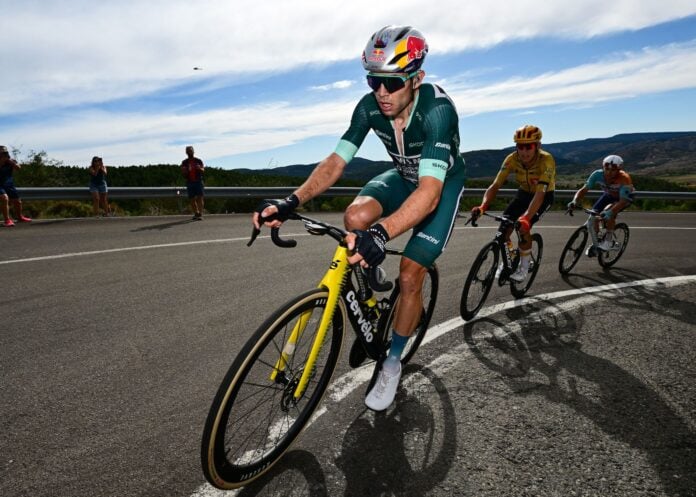
Stage 10 of the 2026 Vuelta a España restarts the race after Monday’s first rest day with a difficult 184.7km stage from Alcaraz to Elche de la Sierra.
It is officially classified as hilly rather than mountainous, but there is very little genuinely flat road. Three Category 3 climbs, 2,991 metres of elevation gain and another uphill drag close to the finish make this an awkward stage for the pure sprinters and one of the better breakaway opportunities of the second week.
The route should create a tactical contest between teams prepared to control almost five hours of rolling terrain for a resilient fast finisher and stage hunters who know that a strong break could be very difficult to retrieve.
It also comes immediately after the first rest day and the enormous Stage 9 mountain test on Alto de Aitana, adding the traditional uncertainty over how riders respond when racing resumes after a day off.
Vuelta Stage 10 at a glance
| Detail | Stage 10 |
|---|---|
| Date | Tuesday 1 September 2026 |
| Start | Alcaraz |
| Finish | Elche de la Sierra |
| Distance | 184.7km |
| Stage type | Hilly |
| Elevation gain | Approximately 2,991m |
| Categorised climbs | 3 |
| Intermediate sprint | Hellín, km 125 |
| Final categorised climb | Puerto de Socovos, summit 21.5km from finish |
| Likely outcome | Breakaway or reduced sprint |
The broader place of Stage 10 within the three weeks can be found in ProCyclingUK’s Vuelta a España 2026 route guide.
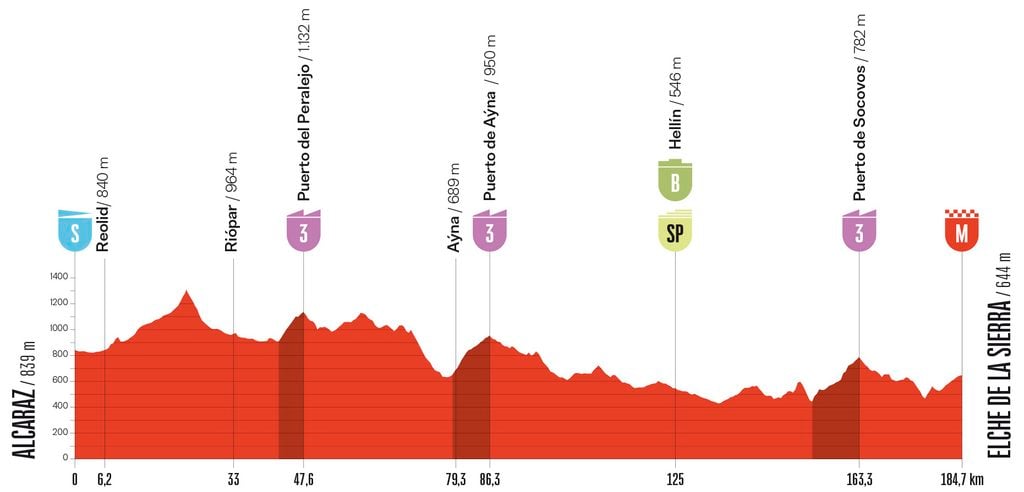
Vuelta Stage 10 route
Stage 10 begins in Alcaraz and immediately starts climbing.
The opening road rises over the uncategorised Puerto de las Cruces, with the final 3.2km of that early ascent averaging around 5%. That terrain should encourage attacks almost from the moment the flag drops and could make establishing the day’s breakaway a lengthy process.
The first classified climb follows after 47.6km.
Puerto del Peralejo
5.2km at 4.3% | Category 3
Peralejo is not especially difficult, but its position in the opening quarter of the stage ensures there will have been very little straightforward racing beforehand.
There is then more rolling terrain rather than an immediate long descent.
Puerto de Aýna
7.7km at 4.0% | Category 3
The second categorised climb tops out after 86.3km.
Again, the gradients are modest, but the accumulated effect matters. By this point the peloton will already have spent much of the first half of the stage either climbing or riding across constantly changing terrain.
The race then gradually loses elevation towards Hellín, where the intermediate sprint comes after 125km.
From there the profile becomes increasingly important tactically.
Puerto de Socovos is the key late climb
The final categorised ascent is the Puerto de Socovos.
It measures 9.7km at 3.5%, beginning with 31.2km remaining and reaching the summit just 21.5km from the finish.
Those gradients are not enough to make this a GC climb.
They are, however, ideal for sustained pressure.
A team riding hard from the bottom can make the ascent significantly more difficult than its average suggests, particularly after almost 3,000 metres of climbing across the day.
For riders in the breakaway who do not trust their sprint, this is also the obvious place to begin reducing the group.
The stage does not become straightforward after the summit either.
There is a further 1.7km rise at around 5.5% inside the final 10km before a short descent, while the last 4.5km gradually drag uphill towards Elche de la Sierra.
That final sequence makes a completely conventional lead-out difficult.
Why Stage 10 is one of the better breakaway opportunities
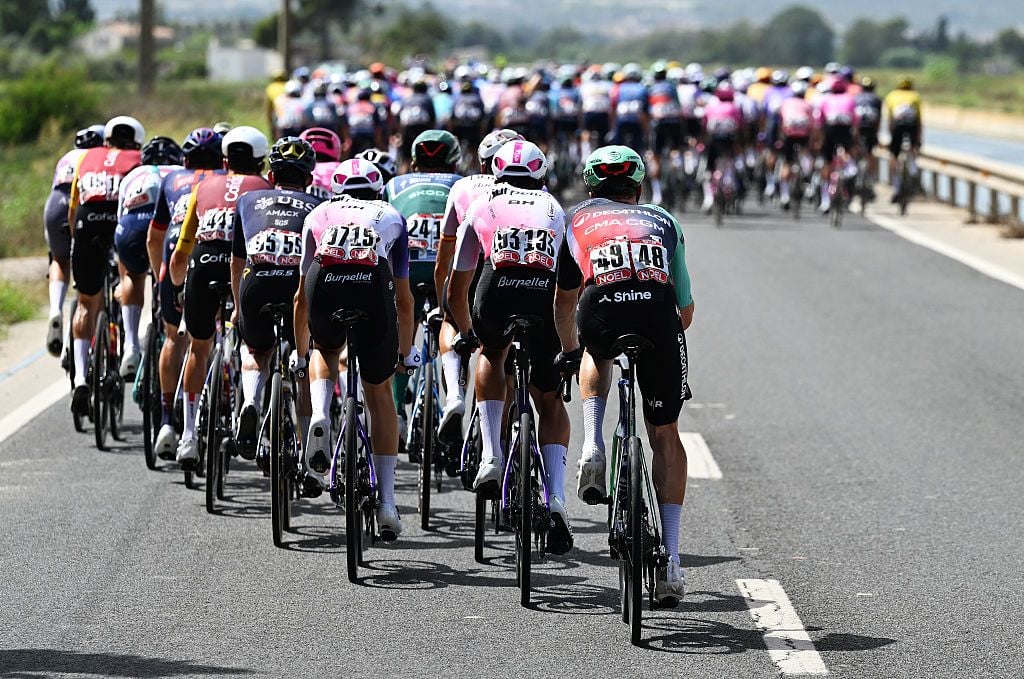
This is exactly the sort of route where the breakaway can survive.
There is enough climbing immediately from the start for strong riders to force their way into the escape, and by the second week a substantial number of riders will be far enough down the general classification to receive freedom.
The biggest question is who chases.
The team defending the red jersey has little reason to control a harmless breakaway for 180km simply to deliver a stage victory to somebody else’s sprinter.
Responsibility therefore falls on teams such as Team Visma | Lease a Bike, Lidl-Trek or whichever other squads believe they have a rider capable of winning in Elche de la Sierra.
One team controlling alone is unlikely to be enough.
If several sprint-oriented squads cooperate, the break can be kept within reach.
If they begin looking at one another, an advantage of five or six minutes could become extremely difficult to erase over this terrain.
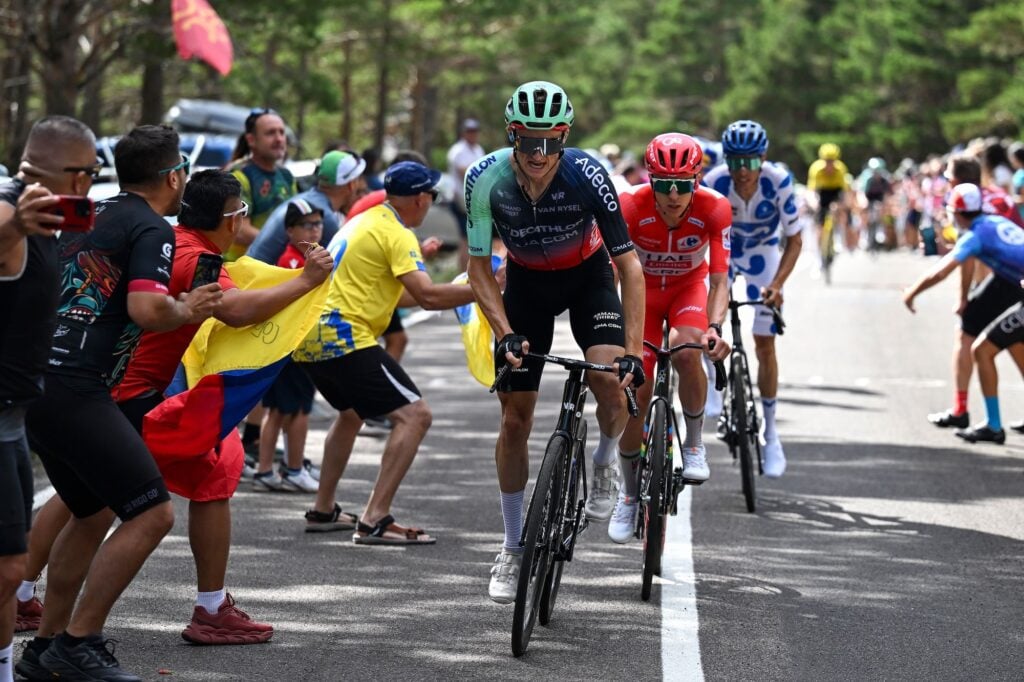 Photo Credit: Getty
The first rest day adds another layer
Stage 10 comes immediately after the first rest day on Monday 31 August.
That matters more than it might initially appear.
Some riders emerge from a rest day noticeably fresher. Others struggle to rediscover racing rhythm and can look unexpectedly vulnerable during the first hour.
Stage hunters also have the opportunity to reset after a brutal opening week containing Andorra, Valdelinares, the crash-heavy road to Xeraco and Alto de Aitana.
The opening climb out of Alcaraz therefore has the ingredients for a very aggressive start.
Anyone who has recovered well will know this is a much better opportunity than waiting for the major mountains later in the week.
Matthew Brennan still has a route to a third stage win
Matthew Brennan has already established his debut Vuelta as one of the major stories of the opening week.
He won the uphill sprint on Stage 2 before taking his second victory on Stage 5 in Roquetes, where Christophe Laporte and Wout van Aert produced another excellent Visma lead-out.
Stage 10 is more difficult.
Almost 3,000 metres of climbing, a late 9.7km ascent and the rising finish mean there is no guarantee Brennan reaches Elche de la Sierra with the same freshness he had in Roquetes.
There is also the question of whether Visma want to spend several riders controlling the breakaway all afternoon.
If they do, Brennan has already shown enough climbing strength to justify the effort.
If the stage becomes more selective than expected, Visma have another obvious option.
Wout van Aert may actually suit Stage 10 better
Van Aert has almost every possible scenario covered.
He can survive the climbs comfortably, follow late attacks, enter a breakaway himself and still sprint from a reduced group.
That makes him arguably the rider whose characteristics most naturally fit Stage 10.
Visma also do not have to make a leadership decision before the race.
If Brennan is still comfortable after Puerto de Socovos, Van Aert can help deliver him towards the finish.
If Brennan is struggling, the team can switch to Van Aert.
If a dangerous group goes early containing Van Aert, Visma have no reason to chase at all.
That flexibility could be decisive on a stage where committing to one tactical plan too early carries significant risk.
Mads Pedersen should welcome almost 3,000 metres of climbing
Mads Pedersen is another obvious contender.
The Vuelta sprinters and points jersey guide identified precisely these sorts of stages as one of the reasons Pedersen is so dangerous across three weeks.
He does not need completely flat terrain.
In many cases, he would rather have the opposite.
The harder Stage 10 becomes, the more likely it is that several riders with greater outright sprint speed are removed before Elche de la Sierra.
Puerto de Socovos is particularly suitable.
Its shallow gradients allow Lidl-Trek to sustain a high pace without turning the stage into a pure climbing contest.
The rising final kilometres should suit Pedersen as well.
If 30 or 40 riders remain together after a hard day, he becomes one of the obvious favourites.
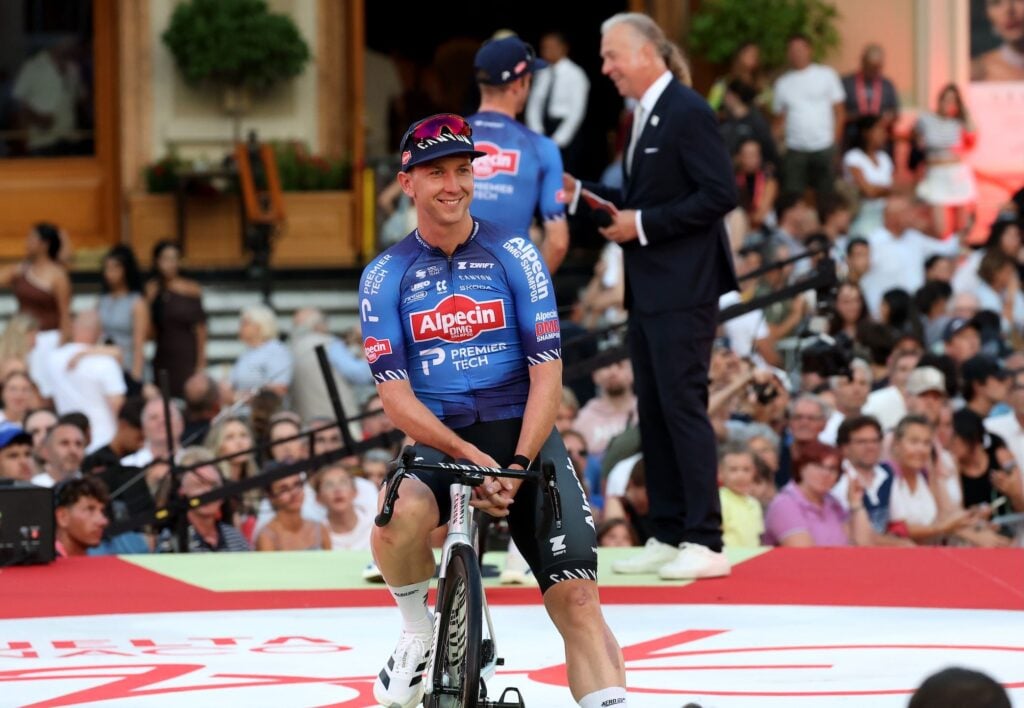
Kaden Groves can survive the terrain
Kaden Groves also sits firmly within the group of sprinters who should not be frightened by the profile.
He has repeatedly shown at the Vuelta that he can survive significant climbing before producing a sprint.
The issue is not simply Socovos.
It is the accumulation of nearly 3,000 metres of ascent and repeated changes of pace beforehand.
If the early breakaway battle is short and the peloton settles, Groves should have a realistic chance of reaching the finale.
If attacks continue for two hours and the climbs are raced aggressively, the stage becomes much less predictable.
Ethan Hayter becomes more dangerous as the group becomes smaller
Ethan Hayter again occupies the middle ground between the climbers and conventional sprinters.
A large bunch finish against the fastest riders is not necessarily his ideal outcome.
A harder stage that removes some of them is much more interesting.
Hayter has the climbing ability required for Socovos and enough speed to win from a reduced group.
The uphill tendency of the final kilometres also helps.
If Stage 10 produces a front group of 20 or 30 riders without the purest sprinters, Hayter becomes considerably more dangerous.
Bryan Coquard has already shown his Vuelta form
Bryan Coquard cannot be ignored after taking his first Grand Tour victory on Stage 8 in Xeraco.
He won the sprint ahead of Mads Pedersen and Jordi Meeus on a day ultimately overshadowed by Tadej Pogačar’s race-ending crash.
Stage 10 may suit Coquard even better stylistically.
He has never needed a completely flat finale and is comfortable when shorter climbs reduce the size of the group before the sprint.
The issue, as with Brennan, is whether Cofidis want responsibility for controlling such a breakaway-friendly stage.
If the escape is caught, Coquard should be firmly involved.
Jordi Meeus needs a relatively calm day
Jordi Meeus would prefer considerably less attrition.
His outright sprint speed makes him dangerous whenever a reasonably substantial group reaches the finish, but he has less reason than Pedersen or Van Aert to welcome a hard Puerto de Socovos.
Red Bull-BORA-hansgrohe therefore face an awkward choice.
Helping to chase the break increases Meeus’ chance of reaching the finish with a stage to contest, but committing riders to that chase leaves fewer team-mates available to help him survive and position through the closing kilometres.
A relatively controlled stage keeps him firmly among the contenders.
A constantly aggressive one does not.
The Hellín sprint matters for green
The intermediate sprint comes in Hellín after 125km.
That could add another tactical element to the points classification.
The Vuelta jerseys guide explains how intermediate sprints contribute towards green, and Stage 10 gives the versatile fast riders another opportunity to collect points on terrain where some conventional sprinters may already be struggling.
If the breakaway takes all the major points, the peloton may pass through with little drama.
If the escape is close enough to be caught or contains only a handful of riders, Van Aert, Pedersen and the other green jersey contenders may decide the remaining points are worth contesting.
The difficulty is what follows.
Any energy spent in Hellín comes before the final 60km and Puerto de Socovos.
The breakaway contenders could come from almost anywhere
Picking individual breakaway favourites is much harder than identifying the sprint contenders.
The ideal Stage 10 escapee needs several qualities.
They need enough climbing ability to survive almost 3,000 metres of ascent, enough power for the flatter and rolling sections, and ideally either a strong sprint or the ability to attack late.
Most importantly, they need enough freedom from the general classification.
That should create opportunities across almost every team.
The Vuelta team-by-team guide shows how many squads arrived with riders specifically selected to hunt stages rather than protect an overall contender.
By the second week, those riders become increasingly important as teams that have missed victories begin searching more aggressively for opportunities.
The GC riders should want a quiet afternoon
Whichever rider leaves Alto de Aitana in the red jersey should have very little incentive to turn Stage 10 into another general classification battle.
The profile contains no climb difficult enough to demand a GC attack and the next genuine mountain showdown is already close.
Stage 11 from Cartagena to Lorca is officially flat before Stage 12 finishes at Calar Alto, one of the major climbing tests on the 2026 Vuelta route.
Sierra de la Pandera then follows on Stage 14.
The main objective in Elche de la Sierra should therefore be avoiding trouble.
That does not mean the GC contenders can switch off.
The first stage after a rest day can expose anyone whose legs have responded badly, while rolling roads and aggressive racing can create splits even without a deliberate overall attack.
The race has already provided the strongest possible reminder that supposedly quieter days can change everything. Pogačar abandoned after his Stage 8 crash on a stage where the leading GC riders had expected little more than a safe journey towards the finish.
The finish in Elche de la Sierra is harder than it looks
The final categorised climb ends 21.5km from the finish, but that does not mean the remaining kilometres are easy.
After descending away from Socovos, the riders face another 1.7km rise averaging around 5.5%.
That provides a very useful attacking point.
It comes late enough that a strong rider can commit without needing to defend a gap for an enormous distance, while the remaining teams may already be short of domestiques.
Even after that rise, the road continues to favour powerful riders rather than pure top-speed sprinters.
The final 4.5km gradually climb towards Elche de la Sierra.
That should reward anyone who still has strength rather than simply the rider capable of producing the highest speed for 200 metres.
What has to happen for the sprinters to win?
The basic requirement is cooperation.
No single team should want to chase a strong breakaway across this terrain for almost the entire day.
If Visma, Lidl-Trek, Cofidis and several other sprint-oriented squads all contribute, the escape can remain manageable.
If only one or two commit, the balance changes.
The sprinters also need the final climb ridden sensibly.
Pedersen, Van Aert, Coquard, Groves and Brennan can all survive Socovos on a good day, but repeated attacks over the top could be more damaging than the climb itself.
Once the group reaches the final uncategorised rise, lead-out organisation becomes another problem.
This is unlikely to resemble a conventional eight-rider sprint train.

Stage 10 favourites
Stage 10 is difficult enough that no single rider stands comfortably above the rest.
Wout van Aert has perhaps the broadest range of winning scenarios. He can attack, race from the break or sprint from a reduced peloton.
Mads Pedersen should welcome both the climbing and the uphill tendency of the finish.
Matthew Brennan has already won twice and possesses the speed to make another victory possible if Visma decide to control.
Bryan Coquard arrives with the confidence of his Stage 8 win and should cope well with a selective race.
Kaden Groves remains dangerous if the climbs are ridden at a manageable tempo.
Ethan Hayter becomes increasingly interesting as the group gets smaller.
The biggest rival to all of them may simply be the breakaway.
Stage 10 prediction
Stage 10 looks like one of those Vuelta days where the decisive tactical choice could come inside the opening hour.
If a large, high-quality breakaway forms on the climb out of Alcaraz and contains nobody threatening the general classification, the red jersey team should have little reason to chase.
That hands responsibility to the sprint teams.
Visma have perhaps the strongest incentive because Brennan and Van Aert give them two different ways to win.
Lidl-Trek should also be interested with Pedersen, while Coquard’s Stage 8 victory gives Cofidis reason to believe another difficult sprint can work.
If three or four teams cooperate, the breakaway can be brought back.
If they do not, Puerto de Socovos becomes the place where the escapees start racing for victory rather than worrying about the peloton behind.
The rolling final 20km and uphill approach to Elche de la Sierra tip the balance slightly towards the attackers.
A reduced sprint remains entirely realistic, but the breakaway starts Stage 10 with a genuine chance of staying away.

