
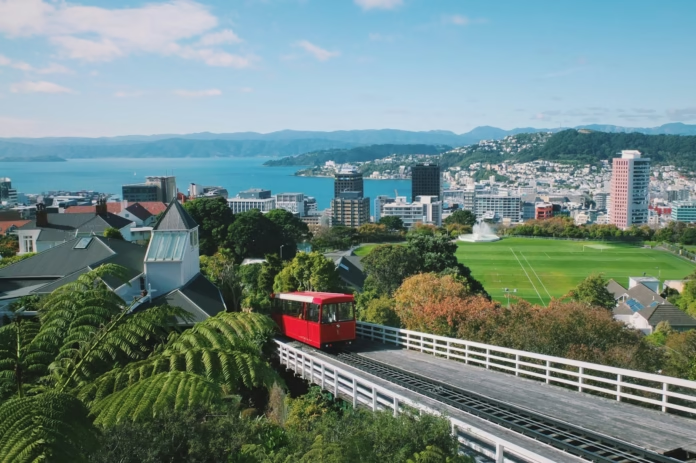
Wellington is not the obvious New Zealand cycling base if the plan begins with long Alpine-style climbs and dependable sunshine. Its appeal is different.
The capital is compressed between harbour, steep hills and exposed coastline, which means good riding begins almost as soon as you leave the centre. One day can be spent following the coast around Wellington’s bays, another crossing the Remutaka Range on a historic railway trail, while a third can link short, steep climbs through the city’s western hills.
That variety makes Wellington particularly good for a trip where cycling is important without needing to dominate every hour. The waterfront, Te Papa, restaurants and cafés are all within a compact centre, but it does not take long on the bike before the city gives way to exposed headlands, bush, farmland or the much broader landscape of Wairarapa.
It is a different proposition from the more obviously spectacular riding around Queenstown and Central Otago or the mixture of plains and Port Hills available from Christchurch and Canterbury. Wellington works because so many different rides are packed into a relatively small area.
Why Wellington makes such a useful cycling base
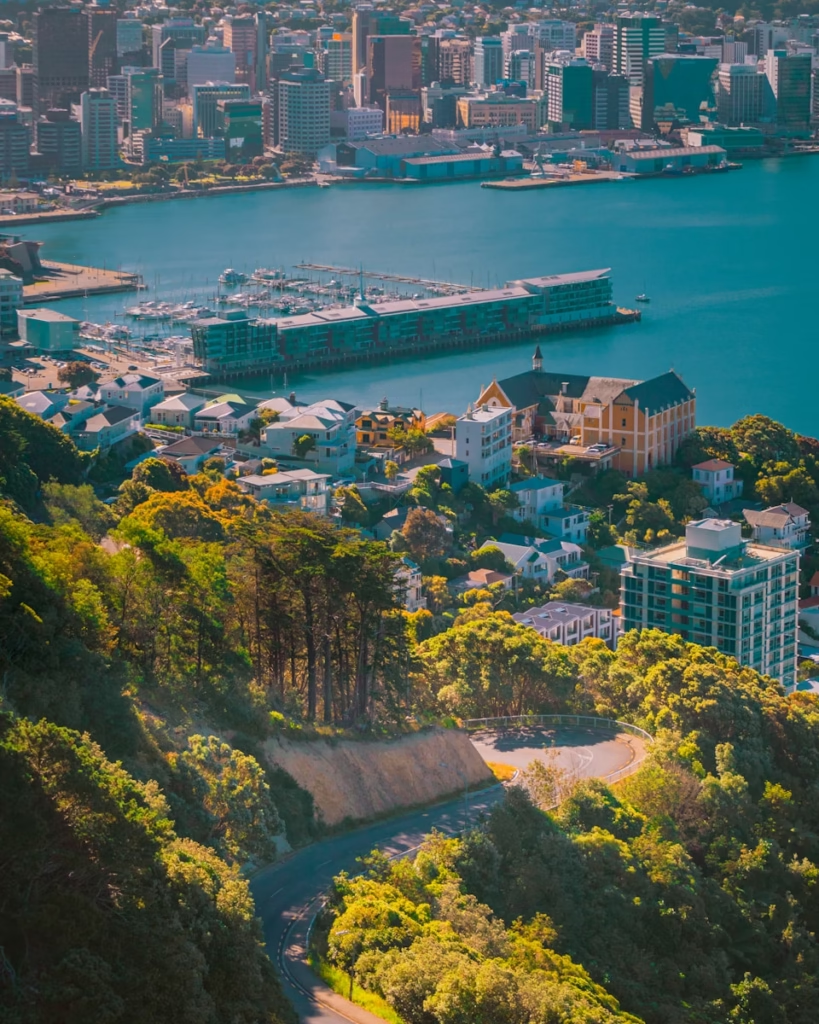
The first advantage is scale.
You do not need to spend an hour riding through suburbs before the interesting roads begin. Wellington’s topography puts hills and coastline immediately alongside the city, so a short ride can still feel substantial.
That works particularly well on a three or four-day visit. There is no need to choose between an entire holiday based around road riding and another dedicated to gravel or trails. Wellington can accommodate both without requiring major transfers between them.
Road riders have the bays, western hills, Hutt Valley and Wairarapa. Gravel and touring riders have the Remutaka Cycle Trail. Mountain bikers can reach Mākara Peak only a few kilometres from the centre, with more than 40 trails spread through native bush.
For riders planning a longer trip through the country, Wellington fits naturally within ProCyclingUK’s Australia and New Zealand cycling hub.
The Remutaka Cycle Trail is the headline ride
The biggest cycling attraction around Wellington is the Remutaka Cycle Trail, one of New Zealand’s official Great Rides.
The complete route runs for around 122km from Petone to Ōrongorongo, beginning on the edge of Wellington Harbour before following the Hutt Valley, crossing the Remutaka Range and continuing into Wairarapa before eventually reaching the rugged southern coastline.
It is normally treated as a two or three-day trip rather than a single endurance challenge.
That is the better way to approach it.
The appeal comes from the changing character of the route rather than simply completing 122km as quickly as possible. River paths give way to native bush, old railway tunnels and bridges before the trail crosses into the more open Wairarapa landscape. Later sections become much more exposed and remote.
You can also ride only part of it, which makes the trail useful even if Wellington is your base for only a few days.

The old railway crossing is the section most riders should know
For many visitors, the most memorable part is the Remutaka Rail Trail between Maymorn and Cross Creek.
The trail follows the route of the former railway that once connected the Hutt Valley with Wairarapa. Its original engineering is one of the reasons the western approach is so rideable: rather than tackling the range through brutally steep roads, the route climbs gradually through the hills.
The full rail-trail section is roughly 25km and passes tunnels, old railway structures and bridges before reaching the summit.
The character changes after that.
The western climb is largely gentle Grade 2 riding. Beyond the summit towards Cross Creek, sections reach Grade 3 and become narrower and more technical, with rough surfaces and exposed edges in places.
That distinction matters when choosing a bike.
A competent gravel rider may be comfortable on much of the route, particularly the smoother Hutt Valley and railway sections, but the full Remutaka experience is not simply a manicured gravel path from start to finish. Less confident riders may prefer a hardtail mountain bike if they plan to continue through the rougher sections.
A light is also essential for the tunnels rather than something to discover you need when already inside one.
You do not have to ride the whole trail
One of the best features of the Remutaka Cycle Trail is that it can be broken into much smaller rides.
Maymorn is accessible by train, making the railway section practical as a day trip from central Wellington. Riders can continue towards Cross Creek and Featherston before using a shuttle or rail connection to return.
The Hutt River section is easier still and suits riders who want a longer leisure ride without committing to the mountain crossing.
This flexibility makes the trail much more useful than a point-to-point route that demands two or three completely dedicated days.
It is worth checking current trail conditions before setting off. The Cross Creek and Wild Coast sections can be affected by maintenance, slips and weather, and the more exposed parts of the route are not places where improvising around a closure is always straightforward.

Wellington’s bays make an easy first road ride
For a straightforward road-bike ride from the city, the harbour and southern bays are the natural starting point.
The appeal is not one famous climb or viewpoint. It is the succession of coastal roads, short rises and changing views as the route bends around the harbour and Cook Strait.
That makes it particularly good for the first morning of a trip.
You can settle into riding on the left, work out how strong the wind is and extend or shorten the route depending on conditions. There are plenty of opportunities to turn back towards the centre rather than committing to a huge loop.
The roads through Oriental Bay and towards the eastern and southern coastline can be linked into longer rides around Seatoun, Lyall Bay, Island Bay and the exposed south coast.
On a still day, much of it feels relatively benign.
Wellington is not famous for still days.
The wind changes how you should plan a ride
Calling Wellington windy is not travel-guide exaggeration.
Cook Strait funnels weather between New Zealand’s North and South Islands, and exposed roads around the city can feel completely different depending on the direction of the wind.
A tailwind on the way out can disguise how demanding the return journey will be. The same route may feel relaxed one day and like sustained threshold training the next.
That makes checking wind direction as important as looking at rain.
It also changes where the difficulty lies. A route with only modest elevation can become harder than a hillier ride if 30km of it is spent riding into a strong headwind.
For visiting cyclists, the best approach is flexibility. Have more than one possible route and choose between the exposed coast, sheltered valleys and hillier inland roads once you know what conditions are actually doing.

The city itself is full of short, steep climbing
Wellington does not have one road climb that defines it in the way Alpe d’Huez defines Bourg d’Oisans or the Port Hills immediately frame riding in Christchurch.
Instead, the climbing is scattered almost everywhere.
The city’s suburbs were built across steep terrain, producing roads where gradients can arrive abruptly and disappear almost as quickly. Brooklyn, Kelburn, Karori and the western hills can all be incorporated into rides without needing to travel far from the centre.
For anyone who likes short climbing efforts, this is excellent terrain.
A 60km ride can accumulate a surprising amount of elevation because the road is constantly rising and falling rather than spending half an hour on one continuous ascent.
It also means route profiles should be taken seriously. Two rides of the same distance can feel completely different if one hugs the coast and the other repeatedly crosses Wellington’s ridges.
Mākara adds road and mountain-bike options
Heading west towards Mākara gives Wellington another type of riding.
Road cyclists can use the area as part of a hillier loop through the western side of the city, with exposed roads and a much more rural feel than the distance from central Wellington suggests.
Mountain bikers have an even stronger reason to go there.
Mākara Peak Mountain Bike Park sits only around 7km from the city centre and contains more than 40 trails through roughly 250 hectares of native bush.
That proximity is a major advantage.
You can spend a morning riding proper purpose-built trails and still be back in central Wellington for the afternoon. There is no need to turn a mountain-bike day into a separate expedition requiring several hours of driving.
It reinforces one of Wellington’s strongest qualities as a cycling destination: the useful riding starts very close to where you are likely to stay.
Wairarapa gives the trip a completely different rhythm
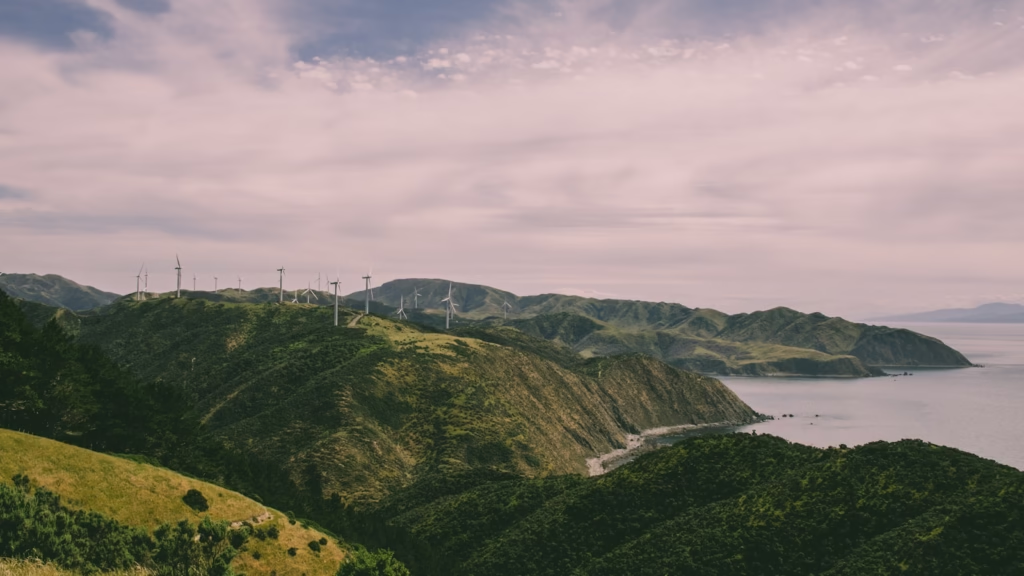
Cross the Remutaka Range and the landscape changes noticeably.
Wellington feels compressed by hills and coastline. Wairarapa opens out.
Roads become longer and more rural, and towns such as Featherston, Greytown and Martinborough provide obvious destinations around which to build a longer day.
Martinborough is particularly useful as an overnight stop because its vineyard country gives the trip something beyond riding. It is possible to make a cycling holiday feel repetitive when every evening is simply preparation for another hard day. Wairarapa makes it easier to slow the trip down.
The train also makes Featherston an unusually practical starting or finishing point.
Wairarapa Line services have luggage space for bicycles, although capacity and operating rules mean it is important to check the service before designing a one-way ride around it.
For a visiting cyclist without a hire car, that rail connection considerably expands what is possible.
Wellington works well without a car
That is one of the region’s underrated strengths.
Many good cycling destinations become awkward as soon as you remove a vehicle. Trailheads may be 30km away, major roads can be hostile to bikes and public transport often treats bicycles as an afterthought.
Wellington is easier.
You can start directly from central accommodation for coastal and city rides. Trains open up the Hutt Valley, Maymorn and Wairarapa, while shuttle operators support the Remutaka Cycle Trail.
It is still worth planning carefully, particularly because bicycle capacity on trains can be limited, but hiring a car is not automatically necessary.
That makes Wellington particularly attractive as one stop on a longer New Zealand trip.
What bike is best for Wellington?
There is no single answer because the region offers genuinely different riding.
A road bike is the obvious choice if the trip is built around the bays, Wellington’s climbs and longer rides into Wairarapa. Wider tyres make sense because road surfaces and weather can vary, but there is no need for specialist equipment.
A gravel bike is probably the most versatile option if you want to combine road riding with the smoother parts of the Remutaka Cycle Trail. Tyres somewhere around 38-45mm give enough comfort for much of the mixed-surface riding without making the paved kilometres feel unnecessarily slow.
For the full Remutaka route or dedicated riding at Mākara Peak, a mountain bike becomes the safer and more capable choice. Some sections of the Great Ride are considerably rougher than the words “rail trail” might suggest.
An e-bike also works well for leisure-focused trips, particularly around the established trails. On longer point-to-point rides, however, range and charging need to be considered before leaving Wellington rather than once the battery is already low.
When is the best time to cycle in Wellington?
December through March gives the best combination of longer daylight and warmer temperatures.
That does not mean guaranteed settled weather.
Wellington’s exposure means wind and rain remain possible throughout summer, while coastal conditions can change quickly even when the forecast looks reasonable.
Late spring and early autumn can be excellent alternatives. Temperatures are cooler, popular routes can be quieter and long rides remain comfortable when conditions cooperate.
The trade-off is greater weather uncertainty.
A lightweight waterproof belongs in the luggage almost regardless of when you visit. An extra layer is also sensible for rides crossing the Remutakas or spending significant time on exposed coastline.
-
 Photo Credit: Canyon SRAM (supplied media release)
 -
 Photo Credit: Park Tool



A three-day Wellington cycling itinerary
A short trip can cover three very different versions of the region.
Day one: Wellington harbour and southern bays
Start with the coast. Build a loop through the bays and add one or two of the city’s climbs if the legs are good. This gives you a quick introduction to the roads and, more importantly, tells you what Wellington’s wind is doing.
Day two: Remutaka Rail Trail
Take the train towards Maymorn and make the historic railway crossing the main ride of the day. The exact distance can be adjusted around bike choice, trail conditions and whether you want to return the same way, continue towards Featherston or use a shuttle.
Day three: western hills or Wairarapa
Road riders can stay close to Wellington and build a harder loop around Karori, Mākara and the western hills. Alternatively, use the train to start in Wairarapa and spend the day on quieter rural roads around Featherston, Greytown and Martinborough.
Mountain bikers can replace either option with several hours at Mākara Peak without giving up the rest of the day in Wellington.
Why Wellington deserves a place on a New Zealand cycling trip
Wellington is not New Zealand’s biggest climbing destination and it does not need to pretend otherwise.
Its strength is how efficiently it combines different types of riding.
You can leave a city-centre hotel and be on a coastal road within minutes. A train can take you towards a historic trail through the Remutaka Range. Cross those hills and the riding opens into Wairarapa. Stay closer to Wellington and there are steep roads and proper mountain-bike trails almost on the edge of the city.
That makes it particularly good for cyclists who want to travel rather than simply relocate their normal training routine somewhere warmer.
The rides are varied enough to fill several days, the logistics are unusually manageable and Wellington itself gives you plenty to do once the bike has been put away.
For more ideas beyond New Zealand, the wider ProCyclingUK cycling travel hub brings together our destination guides, routes and practical advice for riding abroad.

