

Christchurch and Canterbury make a strong case for being one of New Zealand’s most complete cycling destinations. The appeal is not just that you can ride there. It is that you can ride in so many different ways within one region: flat city paths, exposed volcanic ridgelines, quiet rural roads, gravel trails, coastal detours, lake country and serious climbing.
For visiting cyclists, that range matters. Some destinations are brilliant for one type of rider. Christchurch and Canterbury are different. They work for road cyclists looking for repeated climbs, touring riders who want scenery and distance, gravel riders chasing open landscapes, families after easy trails and mountain bikers who want proper terrain within easy reach of the city.
That is why Canterbury deserves more attention. It is not only a place to pass through on the way to the Southern Alps. It is a riding base in its own right, and it sits naturally within the wider appeal of cycling in Australia and New Zealand.

Quick answer: is Christchurch good for cycling?
Yes. Christchurch is one of New Zealand’s strongest cycling bases because it combines city riding, established cycle routes, the Port Hills, Banks Peninsula and access to wider Canterbury. Riders can keep things gentle on flatter city and rail-trail routes, or build a harder trip around climbs, gravel roads and longer rural loops.
The result is a region where you can ride easily one day and test yourself properly the next.
Why Christchurch works so well as a cycling base
The first advantage is geography. Christchurch is flat at city level, which makes it easy for riders to settle in, get around and build gentle routes through parks, riverside corridors and suburbs. That matters if you have flown in with a bike, hired one locally or want a relaxed first day before taking on longer rides.
The second advantage is contrast. The Port Hills sit immediately to the south of the city, so Christchurch offers that rare combination of easy urban riding and proper climbing close together. You can roll through the city, reach the lower slopes, then be climbing into views of the Pacific, Lyttelton Harbour and the Canterbury Plains without needing a long transfer.
Christchurch City Council’s cycling routes and cycleways are useful for planning the city side of a trip, especially if you want to connect parks, suburbs and quieter corridors before heading for bigger roads.
That makes Christchurch a good destination for mixed riding groups. One rider can take on a hilly road loop, another can use the city’s cycleways, and a third can head for gravel or trail riding. Few cities make that quite so simple.

The Port Hills: Christchurch’s cycling signature
The Port Hills are the feature that gives Christchurch its cycling identity. They are not Alpine in scale, but they are steep enough, varied enough and scenic enough to shape an entire trip.
For road riders, climbs such as Dyers Pass, Evans Pass and the roads around Cashmere, Sumner and Lyttelton offer classic efforts: punchy, exposed, twisting and rewarding. The gradients can bite, especially when the wind is up, but the reward is immediate. One side gives you Christchurch and the Canterbury Plains. The other gives you harbour, sea and volcanic ridgelines.
For mountain bikers, the Port Hills add another dimension. The terrain can shift from flowing tracks to rougher, more technical riding, with the city still close below. That is a rare combination: proper riding without the feeling of being cut off from services, food, accommodation or transport.
The Port Hills also give visiting riders a simple way to measure the place. Ride them once and you understand the region better. Christchurch is not just a flat city with cycling infrastructure. It is a city with a natural training ground on its doorstep.
Little River Rail Trail: the accessible classic
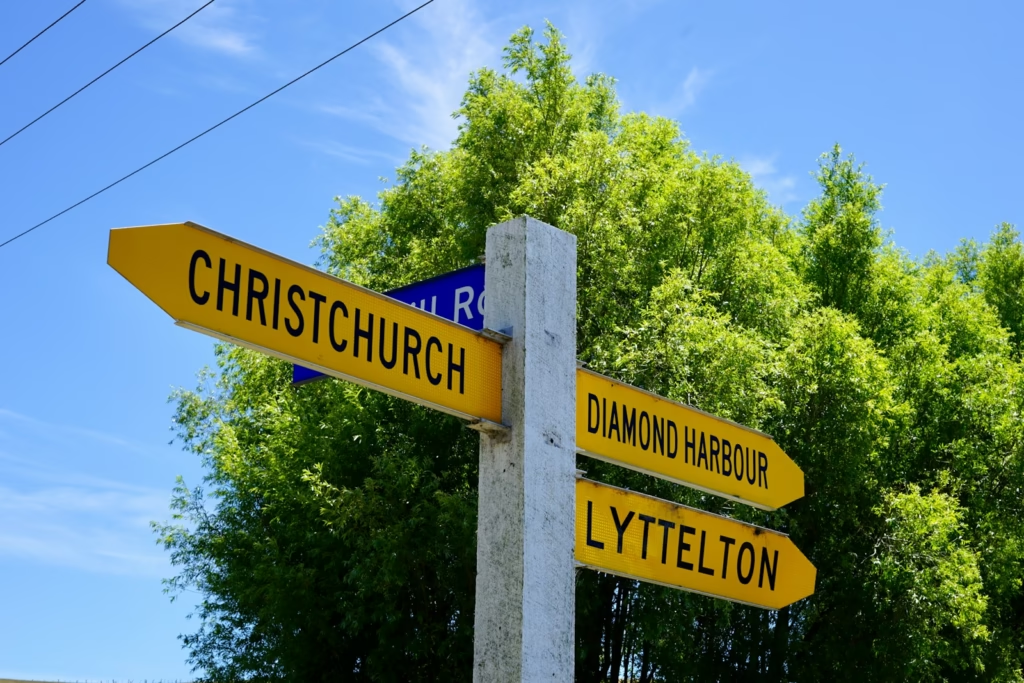
If the Port Hills are Christchurch’s sharp edge, the Little River Rail Trail is its accessible classic. It gives riders a clear journey away from the city and towards Banks Peninsula without demanding elite fitness or technical confidence.
The Department of Conservation describes the Christchurch to Little River Rail Trail as a 46km walkway and cycleway from Hornby in Christchurch to Little River on Banks Peninsula, with the Motukārara to Little River section covering 20km. That makes it especially useful for visitors: you can ride a section, build it into a longer day, or use it as the first step into a broader Canterbury itinerary.
The trail is not about savage gradients or technical drama. It is about rhythm, landscape and the pleasure of moving steadily from city edge to rural Canterbury. For families, newer riders or anyone wanting an easier day between harder efforts, it is one of the region’s most obvious assets.
Banks Peninsula: the harder, wilder extension
Banks Peninsula is where the riding becomes more demanding and more memorable. The landscape is volcanic, folded and irregular, with roads that rise, fall and twist towards harbours, bays and small settlements. It is the sort of place where distance alone does not tell the full story. A route that looks modest on a map can feel heavy once the climbing, wind and road surfaces are added.
Akaroa is the obvious focal point, but the roads around Little River, Gebbies Pass, Hilltop, Lyttelton and the surrounding bays give plenty of options. For road cyclists, this is where Canterbury starts to feel like a serious riding destination rather than just a pleasant one. You can create big loops, coastal out-and-backs or multi-day touring routes that still keep Christchurch within reach.
It is also a region that rewards patience. The best rides here are not always about speed. They are about stopping at viewpoints, reading the weather, taking the quieter road and letting the landscape dictate the day.
Canterbury’s wider riding appeal
Beyond Christchurch and Banks Peninsula, Canterbury opens out. The plains can look simple at first, but for cyclists they offer something valuable: space. Long roads, wide skies and rural settlements create a very different rhythm from the Port Hills. This is useful territory for endurance rides, touring, gravel exploration and steady training kilometres.
Then the region changes again as it pushes towards the foothills, lakes and mountains. Canterbury’s cycling identity is not based on one famous climb or one marketed route. It is based on layers. City, hills, peninsula, plains, foothills, high country. That variety is the reason it works so well for riders who like building a trip around more than one type of day.
A sensible itinerary might start with Christchurch city paths, then move to the Port Hills, then the Little River Rail Trail, then Banks Peninsula or the wider Canterbury countryside. That progression gives the trip a natural shape: easy first, then scenic, then testing.
For anyone planning a longer riding holiday, the same principles apply as they would in other varied destinations covered in ProCyclingUK’s travel and riding abroad section. The best trips are not built from one heroic ride. They are built from a base that gives you options.

Best types of riding in Christchurch & Canterbury
| Type of rider | Best fit in the region | Why it works |
|---|---|---|
| Road cyclists | Port Hills, Banks Peninsula, rural Canterbury roads | Climbing, views and varied loop options |
| Gravel riders | Rail trails, country roads, Canterbury plains and foothills | Open terrain and mixed-surface potential |
| Families and leisure riders | Little River Rail Trail, city cycleways, parks and riverside routes | Easy gradients and accessible sections |
| Mountain bikers | Port Hills and Christchurch trail areas | Technical and cross-country riding close to the city |
| Touring riders | Christchurch to Little River, Banks Peninsula, wider Canterbury | Strong base for multi-day routes |
When to ride
Spring and autumn are likely to suit most visiting cyclists best, with milder conditions and enough daylight for longer rides. Summer offers long days but can bring heat and exposure, particularly on open roads and trails. Winter can still work, especially for lower-level routes, but riders should expect colder starts, changeable weather and reduced daylight.
The main practical point is wind. Canterbury’s open terrain can make wind a serious factor, particularly on exposed roads and plains sections. That should not put riders off, but it does make route planning more important. A flat ride in Canterbury is not always an easy ride if the wind turns against you.
This is where travel preparation matters. Riders taking their own bike should think carefully about packing, airline rules and setup before leaving, especially if the trip combines road, trail and gravel riding. ProCyclingUK’s guide on how to travel with your bike is a useful starting point.

How to shape a Christchurch cycling trip
A good Christchurch and Canterbury trip does not need to be complicated. In fact, the region works best when you keep the structure simple.
Start with one easy city or rail-trail day to get settled. Use that to test the bike, understand the traffic rhythm and get your bearings. Then add one Port Hills ride, where the climbing and views give the trip its first proper cycling identity. After that, decide whether the next step is Banks Peninsula, a longer rural road day, a gravel-focused route or a gentler recovery spin.
For stronger riders, the appeal is in stacking different types of effort: a climbing day, an endurance day, a trail day and a scenic recovery day. For newer riders, the appeal is that the region does not force you into difficulty too quickly. You can keep the riding controlled and still feel like you are seeing the place properly.
That balance is also why Christchurch works well for first multi-day cycling holidays. If you are building towards your first longer trip, ProCyclingUK’s guide on how to train for your first multi-day cycling holiday gives the useful foundation: prepare for repeat days, not just one big effort.
-
 Photo Credit: Canyon SRAM (supplied media release)
 -
 Photo Credit: Park Tool



How it compares with other riding destinations
Christchurch and Canterbury are not trying to be Queenstown. They do not have the same instant drama or mountain-town glamour. Their appeal is quieter and more flexible. That is not a weakness. For some cyclists, it is the reason to go.
Compared with a place such as Tasmania, Christchurch is more immediately accessible as a city riding base, with stronger urban cycling options and faster access to repeated climbing. Tasmania, covered in our cyclist’s guide to Hobart, kunanyi and the East Coast, has its own wildness and island rhythm. Canterbury feels more open, structured and varied from a single base.
Compared with a road-trip destination such as the Great Ocean Road, Christchurch is less about one iconic corridor and more about a cluster of different riding worlds. City, hills, rail trail, peninsula and plains all sit close enough together to make route planning feel natural.
That is the key distinction. Christchurch and Canterbury are not dependent on one famous road. They work because the whole region can be shaped around the bike.
Why Christchurch and Canterbury deserve a place on your riding list
Christchurch and Canterbury deserve a place on a cycling list because they offer balance. There are prettier single roads elsewhere, bigger climbs elsewhere and more famous trails elsewhere. But not every destination gives you this much variety from one base.
Christchurch gives you bike-friendly city riding and immediate access to the Port Hills. The Little River Rail Trail gives you an easy, scenic route with real local character. Banks Peninsula gives you harder road riding and coastal drama. Wider Canterbury gives you space, scale and the feeling of riding through a landscape rather than around a tourist product.
That is the strength of the region. It does not need to shout. It simply gives riders options, and the best cycling trips are often built from exactly that: a good base, varied terrain, reliable routes and the sense that tomorrow’s ride can feel completely different from today’s.

