
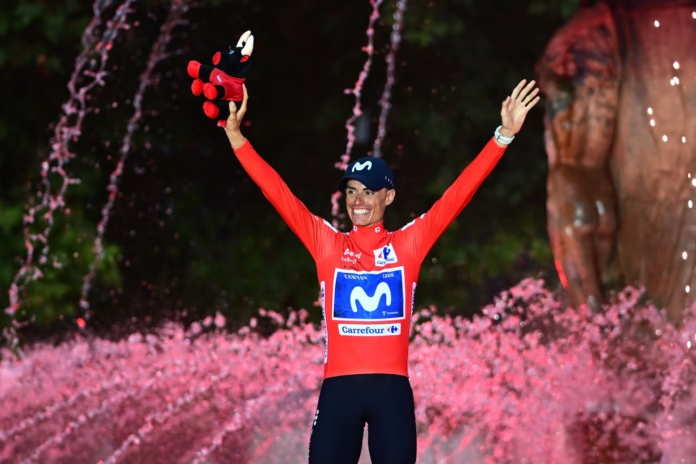
The 2026 Vuelta a España began with Tadej Pogačar as the dominant reference point and ended with Enric Mas finally converting years of Grand Tour consistency into an overall victory. Between those two facts, the race changed the late-season form picture for several of the peloton’s most important riders.
Mas won by 2:15 over Primož Roglič and 2:44 over Felix Gall, with Richard Carapaz fourth and Sepp Kuss fifth. Wout van Aert took the points jersey, Santiago Buitrago won the mountains competition and Oscar Onley secured white while finishing sixth overall. The final Vuelta classifications show a race that produced meaningful form signals well beyond the podium.
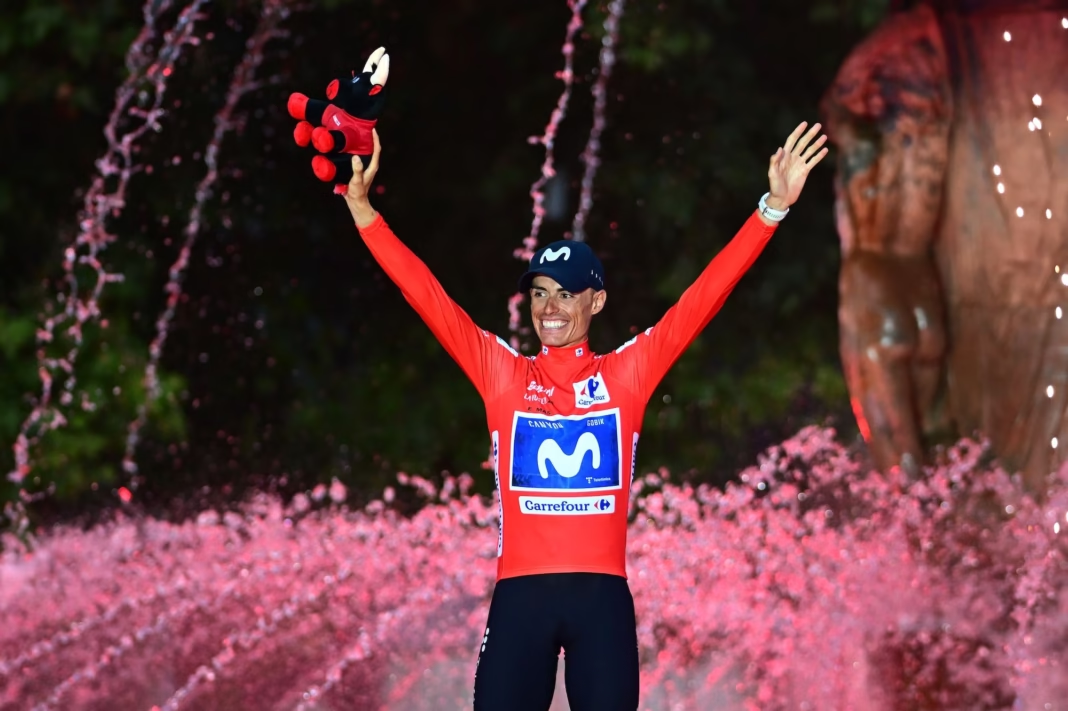
Mas leaves the Vuelta with his career redefined
Mas had finished second at the Vuelta three times before 2026, enough to establish him as one of the most reliable Grand Tour riders of his generation but also to leave an obvious gap in his palmarès. This time he took the opportunity when it appeared. Pogačar’s stage eight crash removed the race leader, but Mas still had to defend the jersey for almost two weeks against Roglič, Gall and a field that knew precisely where his vulnerabilities were supposed to be.
His stage nine victory on Alto de Aitana immediately changed the tone. Rather than merely inheriting red, Mas strengthened his position on the road. He then limited his losses in the stage 18 time trial and finished the job in the Sierra Nevada, where the final mountain stage left him with the 2:15 advantage he carried into Granada.
ProCyclingUK’s analysis of how Mas won the Vuelta traces that progression in detail. The important form conclusion is straightforward: Mas did not simply survive after Pogačar left. He repeatedly answered the specific tests that had prevented him winning Grand Tours before. At 31, that changes the way his future three-week campaigns should be judged.
Roglič is still elite, but the old guarantee has weakened
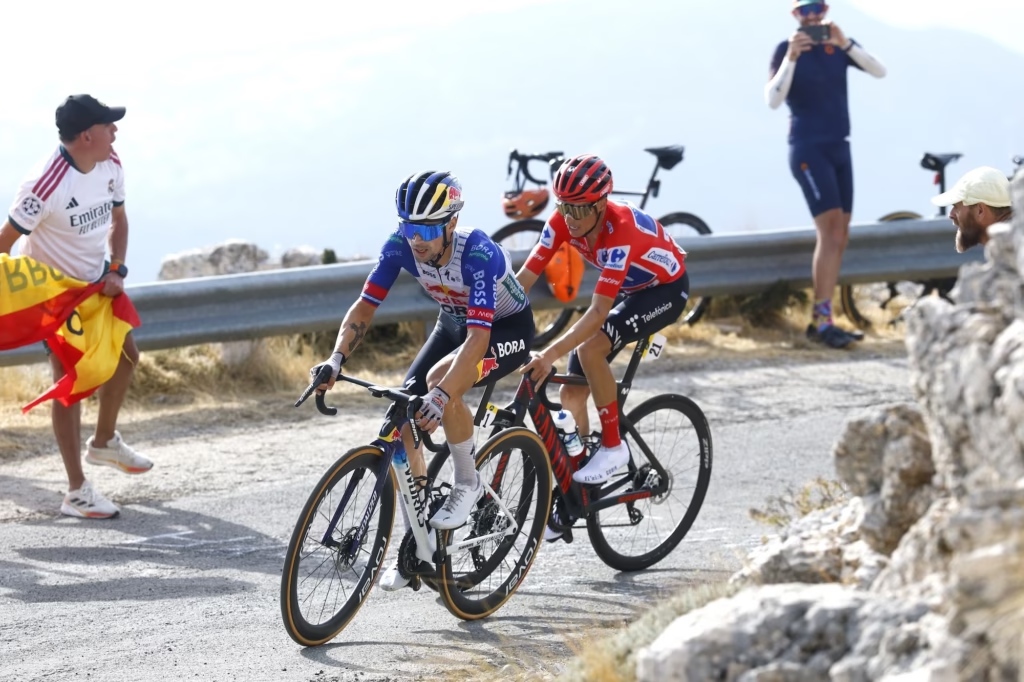
Second place would be an outstanding Vuelta for almost any rider. For a four-time winner, it inevitably reads differently. Roglič arrived with the experience, time-trial ability and finishing speed to exploit any weakness from Mas, yet he never found the sustained advantage needed to overturn the race.
The time trial was his clearest opportunity. He gained time, but not enough. The mountains then became a problem because Mas could defend rather than chase. By stage 20, Gall was strong enough to put pressure on Roglič’s second place while Mas extended his overall advantage. The separate analysis of why Roglič lost the 2026 Vuelta is less about a collapse than a narrowing margin for error.
Roglič remains capable of winning major stage races. Nothing in Spain suggests otherwise. The change is that his time trial and late-race acceleration no longer automatically solve a close Grand Tour. Against a rider defending well in the mountains, he needed a larger advantage from his strongest terrain than he could produce.
Gall has strengthened his Grand Tour standing again
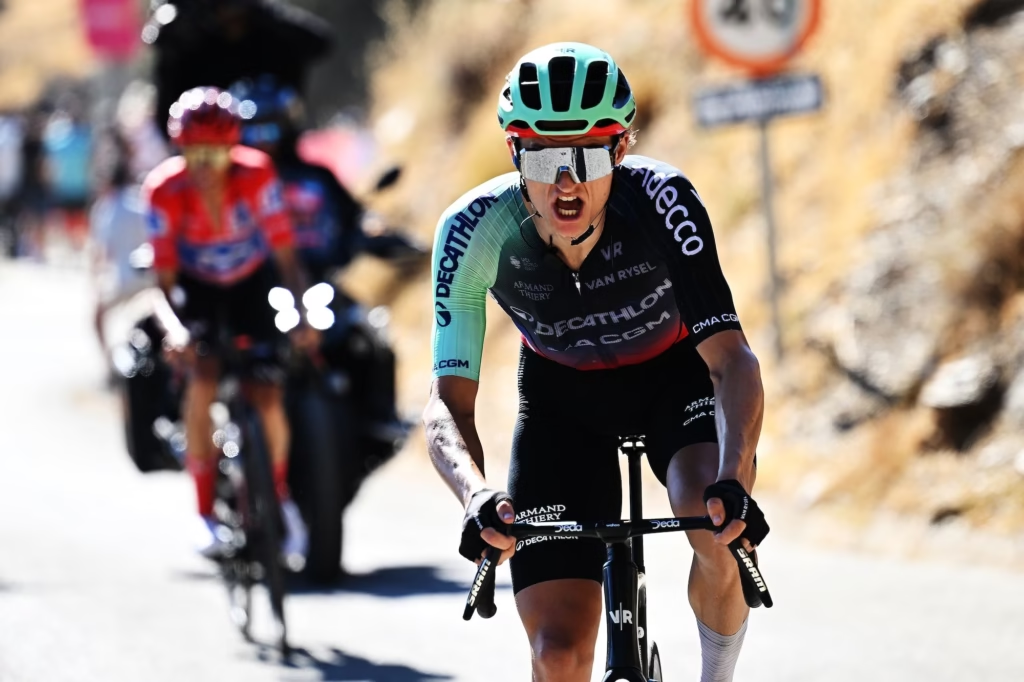
Felix Gall’s third place continued a trajectory that has increasingly made him one of the most dependable pure climbers in stage racing. He finished only 29 seconds behind Roglič and was the stronger of the pair on the final mountain stage. That is significant because the podium was not secured through one exceptional day followed by damage limitation. Gall remained competitive deep into the third week.
His move to Lidl-Trek for 2027, already confirmed after the Vuelta, gives that form a wider consequence. A rider who can finish on a Grand Tour podium and still be applying pressure on stage 20 changes the options available to a team already building considerable stage-race depth. The remaining question is how much time Gall can avoid losing when a race contains a heavier time-trial programme.
Kuss found his best legs late
Sepp Kuss’s fifth place does not tell the whole story. He entered the final mountain stage outside the top 10 and used an aggressive long-range ride through the Sierra Nevada to jump six places. It was the sort of performance that recalled why Kuss can be so disruptive when he is allowed to race offensively rather than simply protect a position.
The result does not suddenly make him the obvious favourite for another Grand Tour, but it restores some of the threat that had faded during less consistent periods. Fifth overall after such a late move is evidence of deep endurance as well as climbing form. For Visma | Lease a Bike, it also means the Vuelta ended with more than Van Aert’s green jersey to take into the final part of the season.
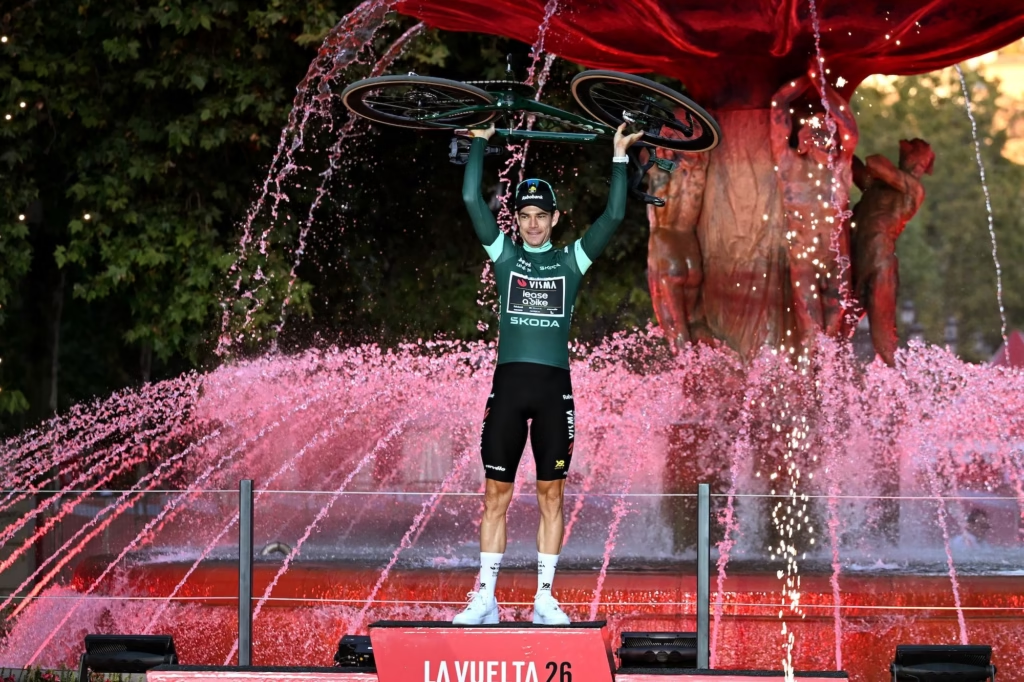 Photo Credit: Getty
Van Aert’s green jersey matters for Montréal
Van Aert won the points classification with 326 points, 53 clear of teammate Matthew Brennan. He won two stages, repeatedly scored across different terrain and remained effective deep into a mountainous Grand Tour. That is a different preparation from a rider arriving at the World Championships through a short block of one-day races, but the durability can be valuable on a long Montréal course.
ProCyclingUK has already looked specifically at Van Aert’s Vuelta form before the Montréal Worlds. The caution is recovery. A three-week race finishing only a week before the championships gives little time to freshen up, and the road race will punish accumulated fatigue. The positive is that Van Aert did not limp through Spain. He remained competitive and tactically active to the end.
Onley and Omrzel leave Spain with their ceilings raised
Oscar Onley’s sixth overall and white jersey are among the most important development results of the race. He finished 9:28 behind Mas and 1:10 ahead of Jakob Omrzel in the young rider classification. Onley also handled the Jerez time trial well enough to strengthen his white-jersey position, an encouraging sign for a rider whose climbing ability was already well established.
For Great Britain, that form feeds directly into the World Championships. Onley joins Tom Pidcock in a strong road squad, giving Britain a rider coming out of a Grand Tour with proven endurance and climbing form. The Great Britain Worlds guide explains why his presence gives the team tactical flexibility rather than merely another protected rider.
Omrzel’s seventh overall and stage victory at Calar Alto were arguably even more striking in development terms. He did not beat Onley for white, but he left Spain with proof that he can win on a major summit finish and remain inside a Grand Tour top 10. That moves him beyond prospect status.
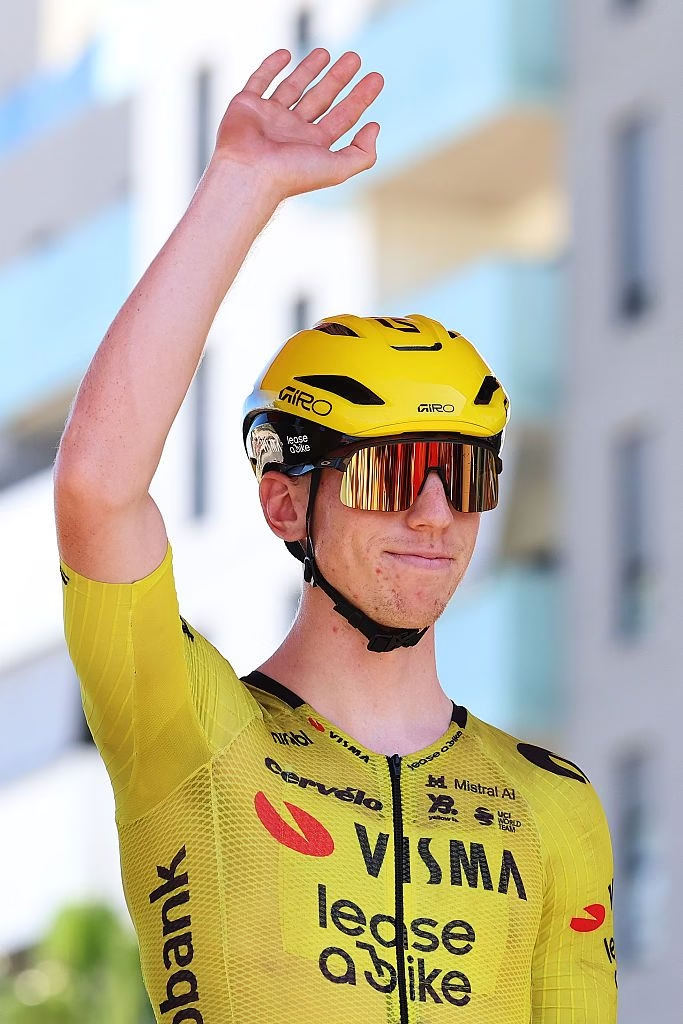 Photo Credit: Getty
Buitrago and Brennan also changed their season
Santiago Buitrago’s mountains jersey rewarded consistency across the high mountains. He led the competition from stage nine and continued collecting points rather than relying on a single breakaway haul. His third place on the Calar Alto stage added another high-level result to a race in which he found a clear objective after the GC hierarchy settled.
Matthew Brennan’s five stage victories demand separate attention. Van Aert beat him to green, but a five-win debut Grand Tour puts Brennan’s sprinting progression on a different scale. The fact that Visma could leave Spain with the top two places in the points classification says plenty about how effectively the team converted opportunities after the GC battle moved elsewhere.
Pogačar’s crash remains the unavoidable break in the form line
No post-Vuelta form guide can treat Pogačar as if he simply lost the race. He was leading Mas by 3:50 when his stage eight crash ended his Vuelta and his season. Before that point, the race had been developing around the possibility of a Tour-Vuelta double. After it, every tactical relationship changed.
That does not diminish Mas’s subsequent performance, but it does mean the final standings answer a different question from the one posed at the start. Mas proved he could beat Roglič, Gall and the rest over the remaining two weeks. We did not get a complete three-week comparison between Mas and Pogačar.
The post-race Vuelta analysis and historical comparison place Mas’s win in the wider season. From a form perspective, the clearest conclusions are narrower: Mas has finally proved he can close a Grand Tour from the front, Gall is still improving, Roglič remains elite without being untouchable, and a cluster of riders led by Van Aert and Onley leave Spain with immediate relevance to the Montréal World Championships.

