
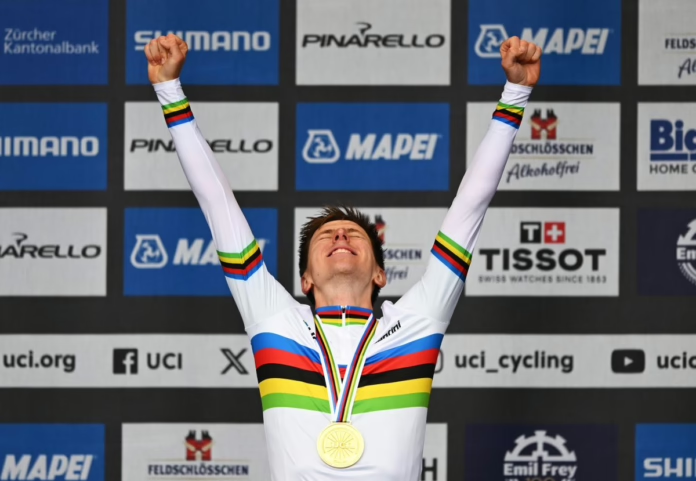
The elite men’s road race closes the 2026 UCI Road World Championships in Montréal on Sunday 27 September, with 273.7km, 3,803 metres of climbing and 12 laps around Mount Royal deciding the final rainbow jersey of the week.
Tadej Pogačar should have arrived attempting to win a third consecutive world title. Instead, the injuries suffered when he crashed out of the Vuelta a España have ended his season, removing the rider around whom almost every major nation would otherwise have built its tactics.
That leaves a much more open championship. Remco Evenepoel has already won GP Québec. Isaac del Toro beat Paul Seixas on the actual World Championships circuit at GP Montréal. Tom Pidcock finished fourth in Québec and sixth in Montréal, while Wout van Aert heads to Canada after winning two Vuelta stages, the green jersey and the overall combativity award.
Mathieu van der Poel adds another former world champion to a field where the main contenders need very different versions of the same race. Belgium can attack with Evenepoel or wait for Van Aert. Mexico have a rider who has already won on Mount Royal but far less depth around him. France can use numbers before Seixas has to expose himself, while Great Britain have Pidcock, Oscar Onley and Adam Yates rather than one obvious card.
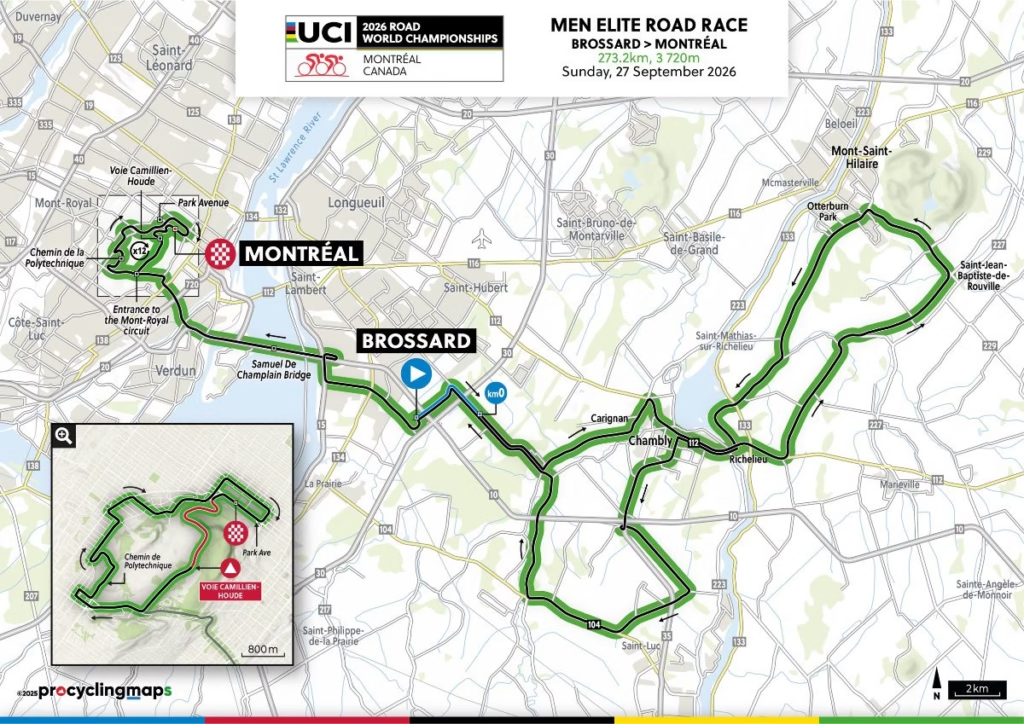
The 2026 UCI Road World Championships course guide explains how the 13.4km Mount Royal circuit works. For the men, the important part is the repetition. Camillien-Houde, Côte de la Polytechnique, Pagnuelo and the rising finish on Avenue du Parc return 12 times after more than 110km of racing outside Montréal.
UCI Road World Championships 2026 men’s road race details
| Detail | 2026 elite men’s road race |
|---|---|
| Date | Sunday 27 September 2026 |
| Start | Quartier DIX30, Brossard |
| Finish | Avenue du Parc, Montréal |
| Distance | 273.7km |
| Climbing | 3,803 metres |
| Start time | 09:00 EDT / 14:00 BST |
| Expected finish | Around 20:40 BST |
| Finishing circuit | 13.4km |
| Mount Royal laps | 12 |
| Defending champion | Tadej Pogačar, not racing |
The first 112.4km take the peloton through Montérégie before the race reaches Montréal. From there, 12 laps of the Mount Royal circuit account for more than 160km of the remaining distance and most of the climbing.
For television and streaming details, the World Championships TV schedule and live-stream guide covers the full week.
Previous winners
| Year | Winner |
|---|---|
| 2025 | Tadej Pogačar |
| 2024 | Tadej Pogačar |
| 2023 | Mathieu van der Poel |
| 2022 | Remco Evenepoel |
| 2021 | Julian Alaphilippe |
Pogačar’s absence guarantees a different winner in Montréal. Van der Poel and Evenepoel are the two recent champions on the current start list with the opportunity to take the rainbow jersey back.
Why Mount Royal gets harder every lap
Nothing on the Montréal circuit looks overwhelming when viewed once.
Camillien-Houde is the main sustained climb, with the hardest section around 1.8km at 8%. Côte de la Polytechnique is shorter but contains ramps above 11%, while Pagnuelo adds another half-kilometre rise before the course works back towards Avenue du Parc.
The GP Montréal 2026 route guide showed how quickly those climbs accumulate. Each 13.4km lap contains approximately 269 metres of elevation.
One passage of Camillien-Houde is manageable for almost everyone on this start list. Twelve are not.
During the early circuits, the climbing should steadily remove support riders and force weaker climbers to spend more energy holding position. By the final two or three laps, the same acceleration that caused little separation earlier can suddenly split a group immediately.
The final 600 metres on Avenue du Parc rise at around 4%, so there is no flat sprint waiting for anyone who survives. Riders still need enough power to accelerate after close to seven hours of racing.
GP Montréal gave the favourites a full-speed reconnaissance
Usually there is a degree of guesswork before a World Championships route is raced properly.
Not this year.
GP Montréal on 13 September used the same 13.4km Mount Royal circuit, with the WorldTour peloton completing it 16 times. The Worlds road race has four fewer circuit laps but adds the long approach from Brossard, making the championship almost 60km longer overall.
Isaac del Toro and Paul Seixas were the two riders who solved the circuit best.
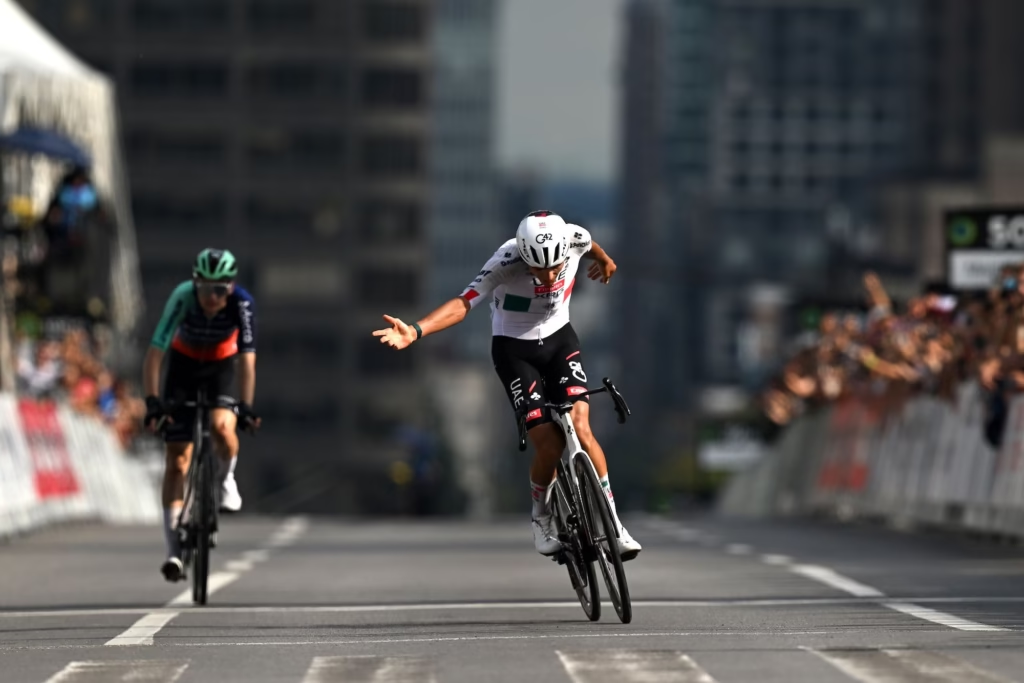
Seixas attacked on the final Camillien-Houde ascent, Del Toro bridged across and the pair quickly established enough of a gap to decide the victory between them. Del Toro then beat the Frenchman on Avenue du Parc, with Brandon McNulty third, Quinn Simmons fourth and Evenepoel fifth.
Our GP Montréal race report showed how much of the finale was shaped before the final sprint. Ben Healy had already attacked from distance, McNulty and other UAE riders were repeatedly involved and several of the main favourites had been forced to spend energy before Seixas finally made the decisive move.
Worlds will not unfold the same way. Trade-team structures disappear, national teams have different numbers and the extra distance changes the value of every early effort.
The climbs themselves remain the same.
Isaac del Toro has already proved he can win here
Nobody on the start list has stronger direct evidence than Del Toro.
He has already won on the World Championships circuit.
The manner of the victory was as important as the result. Del Toro did not simply survive until a sprint. He recognised Seixas’s decisive attack, worked his way across and still had enough left to win convincingly on the uphill finish.
That combination is almost ideal for Montréal.
He climbs well enough to follow the strongest riders, accelerates sharply enough to create separation himself and has enough finishing speed that rivals cannot comfortably take him to Avenue du Parc.
The complication is everything that happened before he made the winning move.
At GP Montréal, UAE Team Emirates-XRG could use McNulty, Adam Yates and others to put pressure on rival teams while Del Toro conserved energy. Mexico cannot reproduce that strength in depth.
If Evenepoel attacks with 50km remaining, Del Toro has to decide how much responsibility he takes. If Britain put Onley or Yates ahead, the same question appears again. If Simmons, Healy or another strong outsider moves at the wrong moment, Mexico do not have a queue of WorldTour leaders available to close the gap.
Del Toro may be the best individual fit for the course. He could also be one of the riders forced to make the most decisions.
Remco Evenepoel does not need to wait for the final lap
Evenepoel’s two Canadian races offered different lessons.
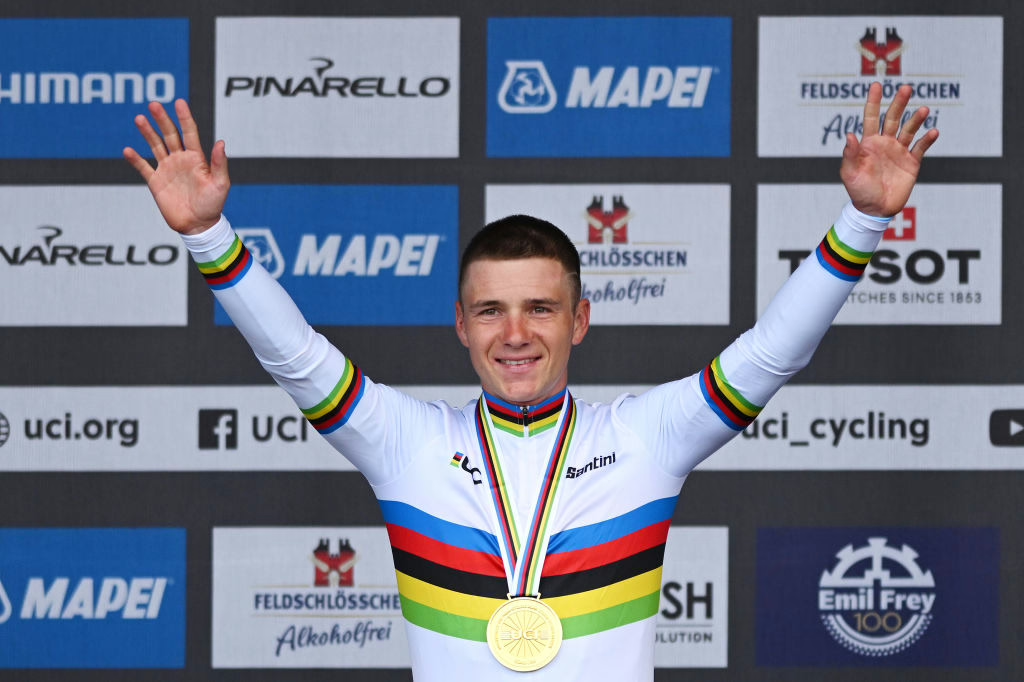
At GP Québec he attacked from 28km out, helped establish the decisive move and eventually beat Giulio Ciccone for victory. Two days later in Montréal, he finished fifth after being forced to chase back towards the front once the race had already begun to split.
The Québec performance is probably the more useful guide to how Belgium should use him at Worlds.
Evenepoel does not need to wait until the final Camillien-Houde ascent. His ability to attack from 40 or 50km out can force every other major nation to make decisions well before they intended to.
Mexico may need Del Toro to chase.
France may have to use one of Seixas’s helpers.
Great Britain must decide whether Pidcock responds or whether Onley and Yates can handle it.
The Netherlands have to judge how much Van der Poel can afford to spend.
Belgium can make those attacks without committing Van Aert.
Even if Evenepoel is eventually caught, the cost of bringing him back can reshape the race behind.
Wout van Aert gives Belgium a completely different second route
Van Aert arrives from the Vuelta with one of the more interesting form lines in the race.
He won two stages, took the green jersey and collected the overall combativity award, while also spending substantial time working as part of Visma | Lease a Bike’s lead-out for Matthew Brennan.
The final Vuelta classification recap showed just how strong his three weeks had been beyond the stage wins.
The more relevant performance for Montréal came in Loja, where Van Aert won from a hard breakaway on a stage containing almost 3,300 metres of climbing.
That tells us more than another conventional sprint victory would have done.
The obvious question is recovery. Worlds comes only two weeks after the Vuelta ended, so Belgium need Van Aert to absorb the three-week workload rather than carry fatigue into Montréal.
If he does, the tactical value is enormous.
Evenepoel can attack without Belgium emptying its hand. If rivals bring him back, Van Aert may still be sitting in the group having spent far less energy.
Very few climbers on this start list want to reach Avenue du Parc with him.
Paul Seixas knows exactly where he can make the difference
Seixas was the rider who broke GP Montréal open.
His attack on the final Camillien-Houde climb was strong enough to separate the main favourites and briefly looked like the winning move before Del Toro bridged across.
Second place came with an obvious lesson.
Seixas can create the decisive selection on these roads.
He probably cannot afford to arrive at the finish with several of the fastest riders still attached.
Del Toro beat him comfortably in the two-rider sprint. Van Aert, Van der Poel and Pidcock are all riders France would rather remove before the final kilometre.
That gives France an incentive to make the race hard before the last lap rather than simply protecting Seixas until everybody else expects him to attack.
The extra distance could help him.
GP Montréal was 214.4km. Worlds is 273.7km. Seixas does not necessarily need a stronger final attack if another hour of racing has already reduced the number of riders capable of following it.
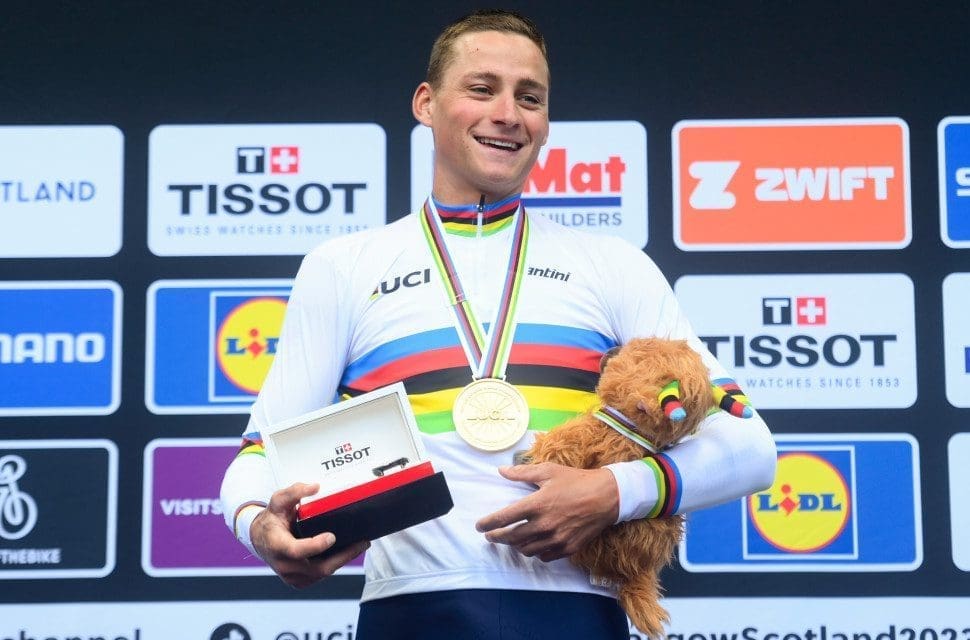
Mathieu van der Poel is the hardest major contender to place
Van der Poel arrives without the direct circuit comparison available to Del Toro, Seixas, Evenepoel and Pidcock.
The route can be read in two very different ways for him.
Twelve Mount Royal laps create enough sustained climbing to expose him if France, Mexico and Belgium continually push the pace towards a pure climbing contest.
The distance pulls the other way.
Few riders in the world have been more reliable after six hours of hard one-day racing. Van der Poel has repeatedly shown that extreme distance can turn into an advantage rather than a weakness.
His presence also affects how everyone else races.
If he survives into the final 10km, the climbing specialists know that waiting becomes dangerous. A rider who might otherwise save everything for Avenue du Parc may have to attack earlier simply to avoid facing Van der Poel in the finish.
That can create opportunities for riders who have nothing to do with the Dutchman’s own move.
His ideal race is probably hard but irregular rather than one continuous climbing test. If he gets small periods to recover between the strongest accelerations, he can remain in contention far deeper into the race than the profile alone suggests.
Tom Pidcock arrives with the right form and useful British depth
Pidcock’s Canadian results were almost exactly what Great Britain needed to see.
He finished fourth in Québec and sixth in Montréal, remaining competitive against most of the main World Championships contenders on both courses.
Britain also have more than one way to race around him.
Oscar Onley arrives from sixth overall and the white jersey at the Vuelta. Adam Yates knows Mount Royal exceptionally well and has the climbing strength to make a move that no major nation can simply ignore.
That means Pidcock should not have to follow every attack himself.
If Yates is ahead, Britain can wait.
If Onley joins a strong move, somebody else has to chase.
The Great Britain World Championships analysis looked at why that depth could be more valuable than simply declaring one protected leader from kilometre zero.
Pidcock’s strongest finale is likely to come from a heavily reduced group rather than a large sprint. He has enough acceleration to beat climbers without needing to take Van Aert or Van der Poel all the way to the line.
The task for Britain is reaching that situation with him still fresh.
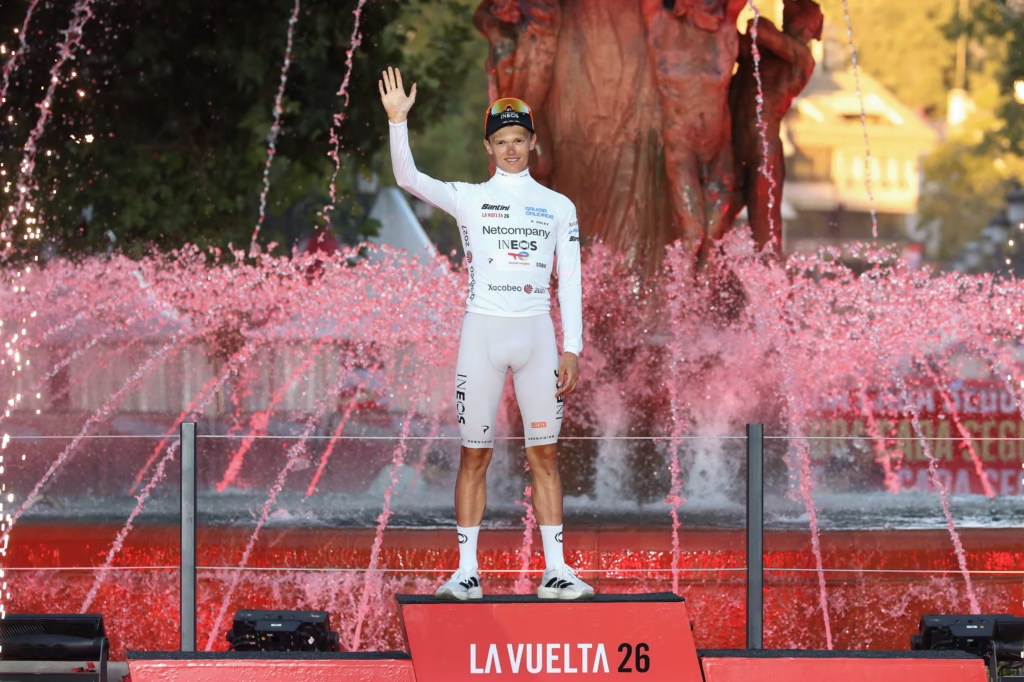
Oscar Onley can be used as more than support
Onley’s Vuelta makes him one of the most interesting secondary options in the race.
He finished sixth overall and won the young rider classification after spending much of the final week close enough to the podium fight to demand attention from the strongest GC teams.
The physical condition is therefore obvious.
Recovery is less certain.
If Onley has absorbed those three weeks well, Britain should use him aggressively rather than simply asking him to ride for Pidcock from the start.
A move containing a recent Grand Tour top-six finisher cannot be ignored.
That is especially useful in a World Championships where Belgium, France, Mexico and the Netherlands all have clear reasons to save their main rider for later.
Every time somebody else has to chase Onley, the race becomes slightly better for Pidcock.
Brandon McNulty and Quinn Simmons give the USA several ways into the race
The United States were one of the strongest teams at GP Montréal.
McNulty finished third and Simmons fourth, with both riders involved while the race was still being decided rather than collecting places from a beaten chase group.
That is a useful starting point for Worlds.
The Americans do not need to organise everything around one leader.
McNulty can move late.
Simmons is at his best when the race becomes aggressive and nobody wants responsibility for chasing.
Matteo Jorgenson gives them another rider capable of surviving repeated climbing and attacking from further out.
That combination can cause problems for nations with one obvious protected contender.
If Simmons goes three laps from the finish, Belgium may be happy to let somebody else chase while preserving Evenepoel and Van Aert. France may not want to burn Seixas’s final helper. Mexico have far fewer riders available to solve the problem.
The USA may not have the single strongest rider on the start line, but they have enough good ones to keep changing the race.
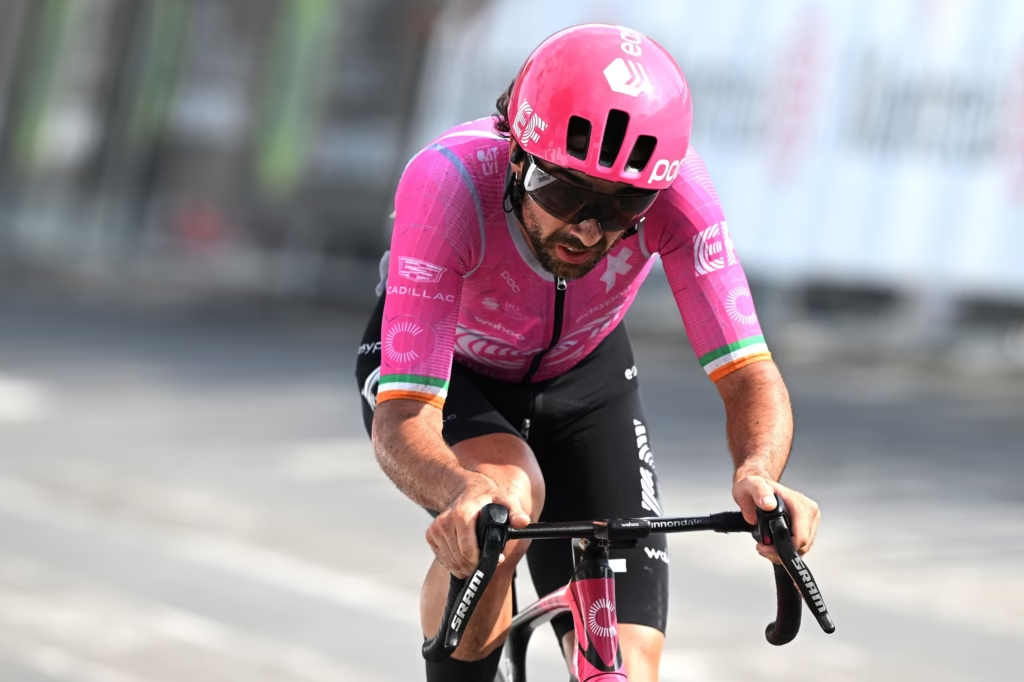
Ben Healy needs the race to become uncomfortable
Healy showed exactly what he wants from Montréal during the WorldTour race.
He attacked from distance and spent a long period ahead while the favourites reorganised behind.
Ireland gain little by waiting until the final Camillien-Houde alongside Del Toro, Seixas and Evenepoel.
Healy needs uncertainty.
An attack two or three laps from the finish can create it. If Belgium have a rider in the move, they may refuse to chase. If Britain already have Onley or Yates there, the same applies. France may prefer to leave the work to somebody else while Seixas waits.
A gap can grow quickly when every country has a reason not to close it.
Healy is one of the best riders on the start list at exploiting precisely that situation.
Giulio Ciccone gives Italy a clear late-race threat
Ciccone’s second place behind Evenepoel at GP Québec confirmed that his form is where it needs to be.
Montréal offers more climbing than Québec and should suit him better from that perspective.
The finish is the problem.
Ciccone does not want to reach Avenue du Parc with Del Toro, Van Aert, Van der Poel or Pidcock still beside him.
Italy therefore have good reason to attack before the final kilometre rather than simply treating the championship as a race to deliver Ciccone to the last ascent.
The depth of their selection gives them room to do that.
World Championships often reward the nations willing to use strong riders before the race appears to have entered its decisive phase. Montréal looks particularly suited to that approach.
 Photo Credit: Getty
Richard Carapaz and Jhonatan Narváez give Ecuador contrasting cards
Ecuador may not have the numbers of Belgium, France or Britain, but they have two riders who want very different finales.
Carapaz is most dangerous when he can attack repeatedly after the race has already become selective.
Narváez offers more speed and can afford to wait longer.
That creates a simple division of responsibility.
Carapaz can make the aggressive move.
Narváez has no need to contribute behind.
If the move returns, Ecuador still have a rider better suited to the finish.
Once the race has been reduced to 20 or 30 riders, the size of the original national team matters less.
Mads Pedersen needs the race to stop short of its hardest version
Pedersen can never be dismissed from a championship of this length.
The 2019 world champion has built much of his career around surviving hard races that are supposed to be beyond the limits of a sprinter.
Mount Royal gives him a much more difficult problem.
If Seixas, Del Toro and Evenepoel continually increase the pressure during the final hour, the accumulated climbing may simply be too much.
Denmark therefore need a hard race without allowing it to become a pure climbing contest.
If Pedersen survives into the last 10km, the tactical equation changes immediately. Almost nobody in the remaining group will want to tow him towards the finish.
That alone can force attacks which alter the shape of the race.
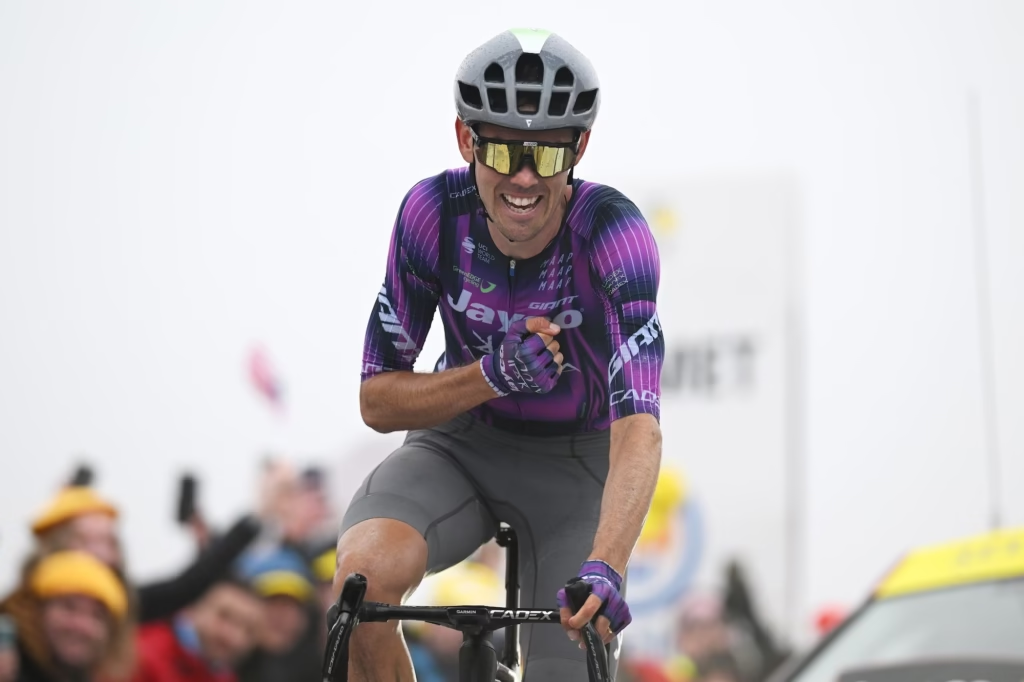
Michael Matthews still has a route to the finish
Matthews occupies a similar position.
Few riders know Montréal better, and his record across the Canadian races has repeatedly demonstrated how much climbing he can survive without losing his sprint.
The redesigned World Championships circuit has moved further towards the climbers, but Matthews remains dangerous if the strongest riders repeatedly cancel one another out rather than maintaining pressure.
Australia also have enough climbing strength that they do not need to protect him regardless of circumstances.
If the race becomes too hard, they can switch towards more aggressive options.
If groups continually come back together, Matthews becomes progressively more relevant.
The Vuelta riders carry the biggest recovery question
Van Aert and Onley are only part of a sizeable group arriving from Spain.
Enric Mas won the Vuelta, Primož Roglič finished second, Felix Gall third and Richard Carapaz fourth. The final classification shows how close several of the World Championships contenders were to maximum effort right through the final mountain stages.
Their form is not difficult to establish.
Their recovery is.
Two weeks can be enough to carry Grand Tour condition into a championship. It can also be too short to escape the fatigue of three weeks of racing.
Gall has the climbing profile for Mount Royal. Roglič has the explosiveness and finish. Mas has just produced the strongest Grand Tour of his career. Carapaz remains one of the most aggressive championship riders in the peloton.
The final week before Worlds will decide whether the Vuelta has sharpened them or emptied them.
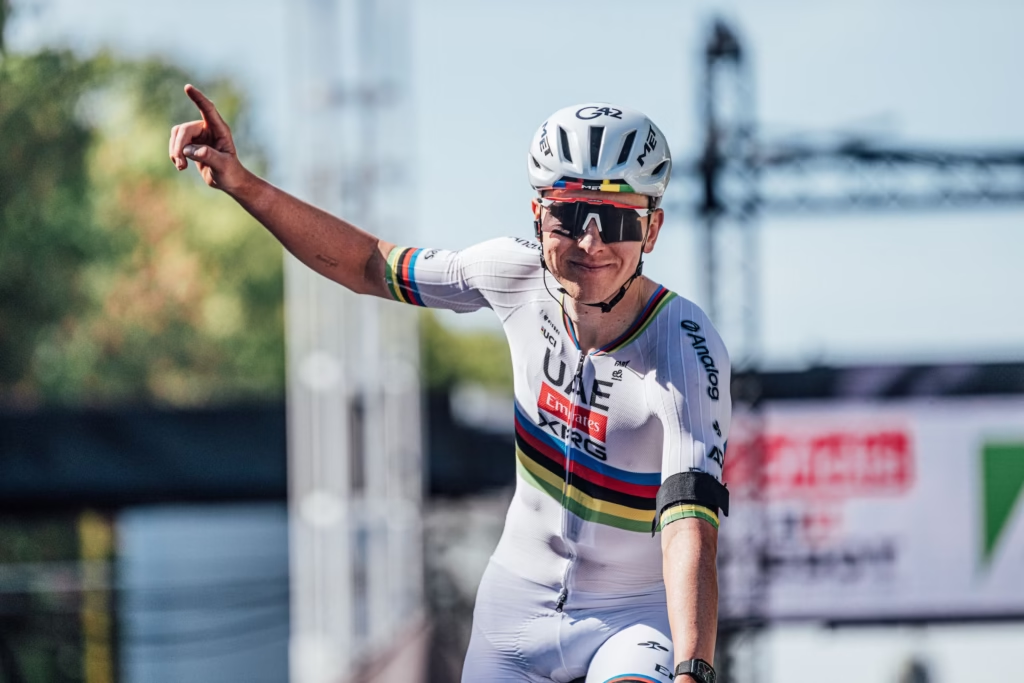
Pogačar’s absence changes how every major nation can race
The last two men’s World Championships had a clear centre.
Pogačar was the rider everybody had to stop.
Montréal does not have an equivalent.
Del Toro has already won on the circuit but does not have the strongest national team.
Evenepoel has a huge long-range threat but Belgium also have Van Aert.
Seixas appears capable of making the key climbing selection but has never raced an elite Worlds of this length as one of the principal favourites.
Pidcock is consistently close without being the obvious rider around whom everyone else must organise.
Van der Poel can win, but the course gives the climbers opportunities to remove him.
That uncertainty should encourage attacks earlier than would have been likely with Pogačar present.
There is no obvious point at which one nation can simply take control and say the race belongs to its leader.
How the 2026 World Championships could be won
There are several plausible versions of the finale.
Evenepoel, Healy, McNulty, Simmons or another strong attacker could get clear with two or three laps remaining and benefit from hesitation behind.
The race could reproduce the GP Montréal pattern, with the main favourites reaching the final Camillien-Houde together before one rider finally creates separation.
Or Van Aert and Van der Poel could survive long enough that the climbers are forced to attack earlier than they would ideally choose.
That last scenario may produce the most interesting racing.
A rider can make the decisive move without necessarily being the strongest rider in the race. He may simply attack because waiting for the sprint is even worse.
On a circuit with several short opportunities to accelerate and enough descending or flatter road for groups to hesitate afterwards, that distinction can decide a World Championship.
Other riders to watch
Thibau Nys and Maxim Van Gils give Belgium additional options before Evenepoel and Van Aert need to commit, while Jhonatan Narváez remains one of the quickest finishers among riders capable of surviving a hard Mount Royal race.
Mathias Vacek has the power and climbing ability to become dangerous if the final hour produces repeated small groups rather than one clean selection. Toms Skujiņš is another rider ideally suited to a championship where endurance, positioning and aggression can matter as much as pure climbing numbers.
Felix Gall’s Vuelta podium shows the level of his climbing form, while Primož Roglič offers Slovenia a completely different kind of threat in Pogačar’s absence.
Santiago Buitrago arrives from winning the mountains classification at the Vuelta and is another rider who becomes more dangerous if Colombia are prepared to attack rather than simply wait for the final lap.
For Canada, Michael Woods has the attraction of a home World Championships on terrain built around repeated climbing, while the home team will also benefit from knowing these roads better than almost anyone.
World Championships 2026 prediction
The safest prediction is that this will not be decided in the same straightforward way as the last two editions.
Del Toro has already won on Mount Royal and has the best direct evidence of any contender. The question is how much more work he has to do without UAE around him.
Evenepoel has the opposite advantage. Belgium can make other nations chase long before their main two riders need to settle the race themselves.
Pidcock has been consistently near the front in Canada without yet producing the defining result. Britain’s depth could give him a better tactical race at Worlds than he had at GP Montréal.
Top 3 prediction
1. Remco Evenepoel
2. Isaac del Toro
3. Tom Pidcock
The difference is unlikely to come down simply to who climbs Camillien-Houde fastest.
It is more likely to be decided by who reaches the final lap having spent the least energy solving everyone else’s attacks.

