A team’s strongest rider is not automatically its leader for every race. Selection depends on what the event demands, who is healthy, which riders are in form, how the route suits them and what the squad wants from that part of the season. A team might protect a climber at one race, organise a sprint train a week later and send an aggressive group to a one-day Classic without committing everything to a single name.
The final decision belongs to the sporting structure, usually led by team management and the directeurs sportifs, with riders and coaching staff contributing information. Contracts, calendars and preparation plans affect who is available, but the practical question is simpler: which rider gives the team its best realistic chance of achieving the objective, and who can support that plan? The answer may be one leader, several options or a squad deliberately built to attack rather than defend.
Selection starts with the race, not the biggest name
Before settling on a leader, a team has to decide what result is worth pursuing. A mountainous stage race favours different attributes from a flat one-day race. A rider who can win a reduced sprint may be a better option for a rolling Classic than a pure sprinter, even when the latter has more victories. On a long race with steep climbs, a strong general classification contender matters more than a fast finisher who is unlikely to survive the decisive terrain.
Teams study route profiles, previous editions, expected wind, technical sectors and the kind of effort most likely to decide the event. They also look at the likely opposition. A rider could have a good chance of winning against one field but be better used as a tactical alternative in another. Choosing a leader is therefore partly a judgement about the route and partly about what other teams might do.
The distinction matters when a race finishes after several short climbs. A pure sprinter may be the best athlete over the final 200 metres but not the best leader if the bunch is likely to split an hour earlier. Protecting a rider who cannot reach the finale wastes teammates’ energy. A well-selected team has a plan for the actual shape of the race rather than the result it would most like to see.
Current form can outrank reputation
A rider’s past wins establish what they are capable of, not what they can deliver this week. Coaches monitor training progress, recovery, fatigue and how riders performed in recent races. A rider coming back from illness or injury may have the talent to win but not the sustained condition needed for a long mountain stage. Someone without the same reputation may have completed a better preparation block and be the more dependable option.
This is one reason teams are careful about announcing a clear hierarchy too early. A leadership plan created in January may need revision by May if riders have fallen ill, crashed or developed unexpectedly well. A rider who was originally intended as a mountain helper could arrive in excellent form, while a planned leader might be struggling. Good selection keeps enough flexibility to recognise the change before the race starts.
Not all data are comparable either. A rider’s power in training can indicate readiness, but a race introduces positioning, weather, nerves, teamwork and tactical uncertainty. A strong training climb does not prove someone can follow repeated attacks after five hours. Results from similar races are useful because they put the numbers into a competitive setting, though even then the course and quality of field have to be considered.
One leader, two leaders or an open strategy?
Teams sometimes arrive with a single protected rider. That gives the support group a clear task: shelter that rider, provide food and bottles, control dangerous moves and place them well before the decisive section. It is often the most efficient approach when the team has an obvious favourite for a sprint or general classification. The drawback is vulnerability. A puncture, crash or unexpectedly poor day can take away the objective the whole selection was built around.
A dual-leadership approach spreads risk. Two climbers may both remain protected until the mountains show which is stronger. In a Classic, two possible winners can cover different attacks and force rivals to chase. But it is not a free advantage. If the riders need teammates at the same moment, the directeurs sportifs must decide who receives the resources. A team claiming to have three equal leaders still needs to answer who will sacrifice their own chance when the final attack comes.
An open squad has a different purpose. When there is no obvious contender against the best in the race, riders may be encouraged to enter breakaways, attack from distance or take opportunities as they appear. One rider becomes the team’s best chance because of the race situation, not because that person was named leader in the morning meeting. This can be especially effective for teams targeting exposure, a stage win or a high placing rather than control of the race.
The helpers determine how strong the leader really is
A leader needs the right teammates, not simply the most talented available riders. A general classification contender benefits from climbers who can keep pace deep into a mountain stage, riders skilled in controlling the peloton and dependable teammates able to protect them in crosswinds. A sprinter needs different support: riders to control breakaways, move the group forward in chaotic roads and deliver a fast, well-timed lead-out.
These roles are performed by domestiques, riders who use their effort for the team’s objective. Our guide to domestiques at the Tour de France explains how that work ranges from collecting bottles to pacing the hardest climbs. A top domestique may be able to lead a smaller race personally but be more valuable as the final helper for a teammate at a major event.
Team composition also affects leadership. If a team has plenty of climbing support but only one specialist sprinter, it may make little sense to ask that sprinter to contest every stage. Conversely, a squad selected around fast finishes can struggle if the general classification becomes the sudden priority. The available riders are a constraint on the plan, and managers have to balance conflicting ambitions over the whole calendar.
What happens in the team meeting?
Before a race, the directeurs sportifs normally set out the route, likely danger points, weather, team objective and each rider’s responsibilities. Riders need to know who is protected, who is expected to follow attacks, which rivals merit attention and where the team wants to move up in the bunch. A plan that merely says “ride for the strongest rider” leaves too much unanswered when a split opens or a breakaway establishes a gap.
The road captain often plays a different role from the nominated winner. A captain is usually an experienced rider who can organise teammates on the road, interpret instructions from the car and make immediate decisions. That rider may have little intention of contesting the finish. The team leader is the person for whom the plan is designed; the captain helps make the plan work when the riders cannot wait for detailed direction from behind.
Communication also has limitations. Radios can pass information on gaps, punctures or instructions, but the riders still have to make split-second judgements about cornering, positioning and whether to chase. The guide to race radios and team cars examines how much the sports director can influence the action once the peloton is moving.
A good meeting also sets out contingencies. What if the protected rider crashes? Who should remain with them? At what point does a breakaway become too threatening to ignore? If the forecast crosswind appears before the planned attack point, who starts the move? Those decisions reduce hesitation under pressure, though they do not remove the need to improvise.
Why a leader can change halfway through a race
A team hierarchy is not immutable. If the designated sprinter is dropped on a climb, a strong finisher who survives may become the better option. If a general classification leader loses significant time early in a stage race, the squad might switch to stage hunting. A team with two protected riders may favour the one who is better placed after a crash or split. Those decisions can happen in public, with television cameras showing a teammate being told to attack or wait.
The change is not always evidence of disagreement. Sometimes the original leader actively supports a teammate after recognising that the tactical opportunity has moved elsewhere. On other occasions, differing personal ambitions can produce tension, particularly if the squad has left its leadership options open. Successful teams manage the expectations before the situation becomes a crisis.
An apparently surprising domestique attack may also be part of the agreed plan. Sending a rider up the road forces opponents to work, provides a possible satellite helper later in the race or creates an alternative path to victory. Viewers can misread the move as a challenge to the team leader when it is actually intended to support them. It is the broader pattern of where teammates are positioned that reveals the strategy.
How leadership differs between a Grand Tour, a Classic and a women’s stage race
In a Grand Tour, a squad can pursue several objectives at once: general classification, sprint stages, breakaways and perhaps a secondary jersey. The route may make some days almost exclusively about protecting a GC contender, while another stage offers the sprinter an opportunity. The team must decide when its goals conflict. Sending too many helpers into a sprint chase may leave the climber isolated on the next mountain day if the effort damages recovery.
In a one-day Classic, there is no next stage on which to recover a disappointing result. Teams often need to commit at a decisive point rather than conserve riders for tomorrow. This makes a squad with multiple late-race options valuable, but only if it can keep enough riders in contention over cobbles, climbs or exposed roads. A protected leader’s status means little if their teammates cannot bring them to the right place before the race splits.
Women’s cycling follows the same tactical principles, though field depth, team sizes and calendar priorities vary by event. A team with one outstanding climber may focus heavily on her in a mountainous race, while another squad with several riders of similar ability can try a succession of attacks. The labels leader, captain and domestique describe roles, not fixed personal rankings. Our women’s cycling race-day glossary explains these distinctions.
Some riders spend most of a season as protected leaders and then become helpers for a teammate at a particular championship or a race with a different route. That is not a demotion. The purpose is to give the team the best chance in the event being contested, and it can be more effective to use a strong all-rounder to support a specialist than to insist on a single hierarchy everywhere.
What to watch for when the race starts
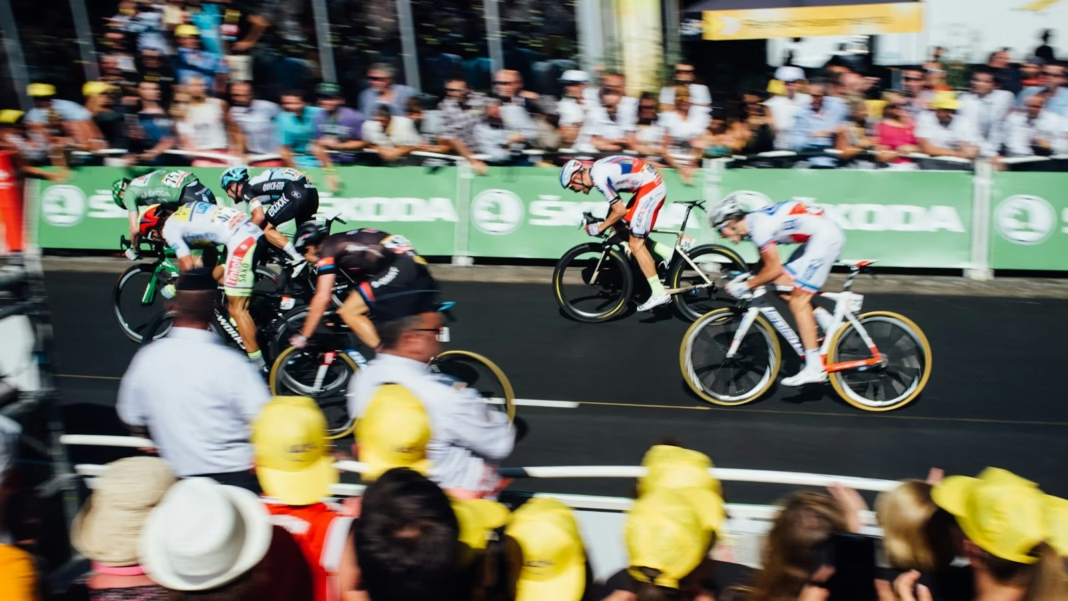
Look at who receives protection in the first hour. A rider consistently positioned behind teammates and spared bottle runs is probably important to the plan. Notice which rider the team chases for, who is allowed into breakaways and who stays with an isolated favourite after a mechanical problem. In a sprint team, the final few kilometres show the hierarchy clearly as lead-out riders work in sequence before the protected finisher launches.
In mountainous racing, the most revealing moment comes when a helper reaches their limit. If that rider sets a hard tempo, then pulls off to let the leader continue, the hierarchy is working as intended. If an unprotected teammate is still with the favourites while the nominal leader struggles, the team faces a different decision. Leadership becomes visible when the plan meets the legs, the route and the opposition.