
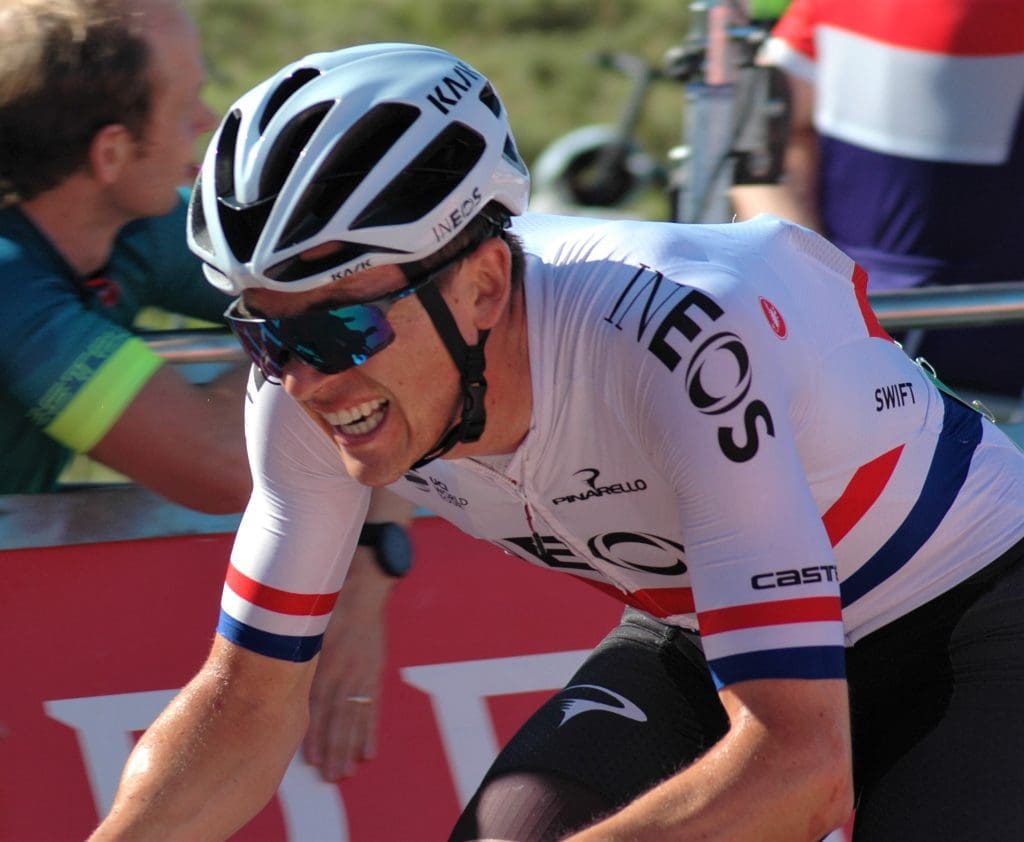
Ben Swift will retire from professional cycling at the end of the 2026 season, bringing an 18-year career that has included two British road titles, two Milan-Sanremo podiums and more than a decade as one of British cycling’s most experienced road captains to a close.
The 38-year-old announced his decision through a video published by Netcompany INEOS on Tuesday, ahead of what will be his final appearance at the Tour of Britain. Swift still has several weeks of racing planned and intends to finish his career on his own terms, with a return to Italy followed by Paris-Tours currently forming the final part of his programme.
“Yeah, so this is it. I’ve decided to retire,” Swift said. “It’s been 18 great years, and never really in my wildest dreams thought I’d have such a long career and a successful career along the way.”
For Swift, the timing is important. He is not stopping because racing has become something he no longer enjoys, or because he feels incapable of contributing at professional level. He has deliberately chosen to leave before reaching that point.
“I still love riding my bike. I love the training, I love the racing, and I think I decided to finish this year because I still feel like I’m at a high enough level to enjoy the racing,” he said.

Swift wants to leave while racing still feels right
The final years of Swift’s career have looked very different from the period when he regularly chased victories himself. At Netcompany INEOS he has increasingly become a domestique, road captain and mentor, providing experience to a team undergoing considerable generational change.
That role was one of the reasons Swift was retained for the 2026 season, with the team identifying his leadership and influence on younger riders as being every bit as useful as his own results.
His final campaign has not been straightforward. Swift suffered a fractured pelvis during a crash-heavy Omloop Het Nieuwsblad in February, an injury that disrupted his spring and could easily have changed the shape of his farewell year. The Omloop crash also left Stefan Küng with a fractured femur, making it one of the more damaging early-season races for several teams.
Swift recovered and returned to racing rather than allowing the injury to determine how his career ended. That makes his decision to stop now more deliberate. He still enjoys training, still feels capable of doing his job and wants his final races to be something he can appreciate rather than endure.
One final Tour of Britain has particular significance
Swift’s farewell begins on home roads at the Tour of Britain, where Netcompany INEOS are one of five WorldTour teams in the 18-team field confirmed for the 2026 men’s race.
“There’s still plenty of racing left this year. I’ve got Tour of Britain, which is obviously my home race,” Swift said. “It was my first, technically, professional race. I think it was only right to go back there and do Tour of Britain.”
Swift believes this will be his 11th or 12th appearance at the race, a competition closely tied to several stages of his career. His final participation also comes almost exactly a year after he played a small but emotional role in another British cycling farewell.
On the final stage of the 2025 Tour of Britain, Swift crossed the line in Cardiff alongside long-time friend Geraint Thomas as Thomas ended his own professional career. The pair had known one another since their youth racing days, making Swift an obvious companion for the final metres of Thomas’s career. The 2025 Cardiff finale became as much a farewell to Thomas as a race for the overall Tour of Britain title.
Twelve months later, Swift is following him.
From Katusha to becoming part of Team Sky’s foundations
Swift turned professional with Katusha in 2009 after developing through British Cycling’s academy system and spending important formative years based in Italy.
His stay with the Russian team lasted only one season. For 2010, Swift joined the newly created Team Sky and became part of the foundations of what would develop into one of the dominant teams of the following decade.
His impact was immediate. Swift won the Tour de Picardie in May 2010, taking a stage along the way and delivering the new British team its first overall stage-race victory.
It was an early demonstration of the versatility that defined the first half of his career. Swift possessed genuine sprint speed but could climb considerably better than a conventional bunch sprinter, opening opportunities on harder one-day courses and selective stage finishes.
Victories followed at the Tour Down Under, Tour de Romandie, Tour de Pologne, Tour of California and Itzulia Basque Country. His results were spread across very different types of terrain, reflecting a rider who never fitted neatly into one category.
Milan-Sanremo came closest to delivering Swift a Monument
No race demonstrated Swift’s abilities at his peak better than Milan-Sanremo.
He finished third in 2014, behind Alexander Kristoff and Fabian Cancellara, establishing himself as a genuine contender for one of cycling’s five Monuments. Two years later he came even closer, surviving another edition approaching 300km before producing one of the strongest sprints on the Via Roma.
Arnaud Démare won, with Swift second.
Those results encapsulated why Milan-Sanremo suited him. Swift had enough climbing ability to survive the Cipressa and Poggio but retained a finishing speed that many stronger climbers could not match after almost seven hours of racing.
It was a difficult balance to reproduce consistently, but when everything aligned Swift was capable of competing with the best one-day riders in the world.
His two Sanremo podiums remain among the standout individual achievements of his road career.

Two British titles arrived in the second half of his career
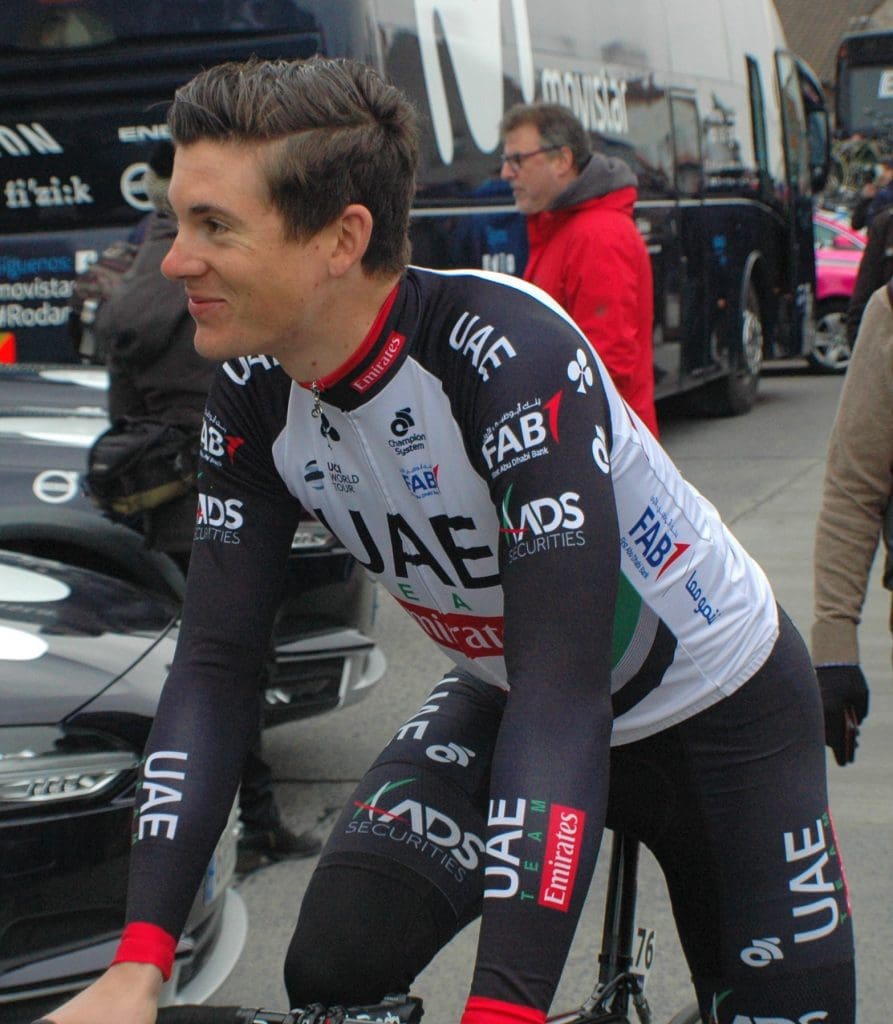
Swift left Team Sky at the end of 2016 and spent two seasons with UAE Team Emirates before returning to the British squad in 2019.
That second spell immediately produced one of the biggest victories of his career.
Swift won the British road race championship in Norwich in 2019, earning the national champion’s jersey for the first time at 31. He then won the title again in Lincoln in 2021, confirming that his own competitive ambitions had not disappeared even as his role within INEOS became increasingly team-focused.
The second victory came at an interesting point in his career. Swift was no longer primarily a sprinter expecting several opportunities to race for himself each season, but he remained strong and tactically sharp enough to win one of the most difficult races on the domestic calendar.
Those British titles ultimately became an important part of his later career rather than a final echo of his earlier success.
Swift evolved into one of INEOS’ most experienced road captains
Few riders manage to change roles as substantially as Swift while remaining useful at WorldTour level for so long.
He began as a fast finisher who could climb. By his later seasons, he had become the type of rider capable of contributing almost anywhere.
His climbing improved enough for him to work deep into difficult stage races, while his experience made him particularly valuable for positioning leaders, reading races and guiding younger teammates. That ability to make himself useful even when his own opportunities diminished helped extend his career far beyond the period when he was collecting most of his victories.
Swift also became one of the links between several distinct generations of the Team Sky and INEOS project.
He raced alongside riders who defined the team’s Grand Tour-dominating years before remaining as the organisation began rebuilding around a younger roster. Thomas’s retirement strengthened that link further when the former Tour de France winner returned almost immediately as the team’s Director of Racing.
The pair’s relationship had already stretched across most of their lives in the sport. Thomas moved into INEOS management for the 2026 season, leaving Swift in the unusual position of racing under someone who had been a teammate and close friend for most of his career.
Now Swift is the one preparing to leave the peloton.
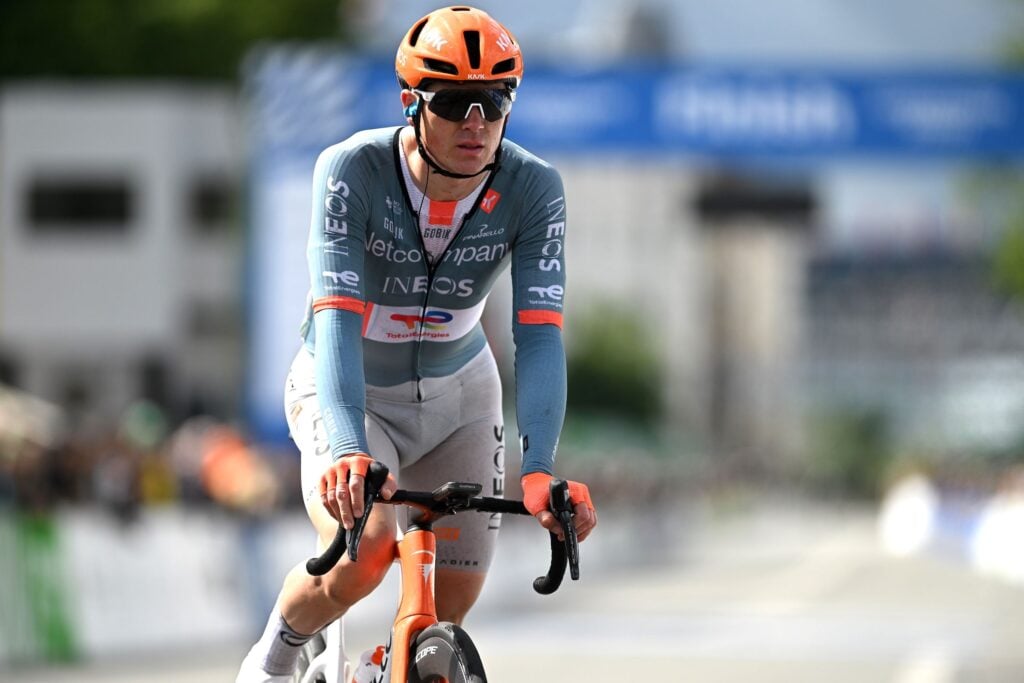 Photo Credit: Getty
His career extended far beyond road racing
Swift also retires with significant achievements on the track.
He became world scratch race champion in Melbourne in 2012, during a World Championships where he also collected silver medals in the points race and Madison.
That background was typical of the generation of British riders who moved regularly between track and road during the country’s rise through the late 2000s and early 2010s.
It also helps explain elements of Swift’s road career. His sprinting ability, tactical awareness and comfort operating in fast, compressed racing situations all developed partly through years spent racing on the track.
Even late in his career, Swift retained an attachment to both disciplines rather than defining himself solely through his WorldTour road programme.

Italy will bring Swift’s career back towards its beginning
After the Tour of Britain, Swift plans to return to Italy for several autumn races.
That is not simply a convenient final block of races.
Italy played a major role in the beginning of his career. Swift spent six formative years based around Quarrata in Tuscany, spanning his final three seasons as an under-23 and the beginning of his professional career.
“So after Tour of Britain, I’ve got a few more in Italy, which is quite nice to be racing back in Italy,” Swift said.
“It feels like full circle. That’s where the whole journey started. We lived in Quarrata in Tuscany in my first six years, my first three years Under-23 and then my first years pro. So I’ve got a real strong connection to Italy.”
That connection makes the autumn programme an appropriate final European chapter before Swift heads to Paris-Tours, which he identified as the race where he intends to finish.
“And then on to Paris-Tours, so a big one to finish with,” he said. “So I want to finish kind of on my own terms, on a high, enjoy my racing, and just make the most of it.”
An 18-year career that became about more than victories
Swift’s career can effectively be divided into two versions of the same rider.
The early Swift was a sprinter and one-day contender capable of winning stages, stage races and challenging for Milan-Sanremo. The later Swift became valuable precisely because he was willing to stop measuring successful races solely through his own finishing position.
He could protect a leader, organise younger teammates, ride on the front, help control difficult situations and provide the kind of race knowledge that cannot be replicated through power data or tactical meetings.
That transition is what allowed him to remain important for so long.
Swift began his professional career with Katusha in 2009, joined Team Sky during its first season and spent all but two of the following 17 years within the organisation that became INEOS. Along the way came two British titles, a world track championship, major international victories and two near misses at Milan-Sanremo.
Now there is one final Tour of Britain, a return to the Italian roads that helped shape his career and Paris-Tours still to come.
Swift is leaving before professional cycling stops being something he enjoys. After 18 seasons, that is exactly how he wanted it.

