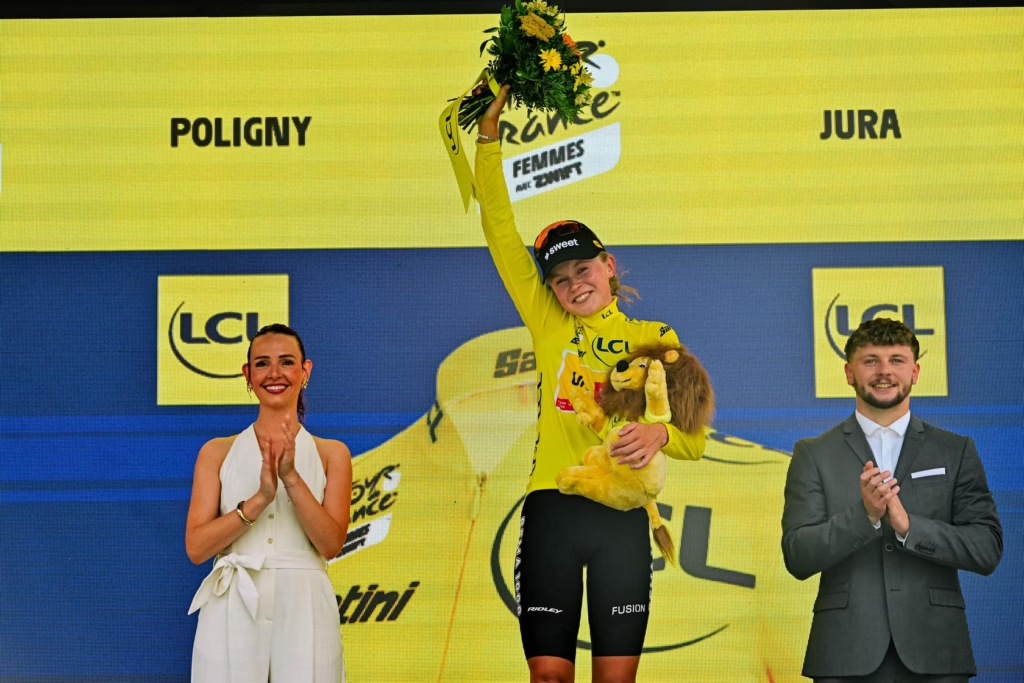
Sigrid Ytterhus Haugset begins the Stage 4 individual time trial with a much stronger chance of retaining the yellow jersey than the specialist names behind her might suggest.
The Norwegian leads Kim Le Court-Pienaar by 2 minutes 22 seconds, Demi Vollering by 2 minutes 26 seconds and Marlen Reusser by 2 minutes 30 seconds after turning an 88.5km solo attack into victory in Poligny.
Reusser, Vollering and Pauline Ferrand-Prévot should all gain time across the 21km from Gevrey-Chambertin to Dijon. The question is whether any of them can recover more than two minutes in a single ride.
Unless Haugset pays heavily for her Stage 3 effort or makes a serious pacing mistake, the most likely answer is no. Yellow remains hers to lose, while dropping outside the top ten would require something far more dramatic than an ordinary difficult afternoon.
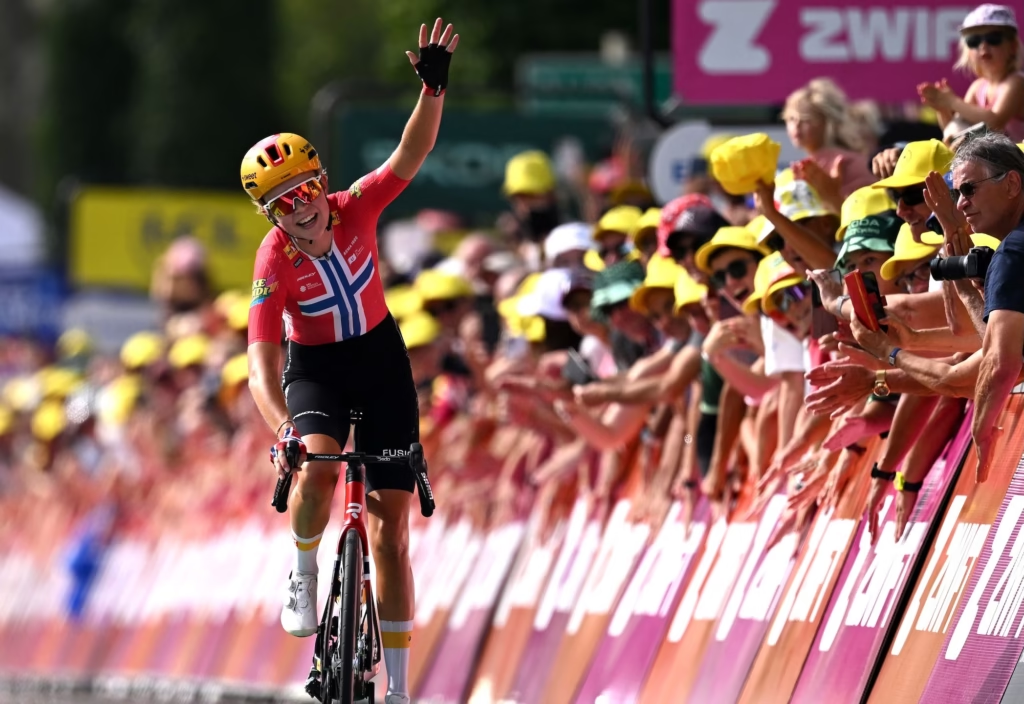 Photo Credit: Getty
Haugset has more than two minutes to defend
The scale of Haugset’s advantage changes the calculation entirely.
She does not need to beat Reusser, Vollering or the leading specialists. She can finish well behind them on the stage and still retain the overall lead.
The principal gaps before the time trial are:
Kim Le Court-Pienaar: 2:22 behind
Demi Vollering: 2:26 behind
Marlen Reusser: 2:30 behind
Pauline Ferrand-Prévot: 2:30 behind
Elisa Longo Borghini: 2:30 behind
Kasia Niewiadoma-Phinney: 2:30 behind
Reusser must therefore gain more than seven seconds per kilometre across the full course to take yellow directly. Vollering needs a similarly dominant margin, while Ferrand-Prévot must also recover the entire 2:30 deficit.
Those are substantial requirements over 21km, particularly against a rider whose Stage 3 victory was built through sustained solo power rather than one short climbing attack.
The complete position before Dijon is detailed in the GC and jersey standings after Tour de France Femmes Stage 3.
Haugset is better against the clock than the yellow jersey story suggests
Haugset is easy to describe as a climber because she won the Norwegian road title and took yellow on a hilly stage. That description is incomplete.
She finished second in the 2026 Norwegian time trial championship over a distance similar to Tuesday’s stage, beaten only by Uno-X Mobility teammate Katrine Aalerud. She is not a specialist at Reusser’s level, but she is clearly capable of producing a competitive sustained effort against the clock.
Her Stage 3 performance provided further evidence.
Riding alone for 88.5km required aerodynamic efficiency, disciplined pacing and the ability to maintain power across rolling and faster roads. Those are all transferable qualities for the Dijon time trial.
The story of Haugset’s extraordinary Stage 3 victory matters because it explains why she should not be treated like an accidental breakaway rider waiting to be exposed.
Her biggest weakness is more likely to be recovery than ability.
Haugset completed one of the hardest efforts of the Tour in temperatures approaching 37°C. Most of the recognised favourites spent the closing kilometres inside groups, conserving considerably more energy before Tuesday’s test.
A normal Haugset time trial should preserve yellow. A heavily fatigued one could make the final kilometres uncomfortable.
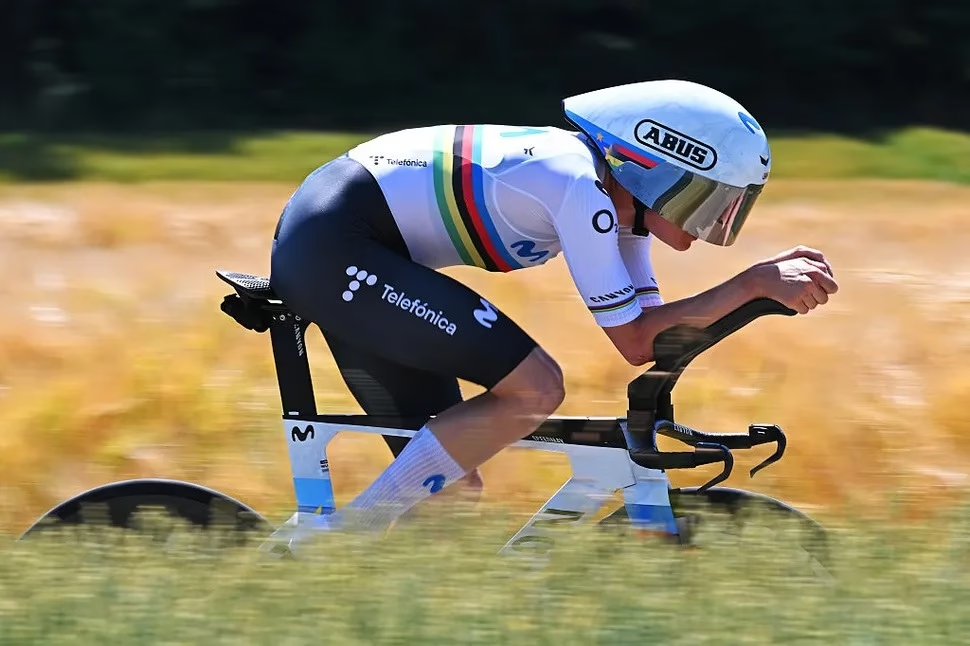 Photo Credit: Getty
How much time could Reusser gain?
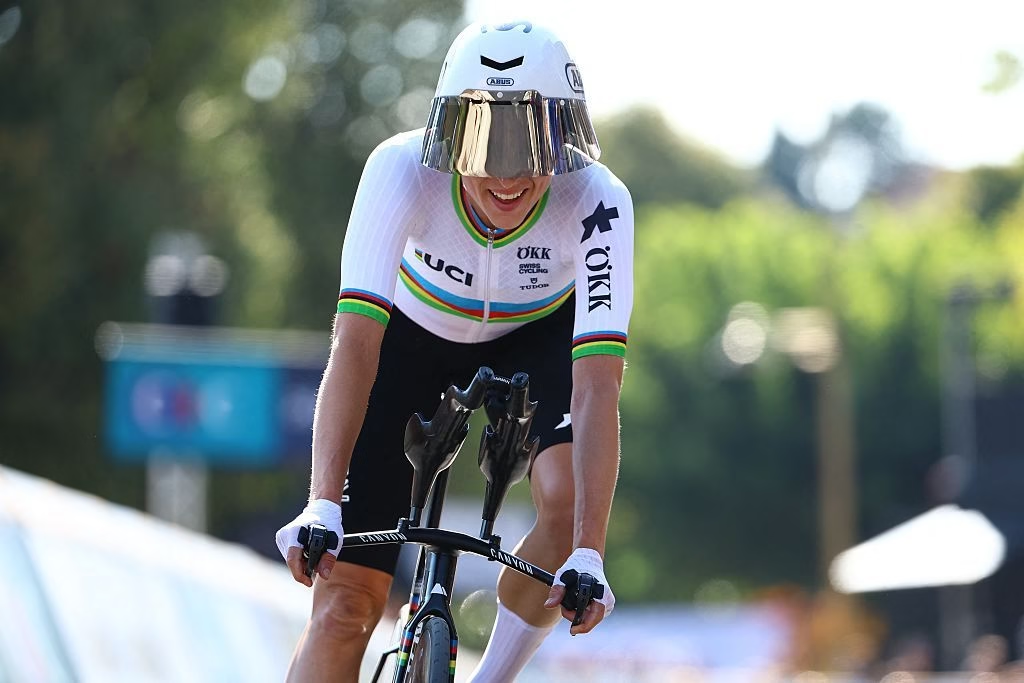
Reusser is the rider most capable of threatening Haugset’s lead.
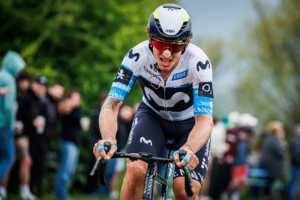
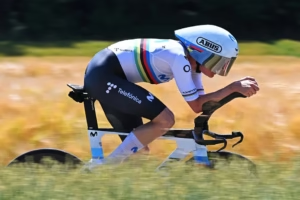
The Movistar leader should be among the fastest riders on the course and is particularly well suited to the quicker opening and closing sections. Her aerodynamic position, sustained power and ability to maintain speed after the climb give her a clear route towards the stage victory.
A gain of more than a minute over Haugset would be entirely plausible. Recovering the full 2:30 is a different level of performance.
For that to happen, Reusser would probably need to produce one of her strongest time trials while Haugset simultaneously struggles with fatigue, pacing or equipment. It cannot be ruled out, but it is not the expected outcome from two competent rides.
Reusser’s more realistic objective is becoming the best-placed established contender.
She begins only four seconds behind Vollering in the underlying GC battle. Moving ahead of the Dutch rider, while gaining more heavily on Ferrand-Prévot, Niewiadoma-Phinney and the lighter climbers, would fundamentally improve Movistar’s position before Mont Ventoux.
The balance between the specialists and climbers is covered in the Tour de France Femmes 2026 time trial guide.
Vollering can become the leading favourite without taking yellow
Vollering is also expected to gain significantly on Haugset.
The course suits her better than a completely flat time trial would. She has enough sustained power to remain competitive through the opening roads and should be particularly strong on the rising middle section around Marsannay.
A strong Vollering ride could remove a substantial part of the 2:26 deficit. Taking the entire margin would still require Haugset to perform well below expectations.
Vollering does not need the yellow jersey for Stage 4 to become a major success.
Moving ahead of Le Court-Pienaar and placing time into Ferrand-Prévot, Niewiadoma-Phinney, Paula Blasi and the other leading climbers would make her the best-positioned rider before the mountain stages.
Her most important comparison may therefore be with Reusser rather than Haugset.
Vollering begins four seconds ahead of the Swiss rider but is likely to concede time to her in Dijon. Keeping that loss limited would leave FDJ United-Suez with a strong tactical position for the remainder of the Tour.
The wider consequences are examined in the Tour de France Femmes 2026 Stage 4 preview.
Ferrand-Prévot has a different calculation
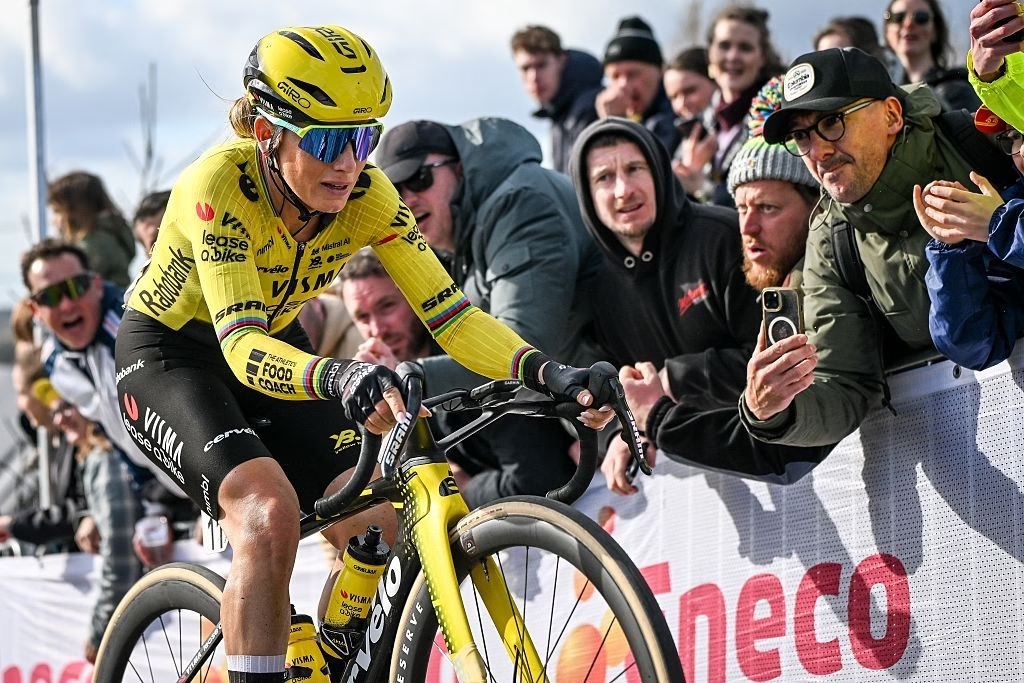
Ferrand-Prévot begins level with Reusser on GC but is unlikely to match the world’s leading specialist across the full course.
Her task is not necessarily to threaten Haugset’s yellow jersey. It is to prevent Reusser and Vollering creating a margin that controls the way Visma | Lease a Bike must race the mountain stages.
Ferrand-Prévot should be competitive through the climbing section and has the technical ability to carry speed efficiently through the changes in rhythm. The quicker roads before and after Marsannay are where Reusser is most likely to gain.
Conceding some time is manageable because the route still contains Mont Ventoux and the mountainous final weekend around Nice. Losing close to a minute or more to Vollering would create a much more difficult strategic problem.
Ferrand-Prévot can survive Stage 4 without winning it. She cannot afford for the time trial to define the rest of her race.
Could Haugset fall outside the top ten?
It would take a serious problem.
Every rider immediately behind Haugset starts more than two minutes down. For the yellow jersey to fall outside the top ten, at least ten riders would need to recover approximately 2:30 over 21km.
Reusser may be capable of approaching that margin if Haugset struggles. Vollering could also threaten it during an exceptional ride. Expecting another eight riders to do the same is far less realistic.
Even if Haugset loses two minutes to the stage winner, she would remain within half a minute of the front of the general classification.
A ride that costs her yellow would not automatically remove her from the leading positions.
Dropping outside the top ten would probably require a mechanical problem, crash, severe recovery issue or complete pacing collapse. It is not a realistic expectation based only on the differences in time-trial ability.
The more credible range is that Haugset finishes Stage 4 still in yellow or falls only a few places while remaining firmly involved in the general classification.
The intermediate split may not tell the full story
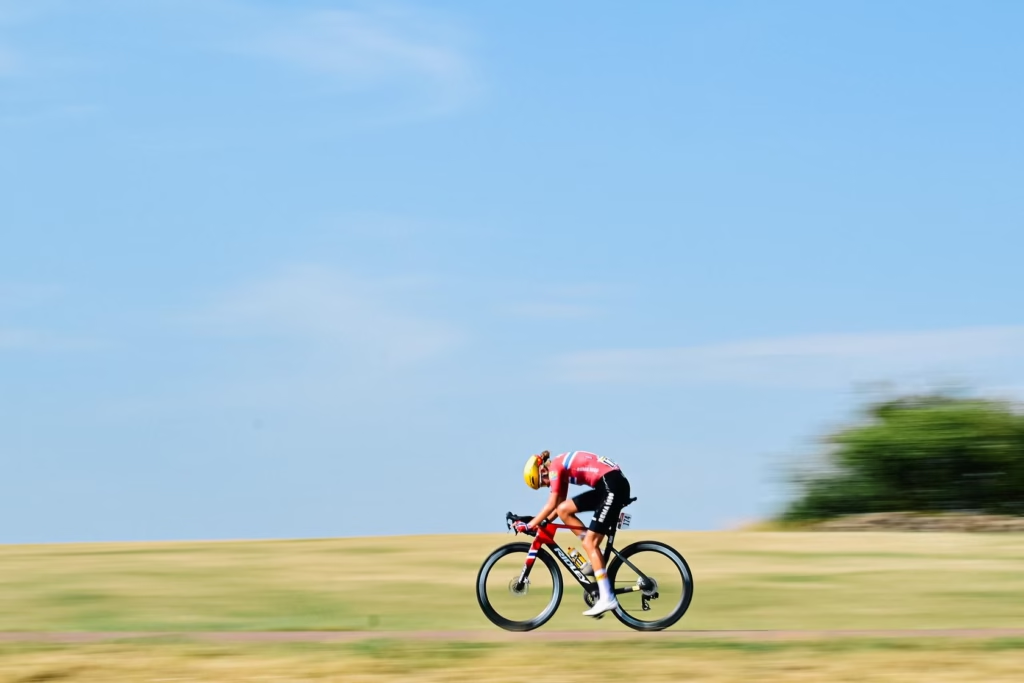
The official checkpoint comes after 9.7km, around the end of the more demanding middle section.
That position could temporarily flatter Haugset and the lighter climbers. The faster second half into Dijon should favour Reusser, Vollering, Lotte Kopecky and the larger power specialists.
Uno-X should therefore avoid treating a healthy advantage at the checkpoint as proof that the jersey is safe.
The same applies in reverse. A modest deficit at 9.7km would not necessarily mean Haugset is in serious trouble. What matters is how much energy she has preserved for the final roads.
The danger is overcommitting on the climb in an attempt to defend every second, then losing much larger blocks of time once the course accelerates towards Dijon.
Haugset needs to ride the whole 21km, not one intermediate split.
Uno-X must control the information
Starting last gives Haugset access to every relevant time.
Reusser begins 20 minutes earlier, Ferrand-Prévot 18 minutes before her and Vollering four minutes ahead. Uno-X Mobility will know the exact benchmark required to retain yellow before Haugset reaches the most important section of the course.
That information can help, but too much of it could disrupt the pacing plan.
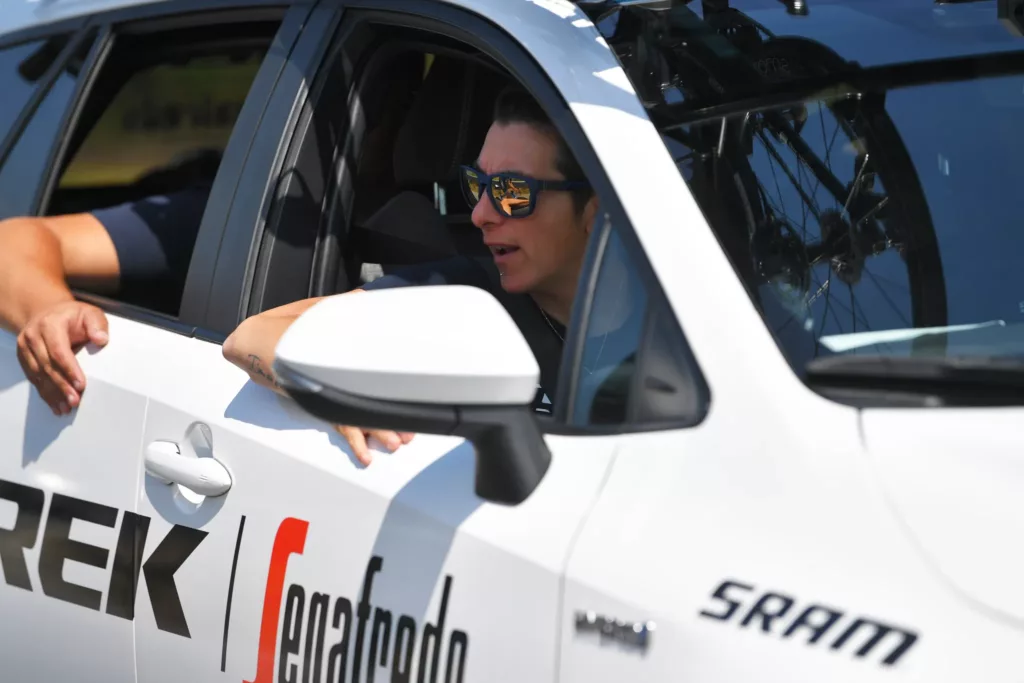
Uno-X should communicate thresholds rather than provide a constant commentary. Haugset does not need to know every second she is conceding to Reusser. She needs to know whether she remains within the planned range and whether a change in effort is required during the closing kilometres.
The opening section should be ridden at a controlled aerodynamic intensity. The climb demands a deliberate increase without crossing into an unsustainable effort, before Haugset commits fully once the road begins running more quickly towards Dijon.
The priority is producing the fastest possible time. Emotionally attempting to defend yellow from the first kilometre would make that less likely.
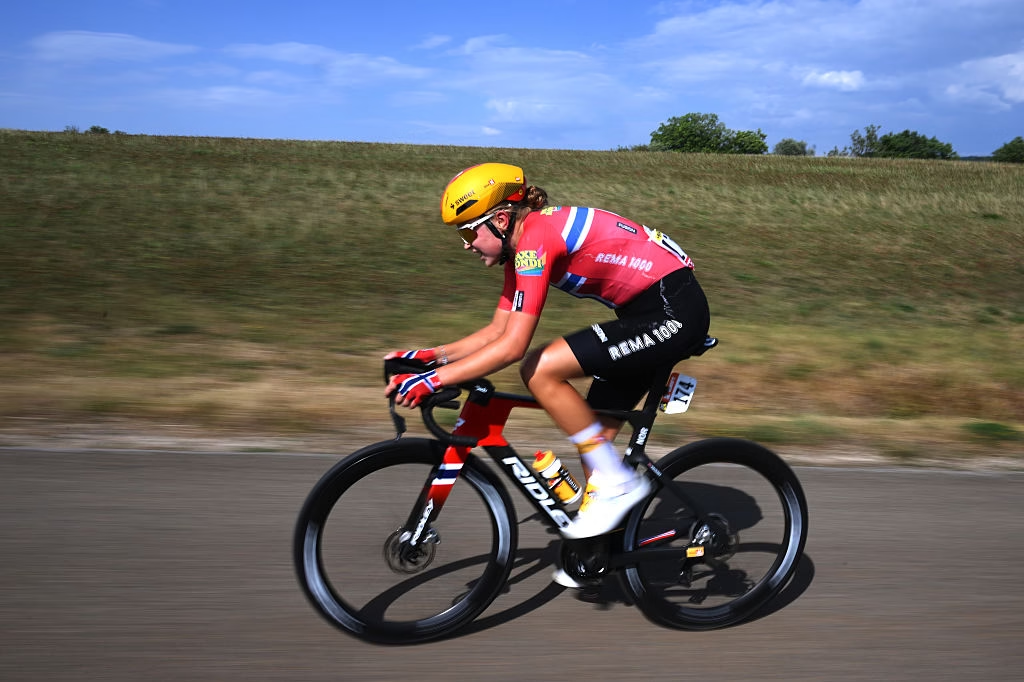 Photo Credit: Getty
Uno-X must think beyond one day in yellow
Retaining the jersey would be one of the biggest achievements in Uno-X Mobility’s Tour history, but the team cannot treat Stage 4 as if the race ends in Dijon.
Haugset has already won a stage and taken yellow. She now has an opportunity to turn that result into a significant final general classification position.
That means Uno-X should not ask her to take unnecessary risks through corners or ride far beyond her planned power simply to preserve a small advantage.
The Tour still contains terrain where Haugset can remain competitive before the decisive summit finish on Mont Ventoux.
Even if she loses yellow, staying close to Reusser and Vollering would leave her with a realistic route towards a major overall result. Protecting that possibility matters more than defending the jersey at any cost.
Will Haugset still be in yellow after Stage 4?
The balance of probability says yes.
Reusser is likely to take substantial time. Vollering should also move considerably closer, while Ferrand-Prévot, Longo Borghini and several other contenders can reduce their deficits.
None begins close enough to make taking yellow the expected outcome from an ordinary performance.
Haugset can afford to lose 2:22 to Le Court-Pienaar, 2:26 to Vollering and 2:30 to Reusser. That is a considerable defensive cushion over 21km, particularly for a rider who finished second in her national time trial championship and has already demonstrated the ability to sustain a long solo effort.
The jersey becomes genuinely vulnerable only if Stage 3 has left her badly depleted or she encounters a major problem.
The most plausible outcome is Haugset retaining yellow with a reduced advantage, while Reusser or Vollering emerges as the best-placed established favourite behind her.
Stage 3 placed Haugset at the centre of the Tour through ambition. Stage 4 asks whether she can consolidate that position through restraint.
She does not need another extraordinary ride. She needs one controlled enough to make her extraordinary advantage last.