
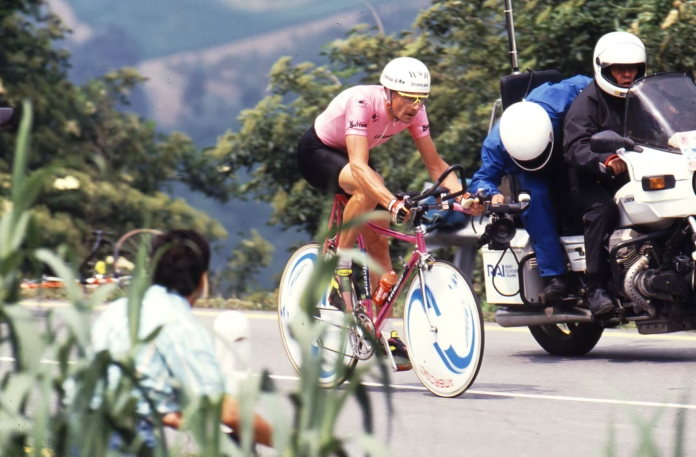
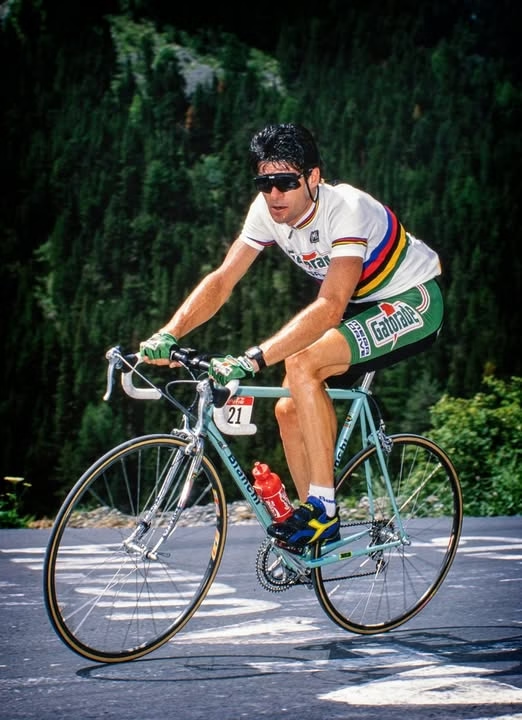
Gianni Bugno’s best seasons produced a combination few riders manage across an entire career. He won the Giro d’Italia, Milano-Sanremo and the Wincanton Classic in 1990, became road world champion in 1991, successfully defended the rainbow jersey in 1992 and added the Tour of Flanders in 1994. At the same time, he spent several years trying to break Miguel Indurain’s control of the Tour de France.
That range is the key to understanding Bugno. He could win a Grand Tour, sprint from a small group, climb with the best riders in the world and handle one-day races on very different terrain. Yet his career is remembered as much for the pressure around him as for the victories themselves, particularly once his 1990 breakthrough turned him into Italy’s expected answer to Indurain.
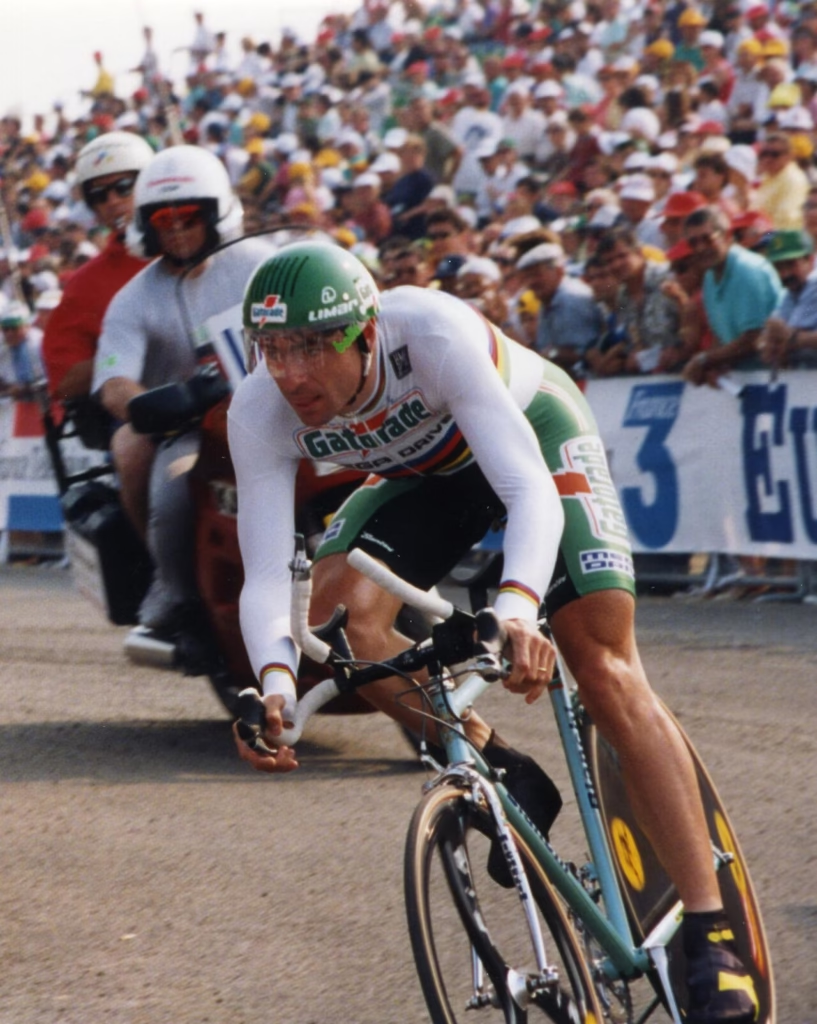
1990 turned Bugno from elite rider into the centre of Italian cycling
Bugno was already a major professional before 1990, but that season changed the scale of his career. He won Milano-Sanremo in March, then dominated the Giro d’Italia and held the pink jersey from the opening stage through to the finish. The Giro victory made him the obvious Italian stage-race leader at a moment when the country was searching for a rider capable of controlling the biggest events.
He did not stop with the Giro. Bugno won the Wincanton Classic, took the overall UCI Road World Cup and finished third in the world road championship. At the Tour de France he won two stages, including the finish at Alpe d’Huez, while placing seventh overall. The same rider was winning a Monument, a Grand Tour, a World Cup Classic and a mountain stage at the Tour inside one season.
That breadth created expectations that became difficult to escape. Bugno was no longer judged as a rider with an extraordinary 1990; he was judged against the possibility that he might dominate the next several years. Every subsequent Tour became a referendum on whether that possibility had been fulfilled.
Indurain became the rival Bugno could never quite dislodge
The 1991 Tour de France brought Bugno closer to yellow than he would ever come. He finished second overall behind Miguel Indurain, who was beginning the sequence of five consecutive Tour victories that defined the first half of the decade. Bugno was strong enough to remain a genuine rival but not strong enough against the clock to overturn Indurain’s advantage.
That difference became central to the narrative around both riders. Bugno looked fluid on a bike and could climb with apparent ease, while Indurain’s huge time-trial engine turned entire Tours into exercises in damage limitation for his rivals. The contrast was stylistic as well as numerical, and it helped make Bugno one of the most prominent figures in the Tour de France during Indurain’s rise.
Bugno returned in 1992 and finished third overall. By then it was increasingly clear that winning the Tour would require a level of consistency against Indurain that he could not quite sustain. That did not make Bugno a failed Grand Tour rider. A Giro victory, second and third at the Tour and stage wins across all three Grand Tours form a substantial stage-racing record. The difficulty was that his peak coincided with a rider who was exceptionally well suited to the Tour’s structure.
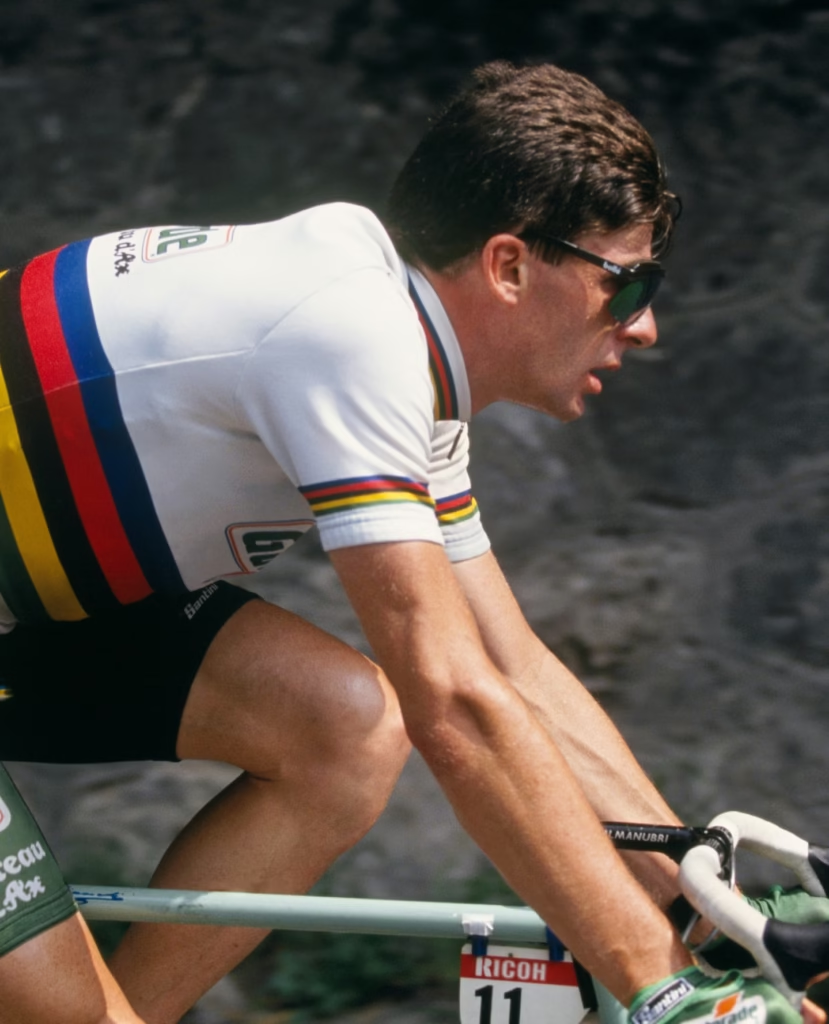
Two world titles showed how complete his one-day racing could be
If the Tour created frustration, the world championships provided Bugno with some of his clearest victories. In Stuttgart in 1991 he won the elite road race and took the rainbow jersey, adding another major title to a season in which he had also become Italian road champion and won the Clásica de San Sebastián.
Retaining the world title in Benidorm in 1992 was even more significant. Repeat world champions are rare because the course, tactical situation and national-team dynamics change each year. Bugno won on two different courses and confirmed that his first title had not been the result of one perfect set of circumstances.
The rainbow years also reveal why Bugno does not fit neatly into a single rider type. A pure climber might survive a selective Worlds but would be vulnerable if the race ended in a small sprint. A pure Classics rider might struggle with the sustained climbing. Bugno had enough of both qualities to remain dangerous across a wide range of championships and major one-day races.
The 1994 Tour of Flanders win broadened the career again
By 1994 Bugno’s Grand Tour ambitions were no longer the only way to judge him. His victory at the Tour of Flanders gave the career another dimension. He reached the finish with Johan Museeuw, Andrei Tchmil and Franco Ballerini and won the sprint, taking one of cycling’s most prestigious cobbled Classics.
Flanders is a particularly revealing result because it asks for different skills from the Giro or World Championships. Positioning before the cobbled climbs is critical, the race is tactically chaotic and repeated short efforts replace the longer mountain rhythm of a stage race. Bugno adapted well enough to beat riders whose careers were built around precisely that terrain.
The win also places him within a strong Italian generation of one-day riders. ProCyclingUK’s Andrea Tafi rider history covers another rider from that period whose greatest results came on the cobbles. Bugno’s difference was that Flanders sat alongside a Giro title and world championships rather than defining his specialism.
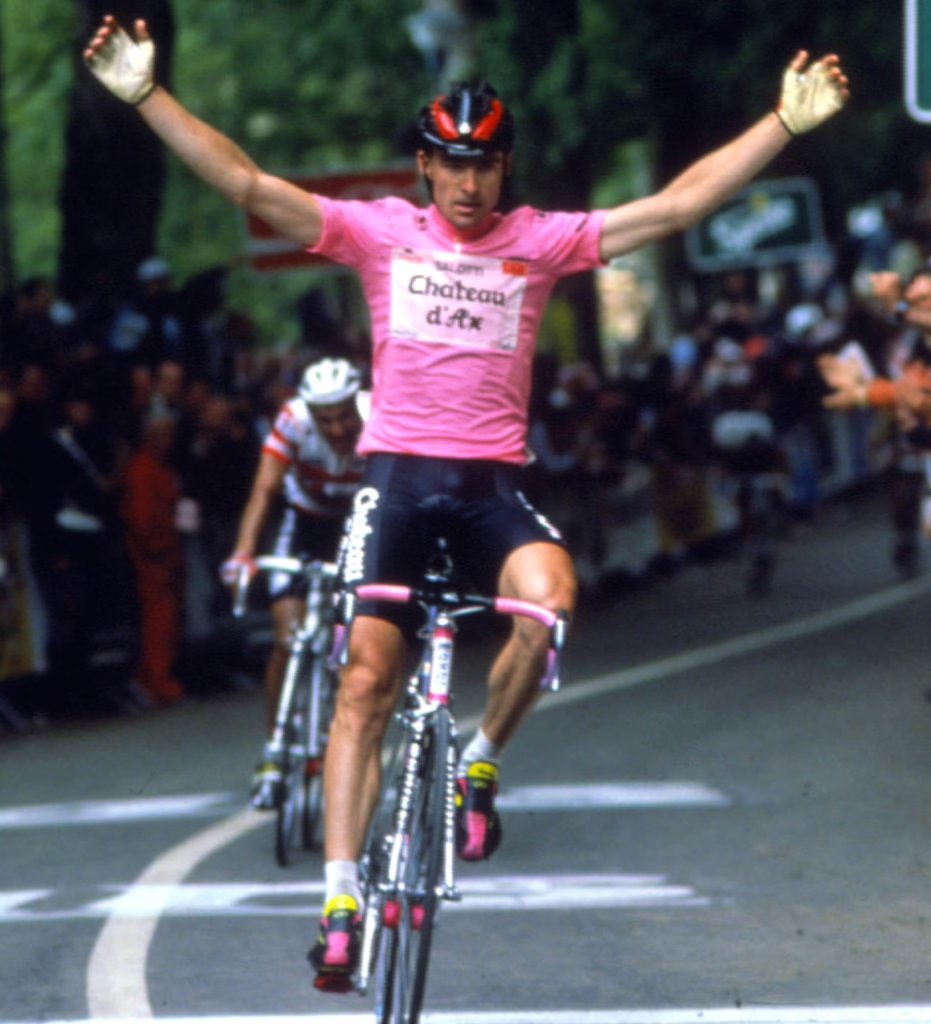
Bugno’s apparent ease made the pressure around him harder to read
Bugno’s riding style often looked economical to the point of effortlessness. He sat still on the bike, rarely appeared visually ragged and could make a hard acceleration look less violent than it really was. That elegance became part of his public image, but it also encouraged the idea that he should always be capable of doing more.
The reality was less simple. Professional cycling in the early 1990s was tactically rigid at the Tour, increasingly specialised and loaded with national expectation. Bugno’s ability to win many different types of race did not automatically translate into the repeatable time-trial dominance needed to defeat Indurain over three weeks.
His career therefore developed an awkward split. When he won a Classic or a world title, it reinforced the sense that he possessed almost unlimited ability. When he lost time at the Tour, the same talent was used as evidence that something had gone wrong. Few riders were judged against their theoretical ceiling as relentlessly.
The later years still contained major results
Bugno’s peak did not end abruptly after the Flanders victory. He finished second at Liège-Bastogne-Liège in 1995 and continued to win races as his role changed. By then he was less likely to begin a Grand Tour as the central favourite, but his experience and finishing speed still made him dangerous in selective one-day events.
His stage-race record remained substantial across the whole career. He won nine stages of the Giro d’Italia, four stages of the Tour de France and two stages of the Vuelta a España. That distribution reflects longevity as well as versatility. Bugno could win uphill, against the clock and from reduced groups, and he remained relevant across different team structures until retiring in 1998.
The final years also placed him within the rapidly changing commercial landscape of 1990s cycling. Teams grew more international, training and equipment became more specialised and the sport moved towards the structures that would define the following decade. Bugno’s career had begun in a different professional environment and lasted long enough to experience that transition directly.
His palmarès makes more sense when the pieces are viewed together
Reducing Bugno to the rider who could not beat Indurain misses much of the career. He won the Giro d’Italia, two world road titles, Milano-Sanremo, the Tour of Flanders and the season-long World Cup. He also stood on the Tour podium twice and won stages at all three Grand Tours.
The combination is unusual because modern careers are increasingly specialised. A rider capable of winning a three-week Grand Tour is rarely also a realistic favourite for Flanders. A rider with the sprint to win a four-man cobbled Classic is rarely capable of finishing second overall at the Tour. Bugno occupied both spaces.
That is why the elegance associated with him should not be confused with softness. The results required enormous physical range and the ability to perform under repeated expectation. What he lacked was not a major victory or a defining season, but the sustained Tour dominance that Italy hoped his 1990 breakthrough might produce.
-
 Photo Credit: Canyon SRAM (supplied media release)
 -
 Photo Credit: Park Tool

Bugno belongs among the defining all-rounders of his generation
Bugno retired in 1998 with a record that remains difficult to categorise cleanly. He was a Grand Tour winner without being remembered primarily as a stage racer, a double world champion who also won cobbled and hilly Classics, and a Tour contender whose strongest years happened to coincide with Indurain’s dynasty.
That tension is central to the way his career is remembered. The missed Tour victory is obvious because it was the prize everyone expected him to chase. The rest of the palmarès is strong enough that the absence should not dominate the story. Bugno did not become the rider who ruled the 1990s, but he won across enough terrain to remain one of the era’s most complete champions.

