
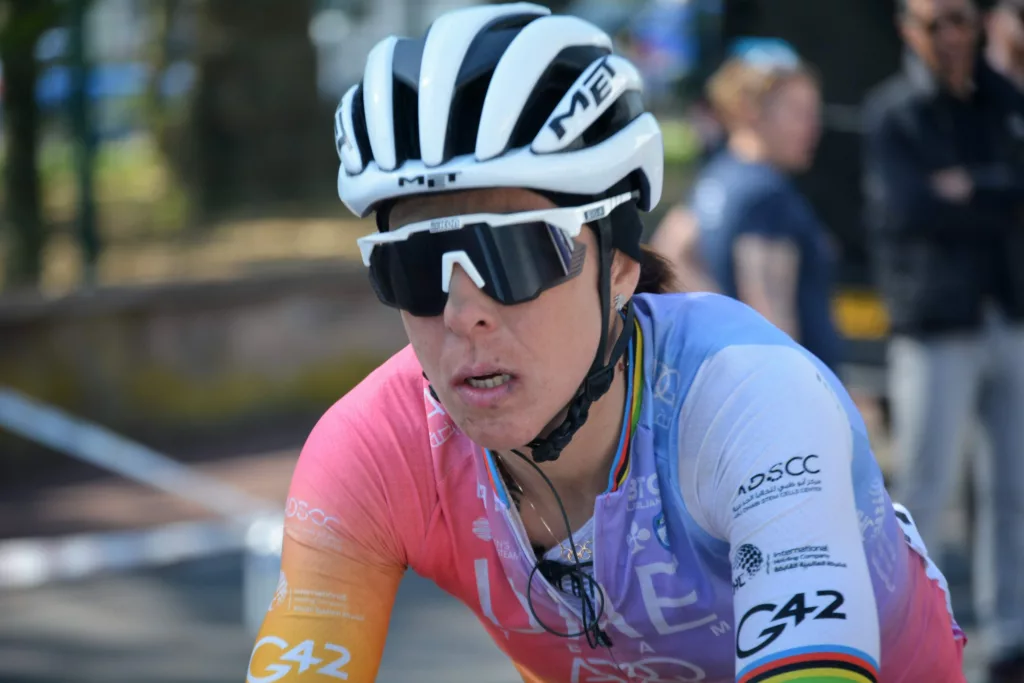
Marta Bastianelli’s career makes far more sense when you stop trying to read it as one continuous line. It was really three careers in one. First came the teenage prodigy who became world champion almost immediately. Then came the disrupted middle years after her doping ban, when the rider who had looked destined for immediate greatness seemed to lose her place at the very top. Then came the final act, the longest and in some ways the most impressive of all, when she rebuilt herself into one of the strongest and most reliable one-day racers in the peloton. By the time she retired in 2023, she had added Gent-Wevelgem, the Tour of Flanders, Ronde van Drenthe, the European road title and a long list of other major one-day wins to that early rainbow jersey.
That is what makes Bastianelli such a compelling figure in women’s cycling history. She was not simply a rider of early promise who faded, nor a late bloomer who suddenly arrived. She was both. Her story sits naturally within the wider women’s cycling history hub, because it captures something important about the sport itself: careers do not always move neatly, and some of the most interesting champions are the ones who have to rebuild themselves before becoming truly complete riders.
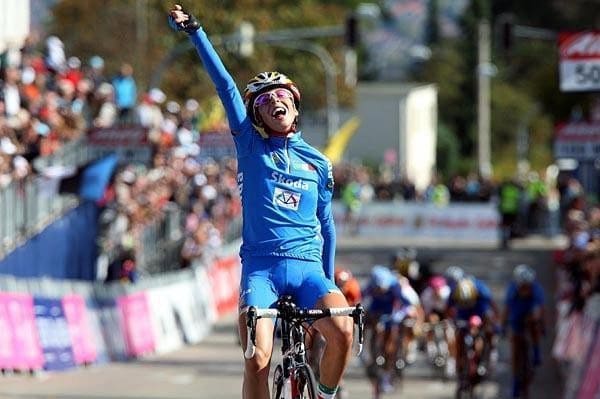
The teenage world champion
Born in Velletri on the 30th April 1987, Bastianelli was already a major talent before she turned 20. She finished second in the junior road race at the 2004 World Championships, which was an early sign that she belonged among the best of her generation. By 2007 she was already racing at the top level and, after finishing runner-up to Marianne Vos in the European Under-23 Championships and third at GP de Plouay, she produced the result that changed everything: victory in the elite road race at the World Championships in Stuttgart. She was just 20 years old.
That title matters even now because of what it seemed to promise. Women’s cycling suddenly had a world champion who looked young enough to build an era around. Vos was already there, and Bastianelli looked like she might become one of the key rivals of the next decade. In that moment, it was easy to imagine a career built on immediate dominance and repeated rainbow jerseys.
The interruption that reshaped her career
The first version of that story did not last. In 2008 Bastianelli backed up her world title with strong results in races such as Trofeo Alfredo Binda history, previous winners and greatest moments, Women’s Tour of Flanders history, previous winners and greatest moments and Flèche Wallonne Féminine history, previous winners and greatest moments. But later that year she tested positive for fenfluramine, a banned appetite suppressant, and after appeal she received a two-year ban. That episode completely altered the trajectory of her career.
This is the unavoidable dividing line in any serious account of Bastianelli. Without it, the story is incomplete. With it, the story becomes much harder and much more interesting. She was no longer just the young champion rising smoothly through the sport. She was now a rider whose first peak had been interrupted and whose reputation had been deeply complicated before she had really reached maturity.
The difficult middle years
When Bastianelli returned at the end of 2010, the peloton had moved on without her. The results were no longer automatic. She still had flashes of class, but she was no longer a front-line contender in the biggest races on a regular basis. Over the next few seasons there were smaller highlights rather than defining triumphs: decent national championship rides, the points jersey at the Tour du Languedoc, sixth overall at Chongming Island, and scattered top-10s that hinted at what remained in her legs.
That stretch is easy to skim past, but it matters because it explains the scale of what came later. Bastianelli did not bounce straight back into being a star. She had to live through the years where the sport seemed to have decided she was no longer one of the centrepieces. In hindsight, that makes the third act of her career much more impressive.
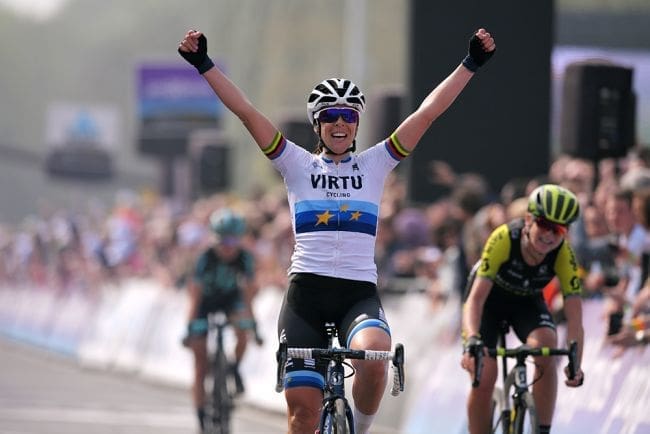
The second rise begins
The shift started properly in 2016. Bastianelli won Omloop van het Hageland history, previous winners and greatest moments, GP della Liberazione, the overall at Giro della Campania and the points jersey at Trophée d’Or Féminin. Just as important as the wins was the depth of the form. She was second at GP de Dottignies, third at the Madrid Challenge and fifth at Ronde van Drenthe. For the first time in years, the results no longer looked like isolated memories of an old talent. They looked like the return of a serious one-day specialist.
That is the point where Bastianelli’s career really changes shape. The rider who emerged from this period was not simply a revived sprinter. She was stronger, more resilient and better suited to hard one-day races than the young world champion version of herself had been. She no longer needed the script to be neat. In fact, she became more dangerous when the race was messy.
What kind of rider Marta Bastianelli became
Bastianelli is sometimes described too narrowly as a sprinter. She certainly had finishing speed, and enough of it to win from reduced groups and harder bunch finishes. But the longer her career went on, the clearer it became that she was really an all-round one-day specialist. She thrived in races where the route was hard enough to remove many of the pure sprinters but not quite selective enough to hand everything to the climbers. That sweet spot suited her perfectly.
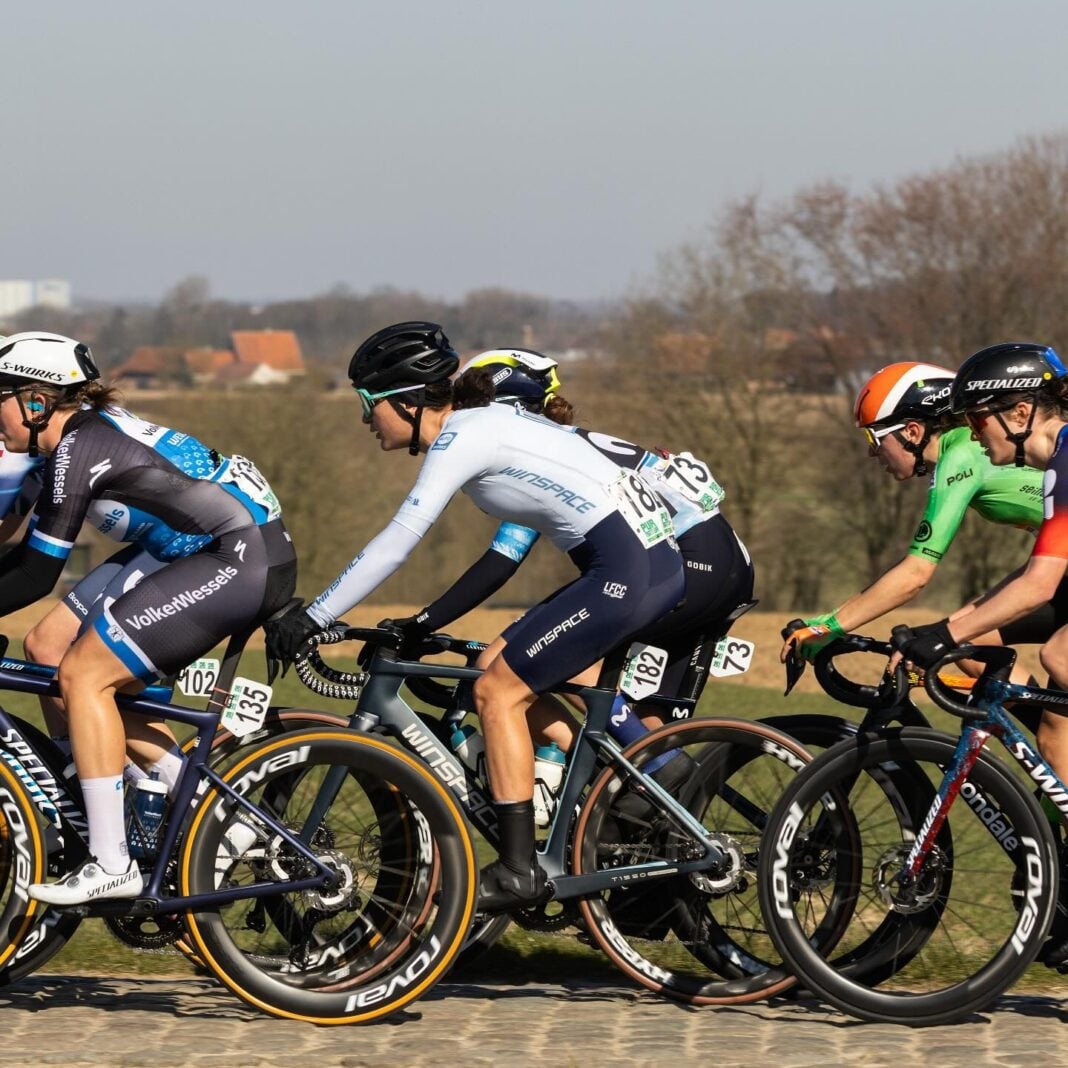
That is why her palmarès reaches across so many of the races you have been updating. She belongs in Gent-Wevelgem Women history, previous winners and greatest moments, Women’s Tour of Flanders history, previous winners and greatest moments, Omloop van het Hageland history, previous winners and greatest moments, Ronde van Drenthe history, previous winners and greatest moments and Le Samyn des Dames history, previous winners and greatest moments because she was one of the riders who could solve all of those race shapes.
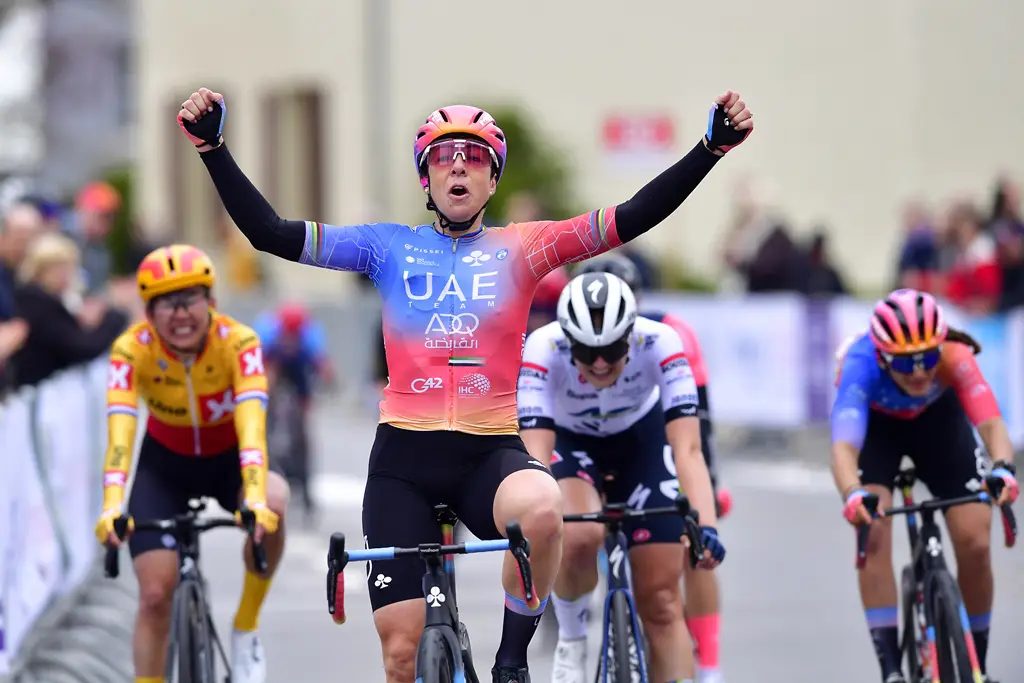
2018 and 2019 – the years that completed her legacy
If 2016 marked the return, then 2018 and 2019 completed the transformation. In 2018 she won Gent-Wevelgem, Brabantse Pijl and the European road race title. That last victory mattered because it gave her another championship jersey more than a decade after the world title, which is the sort of gap that tells you how long and unusual her career really was.
Then came 2019, arguably the best one-day season of her life. She won Omloop van het Hageland, Ronde van Drenthe and the Tour of Flanders, while also taking the Italian national road title and Vårgårda. More importantly, that run showed the fully mature Bastianelli at her best: strong enough for hard Classics, smart enough for tactical finales and fast enough to finish them off.
The 2019 Tour of Flanders as her defining race
If one win best captures what Bastianelli became, it is the 2019 Tour of Flanders. The race split on the Kanarieberg and hardened further on the Oude Kwaremont and Paterberg. Bastianelli did not win because the race came back neatly for a standard sprint. She won because she survived the key moves, stayed calm when Marianne Vos punctured out of the decisive group, matched Annemiek van Vleuten’s aggression and then proved strongest in the final sprint from three. It was not just a fast finish. It was a complete Classics win.
That result matters historically because it turns Bastianelli from a rider with major wins into a rider who conquered one of the sport’s defining Monuments. It secures her place in the top tier of modern one-day specialists, and it also makes her one of the clearest examples of how a rider can reinvent herself long after the first version of her career seemed to have passed.
The final years and retirement
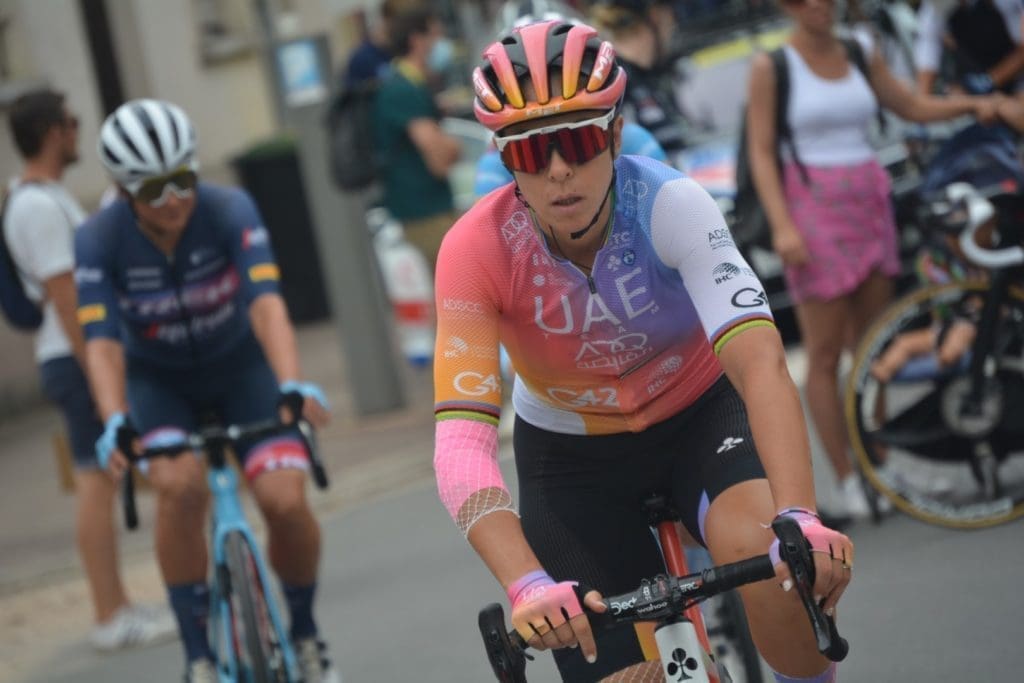
Bastianelli’s later seasons remained productive. She won the Vuelta CV Féminas in 2022, took the overall at the Ceratizit Festival Elsy Jacobs and added a third Omloop van het Hageland victory the same year. In 2023 she delayed retirement for one final season with UAE Team ADQ before bringing her career to a close after the Giro d’Italia Donne.
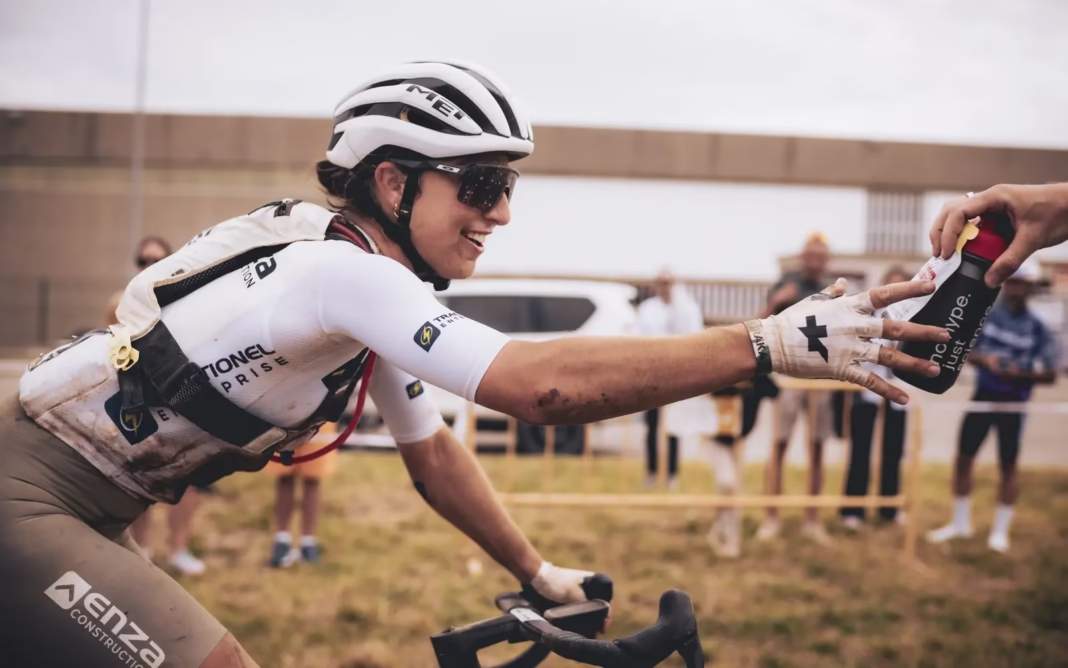
The detail that matters most is that she did not retire as a faded memory of a teenage world champion. She retired as a rider who had won races every year from 2013 onward, had become one of the strongest one-day specialists in the peloton and had completely rewritten the expected narrative of her own career.
What came after racing
Bastianelli moved straight into a leadership role off the bike. UAE Team ADQ announced in 2023 that she would become the team’s Riders’ Lead. That makes her post-racing path unusually clear and directly connected to the final team of her career.
She has also remained visible in Italian cycling more broadly. ProCyclingUK’s 2025 preview of GP della Liberazione Pink noted that Bastianelli continued as race patron after retirement, which fits the larger picture of her post-racing life: she did not just leave the sport, she moved into roles that preserve continuity and offer credibility to the next generation.
-
 Photo Credit: quentinphotographiebe
 -
 Photo Credit: Getty
Why Marta Bastianelli still matters
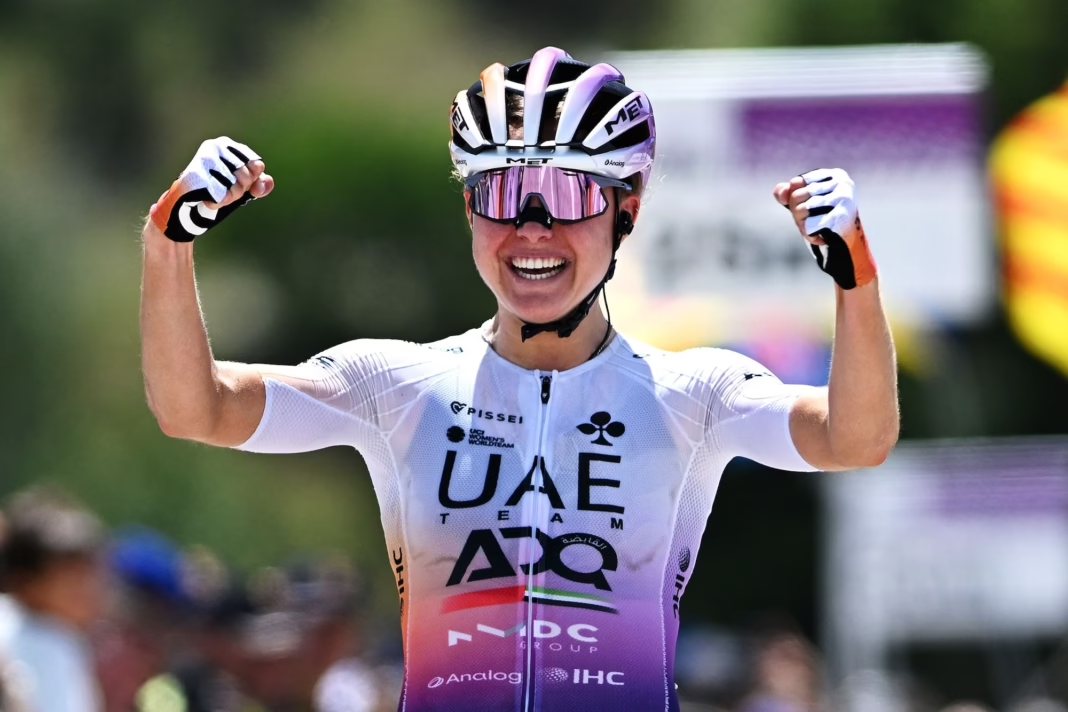
Bastianelli matters because hers is one of the sport’s great second acts. Plenty of riders burn brightly when they are young. Plenty of others arrive later with more stable careers. Very few do both. Bastianelli was a teenage world champion, then a suspended rider whose early promise seemed compromised, then one of the most effective one-day racers of the modern peloton. That makes her story much richer than a simple palmarès suggests.
She also matters because her career touches so many of the races that define the women’s spring. She belongs in Trofeo Alfredo Binda history, previous winners and greatest moments, Women’s Tour of Flanders history, previous winners and greatest moments, Gent-Wevelgem Women history, previous winners and greatest moments and Omloop van het Hageland history, previous winners and greatest moments, not as a supporting figure but as one of the riders who helped define what those races became in the late 2010s and early 2020s. In a historical series that includes riders like Annemiek van Vleuten, Chantal van den Broek-Blaak and Ellen van Dijk, Bastianelli stands out because her greatness came in two different waves.
Marta Bastianelli career highlights
- World road race champion in 2007
- European road race champion in 2018
- Winner of the 2019 Tour of Flanders
- Winner of Gent-Wevelgem in 2018, Ronde van Drenthe in 2019 and Le Samyn in 2023
- Three-time winner of Omloop van het Hageland, in 2016, 2019 and 2022
- Winner of Brabantse Pijl in 2018 and Vårgårda in 2019
- Retired after the 2023 Giro d’Italia Donne
- Moved into a management role as Riders’ Lead with UAE Team ADQ after retirement

