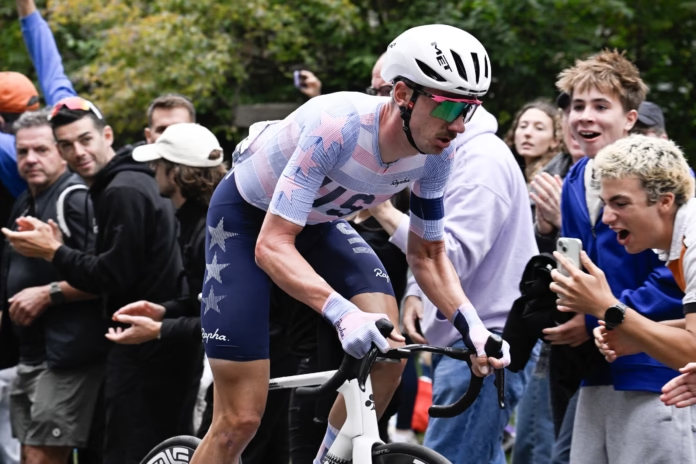
Brandon McNulty’s World Championships win looked like a 32km solo display by the time he reached the finishing straight in Montréal. The decisive work had started much earlier.
The United States spent the final 90km forcing their rivals to make decisions. Quinn Simmons was in the dangerous move when Mathieu van der Poel began opening the race. Matteo Jorgenson attacked as that group came back. McNulty then used the next hesitation to go clear, while Jorgenson became a problem for every rider trying to chase him.
McNulty still needed the strength to stay away. Tom Pidcock reduced his advantage to around ten seconds on the final lap, Van der Poel attacked behind and Isaac del Toro had already spent a large part of the race trying to close gaps. Yet the Americans had arranged the race so that nobody could chase McNulty without potentially helping another US rider.
That combination of physical strength and numbers turned McNulty from an outside contender into the first American elite men’s road world champion since 1993.
The race report covers the full sequence of attacks. The tactical story is how the United States repeatedly created situations in which the strongest individual riders had to do more work than McNulty.
USA had three riders who could change the race
McNulty was a genuine contender in Montréal, but he did not carry the same pre-race status as Del Toro, Remco Evenepoel, Van der Poel or Paul Seixas.
That worked in the Americans’ favour.
The US team could race through McNulty, Simmons and Jorgenson rather than protecting one leader until the final lap. All three were strong enough that rivals could not simply allow them to ride up the road.
The men’s World Championships preview had already identified that depth as one of the complications facing the headline favourites.
Simmons was the first to make it count.
When Van der Poel helped create a dangerous group from around 90km out, Simmons was there. That immediately gave McNulty and Jorgenson permission to sit behind while Belgium, Mexico, France and Great Britain assessed whether they could afford to let the move continue.
The Americans were already gaining something before McNulty had attacked once.
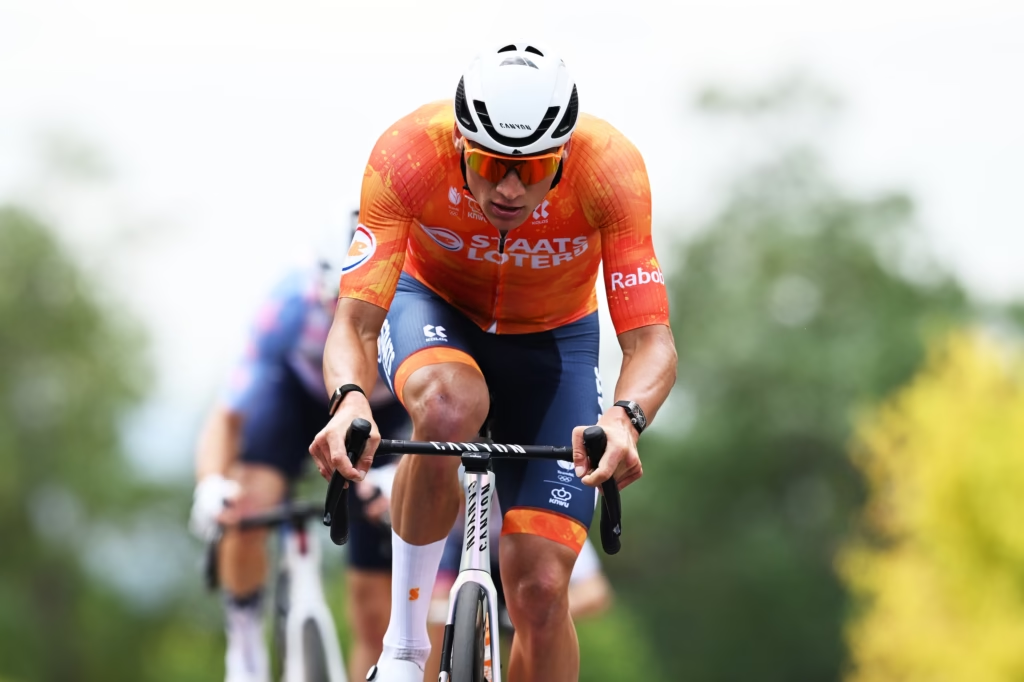 Photo Credit: Getty
Van der Poel raced to win, but his aggression suited USA
Van der Poel’s ride deserves more attention than the bronze medal alone suggests.
He did not wait for the final lap and hope his sprint would survive the climbing. Instead, he tried to control where the selection happened.
His acceleration on Camillien-Houde with around 74km remaining was one of the hardest moves of the race. Simmons and Oscar Onley initially followed, while a group of favourites including Del Toro, Seixas, Evenepoel, Pidcock, McNulty and Jorgenson were left reorganising behind.
It was logical racing from Van der Poel. Montréal was harder than an ideal course for him, so allowing the climbers to dictate the final two laps would have increased the risk that he was simply ridden off the wheel. His best route to another rainbow jersey was to start reducing the field before that point.
The problem was Simmons.
While Van der Poel was spending energy creating the race he wanted, one of the strongest US riders was sitting in the same move. McNulty and Jorgenson could conserve themselves behind without allowing the Netherlands to gain a tactical advantage.
Van der Poel effectively did part of the work of weakening McNulty’s later rivals.
He was strong enough to survive that expenditure and still sprint for third, but by the time the final decisive attacks arrived, he had already been racing aggressively for more than an hour.
Del Toro became the rider everyone expected to chase
Isaac del Toro faced the opposite problem.
His recent form made it difficult for him to hide.
Two weeks earlier he had won the 2026 GP Montréal on many of the same roads, beating Seixas in a race that looked increasingly like a World Championships rehearsal.
Every time the race became dangerous on Sunday, eyes turned towards him.
Del Toro repeatedly drove the chase, accelerated on Camillien-Houde and helped bring the strongest groups back together. His strength kept him in contention, but it also made him the default answer whenever somebody escaped.
That becomes expensive in a championship race.
Mexico did not have another rider capable of taking over every time Del Toro finished a chase. The United States did.
When one American move came back, another could start almost immediately.
That became crucial inside the final 40km.
The race reset and Jorgenson attacked immediately
The Van der Poel group was eventually neutralised after Del Toro and the other favourites increased the pressure behind.
For several riders, that was the moment to recover.
Jorgenson treated it as an opportunity.
He attacked with Giulio Ciccone, forcing another response almost as soon as the previous chase had finished. Pidcock reacted, but the group never really settled.
McNulty then made his move.
At first it looked like another attack in a race that had already contained dozens of them. The difference was what had happened beforehand.
Del Toro had just worked.
Van der Poel had spent much of the previous hour at the front.
Pidcock had already been forced to chase back after an earlier crash and bike change.
Evenepoel was struggling to stay with the best on the steeper sections.
McNulty accelerated while everyone else was trying to decide whether somebody else should respond.
That hesitation was enough.
McNulty did not need a huge gap at first
The initial advantage was small.
What mattered was that the chase did not organise immediately.
Ten seconds became 20, then 30. By two laps to go McNulty had pushed the margin beyond a minute.
That was the point when the race changed.
A 10-second attack is everybody’s problem. A rider a minute ahead can quickly become somebody else’s responsibility, particularly when the group behind contains several nations with competing interests.
Matthews had good reason to protect his sprint.
Van der Poel had already spent heavily.
Del Toro could not keep volunteering to close everything.
Seixas had been involved in several earlier pursuits.
Evenepoel was fighting his own physical battle.
And every time somebody tried to attack out of the chase, Jorgenson could follow.
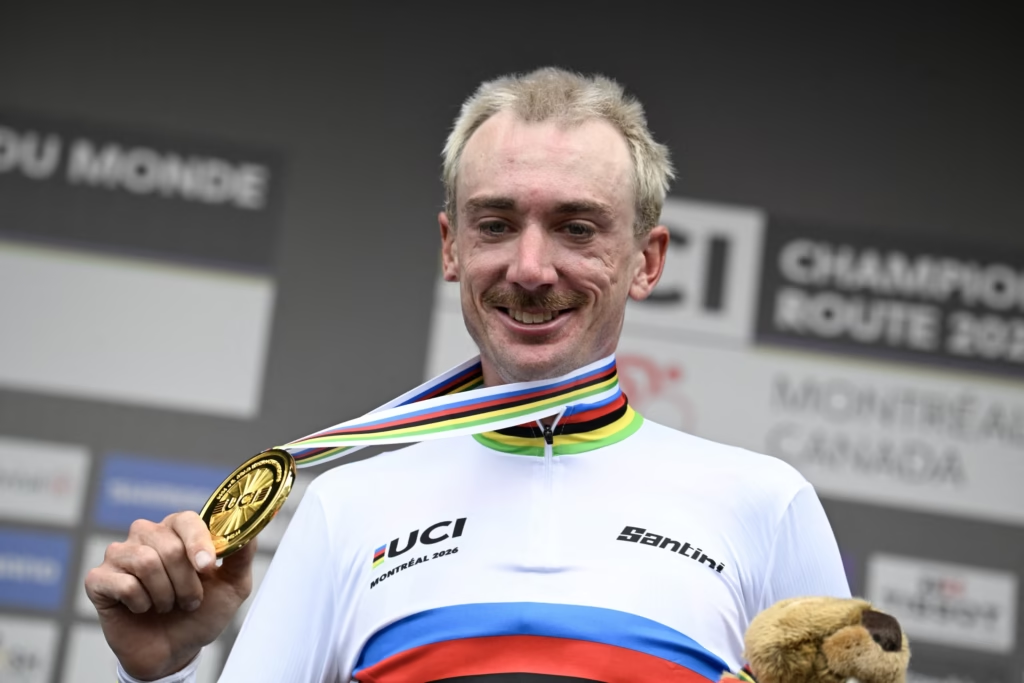 Photo Credit: AFP
Jorgenson was almost as important as McNulty
Jorgenson’s role in the final 30km was less visible than McNulty’s, but tactically it was central to the win.
He did not need to ride tempo on the front.
His job was to appear whenever somebody threatened to create a more effective pursuit.
Pidcock attacked and Jorgenson followed.
Van der Poel accelerated and Jorgenson was there.
Evenepoel tried to move and an American could respond without contributing to the chase.
That made every attack behind McNulty less attractive.
A rider could commit fully and potentially pull Jorgenson closer to his teammate, or they could ease off and allow McNulty another few seconds.
There was no comfortable option.
This is where the American strength in numbers became more important than simply having several good riders.
The USA had managed to place one rider ahead and another directly inside the tactical problem behind.
Pidcock came closest to undoing the plan
Pidcock was the rider who nearly changed the result.
His seventh place does not really show how influential he was during the final lap.
The British rider had already spent energy chasing after his earlier crash and bike change, yet he repeatedly attacked the favourites’ group once McNulty was clear.
Those accelerations helped reduce a chase group that had become too large and hesitant.
On the final ascent of Camillien-Houde, Pidcock produced the most dangerous pursuit of all.
McNulty’s advantage fell towards ten seconds.
For the first time since the American escaped, it looked as though the race might actually come back together.
Pidcock’s problem was that reducing the gap and closing it were two different jobs.
He had spent so much energy getting within sight of McNulty that there was little left to finish the chase, while the riders around him were either unable or unwilling to contribute enough.
Jorgenson was still sitting in the group.
McNulty survived the climb.
That was enough.
The flatter roads gave McNulty the terrain he needed
McNulty’s fourth place in the World Championships time trial had already shown how well suited he was to the second part of the equation.
Once he survived Camillien-Houde with the lead intact, the terrain became more favourable.
He did not need another explosive attack. He needed sustained power.
The gap that had briefly dropped towards ten seconds began moving in the opposite direction again.
McNulty settled into a position closer to a time-trial effort and rebuilt his advantage on the faster roads.
For riders behind, that was psychologically damaging as well as tactically difficult.
They had just spent a huge amount of energy bringing the leader almost within reach, only to see the gap begin growing again.
By the time the race entered its final kilometres, McNulty had enough margin to absorb another round of attacks.
Van der Poel tried again, but Jorgenson was waiting
Van der Poel still had one more move.
The Dutchman attacked late, refusing to settle for a sprint while McNulty remained within reach.
Jorgenson followed immediately.
That recreated the same problem the chase had faced throughout the final half-hour.
If Van der Poel rode flat-out, he risked transporting McNulty’s teammate back towards the front. If he stopped, the American leader moved closer to the rainbow jersey.
Van der Poel chose to keep racing rather than surrender, but the sustained attacks earlier in the day had taken something out of his finishing power.
He still had enough to take bronze behind Matthews.
That was an impressive result on a course which demanded far more climbing than his ideal championship route, but the race had been shaped in a way that repeatedly forced him to spend energy before McNulty did.
Evenepoel could never impose himself
Belgium initially had a good tactical position.
Wout van Aert made the major move with Van der Poel and Simmons, allowing Evenepoel to remain behind without immediately taking responsibility.
If Van Aert had stayed in front deep into the race, Belgium might have been able to create something similar to the American situation.
Instead, both riders began struggling physically.
Van Aert was dropped when Del Toro pushed the pace, while Evenepoel repeatedly lost contact on Camillien-Houde.
The time trial world champion kept coming back and even managed another late attack after appearing out of the race, but those recoveries were costing him energy every time.
He finished 12th, only 25 seconds behind McNulty, yet never reached the point where Belgium could organise the race around his power.
That was important.
Few riders are more dangerous to a lone leader on fast roads than Evenepoel. Montréal never produced the version of Evenepoel capable of taking control of that chase.
Matthews raced for the finish that was available
Michael Matthews eventually won the sprint for silver.
His tactics were sensible, but they also illustrated one of McNulty’s advantages.
Matthews knew that a reduced sprint gave him an excellent chance of a medal. Chasing McNulty personally would have meant sacrificing the strength he needed to beat Van der Poel, Simmons, Del Toro and the other riders still present.
So he did not ride as though catching McNulty was solely his responsibility.
From an Australian perspective, that made sense.
From McNulty’s perspective, it was ideal.
The best sprinter in the chase had more to lose than most by turning himself into a domestique.
Matthews ultimately judged his own race well enough to finish second.
He just never had a tactical reason to sacrifice that medal chance to make sure somebody else could beat McNulty.
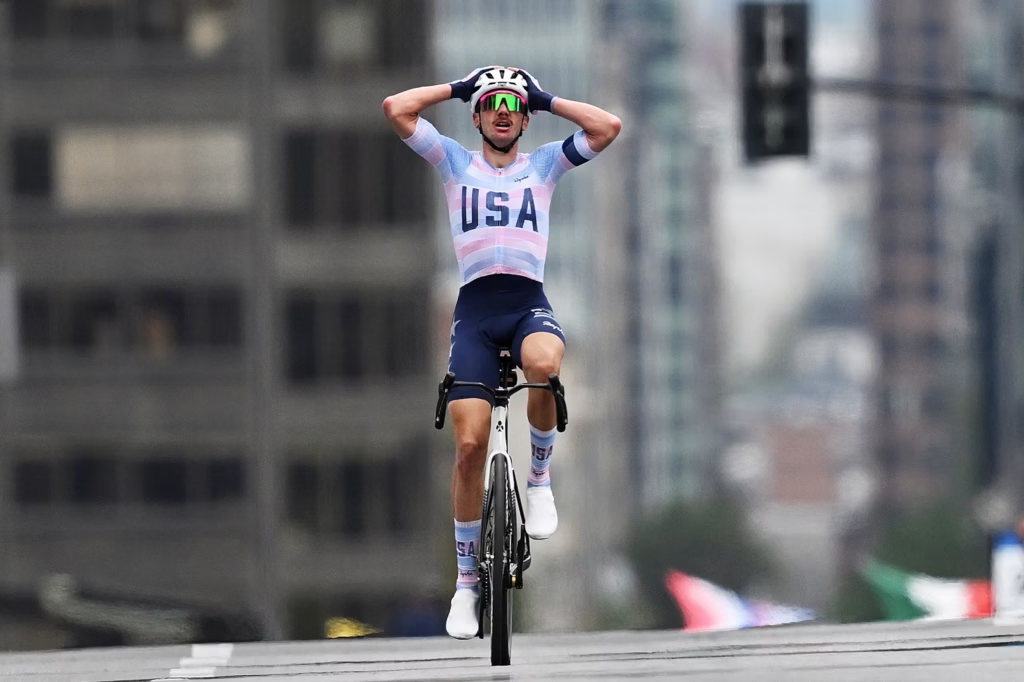 Photo Credit: Getty
Simmons meant catching McNulty would not solve the American problem
Simmons eventually worked his way back into the medal group and finished fourth.
His presence added another complication.
Even if the favourites caught McNulty, the USA would still have Simmons for the finish and Jorgenson after spending much of the chase sitting on wheels.
Bringing one American back therefore did not reset the race.
It simply introduced two more.
That is what made the US strategy so effective.
Simmons attacked early.
Jorgenson attacked when Simmons’ move came back.
McNulty escaped from the next pause.
Jorgenson then defended.
Simmons returned late enough to become another threat.
The Americans kept asking new questions while their rivals were still answering the previous one.
McNulty knew Montréal better than most
There was also a course-specific reason McNulty could commit so confidently.
He had already won GP Montréal in 2025 and finished third in the 2026 edition shortly before the World Championships.
He knew where the circuit favoured a solo rider, how much the climbs would hurt after more than five hours and how quickly an advantage could change on the flatter sections.
The 2026 GP had also shown the danger of waiting until the final climbing battle against riders such as Del Toro and Seixas.
McNulty avoided that contest entirely.
Rather than asking whether he could beat the best climbers uphill, he attacked early enough to force them into a chase.
The question changed from whether McNulty could follow Del Toro to whether Del Toro and everyone else could catch McNulty.
The answer was no.
A 32km solo win built by an entire team
The image of McNulty riding alone towards the world title makes the victory look individual.
The race that produced it was not.
Simmons forced Van der Poel and the other favourites to spend energy while McNulty waited. Jorgenson attacked as the race came back together, creating the instability McNulty used for his own move. Once McNulty escaped, Jorgenson followed the riders most capable of organising the pursuit.
The rival performances help explain why that strategy worked.
Van der Poel raced aggressively enough to shape much of the final 90km but paid for some of that work later. Del Toro was so strong that the group repeatedly expected him to chase. Pidcock nearly overturned the race but had already spent too much energy to finish the job alone. Evenepoel never found the climbing legs needed to control the finale. Matthews had more reason to preserve his sprint than sacrifice it.
McNulty still had to finish what his team started.
He rode 32km alone at the end of a World Championships, survived the moment when his advantage almost disappeared and then rebuilt it when the course suited his time-trial strength again.
There were stronger favourites on the Montréal start line.
The United States simply made sure Brandon McNulty did not have to beat all of them in the same way.