

Lotte Kopecky will not start Stage 3 of the 2026 Tour of Britain Women after feeling unwell on Friday morning, removing one of the leading favourites from the race ahead of the decisive Great Orme summit finish.
Team SD Worx-Protime confirmed shortly before the stage that Kopecky had been assessed by medical staff and would not continue in the five-day Women’s WorldTour race. Her withdrawal changes the complexion of a day that had looked particularly well suited to her strengths and removes one of the strongest overall contenders before the race reaches its first major GC test.
The Tour of Britain Women 2026 route guide had already identified the Great Orme stage as one of the most important days of the race, with almost 2,000 metres of climbing packed into just over 100 kilometres.

Kopecky was unwell on Friday morning
SD Worx-Protime said Kopecky was not feeling well on the morning of Stage 3 and that the decision not to start was made after consultation with the team’s medical staff.
The team said:
“Lotte Kopecky won’t start stage 3 of Tour of Britain. Unfortunately Lotte Kopecky was not feeling well this morning. In consultation with the medical staff it has been decided she will not start today in the 3rd stage of Tour of Britain. We wish Lotte a speedy recovery.”
There has been no indication of a crash-related injury or any more specific diagnosis at this stage, and the team have not given a timetable for when she might return to racing. For the Tour of Britain Women, however, the consequence is clear: Kopecky will take no further part in the race.
Kopecky misses the Great Orme GC test
Stage 3 runs from Mold to the Great Orme in Llandudno and had been expected to provide the first significant general classification separation of the week.
The final climb is short and explosive rather than a long mountain ascent, making it particularly well suited to Kopecky. Her combination of climbing power, acceleration and finishing speed had made her one of the strongest favourites for the stage and one of the riders most capable of leaving Llandudno in control of the overall classification.
The Tour of Britain Women 2026 contenders preview highlighted why Kopecky’s profile made her such an obvious threat across a route that rewards riders capable of combining Classics strength with short climbing efforts.
Her absence now removes one of the riders most likely to dictate the pace on the Great Orme and gives several of her rivals a clearer path towards both the stage win and the race lead.
SD Worx-Protime lose their strongest Great Orme option
The withdrawal also changes how SD Worx-Protime can approach the remainder of the race.
Kopecky’s presence had given the team considerable tactical flexibility because she could attack on harder terrain while allowing other riders to remain protected behind. On a stage such as the Great Orme, that would have made it difficult for rival teams to concentrate on a single threat.
Without Kopecky, the team’s strategy becomes easier to read. SD Worx-Protime still have substantial strength in the race, but they have lost the rider whose profile was arguably best matched to the steep, punchy finish in Llandudno.
That places more responsibility on the remaining riders to respond when the strongest climbers begin attacking and removes one of the most difficult tactical problems for the rest of the peloton.
Stage 3 favourites hierarchy changes immediately
Kopecky’s withdrawal has an immediate impact on the Stage 3 hierarchy.
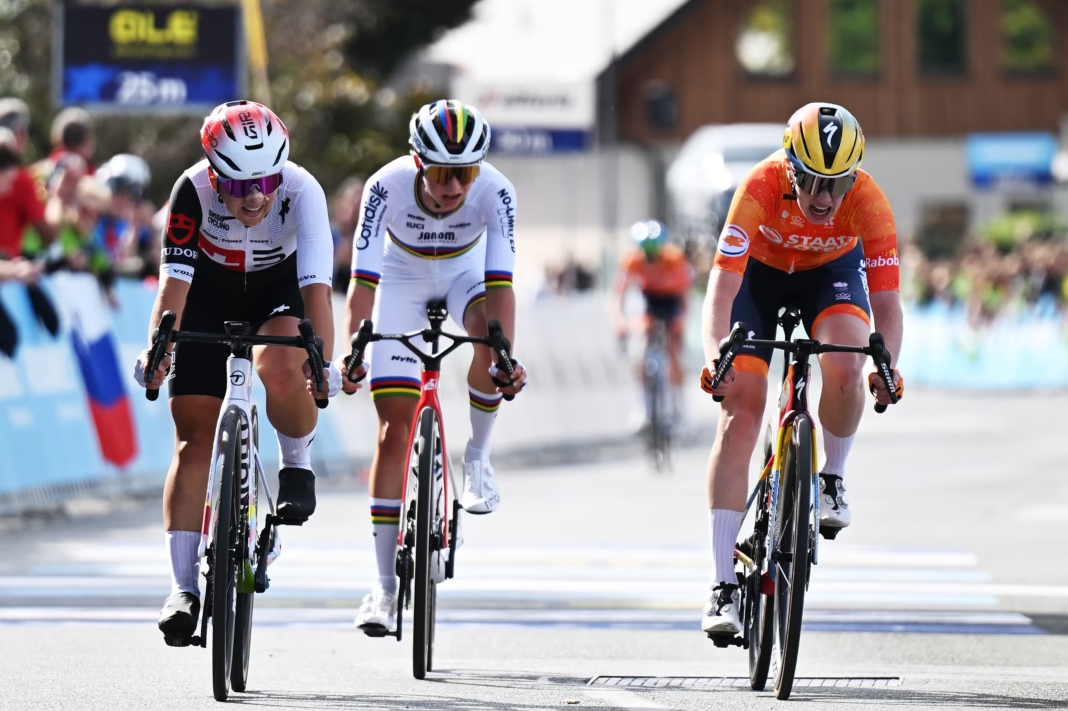
Kim Le Court-Pienaar becomes an even more obvious contender because of her ability to combine climbing strength with a fast finish, while Karlijn Swinkels, Ally Wollaston, Paula Blasi and Riejanne Markus all benefit from the removal of one of the strongest punchy climbers in the field.
The tactical difference is just as important as the absence itself. Riders no longer need to worry about Kopecky sitting behind attacks and using her sprint if a small group reaches the summit together, which could encourage more aggressive racing on Saint Tudno’s Road.
The full Tour of Britain Women 2026 start list shows the depth of the field that remains, but Kopecky’s departure unquestionably removes one of its biggest names.
Stage 3 becomes even more open
Friday’s stage was already expected to be the first major GC checkpoint, and Kopecky’s withdrawal makes the race more difficult to predict.
The Great Orme is short enough that explosive riders remain dangerous, but steep enough to create meaningful gaps. With one of the strongest all-round favourites now absent, more teams have an incentive to race proactively rather than waiting for SD Worx-Protime to control the final climb.
That should particularly suit riders willing to attack before the final few hundred metres, where Kopecky’s finishing speed would otherwise have been a major deterrent.
The wider tactical picture for the day is covered in ProCyclingUK’s Stage 3 preview, while the Tour of Britain Women 2026 viewing guide has the latest information for following the race live.
Kopecky now leaves the Tour of Britain Women before its decisive Welsh stages, and her absence ensures the fight for both the Great Orme victory and the overall title will look very different from the one expected at the start of the day.

