
The Vuelta a España closes its second week on Sunday with 189.7km from Palma del Río to Córdoba, a difficult medium-mountain stage that sits somewhere between a breakaway day and a reduced sprint.
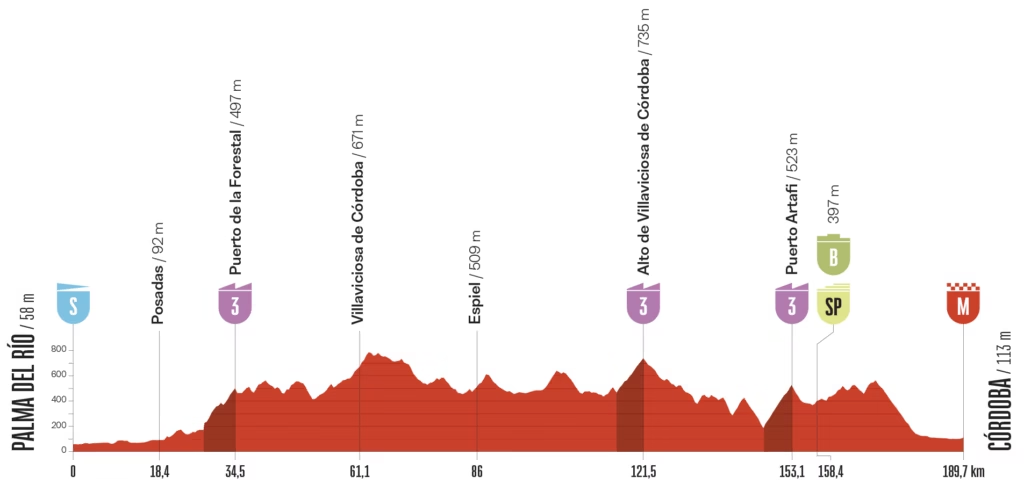
There are three Category 3 climbs and almost 190km of racing through the Sierra Morena before a fast approach into Córdoba. None of the climbs is particularly severe in isolation, but the route accumulates difficulty throughout the afternoon before Puerto de Artafi, 5.9km at 5.6%, tops out with 36.6km remaining.
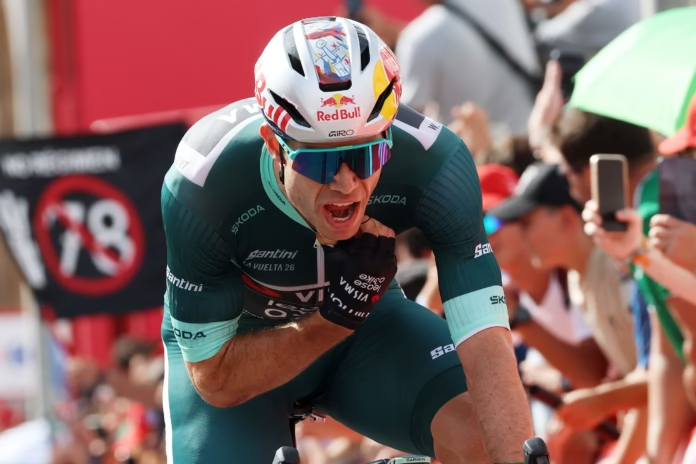
That combination immediately brings Wout van Aert into the conversation. The Belgian won in Córdoba at the 2024 Vuelta after surviving a late climb before beating the reduced group, and he arrives this time having finally taken his first victory of the 2026 race on Stage 13 in Loja.
Team Visma | Lease a Bike also have Matthew Brennan, already a three-time stage winner during his debut Vuelta, while Magnus Cort, Thibau Nys, Ethan Hayter, Bryan Coquard, Jordi Meeus and Axel Laurance all have reasons to believe they can survive enough of the climbing to contest the finish.
The bigger question is whether any of them get the opportunity. Stage 15 comes immediately after the summit finish on Sierra de La Pandera and immediately before the second rest day. The GC teams have little reason to control a harmless escape, and dozens of stage hunters know they can empty themselves without having to race again on Monday.
That gives the breakaway a genuine chance of reaching Córdoba first.
Vuelta a España Stage 15 at a glance
| Detail | Stage 15 |
|---|---|
| Date | Sunday 6 September 2026 |
| Start | Palma del Río |
| Finish | Córdoba |
| Distance | 189.7km |
| Stage type | Medium mountains |
| Puerto de la Forestal | 6.7km at 4.1%, Category 3 |
| Alto de Villaviciosa de Córdoba | 5.7km at 4.8%, Category 3 |
| Puerto de Artafi | 5.9km at 5.6%, Category 3 |
| Puerto de Artafi summit | 36.6km remaining |
| Intermediate sprint | 31.3km remaining |
| Neutralised start | 11:35 BST |
| Official race start | 11:46 BST |
| Expected finish | 16:16-16:45 BST |
The full Vuelta a España 2026 route guide shows why Sunday is difficult to categorise neatly. It is not one of the major GC stages, but there is far too much climbing for the sprinters to treat Córdoba as a routine opportunity.
Stage 15 is exactly the sort of day a breakaway should target
The timing is almost as important as the profile.
The peloton arrives from Stage 14 on Sierra de La Pandera, one of the hardest mountain stages of the second week, and nobody races on Monday.
That makes Sunday an obvious day for riders who are no longer interested in the general classification.
A domestique can spend everything trying to make the break without worrying about having to protect a leader the following morning. Stage hunters have increasingly few opportunities remaining, with the final week containing the 32.1km Jerez time trial and two more serious GC finishes at Peñas Blancas and Collado del Alguacil.
The GC teams should want something completely different.
Their ideal Stage 15 is a strong but harmless break disappearing up the road, followed by a controlled ride through the Sierra Morena and no crashes on the approach to Córdoba.
That difference in incentives is the basis for a breakaway stage.
The first climb comes early enough to complicate the escape
The opening road from Palma del Río follows the Guadalquivir towards Posadas before the route begins turning north.
There is not a long flat introduction.
Puerto de la Forestal begins early in the stage and tops out after only 34.5km, measuring 6.7km at 4.1%.
That should influence who makes the break.
A group of four riders escaping immediately on the flat may not be enough because stronger climbers can continue attacking as the road rises. Riders aiming for the stage know they need enough climbing ability to deal with the later Sierra Morena roads anyway.
The opening fight could therefore last well into Puerto de la Forestal.
That suits riders such as Van Aert, Cort and Stefan Küng if they decide to attack rather than wait for the peloton.
It also increases the possibility of a very large escape.
Stage 13 produced a break containing more than 40 riders because so many teams recognised the opportunity. Sunday’s tactical situation is similar enough for another substantial move to form.
Puerto de la Forestal should decide the composition, not the winner
At 6.7km and 4.1%, Puerto de la Forestal is not a climb for the GC favourites.
Its value is in sorting the breakaway.
A powerful rouleur can climb it quickly enough to stay involved, while riders who need completely flat terrain may struggle if the attacks continue all the way to the summit.
The mountains classification also gives Santiago Buitrago and the riders chasing him another reason to be active.
There are only Category 3 points available, but three classified climbs mean somebody spending the day ahead can still add to their total.
Once the right group gets clear, the peloton should have little incentive to chase immediately.
That is when the gap could expand quickly.
Most of the climbing is not categorised
The three official climbs do not fully explain Stage 15.
After Puerto de la Forestal, the race continues through the Sierra de Hornachuelos Natural Park and onto a long loop around the Puente Nuevo reservoir.
The terrain constantly rises and falls.
There are long stretches where nobody receives mountains points, but the riders are still climbing, descending, cornering and accelerating.
That matters for the fast finishers.
Someone such as Van Aert can absorb that repeated workload. Cort has made a career from doing the same. Nys and Hayter are comfortable when the race becomes harder than a conventional sprint stage.
For a heavier sprinter, the accumulated climbing can gradually become the problem even if none of the individual ascents looks threatening.
By the time Puerto de Artafi arrives, the riders will already have spent close to four hours on difficult roads.
Alto de Villaviciosa is where the stage can start changing
The second categorised climb tops out at kilometre 121.5.
Alto de Villaviciosa de Córdoba is 5.7km at 4.8%, leaving 68.2km to race.
Again, the numbers are moderate.
Its position makes it more interesting.
A team wanting to remove the faster sprinters can begin increasing the pace here rather than waiting until Artafi. If someone is already suffering after the previous 120km, there is enough difficult terrain afterwards to make returning to the front expensive.
This is also an obvious point for the breakaway to begin attacking itself.
A large escape of 15 or 20 riders cannot expect to cooperate all the way into Córdoba when Van Aert, Cort or another fast finisher is sitting among them.
The riders without a sprint have to start changing the composition before the final climb.
Puerto de Artafi is the key point of Stage 15
The final categorised ascent begins with 42.5km remaining.
Puerto de Artafi measures 5.9km at 5.6%, gaining 333 metres before the summit with 36.6km to go.
It is not hard enough for a pure climber to expect huge separation.
It is hard enough for a strong team to make the race selective.
That creates several different battles at once.
A breakaway rider without a sprint needs to attack.
Van Aert and Cort primarily need to survive.
Nys and Hayter may see the climb as somewhere to put their sprint rivals under pressure.
Meeus and some of the heavier fast men need to stay close enough that they can use the substantial distance after the summit to return.
The GC contenders should mainly be trying to avoid wasting energy.
There is no single team with one obvious reason to dictate the climb from bottom to top.
That uncertainty should make it tactical.
 Photo Credit: Getty
Van Aert already knows how to win in Córdoba
There is a particularly obvious reason to make Van Aert the reference rider.
He won here in 2024.
That stage finished after the Alto del 14%, where Visma increased the pace and reduced the peloton before Van Aert beat Mathias Vacek in Córdoba.
Our report from Van Aert’s 2024 Córdoba victory shows how well the formula suited him. A late climb removed much of the sprint field without being severe enough to drop Van Aert, leaving him as the fastest rider in the reduced group.
Stage 15 of the 2026 race offers a similar opportunity.
Artafi is further from the finish, which gives dropped riders more chance to return, but the preceding route is considerably more demanding than a glance at the three Category 3 climbs suggests.
Van Aert has also just demonstrated that fatigue is not stopping him from winning deep into this Vuelta.
His Stage 13 victory in Loja came after spending almost the entire day in a huge breakaway, surviving repeated attacks and then making the decisive move himself with around four kilometres remaining.
Córdoba requires a different finish, but much of the same strength.
Matthew Brennan may be an even bigger problem for the other teams
Van Aert is not Visma’s only option.
Matthew Brennan has won three stages during his first Grand Tour and continues to handle difficult terrain far better than a conventional young sprinter might be expected to.
His latest victory came in Stage 11 at Lorca, where Visma controlled the race before Brennan beat Bryan Coquard and Jordi Meeus.
Two days later, Brennan was in the Stage 13 breakaway with Van Aert.
He repeatedly closed attacks during the finale and still finished third after Van Aert escaped with Valentin Paret-Peintre.
That performance is particularly relevant for Stage 15.
If Brennan survives Puerto de Artafi, almost everyone else needs to find a way of getting rid of him before Córdoba.
If rivals attack, Van Aert can follow.
If they do nothing, Brennan waits for the sprint.
The same two-card problem that helped Visma dominate Stage 13 is available again.
Visma do not necessarily want to control 190km
Having the strongest options does not automatically mean Visma will chase the break all afternoon.
That is the central question surrounding the stage.
Van Aert has already won.
Brennan has three victories.
The team has been extremely successful in this Vuelta.
Does it really want to spend several riders controlling a dangerous 190km breakaway immediately after La Pandera?
Other teams would certainly like them to.
Cofidis can protect Coquard and ask Visma to chase.
Uno-X can do the same with Cort.
Soudal Quick-Step have Hayter.
Red Bull-BORA-hansgrohe have Meeus, but their wider race revolves around Primož Roglič rather than sacrificing the whole team to a sprint.
If everybody waits for Visma, the break can quickly reach six or seven minutes.
That may be enough.
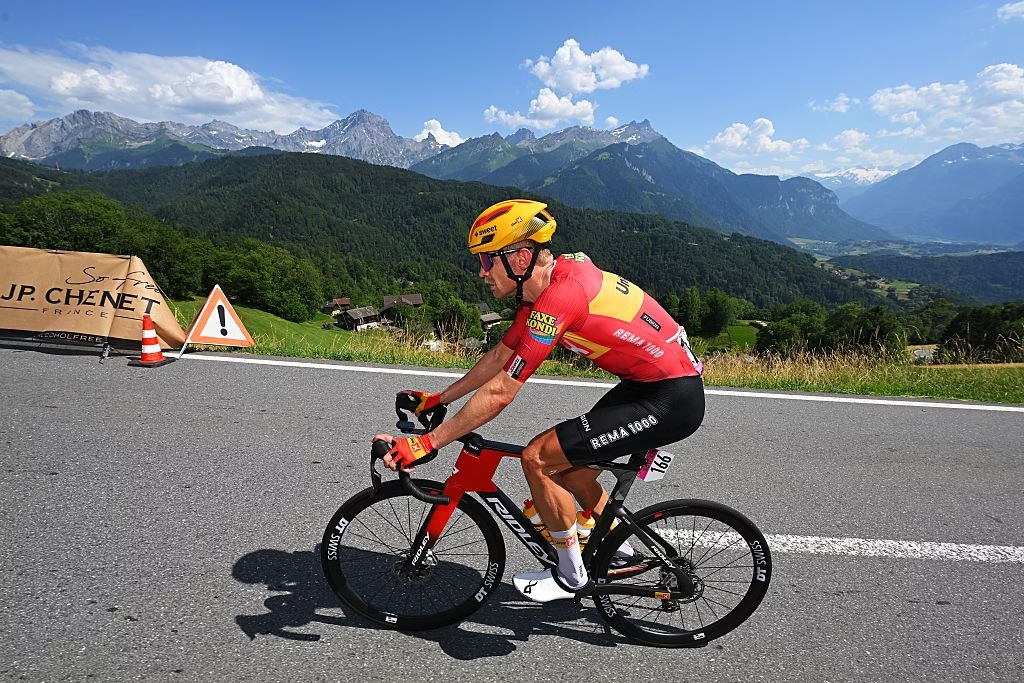 Photo Credit: Getty
Magnus Cort has already won in Córdoba too
Van Aert is not the only previous Córdoba winner in the field.
Magnus Cort won here in 2021, continuing an exceptional Vuelta record that now includes six stage victories.
The Dane remains one of the best examples of the rider Stage 15 rewards.
He is fast enough to win reduced sprints but strong enough to make breakaways on difficult terrain. He can attack rather than relying entirely on a lead-out and is comfortable racing after repeated short climbs.
That is increasingly relevant late in a Grand Tour.
Cort has also confirmed that 2026 will be his final professional season, giving him limited remaining opportunities to add another Grand Tour victory before retirement.
There are few better stages for him than Córdoba.
Thibau Nys should be one of the most dangerous riders in the race
Nys deserves to be treated as one of the main Stage 15 contenders rather than simply an outsider.
The Lidl-Trek rider finished third on the uphill Stage 10 in Elche de la Sierra, a useful indication of how well he is handling his first Vuelta.
Sunday’s terrain plays directly towards his strengths.
Repeated short climbs are much more favourable than one long mountain, while the final 36km after Puerto de Artafi give him time to recover before using his speed.
Lidl-Trek have also lost Mads Pedersen to illness, removing the rider who would otherwise have been the team’s obvious option on this type of stage.
That creates more freedom for Nys.
He can wait for the reduced sprint, but Lidl-Trek may be better served by placing him in the break rather than asking the depleted peloton to bring one back.
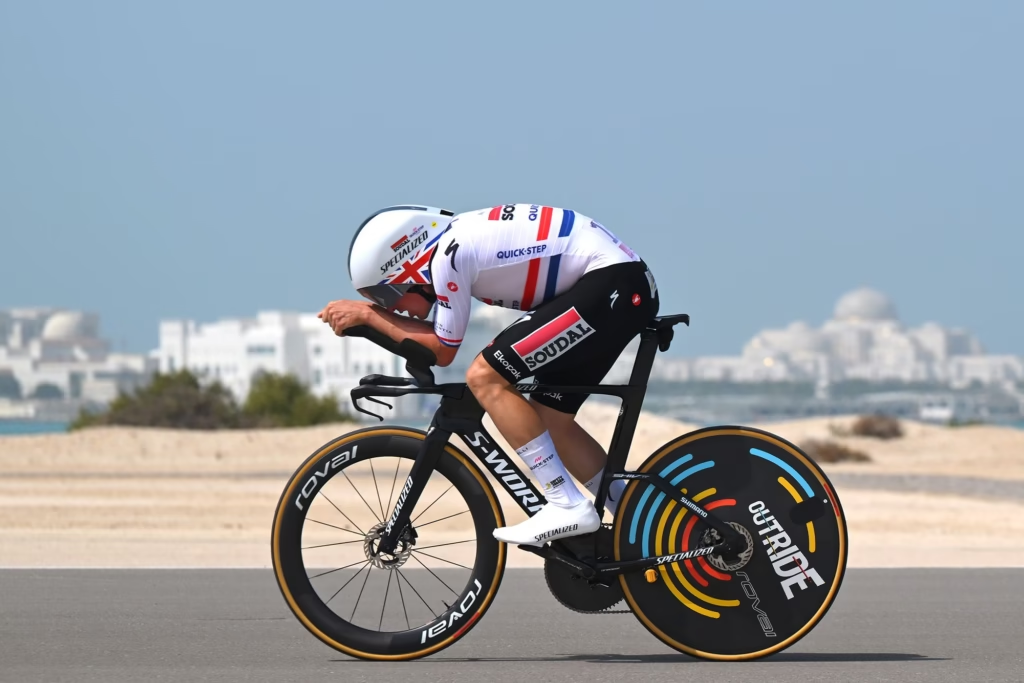 Photo Credit: Getty
Ethan Hayter has almost the perfect profile for Córdoba
Hayter is another rider who should welcome the route.
The British rider has the climbing ability to survive a 5.9km ascent at 5.6%, particularly when the summit is still more than 36km from the finish.
He also has enough speed to win from a reduced group.
His Stage 10 breakaway involvement and repeated attempts to get into moves during the second week show that Soudal Quick-Step are happy to use him aggressively rather than simply wait for conventional sprint opportunities.
That may be the correct strategy again.
If Hayter reaches Córdoba alongside Brennan and Van Aert, the task becomes difficult.
If he can get into a strong break without them, the entire stage looks different.
Bryan Coquard has already proved his Vuelta form
Coquard is another obvious reduced-sprint contender.
He won Stage 8 in Xeraco and then finished second behind Brennan in Lorca, confirming that his speed has survived the accumulated fatigue of the race.
Stage 15 is harder than Lorca.
That may actually improve his relative chances.
Coquard has always been comfortable on terrain that removes some of the pure sprinters before the finish. The question is whether Cofidis can keep the race close enough without committing too much energy.
They are unlikely to receive much help from GC teams.
If the break has four minutes approaching Villaviciosa, Cofidis will have to decide how much they are willing to invest.
Jordi Meeus has 36km to repair any damage
Meeus is closer to a conventional sprinter than Van Aert, Cort or Nys, but he should not be dismissed.
He finished third behind Brennan and Coquard in Lorca and starts Sunday as one of the fastest riders still in the Vuelta.
Puerto de Artafi is the problem.
Its 5.6% average can become uncomfortable if another team rides the full climb hard, particularly after almost 150km of hilly terrain.
The 36.6km after the summit gives Meeus a chance.
If he loses 20 seconds rather than two minutes, Red Bull can help him return on the run towards Córdoba.
Whether they want to expend those resources is another matter when Roglič remains their overriding priority.
That could leave Meeus dependent on other dropped sprinters having the same problem.
Axel Laurance is well suited to the final climb
Laurance is another rider who can benefit if Artafi removes the heavier sprinters.
The Netcompany INEOS rider has enough punch to follow attacks on medium gradients and enough speed to matter if 20 or 30 riders reach Córdoba.
His team do not have a reason to chase the stage all afternoon, particularly with Oscar Onley carrying their GC and young-rider ambitions.
That makes a breakaway attempt more logical.
Laurance is exactly the sort of rider who can become difficult to control in a large escape because neither the climbers nor the fast finishers are entirely comfortable taking him to the line.
 Photo Credit: Getty
Finn Fisher-Black is more dangerous attacking than waiting
Fisher-Black was sixth on Stage 13 and again showed how effective he can be when given freedom away from Red Bull’s main GC responsibilities.
Stage 15 provides another opportunity.
He can climb Artafi comfortably enough to attack, but there is little reason to carry Van Aert, Brennan, Cort or Nys into Córdoba and expect to beat them in a sprint.
His route is more aggressive.
Get into the break.
Force a selection on Villaviciosa or Artafi.
Then try to reach the final descent with a small group willing to work.
Red Bull have Meeus as the faster option behind, which gives Fisher-Black even more freedom to make the race difficult.
Stefan Küng needs the race to break apart
Küng’s requirements are straightforward.
He does not want a sprint.
The Swiss rider needs to use the terrain either from the original breakaway or with a move around the final climb.
Puerto de Artafi itself may not be enough.
A five-second gap over the summit with 36km remaining is unlikely to survive against a motivated group.
Küng needs company.
Two or three powerful riders working together through the rolling roads after the summit have a much better chance, particularly if the teams behind start looking at each other.
This is a stage where tactical hesitation can be worth more than another 30 watts.
Christophe Laporte gives Visma yet another route
Laporte makes the Visma situation even more awkward for their rivals.
He can survive the climbing.
He can sprint.
He can attack.
And unlike Brennan, he does not need the race to finish in any particular way.
If Laporte gets into a large break, other teams cannot simply assume Visma will chase for Van Aert or Brennan behind.
If he stays with the peloton, he becomes another rider capable of working on Artafi and into Córdoba.
The team may ultimately decide to commit to one clear plan, but it does not have to make that decision early.
Alessandro Romele could benefit from a selective finish
Romele has repeatedly appeared near the front during the first two weeks and remains another useful option if the stage comes back together.
He finished eighth in Lorca and has enough versatility to survive more climbing than many conventional sprinters.
XDS Astana also have very little reason to carry the entire chase.
That gives Romele the same strategic decision faced by many of Sunday’s contenders: waiting for the peloton may actually reduce his chance of winning.
Joining the right breakaway could be the better option.
The missing sprinters change the chase
The attrition of the first two weeks matters.
The Vuelta withdrawal list has grown rapidly, and several riders who would normally make a team commit to chasing are already gone.
Pedersen did not start Stage 11 because of illness.
Kaden Groves left on Stage 9.
Ben Turner is also out.
Alpecin-Premier Tech have subsequently lost further riders during the second week.
That means fewer teams have a strong reason to contribute to a controlled sprint.
Visma cannot simply assume three or four other squads will help reduce the break throughout the afternoon.
The final climb ends too far from Córdoba to decide everything
Puerto de Artafi tops out with 36.6km remaining.
That is a long way.
A rider attacking on the steepest part cannot simply crest with ten seconds and descend to victory.
There is still an intermediate sprint at Santa María de Trassierra with 31.3km remaining, more rolling terrain and then the long drop towards Córdoba.
That makes cooperation crucial.
A group of four riders representing four different teams can be extremely dangerous.
A solo rider may struggle.
The same logic gives dropped sprinters hope. If several teams still have fast riders behind, they can organise a chase and regain contact before the road reaches Córdoba.
The decisive moment may therefore come after Artafi rather than on it.
The intermediate sprint can keep the race moving
The intermediate sprint follows only 5.3km after the summit.
Van Aert has another reason to pay attention because of his position in the green jersey competition.
Brennan is also collecting points consistently.
If either is in the front group, the pace is unlikely to disappear immediately after the climb.
That is bad news for riders trying to regain contact.
It is also useful for attackers who want the race to remain fragmented.
The section between Artafi and Santa María de Trassierra should therefore be raced harder than a normal post-climb transition.
The descent towards Córdoba favours power
After the rolling plateau, the race begins its main descent towards Córdoba.
This is where Küng, Van Aert, Cort and other powerful riders become particularly valuable.
A lightweight climber who has created a small gap may suddenly find the road working against him.
The final approach becomes increasingly straightforward once the race reaches the city.
There are roughly 13km from the first entry into Córdoba to the finish on Avenida del Vallellano, enough time for a well-organised chasing group to close a modest advantage.
A winning break needs to arrive in the city with both a gap and enough riders prepared to work.
 Photo Credit: Getty
The GC teams should want the quietest afternoon possible
After La Pandera, there is very little reason for the main GC teams to create another hard race themselves.
The final week provides far clearer opportunities to attack the overall classification.
Stage 18 contains the 32.1km individual time trial from El Puerto de Santa María to Jerez.
Stage 19 finishes at Peñas Blancas.
Stage 20 brings the final mountain showdown at Collado del Alguacil.
Sunday is about reaching the second rest day without giving away anything unnecessary.
That should help the breakaway.
Movistar, Red Bull-BORA-hansgrohe, Decathlon CMA CGM and the other GC teams can all allow the stage hunters to race several minutes ahead provided nobody dangerous overall joins them.
Breakaway or reduced sprint?
The route points towards a reduced sprint.
The race situation points towards the breakaway.
That is why Stage 15 is difficult to predict.
If Visma decide from the start that they want another victory, they have the riders to control. Van Aert, Brennan and Laporte give them enough quality to justify the work.
But why should anyone help them?
Cofidis have Coquard but do not want to spend five hours setting up Van Aert.
Uno-X have Cort but can put him into the break.
Lidl-Trek can do the same with Nys.
Soudal can attack with Hayter.
Red Bull have GC priorities that matter far more than delivering Meeus to another sprint.
If a strong break takes six minutes, it may never be seen again.
If the escape is still only two or three minutes ahead at Villaviciosa, the final climb should bring the stage back towards Van Aert and Brennan.
-
 Photo Credit: Getty

How Stage 15 is likely to unfold
The opening kilometres should be aggressive.
Puerto de la Forestal comes early enough to keep the breakaway fight alive, and the eventual escape may contain considerably more riders than the usual transition-stage move.
Once the composition is acceptable, the GC teams should back off.
That leaves the gap in the hands of Visma and the remaining sprint teams.
Alto de Villaviciosa is where the calculation becomes serious. A break still five or six minutes ahead there is in an excellent position.
Puerto de Artafi should then split both races.
The breakaway riders without a sprint have to attack Van Aert, Cort or anyone similarly fast.
The peloton can increase the pace to remove sprinters and reduce the group.
After the summit, the balance moves towards the chase, but only if enough teams are willing to contribute.
That is far from guaranteed.
Main contenders for Vuelta Stage 15
Wout van Aert is the obvious reference. He won in Córdoba in 2024, has just taken Stage 13 and can win either from the breakaway or a reduced sprint.
Matthew Brennan already has three victories and becomes extremely difficult to beat if he survives Artafi with the front group.
Magnus Cort won in Córdoba in 2021 and remains one of the best breakaway sprinters in the race.
Thibau Nys has the climbing and finishing speed required, particularly now that Lidl-Trek can give him more freedom following Pedersen’s withdrawal.
Ethan Hayter is another ideal reduced-sprint rider who may be even more dangerous from the breakaway.
Bryan Coquard has already won a stage and remains consistently close in the sprints.
Jordi Meeus needs to survive Artafi but has enough distance afterwards to return if the climb temporarily removes him.
Axel Laurance is well suited to a selective race and does not need a conventional bunch sprint.
Finn Fisher-Black should attack rather than wait for the fastest finishers.
Stefan Küng needs a long-range move but has the power to make a small group extremely difficult to catch.
Christophe Laporte and Alessandro Romele add further depth to an unusually open field.
Stage 15 should reward versatility rather than outright sprint speed
Córdoba has already produced two recent winners who tell us almost everything about Sunday’s stage.
Magnus Cort won here in 2021.
Wout van Aert won here in 2024.
Both can sprint.
Neither needs a sprint stage.
That distinction matters across 189.7km containing three classified climbs, long stretches of uncategorised climbing and a final ascent close enough to Córdoba to remove tired riders without automatically deciding the winner.
The fastest rider in the Vuelta is not necessarily the favourite.
The strongest climber is not either.
Stage 15 is for somebody capable of spending four hours racing through the Sierra Morena, surviving the attacks on Puerto de Artafi and still having a way to win once Córdoba appears below.
Van Aert has already done exactly that once.
This time, almost the entire breakaway will know they need to stop him doing it again.

