
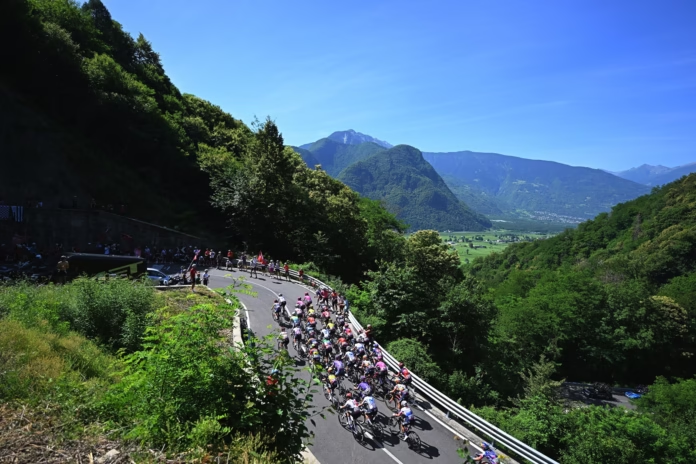
The Tour de Suisse Women 2026 continues on Thursday, 18th June, with another compact but awkward stage that should keep the general classification riders under pressure. Stage 2 starts and finishes in Locarno, covering 105.3km around Lago Maggiore with 1,242m of climbing, and the route again favours riders who can handle punchy terrain rather than those waiting for a straightforward sprint.
After the hilly opener in Sondrio, this is not a reset day. The race moves into Switzerland, but the pattern remains similar: short stage, rolling roads, late climbs and enough tactical uncertainty to make positioning important. With the 23.8km Aarburg time-trial still to come on stage 4 and the final mountain stage in Villars-sur-Ollon waiting on stage 5, stage 2 is another day where the favourites will want to avoid unnecessary losses.
The stage may not be hard enough to create the biggest GC gaps of the week, but it is exactly the sort of day where a poor position, a missed split or a late attack can change the shape of the race. Locarno should favour puncheurs, classics-style riders and aggressive all-rounders, while the GC contenders will need to stay close to the front through the final climbs.
For more background on the week, see our Tour de Suisse Women 2026 full route guide, the full start list for Tour de Suisse Women 2026, our Tour de Suisse Women 2026 contenders preview and our how to watch Tour de Suisse Women 2026 in the UK guide.

Tour de Suisse Women 2026 stage 2 route
Stage 2 is based around Locarno, with both the start and finish in the lakeside Swiss town. At 105.3km, it is short enough to invite aggressive racing, but the 1,242m of climbing means it is not a simple sprint stage.
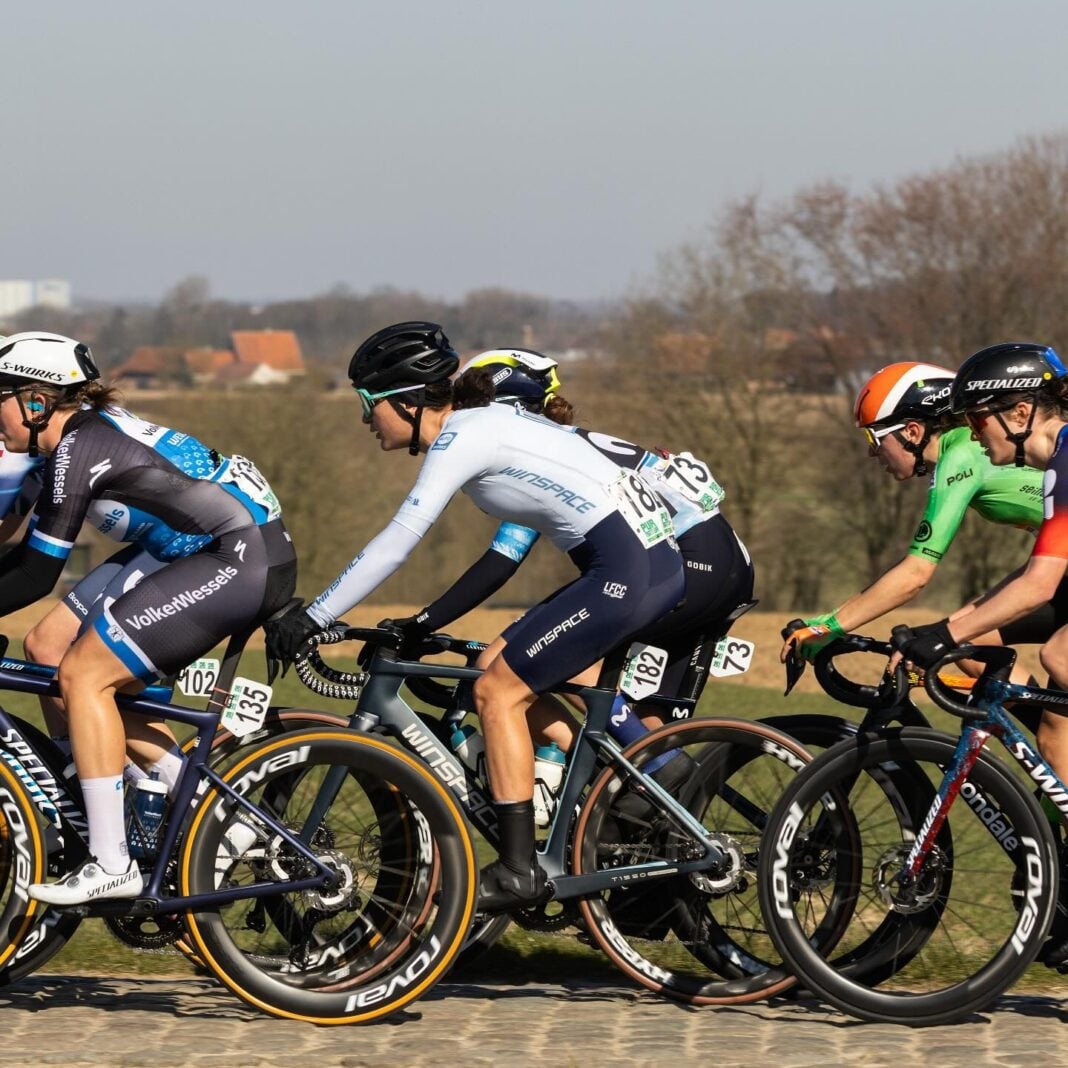
The route takes the riders through the Lago Maggiore region, with punchy terrain rather than long mountain climbs. That distinction is important. This is not a stage that should automatically belong to pure climbers, but it is hard enough to make life uncomfortable for sprinters if the pace is high.
The decisive section comes late. The stage includes two climbs in the final 15km, with Fanghi followed by Orselina. Fanghi is the longer of the two, while Orselina is shorter and steeper, giving attackers a final launchpad before the descent and run-in towards Locarno.
The final kilometres after the climbs could make the tactics complicated. If a small group goes clear over Orselina, the descent and flat run-in may help them hold the gap. If the bunch is only stretched rather than broken, the stage could come back together for a reduced sprint. That balance should make the finale tense.
What kind of rider can win in Locarno?
Stage 2 looks best suited to a punchy rider who can climb hard late, descend well and still finish quickly from a reduced group. It is not a pure sprinter’s day unless the pace is controlled, but it is also not a full mountain stage where only the strongest climbers should survive.
The ideal stage winner needs to handle short climbs at high intensity. The two late ascents should draw out the strongest riders, but the run-in means timing will matter. An attack too early could be brought back. Waiting too long could leave the stage to a faster rider from a reduced group.
That makes riders such as Liane Lippert, Kim Le Court, Kasia Niewiadoma-Phinney, Elisa Longo Borghini and Julie De Wilde particularly interesting. All have different ways to win from this kind of finish. Lippert and Le Court look dangerous if the group is reduced but not destroyed. Niewiadoma-Phinney and Longo Borghini can make the stage harder, while De Wilde becomes a threat if the strongest sprinters are dropped but the front group remains sizeable.
There is also room for an opportunistic move. If the GC teams hesitate because they are looking towards the time-trial and final mountain stage, a strong attacker could use the late climbs to force a gap and then make the chase difficult on the run-in.
Why stage 2 matters for the GC
Stage 2 is not the obvious GC day on paper, but the Tour de Suisse Women 2026 does not give riders much time to recover from mistakes. With only five stages, every split and every bonus second carries extra weight.
The biggest GC checkpoints still sit later in the week. Stage 4’s Aarburg time-trial should give Marlen Reusser a major opportunity, while the final mountain stage around Villars-sur-Ollon gives the climbers and aggressive GC riders their clearest chance to change the race. Stage 2 sits between those bigger moments, but it can still shape how the contenders reach them.
For Reusser, the priority will be staying safe and avoiding any split before the race reaches the time-trial. Movistar also have Liane Lippert, which means they do not need to ride only defensively. Lippert gives them a stage-winning card if the finale becomes selective.
For Elisa Longo Borghini, Kasia Niewiadoma-Phinney and Cédrine Kerbaol, the late climbs offer a chance to test the race without committing everything. A few seconds gained here could matter later, especially if the time-trial creates only moderate gaps.
AG Insurance-Soudal may also see this as a useful day. Kim Le Court is a strong option for a reduced finish, while Justine Ghekiere and Urška Žigart give the team climbing depth if the stage becomes harder than expected.
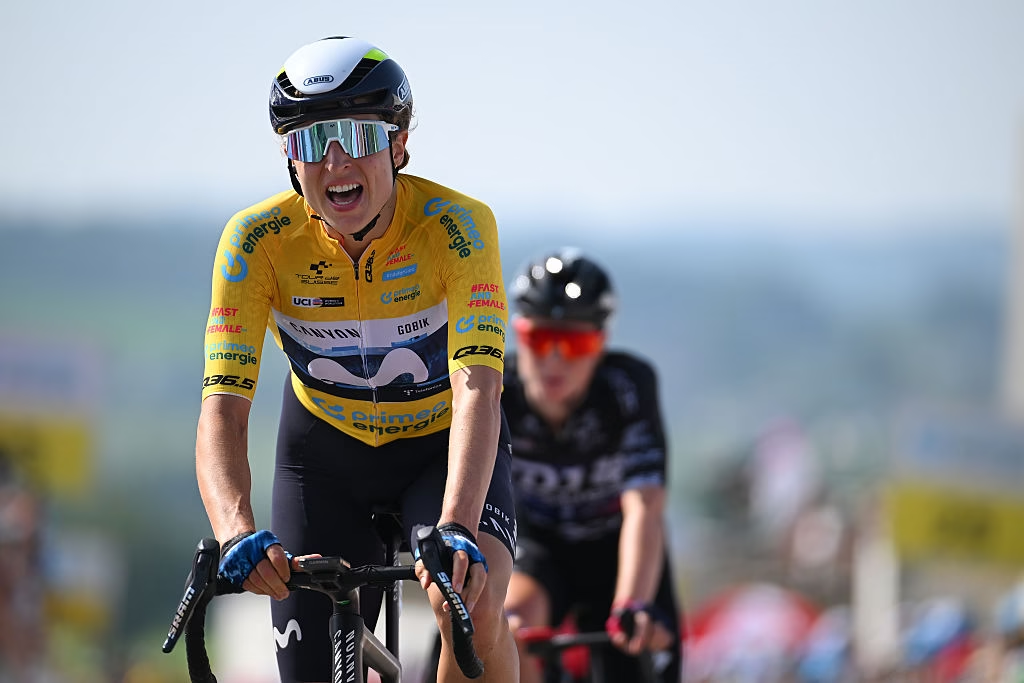
Marlen Reusser
Marlen Reusser remains the main overall favourite because the wider route gives her such a clear pathway through the Aarburg time-trial. Stage 2 is not necessarily the day she needs to win, but it is a day she cannot afford to mishandle.
The Locarno finale should suit riders with punch and speed more naturally than a pure time-trial specialist, yet Reusser’s power still makes her dangerous if the final climbs turn the stage into an attritional selection. If the front group hesitates after Orselina, she has the engine to make a late move difficult to chase.
Movistar’s wider strength matters here. Liane Lippert gives the team a better stage-specific option, so Reusser can focus on staying protected while Lippert follows or makes the decisive move. That could be one of the most useful tactical combinations in the race.
Liane Lippert
Liane Lippert looks like one of the best fits for stage 2. The late climbs are short enough for her punch to count, and the finish could suit her if the front group is reduced but still comes back together.
This is exactly the sort of day where Lippert can make Movistar’s race easier. If she attacks or follows moves, other teams have to react. If she stays in the front group, she gives Movistar a realistic route to the stage without forcing Reusser to take risks.
Lippert’s GC chances may depend on how close she remains before the time-trial and final mountain stage, but as a stage contender in Locarno she looks one of the clearest names. The shape of the day suits her strengths better than a long mountain finish.
Elisa Longo Borghini
Elisa Longo Borghini should be watched closely on stage 2 because the route rewards awareness as much as pure climbing. The two late climbs give her a platform to attack, but the flat run-in also means she will need to pick the right moment.
Longo Borghini’s final-stage Giro d’Italia Women victory showed that her finishing sharpness is moving in the right direction again. Locarno is a different kind of challenge, but it still suits a rider who can read tactical moments and turn awkward terrain into pressure.
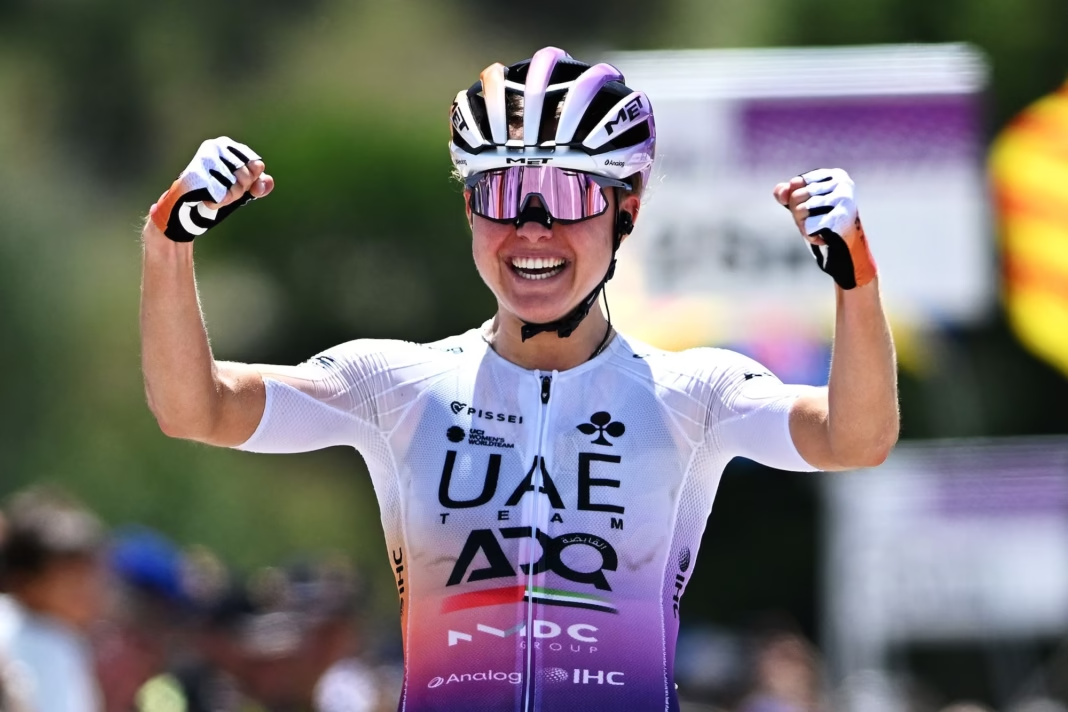
UAE Team ADQ have enough depth to keep her protected, with Brodie Chapman, Karlijn Swinkels and Maëva Squiban all useful on stages where positioning and race reading matter. Longo Borghini may not need to go all-in here, but if the favourites hesitate after the final climb, she is one of the riders most capable of punishing them.
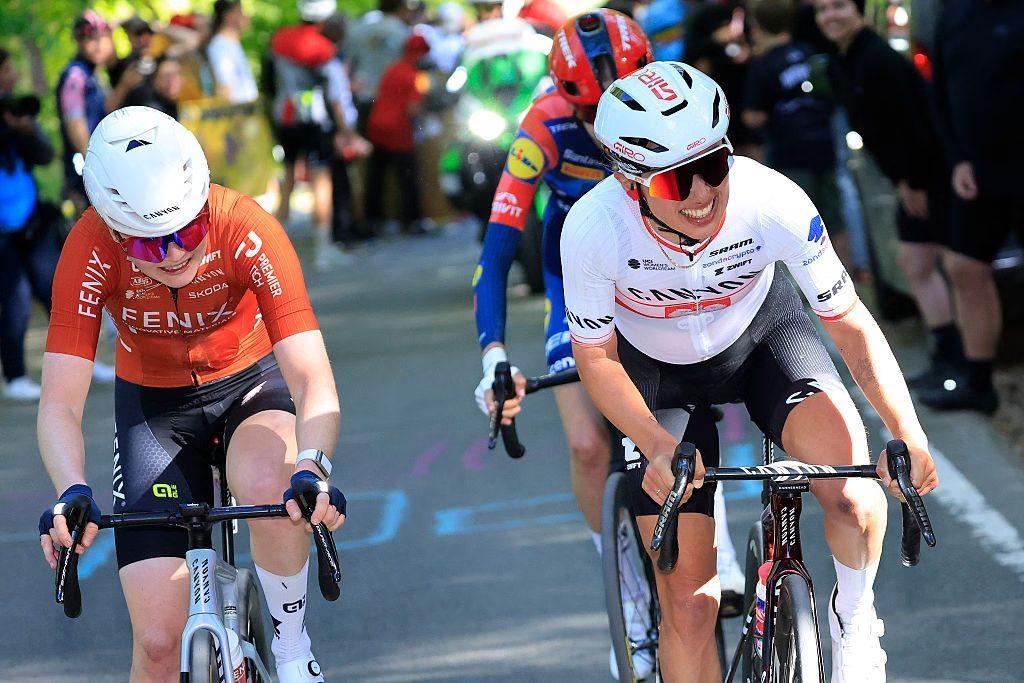
Kasia Niewiadoma-Phinney
Kasia Niewiadoma-Phinney has one of the clearest reasons to be aggressive before the time-trial. She is unlikely to want the race to wait passively for stage 4, so stage 2 gives her another chance to test the field on terrain that suits her instincts.
The Fanghi and Orselina combination should appeal to her. The climbs are not long, but they are hard enough to create separation if the pace is high. Niewiadoma-Phinney can attack on this kind of terrain without needing a summit finish, and she is also strong enough to sprint from a small group if the selection is limited.
The key question is whether Canyon SRAM can put her in the right place before the final climbs. If she is near the front, she has the profile to shape the finale. If the group is still large after the descent, the stage becomes harder for her to finish off.
Kim Le Court
Kim Le Court may be one of the most dangerous riders in the stage 2 finale. The route gives her a strong chance if the race becomes selective but not completely broken apart.
Le Court’s punch and finishing speed make her a serious reduced-group contender. She does not need the final climbs to create huge GC gaps. She needs them to remove enough fast riders and leave her in a front group where her sprint becomes a weapon.
AG Insurance-Soudal’s depth is useful here. Justine Ghekiere and Urška Žigart can follow harder climbing moves, while Le Court gives the team a different route if the race comes back together. That flexibility should make them one of the more interesting teams in the final 20km.
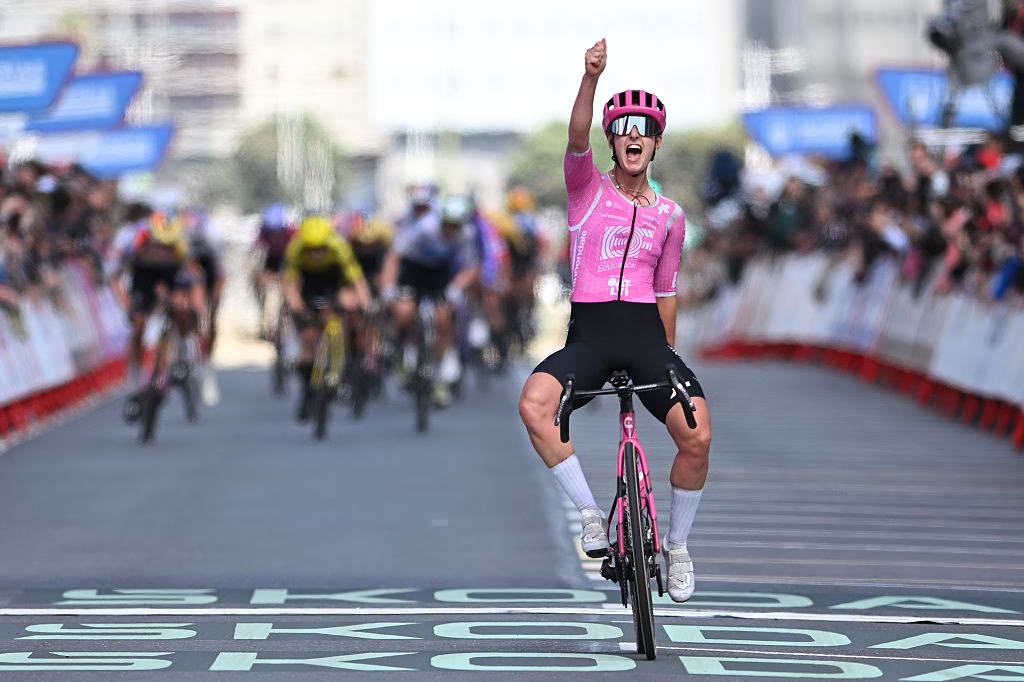
Cédrine Kerbaol
Cédrine Kerbaol gives EF Education-Oatly a strong option if stage 2 becomes more selective than controlled. She can climb, descend and handle awkward terrain, which makes the late double-climb section a useful opportunity.
Kerbaol’s GC path depends partly on the time-trial and final mountain stage, but she should not be passive before then. If the front group splits over Fanghi or Orselina, she is exactly the kind of rider who can make the move and force others to chase.
EF also have Henrietta Christie and Alice Towers as useful depth, but Kerbaol is the rider most likely to matter if the stage becomes a proper GC test rather than a reduced sprint.
Other riders to watch
Julie De Wilde is an interesting stage option for Fenix-Premier Tech if the finale thins the bunch without turning into a pure climbing selection. Yara Kastelijn gives the same team a more aggressive route if the final climbs are raced harder.
Ricarda Bauernfeind and Riejanne Markus give Lidl-Trek two strong options for a selective stage. Bauernfeind can handle hard climbing days, while Markus brings experience and race sense. Lucinda Brand and Loes Adegeest also give the team more tactical routes if the race opens up.
Thalita de Jong and Marta Jaskulska give Human Powered Health useful options if the stage becomes aggressive before the final climb. Lily Williams could also become interesting if the front group is reduced but still has a sprint dynamic.
Sarah Van Dam, Nadia Gontova and Linda Zanetti are also worth watching. Van Dam has the punch for hilly terrain, Gontova brings climbing strength, and Zanetti gives the Swiss national team a home option who could benefit if the major teams hesitate.
-
 Photo Credit: quentinphotographiebe
 -
 Photo Credit: Getty
Race tactics
The first part of the stage should be about control and positioning. The route is short, so the peloton cannot afford to let a strong breakaway gain too much time, but the GC teams may not want to spend too much energy before the weekend.
The race should become sharper approaching the final 15km. Fanghi and Orselina are close enough to the finish to be decisive, but the flat run-in means teams will need to judge the chase carefully. A small group over the top of Orselina could be hard to bring back if the composition is right.
Movistar have the most obvious tactical flexibility because they can use both Reusser and Lippert. UAE Team ADQ, Canyon SRAM and AG Insurance-Soudal should also want the race controlled enough to keep their main options in play. Lidl-Trek, EF Education-Oatly and Fenix-Premier Tech may be more willing to make the stage messy.
The stage could come down to whether the final climbs are ridden as launchpads or as filters. If they are launchpads, a small attacking group can decide the day. If they are filters, the stage is more likely to finish with a reduced sprint in Locarno.
Prediction
Stage 2 looks like a reduced-group finish rather than a full bunch sprint or a pure climber’s stage. The climbs are close enough to the finish to remove riders, but the run-in gives a chasing group a chance if the front of the race is not fully committed.
Liane Lippert looks like the best fit. She has the punch for the late climbs, enough speed from a small group and the tactical benefit of racing alongside Reusser. Movistar do not need to put everything on Reusser’s shoulders, and Lippert gives them a very clear stage-winning route.
Kim Le Court is another obvious contender if the front group stays together after the climbs. Elisa Longo Borghini, Kasia Niewiadoma-Phinney and Cédrine Kerbaol are all capable of making the stage more selective, while Julie De Wilde becomes dangerous if the final climbs remove the pure sprinters but leave a larger front group.

